T-Mobile Austria gibt nach dem Beschlusses des Europaparlaments gegen Roaming-Gebühren nicht auf und sucht nach einem neuen Modell. Der Konsument soll „seinen Inlandspreis mit Aufschlag innerhalb der EU zahlen“, so der Chef von T-Mobile Austria Andreas Bierwirth.
Der österreichische Mobilfunkbetreiber T-Mobile sucht nach dem heutigen Beschluss des Europaparlaments in Straßburg nach einem neuen Roaming-Modell. Andreas Bierwirth, Chef von T-Mobile Austria, erklärte in einem Statement, das Golem.de vorliegt: „Es heißt nun, ein gänzlich neues Roaming-Modell zu entwickeln, statt einfach die Preise zu senken. Der Konsument soll seinen Inlandspreis mit Aufschlag innerhalb der EU zahlen.“
T-Mobile Austria habe gewusst, dass es ein Ablaufdatum für Roaming innerhalb der EU gibt und werde den rechtlichen Rahmenbedingungen folgen. Bierwirth: „Es darf nicht vergessen werden, dass es unterschiedlich hohe Kosten in verschiedenen Ländern gibt. So ist beispielsweise Österreich als Bergland mit kleiner Bevölkerung ungleich teurer zu versorgen als Belgien mit flachem Land und dichter Besiedelung. Auch wenn die EU-Politiker mit der Abschaffung von Roaming allen Urlaubern scheinbar ein Zuckerl schenken: Insgesamt werden der Telekomindustrie viele Millionen an wichtigem Investitionsvolumen entzogen.“
Ein großer Netzausrüster bietet nach Informationen von Golem.de den Betreibern eine Software an, die berechnet, wie sie ihr Netz durch Extraeinnahmen über das Roaming finanzieren könnten.
Die Roaming-Gebühren fallen am 15. Juni 2017 weg. Welche Volumina an SMS, Telefonminuten und Daten frei bleiben müssen von den Roaming-Aufschlägen, wird die EU-Kommission noch ausarbeiten. „Europäer werden den gleichen Preis zahlen wie zu Hause, wenn sie ihre Mobilgeräte auf Reisen in der EU nutzen“, erklärte der für Digitales zuständige EU-Vizekommissionschef Andrus Ansip. Wer dauerhaft eine günstigere SIM-Karte aus dem Ausland daheim nutzt, kann auch weiterhin Extrakosten berechnet bekommen.
„Erst wenn diese Vorgaben vorliegen, kann mit der vollständigen technischen Implementierung begonnen werden“, sagte Bierwirth.
U.K. grocer Morrisons, ad-buying behemoth GroupM and other marketers and agencies are testing never-before-available data from cellphone carriers that connects device location and other information with telcos‘ real-world files on subscribers. Some services offer real-time heat maps showing the neighborhoods where store visitors go home at night, lists the sites they visited on mobile browsers recently and more.
Under the radar, Verizon, Sprint, Telefonica and other carriers have partnered with firms including SAP, IBM, HP and AirSage to manage, package and sell various levels of data to marketers and other clients. It’s all part of a push by the world’s largest phone operators to counteract diminishing subscriber growth through new business ventures that tap into the data that showers from consumers‘ mobile web surfing, text messaging and phone calls.
Morrison’s Credit: Chris Ratcliffe/Bloomberg
SAP’s Consumer Insight 365 ingests regularly updated data representing as many as 300 cellphone events per day for each of the 20 million to 25 million mobile subscribers. SAP won’t disclose the carriers providing this data. It „tells you where your consumers are coming from, because obviously the mobile operator knows their home location,“ said Lori Mitchell-Keller, head of SAP’s global retail industry business unit.
There is a lot of marketer interest in that information because it is tied to actual individuals. For the same reason, however, there is potential for resistance from privacy advocates.
WPP units such as Kantar Media and GroupM’s Mindshare have „kicked the tires“ for three years on Consumer Insight 365, testing and helping develop applications for the service, said Nick Nyhan, CEO of WPP’s Data Alliance. The extensive time spent so far partly reflects „high sensitivity to not doing something that would be too close for comfort from a consumer point of view,“ Mr. Nyhan said.
The service also combines data from telcos with other information, telling businesses whether shoppers are checking out competitor prices on their phones or just emailing friends. It can tell them the age ranges and genders of people who visited a store location between 10 a.m. and noon, and link location and demographic data with shoppers‘ web browsing history. Retailers might use the information to arrange store displays to appeal to certain customer segments at different times of the day, or to help determine where to open new locations.
„It used to be that this data was a lot harder to come by,“ said Ross Shanken, CEO of LeadID, a lead generation analytics firm. In a previous position at data firm TargusInfo 2008 and 2010 he nonetheless partnered with „a very large telco“ to validate names, addresses and phone numbers for data appending.
Too risky for the E.U.?
To protect privacy, SAP receives non-personally-identifiable, anonymized information from telcos, and only provides aggregated information to its clients to prevent reidentification of individuals. Still, sharing and using data this way is controversial. Nearly all the players exploring the burgeoning Telecom Data as a Service field, or TDaaS for short, are reluctant to provide the details of their operations, much less freely name their clients. And despite privacy safeguards, SAP is focused on selling its 365 product in North America and the Asia-Pacific region because it cannot get the data it needs from telcos representing consumers in the E.U., where data protections are stricter than in the U.S. and elsewhere.
But the rewards may outweigh the possible tangles with government regulators, consumer advocates and even squeamish board members.
The global market for telco data as a service is potentially worth $24.1 billion this year, on its way to $79 billion in 2020, according to estimates by 451 Research based on a survey of likely customers. „Challenges and constraints“ mean operators are scraping just 10% of the possible market right now, though that will rise to 30% by 2020, 451 Research said.
„If I was a CEO of any telecom operator in the U.S., I would be saying to myself I can do the same,“ said Michael Provenzano, CEO and co-founder of Vistar Media, which teams up with mobile operators to provide anonymized and aggregated data for targeting digital out-of-home ads based on consumers‘ comings and goings. „That’s going to be something these guys are talking about in the boardroom.“
Perhaps the most prominent recent moves in the burgeoning TDaaS realm are Verizon’s $4.4 billion acquisition of AOL in May, followed by its purchase of mobile ad network Millennial Media for $238 million in September. Many saw the AOL buy as a means for Verizon to turn its data into a viable business, in part because AOL provides ad-tech infrastructure and marketer relationships that Verizon lacks.
The level of authenticated information derived from Verizon and other mobile operators is seen as potentially more valuable than some other consumer data because it directly connects mobile phone interactions to individuals through actual billing information. „We’re talking about linking a household and a billing relationship with a human being,“ said Seth Demsey, CTO of AOL Platforms.
Verizon’s Precision Market Insights division previously stumbled in its attempts to aggregate and package mobile data to help marketers target consumers and measure campaigns. Sprint’s similar Pinsight Media division and AT&T’s AdWorks—which segments and targets TV audiences—have not fared much better, according to observers.
But lackluster results from going it alone have driven telcos toward companies that can facilitate cashing in on data. Along with SAP on the marketer-facing side, others including HP and IBM have stepped in to help phone carriers on the back-end data management and analysis side.
When Spanish operator Telefonica embarked on its Dynamic Insights offering, it partnered with consumer insights firm GfK to help package the telco’s mobile data for clients including U.K. food purveyor Morrisons. The grocery chain used the service to garner anonymized data connecting consumer demographic data to location visits.
SAP’s Rohit Tripathi Credit: Courtesy SAP
Some of these data relationships have long histories. SAP America owns Sybase, a subsidiary it bought in 2010 that serves as a technology hub for multiple mobile carriers and counts Verizon as a partner. The Sybase business has provided „deep relationships with mobile operators around the globe,“ said Rohit Tripathi, global VP and general manager of SAP Mobile Services, in an email.
AirSage, another firm that has tight integrations with mobile operators, supplies data to municipal planners, retail store developers and city tourism boards. The company integrated its technology with telecom companies in the 1990s to enable 911 call support services. More recently it has signed data deals with Verizon Wireless and Sprint. „Our solution is actually plugged into the network behind the firewall of the carrier,“ said Ryan Kinskey, director of business development and sales at AirSage. Device IDs tracked by AirSage are anonymized, he added.
Verizon and Sprint declined to comment for this story. AT&T and T-Mobile said they don’t share consumer or location data with SAP, Sybase, AirSage or Vistar.
Why the secrecy?
Insiders say phone carriers exploring data-sharing businesses are tight-lipped because they don’t want to reveal too many details to competitors, but fear of consumer complaints is always lurking in the background.
EFF’s Peter Eckersley Credit: Courtesy EFF
„The practices that carriers have gotten into, the sheer volume of data and the promiscuity with which they’re revealing their customers‘ data creates enormous risk for their businesses,“ said Peter Eckersley, chief computer scientist at the Electronic Frontier Foundation, a privacy watchdog. Mr. Eckersley and others suggest that anonymization techniques are faulty in many cases because even information associated with a hashed or encrypted identification code can be linked back to a home address and potentially reidentified by hackers.
Unlike other types of location tracking, such as beacon technologies that work only with mobile apps that people have agreed to let track them, many services employing telco data require no explicit opt-ins by consumers. Companies like SAP instead rely on carriers‘ terms and conditions with their subscribers, calling acceptance of the terms equivalent to opting in. Verizon’s privacy policy, for example, says that information collected on its customers may „be aggregated or anonymized for business and marketing uses by us or by third parties.“
Ultimately, for mobile operators, these relationships could reap substantial income from the data generated by subscribers who already account for their primary revenue streams. The telcos do not break out revenue derived from their data-related sales in their quarterly earnings reports, so just how much money they’re making from these deals is not known.
SAP will „effectively share the revenue back with the operator, so they get to make money from data that they’re basically not utilizing or under-utilizing today,“ former SAP Mobile President John Sims said at an industry conference in Las Vegas in 2013 as the company introduced Consumer Insight 365.
„The mobile operators don’t want to reveal this,“ said Mr. Tripathi, the SAP Mobile Services executive. No matter how much telcos and their partners stress that the data is anonymized and aggregated, he said, „they are fearful people will take this and twist it into something that it isn’t.“
Es ist eine der beliebtesten Floskeln in Stellenausschreibungen: Wir bieten ein positives Arbeitsklima. Kein Wunder, wünschen sich Mitarbeiter neben einem fairen Gehalt auch Erfüllung im Job durch spannende Aufgaben, inspirierende Kollegen und Wertschätzung für die eigene Arbeit. Wie authentisch und nachhaltig die vom Arbeitgeber vorgelebten Werte im Rahmen einer kommunizierten Unternehmenskultur sind, steht jedoch auf einem ganz anderen Blatt.
Dabei zahlt sich eine gesunde Unternehmenskultur sprichwörtlich aus: So sind Firmen mit einem positiven Arbeitsklima laut dieser umfassenden Infografik nachweislich um circa 20 Prozent produktiver. Auch werden dadurch Umsätze erwirtschaftet, die im Vergleich zu Unternehmen ohne entsprechende Bedingungen um bis zu 1,7 Prozent höher sind.
Wem es dagegen nicht gelingt, eine nachhaltige Unternehmenskultur aufzubauen, riskiert spürbare Einbußen. Beispielsweise sorgen schlecht motivierte Mitarbeiter dafür, dass Umsätze um bis zu 33 Prozent geringer ausfallen und auch das Umsatzwachstum im Vergleich zu anderen Unternehmen um bis zu elf Prozent geringer ausfällt. Darüber hinaus ist erwiesen , dass die Fähigkeit von Mitarbeitern, Probleme zu lösen, proportional zu ihrer Zufriedenheit mit dem Arbeitgeber steigt. Was Chefs also beim Aufbau einer nachhaltigen Unternehmenskultur beachten müssen, verraten wir dir jetzt:
Diese 8 Fehler sind Gift für jedes Arbeitsklima
Fehler 1: Geheimniskrämerei statt Transparenz
Geheimniskrämerei provoziert böses Blut und schadet damit der Unternehmenskultur. (Foto: Shutterstock )
Oh Gott, welcher Mitarbeiter weiß was und wie viel? Gerade vor der seit Jahren von Experten propagierten Transparenz als tragende Säule einer jeden Unternehmenskultur schrecken viele Chefs zurück. Geheimniskrämerei bei strategischen Entscheidungen, in der Personalpolitik oder im Umgang mit Mitarbeitern wird leider oft als Maßnahme verstanden, möglichst wenig Unruhe im Team zu stiften. Dabei ist Angst wie so oft auch beim Aufbau einer Unternehmenskultur kein guter Ratgeber.
Denn: Wer wichtige Informationen bewusst zurückhält, riskiert, die eigenen Mitarbeiter zu verunsichern. Transparenz muss ja nicht gleich bedeuten, alle Gehälter offenzulegen. Entscheidend für eine gesunde Unternehmenskultur sind vielmehr eine offene Kommunikation von Problemen und künftigen Vorhaben im Unternehmen. Dazu gehört übrigens auch, die Sorgen und Wünsche der Mitarbeiter ernst zu nehmen und mit Diensten wie beispielsweise Officevibe kontinuierlich zu evaluieren.
Fehler 2: Nur den nächstbesten Bewerber einstellen
Der notorische Fachkräftemangel macht es einem auch wirklich nicht leicht. Qualifiziertes Personal wird in der IT-Branche händeringend gesucht, doch das Angebot ist rar gesät. Da liegt es nahe, lieber den nächstbesten Bewerber anzuheuern, statt weiter mit einer klaffenden Personallücke den Kürzeren gegenüber der Konkurrenz zu ziehen – das aber birgt auch Gefahren für die Stabilität der Kultur im Unternehmen.
Können sich Mitarbeiter nicht zu 100 Prozent mit den Werten ihres Arbeitgebers identifizieren, drohen steigende Fehlzeiten und hohe Fluktuationsraten. Das sorgt einerseits für zusätzliche Einarbeitungskosten, schürt andererseits aber auch Unruhe in der Belegschaft. Chefs sollten sich also immer klarmachen: Die Unternehmenskultur steht und fällt mit dem Personal, das sie einstellen. Es ist daher sinnvoll, Bewerber schon im Vorstellungsgespräch über die fachliche Qualifikation hinaus auf die Passgenauigkeit zur eigenen Kultur zu prüfen. Das Startup Rounds zum Beispiel räumt neben Vorgesetzten auch allen Mitarbeitern die Möglichkeit ein, Bewerber offen mit Fragen zu durchlöchern.
Fehler 3: Gute Arbeit nicht belohnen
Nur wer die Leistungen der Mitarbeiter angemessen honoriert, kann sich auf ein motiviertes Team verlassen. (Foto: Shutterstock )
Anerkennung ist der Sauerstoff für menschliche Beziehungen, sagt der deutsche Volksmund. Das kann auch auf die Unternehmenskultur übertragen werden: Denn wer gute Arbeitsleistungen nicht würdigt und immer nur den nächsten Meilenstein im Visier hat oder – noch schlimmer – nur Kritik an die große Glocke hängt, provoziert Enttäuschungen und Missgunst bei den Mitarbeitern.
Führungskräfte sollten Mitarbeiter vor diesem Hintergrund bewusst für gute Leistungen belohnen. Mindestens mit einem entsprechenden Feedback, idealerweise aber auch mit zusätzlichen Anreizen wie zum Beispiel Sonderurlaub oder Gutscheinen. Wichtig: Machen Arbeitgeber solche Versprechen, müssen sie diese natürlich auch einhalten. Andernfalls verkommen kommunizierte Werte schnell zu einem Lippenbekenntnis.
Fehler 4: Mitarbeiter einstellen, die dein eigener Klon sind
Es ist ja keine Überraschung, dass man immer mit den Menschen am besten auskommt, die einem persönlich sehr ähnlich sind. Ob gemeinsame Ziele, Hobbies oder Weltbilder – Chefs stellen gerne Mitarbeiter mit möglichst geringer Reibungsfläche ein. Eine solche Personalpolitik widerspricht jedoch dem Verständnis einer guten Unternehmenskultur, die auch von Diversität lebt.
Ist die nicht gewährleistet, droht ein Verlust der Diskussionskultur, weil das Team in der Regel (zu) schnell einen Konsens findet. So wird Querdenke verhindert. Kein Wunder, dass renommierte CEOs schon warnen: „Verstehe deine Fehler und stelle Leute ein, die nicht wie du sind“, sagte beispielsweise Mary Barra, Chefin von General Motors, zur Facebook-Frontfrau Sheryl Sandberg.
Fehler 5: Unrealistische Forderungen stellen
Formulieren Chefs zu ehrgeizige Ziele, kann es sein, dass Mitarbeiter sich schnell überfordert fühlen. Schlechte Stimmung ist die Folge. (Foto: Shutterstock )
Ziele auf Unternehmens- und Mitarbeiterebene sind dazu gedacht, Sinn für die eigene Arbeit zu stiften und für Motivation zu sorgen. Werden im Rahmen einer offenen Kommunikationskultur (siehe Punkt 2) künftige Vorhaben und Forderungen ausgesprochen, ist es für das Arbeitsklima jedoch unerlässlich, dass die Forderungen auch realistisch beziehungsweise erreichbar sind.
Ist dies nicht der Fall, sinkt die Arbeitsmoral schneller als einem lieb ist. Warum? Mitarbeiter werden sich fühlen, als seien sie ihrem Job nicht gewachsen. Schlechte Stimmung und Konflikte in und zwischen einzelnen Teams sind vorprogrammiert. Also: Lieber tiefstapeln und hoch feiern!
Fehler 6: Probleme nicht professionell lösen
Ja, auch sie gehören dazu: Fehler! Nicht immer kann in einem Unternehmen alles nach Plan verlaufen und schon gar nicht machen Mitarbeiter immer alles richtig. Um Ängste zu vermeiden, kann die Installation einer entsprechenden Fehlerkultur schon die halbe Miete sein, allerdings muss es dann auch in der Umsetzung durch Führungskräfte fair zugehen.
Bedeutet: Für Fehler sollte zunächst immer das gesamte Team einstehen, niemals aber ein einzelner Mitarbeiter. Es versteht sich darüber hinaus von selbst, das Kollegen nicht öffentlich oder hinter vorgehaltener Hand kritisiert werden. Unterläuft einem Mitarbeiter dennoch ein kapitaler Bock, empfiehlt es sich, diesen intern zur Seite zu nehmen und vertraulich über Ursachen und Verbesserungsvorschläge zu sprechen. So wahrt man Authentizität als wichtiger Baustein einer gesunden Unternehmenskultur.
Fehler 7: Von Work-Life-Balance nichts hören wollen
Eine Unternehmenskultur lässt sich nicht per Gehaltscheck erhalten. Wichtig ist auch das Thema Vereinbarkeit von Familie und Beruf. (Foto: Shutterstock )
So hip eine einmal aufgebaute Unternehmenskultur in der Kommunikation nach außen auch wirkt: hat die Work-Life-Balance der eigenen Mitarbeiter bei allen Ambitionen keinen Platz, darf man sich über aufkeimendes Frustpotenzial nicht wundern. Vor allem für die Generation Y ist ein üppiger Gehaltszettel kein Argument mehr, sich dauerhaft an ein Unternehmen zu binden.
Mindestens ebenso wichtig sind attraktive Benefits im Rahmen der Familienförderung. Dies schließt neben entsprechenden Elternzeiten übrigens immer mehr auch die Pflege von Angehörigen ein. Zudem sollte auch ein Gesundheitsmanagement fester Bestandteil der Unternehmenskultur sein. Idealerweise bieten Chefs ihren Mitarbeitern also regelmäßige Gymnastik-Kurse an, schaffen Angebote für Ergonomie am Arbeitsplatz und flexible Arbeitszeiten.
Fehler 8: Zu schnell wachsen
Dieses Dilemma betrifft vor allem Startups mit skalierbaren Geschäftsmodell. Einerseits will man das Image eines hippen und agilen Schnellboots bewahren, andererseits muss zur Ausweitung des operativen Geschäfts früher oder später Fremdkapital von Investoren aufgenommen werden – zum Preis von umfassenden Mitspracherechten, versteht sich. Nicht selten geht daran eine einmal aufgebaute und gelebte Unternehmenskultur zugrunde, weil bestimmte Werte und Prinzipien auf Geheiß über Bord geworfen werden.
Insofern sollte die Evaluierung der Unternehmenskultur immer Hand in Hand mit dem Wachstum gehen. So ist es laut Business-Vordenker Tim Leberecht (ausführliches Interview in der kommenden t3n-Ausgabe) ratsam, sich schon vor dem ersten Gespräch mit Investoren zu überlegen, welche Werte unantastbar und welche wiederum verhandelbar sind. Auch sollten regelmäßig Teambuilding-Maßnahmen durchgeführt werden, um gefährliche Cliquenbildung zu verhindern.
Chances are you don’t like your current bank. German startup Number26 has been working hard for the past couple of years to bring a new banking experience to Europe. And now it has, using a novel approach to bank branches. Instead of playing catch up with good old brick-and-mortar banks, it is partnering with Barzahlen to turn retail shops into branches.
Starting today, you can go to 3,000 grocery stores, drugstores and other retail chains in Germany to withdraw and deposit cash. Withdrawing cash isn’t really important as you could already use any MasterCard ATM to get cash from your Number26 account. But depositing cash is a new feature for the company.
All you need to do is show up at a checkout register with your phone. Inside the Number26 app, look for the new Cash26 feature, enter the amount of cash you want to deposit or withdraw and scan a barcode. You then need to enter your PIN code. Cash deposits immediately appear in your bank account.
This feature is quite important as Number26’s home country has a heavy cash culture — people don’t use checks anymore and you can’t use your card everywhere. You could end up with cash that you want to put on your bank account, and you need to withdraw cash all the time.
As a reminder, Number26 participated in our Battlefield competition at Disrupt London 2014. Creating an account takes minutes and everything happens on your phone. After that, you will receive a MasterCard that works particularly well with Number26’s app. For example you can disable features or set limits so that you don’t have any surprises. You can disable online payments if you don’t plan on using this card for your favorite e-commerce websites.
The app is also much better designed than your average banking app. Number26 is also launching an app update today with a new navigation, new stats, 3D Touch support on the iPhone 6s and more. You can expect other banks to add 3D Touch support in 2016 or 2017.
By partnering with Barzahlen, Number26 has more “branches” than Deutsche Bank and Commerzbank combined. So far, 50,000 people in Germany and Austria signed up for a Number26 account. The company now employs 65 people and raised $10.6 million back in January.
Barzahlen offers this kind of banking features to multiple clients, as well as a way to pay your utility bills and rents. When I first covered Number26, the startup told me that it wanted to partner with other fintech companies to provide more features to its customers. It looks like Barzahlen is the first partner, and I can’t wait to see what’s next for the company.
At 10:03 am Wednesday, a red Tesla Model S P85D with the license plate “UBER QIK” arrived at a parking garage on East 31st Street in Manhattan. This is noteworthy only because that very car was at the Portofino Hotel in Redondo Beach, California, just two and a half days earlier.
The Model S crossed the country in record time for an EV—and drove itself nearly the entire way.
Carl Reese, Deena Mastracci, and Alex Roy made the coast-to-coast drive in 57 hours and 48 minutes, a time that is still to be verified by an independent third party. The three are veterans of record-setting transcontinental runs: In April, Reese and Mastracci set a record for the least time spent charging an EV while driving across the country. And Roy, a rally driver, set an unofficial “Cannonball Run” record in 2006, driving from New York to LA in just 31 hours and 4 minutes.
Arriving in New York in record time, without being arrested or killed, is a personal victory for the drivers. More than that, though, it highlights how quickly and enthusiastically autonomous technology is likely to be adopted, and how tricky it may be to keep in check once drivers get their first taste of freedom behind the wheel.
Well That Didn’t Take Long
Tesla Motors introduced “Autopilot,” which makes recent Model S sedans and all Model X SUVs semi-autonomous, through an over the air software update on October 14. The system, installed in tens of thousands of vehicles, uses radar, cameras, GPS, and ultrasonic sensors to keep the car within its lane, maintain a safe following distance, and change lanes at the command of the human. CEO Elon Musk urged prudence when using Autopilot, saying, “We tell drivers to keep their hands on the wheel just in case, to exercise caution in the beginning.”
Four days later, Reese, Mastracci, and Roy piled into a Model S and took off. They covered 2,994 miles at an average speed of 51.8 mph, a figure that includes the time spent plugged into Supercharger stations along the way. They had autopilot mode engaged 96 percent of the time, Reese says, using it at speeds around 90 mph. It eased the burden on the team, a big deal when you’re in a car for 57 hours straight.
Autopilot caused a few scares, Roy says, largely because the car was moving so quickly. “There were probably three or four moments where we were on autonomous mode at 90 miles an hour, and hands off the wheel,” and the road curved, Roy says. Where a trained driver would aim for the apex—the geometric center of the turn—to maintain speed and control, the car follows the lane lines. “If I hadn’t had my hands there, ready to take over, the car would have gone off the road and killed us.” He’s not annoyed by this, though. “That’s my fault for setting a speed faster than the system’s capable of compensating.”
Rules governing autonomous driving barely exist, and the few that are in place vary by state. There was nothing stopping Tesla from flipping the switch to make its cars steer themselves, but there’s no system for regulating what that means in the real world. Musk advises caution and responsibility, but Tesla isn’t rushing to rein in drivers. Musk himself congratulated Reese, Mastracci, and Roy on Twitter:
“It’s so cool to see Model S owners get out there and use this groundbreaking technology. The more people who use it, the better it will get,” says company spokeswoman Khobi Brooklyn. “Having said that, today’s Autopilot features are designed to provide a hands-on experience to give drivers more confidence behind the wheel, increase their safety on the road, and make highway driving more enjoyable. Drivers can’t abdicate responsibility, we expect the driver to be present and prepared to take over at any time.”
Tesla’s Autopilot is only available above 18 mph and is intended only for highway use, but there are no apparent restrictions on top speed, or where the system’s used. The human has to touch the wheel every few seconds, otherwise the car beeps a warning, and eventually comes to a controlled stop. Tesla’s not the only company with this kind of tech: Mercedes’ Intelligent Drive system lets the S- and E-Class sedans stay in their lanes at a controlled speed, but those cars require the human keep her hands on the wheel at all times.
Companies can get away with a lot that’s in a legal gray area, as long as bad things don’t happen. Bryant Walker Smith, assistant professor at the University of South Carolina School of Law
If someone causes an accident by relying too heavily on Tesla’s system, Tesla may not get off the hook by saying, “Hey, we told ’em to be careful.”
“Companies can get away with a lot that’s in a legal gray area, as long as bad things don’t happen,” says Bryant Walker Smith, an assistant professor at the University of South Carolina School of Law and affiliate scholar at the Center for Internet and Society, who studies self-driving vehicles. But when bad things do happen, regulators step in—and those gray areas tend to shrink pretty quickly.
In an extreme case, states could decide Tesla’s cars are unsafe and revoke their registrations, or refuse to issue new ones. The feds could force Tesla to recall its cars and change their settings (something Tesla could do with another software update). If someone’s hurt in an accident, the automaker could face civil or criminal charges.
This is why, Smith says, other risk-averse automakers developing autonomous technology have been so slow to introduce it. Questions of liability are unresolved. If a self-driving system causes a tragedy—especially one involving an innocent bystander—public pushback is likely. The strongest argument for the technology, that it will make driving safer, would be badly weakened.
Even Roy, a trained racing driver who set this speed record with the help of Autopilot, is concerned about how the public will use it, he says. “There’s no reason this car should be allowed to go 20 or 30 miles per hour over the speed limit in autonomous mode.”
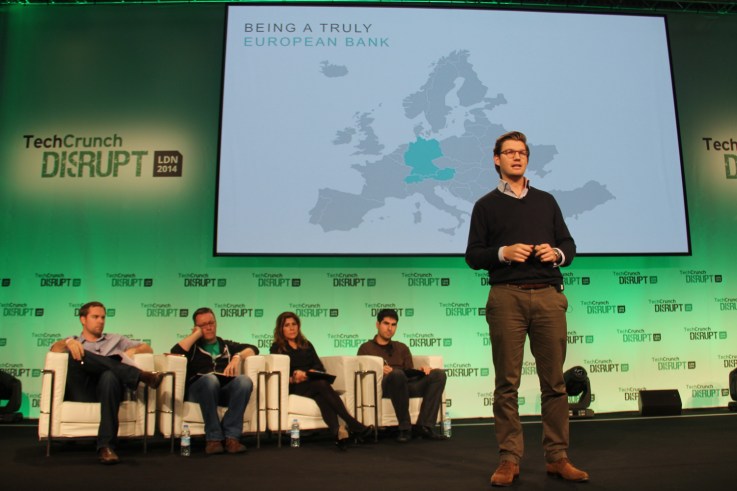
Why does it still take two days in Europe for a card transaction to show up in your bank statement? Meet Number26, the Simple of Europe — a fintech startup that promises to fix all the oddities of the European bank system. In other words, Number26 is a bank that doesn’t suck. The startup is launching today in private beta on stage at TechCrunch Disrupt London.
“We are providing Europe’s most modern current account, bank account,” co-founder and CEO Valentin Stalf told me in a phone interview before Disrupt. “Attached to it comes a MasterCard.”
As a reminder, commercial banks in Europe suck. In the U.S., you can show up and open an account in five minutes. In Europe, you need to make an appointment with a bank’s local branch, bring documents and fill a lot of forms. You can also sign up online, but you’ll have to go to the post office to send documents.
When you sign up for a Number26 account, the process is much easier than any other bank — you don’t have to physically send anything as the entire process takes place on the company’s website. The company told me that you can sign up in five minutes.
At the very end of the process, Number26 starts a video call to verify your identity. You simply show your passport to the webcam and answer a couple of questions. A call is much less painful than having to go to your local post office to send copies of your passport.
Every time you use your card, you can open the app a few seconds later to see the transaction right here on your statement
After that, you will receive a debit card that works in all MasterCard ATMs and shops. So far, Number26 doesn’t seem very different from traditional online banks in Europe.
But this is when it gets interesting. Number26 focuses a lot of its attention on the user experience of the mobile app. In addition to being a beautiful app, there are a few interesting features that make the app stand out of the crowd.
First, transactions show up in real time. Every time you use your card, you can open the app a few seconds later to see the transaction right on your statement.
“When you look at a MasterCard transaction, all of these transactions have an online authentication,” Stalf said. “The terminal contacts the MasterCard cloud and the cloud network tells that this card number is linked to this processing company. We see what’s happening with the processing company in real time, because this transaction needs to be authorized.”
Other banks could technically do the same and display transactions in real time. But it’s more difficult for them to implement these features due to their existing infrastructure.
You can also open the app and block your card with a simple button. But if you find your card a few minutes later, you can simply unblock it. You don’t need to wait and receive a new card.
If you lend your card to a friend that you don’t really trust, you can also block ATM transactions for let’s say an hour. Whenever you get your card back, you can unblock ATM transactions in the app. Everything works in real time.
Finally, Number26 added a few financial tools in its mobile app. For example, you will see how much money you spend at restaurants or clothing stores. It’s very reminiscent of Mint, but Mint is only available in the U.S. and Canada.
And then, there are all the reasons why you wouldn’t trust a startup to manage your money. Once again, it works a lot like Simple.
“Because we need a banking license, in the background, we have a banking partner,” Stalf said. “The money sits in this bank. Regulators require us to do that. And on the other end, because it’s a German banking license, all the amounts are insured until something like 6 million euros.
While the startup is based in Berlin, a German banking license lets you operate in other European markets. So far, the company accepts clients in Germany, Austria and Switzerland. But it will be very easy to scale to more European countries in the future.
For the end user, there is no card fee for EUR payments, and no service fee for your account. Number26 takes a cut of every MasterCard transaction. Its partner bank will also invest the money sitting in the bank accounts. All of this is transparent for the end user.
In the future, the startup will add new features to make the product more compelling. For instance, Number26 plans to add overdraft and savings options. It is also looking into building a corporate solution as well.
You can also expect innovative futures that you won’t find in your existing banking app. For example, the company wants to use your smartphone’s geolocation to compare it with the location of your card transactions. This way, Number26 can detect suspicious activity and ask you to accept or block a transaction.
In the long run, the company wants to integrate other fintech startups directly into your Number26 account. “We could integrate TransferWise for international transfers for example,” Stalf said. “The idea is to be the connector for finance startups.”
The team of 17 has raised $2.6 million so far (€2 million) from Earlybird Venture Capital, Redalpine Venture Partners, Axel Springer Plug and Play Accelerator. It will be hard to convince conservative customers and compete with traditional banks and their advertising money, but Number26 definitely has a chance when it comes to creating the best banking experience in Europe.
Q&A
Judges: Niko Bonatsos (General Catalyst), Jon Bradford (Techstars), Bindi Karia (Silicon Valley Bank), Brenden Mulligan (Cluster).
Question: Your app is gorgeous. There has to be a major pain point that you are solving to make people switch. How did you find that real time data was a pain point?
Answer:
Question: The relationship with the regulator is complicated. How do you do it?
Answer: We have a banking partner in Germany. We’re doing much more than using their technology. And we can do video conference calls to verify customers all over Europe.
Question: What’s the plan for making money?
Answer: We have two short term revenue streams. But we have long term plans as well, becoming a fintech hub.
AT&T (NYSE:T) and T-Mobile(NYSE:TMUS) are on the verge of releasing a new wireless network feature that will allow their customers to use one phone number on multiple devices.
AT&T’s calling its new technology NumberSync, and says the first device with the feature will be released soon, with more to come over the holiday season. T-Mobile hasn’t said when its version of NumberSync will launch, but told Re/Codelast week that it’ll be better than AT&T’s feature. (I guess we just have to take T-Mobile’s word for it for now.) After AT&T and T-Mobile spilled the beans, Sprint piped up and said that it’s „exploring“ the idea, but has yet to lay out any specifics publicly.
At face value, the ability to use one phone number across multiple devices may not seem like game-changer, but there are a couple of key reasons why the wireless industry is moving in this direction.
Make way for wearables One of the most important reasons why carriers would want to add this feature is to make it easier for customers to add wearable devices to their networks.
On AT&T’s consumer blog, Chief Marketing Officer David Christopher wrote that, „This means in the future you’ll be able to send and receive texts, as well as make and receive calls, from your tablet or wearable using the same number that your family, friends and colleagues recognize. This will work when your smartphone isn’t with you, nearby or even powered on.“
While not all wearables have their own cellular connections, it’s an inevitable progression for the technology. A handful of smart watches already sport cellular connectivity, like the LG Watch Urbane 2nd Edition, and more are on the way.
By 2020, tech companies will ship an estimated 155 million wearable devices worldwide. T-Mobile and AT&T are simply getting their networks ready now, so that they can handle the demand later.
More connections equal more money Of course, the big incentive for carriers to promote wearable adoption is the additional revenue those devices would help them generate. AT&T sells its family data plans as bundled packages, and already charges $10 a month to add network capabilities to a wearable device.
AT&T says it won’t charge for its NumberSync feature, so it likely plans to make money from its per-device charge. That’s a pretty good deal for the carrier, considering that once the technology is up and running, it can boost average revenue per user simply by having customers pay the additional fees to connect their wearables to the network.
T-Mobile doesn’t charge a per-line fee for additional devices right now, and may simply add the new shared phone number feature to the its long list of freebies. But that doesn’t mean it won’t benefit financially.
When customers connect their wearables to their cellular networks, they’ll likely use more data. Right now, the average wireless customer uses about 2.5 GB of data per month, but, with the help of wearables, that number is expected to increase to 14 GB in about five years. All of that extra data usage will eventually translate into more revenue for the carriers. According to SNS Research, wearables will add an additional $71 billion in worldwide carrier revenue by 2020.
While AT&T and T-Mobile will be the first to roll out the option of sharing one phone number between a smartphone and a wearable device, Sprint and Verizon Communications are likely close behind. But with huge wearable tech growth on the way, all the carriers should benefit.
Erfolg ist immer eine Teamleistung. Und ein solches Team zusammenzustellen, ist gar nicht so einfach. Aber es gibt Charaktere, die tun wirklich jedem Unternehmen gut – vor allem im Zusammenspiel. Das sind sie.
Das Team, das gewinnt
„Never change a winnig team“, wie es so schön heißt. Aber, wie stellt man ein solches Team überhaupt zusammen? Nun, wer ein stabiles Team haben will, das sich gegenseitig stützt und zeitgleich voranbringt, der braucht bei der Einstellung ein wenig Fingerspitzengefühl. Welche Eigenschaften brauchen wir noch? Welche Hard und Soft Skills tun uns gut? Wie findet sich ein Zusammenspiel, das wirklich ein fruchtbares Ergebnis zur Folge hat. Und vor allem: Wie findet sich ein Team zusammen, in dem sich alle wohlfühlen? Denn, wie wichtig das ist, beantwortet sich damit, wie viel Zeit wir mit diesen Menschen verbringen: Sehr viel.
All das ist sicherlich zu weiten Teilen nur individuell zu beantworten – und doch gibt es ein paar Eigenschaften und Fähigkeiten, die jedem Team gut tun. Gwen Moran hat für Fast Company die fünf Charaktere aufgelistet, die jeder Chef unter sich scharen sollte. Das haben wir uns natürlich mal genauer angesehen! Erkennt ihr euch und eure Kollegen wieder, oder besteht hier noch Einstellungsbedarf?
Diese „Fantastic Five“ braucht es für Zusammenhalt und Produktivität
1. Das Medium
Es gibt diese Menschen, die schnell die Fähigkeit haben, den größeren Zusammenhang der Dinge zu verstehen und so auch wissen, welche Menschen es für die Umsetzung braucht. Sie sammeln Informationen und wägen dann erst einmal ab, bevor sie den nächsten Schritt tun. Sie selbst sind dabei gerne Teil des Geschehens, aber neigen auch dazu introvertiert zu sein und die Szenerie erst einmal zu beobachten, um sie für sich einzuordnen. Sie lieben es, andere zusammenzubringen und sind empathisch – und genau diese Sensibilität verleiht ihnen die Fähigkeit, die Bedürfnisse des Teams und die Notwendigkeiten für das Lösen einer Aufgabe auszuloten. Diese Menschen können andere motivieren und sind wichtig für den Zusammenhalt im Team.
2. Der Innovator
Der oder die Innovatorin ist stets auf der Suche nach neuen Lösungsansätzen – und deshalb eine wichtige, weil kreative Persönlichkeit, die es braucht, wenn man mal feststeckt, weil die üblichen Muster nicht anwendbar sind. Sie haben meist einen neuen Blickwinkel parat und haben ebenso den Anspruch, bereits erprobte Lösungswege zu verbessern und effizienter zu gestalten. Sie sind also die, die den Weg für neues bereiten und frischen Wind in bereits Vorhandenes bringen.
3. Der Fürsprecher
Wir alle brauchen gelegentlich jemand, der uns den Rücken stärkt. Der oder die Fürsprecherin kann für sich selbst einstehen – aber eben auch für andere. Und das tun sie auch, wenn sie denken, sie oder ihr Gegenüber haben etwas verdient, was sie nicht bekommen, oder aber brauchen Gehör, für etwas, das für das Gefüge wichtig ist. Sie haben stets einen guten Blick für die Vorgänge im Unternehmen und vor allem auf das, was im eigenen Team vor sich geht und helfen dann dabei, dass eine Situation geschaffen wird, in der jeder sein Potential ausleben kann. Und genau das macht sie so wichtig für das Weiterkommen des Einzelnen und damit auch des Unternehmens.
4. Der Brückenbauer
Der oder die Brückenbauerin sind wichtige Menschen, wenn es um den Ausbau von Netzwerken geht. Sie haben viele Informationen, wissen, wo sie neue bekommen und können diese in entsprechende Richtung weiterleiten – oder aber die betreffenden Personen gleich zusammenbringen. Sie haben die Fähigkeit, Situationen schnell zu durchdenken und erkennen, wer oder was nun Hilfe leisten könnte. So sind sie nicht nur ideal, um Teammitglieder zu unterstützen, sondern schaffen mit ihrem Netzwerk auch einen idealen Boden für die großen Aufgaben innerhalb des Unternehmens.
5. Der Pionier
Wenn neue Ideen hermüssen, dann braucht es einen Pionier oder eine Pionierin. Pioniere schauen in der Regel vor und nicht zurück, sie sehen das, was vor ihnen liegt – oder auch, was vor ihnen liegen könnte und finden Lösungen um dorthin zukommen. Sie haben die Fähigkeit, Probleme differenziert zu betrachten, sie in ihre Einzelteile zu zerlegen und sie dann so zusammenzusetzen, dass ein Lösungsweg sichtbar wird. Aber ebenso können sie auch das Große und Ganze betrachten, statt sich im Kleinteiligen zu verlieren – und machen sich dann auch an die Umsetzung, statt lange zu diskutieren. Eben das macht sie so wertvoll, um die täglichen Herausforderungen zu bewältigen.“
BMW is showing off a modified 2-Series Coupe and 6-Series Gran Coupe that can race around a track at the limits of adhesion, and slide around corners like a throttle-happy Formula Drift ace.
Both cars are outfitted with a LIDAR system, 360-degree radar, ultrasonic sensors, and cameras that track the environment. Partnered with the electronic braking, throttle, and steering control that’s standard on all new BMWs, the prototypes can run through a high-speed slalom, perform precise lane changes, and slide around corners, without any driver intervention.
Darum könnten Mobilfunkanbieter in Zukunft überflüssig werden
In Zukunft wird mobiles Internet so selbstverständlich wie der Strom aus der Steckdose. Gut für die Nutzer, schlecht für die Mobilfunkanbieter, die immer austauschbarer werden.
Weltweit gibt es sieben Milliarden Mobilfunkanschlüsse, davon in Deutschland 112 Millionen . Tendenz steigend. Läuft es also gut bei den Mobilfunkanbietern? Nur für den Moment. In Zukunft werden sie austauschbar, denn schon heute unterscheiden sie sich im Prinzip nur durch Preis, Datenvolumen und Netzabdeckung voneinander. Zusatzdienste, die zu den Anfängen des Mobilfunks für die Nutzer noch eine Rolle spielten, haben keine Bedeutung mehr. In Zeiten von WhatsApp oder iMessage brauchen Nutzer keine teuren SMS-Pakete mehr. Auch die Telefonie wird unwichtiger, was zählt ist die Datenverbindung.
Over-The-Top-Dienste (OTT) wie Skype, WhatsApp, iMessage und Co. legen kontinuierlich zu, während die klassischen Kommunikationsdienste wie Telefonie oder SMS in der Nutzung sinken. Laut der Bundesnetzagentur lag die mobile Datennutzung 2014 im Monatsmittel bei 288 Megabyte und damit viermal so hoch wie noch 2011. Mobil telefoniert wurde in Deutschland 2014 im Monat nur noch knapp 80 Minuten. Drastisch eingebrochen ist auch die SMS-Nutzung : von 60 Milliarden SMS im Jahr 2012 blieben 2014 nur noch 22,5 Milliarden übrig.
Die Kluft zwischen Nutzer und Mobilfunkanbieter wird größer
Gleichzeitig wird die Kluft zwischen Nutzer und Mobilfunkbetreiber immer Größer, wie die Umfrage des Marktforschungsinstituts für Servicequalität zeigt. Das Gesamturteil für die Mobilfunkbranche ist nur befriedigend und an erster Stelle stehen bei der Kundenzufriedenheit die Mobilfunkdiscounter. Die Netzbetreiber Telefonica, Telekom oder Vodafone bilden das Schlusslicht. Die qualitativen Unterschiede zwischen den Netzbetreibern, anfänglich noch deutlich größer, werden immer geringer.
„Es gibt kein wirklich schlechtes Mobilfunknetz mehr.“
Es gibt kein wirklich schlechtes Mobilfunknetz mehr, was auch zur Wechselfreudigkeit beiträgt. Dank der Möglichkeit der Mitnahme der Rufnummer sinkt die Bindung zu einem bestimmten Mobilfunkanbieter. Obwohl die Kluft zum Kunden immer größer wird, unternimmt die Branche viel zu wenig, um den Kunden zu binden. Auf den demografischen Wandel der Nutzer und die damit einhergehende Veränderungen im Nutzungsverhalten wird mit den falschen Maßnahmen reagiert. Die steigende Beliebtheit von Messaging-Diensten wie WhatsApp wurde anfänglich belächelt, bis dann vier Jahre nach dem Start von WhatsApp & Co der zaghafte Versuch unternommen wurde, mit der App Joyn eine Alternative zu bieten. Erfolglos, schaut man sich das Ranking im App-Store und der Anzahl der Bewertungen an.Gleichzeitig untersagen die Mobilfunkanbieter in ihren AGB die Nutzung von Diensten wie P2P (Peer-to-Peer), Instant Messaging oder VoIP (Voice over IP). Kein Problem hat man damit, Streaming-Dienste wie beispielsweise Spotify von der Berechnung des Datenvolumens auszuschließen. Mit Netzneutralität hat das nur noch wenig zu tun. Hauptsache der Rubel rollt. Statt sich auf den Nutzer zu fokussieren, wird selbiger lieber gemolken. So sind in kaum einem anderen Land die Kosten für mobiles Internet so hoch wie in Deutschland. Ist in Finnland ein Inklusiv-Volumen von 50 Gigabyte üblich, steht Deutschland mit einem Gigabyte hinter Italien, Tschechien oder Spanien und nur knapp vor Ungarn. Finde den Fehler.
Der SMS-Killer. WhatsApp läutete den Untergang der SMS ein (Quelle: Twin Design / Shutterstock.com)
Zukunft der Mobilfunkanbieter ist düster
Die Liste der gescheiterten Unternehmungen, eigene Dienste zu etablieren, ist lang. Messaging, Musik-Streaming oder Mobile Payment, allesamt eher klägliche Versuche beim Nutzer zu punkten. Der Zugriff auf den Kunden wird in Zukunft weiter sinken, denn gemeinsam mit der GSM-Association, dem Verband der Mobilfunknetzbetreiber, verhandeln Samsung und Apple über die Einführung der eSim. Bei der eSIM handelt es sich um eine fest verbaute Sim-Karte, auf die jeder Mobilfunkbetreiber aufgeschaltet werden kann. Kunden brauchen in Zukunft keine Sim-Karte mehr für das Smartphone, sondern können sofort loslegen.
Der Wechsel zwischen den Mobilfunkanbietern wird damit entsprechend vereinfacht, da der lästige Wechsel der Sim-Karte entfällt. Die Hoheit der eSim liegt beim Hardware-Hersteller, also bei Apple und Samsung. Das heißt, dass sowohl Apple als auch Samsung einen Mobilfunkbetreiber anbieten, aber eben auch ausschließen können. Mobilfunkanbieter, die besonders restriktiv gegenüber bestimmten Onlinediensten sind, könnten einfach seitens der Smartphone-Hersteller ausgeschlossen werden. Mit der eSim geht ein weiterer Baustein in der Kundenbeziehung für die Mobilfunkanbieter verloren. Und es bröckelt weiter, denn Apple bietet, zunächst nur in den USA, das iPhone als Abo-Modell an.
Für einen Betrag von 39 US-Dollar kann das iPhone gemietet werden und der Kunde bekommt automatisch immer das neueste Gerät. Das Gleiche bietet Samsung auch an und andere Hersteller werden folgen. Mit neuen Smartphones gekoppelt an eine Vertragsverlängerung können die Mobilfunkanbieter künftig also auch nicht mehr locken. Die nicht abreißenden Gerüchte, Apple wolle ein VMNO, ein virtueller Mobilfunkanbieter werden, dürften bei den etablierten Mobilfunkbetreibern nur so mittelgut ankommen. Ganz abgesehen von Projekten wie Googles Loon, dessen Ziel nichts geringeres ist, als die Welt mit Internet auszustatten.
Sri Lanka ist das erste Land, welches mit Hilfe von Google Loon einen landesweiten universellen Internetzugang über WLAN bekommt. Auch wenn Sri Lanka nur eine Insel und nicht Europa ist, sieht man, wohin die Reise bei Google geht. Für Unternehmen wie Google, Facebook oder Apple ist mobiles Internet die Basis für alle Produkte. Die Abhängigkeit von Mobilfunkprovidern ist, wie man am gerade von Google gestarteten Accelerated-Mobile-Pages-Project sehen kann, ein Problem.
Project Loon als Gefahr für den klassischen Mobilfunk? (Foto: Google)
Fazit
Die Frage ist nicht, ob es die Mobilfunkanbieter in Zukunft noch geben wird, sondern viel mehr welche Rolle sie spielen werden. Die Bindung zum Kunden geht zunehmend an Unternehmen wie Apple, Google, Facebook oder Amazon verloren. Ein Ökosystem, wo Kunden Lösungen aus einer Hand bekommen, die nahtlos mit einander funktionieren, ist heute essentiell. Apple, Google, Facebook und Amazon haben das erkannt und bieten genau das: einzelne Lösungen aus einer Hand für unterschiedliche Anwendungsfälle mit Fokussierung auf den Nutzer.
Im Mobilfunk wird das vernachlässigt und es fehlen innovative Ideen und Lösungen. Themen werden entweder zu spät oder nicht nutzerzentriert angegangen, wie man an den Entwicklungen im Bereich Mobile Payment sehen kann. Anstatt sich mit den Kundenbedürfnissen zu beschäftigen, steht am Anfang das Geschäftsmodell. Am Ende bleibt nur noch die Rolle des Technologie-Anbieters, die in etwa so spannend ist wie Strom aus der Steckdose. Gar nicht.












 TheIdea – The Innovation Agency