Archiv der Kategorie: Gadgets

2014′ Apple Special Event unboxing new Iphones, Apple Pay, Apple Watch and many more

See All the Glorious Gadgets From Apple’s Big Event

CUPERTINO, California—Today Apple unveiled a trifecta of new products that are surely sending worrisome ripples down the spines of the company’s competitors.

At a massive media event here at the Flint Center for Performing Arts, Apple announced two new large-screen iPhones, a new mobile payment platform, and an advanced touchscreen wristwatch. Judging by the numerous outbreaks of applause and the occasional standing ovation, the new products were met with great support by the huge audience of press, Apple employees, and VIPs from the entertainment, technology, and fashion industries.

But don’t worry if your eyes weren’t glued to the video livestream—or if you were one of the countless viewers who suffered from numerous drop-outs and technical problems and were left in the dark for much of the event. Here are the most important things you need to know about Apple’s big day.

The New iPhones: iPhone 6 and iPhone 6 Plus

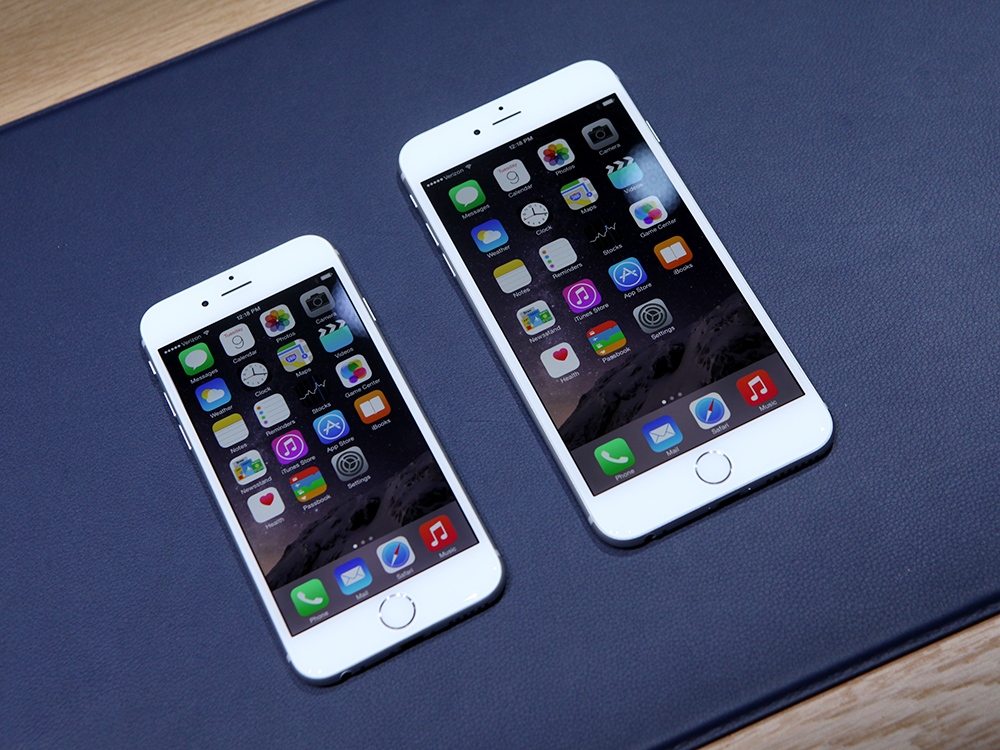
After a dramatic introductory video, Apple senior vice president Phil Schiller unveiled two new iPhone models today, the iPhone 6 and iPhone 6 Plus. Both are styled with a smooth, brushed aluminum rear face that curves gently into the front face. They look like small iPads.

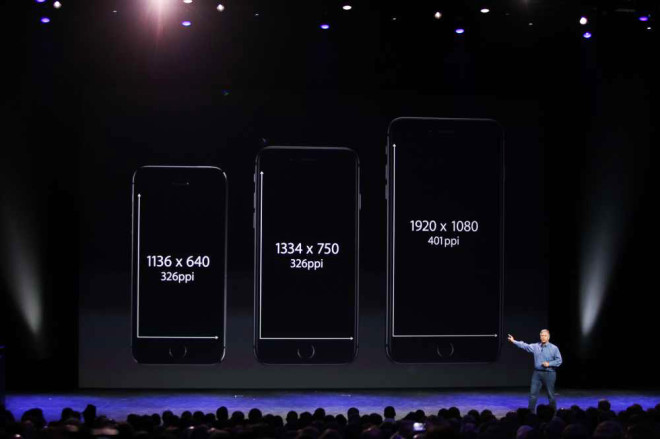
The iPhone 6 has a 4.7-inch display with a 1334×750 pixel resolution. The iPhone 6 Plus features a 5.5-inch screen with full HD 1920×1080 display resolution. Other than this size difference, the phones are essentially the same.

 

AppleSpecialEvent20140909-Iphones

iphone6

On the rear, they’ve got an 8-megapixel shooter with an f/2.2 aperture 8-megapixel camera. It’s got a new sensor and speedier autofocus. The 6 has digital image stabilization, but the 6 Plus also has additional optical image stabilization that uses its gyroscope and the M8 coprocessor to cancel out extra shakiness. The front-facing camera gets some new features like HDR and a burst-shot mode.

Inside, an A8 processor promises to be up to 87 percent more efficient than its predecessor, offering CPU processing power up to 25 percent faster and GPU speeds up to 50 percent faster than the iPhone 5s’ A7 chip. The M8 motion coprocessor, in addition to aiding in image stabilization, can now tell when you’re walking, running or cycling, and can give you credit if you’re traversing up and down stairs thanks to a barometer that detects changes in air pressure.

Both devices feature Touch ID home buttons and NFC (more on that in a sec). The iPhone 6 goes on sale Friday, September 19th starting at $200 on contract for 16 GB, $300 for 64 GB, and $400 for 128 GB. The iPhone 6 Plus starts at $100 more.

ApplePay, Apple’s Mobile Payment Initiative

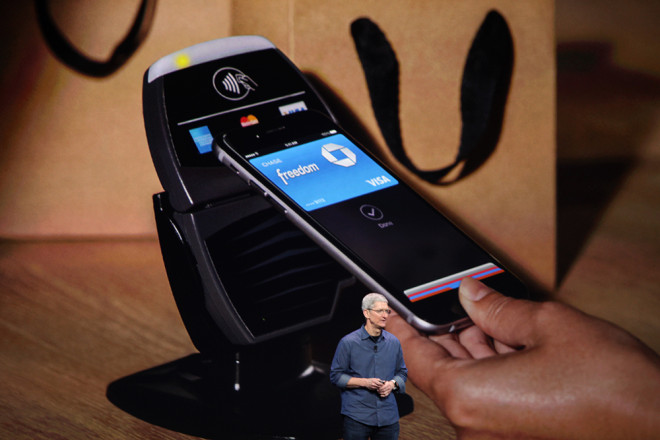
“Payments is a huge business. Every day between credit and debit, we spend $12 billion, and that’s just in the United States,” Cook said to introduce what a huge space payments is—a huge space digital payments have yet to crack.
AppleSpecialEvent20140909-ApplePay

applepayday

Working with American Express, MasterCard, and Visa, the new ApplePay systemas been designed to work with over 220,000 merchants at launch, including familiar locations like Walgreens, Whole Foods, Macy’s, and Target. Using NFC, you simply tap your phone on a payment terminal to purchase things. It’s that easy. How it works is a bit more complicated though. It uses a combination of NFC, Touch ID, and a secure chip Apple calls the Secure Element. You add a card by snapping a photo of it, then getting verification from your bank. During a transaction, a unique device number, rather than the actual credit card information, is sent to the merchant along with a dynamic security code. Apple doesn’t collect your data—what you buy is between you and the merchant. And if you lose your iPhone, you can suspend payments with Apple’s standard-issue Find My Friends app without needing to cancel your actual credit card.

It will launch in the U.S. in October as an update to iOS 8.

Apple’s Wearable: The Apple Watch

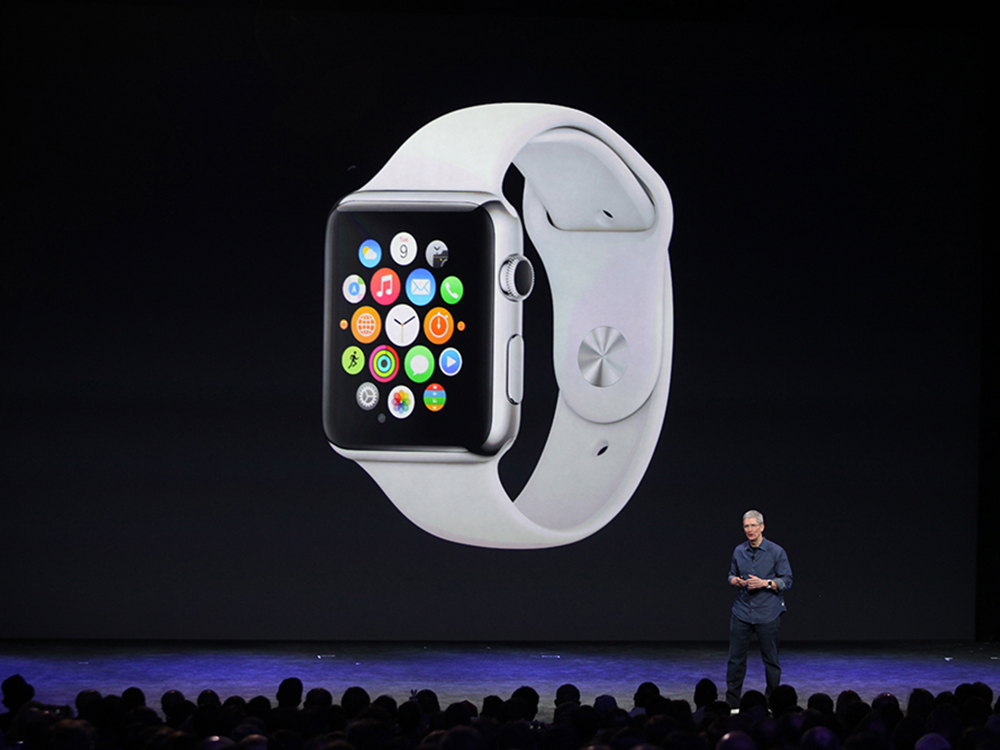
The biggest question mark surrounding today’s event was whether Apple would actually unveil its long-rumored wearable computing product. The company did not disappoint. The Apple Watch is officially here.

“Apple watch is the most personal device we’ve ever created,” Cook said after receiving a standing ovation and a round of wild applause. Apple’s CEO calls it “a new intimate way to connect and communicate direction from your wrist.”

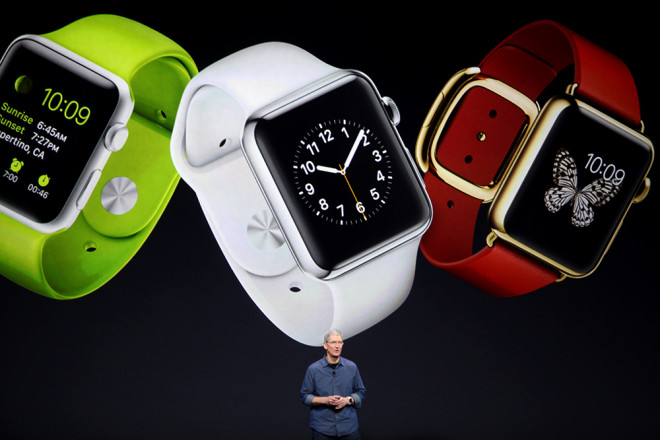
The timepiece, which is accurate to within plus or minus 50 milliseconds, is not just technologically impressive. It’s also quite stylish. The faces and the different hardware choices let you trick out the watch to match your own personal style.
AppleSpecialEvent20140909-AppleWatch1

AppleWatchWristApps

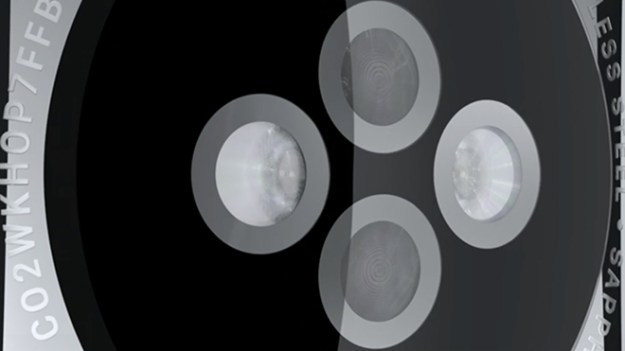
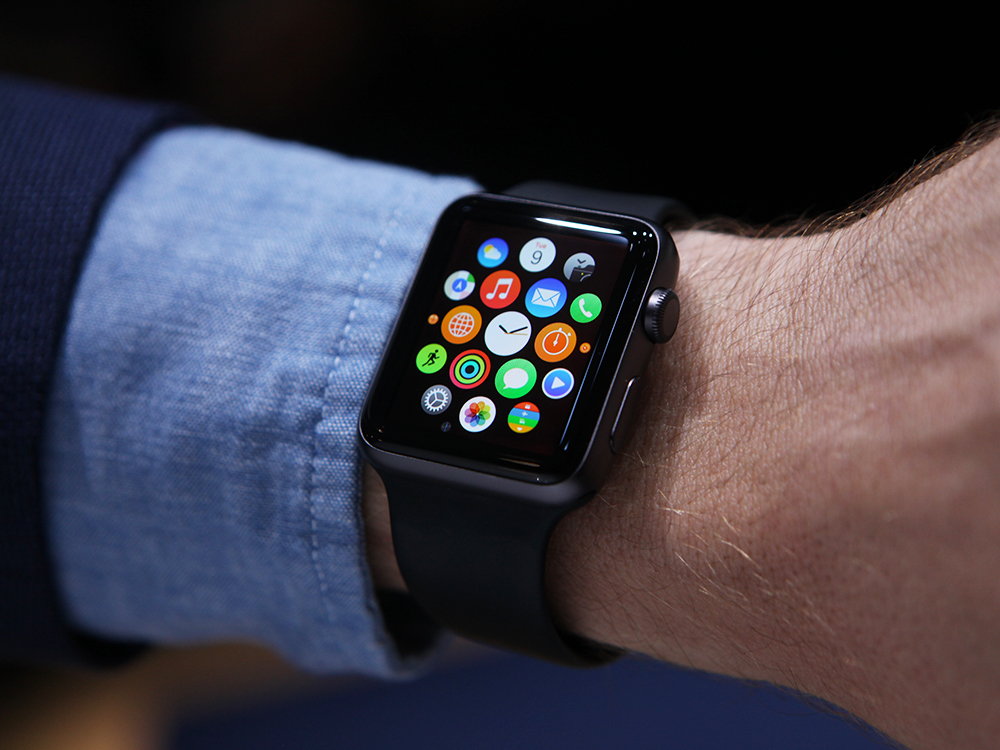
The watch face looks very similar to a traditional watch, including a dial on the side that Apple calls the “digital crown” that translates movement into digital data. Apple kept some of the tech specs on the vague side—the product won’t actually ship until next year. What we do know is that the display is a sheet of sapphire, and inside is a custom designed chip encapsulated to protect the electronics. On the rear are four sapphire lenses which hold LEDs and photo sensors for detecting your heart rate.

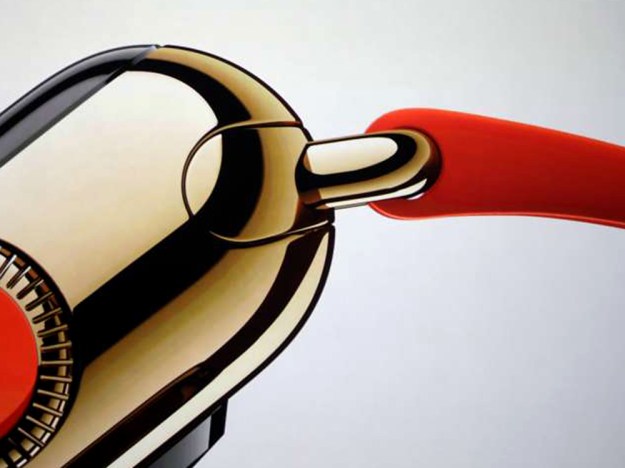
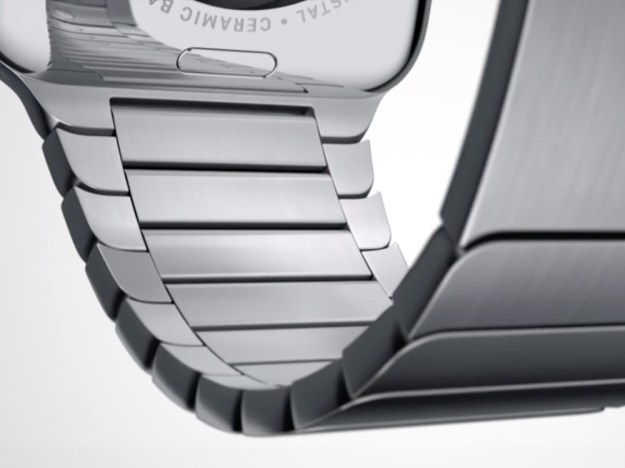
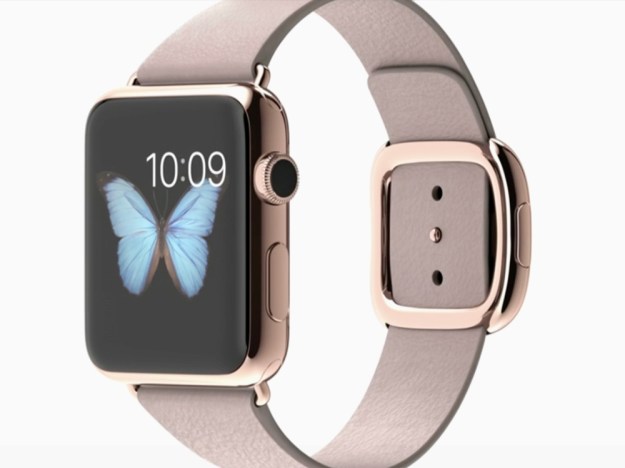
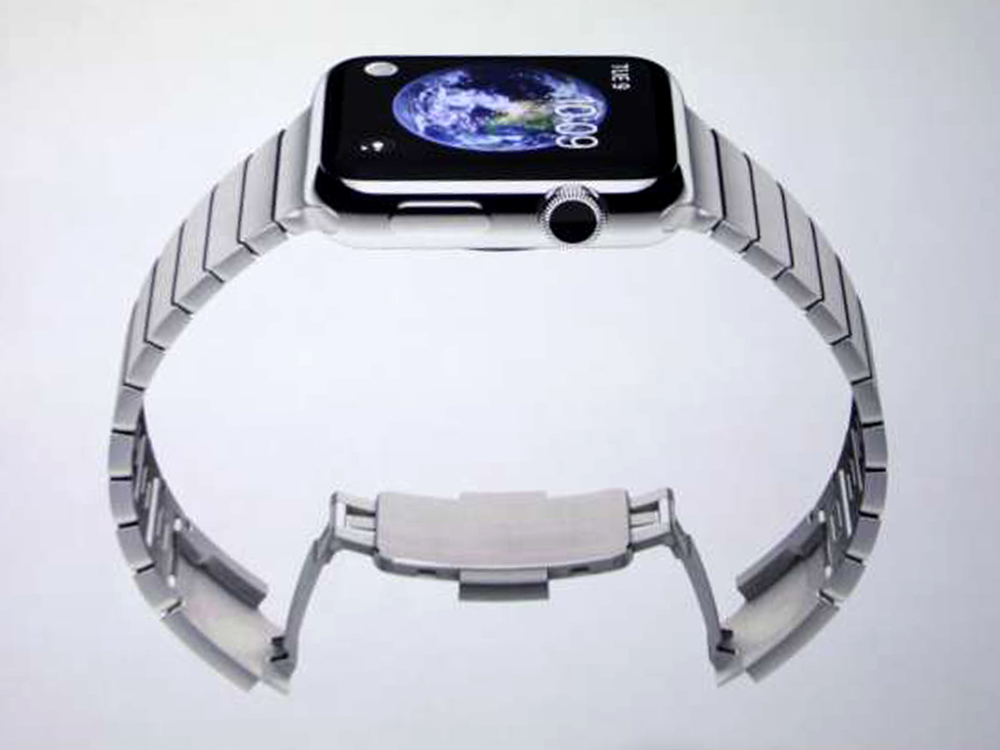
With regards to looks, the Apple Watch is a bit of a chameleon. It comes in three editions: Apple Watch, Watch Sport, and Watch Edition. Apple Watch is the most basic, Watch Sport is more durable, and Watch Edition is more exotic and made of gold. There are six different straps you can mix and match to suit your needs: a quilted leather strap with a magnetic clasping band, a traditional leather buckle, a stainless steel link bracelet, and a mesh chain loop are among the choices. The device comes in not just two band sizes, but two watch face sizes, to suit folks with different-sized wrists.

But it’s not just the hardware that’s customizable. “With every breakthrough, Apple has also had to have a breakthrough in user interface,” Cook said. What Apple didn’t do, he says, is take the iPhone and shrink the interface and strap it on your wrist. The display is too small, and it would make for a terrible user experience. Instead the digital crown is a key part of the navigation experience, as are onscreen taps and swipes.

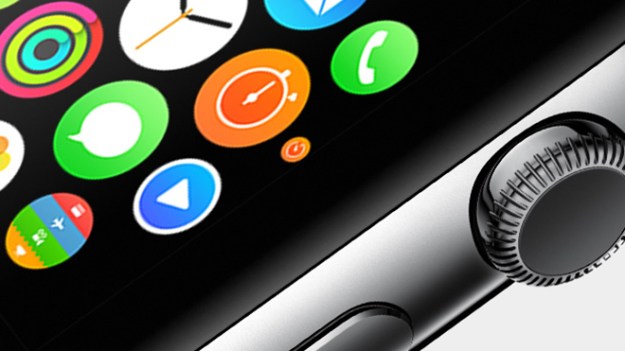
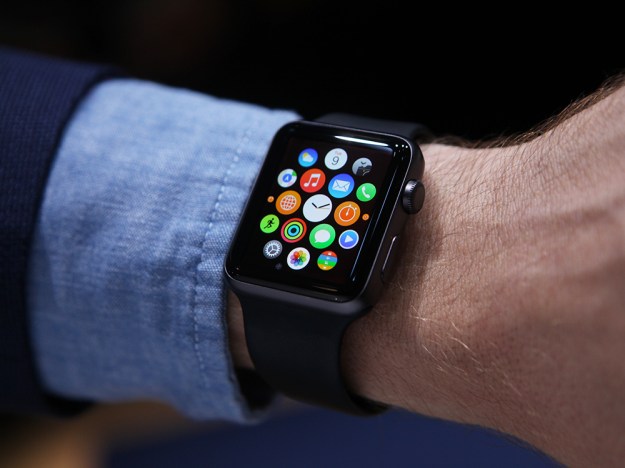
The menu screen is composed of bubbles of circular app icons you can arrange however you like, including grouping them by “neighborhood” of related apps. Twisting the crown zooms in and out on the group of apps. To open an app, you tap it. A feature called Glances lets you swipe upwards from the bottom of the screen to cycle through a customizable series of data screens. Siri is built into the watch, so you can dictate questions like “What movies are playing tonight?” A new feature called Digital Touch lets you select a contact then send a super-quick message just based on taps and drawings that your contact can then feel (via a vibration) when it reaches their wrist. It’s intended for messages that have a more personal context—and are a lot less wordy—than your usual text message.

The Apple Watch has a number of other apps including Maps, notifications from third-party apps, and a lot of customizable watch faces. Third-party apps, like ones from American Airlines and W Hotels, are also on the way. A pair of Apple-built health and fitness apps use both the watch and your iPhone’s sensors to give you a holistic view of your daily activities, combining the features of a general activity tracker and an advanced sport watch.

The Apple Watch charges using an inductive charger that fits on the back of its rectangular face. There’s no word about exact battery life yet. Few details were given about pricing, as well. All we know is that the Apple Watch will start at $350, and that it will go on sale in early 2015.
AppleWatchMetal

Source: http://www.wired.com/2014/09/apple-event-faq

Apple Watch – Apples Latest Consumer Innovation


Everything You Need to Know About the Apple Watch

AppleWatch      AppleWatchMetal

The wearable space just got bigger. Way bigger. Apple debuted its long-awaited wearable Tuesday, simply called Apple Watch.

There are actually three products: Apple Watch, Apple Watch Sport, and Apple Watch Edition. The differences between them are only apparent in the different materials (including aluminum, 18K gold, and pink gold) and wrist strap choices, which vary between feminine, masculine and youthful.

The Apple Watch starts at $350, and it will be available “early next year,” according to the company. Pricing for Apple Watch Sport and Apple Watch Edition were not announced at today’s event. The watch will require an iPhone to operate, but it works with the iPhone 5 or later and isn’t limited to just the new iPhone 6 devices.

AppleWatchSportsEdition

The interfaces of all three phones are alike, and there are a number of standout features.

Instead of interfacing with the watch by touching the screen, which just gets your fingers in the way and blocks your view, you can navigate through the menus and apps by touching the crown. Twist it to zoom in and out of screens and menus. Press it and you go back to the home screen (just like on the iPhone).

There’s an additional button just beneath the crown. Tapping it brings up something Apple calls “Digital Touch” communication. It’s based around a list of friends you’ve communicated with recently. You can send small pictures and sketches to your friends with just a few taps.

The screen itself works much like a Retina display on iPhones and iPads, but it can also sense force. So the familiar two-dimensional touch input system gains a third, vertical dimension.


AppleWatchSensorClose

On the back, there’s a crystal with LEDs that can measure your heart rate—this adds health-tracking capability to the watch. Also on the back is a wireless, inductive charging mechanism. The charger attaches to the back of the watch via a magnet. There’s also vibrating mechanism on the back so you can get notifications and haptic feedback for each of your finger taps.

Raising your wrist awakens the display. When it pops to life, you see a simplified list of apps made just for the watch. There are also several watch faces to choose from. You get sporty, chrono-style faces, retro digital readouts, and even a whimsical Mickey Mouse face. You can customize the color of the face by rotating the crown, or swipe to change the contents of the face so it shows the date and other fields of information on its screen.

AppleWatchGold

There are some health-tracking features to help you make your fitness goals for steps, calories burned, and so on. The watch also works with Apple Pay, the company’s new mobile payments system.

“We’ve been working on Apple watch for a long time,” Cook says. “It covered every discipline at Apple.”

AppleWatchMetal2

Kevin Lynch, a new face on Apple’s media event stage who led the software effort, stepped onstage in Cupertino to give us the first live demo of the watch.

Apple wanted to build the watch so functions were easy to find and use. The menu screens are bubbles of circular app icons you can arrange how you like. You can arrange “neighborhoods” of apps. To open an app, you tap it.


AppleWatchApple


Apple also thought it was important to relay other information in a glanceable way. It does this using a new interaction it calls Glances, a swipe up from the bottom of the watch face. You can arrange these how you like, swapping through the water, the music you’re playing on other devices, et cetera. You can also send some sort of silly 3-D animated smiley face, allowing you to share a lot of emotion without doing a whole lot.

AppleWatchHomeButtonClose

Siri is also built into the watch, so you can do things like ask what movies are playing tonight. You can use the crown or your finger to scroll through the list. There’s also a photo app. You can see an overview of photos, displayed in a grid-like Photostream, and you can use the crown to zoom into them, or swipe to scroll through them. You can pull up any collection of photos here.

AppleWatchGold2

In a map, you can pan around by swiping, you can also zoom out by rotating the crown. When you press the bottom left, it takes you back to where you are. There’s also a search command, you can search by diction or look through your favorites. Search a location like Whole Foods, you can get store information as well as directions for walking or driving.

AppleWatchWristApps

A big key to whether the watch succeeds or fails is the buy-in of third-party developers. Using the new development software pack called WatchKit, developers can create rich, actionable notifications for the device. Apple has been busy with partnerships and client applications for the launch, as well. The watch can alert you to friend requests on Facebook. Twitter’s there too. For an incoming tweet, you can reply straight from the message. You can view things on your timeline, look at trending tweets, or tap the top to compose a tweet. For when you’re traveling, American Airlines has an app. You can even unlock hotel room doors at some hotels using the watch. You can also get notified when you’re walking near sight seeing spots you’ve pinned on Pinterest and get walking directions to them. The watch works with BMW cars, you can challenge friends to runs on the Nike app, and you can control things in your home using the Honeywell app.

AppleWatchFemale


Source: http://www.wired.com/2014/09/apples-new-wearable

IPhone 6 and Iphone 6 Plus hitting the stores September 19 2014

Meet Apple’s Super-Sized iPhone 6 and iPhone 6 Plus

iphone6

As foretold by the rumors, Apple announced two new larger iPhone models today: the iPhone 6 and iPhone 6 Plus. Sized at 4.7-inches and 5.5-inches respectively, the phones sport a slick new style and landmark new features.

The iPhone 6 is priced at $200 for 16 GB, $300 for 64 GB, and $400 for 128 GB, with a two year contract. The larger iPhone 6 Plus commands a premium: $300 for 16 GB, $400 for 64 GB, and $500 for 128 GB. Both phones come in silver, gold, and black.

Pre-orders start this Friday, September 12, and the phones go on sale Friday the 19th.

Both phones sport new designs. The iPhone 6 and 6 Plus, with their larger displays, now feel reminiscent of a miniature iPad. The rear of each device is smooth brushed anodized aluminum that curves softly into its glass front face rather than being completely flat on the back with largely squared-off edges—the look the past four iPhones adopted. On the front, you’ve also got the familiar Touch ID home button.

The iPhone 6 has a 1334×750 display, the 6 Plus 1920×1080 display. That’s over 1 million pixels on the iPhone 6 and over 2 million on the iPhone 6 plus. These new display sizes use a new generation of Retina display Apple is calling Retina HD. The new reengineered displays use ion-strengthened glass on top, and on the bottom, an ultrathin backlight. Even with the larger display, Apple is promising the iPhone 6 and iPhone 6 Plus will have equal or better battery life than the last generation of iPhones.

apple-event-140909-Iphone6Sizecomparision


To use these big-screened phones, Apple’s introduced a few new software tricks to iOS. In the iPhone 6 Plus, the Messages app has a new horizontal split display. Stocks also has a two panel horizontal view, as does Mail. The keyboard takes advantage of the display area, too, and there’s a new horizontal homescreen view. These views obviously make better use of the increased screen real estate, but I wonder how easy it is to use with your fingers as you type.

You can also use swiping gestures for navigation in Mail, Messages, and Safari. There’s also a new gesture called reachability: If you double touch the home button, the display slides down so you can reach things at the top of the display without having to readjust your hand. This seems like a better solution than Samsung’s one-handed mode, but it’s still kind of awkward that it’s necessary.

Both phones will ship with iOS 8. Software updates will go out to older iPhones (the 4S and later) on September 17.

On the iPhone 6 line, Apple updated the camera hardware and software. Apple’s using a 8-megapixel camera with a f/2.2 aperture. There’s also a new sensor inside that’s an improvement over previous iPhone cameras, and a faster auto-focus. There’s the standard digital image stabilization at work in both phones, but in the bigger iPhone 6 Plus, there’s also an optical image stabilization system that uses the phone’s gyroscope and M8 processor to cancel out movements and shaking hands. Video is stabilized too, and there’s a new slow-mo mode that shoots at 240 fps.

Inside, a new A8 processor promises to keep things humming faster than any iPhone before, and the M8 chip has improved performance for motion-sensing and health-tracking. Working along side these updated processors is a new sensor: a barometer.

Source: http://www.wired.com/2014/09/apple-iphone-6-announced

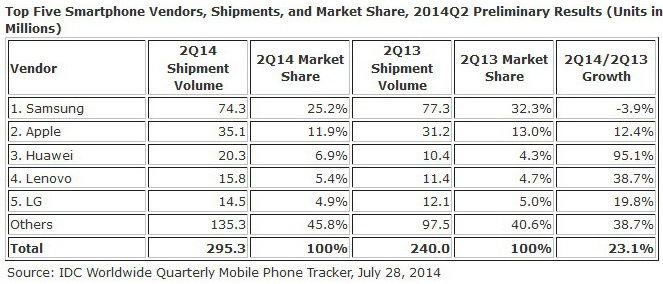
Smartphone Marktanteile Q2/2014 – Samsung und Apple verlieren, Huawei gewinnt deutlich

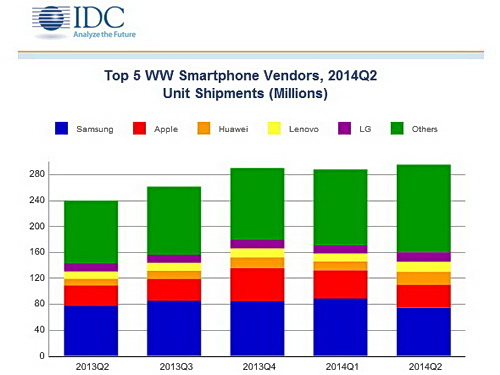
Im Ranking der weltweiten Top 5 der größten Smartphone-Hersteller müssen Samsung und Apple einige Marktanteile an die Konkurrenz von Lenovo und LG Electronics abgeben. Der große Gewinner beim globalen Absatzvolumen heißt Huawei.

IDC_WW_Quarterly_Mobile_Phone_Tracker_280714

Die Chinesen jagen Apple und Samsung im Geschäft mit Smartphones deutlich Marktanteile ab. Laut den neuesten Zahlen der Marktanalysten von IDC für das vergangene Quartal Q2/2014 bröckelte der Marktanteil des weltweit größten Herstellers Samsung von 32,3 Prozent in Q2/2013 auf nun 25,2 %. Gleichzeitig verkaufte Samsung mit 74,3 Millionen Smartphones um fast 4 Prozent weniger Phones, als im Vergleichszeitraum des Vorjahres (77,3 Mio.).

Insgesamt wurden weltweit im 2. Quartal 2014 fast 300 Millionen Smartphones ausgeliefert. Das ist ein Plus von 23,1 Prozent (Q2/2013: 240 Mio.). Apple behauptet sich im globalen Ranking der Top 5 der weltweit größten Smartphone-Hersteller mit 35,1 Millionen iPhone Smartphones auf Platz 2 und steigerte damit sein Absatzvolumen um 12,4 Prozent (Q2/2013: 31,2 Mio.). Beim Marktanteil verliert Apple aber 1,1 Prozent und hält jetzt statt 13 Prozent noch 11,9 %.

Der große Gewinner im Ranking heißt Huawei. Der chinesische Telekommunikationsriese steigerte sein globales Liefervolumen um 95,1 Prozent, von 10,4 Millionen Smartphones auf 20,3 Mio. Geräte: Platz 3. Der Marktanteil von Huawei beträgt jetzt 6,9 Prozent (Q2/2013: 4,3 %). Auch für Lenovo auf Rang 4 lief das 2.Quartal 2014 gut: Absatzsteigerung um 38,7 Prozent von 11,4 auf 15,8 Millionen Phones und 5,4 Prozent Marktanteil (zuvor 4,7 %).

Für den südkoreanischen LG Electronics Konzern bleibt mit 14,5 Millionen (Q2/2013: 12,1 Mio.) und einem Marktanteil von nun 4,9 Prozent (Q2/2013: 5 %) Position 5. Die Verkäufe für das neue und sehr populäre Smartphone-Flaggschiff LG G3 werden sich IDC zufolge erst im 3. Quartal in den Absatzzahlen widerspiegeln.

All the Apps and Services Apple Just Tried to Make Obsolete

Os-x-yosemite
Apple senior vice president of Software Engineering Craig Federighi speaks in front of a screen for the Yosemite operating system at the Apple Worldwide Developers Conference in San Francisco, Monday, June 2, 2014.
Image: Jeff Chiu/Associated Press
Apple gave developers a much-anticipated first look at iOS 8 and OS X 10.10 during Monday’s keynote presentation at the company’s annual World Wide Developers Conference.

The company unveiled an array of new and revamped features that will be coming to OS X and iOS — many of which may have looked a little familiar to those already used to popular third-party apps and services.

From messaging to fitness tracking to Google searches, here’s a look at some the apps and services Apple seems to be taking head-on with iOS 8 and OS X Yosemite.

Cloud storage platforms

Apple announced iCloud Drive, a cloud-based file management system that will be available on iOS 8 and OS X Yosemite, which will also work with third party apps and will run on Windows 8. Files stored in iCloud Drive can be viewed across devices and edits are automatically synced to the cloud do you can easily pick up where you left off.

hero_hero

Image: Apple

Sound familiar? That’s because the system is very similar to Dropbox, Google Drive, Box, Microsoft’s OneDrive and pretty much every other cloud storage platform, though Box’s CEO, Aaron Levie, seems to be excited about the move. Apple also announced new pricing more in line with its cloud storage competitors— 20 GB will cost $0.99 a month while 200 GB will be $3.99.

Messaging apps

Messages, the most-used iOS app, is getting a huge overhaul in iOS 8 that borrows many features from some of the most popular third-party messaging apps. As if Snapchat didn’t have enough to worry about lately, Apple seems to be taking some cues from the disappearing messages app.

Photos and videos will now automatically disappear from message threads, unless actively saved. Additionally, the gesture-based controls for recording audio messages are not unlike those used in the video chatting features that debuted in Snapchat’s most recent update.

Screen-Shot-2014-06-02-at-3.23.23-PM-640x493

Messages is also getting voice messaging and the ability to mute or leave group threads, all of which are features already available in other popular messaging apps, including WhatsApp.

WhatsApp CEO Jan Koum has already expressed his displeasure with Apple over some of its new messaging features, though he did not elaborate on which ones.

Apple is also taking on apps like Google Voice and Skype with the ability to make phone calls from the desktop in Yosemite.

Photo editors

Apple’s new Photos app, includes an array of new smart editing tools. While you can still control things like levels, brightness and contrast independently, the new features allow you to adjust all of these at once to the optimum level with just one swipe.

apple-photos1

Image: Apple

This is similar to many image editing apps that have features to automatically enhance and correct photos like Camera+, Afterlight and many others. Apple’s version will have an additional advantage though because all changes made within Photos will be synced with iCloud so the edited images will be available in real time across all of your devices.

Fitness trackers

Though we didn’t see the long-rumored iWatch during the keynote, Apple’s Health app, is still taking on the fitness tracking space.

Apple_Health
Apple Senior Vice President of Software Engineering Craig Federighi speaks during the Apple Worldwide Developers Conference at the Moscone West center on June 2, 2014 in San Francisco, California.

The app will monitor all of your health-related information in one place, including stats from fitness tracking apps, and work with third-party apps like Nike+.

Google Now, Google searches

Apple’s Spotlight Search is being revamped for both iOS 8 and Yosemite. Not only will Spotlight search for content stored locally on your device, it will search Wikipedia, maps, news, movie showtimes and iTunes and App Store content.

Screen Shot 2014-06-02 at 3.42.44 PM

Image: Apple

The new Spotlight also opts for Bing over Google for web searches in Yosemite. (It appears Spotlight searches in iOS 8 will continue to use Google, for now.) This change has already caused some to speculate whether Apple may be working on its own Siri-powered search engine.

Of course, whether or not Apple’s versions of these apps will eventually overshadow their third-party counterparts depends on how well they actually work. Apple has been known to epically miss the mark when it comes to launching new apps — Apple Maps is only just now enjoying a comeback, after a catastrophic rollout in 2012. But if Maps has taught us anything it’s that Apple tends to get it right eventually, and when it does, it sticks.

Source: http://mashable.com/2014/06/02/apps-apple-made-obsolete-wwdc

Displays mit taktilem Feedback – Elektroaktive Polymere (EAPs) machen es möglich

Elektroaktive Polymere (EAPs)

„Tactus Technology is the developer of a new tactile user interface for touch-screen devices. Tactus provides a new dimension of user interface with a fundamentally unique solution: application-controlled, completely transparent physical buttons that rise up from the touch-screen surface on demand. With the buttons enabled, users can push and type or rest their fingers as they would with any physical button or keyboard. When the buttons are disabled, they recede into the screen, becoming invisible and leaving a smooth, seamless flat touch-screen with maximum viewing area.“

„Elektroaktive Polymere sind weich, dehnbar und sie können elektrische Signale in mechanische wandeln – oder umgekehrt. Die Forscher unterschieden zwei Hauptklassen: ionische (feuchte) und elektrische EAPs.

-Zu den ionischen oder feuchten EAPs zählen Hydro-Gele, leitfähige Polymere oder auch ionische Polymer-Metall-Komposite. Sie enthalten wässrige Elektrolyte, die für den Betrieb zuverlässig gekapselt werden müssen. Die Dehnung bei Anlegen elektrischer Spannung funktioniert – wie es der Name schon sagt – per Ionentransport. Vorteil gegenüber elektrischen EAP: Niedrigere Steuerspannungen, höhere übertragene Drücke (> 100 MPa), dafür aber deutlich geringere Dehnungen und erhöhter Fertigungsaufwand.

-Bei elektrischen EAPs dehnt sich der Polymer durch elektrostatische Effekte. Dafür wird elektrische Spannung angelegt, unter der sich Elektroden und Elastomer verformen. Hier sind deutlich höhere Spannungen von einigen 100 V bis zu einigen kV vonnöten und die übertragenen Drücke sind mit einigen 10 MPa geringer. Dafür muss nicht gekapselt werden und sie dehnen sich unter Spannung um das Doppelte bis Dreifache ihres Ausgangszustandes.“

Quelle:
http://www.vdi-nachrichten.com/artikel/E-Muskeln-statt-E-Motoren/57331/1
http://www.tactustechnology.com/technology.html

Microsoft präsentiert Surface Tablet

Der dritte im Bunde (neben Apple mit IOS und Google mit Android) präsentiert mit dem Betriebssystem Windows 8 Surface ein Tablet mit integrierter Tastaturhülle.

Zwei Varianten werden angeboten. Das stärkere Angebot beinhaltet Windows 8 Pro, ist ein ziemlicher Riegel mit 903 g, und einer Dicke von 13.5 mm, beinhaltet jedoch ein 10.6” ClearType Full HD Display und einen leistungsfähigen Akku mit 42 W-h, microSDXC, USB 3.0, Mini DisplayPort Video, Ports. Eine integrierte 2×2 MIMO antenne, lässt sich auch per Stift bedienen. 64 GB, 128 GB Speicher sind inklusive.

Die Welt im Jahr 2019 – 12 neue Innovationen um die Welt zu verändern

Microsoft’s Zukunft in einem wunderschön gestalteten Werbevideo mit folgenden 12 Innovationen zum Ansehen und dem passenden Video dazu.


„Smart Eyeglasses“

Gläser, die ganz nebenbei auch den „Universal Translater“ Babelfish à la Douglas Adams beinhalten.


„Interaktive Video Wände“
Interaktive Musiker oder Bettler – Microsoft macht’s möglich.
Nicht mehr nur reale Hilfsbedürftige sollen Spenden erhalten, sondern virtuell ausprogrammierte Videowände.


„Smarte Visitenkarten“


„Intelligtente Wände auch im Fahrzeug“


„Vernetzte Flipboards“


„Arbeitsflächen, nahtlos miteinander integriert“

„Interaktives Papier“

extrem dünne Smartphones


„Schlaue Kühlschränke“

Online-Check-In für das Hotel


„extrem dünne Tablets“ – mit Holographie-Technik


und zum Nachlesen: http://mashable.com/2011/10/27/microsoft-near-future-video/#view_as_one_page-gallery_box2861

Smartphonesteuerung (nächster Song, Anruf annehmen) durch Biegen? Nokia machts möglich

Nokia und Microsoft zeigen auf der Nokia World in London, wie die nächste Benutzersteuerung von Mobiltelefonen aussehen könnte.

Beachtenswert ist dass das Display den Grad der Verbiegung interpretieren kann, und so zum Beispiel Song wechseln, Album wechseln, einen ankommenden Ruf lautlos stellen, bzw. in durch stärkeres Verbiegen auf den Anrufbeantworter legen kann.