Martin Casado is a legend in his corner of the tech world for inventing a technology that radically alters the way computer networks are built.
He invented the tech while he was a doctoral student at Stanford. He took that invention and two of the professors advising him, Nick McKeown from Stanford and Scott Shenker from the University of California, Berkeley — legends in their own right — and founded a startup. It was called Nicira, and it was backed by venture capitalists like Andreessen Horowitz’s a16z.
„Nicira launched into the networking industry like a cannonball hitting placid water,“ Marc Andreessen, the founder of a16z, wrote of Nicira and of Casado. That’s true.
The company was quietly founded in 2007 but didn’t officially launch until early 2012. Five months later, it sold to VMware for a stunning $1.26 billion. And the network industry has never been the same.
After staying with VMware for a few years, Casado left in early 2016 to become a VC with a16z. But the interesting thing is that he doesn’t think of himself as a runaway success, but as someone who got good at failure.
Or so he told the 2017 graduating class at his first alma mater, Northern Arizona University, where he spoke after receiving an honorary doctorate on May 13.
„When I was standing where you are, I wanted to be the world’s best computational physicist,“ Casado told the crowd. „And soon after, I wanted to be the world’s foremost cyber-policy expert. But instead, I went to grad school, and then I wanted to be the world’s best academic. And I certainly didn’t accomplish that.“
He added: „I only found computer science because I couldn’t hack it as a physicist and then I failed as a microbiology student. I made many, many missteps as the first-time founder of a company.“
Casado’s speech was short, sweet, funny, and profound.
Casado is considered the father of SDN.VMware
I heard it because I was in the audience that day, proudly watching my daughter graduate with a degree in astrophysics. (Notice how I slipped in that motherly brag?) While I’m insanely proud of my kid, I’m also biting my nails over what her degree will lead to.
She doesn’t want to go to grad school right now. And although she knows forms of math that I didn’t even know existed, what kind of career will she have? I don’t know, and neither does she.
But Casado’s speech flipped my view on it. He offered four solid bits of advice to students, which is good advice for anyone, at any age.
1. ‚You’re unlikely to achieve your goals.‘
No one can predict the future, and when you’re on the path to a goal, a better goal „is likely to smack you while you’re looking the other way,“ Casado said, „and you’d be an idiot not to follow it.“
His advice is to „take some fraction of that effort and work on being open to change and to opportunity“ while working toward your goals.
If he hadn’t been open to change in his career, he may never have invented an industry-changing technology.
2. ‚You are going to fail. A lot. It’s inevitable.‘
He suggests that it is failure, not progress, that indicates whether you are living up to your potential.
If you are failing, you are pushing yourself and „not stalling your own progress by hiding,“ he said.
The true skill, then, is „to learn to embrace failure — not only embrace failure, get good at it, and by that I mean get back up, apply what you’ve learned, and hit reset.“
3. ‚No one really knows what contributes to success.‘
Every person is unique, and that means what’s right for another isn’t always right for you. When it comes to advice, listen to the parts that ring true for you and disregard the rest.
„You’re going to take one path out of an infinite number of possibilities,“ Casado said. „And you’re going to navigate it your way.“
4. ‚The universe is a messy place.‘
If there is a secret to life, happiness, and success, it’s this: „The opportunity is hidden in the sloppiness. If you hold too hard to specific ideas of where you want to go, or what the landscape will look like, or what the world will provide you, I can guarantee you’ll be disappointed.“
Here is the full transcript of his speech. The video is below if you’d rather listen.
„Graduates, I am deeply honored to have a few minutes with you. So let me first thank you for the opportunity and your attention.
„Right now, this moment is one of the most significant inflection points in your life. And perhaps not in the way you’d expect. So if you’ll indulge me, I’d like to explain why.
„Getting to this point, this space we’re all sharing right now, has taken a tremendous amount of work and dedication, no doubt. And for that, I applaud you, and you have my deepest respect.
„However, a university education, no matter how windy, is a path with a clear goal. It was challenging, sure. Yet generally the objective was pretty obvious: work hard and get the hell out.
„All of that is about to change.
„Almost two decades ago I was standing where you are now. I was nervous. I was excited. And I was largely over it.
„And so I took that proverbial step. And very quickly, I realized that where I landed was very, very different from where I left.
„It was as if I stepped off of a narrow path and into a city. And unlike my university experience, there was no clear goal. There wasn’t a defined string of classes or tests I had to pass. There was no notion of a start or finish.
„Instead, there was a vast, vast collection of opportunities and perils — infinite routes to infinite locations, and none of which I really understood. You could choose to stop or move at any time with equal chance of benefit or loss.
„And I found that none of my experiences really prepared me to navigate such a wide open space. There were no platitudes, no cliches, no quippy one-liners that provided clear and useful guidance. It wasn’t just about working hard and setting goals. It wasn’t just about perseverance or having a positive attitude. I knew how to do all those things. This new space required something far different.
„So with that backdrop, I’d like to offer you some advice — lessons that no one would be able to put on a motivational poster and keep their job, lessons to keep in mind as you take this next step into the chaos.
„First: You’re unlikely to achieve your goals. Really, it’s very unlikely. When I was standing where you are, I wanted to be the world’s best computational physicist. And soon after, I wanted to be the world’s foremost cyber-policy expert. But instead, I went to grad school, and then I wanted to be the world’s best academic. And I certainly didn’t accomplish that.
„You’re unlikely to achieve your goals. The reason is that you probably don’t realize how many amazing opportunities are out there and how much you’ll enjoy them. You are unlikely to achieve your goals, because a better one is likely to smack you while you’re looking the other way, and you’d be an idiot not to follow it.
„So my guidance to you is as much as you work toward your goals, take some fraction of that effort and work on being open to change and to opportunity.
„Second: You are going to fail. A lot. It’s inevitable. I only found computer science because I couldn’t hack it as a physicist and then I failed as a microbiology student. I made many, many missteps as the first-time founder of a company.
„You are going to fail because you’re going to be navigating a shifting landscape with a lot of things not under your control. You’re going to fail because the goals are going to change or be unclear. You’re going to fail because you’ll start something and realize it’s not what you want to do.
„And here’s the key: Failing will be your only true measure of progress. It’s inevitable. The system you’re about to walk into is simply too dynamic and too poorly defined for you not to.
„And so my guidance to you is to learn to embrace failure — not only embrace failure, get good at it, and by that I mean get back up, apply what you’ve learned, and hit reset.
„Third: No one really knows what contributes to success. Not me. Not some business guru or some pundit on the news. No one. And that’s particularly true for your success — yours. Here’s the reality: Every one of you is a beautiful collection of amazing qualities and strengths. Unique in all the universe you. And you’re going to take one path out of an infinite number of possibilities. And you’re going to navigate it your way.
„So right here, I grant you permission to summarily ignore the nonsense of others. Take advice as input, sure, but check it against your absolutely unique perspective and qualities to bring to a problem.
„You do you, boo.
„For what it’s worth, of all the advice I’ve given you, this last request will probably be the most difficult. I know you can work hard. I know you’re all smart and capable and resourceful. But I don’t know how well you know yourself. I certainly didn’t when I graduated. And it took a lot of inquiry and a lot of failure and a lot of false starts to begin to figure it out.
„In the words of Dr. Seuss, that he actually didn’t write and I totally made up, ‚You can’t do you, boo, if you don’t know you.‘
„OK, let me take a step back. Here’s where all of this is leading.
„The universe is a messy place. And the real trick going forward is to acknowledge that and to embrace it. The opportunity is hidden in the sloppiness. If you hold too hard to specific ideas of where you want to go, or what the landscape will look like, or what the world will provide you, I can guarantee you’ll be disappointed.
„And it’s exactly because the beauty is in the chaos. What have I asked of you?
One, focus on being open to change, because although you’re all beautiful and bright and creative individuals, the opportunities are for more wondrous than you can possibly conceive.
„Two, fail. It’s the only way you know that you’re riding the chaos and are not stalling your own progress by hiding.
„Three, no one knows what’s best for you, because really, it’s unknowable. So ignore the pundits and do it your way.
„And to do that, know yourself. Because really, this journey is for you. And your priorities. And for those you care about. With that, I’ll leave you with a quote, and this one I didn’t make up.
„It’s from the Ashtavakra Gita:
Let the waves of the universe
rise and fall as they will.
You have nothing to gain or lose.
You are the ocean.
„Thank you very much, and again, many congratulations.“
MICROSOFT WILL BUILD computers even more sleek and beautiful than Apple’s. Robots will 3-D-print cool shoes that are personalized just for you. (And you’ll get them in just a few short days.) Neural networks will take over medical diagnostics, and Snapchat will try to take over the entire world. The women and men in these pages are the technical, creative, idealistic visionaries who are bringing the future to your doorstep. You might not recognize their names—they’re too busy working to court the spotlight—but you’ll soon hear about them a lot. They represent the best of what’s next.
Put Humans First, Code Second
Parisa Tabriz
Browser Boss | Google Chrome
As head of security for Google Chrome, Parisa Tabriz has spent four years focusing on a vulnerability so widespread, most engineers act as if it doesn’t exist: humanity. She has pushed her 52-person team to grapple with problems once written off as “user errors.” They’ve made key changes in how the browser communicates with people, rewriting Chrome’s warnings about insecure network connections at a sixth-grade reading level. Rather than depending on users to spot phishing schemes, the team is exploring machine-learning tools to automatically detect them. And they’re starting to mark sites as “not secure” if they don’t use HTTPS encryption, pressuring the web to secure itself. “We’ve been accused of being paternalistic, but we’re in a position to protect people,” she says. “The goal isn’t to solve math problems. It’s to keep humans safe.” Tabriz, whose father is Iranian, has also made a point of hiring engineers from other countries—like Iran—where state internet surveillance is an oppressive, everyday concern. “You can’t keep people safe if you don’t understand those human challenges around the world.” —Andy Greenberg
Wall Street Can Run on Collaboration, Not Competition
Richard Craib
Founder | Numerai
Wall Street is capitalism at its fiercest. But Richard Craib believes it can also be a place for friendly collaborations. His hedge fund, San Francisco–based Numerai, relies on artificially intelligent algorithms to handle all trades. But the 29-year-old South African mathematician doesn’t build these algorithms himself. Instead, his fund crowdsources them from thousands of anonymous data scientists who vie for bitcoin rewards by building the most successful trading models. And that isn’t even the strangest part.
Ultimately, Craib doesn’t want these data scientists to get overly competitive. If only the best modelers win, they have little incentive to recruit fresh talent, which could dilute their rewards. Competitors’ self-interest winds up at odds with getting the best minds, no matter who they are, working to improve the fund. To encourage cooperation, Craib developed Numeraire, a kind of digital currency that rewards everyone when the fund does well. Data scientists bet Numeraire on algorithms they think will succeed. When the models work, Numeraire’s value goes up for everyone. “I don’t want to build a company or a startup or even a hedge fund,” Craib says. “I want to build a country—a place where everyone is working openly toward the same end.” —Cade Metz
Microsoft Will Outdesign Apple
Kait Schoeck
Industrial Designer | Microsoft
Kait Schoeck wasn’t really supposed to end up at Microsoft. She had enrolled at the Rhode Island School of Design in 2009 with plans to be a painter, or maybe an illustrator. “I didn’t know industrial design actually existed,” she says. That changed in school, where she switched majors and eventually caught Microsoft’s attention. The company liked her unusual portfolio—there wasn’t much in it about computers. Now she’s one of the designers working on Microsoft’s Surface products, helping the company achieve what for decades has seemed impossible: outdesigning Apple. Because Schoeck and her team aren’t bogged down by decades of PC-design baggage, they freely break with convention. And because their desks are a few feet from a machine shop, they can build whatever they dream up. “Being able to hold the products we make—that’s when you really know what works,” Schoeck says. Early in her time at Microsoft, she coinvented the rolling hinge that makes the detachable Surface Book possible; her team has also found ways to make touchscreen laptops feel natural, to build tablets that really can replace your laptop, and to turn the old-school desktop PC into something more like a drawing table. Thanks to designers like Schoeck, Microsoft’s machines aren’t just brainy anymore—they’re beautiful too. —David Pierce
Frugal Science Will Curb Disease
Manu Prakash
Founder | Foldscope Instruments
While visiting rabies clinics in India and Thailand, Manu Prakash made a damning realization: In remote villages, traditional microscopes are useless. Cumbersome to carry and expensive to maintain, the finely tuned machines are often relegated to a dusty lab corner while medical providers diagnose and treat patients in the field. So the Stanford bioengineer set out to build what he calls “the pencil of microscopy”—a high-performing tool that’s lightweight, durable, and cheap. In 2014 his lab unveiled the Foldscope, an origami-like paper microscope that magnifies objects up to 2,000 times but costs less than $1 to produce. “We quickly realized that writing scientific papers about it wasn’t good enough,” Prakash says. He turned his lab into a mini Foldscope factory, giving away microscopes to anyone who asked. Within a year, the lab had shipped 50,000 of them to users in 135 countries, from Mongolia to rural Montana; this year it aims to donate 1 million. An eager army of DIY scientists has used the tool to identify fake drugs, detect diseased crops, spot counterfeit currency, and more. Earlier this year, Prakash’s lab introduced the Paperfuge, a 20-cent centrifuge inspired by an ancient spinning toy, which can be used to diagnose diseases like malaria. Prakash’s cheap, cleverly designed devices prove that when it comes to public health problems, the high tech (high-cost) solution isn’t always the best fix. Consider his lab’s latest achievement, a method of identifying mosquito species by recording their wing beats. The apparatus required? A flip phone. —Lauren Murrow
TV Ad Dollars Will Get Snapped Up
Jeff Lucas
VP and Global Head of Sales | Snap
In March, Snap’s public stock offering became the third-largest tech IPO of all time, raising $3.4 billion. Now it just needs to make money. As of January 2017, the six-year-old multimedia app had lost $1.2 billion, nearly half of that in 2016 alone. Its growth rate is slowing too: After averaging more than 15 million new daily users in each of the first three quarters of 2016, it added just 5 million in the fourth quarter. So last summer, the company poached media industry veteran Jeff Lucas, former head of sales at Viacom. In the wake of Snap’s IPO, he’s been tasked with backing up the brand’s billion-dollar hype with measurable profits. To do that, he’ll need to ward off copycat competitors like Instagram’s Stories and WhatsApp’s Status—direct descendants of Snapchat Stories, a series of snaps strung together chronologically—and lure ad spending away from Facebook and TV networks. He’s reportedly in talks with marketing agencies like Publicis Groupe, WPP, and Omnicom Group to land deals of $100 million to $200 million. In a crowded industry competing for advertising dollars, Lucas will be instrumental in getting those gatekeepers to open their coffers for Snap. —Davey Alba
SOURCE: EMARKETER
Encryption Alone Is Not Enough
John Brooks
Programmer | Ricochet
Thanks to messaging services like WhatsApp, Signal, and Apple’s iMessage, end-to-end encryption isn’t just for spies and cypherpunks anymore; it’s become nearly as standard as emoji. But sometimes an unbroken channel of encryption between sender and receiver isn’t enough. Sure, it hides the content of messages, but it doesn’t conceal the identities of who’s writing to whom—metadata that can reveal, say, the membership of an organization or a journalist’s web of sources. John Brooks, a 25-year-old middle school dropout, has created an app that may represent the next generation of secret-sharing tools: ones that promise to hide not just your words but also the social graph of your connections.
His chat app, called Ricochet, builds on a feature of the anonymity software Tor that’s rendered sites on the dark web untraceable and anonymous for years. But instead of cloaking web destinations, Ricochet applies those stealth features to your PC: It turns your computer into a piece of the darknet. And unlike almost all other messaging apps, Ricochet allows conversations to travel from the sender’s computer to the recipient’s without ever passing through a central server that can track the data or metadata of users’ communications. “There’s no record in the cloud somewhere that you ever used it,” Brooks says. “It’s all mixed in with everything else happening in Tor. You’re invisible among the crowd.” And when invisibility is an option, plain old encryption starts to feel awfully revealing. —Andy Greenberg
Silicon Valley Can Spread the Wealth
Leslie Miley
President, West Coast | Venture for America
Silicon Valley generates astronomical levels of wealth. But you’d be hard-pressed to find the spoils of the tech industry extending far beyond the Bay Area, much less to Middle America. Leslie Miley wants to change that. Early this year he left his job as a director of engineering at Slack to launch an executive-in-residence program at Venture for America. The project is designed to foster the building of tech businesses in emerging markets like Detroit and Baltimore. Starting this September, the residency will place Silicon Valley execs in yearlong stints in several of the program’s 18 innovation hubs, where they’ll advise area startups. The idea is that having well-connected leaders in such places may give local talent ties to Silicon Valley and inspire startups to set up shop in those cities. According to Miley, the program was fueled by industry-wide anxiety following the 2016 election. “Tech enabled people to stay in their echo chambers,” Miley says. “We’re partially responsible.” Not just by building non-inclusive platforms, he says, but by overlooking large swaths of the country in the hunt for talent. —Davey Alba
RIGGEN-RANSOM Managing Editor | Alexa Personality team
Behind your high tech digital assistant is a band of liberal arts majors. A trio of women shape the personality of Amazon’s Alexa, the AI-powered device used by tens of millions of consumers worldwide: Michelle Riggen-Ransom, who has an MFA in creative writing, composes the bot’s raw responses; Farah Houston, a psychology grad specializing in personality science, ensures that those responses dovetail with customers’ expectations; and Beth Holmes, a mathematician with expertise in natural language processing, decides which current events are woven into Alexa’s vocabulary, from the Super Bowl to the Oscars. “The commonality is that most of us have been writers and have had to express humor in writing,” Houston says. Riggen-Ransom oversees a group of playwrights, poets, fiction authors, and musicians who complete weekly writing exercises that are incorporated into Alexa’s persona. (The bot’s disposition is broadly defined in a “personality document,” which informs the group’s responses.) The content is then workshopped among the team; much of it ends up on the cutting room floor. Alexa’s temperament can swing from practical and direct to whimsical and jokey. The art is in striking the right balance, especially when it comes to addressing sensitive topics. “Our overall approach when talking to people about politics, sex, or religion has been to divert with humor,” Houston says. But thanks in part to her female-led team, the bot won’t stand for insults. “We work hard to always portray Alexa as confident and empowered,” Houston says. It takes a village to raise a fake lady. —Davey Alba
Hard Data Can Improve Diversity
Laura I. Gómez
Founder | Atipica
Three years ago, Laura Gómez was participating in yet another diversity-in-tech panel, alongside representatives from Facebook and Google, when she snapped. “This is not a meritocracy, and we all know it,” the Latina entrepreneur announced. “This is cronyism. A Googler gets hired by Twitter, who gets hired by Facebook. Everyone is appointing their friends to positions of authority.” (As someone who has worked at Twitter, YouTube, and Google, she should know.) The breakthrough inspired Gómez to found Atipica, a recruiting software company that sorts job applicants solely by their skill set. That policy may seem obvious, but recruiters are prone to pattern-matching in accordance with previous hires—giving preference to, say, Stanford-schooled Google engineers. Atipica isn’t designed to shame tech CEOs about their uber-white open offices; rather, it presents hard data, judgment-free. The company’s software—which draws on information from public, industry, and internal sources—reveals the type of person most likely to apply for a job, analyzes hiring patterns, and quantifies the likelihood that certain kinds of candidates will accept job offers. It also resurfaces diverse candidates for new job postings they’re qualified for, a strategy that has led thousands of applicants to be recontacted. Last fall, Atipica raised $2 million from True Ventures, Kapor Capital, Precursor Ventures, and others. For Gómez, a Mexican immigrant who was undocumented until the age of 18, the work is personal. “My mother was a nanny and a housekeeper for people in Silicon Valley,” she says. “My voice is the voice of immigrants.” Her company’s success shows that the struggle to diversify tech will be won not by indignant tweetstorms but by data. —Lauren Murrow
Music Will Leave the Studio Behind
Steve Lacy
Musician
Most musicians work in studios, with engineers and producers and dozens of contributors. Steve Lacy works in hotel rooms. Or in his car. One time at a barbershop. Anywhere inspiration strikes, really. And with every unconventional session, Lacy’s proving to the industry that good music doesn’t have to be sparkling and hyperproduced. He dropped his first official solo material in February, a series of songs (he won’t call it an album) made entirely in GarageBand. Lacy plugs his guitar into his iPhone’s Lightning port and sings right into the mic. The whole thing’s a bit shticky, sure, but the point is to show people that the tools you have don’t really matter. He’s no musical lightweight, though. Just 18, he’s already a sought-after producer, making beats with the likes of J. Cole and Kendrick Lamar. Lacy’s own style is a little bit pop, a little bit soul, and a little bit R&B. He calls it Plaid, because it’s a lot of funky patterns you can’t quite imagine together—but somehow it all works. Even he doesn’t always understand why, but he knows it does. Kendrick Lamar told him so. —David Pierce
SOURCE: RIAA
Microbiology Gets a Little Intelligent Design
Christina Agapakis
Creative Director | Ginkgo Bioworks
For a biologist, Christina Agapakis has an unusual role. At Ginkgo Bioworks, a Boston biotech firm that tweaks yeast and bacteria to create custom organisms for everything from fermentation to cosmetics, Agapakis is a bridge between the technical and creative sides of the business. She works with clients like food conglomerates to figure out how they can use engineered microbes to make their products better, cheaper, and more sustainable. Recently, French perfumer Robertet enlisted Ginkgo’s organism designers to create a custom yeast that could replicate the smell of rose oil. To do that, the designers inserted the scent-producing genes from roses into yeast, which produced floral-smelling compounds—no expensive rose petals necessary. Agapakis then worked with the company’s perfumers to develop new fragrances using this novel substance. “A lot of what I do is think about what this new technology can enable creatively,” she says. Biotech companies are learning that success requires more than good science—it takes imaginative thinking too. —Liz Stinson
Tech Workers, Not CEOs, Will Drive Real, Positive Change
Maciej Ceglowski
Founder | Pinboard
A tweet by @Pinboard reads, “Silicon Valley lemonade stand: 30 employees, $45 million in funding, sells $9 glasses of lemonade while illegally blocking sidewalk.” The account belongs to a bookmarking site founded by Polish-born web developer Maciej Ceglowski. Though he established the handle in 2009 intending to offer product support, Ceglowski now uses the account to gleefully skewer Silicon Valley to 38,700 Twitter followers. Since the presidential election, the developer’s criticism of his own industry has taken a more trenchant tone, energizing a new wave of tech activists. (On Facebook’s refusal to cut ties with Trump supporter Peter Thiel, he tweeted: “Facebook has a board member who heard credible accusations of sexual assault and threw $1.25M at the perpetrator. That requires comment.”) In December, thousands of tech employees signed an @Pinboard-championed pledge at Neveragain.tech, refusing to utilize their companies’ user data to build a Muslim registry. Last year, Ceglowski founded Tech Solidarity, a national group that meets to devise methods of organizing. The effort has become high-profile enough that even C-suite execs, like Facebook’s chief security officer, Alex Stamos, now attend. For all his trademark snark, Ceglowski maintains that his goal is to foster a more conscientious tech industry. He hopes that Tech Solidarity can develop an industry-wide code of ethics in the coming months—“move fast and break things” needs an update, he says—and eventually lead employees to unionize. He believes the best way to exert influence over powerful tech companies is from the inside out: by empowering their workers. —Davey Alba
China Will Lead the Tech Industry
Connie Chan
Partner | Andreessen Horowitz
Connie Chan has a master’s degree in engineering from Stanford, where her classmates were Facebook’s future first employees. She thought that she knew what tech’s leading edge looked like. Then she went to China and discovered she had no idea. On massively popular messaging apps like WeChat, people did way more than just talk. They got marriage licenses and birth certificates, paid utilities and traffic tickets, even had drugs delivered—all in-app. Tech companies in the US, she realized, could no longer take it for granted that they led while the world followed; the stereotype that China’s tech companies are just copycats is obsolete. “If you study Chinese products, you can get inspiration,” Chan says. As a partner at Andreessen Horowitz, she now specializes in helping American startups understand just how much they have to learn as China’s tech industry races ahead of the US in everything from messaging to livestreaming (now a $5 billion market). No matter the protectionist rhetoric coming from the Trump administration, US tech firms see billions of dollars to be made in China, and vice versa. As these two financial giants play overseas footsie, Chan acts as a facilitator. “I spend so much time teaching people what they can’t see,” she says. It won’t stay invisible for long. —Marcus Wohlsen
SOURCES: RHODIUM GROUP; 2016 U.S. DATA: XINHUA NEWS AGENCY
Need Help Choosing a Wine? There’s a DNA-Based App for That.
James Lu
Senior VP of Applied Genomics | Helix
Advances in genetic sequencing mean that labs can now—quickly and cheaply—read millions of letters of DNA in a single gob of spit. Genomics researcher James Lu and his team at Helix (buoyed by $100 million in funding led by Illumina, the largest maker of DNA sequencers) are harnessing that information so you’ll be able to learn a lot more about yourself. How? There’s an app for that. First Helix will sequence and store your entire exome—every letter of the 22,000 genes that code for proteins in your body. (The technology uncovers much more data than genotyping, the process used by companies like 23andMe, which searches only for specific markers.) Then Helix partners will create apps that analyze everything from your cancer risk to, they say, your wine preferences, ranging from a few dollars to a few hundred dollars a pop. “Where one person may be interested in inherited diseases, someone else cares about fitness or nutrition,” Lu says. “We work with developers to provide better products and context for your genetic information.” Helix’s first partners include medical groups like the Mayo Clinic and New York’s Mount Sinai Hospital, which are developing genetic-education and health-related apps, and National Geographic, which offers an app that uncovers your ancestors’ locations and migration patterns going back 200,000 years. Lu imagines future collaborations with, say, a travel service that plans your vacation itinerary based on your genealogy or a food delivery service that tailors menus to your metabolic profile. The project opens new markets for genetic research—and entirely new avenues of self-absorption for the selfie generation. —Lauren Murrow
SOURCE: NATIONAL HUMAN GENOME RESEARCH INSTITUTE
Techies Should Serve Their Country
Matt Cutts
Acting Administrator | United States Digital Service
Matt Cutts could easily have left his job at the US Digital Service after Inauguration Day—as many other Obama staffers did. His wife wasn’t in Washington, and neither was his main gig as Google’s chief spam fighter. But when the time came, he couldn’t walk away. “My heart says USDS,” he wrote to his wife, who eventually joined him in DC.
As a member of the government’s tech task force, Cutts oversaw a team that worked on an online portal for veterans. Had he quit in January, he wouldn’t have seen two USDS initiatives—services for the Pentagon and the Army—through to completion. “The organization deserves to have someone who can help preserve its mission,” Cutts says. It also needs someone who can convince Silicon Valley types that managing the president’s Twitter feed isn’t the only tech job in government. Cutts, who avoids talking politics, has begun recruiting friends in the industry, telling them that no matter whom they voted for, “once you see the sorts of issues you can tackle here, it tends to be pretty addictive.” And you really can change the world (slowly). —Issie Lapowsky
Robots Will Make Fast Fashion Even Faster
Gerd Manz
VP of Future Team | Adidas
Cookie-cutter kicks aren’t good enough for Gen Z sneakerheads. They want customization, and they want it fast. “They get annoyed if it takes three seconds to download an app,” says industrial engineer Gerd Manz, who oversees technology innovation at Adidas. So he is heading up the company’s ambitious new manufacturing facilities—pointedly dubbed Speedfactories—staffed not by humans but by robots. The sportswear giant will start production in two Speedfactories this year, one in Ansbach, Germany, and another in Atlanta, each eventually capable of churning out 500,000 pairs of shoes a year, including one-of-a-kind designs. Thanks to tech like automated 3-D printing, robotic cutting, and computerized knitting, a shoe that today might spend 18 months in the development and manufacturing pipeline will soon be made from scratch in a matter of hours. And though the Speedfactories will initially be tasked with limited-edition runs, Manz, a sort of sneaker Willy Wonka, predicts that the complexes will ultimately produce fully customizable shoes. (You’ll even be able to watch a video of your own pair being made.) “It doesn’t matter to the Speedfactory manufacturing line if we make one or 1,000 of a product,” Manz says. The robot factories of the future will fulfill consumers’ desires: It’s hyper-personalization at a breakneck pace. —Lauren Murrow
Artificial Intelligence Will Help Doctors Do Their Jobs Better
Lily Peng
Product Manager | Google Brain
In 2012, Google built an artificial intelligence system that could recognize cats in YouTube videos. The experiment may have seemed frivolous, but now Lily Peng is applying some of the same techniques to address a far more serious problem. She and her colleagues are using neural networks—complex mathematical systems for identifying patterns in data—to recognize diabetic retinopathy, a leading cause of blindness among US adults.
Inside Google Brain, the company’s central AI lab, Peng is feeding thousands of retinal scans into neural networks and teaching them to “see” tiny hemorrhages and other lesions that are early warning signs of retinopathy. “This lets us identify the people who are at the highest risk and get them treatment soon rather than later,” says Peng, an MD herself who also has a PhD in bioengineering.
She’s not out to replace doctors—the hope is that the system will eventually help overworked physicians in poorer parts of the world examine far more patients, far more quickly.
At hospitals in India, Peng is already running clinical trials in which her AI analyzes patients’ eye scans. In the future, doctors could work with AI to examine x-rays and MRIs to detect all sorts of ailments. “We want to increase access to care everywhere,” she says. By sharing the workload, machines can help make that possible. —Cade Metz
SOURCE: INTERNATIONAL FEDERATION OF ROBOTICS
Microsats Will Democratize Space
Will Marshall
Cofounder and CEO | Planet
The ultrasensitive satellites snapping gloriously hi-res photos of Earth have a major drawback: They can capture only small slivers of the planet at a time. That’s why, earlier this year, a company called Planet launched a fleet of lower-cost, shoebox-sized sats into orbit. They’re capable of shooting Earth’s entire landmass daily—and cost much less than their predecessors to operate. “We hope to enable a wider swath of people who were previously locked out to get access,” says Will Marshall, a former NASA scientist who cofounded Planet in 2010. With eyes in the sky, relief orgs can pinpoint hard-hit places after disasters; corporate farms can monitor their crops; financial companies can see how much mineral comes out of mines; and environmental groups can track deforestation. And once you open the doors to space, others come running—or rocketing—through, at cheaper and cheaper cost. That benefits players big and small, whether they want to fly around the moon or all the way out to Mars.
Ein neuer CDO soll bei den Konzernen oft den „Tanker bewegen und in Schnellboote verwandeln“, schließlich hört und liest man ja überall von Startups, Agil, Dynamik, Disruption und stetiger Veränderung. Da stellt sich doch die Frage (typischerweise an HR)wer erstellt den das JobProfil für einen Job, den es noch nie gab und dessen Ziele so faszinierend unterschiedlich, ja widersprüchlich sind. Schließlich wird jeder seine eigene Vorstellung davon haben, was der künftige CDO „endlich“ angehen soll – fragen Sie doch mal Kollegen aus unterschiedlichen Funktionen!
In der folgenden Liste habe ich einmal einige (Achtung Buzzword-Bingo) zusammengefasst:
Typische CDO Erwartungsperspektiven:
Neue(s)Business Modell(e) finden, entwickeln und bitte gleich den Return on Investment im ersten Jahr sicherstellen
Change Manager(Disruption, Innovation…) der die gesamte Organisation in die neue Arbeitswelt führt
Neue Vertriebs- und Finanzierungskanäle – vom Crowdfunding über Crowdstorming, Crowdworking und Social Marketing
Digital Mindset / Organisationsentwicklung – nachhaltige Veränderung der Unternehmenskultur
Board Coaching / Trainer für die anderen Vorstände
Smart Factory – die intelligente Fabrik, digitalisierte, automatisierte und vernetzte Produktionsumgebungen mit neuen agilen Werkzeugen bis zur Losgröße 1 (zugleich stetig wachsender Fokus auf Service-Orientierung stattfindet – also „nicht-produktion“)
BigData / Analytics / Predictive – alles was man mit Daten, deren Analyse und Vorhersagbarkeit so treiben kann
Rechtsanwalt – Arbeit 4.0, Zusammenarbeit mit Externen, Compliance… siehe unten „illegal“
Neues IT Framework – moderne Softwarearchitekturen, Werkzeuge und Apps einführen
Digitales Vorbild / Botschafter – Sichtbar werden für neuen Arbeitsstil, Führungskultur – am Besten auch nach außen werbewirksam
Digitale Prozesse / Digitale Effizienz – den systemischen Organisationsmotor generalsanieren
Social Media extern – von Arbeitnehmerattraktivität über Recruiting (von natürlich Digital Professionals) bis zu Wirkungsverbesserung durch virales Marketing
Interne Kommunikation und Zusammenarbeit(Enterprise Social Networking)… – die gesamte Belegschaft, inklusive Fabrikarbeiter mobil, vernetzt, zeit- und orts-unabhängig sowie skallierbar in Arbeit 4.0 führen
Diese Liste an Erwartungen ist sicher alles andere als vollständig, soll aber zeigen, dass es nicht einfach ist, das Profil für diese Position so zu definieren, dass der Inhaber überhaupt eine Chance hat Wirkung zu entfalten. Schließlich gilt es neben den fachlichen Aufgaben auch die bestehende Kultur, Politik, Seilschaften etc. kennen zu lernen und dann nachhaltig zu verändern.
Herausforderung: Woher nehmen, diese CDO – eierlegende WollMilchSau?
Wie einer der Headhunter mal so schön formulierte:
„der Kreis derer, die als CDO überhaupt nur annähernd in Betracht kommen, hat den Radius „null““
Es gibt keine Ausbildung zum CDO, typische Karrierewege erzeugen meist „system-stabilisierende“ Vertreter, wer will einem „jungen Wilden“ die Verantwortung über einen Konzern geben. Die Zahl derer, die in ähnlichen Rollen erfolgreich sind, ist äußerst überschaubar – Nachahmung schwierig- und oft auch nicht einfach übertragbar… auch die großen Consulting Riesen sind hier sicher keine Hilfe, da deren Reifegrad hier ähnlich jungfräulich ist (Es gibt keine Blaupausen, die man aus der Schublade ziehen könnte, keine Beweise, kaum Studien die als Handlungsanleitung taugen)
Also wird nach Kompromissen gesucht, das kann dann z.B. so aussehen:
wir nehmen eine(n), der schon Vorstand war/ist … dort findet man kaum Digital Natives (damit ist nicht vorrangig das Alter, vielmehr deren Haltung gegenüber neuen, disruptiven Entwicklungen gemeint, die noch nicht allgemein als erfolgreich, bleibend und wichtig/prägend anerkannt sind), aus Karrieregründen kaum jemanden, der mit Transparenz, Beteiligung und agilen Methoden risikofreudig umgeht
wir nehmen eine(n), der IT kann … wohl einer der häufigsten Fehler, Digitale Transformation mit IT zu verwechseln. Wohl ist ein guter Teil (ca. 20%) mit Software, Tools und IT KnowHow verbunden, der Großteil geht aber um völlig andere (oft sehr IT fremde) Themen – es geht sehr viel um Führung! siehe Liste oben
wir nehmen eine(n), der schon ein Startup erfolgreich gemacht hat … das führt auf beiden Seiten zu großen Enttäuschungen: Freiheit, Sicherheit, Vorgaben, Rahmenbedingungen, Größe, Internationalität… Assimilation garantiert
wir nehmen jemanden, der Karriere machen will und großes Potential zeigt … Wer Karriere machen will ist meist doch recht Regel-konform unterwegs. Wer traut es sich „alles“ in Frage zu stellen bei einem System, in dem er/sie groß werden will? Risikobereitschaft, Fehler machen (dürfen) sind nicht die üblichen Treiber einer erfolgreichen Karriere
wir suchen jemanden von Extern – klar, neue Besen kehren gut… wie sieht es aber mit der damit verbundenen sehr langen Anlaufzeit aus. Kann es sich z.B. ein Automobilkonzern in der heutigen Lage leisten jetzt mit jemandem bei null anzufangen, was die internen Kenntnisse, Netzwerke (oder besser Verstrickungen), Politik, Kultur angeht?
Den „fertigen“ CDO zu finden dürfte also ein schwieriges Unterfangen sein – eine Lösung wäre in meinen Augen mit der aktuellen Priorität zu beginnen und zu versuchen die fehlenden Merkmale zu intern zu entwickeln (ideal parallel mit allen anderen). Neben Kultur, Führung ist sicher „neues, konstantes Lernen“ auf allen Ebenen höchst relevant.
From investor Warren Buffett to tech mogul Jeff Bezos, here’s what some of the world’s richest men and women have to say about money.
“My goal was never to just create a company. A lot of people misinterpret that, as if I don’t care about revenue or profit or any of those things. But what not being just a company means to me is not being just that — building something that actually makes a really big change in the world.” —Mark Zuckerberg, CEO of Facebook
REUTERS/Robert Galbraith
“When a small business grows like eBay did, it has a multiplier effect. It creates other small businesses that supply it with intellectual capital, goods and services.” —Meg Whitman, CEO of Hewlett Packard Enterprise
AP
„I will tell you how to become rich. Close the doors. Be fearful when others are greedy. Be greedy when others are fearful.“ —Warren Buffett, chairman and CEO of Berkshire Hathaway
Mario Tama/Getty Images
„There are very few people in the world who get to build a business like this. I think trading that for some short-term gain isn’t very interesting.” —Evan Spiegel, CEO of Snap Inc., on not selling to Facebook
Steve Jennings/Getty
„The reason I’ve been able to be so financially successful is my focus has never, ever for one minute been money.“ —Oprah Winfrey, business magnate
Mark Metcalfe/Getty Images
“And I think the more money you put in people’s hands, the more they will spend. And if they don’t spend it, they invest it. And investing it is another way of creating jobs. It puts money into mutual funds or other kinds of banks that can go out and make loans, and we need to do that.” —Michael Bloomberg, CEO of Bloomberg LP
REUTERS/Tyrone Siu
„If we were motivated by money, we would have sold the company a long time ago and ended up on a beach.“ —Larry Page, Google cofounder and CEO of Alphabet Inc.
Kimberly White/Getty Images
„I think frugality drives innovation, just like other constraints do. One of the only ways to get out of a tight box is to invent your way out.“ —Jeff Bezos, CEO of Amazon
Chip Somodevilla/Getty
“You always hear the phrase, money doesn’t buy you happiness. But I always in the back of my mind figured a lot of money will buy you a little bit of happiness. But it’s not really true.” —Sergey Brin, Google cofounder and president of Alphabet Inc.
Steve Jennings/Getty Images
„Today, making money is very simple. But making sustainable money while being responsible to the society and improving the world is very difficult.“ —Jack Ma, executive chairman of Alibaba Group
Andrew Burton/Getty Images
“Money makes you more of who you already are.” —Sara Blakely, founder of Spanx
Paul Morigi/Getty
“I’m a bit tight with money, but so what? I look at the money I’m about to spend on myself and ask myself if IKEA’s customers can afford it… I could regularly travel first class, but having money in abundance doesn’t seem like a good reason to waste it.. If there is such a thing as good leadership, it is to give a good example. I have to do so for all the IKEA employees.” —Ingvar Kamprad, founder of IKEA
Heribert Proepper/AP
“The financial markets generally are unpredictable. … The idea that you can actually predict what’s going to happen contradicts my way of looking at the market.“ —George Soros, investor and chairman of Soros Fund Management
AP Photo
“I believe that you have to understand the economics of a business before you have a strategy, and you have to understand your strategy before you have a structure. If you get these in the wrong order, you will probably fail.” —Michael Dell, CEO of Dell Inc.
Jack Plunkett/AP Images for Dell, Inc.
“I never thought about becoming wealthy. It never crossed my mind. What really motivated me was to try to accomplish something.” —Sheldon Adelson, chairman and CEO of Las Vegas Sands Corporation
Last fall, Apple Chief Design Officer Jony Ive was asked what he would do if he weren’t designing for Apple.
„If I wasn’t doing this, I think I would just be drawing or making stuff for friends,“ Ive said during an interview with Charlie Rose. „Maybe it would just be Christmas tree ornaments, I don’t know.“
Last Sunday, the London hotel Claridge’s unveiled its annual Christmas tree installation.
It was designed by Ive.
Ive’s official Apple bio says he’s „responsible for all design at Apple, including the look and feel of Apple hardware, user interface, packaging, major architectural projects such as Apple Campus 2 and Apple’s retail stores, as well as new ideas and future initiatives.“
But people who know the company well are starting to suggest that Ive has been taking more of a backseat role and may not even be deeply involved in product design anymore, which was where he made his biggest mark on the company.
„I’ve heard that he has lately been checked out or not as directly involved with product design, and that he’s been largely focused on architecture,“ Apple watcher John Gruber told Jason Snell, the former editor of Macworld, during a podcast last week. Ive is mostly working on the new retail stores and working closely with head of retail Angela Ahrendts, Snell said he’s heard.
Gruber later clarified on his blog that he did not mean to imply Ive was on his way out, and that Apple sources have told him „every aspect of every new product remains as much under his watchful eye as ever.“
Kif Leswing/Business Insider
There isn’t a whole lot of evidence one way or the other. But a new glossy book taking a look back at Ive’s best designs is certainly stoking the speculation.
„Criticizing execs is unpopular, but Ive seems stretched thin, burnt out, and bored,“ Apple blogger Marco Arment tweeted. „I’d love to see some fresh design leadership at Apple.“
The history
Rob Price/Business Insider
During Apple’s meteoric rise from 2000 to 2011, Ive was at Steve Jobs‘ side.
He ran Apple’s industrial design department, which was empowered to imagine products like the iPhone. Ive often gave concepts to Apple’s engineering department, telling them to make the product design possible, which is counter to how industrial design works at other high-tech firms.
Ive considered himself Jobs‘ closest friend, and he is still seen as a critical person for the company. His 20-person team designed every single one of Apple’s iconic products in the past 15 years, from the iPod to the iPhone.
If Ive were to retire officially, it could spook investors.
After Jobs‘ death, it looked as if Ive had received even more responsibility at Apple. He expanded his role from strictly physical industrial design to digital user interface as well.
CEO Tim Cook explained the move in a memo to employees, which was leaked and published on 9to5Mac:
„As Chief Design Officer, Jony will remain responsible for all of our design, focusing entirely on current design projects, new ideas and future initiatives. On July 1, he will hand off his day-to-day managerial responsibilities of ID and UI to Richard Howarth, our new vice president of Industrial Design, and Alan Dye, our new vice president of User Interface Design.“
When Ive left, Harper Alexander, his handpicked lab manager and right-hand man, left the group, too — he now does corporate recruiting for Apple.
Many analysts, such as Above Avalon’s Neil Cybart, still believe that Ive is one of the most important people at the company. „With Jony Ive positioned as overseer of Apple design, his influence on Apple’s product direction cannot be overstated,“ he wrote earlier this month.
But earlier this spring, Apple’s iPhone SE launched without a product explanation from Ive, as most previous Apple products had received. And he kept a low profile at the launch event — only one reporter who attended told us he saw Ive, while many others said they thought he wasn’t there.
Ive contributed voice-overs to the launches of the iPhone 7 and MacBook Pro this fall. But as many have observed, he did more press, including two interviews, for his new book than he did for Apple’s latest products.
Ive is certainly keeping a much lower profile than he did before his promotion.
Impossible to tell
SEC
Despite Ive’s clear importance to the company and his role in Apple lore, the company does not list Ive as one of its six most highly compensated executives in Securities and Exchange Commission documents.
(Those execs are CEO Tim Cook, CFO Luca Maestri, Ahrendts, Online Services SVP Eddy Cue, Hardware SVP Dan Riccio, and General Counsel Bruce Sewell.)
The last time Ive was listed on a SEC Form 4, which is required whenever an „insider“ acquires or disposes of stock, was in 2009. It said he owned 28,127 shares of Apple stock at the time. There’s been a 7-1 split since then.
Simply put, nobody outside Apple knows how much Ive makes, even though we know what the rest of Apple’s executive team makes.
Shareholders do not know what Ive makes. It could be massive, or he could already be collecting a nominal salary because he’s effectively retired. It’s impossible to tell.
Making it harder for investors to gain clarity on the situation, Ive has traditionally run a leak-free, extremely secretive ship. Even Snell and Gruber, with their inside Apple sources, realize there is only so much an Apple employee would know, given that Ive’s team has traditionally worked apart from the company, especially the software engineering department.
Former Apple exec Scott Forstall, who developed iOS, could not get into Ive’s lab with his senior vice president ID card, according to a biography of Ive.
The team was small, at fewer than 20 members, although it has grown recently and now includes user interface as well. Few people ever leave the group, although Daniel Coster, a longtime member, was wooed by GoPro.
These team members sit together at lunch and are fiercely loyal to one another. If anyone knows if Ive is no longer showing up to the shop, it’s them, and they’re not talking — to other Apple employees or the press.
Of course, Ive could just be head down, working on Apple’s next big thing — the successor to the iPhone that will ensure the company remains the world’s most admired for years to come.
Snell suggests that the Apple Car, now seemingly on the back burner, was an Ive passion project. That’s certainly plausible. One of the reported goals for the Apple Car project was to retain top talent who might be bored working on incremental iPhone improvements.
Ive told The New Yorker that the face „was the wrong place“ for technology, in a long profile written in the fall of 2014, just before Apple unveiled the Apple Watch. Ive sounded tired:
„He was a few days from starting a three-week vacation, the longest of his career. The past year had been ‚the most difficult‘ he’d experienced since joining Apple, he said later that day, explaining that the weariness I’d sometimes seen wasn’t typical. Since our previous meeting, he’d had pneumonia. ‚I just burnt myself into not being very well,‘ he said.“
A quote from Jobs‘ widow in the same profile hinted at a role change as well:
„He had discouraged the thought that Newson’s appointment portended his own eventual departure, although when I spoke to Powell Jobs she wondered if ‚there might be a way where there’s a slightly different structure that’s a little more sustainable and sustaining.‘ Comparing the careers of her husband and Ive, she noted that ‚very few people ever get to do such things,‘ but added, ‚I do think there’s a toll.'“
Ive’s studio is currently located on the ground floor at 2 Infinite Loop, with a direct passageway to 1 Infinite Loop, where Cook and the rest of his executive team members meet weekly.
When Apple moves into its new „Spaceship“ Campus 2, the industrial design group will get the best location on the ring.
They’ll be on the fourth floor, in a new 30,000-square-foot studio. They will have a view of much of Apple’s campus. It’s a symbol of how important the industrial design group led by Ive has been to Apple.
When the team moves in, will Ive be there, looking at the campus he designed and helped build with them? Or will he be off in England designing retail stores, the Apple Car, or Christmas ornaments for friends?
If banking is something you do on an app, why shouldn’t your mobile carrier actually be your bank? It’s more than just an idea. Orange, Telenor, and O2 are all building their own operations.
In the UK alone, people use mobile banking apps more than 7,610 times a minute, or 4 billion times a year.
According to the “Way We Bank Now” report by the British Banking Association, they downloaded more than 13.8 million banking apps in 2015, up 25 percent from 2014.
All over the world people are switching away from branch-based banking, and even desktop Internet banking, to manage their financial lives through an app.
Why wouldn’t they? There’s no need to go anywhere. The user interface is typically better than it is on a PC. And the addition of biometrics (typically fingerprint) makes signing in so much easier and safer than passwords.
Of course, banking apps are made by banks. The carriers just provide the data packages that allow people to use use them.
But in the last year, a small number of European carriers have come to a radical conclusion: Let’s do more than just enable mobile banking apps; let’s build our own.
Groupama Banque is currently owned by insurance firm Groupama. When the deal is completed, Orange will own 65 percent of it. Thus, the telco will be able to launch Orange Bank in France in January 2017, with Spain and Belgium to follow.
Actually, Orange already has some experience in the area. In October 2014, it launched Orange Finanse as a joint venture between mBank and Orange Polska. It’s not alone. O2 Germany launched a bank with Fidor in July, while Telenor is two years into its Banka Serbia launch.
Other operators are experimenting. Telefonica Spain announced a joint venture with CaixaBank and Santander, while in the US, T-Mobile launched a Visa card with banking features linked to a smartphone app (though it is now being wound down).
Needless to say, financial services are nothing new for mobile operators. In developing markets, they have launched text-based mobile money systems that have transformed the lives of millions. Vodafone’s M-Pesa has 25 million customers and 261,000 agents in 11 countries.
Meanwhile Orange has its own Orange Money service, which launched in Ivory Coast in 2008 and has 18 million customers in 14 countries across Africa.
In mature markets, the emphasis has been on NFC payments. The typical model was a contactless wallet app, with account credentials stored in the secure element of a SIM card. There were numerous launches — Softcard (US), Valyou (Norway), Buyster (France), SixPack (Denmark), and so on. Most have closed.
So why would operators switch focus to banking? The simple reason is that they believe they can build new and intuitive products. Why? Because they are mobile-first.
The theory goes that banks have a tendency to approach new mobile services by layering them on top of legacy IT systems. By contrast, operators should have the know-how to build much better mobile experiences that are consumer centric.
So O2 Banking customers can, for example, sign up via a video chat session with an agent. They can have a current account with a free MasterCard inside five minutes. They can also earn rewards of mobile data rather than pennies of interest.
Telenor Banka in Serbia launched in September 2014. It carefully targeted “premium” tech-savvy customers and cultivated them as brand ambassadors and to quickly spread the word on social media. By summer 2016, the bank had 180,000 customers (the biggest traditional bank in the country has 500,000 mobile users).
The Telenor Banka app was built around specific “pain points” such as currency transfer. In Serbia, people like to transfer their dinars for euros. Typically, they queue to do so with an agent, then queue again at the bank to deposit the cash back into their accounts. Telenor Banka lets them do the same in two clicks inside the app.
Users can also activate and deactivate their cards from inside the app. This helps people combat online fraud as they can “turn off” their cards apart from when they are actually making a payment.
All these launches are indicative of a dynamic moment in banking. Technology is making it easier for digital-only challenger banks (including mobile operators) to launch rival products. Regulation is helping too. The EU Payment Services Directive 2, coming into force in 2018, mandates that banks must open up APIs so that third parties (with user permission) can have access to account information.
In its Essentials 2020 review, Orange set a target of making €400 million ($435 million) from financial services by 2018. This compares to overall group revenues at Orange of €10.3 billion ($11.2 billion) in the third quarter of 2015 alone.
This is ushering in the idea of “banking as a marketplace,” which operators are keen to leverage. Here, banking apps offer account services but also act as a mini mall in which users can “shop” for foreign exchange, insurance, loans, and so on from specialists.
For telcos, it’s an opportunity to experiment with new customer centric business models while delivering CRM and achieving churn reduction. For banks and other key players in financial services, it’s a call to action to leverage their own assets in a way that creates value for the discerning mobile consumer.
Although Amazon publicly says it’s meant to complement existing delivery partners like FedEx and UPS, a new report by The Wall Street Journal’s Greg Bensinger and Laura Stevens says Amazon has broader ambitions.
Eventually, Amazon aims to build a full-scale shipping and logistics network that will not only ship products ordered from Amazon, but also will ship products for other retailers and consumers.
In other words, Amazon is looking to compete against delivery services like FedEx and UPS, the report says. Internally, some Amazon execs call the plan „Consume the City.“
Here are other new details around Amazon’s logistics plan, according to the report:
Amazon recently hired former Uber VP Tim Collins as VP of global logistics.
It recruited dozens of UPS and FedEx executives and hundreds of UPS employees in recent years.
Test trials for last-mile deliveries are running in big cities like Los Angeles, Chicago, and Miami.
The company also experimented with a program called „I Have Space“ to store Amazon’s inventory in warehouses owned by other companies.
On top of that, InternetRetailer.com recently reported that Amazon has hired Ed Feitzinger, the former CEO of UTi Worldwide, one of the largest supply chain management companies, as VP of global logistics. Add that to the fact that Amazon has now built facilities within 20 miles of 44% of the US population, and Amazon is starting to look like a real threat to existing logistics networks.
According to Baird Equity Research, Amazon is looking at a $400 billion market opportunity by launching all these initiatives. They could also help Amazon reduce some of its shipping costs, which have been increasing every year.
People in the industry are starting to take notice, too, according to Zvi Schreiber, the CEO of Freightos, an online marketplace for international freight.
„After dominating e-commerce and warehousing, Amazon is moving farther up the supply chain and eyeing the logistics sector from all angles, particularly looking to leverage technology, capital, and manpower to make logistics more efficient,“ Schreiber told Business Insider.
„Given their track record of disrupting industries — from retail to warehousing and e-commerce fulfillment to cloud computing — the trillion-dollar freight industry is certainly tracking Amazon nervously.“
As Tesla founder Elon Musk promises to change the world, starting with a giant battery factory in the Nevada desert, investors from Toronto to Tokyo are quietly developing the next-generation technologies that may actually get him there.
Batteries, especially the lithium-ion variety used in mobile phones and electric cars, are likely to dominate the $44 billion or more spent on energy storage by 2024, according to Bloomberg New Energy Finance. Trouble is, they’re not the solution to all needs.
As well as the environmental impact of mining lithium, which has been blamed for starving flamingos in northern Chile, batteries lose their charge over time. They can balance minute-to-minute shifts in supply. But they can’t absorb solar power generated in summer, say, and deliver it in winter.
“We’re going to need a whole range of solutions to keep the lights on,” said Michael Liebreich, founder of Bloomberg New Energy Finance. “If your problem is that the sun doesn’t shine in winter, are you really going to buy a battery, charge it once a year during summer and use it once a year in winter? I don’t think so. You can’t just jump to batteries as the single solution.”
Storage devices are crucial to expanding the wind and solar industries and curtailing pollution because they allow what’s generated now to be consumed later. Just as refrigeration changed the way we handled food in the 20th century, energy storage will give grid operators and rooftop-solar consumers flexibility about when to use the power they produce — reducing the number of big power plants the world needs.
Here’s the leading energy storage projects on the drawing board that go beyond lithium-ion batteries:
Hydropower
Long before batteries, electricity was stored through plants that pump water uphill to a reservoir and release it through turbines when it’s needed. It’s long-lived enough to be hold solar power generated in the summer for use in the winter. Hydropower is renewable energy’s oldest technology and accounts for well over 90 percent of energy storage, according to the U.S. Department of Energy.
As well as classic hydroelectric stations, tidal lagoons may also offer energy storage in a similar way by holding water for short periods, according to Tidal Lagoon Power Ltd., which is planning to build six lagoons around the U.K. coast line.
Railpower
Trains can double as storage. In April, Advanced Rail Energy Storage won approval from the Nevada Bureau of Land Management for a $55 million project using rail locomotives.
ARES will build a 6-mile uphill rail corridor involving heavily-loaded trains. When power’s cheap, trains will be pushed up a hill. When the power is needed, they’ll be released down, supplying energy back to the grid through an overhead wire.
Chief Executive Officer Jim Kelly reckons the system can be deployed at about 60 percent of the cost of an equivalent pumped-hydro facility. The nine-month construction program is expected to start in the second quarter of 2017. Once complete, it could run for 40 years.
Air storage
Compressed air storage sequesters a gas underground so it can be released later to drive a generation turbine whenever needed.
One project in Toronto sends the air underwater where it’s stored in balloons. When demand for power rises, the air comes back to the surface through a pipe, where it’s converted into electricity.
Compressed air storage requires a specific type of rock formation. The world has a handful of existing projects — one in Huntorf, Germany and another in McIntosh, Alabama. Several large scale projects have been put on ice, including the Iowa Stored Energy Plant near Des Moines and Dresser-Rand Group’s 317-megawatt Apex Bethel Energy Center in Anderson County, Texas.
Power-to-gas
Companies including carmaker Audi are developing power-to-gas technology that turns excess energy into hydrogen using electrolysis. The hydrogen can be directly injected into a gas network, or “upgraded” into methane and used as a substitute for natural gas.
Siemens, the world’s biggest power-equipment maker, is working on an approach that turns hydrogen into a clean ammonia, that could potentially provide emissions-free fertilizer that could be used by farmers everywhere.
Advocates say it can deliver both long and short-term back up power since the gas can be trapped indefinitely. That means it can shift electricity made in summer for use in the winter. It isn’t yet clear whether the economics will stack up.
Flywheels
Flywheels look nothing like a traditional battery. Think of a spinning drum that stores the kinetic energy in a way that can be made into electricity. Power is used to start the wheel turning. Then when electricity is in short supply, the flywheel turns a motor that generates electricity. They can deliver either short bursts or for longer periods.
Railway Technical Research Institute, a Tokyo-based developer of railroad technologies, is working on a flywheel that uses superconducting magnetic bearings that allow the wheel to spin with less friction. Its system also uses a plastic that’s reinforced with carbon fiber, making the flywheel stronger and faster. The bearings allow the flywheel to float without making contact with its housing, reducing energy lost through friction.
Railway Technical is developing the flywheel technology with Furukawa Electric Co. and Mirapro Co. They have set up a flywheel system at a 1-megawatt solar park in Japan’s Yamanashi prefecture. Temporal Power Ltd. and Beacon Power Corp. are also pursuing flywheel systems.
MEET MOXIE MARLINSPIKE, THE ANARCHIST BRINGING ENCRYPTION TO ALL OF US
MICHAEL FRIBERG
ON THE FIRST DAY of the sprawling RSA security industry conference in San Francisco, a giant screen covering the wall of the Moscone Center’s cavernous lobby cycles through the names and headshots of keynote speakers: steely-eyed National Security Agency director Michael Rogers in a crisp military uniform; bearded and besuited Whitfield Diffie and Ron Rivest, legendary inventors of seminal encryption protocols that made the Internet safe for communication and commerce. And then there’s Moxie Marlinspike, peering somberly into the distance wearing a bicycle jersey and an18-inch-tall helmet shaped like a giant spear of asparagus. “It was the only picture I could find,” Marlinspike deadpans as we walk into the building.
Even without the vegetable headwear, Marlinspike’s wire-thin 6’2″ frame and topknot of blond dreadlocks doesn’t fit the usual profile of the crypto world’s spooks and academics, nor RSA’s corporate types. Walking toward the ballroom where he’s set to speak on the annual Cryptographers’ Panel, however, he tells me it’s not his first time at the conference.
In fact, when Marlinspike made his debut visit to RSA 20 years ago, as a teenager, he wasn’t invited. Lured by the promise of seeing his cryptographer heroes in person, he snuck in, somehow snagging a conference badge without paying the $1,000 registration fee. Later, he made the mistake of handing it off to friends who were more interested in scoring lunch than in hearing about pseudo-random-number generators. They were spotted and kicked out. RSA organizers must have gone so far as to report Marlinspike’s mischief to law enforcement, he says; years later he requested his FBI file and discovered a reference to the incident.
A middle-aged man in a sports coat and jeans approaches us, carrying a Wall Street Journal. He shakes Marlinspike’s hand and thanks him for creating the encrypted messaging app Signal, which the man says was recommended to him by a friend, a former FBI agent. Marlinspike looks back at me with raised eyebrows.
Signal, widely considered the most secure and easiest-to-use free encrypted messaging and voice-calling app, is the reason he’s been invited to speak as part of the very same crypto Jedi Council he had worshipped as a teenager. Marlinspike designed Signal to bring uncrackable encryption to regular people. And though he hadn’t yet revealed it at the time of the conference in March, Signal’s encryption protocol had been integrated into WhatsApp, the world’s most popular messaging app, with over a billion users.
“I think law enforcement should be difficult. And it should actually be possible to break the law.”
For any cypherpunk with an FBI file, it’s already an interesting morning. At the very moment the Cryptographers’ Panel takes the stage, Apple and the FBI are at the height of a six-week battle, arguing in front of the House Judiciary Committee over the FBI’s demand that Apple help it access an encrypted iPhone 5c owned by San Bernardino killer Syed Rizwan Farook. Before that hearing ends, Apple’s general counsel will argue that doing so would set a dangerous legal precedent, inviting foreign governments to make similar demands, and that the crypto-cracking software could be co-opted by criminals or spies.
The standoff quickly becomes the topic of the RSA panel, and Marlinspike waits politely for his turn to speak. Then he makes a far simpler and more radical argument than any advanced by Apple: Perhaps law enforcement shouldn’t be omniscient. “They already have a tremendous amount of information,” he tells the packed ballroom. He points out that the FBI had accessed Farook’s call logs as well as an older phone backup. “What the FBI seems to be saying is that we need this because we might be missing something. Obliquely, they’re asking us to take steps toward a world where that isn’t possible. And I don’t know if that’s the world we want to live in.”
Marlinspike follows this remark with a statement that practically no one else in the privacy community is willing to make in public: that yes, people will use encryption to do illegal things. And that may just be the whole point. “I actually think that law enforcement should be difficult,” Marlinspike says, looking calmly out at the crowd. “And I think it should actually be possible to break the law.”
OVER THE PAST several years, Marlinspike has quietly positioned himself at the front lines of a quarter-century-long war between advocates of encryption and law enforcement. Since the first strong encryption tools became publicly available in the early ’90s, the government has warned of the threat posed by “going dark”—that such software would cripple American police departments and intelligence agencies, allowing terrorists and organized criminals to operate with impunity. In 1993 it unsuccessfully tried to implement a backdoor system called the Clipper Chip to get around encryption. In 2013, Edward Snowden’s leaks revealed that the NSA had secretly sabotaged a widely used crypto standard in the mid- 2000s and that since 2007 the agency had been ingesting a smorgasbord of tech firms’ data with and without their cooperation. Apple’s battle with the FBI over Farook’s iPhone destroyed any pretense of a truce.
As the crypto war once again intensifies, Signal and its core protocol have emerged as darlings of the privacy community. Johns Hopkins computer science professor Matthew Green recalls that the first time he audited Marlinspike’s code, he was so impressed that he “literally discovered a line of drool running down my face.”
Marlinspike has enabled the largest end-to-end encrypted communications network in history.
While Marlinspike may present himself as an eccentric outsider, his ability to write freakishly secure software has aligned him with some of the tech industry’s biggest companies. For a time he led Twitter’s security team. His deal with WhatsApp means that the Facebook-owned company now uses his tools to encrypt every message, image, video, and voice call that travels over its global network; in effect Marlinspike has enabled the largest end-to-end encrypted communications network in history, transmitting more texts than every phone company in the world combined. In May, Google revealed that it too would integrate Signal—into the incognito mode of its messaging app Allo. And last month, Facebook Messenger began its own rollout of the protocol in an encryption feature called “secret conversations,” which promises to bring Signal to hundreds of millions more users. “The entire world is making this the standard for encrypted messaging,” Green says.
So far, governments aren’t having much luck pushing back. In March, Brazilian police briefly jailed a Facebook exec after WhatsApp failed to comply with a surveillance order in a drug investigation. The same month, The New York Timesrevealed that WhatsApp had received a wiretap order from the US Justice Department. The company couldn’t have complied in either case, even if it wanted to. Marlinspike’s crypto is designed to scramble communications in such a way that no one but the people on either end of the conversation can decrypt them (see sidebar). “Moxie has brought us a world-class, state-of-the-art, end-to-end encryption system,” WhatsApp cofounder Brian Acton says. “I want to emphasize: world-class.”
For Marlinspike, a failed wiretap can mean a small victory. A few days after Snowden’s first leaks, Marlinspike posted an essay to his blog titled “We Should All Have Something to Hide,” emphasizing that privacy allows people to experiment with lawbreaking as a precursor for social progress. “Imagine if there were an alternate dystopian reality where law enforcement was 100 percent effective, such that any potential offenders knew they would be immediately identified, apprehended, and jailed,” he wrote. “How could people have decided that marijuana should be legal, if nobody had ever used it? How could states decide that same-sex marriage should be permitted?”
To some, Marlinspike’s logic isn’t quite as airtight as his code. Not all criminals are tech masterminds.
He admits that dangerous criminals and terrorists may use apps like Signal and WhatsApp. (ISIS has even circulated a manual recommending Signal.) But he argues that those elements have always had the incentive and ability to encrypt their communications with tougher-to-use tools like the encryption software PGP. His work, he says, is to make those protections possible for the average person without much tech savvy.
To some, Marlinspike’s logic isn’t quite as airtight as his code. Not all criminals are tech masterminds—the San Bernardino killers, for example. Former NSA attorney and Brookings Institution fellow Susan Hennessey wonders who determines which lawbreakers deserve to be wiretapped, if not a democratically elected government? Americans have long agreed, she argues, to enable a certain degree of police surveillance to prevent truly abhorrent crimes like child pornography, human trafficking, and terrorism. “We could set up our laws to reject surveillance outright, but we haven’t,” she says. “We’ve made a collective agreement that we derive value from some degree of government intrusion.” A spokesman for the FBI, when asked to comment on Marlinspike’s law-breaking philosophy, replied, “The First Amendment protects people who hold whatever view they want. Some people are members of the KKK. I’m not going to engage in a debate with him.”
Marlinspike isn’t particularly interested in a debate, either; his mind was made up long ago, during years as an anarchist living on the fringes of society. “From very early in my life I’ve had this idea that the cops can do whatever they want, that they’re not on your team,” Marlinspike told me. “That they’re an armed, racist gang.”
Marlinspike views encryption as a preventative measure against a slide toward Orwellian fascism that makes protest and civil disobedience impossible, a threat he traces as far back as J. Edgar Hoover’s FBI wiretapping and blackmailing of Martin Luther King Jr. “Moxie is compelled by the troublemakers of history and their stories,” says Tyler Reinhard, a designer who worked on Signal. “He sees encryption tools not as taking on the state directly but making sure that there’s still room for people to have those stories.”
MICHAEL FRIBERG
ASK MARLINSPIKE TO tell his own story, and—no surprise for a privacy zealot—he’ll often answer with diversions, monosyllables, and guarded smiles. But anyone who’s crossed paths with him seems to have an outsize anecdote: how he once biked across San Francisco carrying a 40-foot-tall sailboat mast. The time he decided to teach himself to pilot a hot-air balloon, bought a used one from Craigslist, and spent a month on crutches after crashing it in the desert. One friend swears he’s seen Marlinspike play high-stakes rock-paper-scissors dozens of times—with bets of hundreds of dollars or many hours of his time on the line—and has never seen him lose.
But before Marlinspike was a subcultural contender for “most interesting man in the world,” he was a kid growing up with a different and far less interesting name on his birth certificate, somewhere in a region of central Georgia that he describes as “one big strip mall.” His parents—who called him Moxie as a nickname—separated early on. He lived mostly with his mother, a secretary and paralegal at a string of companies. Any other family details, like his real name, are among the personal subjects he prefers not to comment on.
Marlinspike hated the curiosity-killing drudgery of school. But he had the idea to try programming videogames on an Apple II in the school library. The computer had a Basic interpreter but no hard drive or even a floppy disk to save his code. Instead, he’d retype simple programs again and again from scratch with every reboot, copying in commands from manuals to make shapes fill the screen. Browsing the computer section of a local bookstore, the preteen Marlinspike found a copy of 2600 magazine, the catechism of the ’90s hacker scene. After his mother bought a cheap desktop computer with a modem, he used it to trawl bulletin board services, root friends’ computers to make messages appear on their screens, and run a “war-dialer” program overnight, reaching out to distant servers at random.
“Moxie likes the idea that there is an unknown, that the world is not a completely surveilled thing.”
To a bored middle schooler, it was all a revelation. “You look around and things don’t feel right, but you’ve never been anywhere else and you don’t know what you’re missing,” Marlinspike says. “The Internet felt like a secret world hidden within this one.”
By his teens, Marlinspike was working after school for a German software company, writing developer tools. After graduating high school—barely—he headed to Silicon Valley in 1999. “I thought it would be like a William Gibson novel,” he says. “Instead it was just office parks and highways.” Jobless and homeless, he spent his first nights in San Francisco sleeping in Alamo Square Park beside his desktop computer.
Eventually, Marlinspike found a programming job at BEA-owned WebLogic. But almost as soon as he’d broken in to the tech industry, he wanted out, bored by the routine of spending 40 hours a week in front of a keyboard. “I thought, ‘I’m supposed to do this every day for the rest of my life?’” he recalls. “I got interested in experimenting with a way to live that didn’t involve working.”
For the next few years, Marlinspike settled into a Bay Area scene that was, if not cyberpunk, at least punk. He started squatting in abandoned buildings with friends, eventually moving into an old postal service warehouse. He began bumming rides to political protests around the country and uploading free audio books to the web of himself reading anarchist theorists like Emma Goldman.
Forget Apple vs. the FBI: WhatsApp Just Switched on Encryption for a Billion People
He took up hitchhiking, then he upgraded his wanderlust to hopping freight trains. And in 2003 he spontaneously decided to learn to sail. He spent a few hundred dollars—all the money he had—on a beat-up 27-foot Catalina and rashly set out alone from San Francisco’s harbor for Mexico, teaching himself by trial and error along the way. The next year, Marlinspike filmed his own DIY sailing documentary, called Hold Fast. It follows his journey with three friends as they navigate a rehabilitated, leaky sloop called the Pestilence from Florida to the Bahamas, finally ditching the boat in the Dominican Republic.
Even today, Marlinspike describes those reckless adventures in the itinerant underground as a kind of peak in his life. “Looking back, I and everyone I knew was looking for that secret world hidden in this one,” he says, repeating the same phrase he’d used to describe the early Internet. “I think we were already there.”
If anything can explain Marlinspike’s impulse for privacy, it may be that time spent off society’s grid: a set of experiences that have driven him to protect a less observed way of life. “I think he likes the idea that there is an unknown,” says Trevor Perrin, a security engineer who helped Marlinspike design Signal’s core protocol. “That the world is not a completely surveilled thing.”
THE KEYS TO PRIVACY
Beneath its ultrasimple interface, Moxie Marlinspike’s crypto protocol hides a Rube Goldberg machine of automated moving parts. Here’s how it works.
1. When Alice installs an app that uses Marlinspike’s protocol, it generates pairs of numeric sequences known as keys. With each pair, one sequence, known as a public key, will be sent to the app’s server and shared with her contacts. The other, called a private key, is stored on Alice’s phone and is never shared with anyone. The first pair of keys serves as an identity for Alice and never changes. Subsequent pairs will be generated with each message or voice call, and these temporary keys won’t be saved.
2. When Alice contacts her friend Bob, the app combines their public and private keys—both their identity keys and the temporary ones generated for a new message or voice call—to create a secret shared key. The shared key is then used to encrypt and decrypt their messages or calls.
3. The secret shared key changes with each message or call, and old shared keys aren’t stored. That means an eavesdropper who is recording their messages can’t decrypt their older communications even if that spy hacks one of their devices. (Alice and Bob should also periodically delete their message history.)
4. To make sure she’s communicating with Bob and not an impostor, Alice can check Bob’s fingerprint, a shortened version of his public identity key. If that key changes, either because someone is impersonating Bob in a so-called man-in-the-middle attack or simply because he reinstalled the app, Alice’s app will display a warning.
THROUGH THOSE YEARS, Marlinspike took for granted that authority was the enemy. He describes harbor patrols and train yard guards who harassed him and his fellow hobo voyagers. Cops evicted him from squats, hassled him in the towns he and his friends passed through, and impounded their car on what seemed to be thin pretenses. But merely going to demonstrations never felt like the right way to challenge the world’s power structures.
Instead, around 2007 he turned his political interests back to the digital world, where he’d seen a slow shift toward post–Patriot Act surveillance. “When I was young, there was something fun about the insecurity of the Internet,” he says, with its bounty of hackable flaws available to benign pranksters. “Now Internet insecurity is used by people I don’t like against people I do: the government against the people.”
In 2008, Marlinspike settled in a decrepit brick mansion in Pittsburgh and started churning out a torrent of security software. The next year he appeared for the first time at the Black Hat security conference to demonstrate a program he called SSLstrip, which exposed a critical flaw in web encryption. In 2010 he debuted GoogleSharing, a Firefox plugin that let anyone use Google services anonymously.
That year, with the growth of smartphones, Marlinspike saw his biggest opportunity yet: to secure mobile communications. Helped by a friend who was getting a robotics PhD at Carnegie Mellon, he launched Whisper Systems, along with a pair of Android apps: TextSecure, to encrypt text messages, and RedPhone, to protect voice calls. Anti-authoritarian ideals were built in from the beginning; when the Arab Spring exploded across North Africa, Whisper Systems was ready with an Arabic version to aid protesters.
Alone in the dark, Marlinspike clung to the hull and realized, with slow and lonely certainty, that he was very likely going to die.
Marlinspike dreamed of bringing his encryption tools to millions of people, an ambition that required some sort of business model to fund them. He moved back to San Francisco to promote Whisper Systems as a for-profit startup. The company had barely gotten off the ground when Twitter approached him with a buyout offer, hoping to use his expertise to fix the shambolic security that had led to repeated hacks of celebrity and journalist accounts. The terms of the resulting deal were never made public. Marlinspike describes it only as “more money than I’d ever encountered before. But that’s a low bar.”
Marlinspike became the director of product security at Twitter. A coworker remembers that his expertise was “revered” within the company. But his greater goal was to alter the platform so that it didn’t keep logs of users’ IP addresses, which would make it impossible for authorities to demand someone’s identity, as they’d done with one Occupy Wall Street protester in 2012.
That project clashed with the priorities of executives, a coworker says. “Moxie couldn’t care less if Twitter made a lot of money,” the former colleague says. “He was more interested in protecting users.” Meanwhile, his contract stipulated that he’d have to work for four years before cashing out the stock he’d been paid for his startup. Marlinspike’s cypherpunk apotheosis would have to wait.
https://www.instagram.com/p/8bVAX-LOCz/embed/?v=7ONE FALL EVENING after work, Marlinspike and a friend made a simple plan to sail a 15-foot catamaran out 600 feet into the San Francisco Bay, where they’d drop anchor and row back in a smaller boat, leaving the sailboat to wait for their next adventure. (Anarchist sailors don’t like to pay dockage fees.) Marlinspike headed out into the bay on the catamaran with his friend following in a rowboat.
Only after Marlinspike had passed the pier did he realize the wind was blowing at a treacherous 30 miles an hour. He decided to turn back but discovered that he’d misrigged the craft and had to fix his mistake. As the sun sank toward the horizon, he shouted to his friend that they should give up and return to shore, and the friend rowed back to safety.
Then, without warning, the wind gusted. The catamaran flipped, throwing Marlinspike into the ice-cold water. “The suddenness of it was unbelievable, as if I was on a tiny model made of paper which someone had simply flicked with their finger,” he would later write in a blog post about the experience.
Soon the boat was fully upside down, pinned in place by the wind. Marlinspike tried to swim for shore. But the pier was too far away, the waves too strong, and he could feel his body succumbing to hypothermia, blackness creeping into the edges of his vision. He headed back to the overturned boat. Alone now in the dark, he clung to the hull, took stock of the last hour’s events, and realized, with slow and lonely certainty, that he was very likely going to die.
When a tugboat finally chanced upon his soaked and frozen form he was nearly unconscious and had to be towed up with a rope. When he arrived at the hospital, Marlinspike says, the nurses told him his temperature was so low their digital thermometers couldn’t register it. As he recovered over the next days, he had the sort of realization that sometimes results from a near-death experience. “It definitely sharpened my focus,” he says of the incident. “It made me question what I was doing with my life.”
Marlinspike’s time at Twitter had given him an ambitious sense of scale: He was determined to encrypt core chunks of the Internet.
A normal person might have quit sailing. Instead, Marlinspike quit Twitter. A year and a day after he had started, he walked away from over $1 million in company stock.
Marlinspike quickly picked up where he’d left off. In early 2013 he relaunched his startup as an open source project called Open Whisper Systems. To fund it, he turned to Dan Meredith, director of the Open Technology Fund, a group supported by the Broadcasting Board of Governors, best known for running Radio Free Europe. Meredith had long admired Marlinspike’s encryption apps. As a former security tech at Al Jazeera, he had relied on them to protect reporters and sources during the Arab Spring. “They were what our most sensitive sources used,” Meredith says. “I knew Moxie could do this, and we had the money to make it possible.” The OTF gave Open Whisper Systems around $500,000 in its first year and in total has funneled close to $2.3 million to the group.
With that funding and more from wealthy donors that Marlinspike declines to name, he began recruiting developers and hosting them at periodic retreats in Hawaii, where they’d alternate surfing and coding. In quick succession, Open Whisper Systems released Signal and then versions for Android and the Chrome browser. (Open Whisper Systems has since integrated changes from dozens of open source contributors but still uses the same cryptographic skeleton laid out by Marlinspike and Trevor Perrin in 2013.)
Marlinspike’s time at Twitter had given him an ambitious sense of scale: He was determined to encrypt core chunks of the Internet, not just its fringes. By chance, he met a WhatsApp engineer at a family reunion his girlfriend at the time threw at his house. Through that connection, Marlinspike wangled a meeting with WhatsApp’s cofounder Brian Acton. Later, Marlinspike met with the company’s other cofounder, Jan Koum, who had grown up in Soviet Ukraine under the constant threat of KGB eavesdropping.
Both men were almost immediately interested in using Marlinspike’s protocols to protect WhatsApp’s international users, particularly its massive user bases in privacy-loving Germany and surveillance regimes in the Middle East and South America. “We were aligned pretty early,” Acton says. “When we got past the hairstyle, we were like, ‘Let’s get down to business.’”
IN A HOTEL ROOM above San Francisco’s Soma district a few hours after his RSA panel, Marlinspike pulls out a slim laptop and enters his password to decrypt its hard drive. Or rather, attempts to; the string of characters is so long and complex that he mistypes it three times and, with a slightly embarrassed grin, has to reboot the computer. Finally he succeeds and opens a video file. It’s a rough cut of an ad for Signal he’s hoping to spread online, a montage of footage of the Russian punk protest band Pussy Riot, Daniel Ellsberg, Jesse Owens, Hong Kong’s pro-democracy Umbrella protesters, and Martin Luther King Jr. “They tell us to stay quiet and follow the rules,” a rough voice intones over the images. “We believe in the power of your words … Speak up, send a message.”
Marlinspike’s intention with the spot, whose script he wrote, was to create a “Nike ad for privacy,” he says. “Nike has a boring product. They don’t talk about the shoes. They celebrate great athletes. We’re trying to do the same thing, celebrating people with a contestational relationship to power. Activists, whistle-blowers, journalists, artists.”
“The big win is when a billion people are using WhatsApp and don’t even know it’s encrypted. I think we’ve already won the future.”
Today, those people include Edward Snowden, who has written that he uses Signal “every day.” (Marlinspike recently visited the exiled whistle-blower in Moscow.) Laura Poitras, the Pulitzer- and Oscar-winning recipient of Snowden’s NSA leaks, recommends it to documentary filmmakers and journalists. Women’s rights activists in Latin America who help women find abortions use Signal. So do North Korean defectors evading Kim Jong-un’s spies. Attorneys at the National Lawyers Guild use it to speak about clients. Members of Hands Up United, one of the groups leading the Black Lives Matter movement in Ferguson, Missouri, two years ago, started using Signal after noticing police cars following them home or parked outside of their meetings and strange tones and dropped calls on their cell phones. (The Intercept revealed last summer that the Department of Homeland Security monitored the protesters.) “Signal gave us so much confidence to continue our work,” says Hands Up United organizer Idalin Bobé.
But these are only the early adopters in Marlinspike’s master plan. He outlines his endgame: In the past, government-friendly phone companies have practically partnered with law enforcement to make wiretaps easy. Now people are increasingly shifting to what he calls overlay services—apps like WhatsApp and Facebook Messenger—to communicate. And that switch offers a chance to start fresh, with a communications infrastructure that can be built to resist surveillance. “The big win for us is when a billion people are using WhatsApp and they don’t even know it’s encrypted,” Marlinspike says. “At this point, I think we’ve already won the future.”
https://www.instagram.com/p/_KvwFCrOOu/embed/captioned/?v=7THE NEXT DAY, Marlinspike is rushing over to Open Whisper Systems headquarters, where he’s late for a meeting. As I speed-walk to keep up with his long legs, he grouses about the day-to-day of running a software project: the bug reports and constant tweaks to keep up with operating systems’ improvements, the deadening hours of sitting in front of a computer.
Marlinspike surprises me by admitting that he looks forward to the moment when he can quit. “Someday Signal will fade away,” he states unsentimentally. Instead, he says, Open Whisper System’s legacy will be the changes Signal will have inspired in better-funded, for-profit communication apps.
That time may not be so far off. “I don’t really want to do this with the rest of my life,” Marlinspike says. “Eventually, you have to declare victory.”
But cypherpunks like Marlinspike—let’s be honest—haven’t yet won the crypto war. In fact, the war may be unwinnable by either side. If the rise of end-to-end encrypted messaging enables the sort of benign law breaking Marlinspike has preached, sooner or later it will also shield some indefensible crimes. And that means every technological move toward privacy will be answered with a legal one aimed at shifting the equilibrium back toward surveillance: If law enforcement continues to be foiled by uncrackable encryption, it will come back with an order for “technical assistance,” demanding companies weaken their security measures and rewrite their code to help the cops, as the FBI demanded of Apple. Some form of crypto backdoor might even be built in secret. And Congress still threatens to advance legislation that could ban user-controlled encryption outright.
But these legal and political battles may not be Marlinspike’s to fight. “He definitely romanticizes being an amateur,” says one particularly frank friend. “He likes to give up once he’s an expert.” Marlinspike, she says, seeks the “zero point, when you have nothing to lose, when you have no property, no lover, nothing to hold you back.”
Cypherpunks like Marlinspike haven’t yet won the crypto war. In fact, the war may be unwinnable by either side.
I’m reminded of that underlying restlessness on the last evening I spend with Marlinspike, at a Sunday night screening of Hold Fast, hosted by a sailing club at the Berkeley Marina. As his doc plays to a crowd of a few dozen people, we sit in the back next to a wood-burning stove, with a spring storm churning the bay outside the window behind us.
Early in the film, the narration goes off on a tangent, telling the story of Bernard Moitessier, whom Marlinspike describes reverentially as a sailing mystic. In 1969, Moitessier was winning the Golden Globe, a solo, globe-circling yacht race. Moitessier, a monklike eccentric, didn’t even carry a radio, instead using a slingshot to hurl film canisters containing messages to nearby ships. Just as Moitessier was set to finish ahead of his competitors in Plymouth, England, he shot off a message rejecting the competition and explaining that he would rather simply keep sailing for the Pacific Islands. “I am continuing nonstop because I am happy at sea,” the note read, “and perhaps because I want to save my soul.”
When the screening ends, the lights come up and Marlinspike takes questions. A middle-aged woman asks him what he’s doing now, nine years after the film’s release. Along with plenty of other people in this audience, she knows him only as Moxie Marlinspike the rogue sailor, not as a cryptographer.
Marlinspike takes a second to think, as if he’s never actually considered the question before. “I don’t know,” he says finally, sighing with what sounds like sincere uncertainty. “Maybe I should go back to sailing cheap.”
The crowd laughs at Marlinspike’s show of self-effacing confusion. But he seems to mean what he says. And over their heads, out the window, past the bay, lies the Pacific Ocean: dark, unknown, and inviting.
Elon Musk, in the words of one blogger who did a series of in-depth interviews with the Tesla and SpaceX founder, is, basically, „the raddest man alive.“ Who could fail to be impressed by a single entrepreneur who has set his sights on both getting humans to Mars and revolutionizing our energy economy?
Because Musk is so obviously extraordinary, it could be easy to feel like his career is a world apart — the efforts of a visionary that mere mortals like us could never emulate. But while it’s probably true that, for most of us, the ship has sailed on leading the way to interplanetary travel, that doesn’t mean folks with more down-to-earth careers have nothing to learn from the mogul.
When a user of question-and-answer site Quora asked the simple question, „What can we learn from Elon Musk?“ a host of devoted Musk watchers offered thoughtful answers. Among the best was a reply from blogger (and recent New York Times profile-ee) James Altucher, who took the time to listen „to every interview [Musk] ever did and compiled what I think are the most inspirational quotes.“
Here are a few of the 22 essential takeaways he extracted from all that research:
1. Focus on the impact of your dreams, not the odds.
Maybe, like Altucher, your initial reaction to this principle is to worry that your particular dreams might just be impossible. But, as Altucher reminds readers, this advice is coming from a man who wants to colonize Mars. Are you dreams really more of a long shot than that?
2. No one does amazing things for the money.
„I’ve interviewed over 100 people now on my podcast. Each of the 100 have achieved amazing results in their life,“ notes Altucher. „But none of them have done if for the money.“ Neither did Musk, who Altucher quotes as saying: „Going from PayPal, I thought: ‚Well, what are some of the other problems that are likely to most affect the future of humanity?‘ Not from the perspective, ‚What’s the best way to make money?'“
The takeaway: if you want to do great things, focus on the difference you’ll make in the world (or to yourself), not the financial rewards (or the glory).
3. Reason from first principles.
A lot has been written about Musk’s mindset, but Altucher sums up his unusual and incredibly effective approach with this quote: „Boil things down to their fundamental truths and reason up from there.“ In short, to improve your thinking, set received wisdom aside and try to look at the world with fresh eyes, using objective data and clear-headed observation.
4. Persistence pays.
Not all of the lessons of Musk’s career are off the wall and unexpected. Sometimes, he proves that conventional wisdom is right. Like with this quote: „Persistence is very important. You should not give up unless you are forced to give up.“
5. In hiring, talent beats numbers.
Some entrepreneurs tackle difficult problems by trying to throw a whole lot of warm bodies at them. Not Musk.
„It is a mistake to hire huge numbers of people to get a complicated job done. Numbers will never compensate for talent in getting the right answer (two people who don’t know something are no better than one), will tend to slow down progress, and will make the task incredibly expensive,“ Altucher quotes him as saying.
So next time you need to hire your way out of jam, spare a thought for this bit of wisdom and take the time to find the right talent rather than just hoping that brute numbers will save you.
6. Talent can’t compensate for a lousy personality.
Here’s the quote: „My biggest mistake is probably weighing too much on someone’s talent and not someone’s personality. I think it matters whether someone has a good heart.“ So, once more with feeling: don’t hire jerks!
7. Constantly question yourself.
You’d think that someone with Musk’s achievements might be satisfied with his efforts, but that’s not the case. Musk claims he constantly strives to improve himself.
„It’s very important to have a feedback loop, where you’re constantly thinking about what you’ve done and how you could be doing it better. I think that’s the single best piece of advice: constantly think about how you could be doing things better and questioning yourself,“ he said. If Musk isn’t resting on his laurels, neither should you.
8. Finding the right questions is most of the battle.
Apparently, Musk’s favorite book as a teenager was The Hitchhiker’s Guide to the Galaxy. Here’s the biggest lesson he took away from it: „It taught me that the tough thing is figuring out what questions to ask, but that once you do that, the rest is really easy.“

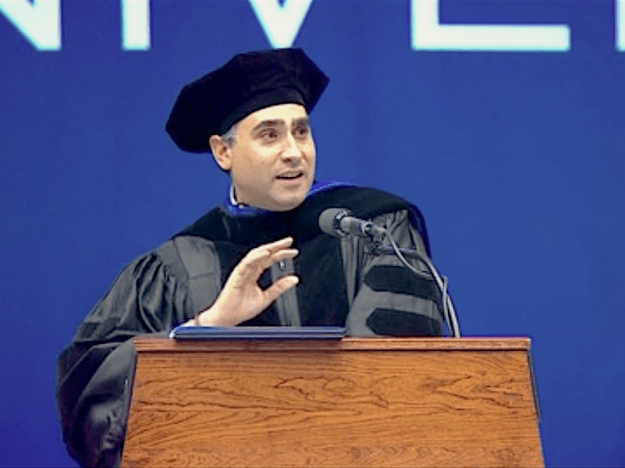
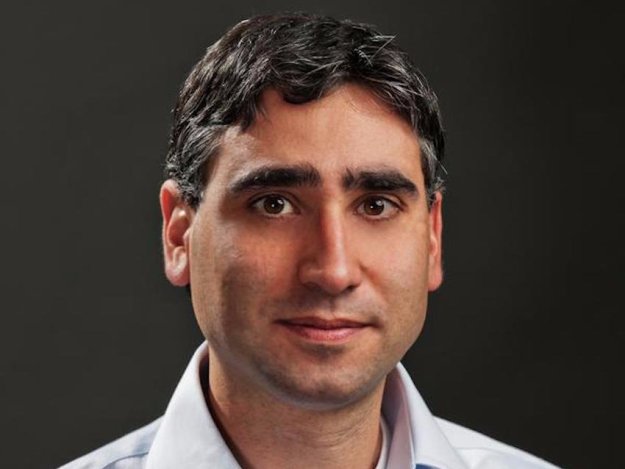 Casado is considered the father of SDN.VMware
 Rather than depending on users to spot phishing schemes, the team is exploring machine-learning tools to automatically detect them. And they’re starting to mark sites as


 Leslie Miley wants to change that. Early this year he left his job as a director of engineering at Slack to launch an executive-in-residence program at Venture for America. The project is designed to foster the building of tech businesses in emerging markets like Detroit and Baltimore. Starting this September, the residency will place Silicon Valley execs in yearlong stints in several of the program’s 18 innovation hubs, where they’ll advise area startups. The idea is that having well-connected leaders in such places may give local talent ties to Silicon Valley and inspire startups to set up shop in those cities. According to Miley, the program was fueled by industry-wide anxiety following the 2016 election. “Tech enabled people to stay in their echo chambers,” Miley says. “We’re partially responsible.” Not just by building non-inclusive platforms, he says, but by overlooking large swaths of the country in the hunt for talent. —Davey Alba


 Since the presidential election, the developer’s criticism of his own industry has taken a more trenchant tone, energizing a new wave of tech activists. (On Facebook’s refusal to cut ties with Trump supporter Peter Thiel, he tweeted: “Facebook has a board member who heard credible accusations of sexual assault and threw $1.25M at the perpetrator. That requires comment.”) In December, thousands of tech employees signed an @Pinboard-championed pledge at











 TheIdea – The Innovation Agency