


Archiv der Kategorie: Innovation

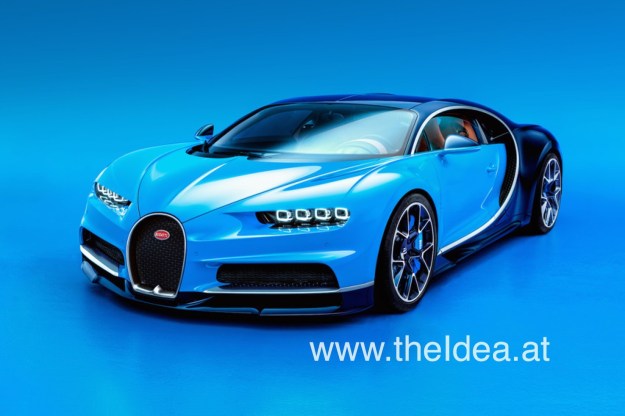
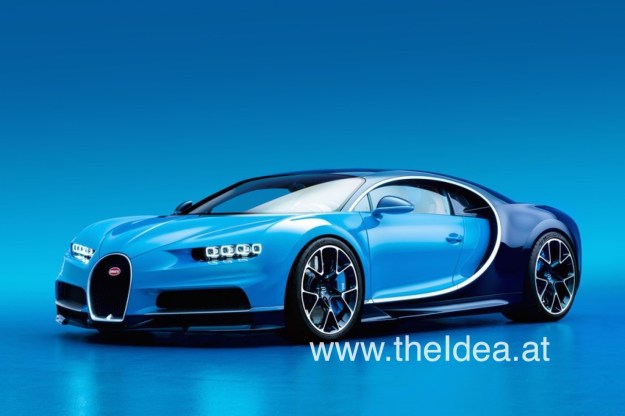
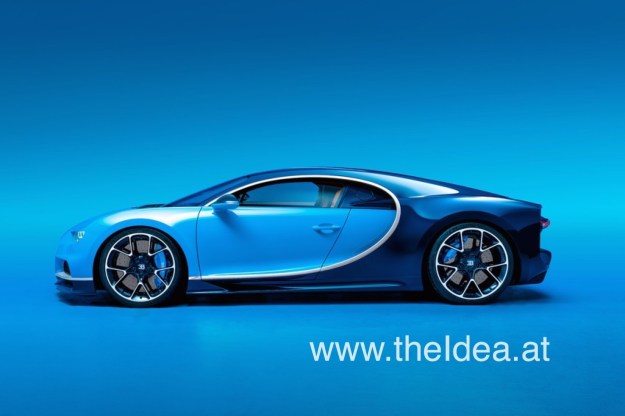
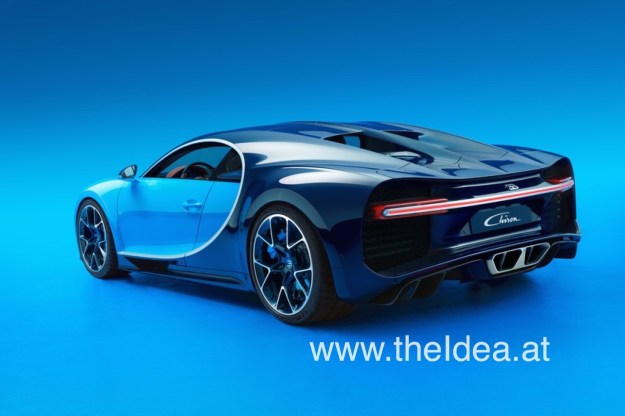
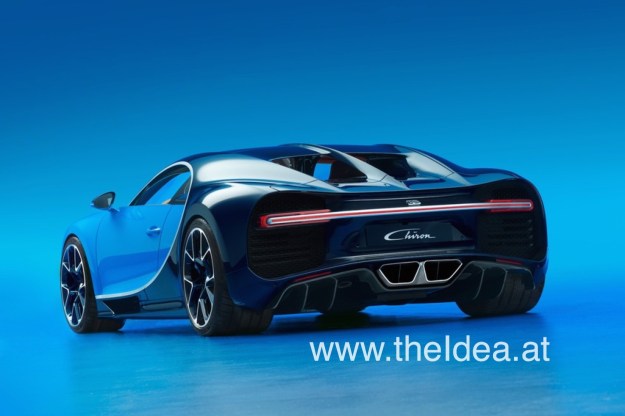
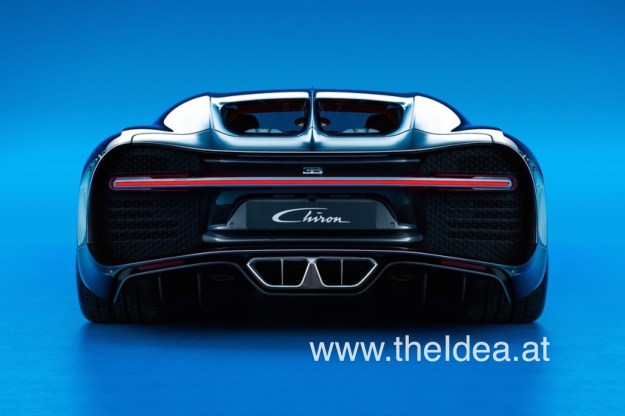
Bugatti’s $2.6 million Chiron is the fastest car in the world

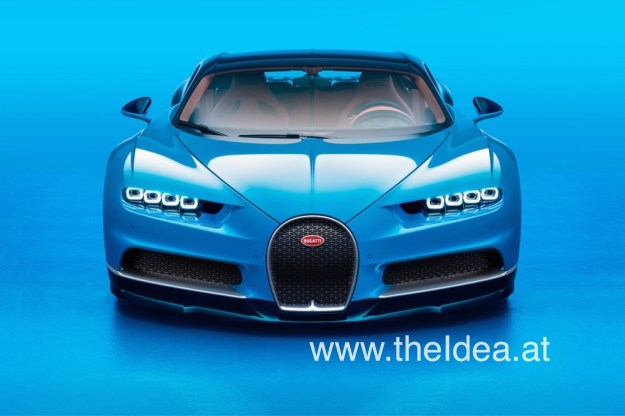
01_chiron_front_web 02_chiron_34-front_web 03_chiron_34-front_web 04_chiron_side_web 05_chiron_34-rear_web 06_chiron_34-rear_web 07_chiron_rear_web 09_chiron_engine-bay_web 15_chiron_grille_web 17_chiron_bugatti-line_web 18_chiron_driver-side_web 20_chiron_steering-wheel_web 22_chiron_speedometer_web 23_chiron_engine-knob_web 24_chiron_knob_web


You might think the super-wealthy have it pretty easy, what with their private islands, private jets and the ability to buy just about anything. But there’s been one thing they’ve not been able to buy in a while: an all-new Bugatti.

In fact, it’s been more than 11 years since the Veyron first went on sale. Can you imagine driving the same Bugatti for a decade? I can’t even.

Thankfully, that more than decade-long nightmare is over; there’s finally an all-new one. It’s called the Chiron. Along with the illustrious French moniker (yes, Bugatti is French), it boasts a 1,500-horsepower 16-cylinder engine, room for two very lucky passengers and a base price of just more than $2.6 million.

W16
Let’s not mince words here. Granted, simply based upon its price tag, the new Bugatti Chiron will be the chariot of global glitterati. Though, it’s more than a coupe from an elite brand. It hits the roads as the most powerful and fastest production car ever.

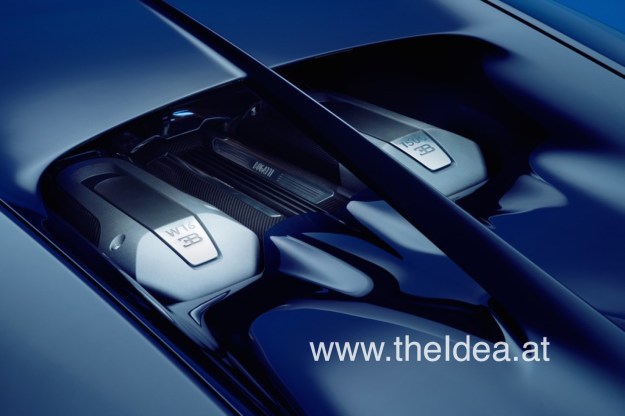
That impressive title is thanks to the 8.0-liter W16-cylinder engine mounted in the mid-rear of the car. If you’re not familiar with a W16, that’s OK. Only Bugatti uses such an engine. Imagine two V8s intertwined into one shape. That’s a W16. Imagine two V8s intertwined into one shape. That’s a W16.

Along with two-stage turbocharging (a new Bugatti development), the Chiron’s W16 produces 1,500 horsepower and 1,180 pound-feet of torque. That, along with a very stout all-wheel drive system, allows it to go 0 to 62 mph in 2.5 seconds, and on to a limited top speed (it could do more) of 261 mph (although the speedo goes up to 310 mph). To put that into perspective, a 747 lifts off the ground at 180 mph.

Understandably, to be able to safely keep the car on the road, and, you know, bring it to a stop once in a while, Bugatti engineers had to go to great technical lengths. That meant they had to develop both a chassis and a braking system as stout as the most advanced and technically complex race cars in the world. Moreover, the tires were tested to aerospace tolerances, which makes sense, given the speeds this thing can hit.

Understandably, a huge, fuel-thirsty engine like that produces a lot of tailpipe pollutants at full throttle. Accordingly, the catalytic converters (the devices that clean the exhaust gases as they pass through it) in the titanium exhaust system are six times larger than catalytic converters fitted to a mid-size sedan.

According to Bugatti, if you dissected the Chiron’s catalytic converters, you’d find surfaces — when the many layers are spread out flat — larger than the area of 30 soccer fields. And that’s just in one single car.

Electromagnetic
Of course, in creating the Chiron, Bugatti couldn’t spend all its technical energy on performance. After all, the car needs to be as opulent as it is fast.

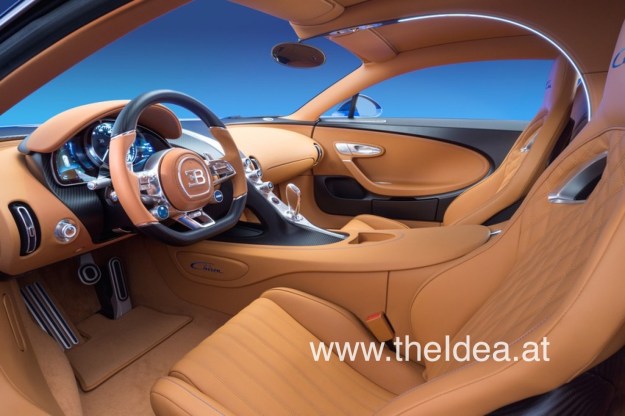
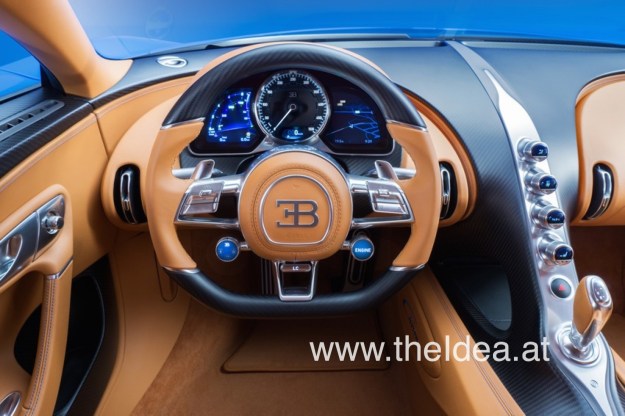
Accordingly, Bugatti engineers created a new instrument cluster with three TFT digital screens as well as an analog speedometer. Cleverly, the faster you drive the Chiron, the more the information displayed falls away. The dedicated infotainment screen fades, as the miles per hour climb in order to limit driver distraction.

Between the driver and the passenger is the signature illuminated C-bar, which is the longest light conductor in the automotive industry. What’s more, its surrounding bezel is machined from a single piece of aluminum. Certainly, this isn’t especially techie, but it is stunning.

Effectively, the Chiron can withstand electromagnetic interference and disruption as well as a military vehicle. This means that the passengers as well as their electronics are about as safe as you can get from electronically harmful electromagnetic waves.

The Chiron effect
Of all the astounding things we’ve just discussed about the Chiron, they’re just the tip of the iceberg.

For example, the front 3D Bugatti logo is covered in gemstone. The cabin sound system was created specifically for the Chiron by the elite German audio system company “accuton” (no, I’ve not heard of it either). And the exterior has been fashioned entirely from carbon fiber.

Perhaps the most astounding thing of all, though, is the fact that — despite the years of development and painstaking attention to detail that went into its creation — Bugatti only plans to ever build 500 Chirons.

Since Bugatti is owned by the Volkswagen Group, I’d like to tell you that some of the tech and features of the Chiron will trickle down into a VW or Audi you can buy in a few years. Truthfully, if it does, it won’t be the stuff you want, like 1,500 horsepower or a gemstone-covered front grille emblem.

Instead, your future car will likely be blessed with lessons learned from Bugatti’s painstaking attention to quality, reliability and precision. That’s because, in order to build a car that can be both the world’s fastest and finest vehicle, it has to be quadruply over-engineered.

That said, I encourage you to still admire the Chiron from afar. Or, better yet, see the latest Bugatti as an aspirational vehicle. Either way, the Bugatti Chiron is going to make the lives of the super-rich very lovely indeed and your future car that much finer.

2017 Bugatti Chiron

http://mashable.com/2016/02/29/2017-bugatti-chiron


Amazon is already after its next $400 billion opportunity

During Amazon’s most recent earnings call, Baird Equity Research analyst Colin Sebastian asked two questions to Amazon CFO Brian Olsavky: one about Amazon Web Services‘ margins, and another about the chances of Amazon expanding its own shipping logistics services to other companies.

The first one got answered promptly, though Olsavsky had to stop mid-sentence because the operator accidentally jumped in early. Still, Olsavsky made it a point to get back and finish his answer.

The second question never got answered.

„If he wanted to talk about it, he would have remembered to answer,“ Sebastian told Business Insider. „Either way, I think the answer is that Amazon doesn’t talk about potential or future services.“

Amazon’s notoriously secretive about its future plans, so it’s not too surprising that Olsavsky skipped Sebastian’s question.

But when you’re going after something as big as the logistics and shipping market, it’s hard to keep your plans under wraps — and a growing amount of evidence suggests Amazon may indeed be going after the delivery and logistics market, which Sebastian pegs as a $400 billion market opportunity.

Next $400 billion opportunity

Over the past few months, we’ve seen a series of reports speculating Amazon’s plan to establish a bigger in-house logistics service that will allow it to potentially bypass its current delivery partners, like UPS and FedEx.

That includes:

Serbastian believes this all points to Amazon building up its in-house logistics delivery network. He envisions Amazon first starting out with its own deliveries, but eventually opening up the service to other companies, putting it in direct competition with the likes of UPS and FedEx.

„Among other opportunities, Amazon has ‚powerhouse potential‘ in the large transportation and logistics market, dominated by global enterprises such as DHL and UPS,“ Sebastian wrote in a recent note.

„Amazon’s cloud technology expertise and increasingly complex fulfillment, logistics and delivery network seem to be obvious foundation to offer third-party services, with an incremental $400-450 billion market opportunity.“

A worker gathers items for delivery from the warehouse floor at Amazon's distribution center in Phoenix, Arizona November 22, 2013.  REUTERS/Ralph D. Freso   Thomson ReutersWorker gathers items for delivery at Amazon’s distribution center in Phoenix

Project Dragon Boat

Perhaps the strongest indication of a bigger Amazon logistics ambition was disclosed last week in a report by Bloomberg’s Spencer Soper.

The report, citing a 2013 Amazon document, revealed an internal project called Dragon Boat, which is intended to become a service that controls everything from picking up the product at the factory in China to delivering it to the end customer in the US.

It said the document described Project Dragon Boat as a „revolutionary system that will automate the entire international supply chain and eliminate much of the legacy waste associated with document handling and freight booking.“

„Sellers will no longer book with DHL, UPS, or FedEx but will book directly with Amazon,“ the report said.

When Amazon’s Olsavsky was asked about its logistics plan again by another analyst during earnings call, he simply shrugged it off as a complementary service, saying it’s intended to supplement, not replace, existing delivery companies.

„What we found in order to properly serve our customers at peak, we’ve needed to add more of our own logistics to supplement our existing partners. That’s not meant to replace them,“ Olsavsky said.

Next AWS

Werner Vogels, Amazon.com chief technology officer, speaks at the AWS Re:Invent conference at the Sands Expo in Las Vegas, Nevada November 29, 2012. REUTERS/Richard Brian Thomson ReutersVogels, Amazon.com chief technology officer, speaks at the AWS Re:Invent conference at the Sands Expo in Las Vegas

But don’t expect Amazon’s logistics business to expand overnight.

If anything, it’s going to take a few years to fully ramp up and establish itself to become a viable delivery option for other companies, according to Sebastian.

„They will start small, mostly to add capacity for their own business, but then, over time, as they gain more expertise, they will offer extra capacity to other companies,“ Sebastian told us.

In that sense, it could follow the path of Amazon Web Services, its cloud computing service that’s now generating almost $8 billion in annual revenue.

Amazon built AWS out of the infrastructure it had created to support its own operations, but it’s now become one of the most widely used cloud computing platforms, used by everything from small startups to big companies like Netflix and GE.

„I think it’s like AWS,“ Sebastian said. „But it took 10 years for AWS to get as large as it is.“

http://www.businessinsider.de/signs-of-amazon-getting-into-logistics-2016-2

How GM Beat Tesla to the First True Mass-Market Electric Car

General Motors first unveiled the Chevy Bolt as a concept car in January 2015, billing it as a vehicle that would offer 200 miles of range for just $30,000 (after a $7,500 federal tax credit). Barring any unforeseen delays, the first Bolts will roll off the production line at GM’s Orion Assembly facility in Michigan by the end of 2016. As Pam Fletcher, GM’s executive chief engineer for electric vehicles, recently put it to me with a confident grin: “Who wants to be second?”

For GM, the Bolt stands to offer a head start in a new kind of market for electric cars. But for the rest of us, there’s a broader significance to this news. It’s not just that Chevy will likely be first. It’s that a car company as lumbering and gigantic as GM, with infrastructure and manufacturing capacity on an epic scale, has gotten there first—and is there now. Tesla is nimble, innovative, and fun to watch, as companies go. But the Bolt is far more significant than any offering from Tesla ever could be. Why? Think of the old saw about how long it takes to turn an aircraft carrier around: It’s slow, and there’s not much to see at any given moment. But the thing about people who actually manage to turn one around is: They’ve got a freaking aircraft carrier.

Mary Barra, the CEO of GM, is a company lifer who has spent years shepherding the Bolt into existence. Joe Pugliese

EFORE WE GO any further, let’s pause for a moment to savor just how richly ironic it is that General Motors is about to take the lead in the electric car race. GM is, after all, a company that went bankrupt just seven years ago and survived only with the help of a federal bailout; a company whose board of directors was described by President Obama’s auto czar, Steven Rattner, as “utterly docile” in the face of impending disaster; a company that has been the butt of jokes about its lackluster, unreliable, macho cars for years; a company that churned out Hummers while Toyota gave us the Prius. And even more to the point, we’re talking about a company that has a long history with electric vehicles—the way South Park has a long history with Kenny.

That’s right. General Motors killed the electric car. More than once.

In the earliest days of the auto industry, electric cars were about as popular as their combustion-powered counterparts. Just like today, they were cleaner and quieter but more limited in range than the competition. Plus, they didn’t require a hand crank to start—an annoying feature of early combustion vehicles that occasionally resulted in broken fingers. But in 1912, Cadillac, GM’s luxury arm, came out with the first electric starter for gas-powered vehicles. Electric cars died out shortly thereafter, and in a cloud of exhaust GM surged to become the world’s largest carmaker.

Fast-forward 84 years, and for a brief interlude it looked like GM was about to take the lead in bringing electrics back. In 1996, in response to a California mandate that required automakers to have zero-emissions vehicles ready for market by 1998, GM rolled out the EV1, the first mass-produced electric vehicle of the modern era. The funny-looking two-seater had a range of about 50 miles and was offered for lease to consumers in California and Arizona. It was impractical, dinky, and entirely doomed. It earned a small coterie of devotees but held little appeal for mainstream consumers. It used almost all unique parts, forfeiting the advantages of GM’s scale. And even as GM’s EV1 team was busy building the car, GM’s lawyers were lobbying hard, side by side with the other big automakers, to get California to back off its requirement.

Charging Through History

In the early days of the automobile, electric cars outnumbered gasoline-powered vehicles on America’s rutted, manure-strewn roads. But even as the internal combustion engine became the automobile’s dominant power source, the dream of the electric car never died. —Jordan Crucchiola

And so Lutz, a guy who would later declare that global warming is a “total crock of shit,” began lobbying GM’s leadership to make the biggest, greenest play possible. He didn’t want GM to just build a me-too hybrid to compete with Toyota. He wanted GM to build a fully electric car that almost anyone could afford to buy and that wasn’t limited by range. He wanted, in effect, to build the Bolt. But the technology wasn’t there. The car that GM actually built at Lutz’s insistence—the Chevy Volt—went on to become one of the most talked-about American vehicles in decades, for a whole host of reasons, many of them symbolic. But in-house, says Tony Posawatz, the engineer who led the team that developed the Volt, it was very clear that this was going to be a transitional car—a warm-up for GM’s electric long game.

For the Volt, GM settled on a design that was neither a Prius-style hybrid nor a pure electric car but something in between called an extended-range electric vehicle. The setup would combine a plug-in battery strong enough to serve as the car’s main power train, plus a motor with a small gas engine that would work as a generator, creating electricity to keep the vehicle going when the battery was depleted. But even that hybrid design forced GM engineers, to a remarkable extent, to become cavemen rediscovering fire.

Being inside the Bolt feels a bit like flying economy class on a brand-new, state-of-the-art plane.

Nearly everything changes when you opt for a fundamentally different power train, so GM’s greatest advantage—more than a century of experience building cars—was all but moot. Car structure was different, since they were building around a battery, not an engine. The brakes, steering, and air conditioner were powered differently. New systems, from electromagnetics for the motors to onboard and off-board charging, each came with its own learning curve. The engineers didn’t have established tests to follow. Just turning on the car required finding the perfect sequence of electrical signals from more than a dozen modules. “Oh my God, it took us forever to get the first Volt to start,” Fletcher says.

Then there was the battery. Lithium-ion chemistry was a new thing 10 years ago, and the Volt team quickly discovered how much of a pain in the neck it is. “Batteries wear out just sitting there, and they wear out when you cycle them,” says Bill Wallace, GM’s head battery engineer. “And then they wear out if you over-discharge them, or if you overcharge them.” They’re extremely sensitive to temperature. They change shape as they charge and discharge. They can also catch fire.

In short, all these problems were new to a company whose experience lay in what Lutz calls “the oily bits.” So the team set about developing the expertise it lacked. GM established a curriculum with the University of Michigan to train battery engineers. It filled a vacant building in Brownstown, Michigan, with the equipment to make battery packs. The engineers created test procedures and wrote them down as they went. They modeled different use cases for the Volt, from a woman in northern Minnesota who plugs in every night to a guy in Miami who drives 100 miles a day. They built the battery lab and brought in the blue environmental chambers, then used them to see how the battery would stand up to each situation. “We invented the idea of what the lab should be,” Fletcher says.

The Volt project was still in its infancy when the US economy tanked in 2008, sending GM into shock. The company began losing $1 billion a month and started cleaving off limbs in desperation, eliminating or selling its Pontiac, Saturn, Saab, and Hummer brands. The Volt project could easily have fallen under the ax as well—but instead it took on an outsize significance. President Obama seized on the car as one reason GM was worth a $40 billion bailout, holding it up as a sign that the bankrupt automaker could adapt. The Volt finally went on sale in December 2010, to accolades (“A bunch of Midwestern engineers in bad haircuts and cheap wristwatches just out-engineered every other car company on the planet.” —The Wall Street Journal) and jeers (“roller skates with a plug” —Fox News).

As for actual drivers, they were pretty into the Volt. The car posted stellar customer satisfaction ratings, and nearly 70 percent of its drivers were new to Chevy. The trouble was that there simply weren’t many buyers. In 2011, GM’s CEO at the time, Dan Akerson, told reporters he wanted to produce 60,000 Volts the next year. To date, Chevy has sold about 80,000—total. The Volt was a powerful symbol, but it wasn’t that significant a vehicle. Buyers soon had more innovative cars to choose from. The all-electric Nissan Leaf hit the market at around the same time as the Volt, for a similar price. In 2012, Tesla introduced its first-generation Model S, with upwards of 200 miles per charge.

But the real significance of the Volt was that it gave GM a brand-new manufacturing and engineering platform for electric vehicles, where it had had none before. “Once you make the leap, and you have a big battery, and you have electric motors,” Posawatz says, “you’ve done all the hard stuff.” And then you might just see an opportunity to gun for the finish line.

Joe Pugliese

N THE MORNING of April 2, 2014, US senator Barbara Boxer glared down from behind a microphone in a Senate hearing room in Washington, DC, demanding answers from America’s industrial problem child, General Motors. The company had just instituted its largest recall ever, after reports that faulty ignition switches on millions of cars from the 2000s had been responsible for numerous deaths and injuries. Boxer, as part of a congressional investigative committee, was castigating GM’s new CEO, Mary Barra, who had been in the job a mere three weeks. “Woman to woman, I am very disappointed,” Boxer said. “The culture that you are representing here today is a culture of the status quo.”

Barra sat there, practicing the studiously neutral, calmly repentant facial nonexpression of someone getting grilled by Congress. The main theme of Barra’s testimony was that the old GM—with a docile, nodding bureaucratic culture that swept problems under the rug—had died with the company’s 2009 bankruptcy, bailout, and restructuring and that the new GM was different. But the “culture of the status quo” charge wasn’t so easy for Barra, of all people, to deflect: She’s not only a GM lifer, she’s a second-generation lifer. Her dad was a die-maker for Pontiac, and she started with the company when she was 18. (She’s 54 now.)

On the other hand, Barra had a strong hand in a lot of the most transformative stuff going on at GM. Chief case in point: Not long before she became CEO, Barra had been tapped to run development of new products, the position once held by Lutz. So by the time she was hauled before Congress in 2014 to answer for the company’s past sins, she had been overseeing the efforts of GM’s electrification gang for three years.

When I walk into Barra’s office one recent fall day, she’s standing in front of her desk wearing black pants, a black turtleneck, and an Apple Watch. (Offsetting the Steve Jobs vibe just a bit is a calendar on the wall that shows a fluffy white cat in the backseat of an Opel Corsa.) As Barra tells it, the process to develop the Bolt really took off when GM’s team was regrouping after a major setback. In 2012, GM invested in a California startup called Envia, which had developed a new battery that posted incredible performance numbers. Envia promised to deliver a 200-mile battery by fall 2013. But its technology turned out to be a flop.

Not only is GM likely to win the race, it may have the winner’s circle to itself for some time.

So in spring 2013, GM’s senior leaders and the most important figures on its electrification team gathered in the virtual reality room of the company’s Design Center to assess the situation. “We started to go, ‘OK, what can we do?’” Barra says. Was there another route to 200 miles? The EV folks hesitated but started pulling together different elements—improvements in battery life, cost savings in motors—that, combined, might represent a way forward. “We can push our way toward 200,” Fletcher recalls thinking.

The meeting turned into a full-on brainstorming session, one that ended, Barra says, with what looked like a viable path to the Bolt: “And we all went, ‘Let’s do that.’”

And so the design team set to work devising a car that would appeal to consumers well beyond the ecowarrior, early-adopter demographic. Some flashy ideas were thrown out early on: A carbon fiber body? Lightweight but too expensive at this price point. Suicide doors? Eye-catching, but they added mass without functional benefits. Capped wheels? Good for aerodynamics, but they signaled something science project–y. “It’s got to look like a serious car,” design lead Stuart Norris says. The team delivered as spacious an interior as possible, with upright glass to make the relatively small car feel more substantial and a raised driving position for a commanding view of the road.

Meanwhile, the technical folks set about making Norris’ design go 200 miles on a charge. At their most basic, batteries are made of powders, the morphology of which—grain size, distribution, how they’re bound together—is key to the power and energy of each cell. LG, General Motors’ battery provider, had cooked up a noticeably improved cell that retained energy capacity particularly well when it got hot, as lithium-ion batteries tend to. That meant Chevy could use a smaller cooling system and stick more cells in the battery pack for more range. LG also improved the battery’s conductivity, so the ions flowed faster, translating to quicker acceleration (the Bolt can go from 0 to 60 in seven seconds).

As soon as the battery was ready, engineers at GM’s Michigan proving ground hacked together a bastard car using the front half of a Chevy Sonic and the rear of a Buick Encore. They called it the Soncore and fitted it with the Bolt battery pack and motor, using the Franken-vehicle to make sure the propulsion system worked. That way, once the real Bolt body was in development, the teams responsible for the car’s chassis controls, vehicle dynamics, and suspension tuning could get right to work.

As 2014 bled into 2015, Chevy engineers built about 100 Bolt prototypes, shipping them around the US for real-world testing to verify the findings of the battery lab. The cars went to Arizona and Florida. The team drove them up the California coast and negotiated San Francisco traffic. They ran the prototypes over rough roads, looking for ways to reduce noise and vibration (extra-tricky in a car with no engine to mask odd sounds). They chose specially developed Michelin tires to minimize rolling resistance and improve range. Working fast, they made thousands of changes to the car, constantly looking for ways to improve. By the time I arrived for a test-drive, in October, the team still had more than 500 open work orders to complete.

Joe Pugliese

Apples Rate of Change — The days of enormous iPhone growth may have reached its end

Summary: Apples Rate of Change — the idea that we’ll never see an iPhone sales quarter bigger than this one, or at least not much bigger. The days of enormous iPhone growth may have reached its end.

The reports of the iPhone’s death have been greatly exaggerated.

In the wake of Apple’s recent quarterly financial results report, there’s been a lot of talk about what happens if the company has truly reached the peak of iPhone sales — and what must come next in order for Apple to keep growing.

The iPhone is a once-in-a-decade (if not once-in-a-lifetime) product, and won’t be replaced on Apple’s revenue chart any time soon. And that’s okay, for a whole bunch of reasons.

What goes up… stays up

It’s easy to assume — in part due to language commonly used by growth-obsessed investors — that the iPhone is in free fall. Not so much: iPhone sales set a record last quarter. What’s actually concerning investors is the rate of change — the idea that we’ll never see an iPhone sales quarter bigger than this one, or at least not much bigger. The days of enormous iPhone growth may have reached its end.

If you’re comparing the iPhone’s life cycle to that of Apple’s iPod, there’s reason to be terrified: The iPod sold like gangbusters for a number of years, but its decline was drastic — to the point where it got removed from Apple’s financial reports last year. That’s not going to happen with the iPhone, for a simple reason: the iPod was made largely obsolete by the smartphone. And the smartphone’s not going anywhere, not for a very long time.

That means Apple’s iPhone business is probably going to keep contributing 150 billion dollars a year for the foreseeable future. (In the last four quarters, the iPhone brought in an average of 38.9 billion per quarter. In comparison, the Mac and iPad bring in five or six billion dollars per quarter. That’s a lot of money, sure, but the two products combined pale in comparison to the phone juggernaut.) It’s enough money to make Apple one of the biggest, most profitable companies on the planet.

Could the iPhone eventually fail? The future is promised to no one, but people are going to want an internet-connected device in their pockets until there’s something even better you can stick in your ear or pop on your eyeball or connect directly to your brain.

There’s money in the ecosystem

Apple focused a lot of energy this week on communicating how well it’s doing — and how much it’s growing — in terms of services revenue. That’s the budget line covering iCloud, iTunes, Apple Music, and the App Store.

The users of Apple’s one billion active devices are all spending money on digital goods and services. It’s potentially a huge growth opportunity for the company, and it will be interesting to see what other services Apple might introduce and how much additional revenue might be generated from its existing iPhone installed base — namely, us.

But beyond offering us more content to buy, the Apple ecosystem extends outward. Consider the Apple Watch: It’s essentially an iPhone accessory, since it only works with Apple’s smartphone. It’s another product that can be marketed to existing iPhone users, generating more revenue while also tying them more tightly into the Apple ecosystem. (When an Apple Watch user considers an Android phone, they also have to consider giving up their Apple Watch — making it potentially that much easier to stick with what they know.)

There’s still room for growth

The days of rapid smartphone sales growth may well be over, and while Wall Street may not be thrilled about this, it doesn’t mean the iPhone is in any danger of disappearing. Apple still thinks there’s room for future growth, and the company’s reasons seem reasonable to me. The rapid growth of the middle class in China is creating hundreds of millions of new consumers with money to spend on brands like Apple, and products like the iPhone. Apple’s weak position in India is generally seen as a negative, but it also means there’s a huge upside if the company figures out how to crack that market.

While those of us in the most industrialized nations have benefited from fast 4G LTE cellular networks for a few years now, those networks are still rolling out in India and other emerging markets. People in those countries will buy new phones to take advantage of LTE as it comes online, and that’s a big opportunity for Apple to sell iPhones.

And then there’s switching: Apple continues to suggest that there’s a constant flow of smartphone users from Android to iPhone. It’s hard to quantify those numbers overall, but at least from Apple’s perspective, there’s a growth opportunity simply in picking up Android users who are ready for a change.

Wait for it

Okay, so the iPhone’s pretty good for now. But what about the next big thing? How does Apple ignite future growth, and protect the products it already has?

Fortunately, Apple has many, many billions of dollars in cash from its past few years of profits. And the company is investing that money in researching the next generations of products. I’m sure some of that money is going into exploring what might replace a smartphone, whether it’s a Siri-powered device that plugs into your ear, or an augmented-reality visor, or who knows what else.

In terms of finding growth, we’ve all heard the reports that Apple’s exploring the possibility of building a car. Entering new markets is never easy, but it provides huge opportunity for growth. It’s the same principle as iPhone sales in India: Apple’s current share of the automobile market is zero, which means that the sky’s the limit when it comes to gaining new customers.

The smartphone era

I’m pretty confident that when we look back to the early parts of the 21st century, we will consider this the dawn of the smartphone era. Even from the perspective of 2016, the personal computer seems to rapidly be transforming into a footnote — a technological prelude to the creation of the smartphone. Tiny devices with massive computing power and an always-on connection to a global data network, living in our pockets — they have transformed the way people live around the world, from the richest countries to some of the poorest.

Apple doesn’t need to replicate the iPhone’s success with another product to be successful, which is good, because there may not be a product as successful as the iPhone any time in the near future. (Though I’d be happy to be proven wrong when the direct-brain implants come around in 2030.) People who are searching the horizon for the next big thing as hot as the smartphone are searching in vain.

We live in the smartphone era, and considering the slowing rate of growth in smartphone sales, so does everyone else. The introduction of the iPhone was the moment this era truly began. Apple has benefited massively from that, and will continue to for the foreseeable future.

http://m.imore.com/persistence-iphone

Moving from Brand Loyalty to Experience Loyalty

Huawei at Mobile World Congress 2015 Barcelona

Huawei at Mobile World Congress 2015 Barcelona

Chinese telecoms giant Huawei posted an eye-popping 70% growth in 2015. It is now beating HTC and Sony when it comes to market share in Europe and is third only to Apple and Samsung when it comes to global smartphone sales.

Huawei’s growth is another indication of how Chinese companies are successfully moving away from their traditional strategy of producing cheaper products to attack the low-end of the market.

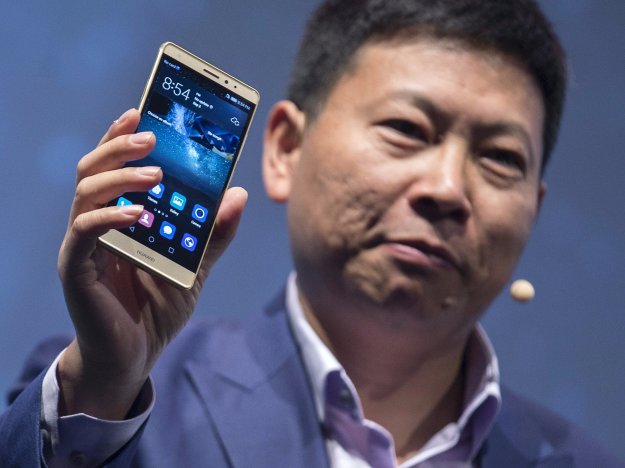
Huwawei-Ceo-Richard-Yu

The world of smartphones, tablets, smart watches and connected devices of the internet of things is the new battleground to provide digital services. And Huawei has quickly announced itself as a serious player in it. Last year’s success was built on a strategy that rival Western firms have excelled in – marketing, brand building and customer service.

The race to engage

Existing brands such as Blackberry and Sony are already engaged in competitive marketing in both product and customer engagement to grab a piece of the large but finite customer base, so Huawei’s rapid rise to overtake them is very impressive. Huawei increased its global share of the smartphone market from 6.8% in 2014 to 9% in 2015 – a massive 50% gain compared to Apple’s growth of 27%.

It’s a crowded android market. TechStage, CC BY-ND

It suggests Huawei now understands how to play the smartphone market. New organisational and workforce strategies that have a laser focus on a customer-first mindset, tightly driven by the needs of the local market, have been put together. In a crowded price-sensitive android market this matters greatly where choice and brand awareness are critical.

Just competing on product functionality and a brand name is not enough when the nature of “smart” means you have connected consumers and feedback on social media is instant. Huawei understands that the mobile market is now all about the customer service experience and no longer just a telecoms commodity. Getting hold of the consumer and personalising the digital world for them with a good experience and price point that fits their needs and lifestyle choices is also critical.

Huawei is a prime example of a modern commercial mindset emerging from Chinese industries. Its marketing embraces local markets and they aggressively target consumers with sponsorship deals that include a host of big football clubs across Europe, including Arsenal, Paris Saint-Germain and AC Milan. Plus, their product portfolio spans the complete modern telecoms provider from hardware to software.

Huawei is going head to head with Apple. Kārlis Dambrāns, CC BY

Three ways to succeed

Customers cannot be taken for granted in this tough market. History shows that customers lack pure brand loyalty – they are more loyal to the experience, the community and ecosystem of services that best fits their needs. With so much choice out there, it is more about listening and socially engaging with the customer that is key.

At least three key strategies seem to be emerging in the growth of the telecoms players in the new mobile, wearables and connected internet of things services.

  1. A strong focus on “customer first” philosophy from the CEO down through the whole organisation to effectively manager customer experience 24/7.
  2. Using third parties to sell your products and a service that adds value and extends penetration into new markets. Huawei has a partner programme that drives sales across its portfolio. Recent awards in Asia in 2015 follow expansions into Australia in 2011 and similar regional strategies across Latin America, the Middle East and Europe. This federated supply chain model allows companies to extend their workforce and has accounted for more than 55% of Huawei’s growth from these third party sales. It is increasingly essential for scaling up sales regionally.
  3. Embracing international standards to get into thought leadership positions. For example by joining The Open Group, a major software standards consortium, and its Digital Business and Customer Experience (DBCX) workgroup helps Huawei define initiatives on connected customer and product design. Taking part in these kinds of groups enables firms to raise their game and influence in new markets by getting smarter in the way they interact with existing and potential customers and partners. It can then be translated into improving working practices – from managing the supply chain to service delivery – across the board.

What Huawei has done well is realise that consumers are always connected. Companies that exploit this will start to gain more ground in the battle for owning the digital market. It requires more than the specific strategies, but thinking holistically about how to transform to a digital operating model in this new world of connected things.

https://theconversation.com/how-chinas-huawei-is-taking-on-samsung-and-apple-52838


teslas self-driving car

Tesla CEO Elon Musk has made a bold prediction: Tesla Motors will have a self-driving car within two years.

“I think we have all the pieces,” Musk told Fortune, “and it’s just about refining those pieces, putting them in place, and making sure they work across a huge number of environments — and then we’re done. It’s a much easier problem than people think it is.”

Although Musk’s comments to Fortune came Monday, The Street pegged a rise in Tesla’s shares to the comments on Tuesday. The ambitious timeframe appeared to be offering support to the stock again today, with shares trading up $1.47, or 0.64 percent, at $231.42 around 7:18 a.m. PST.

Musk’s driverless-car comments may have been overshadowed initially by the achievement of SpaceX on Monday night in landing a rocket during a commercial mission for the first time. Musk is also CEO of SpaceX.

This is the most aggressive timeline Musk has mentioned. While Musk claims the problem is easier than people think it is, he doesn’t think the tech is so accessible that any hacker could create a self-driving car. Musk took the opportunity to call out hacker George Hotz, who claimed via a Bloomberg article last week that he had developed self-driving car technology that could compete with Tesla’s. Musk said he wasn’t buying it.

“But it’s not like George Hotz, a one-guy-and-three-months problem,” Musk said to Fortune. “You know, it’s more like, thousands of people for two years.”

The company went so far as to post a statement last week about Hotz’s achievement.

“We think it is extremely unlikely that a single person or even a small company that lacks extensive engineering validation capability will be able to produce an autonomous driving system that can be deployed to production vehicles,” the company stated. “It may work as a limited demo on a known stretch of road — Tesla had such a system two years ago — but then requires enormous resources to debug over millions of miles of widely differing roads.”

While Tesla is unconcerned about Hotz, the company’s new timeline may have other autonomous car developers hitting the accelerator. Tech companies like Google and Apple, in addition to automakers such as Volvo and General Motors are all competing to be among the first to offer some form of self-driving tech. Many believe the early 2020s would be a realistic timeframe to expect to see the public engaging with self-driving cars.

Just yesterday, it was reported that Google and Ford will enter into a joint venture to build self-driving vehicles with Google’s technology, according to Yahoo Autos, citing sources familiar with the plans. The official announcement is expected to come during the Consumer Electronics Show in January, but there is no manufacturing timeline.

But even if Tesla moves quickly on self-driving cars, are consumers ready for them? The Palo Alto-based carmaker’s recent Firmware 7.1 Autopilot update includes restrictions on self-driving features. The update only allows its Autosteer feature to engage when the Model S is traveling below the posted speed limit. The update came shortly after it was reported that drivers were involved in dangerous activities while the Autopilot features were engaged.

Source: http://www.bizjournals.com/sanjose/news/2015/12/23/elon-musks-bold-new-timeline-for-driverless-cars.html?ana=yahoo

Apple now makes 94% of the profits in the smartphone industry

Source: http://www.businessinsider.de/apple-dominates-profits-by-smartphone-maker-2015-11?r=US&IR=T

Smartphone_Share_2015

Apple now makes 94% of the profits in the smartphone industry, according to recent research by Canacord.

This historical chart compiled by Statista shows how quickly and utterly Apple has dominated the smartphone market. Samsung is now the only other major handset company earning significant profits from smartphones.

Five years ago, the iPhone was still the top profit-maker, but a lot of other companies were in the game. Since then, the platform battle has become a two-player race between Apple’s iOS and Google’s Android, driving third-way competitors like BlackBerry and Microsoft/Nokia down into the loss zone. The fierce competition between Android handset makers, particularly with the rise of inexpensive Chinese Android phones, has also sucked a lot of profit out of the market.

Disrupting automotive through adaptation of technology business model – How to attract MILLENNIALS

n the US 28% of cars are leased. While it is uncommon to lease inexpensive vehicles and family cars, close to half of all luxury cars are. That percentage is only higher in one other car-segment: electric vehicles (EVs): In the first 3 quarters of 2015 75% of new EVs have been leased!

The most common explanation is that EVs are still too expensive to buy. Another popular reason is that customers do not trust the durability of electric powertrains and lithium-ion battery technology. Finally, customers claim that driving range might be an issue and thus prefer leasing over buying (more on my thoughts on driving range anxiety)

All 3 reasons play a major role. All of them have been researched by J.D. Power back in 2010. However, they don’t sufficiently explain the high lease rates among EV customers today. Here are three insights why car leases are 3-4x more common in the EV segment and why car ownership is becoming rare among young customers.

GenY (Millennials) Adapts New Purchasing Habits

Picture

Average Earnings for Young Adults in $2013

Picture

Cars Sold in Millions per Generation

Car leases are already the most popular way of „purchasing“ a luxury and electric vehicle (EV). First, I documented why millennials/younger customers are more likely to lease. Second, I described why technology changes can lead to reduced interest in buying. Finally, I tried to proof that smartphones have given users the ability to experience freedom without owning a car.

These 3 points lead to an assumption: GenY, as the second largest car buying generation, is leading the ownership disruption in the car segment. They buy fewer cars per 1000 citizens, have the highest % of leases and have different expectations for cars (in terms of technologies and features). How can car manufacturers attract GenY and bring driving back?

Lets take a look outside the car industry. How are technology firms attracting young customers? The smartphone market, like the car market, has taken a hit in the last few years. The handset replacement cycle has slowed down significantly. It is the slowest since the introduction of the iPhone in 2007. In 2014, 143 million mobile phones were sold in the United States (-15%). Of them ~90% were smartphones. 2007 users upgraded their phones every ~19 months; today they upgrade every 26+ months.

Picture

Mobile Phone Upgrade Cycle


Source: http://www.ev-analyst.com/home/disrupting-automotive-by-adaptation-of-technology-business-model-3-reasons-why-car-ownership-is-dying-12

http://www.ev-analyst.com/home/disrupting-automotive-through-adaptation-of-technology-business-model-how-to-attract-millennials-22

eSIM ab 2016 bei Deutscher Telekom

Quelle: http://www.heise.de/newsticker/meldung/Deutsche-Telekom-eSIM-soll-2016-kommen-2921732.html?wt_mc=nl.ho.2015-11-15

Die klassische SIM-Karte ist am Ende. Laut Telekom wird sie schon ab 2016 von der sogenannte eSIM abgelöst. Diese ist fest in ein Mobilgerät integriert und kann beispielsweise für einen Anbieterwechsel umprogrammiert werden.

Nach 25 Jahren soll die klassische SIM-Karte vom Markt verschwinden. An ihre Stelle tritt schon ab 2016 die sogenannte eSIM, ist sich die Deutsche Telekom sicher. Dabei handelt es sich um eine fest in ein Mobilgerät integrierte, von außen programmierbare SIM-Karte. Das E steht für embedded.

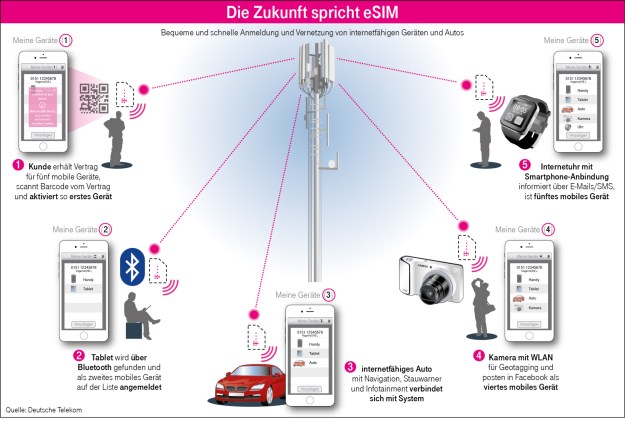
 esim_Deutsche.Telekom


Damit würde der Tausch der SIM-Karte etwa beim Anbieter- oder Gerätewechsel entfallen. Künftig müssten Kunden beispielsweise nur noch den Identifikationscode eines Mobilgeräts einscannen und es so aktivieren. Automatisch werde es dann bereits mit anderen eingebundenen Geräten vernetzt sein, so die Telekom im hauseigenen Blog. Kunden sollen so über einen Vertrag mehr Endgeräte verwalten können als bisher.

Erste Lösungen in Tablets und Wearables

Die Telekom arbeitet nach eigenen Angaben seit Jahren in internationalen Gremien unter dem Dach der GSMA an einem offenen Standard für die eSIM. Er soll die technischen Anforderungen bestimmen und die Regeln für die Profilverwaltung festlegen. „Wir sind überzeugt, dass der neue eSIM Standard ab 2016 in den Markt kommt und sich dann ab 2017 richtig durchsetzt“, heißt es im Blog des Telekommunikationsunternehmens.

Die ersten Lösungen sollen in Tablets und Wearables angeboten werden. Anfangs werde es Hybridlösungen aus eSIM und Plastikkarte geben, so die Telekom weiter. In zehn Jahren werde die klassische SIM dann völlig verschwunden sein.

Apple und Samsung in „fortgeschrittenen“ Verhandlungen

Bereits im Sommer berichtete die Financial Times von Verhandlungen zwischen dem Branchenverband GSMA, Mobilfunkanbietern sowie Apple und Samsung über die Einführung einer umprogrammierbaren SIM für Mobilgeräte. Der Branchenverband zeigte sich seinerzeit optimistisch, eine formelle Vereinbarung mit Apple zu erzielen.

Der US-Konzern führte bereits im vergangenen Jahr die sogenannte Apple SIM ein, die ebenfalls nicht mehr an einen Anbieter geknüpft ist. So sollen Apple-Kunden den Netzanbieter etwa im Urlaub oder auf Geschäftsreisen direkt vom iPad aus wechseln können. Auch in Deutschland ist die Apple SIM mit iPad Air 2 und iPad mini 4 erhältlich. Bisher haben Kunden aber keine große Anbieterauswahl. Zu den Partnern der Apple SIM gehören die Telekom in Form von T Mobile in den USA, EE in Großbritannien sowie GigSky