Archiv der Kategorie: Innovation

The brightest minds in AI research – Machine Learning

In AI research,  brightest minds aren’t driven by the next product cycle or profit margin – They want to make AI better, and making AI better doesn’t happen when you keep your latest findings to yourself.

http://www.wired.com/2016/04/openai-elon-musk-sam-altman-plan-to-set-artificial-intelligence-free/

Inside OpenAI, Elon Musk’s Wild Plan to Set Artificial Intelligence Free
ElonMusk201604

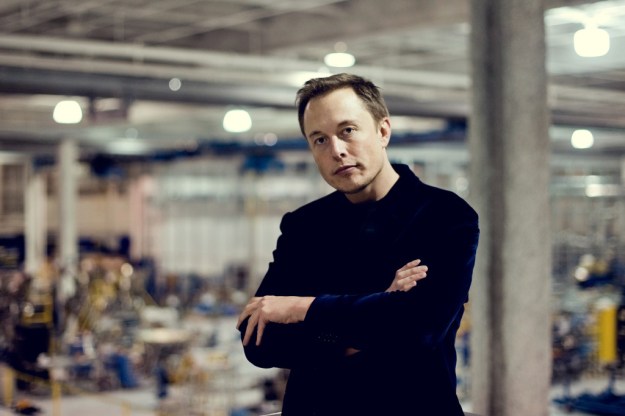
THE FRIDAY AFTERNOON news dump, a grand tradition observed by politicians and capitalists alike, is usually supposed to hide bad news. So it was a little weird that Elon Musk, founder of electric car maker Tesla, and Sam Altman, president of famed tech incubator Y Combinator, unveiled their new artificial intelligence company at the tail end of a weeklong AI conference in Montreal this past December.

But there was a reason they revealed OpenAI at that late hour. It wasn’t that no one was looking. It was that everyone was looking. When some of Silicon Valley’s most powerful companies caught wind of the project, they began offering tremendous amounts of money to OpenAI’s freshly assembled cadre of artificial intelligence researchers, intent on keeping these big thinkers for themselves. The last-minute offers—some made at the conference itself—were large enough to force Musk and Altman to delay the announcement of the new startup. “The amount of money was borderline crazy,” says Wojciech Zaremba, a researcher who was joining OpenAI after internships at both Google and Facebook and was among those who received big offers at the eleventh hour.

How many dollars is “borderline crazy”? Two years ago, as the market for the latest machine learning technology really started to heat up, Microsoft Research vice president Peter Lee said that the cost of a top AI researcher had eclipsed the cost of a top quarterback prospect in the National Football League—and he meant under regular circumstances, not when two of the most famous entrepreneurs in Silicon Valley were trying to poach your top talent. Zaremba says that as OpenAI was coming together, he was offered two or three times his market value.

OpenAI didn’t match those offers. But it offered something else: the chance to explore research aimed solely at the future instead of products and quarterly earnings, and to eventually share most—if not all—of this research with anyone who wants it. That’s right: Musk, Altman, and company aim to give away what may become the 21st century’s most transformative technology—and give it away for free.

Zaremba says those borderline crazy offers actually turned him off—despite his enormous respect for companies like Google and Facebook. He felt like the money was at least as much of an effort to prevent the creation of OpenAI as a play to win his services, and it pushed him even further towards the startup’s magnanimous mission. “I realized,” Zaremba says, “that OpenAI was the best place to be.”

That’s the irony at the heart of this story: even as the world’s biggest tech companies try to hold onto their researchers with the same fierceness that NFL teams try to hold onto their star quarterbacks, the researchers themselves just want to share. In the rarefied world of AI research, the brightest minds aren’t driven by—or at least not only by—the next product cycle or profit margin. They want to make AI better, and making AI better doesn’t happen when you keep your latest findings to yourself.

OpenAI is a billion-dollar effort to push AI as far as it will go.
This morning, OpenAI will release its first batch of AI software, a toolkit for building artificially intelligent systems by way of a technology called “reinforcement learning”—one of the key technologies that, among other things, drove the creation of AlphaGo, the Google AI that shocked the world by mastering the ancient game of Go. With this toolkit, you can build systems that simulate a new breed of robot, play Atari games, and, yes, master the game of Go.

But game-playing is just the beginning. OpenAI is a billion-dollar effort to push AI as far as it will go. In both how the company came together and what it plans to do, you can see the next great wave of innovation forming. We’re a long way from knowing whether OpenAI itself becomes the main agent for that change. But the forces that drove the creation of this rather unusual startup show that the new breed of AI will not only remake technology, but remake the way we build technology.

AI Everywhere
Silicon Valley is not exactly averse to hyperbole. It’s always wise to meet bold-sounding claims with skepticism. But in the field of AI, the change is real. Inside places like Google and Facebook, a technology called deep learning is already helping Internet services identify faces in photos, recognize commands spoken into smartphones, and respond to Internet search queries. And this same technology can drive so many other tasks of the future. It can help machines understand natural language—the natural way that we humans talk and write. It can create a new breed of robot, giving automatons the power to not only perform tasks but learn them on the fly. And some believe it can eventually give machines something close to common sense—the ability to truly think like a human.

But along with such promise comes deep anxiety. Musk and Altman worry that if people can build AI that can do great things, then they can build AI that can do awful things, too. They’re not alone in their fear of robot overlords, but perhaps counterintuitively, Musk and Altman also think that the best way to battle malicious AI is not to restrict access to artificial intelligence but expand it. That’s part of what has attracted a team of young, hyper-intelligent idealists to their new project.

OpenAI began one evening last summer in a private room at Silicon Valley’s Rosewood Hotel—an upscale, urban, ranch-style hotel that sits, literally, at the center of the venture capital world along Sand Hill Road in Menlo Park, California. Elon Musk was having dinner with Ilya Sutskever, who was then working on the Google Brain, the company’s sweeping effort to build deep neural networks—artificially intelligent systems that can learn to perform tasks by analyzing massive amounts of digital data, including everything from recognizing photos to writing email messages to, well, carrying on a conversation. Sutskever was one of the top thinkers on the project. But even bigger ideas were in play.

Sam Altman, whose Y Combinator helped bootstrap companies like Airbnb, Dropbox, and Coinbase, had brokered the meeting, bringing together several AI researchers and a young but experienced company builder named Greg Brockman, previously the chief technology officer at high-profile Silicon Valley digital payments startup called Stripe, another Y Combinator company. It was an eclectic group. But they all shared a goal: to create a new kind of AI lab, one that would operate outside the control not only of Google, but of anyone else. “The best thing that I could imagine doing,” Brockman says, “was moving humanity closer to building real AI in a safe way.”

Musk is one of the loudest voices warning that we humans could one day lose control of systems powerful enough to learn on their own.
Musk was there because he’s an old friend of Altman’s—and because AI is crucial to the future of his various businesses and, well, the future as a whole. Tesla needs AI for its inevitable self-driving cars. SpaceX, Musk’s other company, will need it to put people in space and keep them alive once they’re there. But Musk is also one of the loudest voices warning that we humans could one day lose control of systems powerful enough to learn on their own.

The trouble was: so many of the people most qualified to solve all those problems were already working for Google (and Facebook and Microsoft and Baidu and Twitter). And no one at the dinner was quite sure that these thinkers could be lured to a new startup, even if Musk and Altman were behind it. But one key player was at least open to the idea of jumping ship. “I felt there were risks involved,” Sutskever says. “But I also felt it would be a very interesting thing to try.”

Breaking the Cycle
Emboldened by the conversation with Musk, Altman, and others at the Rosewood, Brockman soon resolved to build the lab they all envisioned. Taking on the project full-time, he approached Yoshua Bengio, a computer scientist at the University of Montreal and one of founding fathers of the deep learning movement. The field’s other two pioneers—Geoff Hinton and Yann LeCun—are now at Google and Facebook, respectively, but Bengio is committed to life in the world of academia, largely outside the aims of industry. He drew up a list of the best researchers in the field, and over the next several weeks, Brockman reached out to as many on the list as he could, along with several others.

Many of these researchers liked the idea, but they were also wary of making the leap. In an effort to break the cycle, Brockman picked the ten researchers he wanted the most and invited them to spend a Saturday getting wined, dined, and cajoled at a winery in Napa Valley. For Brockman, even the drive into Napa served as a catalyst for the project. “An underrated way to bring people together are these times where there is no way to speed up getting to where you’re going,” he says. “You have to get there, and you have to talk.” And once they reached the wine country, that vibe remained. “It was one of those days where you could tell the chemistry was there,” Brockman says. Or as Sutskever puts it: “the wine was secondary to the talk.”

By the end of the day, Brockman asked all ten researchers to join the lab, and he gave them three weeks to think about it. By the deadline, nine of them were in. And they stayed in, despite those big offers from the giants of Silicon Valley. “They did make it very compelling for me to stay, so it wasn’t an easy decision,” Sutskever says of Google, his former employer. “But in the end, I decided to go with OpenAI, partly of because of the very strong group of people and, to a very large extent, because of its mission.”

The deep learning movement began with academics. It’s only recently that companies like Google and Facebook and Microsoft have pushed into the field, as advances in raw computing power have made deep neural networks a reality, not just a theoretical possibility. People like Hinton and LeCun left academia for Google and Facebook because of the enormous resources inside these companies. But they remain intent on collaborating with other thinkers. Indeed, as LeCun explains, deep learning research requires this free flow of ideas. “When you do research in secret,” he says, “you fall behind.”

As a result, big companies now share a lot of their AI research. That’s a real change, especially for Google, which has long kept the tech at the heart of its online empire secret. Recently, Google open sourced the software engine that drives its neural networks. But it still retains the inside track in the race to the future. Brockman, Altman, and Musk aim to push the notion of openness further still, saying they don’t want one or two large corporations controlling the future of artificial intelligence.

The Limits of Openness
All of which sounds great. But for all of OpenAI’s idealism, the researchers may find themselves facing some of the same compromises they had to make at their old jobs. Openness has its limits. And the long-term vision for AI isn’t the only interest in play. OpenAI is not a charity. Musk’s companies that could benefit greatly the startup’s work, and so could many of the companies backed by Altman’s Y Combinator. “There are certainly some competing objectives,” LeCun says. “It’s a non-profit, but then there is a very close link with Y Combinator. And people are paid as if they are working in the industry.”

According to Brockman, the lab doesn’t pay the same astronomical salaries that AI researchers are now getting at places like Google and Facebook. But he says the lab does want to “pay them well,” and it’s offering to compensate researchers with stock options, first in Y Combinator and perhaps later in SpaceX (which, unlike Tesla, is still a private company).

Brockman insists that OpenAI won’t give special treatment to its sister companies.
Nonetheless, Brockman insists that OpenAI won’t give special treatment to its sister companies. OpenAI is a research outfit, he says, not a consulting firm. But when pressed, he acknowledges that OpenAI’s idealistic vision has its limits. The company may not open source everything it produces, though it will aim to share most of its research eventually, either through research papers or Internet services. “Doing all your research in the open is not necessarily the best way to go. You want to nurture an idea, see where it goes, and then publish it,” Brockman says. “We will produce lot of open source code. But we will also have a lot of stuff that we are not quite ready to release.”

Both Sutskever and Brockman also add that OpenAI could go so far as to patent some of its work. “We won’t patent anything in the near term,” Brockman says. “But we’re open to changing tactics in the long term, if we find it’s the best thing for the world.” For instance, he says, OpenAI could engage in pre-emptive patenting, a tactic that seeks to prevent others from securing patents.

But to some, patents suggest a profit motive—or at least a weaker commitment to open source than OpenAI’s founders have espoused. “That’s what the patent system is about,” says Oren Etzioni, head of the Allen Institute for Artificial Intelligence. “This makes me wonder where they’re really going.”

The Super-Intelligence Problem
When Musk and Altman unveiled OpenAI, they also painted the project as a way to neutralize the threat of a malicious artificial super-intelligence. Of course, that super-intelligence could arise out of the tech OpenAI creates, but they insist that any threat would be mitigated because the technology would be usable by everyone. “We think its far more likely that many, many AIs will work to stop the occasional bad actors,” Altman says.

But not everyone in the field buys this. Nick Bostrom, the Oxford philosopher who, like Musk, has warned against the dangers of AI, points out that if you share research without restriction, bad actors could grab it before anyone has ensured that it’s safe. “If you have a button that could do bad things to the world,” Bostrom says, “you don’t want to give it to everyone.” If, on the other hand, OpenAI decides to hold back research to keep it from the bad guys, Bostrom wonders how it’s different from a Google or a Facebook.

If you share research without restriction, bad actors could grab it before anyone has ensured that it’s safe.
He does say that the not-for-profit status of OpenAI could change things—though not necessarily. The real power of the project, he says, is that it can indeed provide a check for the likes of Google and Facebook. “It can reduce the probability that super-intelligence would be monopolized,” he says. “It can remove one possible reason why some entity or group would have radically better AI than everyone else.”

But as the philosopher explains in a new paper, the primary effect of an outfit like OpenAI—an outfit intent on freely sharing its work—is that it accelerates the progress of artificial intelligence, at least in the short term. And it may speed progress in the long term as well, provided that it, for altruistic reasons, “opts for a higher level of openness than would be commercially optimal.”

“It might still be plausible that a philanthropically motivated R&D funder would speed progress more by pursuing open science,” he says.

Like Xerox PARC
In early January, Brockman’s nine AI researchers met up at his apartment in San Francisco’s Mission District. The project was so new that they didn’t even have white boards. (Can you imagine?) They bought a few that day and got down to work.

Brockman says OpenAI will begin by exploring reinforcement learning, a way for machines to learn tasks by repeating them over and over again and tracking which methods produce the best results. But the other primary goal is what’s called “unsupervised learning”—creating machines that can truly learn on their own, without a human hand to guide them. Today, deep learning is driven by carefully labeled data. If you want to teach a neural network to recognize cat photos, you must feed it a certain number of examples—and these examples must be labeled as cat photos. The learning is supervised by human labelers. But like many others researchers, OpenAI aims to create neural nets that can learn without carefully labeled data.

“If you have really good unsupervised learning, machines would be able to learn from all this knowledge on the Internet—just like humans learn by looking around—or reading books,” Brockman says.

He envisions OpenAI as the modern incarnation of Xerox PARC, the tech research lab that thrived in the 1970s. Just as PARC’s largely open and unfettered research gave rise to everything from the graphical user interface to the laser printer to object-oriented programing, Brockman and crew seek to delve even deeper into what we once considered science fiction. PARC was owned by, yes, Xerox, but it fed so many other companies, most notably Apple, because people like Steve Jobs were privy to its research. At OpenAI, Brockman wants to make everyone privy to its research.

This month, hoping to push this dynamic as far as it will go, Brockman and company snagged several other notable researchers, including Ian Goodfellow, another former senior researcher on the Google Brain team. “The thing that was really special about PARC is that they got a bunch of smart people together and let them go where they want,” Brockman says. “You want a shared vision, without central control.”

Giving up control is the essence of the open source ideal. If enough people apply themselves to a collective goal, the end result will trounce anything you concoct in secret. But if AI becomes as powerful as promised, the equation changes. We’ll have to ensure that new AIs adhere to the same egalitarian ideals that led to their creation in the first place. Musk, Altman, and Brockman are placing their faith in the wisdom of the crowd. But if they’re right, one day that crowd won’t be entirely human.

Microsoft Research, Seeing AI

The Real Reason Microsoft Is Building So Many Computer Vision Apps

Turns out Microsoft isn’t as interested in rating mustaches or guessing ages as it is helping the visually impaired navigate the world.

For the past few years, Microsoft has been steadily releasing goofy little apps that use neural networks to perform tricks ranging from guessing your age and rating your mustache to describing photographs (often comically) and even telling you what kind of dog you look like.

But why? Entertaining though these apps are, they all seemed a little random—until a couple of weeks ago at Build 2016, when Microsoft revealed that these experiments are more than just a sum of their parts. In fact, they represent stepping stones on the road leading to Seeing AI, an augmented-reality project for the visually impaired that aims to give the blind the next best thing to sight: information.

Built by Microsoft Research, Seeing AI is an app that lives either on smartphones or Pivothead-brand smart glasses. It takes all of the tricks Microsoft developed using those „goofy“ machine learning apps and combines them into a digital Swiss Army knife for the blind. By helping the visually impaired user line up and snap a photograph using their device, the app can tell them what they’re „looking“ at; it can read menus or signs, tell you how old the person you’re talking to is, or even describe what’s happening right in front of you—say, that you’re in a park, watching a golden retriever catch an orange frisbee. Presumably, it has some excellent mustache detection skills, too.

This isn’t the first app for the blind,“ admits project lead Anirudh Koul. „But those apps are extremely limited.“ One app might be dedicated just to helping you know what color you’re looking at. Another might read menus and signs, or tell you what box you’re holding in the grocery store based on the barcode. There are even photography apps for the blind.

But the problem with all these apps is fragmentation. For a blind person, using them seamlessly is like having to screw in a different set of eyes every time you want to read a paper or identify a color. Seeing AI can do all of the above—and more—all within the same app.

Of course, having so much functionality introduces its own design challenges. According to Margaret Mitchell, Seeing AI’s vision-to-language guru, context is key when trying to decode visual information to text. „If you’re outside, for example, you don’t want it to describe the grass as a green carpet anymore than you want it to describe a blue ceiling as a clear sky when you’re indoors,“ she says. It’s also challenging to know how much information Seeing AI should give users at any given moment. Sometimes, it might be more useful to list what’s around a user, while other times, a scene-description is better, so knowing when to automatically switch between modes becomes important.

These are just some of the problems the Seeing AI team is trying to work out before their software becomes a consumer-facing product. But already, Seeing AI’s software is proving indispensable to Microsoft software engineer Saqib Shaikh, who lost his sight at the age of seven. He has helped the Seeing AI team test and tweak its software, as well as identify features that sighted people might not think of as useful, but which the visually impaired really need. For example: finding an empty seat in a restaurant. „His guidance has been amazing,“ says Mitchell. „He can exactly identify what we should be returning and why.“

Although apps that use its machine-learning algorithms are routinely released by Microsoft Garage, neither Koul nor Mitchell could say when Seeing AI would be available for everyone to download. They only say it is a „research project under development.“ But this isn’t just some silly web toy. When released, Seeing AI will be an app that can fundamentally change a person’s life, while continuing the grand tradition of accessibility pushing design forward in exciting directions.

www.fastcodesign.com/3058905/the-real-reason-microsoft-is-building-so-many-computer-vision-apps

Fashion Ready for the AI Revolution?

If artificial intelligence has its way, discounting could disappear, thanks to software that tells retailers exactly what and how many products to buy, and when to put them on sale to sell them at full price. Online shopping could become a conversation, where the shopper describes the dress of their dreams, and, in seconds, an AI-powered search engine tracks down the closest match. Designers, merchandisers and buyers could all work alongside AI, to predict what customers want to wear, before they even know themselves.

In the last few years, a trifecta of cheap, ubiquitous, powerful computing; big data; and the development of deep learning have triggered a revolution in artificial intelligence. The computing devices that now fill our everyday lives generate large data sets, which “deep learning” algorithms analyse to find trends, make predictions and perform specific tasks, such as identifying specific objects in an image. The more data presented to the algorithm, the more it “learns” to do a task effectively.

Earlier this year, in a blog post titled What’s Next in Computing?, Chris Dixon, partner at the venture capital firm Andreessen Horowitz, wrote, “Many of the papers, data sets, and software tools related to deep learning have been open sourced. This has had a democratising effect, allowing individuals and small organisations to build powerful applications.” As a result, AI might “finally be entering a golden age,” he wrote.

No area of life or business will be insulated from AI, in the same way that no part of society hasn’t been touched by the Internet.

These developments have provoked an AI arms race. Companies like Google and Apple are snapping up AI start-ups, and in the last year, milestones in the field have arrived faster than previously expected, such as last month, when Google’s AlphaGo program beat a human champion at Go, a strategy board game considered more complex than chess.

Already, big businesses are using AI — Kensho, a data-crunching AI software, is automating finance jobs at Goldman Sachs, while Forbes uses AI to automate basic financial news stories. IBM’s Watson — a set of algorithms and software that is the company’s core AI product — is available as a cloud service, enabling research teams to rapidly analyse large amounts of data, such as millions of scientific papers, to test hypotheses and discover patterns. By 2020, the market for machine learning applications will reach $40 billion, according to International Data Corporation, a marketing firm specialising in information technology.

“No area of life or business will be insulated from AI, in the same way that there’s no part of society that hasn’t been touched by computers or the Internet,” Kenneth Cukier, data editor at The Economist and author of books including Big Data: A Revolution that Will Transform How We Work, Live and Think, told BoF. “Today it seems shocking because it’s new. But in time, AI will fade into the background as just the way things are done.”

By presenting a cheaper, faster way of doing many tasks that companies currently employ humans to do, many predict AI will radically alter industries from transportation, to healthcare, to finance. In fashion, like in other industries, driverless trucks will likely reduce companies’ logistics costs, or software like that used by Forbes could be used to write formulaic text, such as product descriptions on e-commerce sites.

But for fashion, some of the biggest opportunities are in aligning supply and demand, scaling personal customer service, and assisting designers.

Aligning supply and demand

Currently, fashion brands and retailers work with a limited amount of data, to predict what products to order and when to discount or replenish them. If they predict wrong, the result is loss of income due to mark-downs, waste and popular items selling out. By analysing large amounts of data — say, the browsing and shopping history of every single one of a fashion brand’s online customers, as well as those of its competitors — AI can tell a retailer how to align product drops to match demand, and even how to display products in a store to sell as many as possible.

AI’s ability to make predictions like these has particular implications for a trend-driven industry like fashion. Today, the fashion market is visible online: an AI can crawl e-commerce sites to see which products are selling; it can analyse consumer data to learn which colours or materials customers in a specific country — or even city — are buying; and it can scoop up swathes of information from social media to identify trends and microtrends. This data — which was not previously available — could help brands be first to market with styles that are likely to become mainstream trends.

Edited, a data analytics company specialising in fashion, is already doing this. Edited’s software has “learned” to recognise apparel products in images, and natural language processing software, which can classify these products. Edited let this loose on a bank of data on 60 million fashion products, collected from retailers and brands in over 30 countries, in over 35 languages: the result is a searchable database of organised, structured information on each of these products.

“We can process the data in seconds. No one could ever do it manually,” says Geoff Watts, chief executive officer of the company. Brands that work with Edited “usually start by analysing their competitors’ historical pricing and assortment data to make more strategic decisions, ultimately leading to better sales, stronger inventory management and less discounting,” he says.

Ganesh Subramanian, former chief operating officer of e-commerce giant Myntra, and now co-founder of Stylumia, an AI-powered tool for fashion professionals, agrees that AI could stop fashion companies making important decisions in the dark. “A trend is nothing but a movement which has a beginning and a gradual adoption,” he says. Like Edited, Stylumia uses AI to make sense of a sea of data, from videos, e-commerce sites, social media, etc. “We can not only spot trends, but also come out with what is the relevant timing for [brands and retailers] to adopt,” he says.

Scaling personal service

In the days when luxury goods could only be bought in a few physical boutiques, one-to-one customer service was at the core of the industry. The Internet changed that dramatically, giving customers a seamless — but often impersonal — way to trawl thousands of products and purchase without exchanging a word. Could AI deliver that original one-to-one service at scale?

One way to do this is through chat bots, which can exchange messages, stories and information with humans. Already, Microsoft’s XiaoIce chatbot is being used by 40 million people on Chinese microblogging platform, Weibo. (Not all attempts to have bots interact with humans have been so successful: when Micosoft unleashed Tay, another chat bot, on Twitter last month, the bot “learned” from other users and rapidly began tweeting offensive messages.)

Machine learning can also enable brands to finely personalise their offerings to each market, or even, each individual customer. Thread, an online personal styling service, combines human stylists with machine learning algorithms. The AI crunches data like what human stylists thinks would suit an individual user, where they live and what the weather is like there, as well as the user’s ratings of products on the app, which items they click, and how customers with similar purchasing habits responded to product recommendations. The AI then trawls through 200,000 fashion products and makes a judgement on what products to recommend.

“Humans are limited in many ways,” says Thread founder and chief executive officer, Kieran O’Neill. Not only can AI process a vast amount of data — it can also “remember your preferences in a way that it’s just not practical for humans to do. A computer remembers everything,” he says. Michele Goetz, principal analyst covering cognitive computing and data at Forrester, agrees: “That’s where I think AI shines, being able to scale insight.”

IBM’s Watson — which is working with over 500 partners in industries including retail — has partnered with The North Face to offer “guided shopping” online. The AI asks shoppers questions on factors such as gender, time of year and technical product details, to deliver tailored recommendations. „Online shopping can be overwhelming. There are so many choices and products from so many different sources,” says Keith Mercier, ecosystem manager of Watson. AI, he says, “can help retailers make sense of massive amounts of unstructured data to improve and personalise the online shopping experience.“

Image recognition apps such as Snap Fashion and ASAP54 are also harnessing AI to build search engines for fashion. In theory, a user can snap a picture of someone on the street wearing a dress they like, or even something as abstract as a painting, and an image-recognition search engine will search a huge database of shoppable products and serve up similar items. When BoF tested these products, the search results were far from perfect, but Kieran O’Neill bets that “in the next three years it will become pretty good.”

AI-assisted Design

„There are AI systems today that compose music, write stories, and create artwork that no one can tell is machine-generated. So fashion design is surely not beyond AI’s capabilities,” says Pedro Domingos, author of The Master Algorithm, which predicts the revolutionary impact of machine learning, “What will likely happen, however, is not that AI will completely replace designers, but will become an indispensable tool for them.“

In the same way that the work of architects like Frank Gehry and Zaha Hadid relies on computer modelling, “Fashion designers armed with AIs will be similarly able to come up with radical new ideas: AI will amplify their creativity rather than replace it,“ reasons Domingos.

“AI will absolutely challenge and replace designers,” counters Kenneth Cukier. “Let’s get real — lots of design is trial and error or boring, repetitive work. AI can help with both by making more accurate predictions of what designs will work and taking over some of the repetitive tasks.”

Approaching AI now

Some believe fashion brands should strike early and invest. “They certainly need to have in-house AI teams, like other companies, whether by building them from scratch or by acquiring start-ups,” advises Domingos. “Those who wait and see risk falling behind, particularly in a fast-moving industry like fashion, where consumers are the main drivers and tastes are fickle.”

“The old world of personal touch is not necessarily going away, but it’s not the way you’re going to grow your brand even from a luxury standpoint,” argues Michele Forrester. When fashion brands thing about AI, she says, they need to consider the next generation of luxury customers, who were born into a world of social media, and handed at birth the ability to buy anything they want, from anywhere in the world. “They don’t have the patience for a one-on-one relationship,” she says.

Indeed, the next generation of big spenders is already using AI: GPS navigation shapes their driving habits, while algorithm-driven personalised recommendations from Spotify and Netflix influence the songs and shows they consume. “If you don’t have it, you are not aligned with the experiences they’re used to,” warns Goetz.

Others are more cautious. “The top tier brands should resist the temptation to buy into the AI world right now,” says Cukier. “Their business is being good at fashion, not smart at technology… Right now, the most promising technologies are still in the lab or in field trials, like self-driving cars. Big, smart, non-technology companies can afford to wait.”

Others agree that, for the moment, partnering with third party AI specialists is the way forward. “The smartest thing a business can do, is partner with a fashion-focused tech company with AI at its core,” says Geoff Watts of Edited. “Building AI teams from scratch, or acquiring AI start-ups and retrofitting them to have a retail focus, requires a substantial investment of time and money.”

Kieran O’Neill of Thread adds that, rather than dive straight in to AI investment, brands should build a strategy around AI, and work out on what the lowest hanging fruits are for their business. Some of the brands using Thread — such as Burberry, Jigsaw and Topman — signed up to sell on the platform, not because they needed the sales, but “because they really want to be close to the AI stuff we’re doing,” he says.

“Every company in every industry should be paying very close attention to AI,” advises Martin Ford. “There is no limit to how far it can go.”

http://www.businessoffashion.com/articles/fashion-tech/is-fashion-ready-for-the-ai-revolution

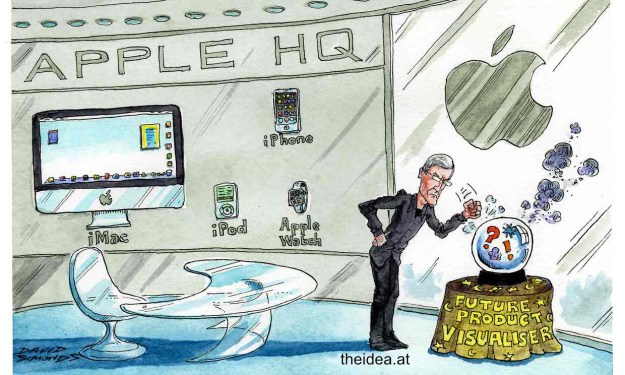
Apple The US giant, 40 years old and looking good, could soon go the dismal way of Sony and Microsoft unless it comes up with something better than the Watch

FutureProductVisualisernew

Does Apple have another 40 years ahead of it, now that it has 40 behind it? As the world’s most valuable public company hit its anniversary last week, it’s the obvious question, in a world where the pace of technological change, enabled by globalisation and the internet, is faster than ever. And the public pressures, from the row with the FBI over unlocking the San Bernardino killer’s iPhone to its tax avoidance through Ireland, aren’t shrinking either.

You only need look at Sony, the famed Japanese company that turns 70 in May (it was founded just after the second world war, in 1946), for an example of how things can go wrong. By its 40th birthday, Sony had invented the Walkman, the compact disc and the Trinitron TV. But the digital world, and then the death of founder Akio Morita, confounded it: despite the success of the PlayStation, it is a shadow of its former self, cutting jobs and struggling to find a space in which it can lead.

The death of Steve Jobs in 2011 was held to be as significant as Morita’s. Five years on, the evidence may not be obvious – but it’s there.

The first is the biggest: the iPhone. The smartphone, as a category, is unique: a computing and communications device that has a potential market of every person on earth. It has only reached about 2.5 billion people so far, but there is an obvious saturation point, even if it is a decade or so away. And analysis suggests that iPhone shipments have already plateaued.

Then, in 2010, the iPad seemed like the next big thing in computing, but in its six-year life it has gone from bang to whimper – twice as quickly as did the iPod, launched in 2001. But at least tablets sell well: the Apple Watch shows no sign of being a hit to compare with either of those, much less the iPhone.

The problem, then, is what Apple does next. Creating a portfolio of products people really want is harder than it sounds. There are well-supported rumours of a car, at some time in the future. So is Apple’s ambition to become the new General Motors? As with the phones and the tablets and the watch, one can only wonder what small slice of the world will be able to afford an Apple car, especially as there have been competitors at all sorts of prices for more than a century.

Cars might also seem old hat in a few years, given the rise of virtual reality systems which overwhelm the senses with new experiences, and artificial intelligence which can outplay the best humans. Maybe travel itself will become outdated. Microsoft (41 years old on Monday) Google (just 18) and Samsung Electronics (47, descended from the even older Samsung) are all making the running here, while Apple seems still to be sitting on the sidelines.

Apple’s power with customers lies principally in its brand, but its executives must avoid the countless dead ends that technology throws up (anyone for 3D TV?) in favour of the deeper streams that can sustain it. Beyond that, it must also stay relevant: Microsoft was once top of the pile, but the rise of the iPhone and Google’s Android left it flat-footed, and it has taken nearly a decade to start finding its way again. If Apple were to miss out on the next wave, whatever that might be, its brand would be tarnished. After that, it’s a long way down.

Chief executive Tim Cook does at least have the reassurance that there are more than 500 million people in the world using upwards of a billion Apple devices. That’s a big audience. The challenge is keeping the show entertaining enough to retain them.

The Aramco float gets stranger and stranger

Get ready for the world’s biggest – and strangest – flotation. Saudi Arabia is to sell shares in its state oil company and its deputy crown prince is prepared to talk dates, which implies seriousness. The public offering will happen next year or maybe in 2018, Mohammed bin Salman said on Friday.

This is part of a hugely ambitious restructuring of the Saudi economy in which the central feature is the establishment of a sovereign wealth fund that will seek to buy non-oil assets. Put a rough value of $2tn on Saudi Aramco – the company’s claimed oil reserves, after all, make Exxon’s look small – and this fund would put equivalent Norwegian or Singaporean versions in the shade. In theory, the Saudis could buy several of the world’s biggest companies, or vast swaths of property in western capitals, and still have spare change.

In practice, life will not be so simple. The Saudis will initially be selling “less than 5%” of Aramco, which is hardly a rushed exit from oil. And, if the state continues to own 95%-plus, whose interests come first? Aramco, remember, accounts for more than half Saudi Arabia’s GDP and it has become entwined in the state’s vast social security programme.

More share sales could follow. But it is hard to believe Saudi Arabia would ever be happy to give up management control of the company, which is what is required if Aramco is ever to be just another investment within the new sovereign wealth fund. The regime, surely, would still want to use its oil to wield political power in its rivalry with Iran.

That is the strange part of the float: investors, in effect, are being offered the chance to be back-seat passengers in a company that, to a large degree, will continue to be an arm of the Saudi state. Wait to see if the flotation documents include fully audited details of the oil and reserves, which have always been kept under close wraps. Only if full disclosure is offered is it really a new world.

Living wage isn’t a step forward for those who miss out

There has been plenty of fanfare around the national living wage. George Osborne went to Asda to highlight what the new £7.20 hourly pay floor means for millions of workers around the UK. It is Britain’s biggest pay rise by the number of people affected and has rightly been welcomed as a step to tackling working poverty, particularly among low-paying industries like retail and restaurants.

But spare a thought for those who will not see their pay packets grow this month. Only over-25s get the new national living wage. So for younger workers Osborne’s new wage merely widens the pay gap between young and old. And while it’s fashionable to demonise big business, the new pay sinners are more likely to be middle-class employers of dogwalkers, babysitters and gardeners. Millions of workers paid cash-in-hand in Britain’s shadow economy also risk missing out.

life virtual 3D teleportation in real-time (Microsoft Research)

life virtual 3D teleportation in real-time (Microsoft Research) changes meetings, events and private entertainment drastically.

Celebrities can join at remote locations with a fraction of the cost of a normal setting, enabling more flexibility in their time-schedules.

holoportation is a new type of 3D capture technology that allows high quality 3D models of people to be reconstructed, compressed, and transmitted anywhere in the world in real-time. When combined with mixed reality displays such as HoloLens, this technology allows users to see and interact with remote participants in 3D as if they are actually present in their physical space. Communicating and interacting with remote users becomes as natural as face to face communication.

Most Cars Will Have Automatic Emergency Braking Standard By 2022

In a significant move, 20 automakers have agreed to make automatic emergency braking standard on their cars by September 1st, 2022. This was announced by the National Highway Traffic Safety Administration and the Insurance Institute for Highway Safety today. The announcement mentions that these automakers represent “more than 99 percent” of the auto market in this country.

Automatic emergency braking systems have long been hailed as effective measures for preventing collisions. Cars are equipped with forward-looking sensors which detect the risk of crashing into the car in front and ping the car to automatically brake should the driver not take any action.


These systems were initially only available in expensive luxury vehicles like the Mercedes-Benz S-Class but have since trickled down the cars you and I can afford. This agreement will go a long way in ensuring that mass market cars feature this technology which can prove to be the difference between life and death in such unfortunate scenarios.

Keep in mind though that this is an agreement and not regulation so there’s nothing compelling car manufacturers from abiding by this agreement. The fact that major car manufacturers in the country have decided to sign their names to the document shows their willingness to work together to bring the benefit of this system to as many people as possible.

Source: http://www.reuters.com/article/us-autos-regulations-safety-idUSKCN0WJ27E

Google and Facebook Team Up to Open Source their Data Centers

485508231

The Evolution of the BatMobile

batman-documentary-carsWarner Bros Online

It takes more than martial-arts training and a cool cape to protect Gotham City. Over the years, Batman has relied on an evolving series of vehicles to help bring down his most infamous enemies.

The Batmobile has changed a lot since the 1941 original. It now has a more imposing, military-influenced design, as seen in „The Dark Knight“ trilogy and the upcoming „Batman v Superman: Dawn of Justice.“

Read on to see how the Batmobile has kept pace with Bruce Wayne’s quest to keep Gotham safe:

The first car to be referred to as a „Batmobile“ appeared in Detective Comics No. 48 in 1941. It was far more subtle than any of its successors. The car, which appears to be inspired by the Cord Roadster, had a small gold bat on the hood.

The first car to be referred to as a "Batmobile" appeared in Detective Comics No. 48 in 1941. It was far more subtle than any of its successors. The car, which appears to be inspired by the Cord Roadster, had a small gold bat on the hood.

DC Comics

The first drivable Batmobile came from Adam West’s 1966 live-action „Batman“ adaptation. Based on the Lincoln Futura, legendary designer George Barris dreamed up the car in 15 days.

Rather than the red and black of previous iterations, the Batmobile from the 1970s „Super Friends“ series was blue and black, with yellow details to highlight the more prominent bat insignia.

Frank Miller’s „The Dark Knight Returns“ (1986) is an important evolution. The Batmobile was overhauled to appear as a redesigned tank. Prioritizing weapons and defense was important to the much more stark version of Gotham in the comic series.

Frank Miller's "The Dark Knight Returns" (1986) is an important evolution. The Batmobile was overhauled to appear as a redesigned tank. Prioritizing weapons and defense was important to the much more stark version of Gotham in the comic series.

DC Comics

Tim Burton’s live-action adaptation of the Batmobile from 1989 is very cool. It’s sleek and imposing, and the jet-black exterior and polished finish really give off a sense of wealth, tying together Bruce Wayne and the Batman persona.

Tim Burton's live-action adaptation of the Batmobile from 1989 is very cool. It's sleek and imposing, and the jet-black exterior and polished finish really give off a sense of wealth, tying together Bruce Wayne and the Batman persona.

Warner Bros.

The 1992 debut of „Batman: The Animated Series“ began a new era. It featured the voice of Kevin Conroy as Batman and debuted the updated sleek Batmobile design seen in the later „Justice League“ spin-off.

The 1992 debut of "Batman: The Animated Series" began a new era. It featured the voice of Kevin Conroy as Batman and debuted the updated sleek Batmobile design seen in the later "Justice League" spin-off.

Warner Bros/YouTube

The Batmobile in „Batman Forever“ (1995) is one of its flashiest appearances, with an almost rib-cage-like design. Its shape is also vaguely reminiscent of the 1989 version.

„Batman & Robin“ (1997) was panned by critics, but its Batmobile isn’t the worst ever. It has a similar shape to previous live-action Batmobiles, but is black instead of the eerie blue glow of the 1995 design.

The live-action „Dark Knight“ trilogy from director Christopher Nolan introduced the Tumbler, an all-terrain, military-inspired version of the Batmobile. It could also be seen as a realization of the Batmobile in Miller’s „The Dark Knight Returns.“

The live-action "Dark Knight" trilogy from director Christopher Nolan introduced the Tumbler, an all-terrain, military-inspired version of the Batmobile. It could also be seen as a realization of the Batmobile in Miller's "The Dark Knight Returns."

REUTERS/ Toby Melville

In a first for the popular „Arkham“ video-game series, players take control of the Batmobile in the quest against Scarecrow’s fear toxin. Heavily inspired by Nolan’s Batmobile, the game also featured un-lockable „skins,“ which changed the vehicle’s appearance to match other famous Batmobile iterations.

 In a first for the popular "Arkham" video-game series, players take control of the Batmobile in the quest against Scarecrow's fear toxin. Heavily inspired by Nolan's Batmobile, the game also featured un-lockable "skins," which changed the vehicle's appearance to match other famous Batmobile iterations.

WB Games

Finally, the upcoming „Batman v Superman“ will usher in a new era for the Dark Knight. Ben Affleck will take on the role, and we’ve already gotten a close look at the new Batmobile, which weighs over 7,000 pounds and, in the film, can drive up to 205 mph.

In real life, the car can reach a speed of 90 mph.

In real life, the car can reach a speed of 90 mph.

Kirsten Acuna/Tech Insider

 http://www.businessinsider.com/batmobile-evolution-2016-3

tug-of-war over who controls and profits from the stream of user data in self-driving cars

google.carx299

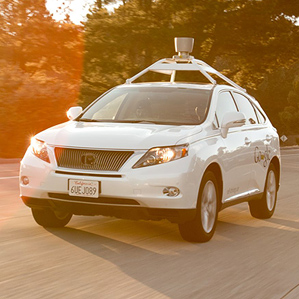
Google’s self-driving car team is expanding and hiring more people with automotive industry expertise, underscoring the company’s determination to move the division past the experimental stage.

The operation now employs at least 170 workers, according to a Reuters review of their profiles on LinkedIn, the business-oriented social network. Many are software and systems engineers, and some come from other departments at Google.

More than 40 of the employees listed on LinkedIn have previous automotive industry experience, with skills ranging from exterior design to manufacturing.

They hail from a wide range of companies, including Tesla Motors Inc, Ford Motor Co. and General Motors Co.

For a look at the composition of Google’s self-driving car team, Google has not disclosed details about the size or composition of its self-driving car team, and Johnny Luu, spokesman for Google’s car team, declined to comment.

The team could have additional members who do not publish profiles on LinkedIn.

Google has said previously that it intends to ready the technology for a marketable self-driving car by 2020, but it may never manufacture vehicles itself.

The tech giant is more likely to contract out manufacturing — much like Apple does with iPhone — or to license technology to existing car manufacturers, automotive industry experts said.

Licensing would follow the model Google has used with its Android operating system for mobile devices.

In the past four weeks, Google has advertised nearly 40 new positions on the team, and many are related to manufacturing.

The team currently has six people with such experience, including purchasing, supplier development and supply chain management.

Hires with manufacturing skills could help Google find and coordinate with a partner to build a vehicle, said Paul Mascarenas, a former Ford executive who is president of FISITA, the International Federation of Engineering Societies.

Google is also engaged in discussions with federal and state regulators about how to revise motor vehicle safety standards to accommodate autonomous cars.

The competition for technical talent is intensifying as tech and automotive companies race to build driverless vehicles.

Beyond Google, the players include Tesla, established car makers such as Daimler AG and GM and, and technology companies such as Apple Inc and Uber Technologies Inc.

Google’s team is being assembled by John Krafcik, an industry veteran who previously headed Hyundai Motor Co’s  U.S. operations and is an expert in product development and manufacturing. Krafcik joined Google in September 2015.

Another senior executive with previous automotive experience, Paul Luskin, was hired last month as operations manager, according to his Linkedin profile.

An engineer with stints at Jaguar Cars, Ford and Japanese supplier Denso Corp, Luskin most recently was president of Ricardo Defense Systems, a unit of Britain’s Ricardo PLC, according to the Linkedin profile.

Google hired industry veteran Andy Warburton in July to head the vehicle engineering team, according to his Linkedin profile.

Warburton spent two years as a senior engineering manager at Tesla and 16 years as an engineering manager at Jaguar.

A third auto veteran, Sameer Kshisagar, joined Google in November as head of global supply management on the self-driving car team. Kshisagar is a manufacturing expert who previously worked for GM, according to his Linkedin profile.

Luskin, Warburton and Kshisagar did not respond to requests for comment.

Google’s self-driving car group also has tapped people with experience beyond the auto industry, including aerospace (Boeing, SpaceX, Jet Propulsion Lab) and electronics (Intel, Samsung, Motorola), according to LinkedIn profiles.

Krafcik and Chris Urmson, director of the car team, have said they want to forge partnerships with established automakers and others to build vehicles. Krafcik made a public pitch for alliances at an auto industry conference in Detroit in January.

However, Google may have to look farther than the auto industry to find a manufacturing partner, said Raj Rajkumar, a Carnegie-Mellon University professor who advises companies on self-driving car development.

The tug-of-war over who controls — and profits from — the stream of user data in self-driving cars is „an inherent and fundamental conflict“ between Google and traditional automakers, Rajkumar said.

Instead, Google may choose to build its own engineering and design prototypes, then partner with a Chinese automaker or an Asian contractor such as Hon Hai Precision Industry’s Foxconn Technology Co that wants to enter the automotive field, several experts said.

Michael Tracy, a Michigan-based auto manufacturing consultant, said Google sees the potential of several different revenue streams from its self-driving technology, including licensing its mapping database and vehicle control software, as well as an integrated package of software, sensors and actuators that would form the backbone of a self-driving vehicle.

The least likely prospect is that Google will manufacture its own vehicles, Tracy said, due to the massive expenditures required and the stiff competition from established automakers.

http://www.voanews.com/content/googles-self-driving-car-team-beefs-up-auto-experience/3217805.html