Archiv der Kategorie: Innovation

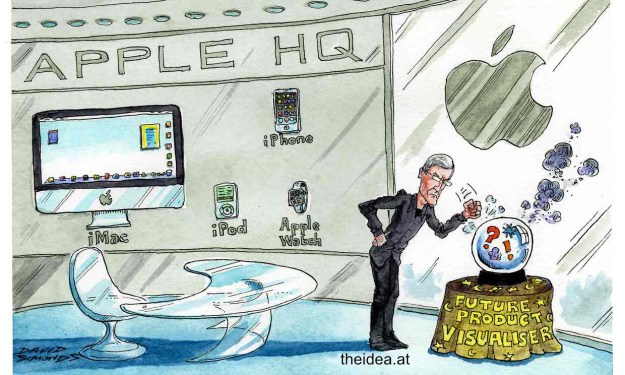
Apple The US giant, 40 years old and looking good, could soon go the dismal way of Sony and Microsoft unless it comes up with something better than the Watch

FutureProductVisualisernew

Does Apple have another 40 years ahead of it, now that it has 40 behind it? As the world’s most valuable public company hit its anniversary last week, it’s the obvious question, in a world where the pace of technological change, enabled by globalisation and the internet, is faster than ever. And the public pressures, from the row with the FBI over unlocking the San Bernardino killer’s iPhone to its tax avoidance through Ireland, aren’t shrinking either.

You only need look at Sony, the famed Japanese company that turns 70 in May (it was founded just after the second world war, in 1946), for an example of how things can go wrong. By its 40th birthday, Sony had invented the Walkman, the compact disc and the Trinitron TV. But the digital world, and then the death of founder Akio Morita, confounded it: despite the success of the PlayStation, it is a shadow of its former self, cutting jobs and struggling to find a space in which it can lead.

The death of Steve Jobs in 2011 was held to be as significant as Morita’s. Five years on, the evidence may not be obvious – but it’s there.

The first is the biggest: the iPhone. The smartphone, as a category, is unique: a computing and communications device that has a potential market of every person on earth. It has only reached about 2.5 billion people so far, but there is an obvious saturation point, even if it is a decade or so away. And analysis suggests that iPhone shipments have already plateaued.

Then, in 2010, the iPad seemed like the next big thing in computing, but in its six-year life it has gone from bang to whimper – twice as quickly as did the iPod, launched in 2001. But at least tablets sell well: the Apple Watch shows no sign of being a hit to compare with either of those, much less the iPhone.

The problem, then, is what Apple does next. Creating a portfolio of products people really want is harder than it sounds. There are well-supported rumours of a car, at some time in the future. So is Apple’s ambition to become the new General Motors? As with the phones and the tablets and the watch, one can only wonder what small slice of the world will be able to afford an Apple car, especially as there have been competitors at all sorts of prices for more than a century.

Cars might also seem old hat in a few years, given the rise of virtual reality systems which overwhelm the senses with new experiences, and artificial intelligence which can outplay the best humans. Maybe travel itself will become outdated. Microsoft (41 years old on Monday) Google (just 18) and Samsung Electronics (47, descended from the even older Samsung) are all making the running here, while Apple seems still to be sitting on the sidelines.

Apple’s power with customers lies principally in its brand, but its executives must avoid the countless dead ends that technology throws up (anyone for 3D TV?) in favour of the deeper streams that can sustain it. Beyond that, it must also stay relevant: Microsoft was once top of the pile, but the rise of the iPhone and Google’s Android left it flat-footed, and it has taken nearly a decade to start finding its way again. If Apple were to miss out on the next wave, whatever that might be, its brand would be tarnished. After that, it’s a long way down.

Chief executive Tim Cook does at least have the reassurance that there are more than 500 million people in the world using upwards of a billion Apple devices. That’s a big audience. The challenge is keeping the show entertaining enough to retain them.

The Aramco float gets stranger and stranger

Get ready for the world’s biggest – and strangest – flotation. Saudi Arabia is to sell shares in its state oil company and its deputy crown prince is prepared to talk dates, which implies seriousness. The public offering will happen next year or maybe in 2018, Mohammed bin Salman said on Friday.

This is part of a hugely ambitious restructuring of the Saudi economy in which the central feature is the establishment of a sovereign wealth fund that will seek to buy non-oil assets. Put a rough value of $2tn on Saudi Aramco – the company’s claimed oil reserves, after all, make Exxon’s look small – and this fund would put equivalent Norwegian or Singaporean versions in the shade. In theory, the Saudis could buy several of the world’s biggest companies, or vast swaths of property in western capitals, and still have spare change.

In practice, life will not be so simple. The Saudis will initially be selling “less than 5%” of Aramco, which is hardly a rushed exit from oil. And, if the state continues to own 95%-plus, whose interests come first? Aramco, remember, accounts for more than half Saudi Arabia’s GDP and it has become entwined in the state’s vast social security programme.

More share sales could follow. But it is hard to believe Saudi Arabia would ever be happy to give up management control of the company, which is what is required if Aramco is ever to be just another investment within the new sovereign wealth fund. The regime, surely, would still want to use its oil to wield political power in its rivalry with Iran.

That is the strange part of the float: investors, in effect, are being offered the chance to be back-seat passengers in a company that, to a large degree, will continue to be an arm of the Saudi state. Wait to see if the flotation documents include fully audited details of the oil and reserves, which have always been kept under close wraps. Only if full disclosure is offered is it really a new world.

Living wage isn’t a step forward for those who miss out

There has been plenty of fanfare around the national living wage. George Osborne went to Asda to highlight what the new £7.20 hourly pay floor means for millions of workers around the UK. It is Britain’s biggest pay rise by the number of people affected and has rightly been welcomed as a step to tackling working poverty, particularly among low-paying industries like retail and restaurants.

But spare a thought for those who will not see their pay packets grow this month. Only over-25s get the new national living wage. So for younger workers Osborne’s new wage merely widens the pay gap between young and old. And while it’s fashionable to demonise big business, the new pay sinners are more likely to be middle-class employers of dogwalkers, babysitters and gardeners. Millions of workers paid cash-in-hand in Britain’s shadow economy also risk missing out.

life virtual 3D teleportation in real-time (Microsoft Research)

life virtual 3D teleportation in real-time (Microsoft Research) changes meetings, events and private entertainment drastically.

Celebrities can join at remote locations with a fraction of the cost of a normal setting, enabling more flexibility in their time-schedules.

holoportation is a new type of 3D capture technology that allows high quality 3D models of people to be reconstructed, compressed, and transmitted anywhere in the world in real-time. When combined with mixed reality displays such as HoloLens, this technology allows users to see and interact with remote participants in 3D as if they are actually present in their physical space. Communicating and interacting with remote users becomes as natural as face to face communication.

Most Cars Will Have Automatic Emergency Braking Standard By 2022

In a significant move, 20 automakers have agreed to make automatic emergency braking standard on their cars by September 1st, 2022. This was announced by the National Highway Traffic Safety Administration and the Insurance Institute for Highway Safety today. The announcement mentions that these automakers represent “more than 99 percent” of the auto market in this country.

Automatic emergency braking systems have long been hailed as effective measures for preventing collisions. Cars are equipped with forward-looking sensors which detect the risk of crashing into the car in front and ping the car to automatically brake should the driver not take any action.


These systems were initially only available in expensive luxury vehicles like the Mercedes-Benz S-Class but have since trickled down the cars you and I can afford. This agreement will go a long way in ensuring that mass market cars feature this technology which can prove to be the difference between life and death in such unfortunate scenarios.

Keep in mind though that this is an agreement and not regulation so there’s nothing compelling car manufacturers from abiding by this agreement. The fact that major car manufacturers in the country have decided to sign their names to the document shows their willingness to work together to bring the benefit of this system to as many people as possible.

Source: http://www.reuters.com/article/us-autos-regulations-safety-idUSKCN0WJ27E

Google and Facebook Team Up to Open Source their Data Centers

485508231

The Evolution of the BatMobile

batman-documentary-carsWarner Bros Online

It takes more than martial-arts training and a cool cape to protect Gotham City. Over the years, Batman has relied on an evolving series of vehicles to help bring down his most infamous enemies.

The Batmobile has changed a lot since the 1941 original. It now has a more imposing, military-influenced design, as seen in „The Dark Knight“ trilogy and the upcoming „Batman v Superman: Dawn of Justice.“

Read on to see how the Batmobile has kept pace with Bruce Wayne’s quest to keep Gotham safe:

The first car to be referred to as a „Batmobile“ appeared in Detective Comics No. 48 in 1941. It was far more subtle than any of its successors. The car, which appears to be inspired by the Cord Roadster, had a small gold bat on the hood.

The first car to be referred to as a "Batmobile" appeared in Detective Comics No. 48 in 1941. It was far more subtle than any of its successors. The car, which appears to be inspired by the Cord Roadster, had a small gold bat on the hood.

DC Comics

The first drivable Batmobile came from Adam West’s 1966 live-action „Batman“ adaptation. Based on the Lincoln Futura, legendary designer George Barris dreamed up the car in 15 days.

Rather than the red and black of previous iterations, the Batmobile from the 1970s „Super Friends“ series was blue and black, with yellow details to highlight the more prominent bat insignia.

Frank Miller’s „The Dark Knight Returns“ (1986) is an important evolution. The Batmobile was overhauled to appear as a redesigned tank. Prioritizing weapons and defense was important to the much more stark version of Gotham in the comic series.

Frank Miller's "The Dark Knight Returns" (1986) is an important evolution. The Batmobile was overhauled to appear as a redesigned tank. Prioritizing weapons and defense was important to the much more stark version of Gotham in the comic series.

DC Comics

Tim Burton’s live-action adaptation of the Batmobile from 1989 is very cool. It’s sleek and imposing, and the jet-black exterior and polished finish really give off a sense of wealth, tying together Bruce Wayne and the Batman persona.

Tim Burton's live-action adaptation of the Batmobile from 1989 is very cool. It's sleek and imposing, and the jet-black exterior and polished finish really give off a sense of wealth, tying together Bruce Wayne and the Batman persona.

Warner Bros.

The 1992 debut of „Batman: The Animated Series“ began a new era. It featured the voice of Kevin Conroy as Batman and debuted the updated sleek Batmobile design seen in the later „Justice League“ spin-off.

The 1992 debut of "Batman: The Animated Series" began a new era. It featured the voice of Kevin Conroy as Batman and debuted the updated sleek Batmobile design seen in the later "Justice League" spin-off.

Warner Bros/YouTube

The Batmobile in „Batman Forever“ (1995) is one of its flashiest appearances, with an almost rib-cage-like design. Its shape is also vaguely reminiscent of the 1989 version.

„Batman & Robin“ (1997) was panned by critics, but its Batmobile isn’t the worst ever. It has a similar shape to previous live-action Batmobiles, but is black instead of the eerie blue glow of the 1995 design.

The live-action „Dark Knight“ trilogy from director Christopher Nolan introduced the Tumbler, an all-terrain, military-inspired version of the Batmobile. It could also be seen as a realization of the Batmobile in Miller’s „The Dark Knight Returns.“

The live-action "Dark Knight" trilogy from director Christopher Nolan introduced the Tumbler, an all-terrain, military-inspired version of the Batmobile. It could also be seen as a realization of the Batmobile in Miller's "The Dark Knight Returns."

REUTERS/ Toby Melville

In a first for the popular „Arkham“ video-game series, players take control of the Batmobile in the quest against Scarecrow’s fear toxin. Heavily inspired by Nolan’s Batmobile, the game also featured un-lockable „skins,“ which changed the vehicle’s appearance to match other famous Batmobile iterations.

 In a first for the popular "Arkham" video-game series, players take control of the Batmobile in the quest against Scarecrow's fear toxin. Heavily inspired by Nolan's Batmobile, the game also featured un-lockable "skins," which changed the vehicle's appearance to match other famous Batmobile iterations.

WB Games

Finally, the upcoming „Batman v Superman“ will usher in a new era for the Dark Knight. Ben Affleck will take on the role, and we’ve already gotten a close look at the new Batmobile, which weighs over 7,000 pounds and, in the film, can drive up to 205 mph.

In real life, the car can reach a speed of 90 mph.

In real life, the car can reach a speed of 90 mph.

Kirsten Acuna/Tech Insider

 http://www.businessinsider.com/batmobile-evolution-2016-3

tug-of-war over who controls and profits from the stream of user data in self-driving cars

google.carx299

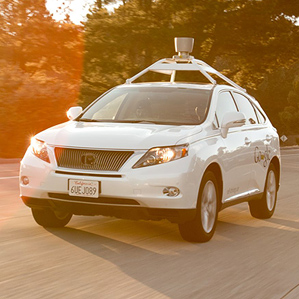
Google’s self-driving car team is expanding and hiring more people with automotive industry expertise, underscoring the company’s determination to move the division past the experimental stage.

The operation now employs at least 170 workers, according to a Reuters review of their profiles on LinkedIn, the business-oriented social network. Many are software and systems engineers, and some come from other departments at Google.

More than 40 of the employees listed on LinkedIn have previous automotive industry experience, with skills ranging from exterior design to manufacturing.

They hail from a wide range of companies, including Tesla Motors Inc, Ford Motor Co. and General Motors Co.

For a look at the composition of Google’s self-driving car team, Google has not disclosed details about the size or composition of its self-driving car team, and Johnny Luu, spokesman for Google’s car team, declined to comment.

The team could have additional members who do not publish profiles on LinkedIn.

Google has said previously that it intends to ready the technology for a marketable self-driving car by 2020, but it may never manufacture vehicles itself.

The tech giant is more likely to contract out manufacturing — much like Apple does with iPhone — or to license technology to existing car manufacturers, automotive industry experts said.

Licensing would follow the model Google has used with its Android operating system for mobile devices.

In the past four weeks, Google has advertised nearly 40 new positions on the team, and many are related to manufacturing.

The team currently has six people with such experience, including purchasing, supplier development and supply chain management.

Hires with manufacturing skills could help Google find and coordinate with a partner to build a vehicle, said Paul Mascarenas, a former Ford executive who is president of FISITA, the International Federation of Engineering Societies.

Google is also engaged in discussions with federal and state regulators about how to revise motor vehicle safety standards to accommodate autonomous cars.

The competition for technical talent is intensifying as tech and automotive companies race to build driverless vehicles.

Beyond Google, the players include Tesla, established car makers such as Daimler AG and GM and, and technology companies such as Apple Inc and Uber Technologies Inc.

Google’s team is being assembled by John Krafcik, an industry veteran who previously headed Hyundai Motor Co’s  U.S. operations and is an expert in product development and manufacturing. Krafcik joined Google in September 2015.

Another senior executive with previous automotive experience, Paul Luskin, was hired last month as operations manager, according to his Linkedin profile.

An engineer with stints at Jaguar Cars, Ford and Japanese supplier Denso Corp, Luskin most recently was president of Ricardo Defense Systems, a unit of Britain’s Ricardo PLC, according to the Linkedin profile.

Google hired industry veteran Andy Warburton in July to head the vehicle engineering team, according to his Linkedin profile.

Warburton spent two years as a senior engineering manager at Tesla and 16 years as an engineering manager at Jaguar.

A third auto veteran, Sameer Kshisagar, joined Google in November as head of global supply management on the self-driving car team. Kshisagar is a manufacturing expert who previously worked for GM, according to his Linkedin profile.

Luskin, Warburton and Kshisagar did not respond to requests for comment.

Google’s self-driving car group also has tapped people with experience beyond the auto industry, including aerospace (Boeing, SpaceX, Jet Propulsion Lab) and electronics (Intel, Samsung, Motorola), according to LinkedIn profiles.

Krafcik and Chris Urmson, director of the car team, have said they want to forge partnerships with established automakers and others to build vehicles. Krafcik made a public pitch for alliances at an auto industry conference in Detroit in January.

However, Google may have to look farther than the auto industry to find a manufacturing partner, said Raj Rajkumar, a Carnegie-Mellon University professor who advises companies on self-driving car development.

The tug-of-war over who controls — and profits from — the stream of user data in self-driving cars is „an inherent and fundamental conflict“ between Google and traditional automakers, Rajkumar said.

Instead, Google may choose to build its own engineering and design prototypes, then partner with a Chinese automaker or an Asian contractor such as Hon Hai Precision Industry’s Foxconn Technology Co that wants to enter the automotive field, several experts said.

Michael Tracy, a Michigan-based auto manufacturing consultant, said Google sees the potential of several different revenue streams from its self-driving technology, including licensing its mapping database and vehicle control software, as well as an integrated package of software, sensors and actuators that would form the backbone of a self-driving vehicle.

The least likely prospect is that Google will manufacture its own vehicles, Tracy said, due to the massive expenditures required and the stiff competition from established automakers.

http://www.voanews.com/content/googles-self-driving-car-team-beefs-up-auto-experience/3217805.html

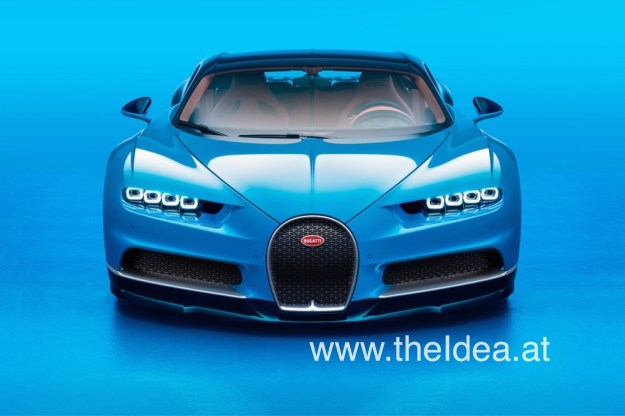
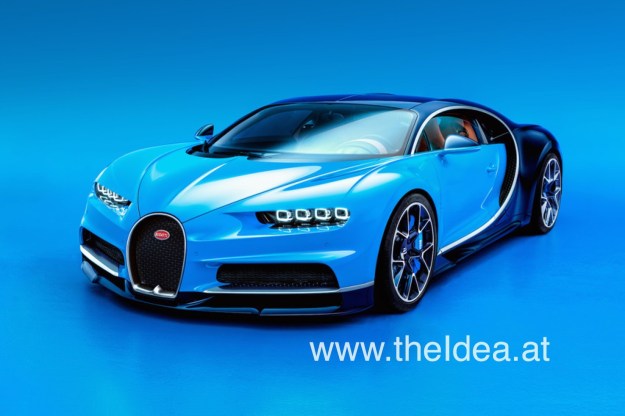
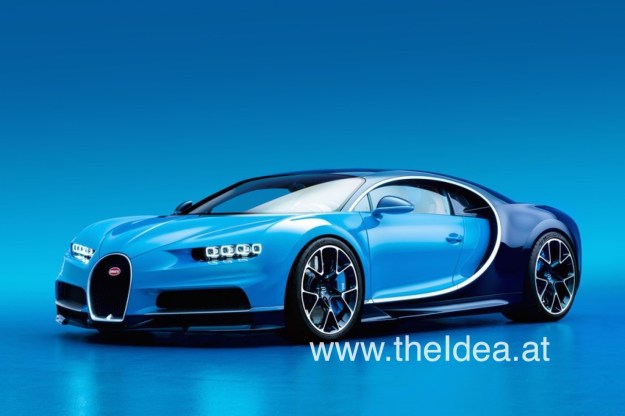
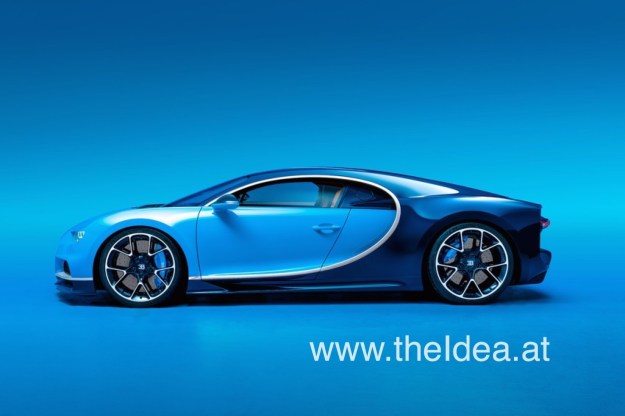
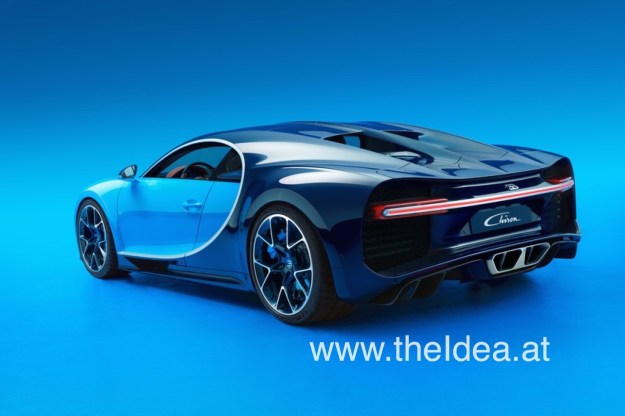
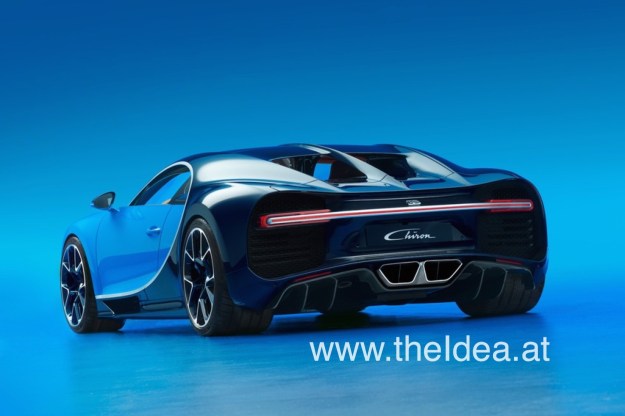
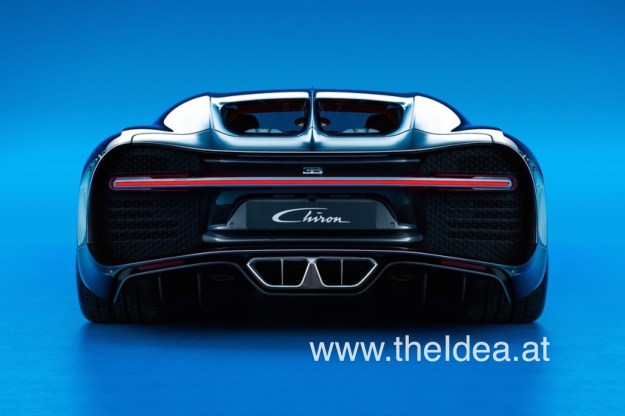
Bugatti’s $2.6 million Chiron is the fastest car in the world

01_chiron_front_web 02_chiron_34-front_web 03_chiron_34-front_web 04_chiron_side_web 05_chiron_34-rear_web 06_chiron_34-rear_web 07_chiron_rear_web 09_chiron_engine-bay_web 15_chiron_grille_web 17_chiron_bugatti-line_web 18_chiron_driver-side_web 20_chiron_steering-wheel_web 22_chiron_speedometer_web 23_chiron_engine-knob_web 24_chiron_knob_web


You might think the super-wealthy have it pretty easy, what with their private islands, private jets and the ability to buy just about anything. But there’s been one thing they’ve not been able to buy in a while: an all-new Bugatti.

In fact, it’s been more than 11 years since the Veyron first went on sale. Can you imagine driving the same Bugatti for a decade? I can’t even.

Thankfully, that more than decade-long nightmare is over; there’s finally an all-new one. It’s called the Chiron. Along with the illustrious French moniker (yes, Bugatti is French), it boasts a 1,500-horsepower 16-cylinder engine, room for two very lucky passengers and a base price of just more than $2.6 million.

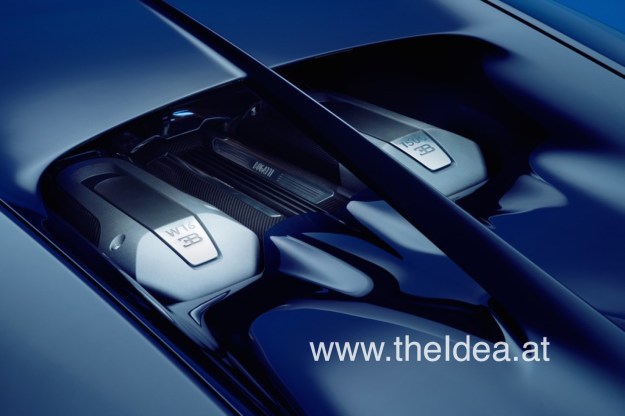
W16
Let’s not mince words here. Granted, simply based upon its price tag, the new Bugatti Chiron will be the chariot of global glitterati. Though, it’s more than a coupe from an elite brand. It hits the roads as the most powerful and fastest production car ever.

That impressive title is thanks to the 8.0-liter W16-cylinder engine mounted in the mid-rear of the car. If you’re not familiar with a W16, that’s OK. Only Bugatti uses such an engine. Imagine two V8s intertwined into one shape. That’s a W16. Imagine two V8s intertwined into one shape. That’s a W16.

Along with two-stage turbocharging (a new Bugatti development), the Chiron’s W16 produces 1,500 horsepower and 1,180 pound-feet of torque. That, along with a very stout all-wheel drive system, allows it to go 0 to 62 mph in 2.5 seconds, and on to a limited top speed (it could do more) of 261 mph (although the speedo goes up to 310 mph). To put that into perspective, a 747 lifts off the ground at 180 mph.

Understandably, to be able to safely keep the car on the road, and, you know, bring it to a stop once in a while, Bugatti engineers had to go to great technical lengths. That meant they had to develop both a chassis and a braking system as stout as the most advanced and technically complex race cars in the world. Moreover, the tires were tested to aerospace tolerances, which makes sense, given the speeds this thing can hit.

Understandably, a huge, fuel-thirsty engine like that produces a lot of tailpipe pollutants at full throttle. Accordingly, the catalytic converters (the devices that clean the exhaust gases as they pass through it) in the titanium exhaust system are six times larger than catalytic converters fitted to a mid-size sedan.

According to Bugatti, if you dissected the Chiron’s catalytic converters, you’d find surfaces — when the many layers are spread out flat — larger than the area of 30 soccer fields. And that’s just in one single car.

Electromagnetic
Of course, in creating the Chiron, Bugatti couldn’t spend all its technical energy on performance. After all, the car needs to be as opulent as it is fast.

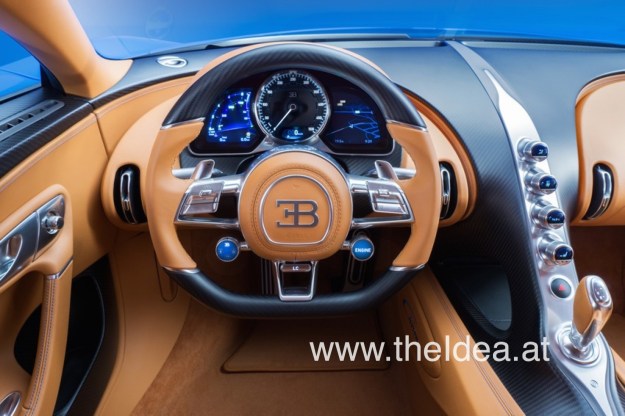
Accordingly, Bugatti engineers created a new instrument cluster with three TFT digital screens as well as an analog speedometer. Cleverly, the faster you drive the Chiron, the more the information displayed falls away. The dedicated infotainment screen fades, as the miles per hour climb in order to limit driver distraction.

Between the driver and the passenger is the signature illuminated C-bar, which is the longest light conductor in the automotive industry. What’s more, its surrounding bezel is machined from a single piece of aluminum. Certainly, this isn’t especially techie, but it is stunning.

Effectively, the Chiron can withstand electromagnetic interference and disruption as well as a military vehicle. This means that the passengers as well as their electronics are about as safe as you can get from electronically harmful electromagnetic waves.

The Chiron effect
Of all the astounding things we’ve just discussed about the Chiron, they’re just the tip of the iceberg.

For example, the front 3D Bugatti logo is covered in gemstone. The cabin sound system was created specifically for the Chiron by the elite German audio system company “accuton” (no, I’ve not heard of it either). And the exterior has been fashioned entirely from carbon fiber.

Perhaps the most astounding thing of all, though, is the fact that — despite the years of development and painstaking attention to detail that went into its creation — Bugatti only plans to ever build 500 Chirons.

Since Bugatti is owned by the Volkswagen Group, I’d like to tell you that some of the tech and features of the Chiron will trickle down into a VW or Audi you can buy in a few years. Truthfully, if it does, it won’t be the stuff you want, like 1,500 horsepower or a gemstone-covered front grille emblem.

Instead, your future car will likely be blessed with lessons learned from Bugatti’s painstaking attention to quality, reliability and precision. That’s because, in order to build a car that can be both the world’s fastest and finest vehicle, it has to be quadruply over-engineered.

That said, I encourage you to still admire the Chiron from afar. Or, better yet, see the latest Bugatti as an aspirational vehicle. Either way, the Bugatti Chiron is going to make the lives of the super-rich very lovely indeed and your future car that much finer.

2017 Bugatti Chiron

http://mashable.com/2016/02/29/2017-bugatti-chiron


Amazon is already after its next $400 billion opportunity

During Amazon’s most recent earnings call, Baird Equity Research analyst Colin Sebastian asked two questions to Amazon CFO Brian Olsavky: one about Amazon Web Services‘ margins, and another about the chances of Amazon expanding its own shipping logistics services to other companies.

The first one got answered promptly, though Olsavsky had to stop mid-sentence because the operator accidentally jumped in early. Still, Olsavsky made it a point to get back and finish his answer.

The second question never got answered.

„If he wanted to talk about it, he would have remembered to answer,“ Sebastian told Business Insider. „Either way, I think the answer is that Amazon doesn’t talk about potential or future services.“

Amazon’s notoriously secretive about its future plans, so it’s not too surprising that Olsavsky skipped Sebastian’s question.

But when you’re going after something as big as the logistics and shipping market, it’s hard to keep your plans under wraps — and a growing amount of evidence suggests Amazon may indeed be going after the delivery and logistics market, which Sebastian pegs as a $400 billion market opportunity.

Next $400 billion opportunity

Over the past few months, we’ve seen a series of reports speculating Amazon’s plan to establish a bigger in-house logistics service that will allow it to potentially bypass its current delivery partners, like UPS and FedEx.

That includes:

Serbastian believes this all points to Amazon building up its in-house logistics delivery network. He envisions Amazon first starting out with its own deliveries, but eventually opening up the service to other companies, putting it in direct competition with the likes of UPS and FedEx.

„Among other opportunities, Amazon has ‚powerhouse potential‘ in the large transportation and logistics market, dominated by global enterprises such as DHL and UPS,“ Sebastian wrote in a recent note.

„Amazon’s cloud technology expertise and increasingly complex fulfillment, logistics and delivery network seem to be obvious foundation to offer third-party services, with an incremental $400-450 billion market opportunity.“

A worker gathers items for delivery from the warehouse floor at Amazon's distribution center in Phoenix, Arizona November 22, 2013.  REUTERS/Ralph D. Freso   Thomson ReutersWorker gathers items for delivery at Amazon’s distribution center in Phoenix

Project Dragon Boat

Perhaps the strongest indication of a bigger Amazon logistics ambition was disclosed last week in a report by Bloomberg’s Spencer Soper.

The report, citing a 2013 Amazon document, revealed an internal project called Dragon Boat, which is intended to become a service that controls everything from picking up the product at the factory in China to delivering it to the end customer in the US.

It said the document described Project Dragon Boat as a „revolutionary system that will automate the entire international supply chain and eliminate much of the legacy waste associated with document handling and freight booking.“

„Sellers will no longer book with DHL, UPS, or FedEx but will book directly with Amazon,“ the report said.

When Amazon’s Olsavsky was asked about its logistics plan again by another analyst during earnings call, he simply shrugged it off as a complementary service, saying it’s intended to supplement, not replace, existing delivery companies.

„What we found in order to properly serve our customers at peak, we’ve needed to add more of our own logistics to supplement our existing partners. That’s not meant to replace them,“ Olsavsky said.

Next AWS

Werner Vogels, Amazon.com chief technology officer, speaks at the AWS Re:Invent conference at the Sands Expo in Las Vegas, Nevada November 29, 2012. REUTERS/Richard Brian Thomson ReutersVogels, Amazon.com chief technology officer, speaks at the AWS Re:Invent conference at the Sands Expo in Las Vegas

But don’t expect Amazon’s logistics business to expand overnight.

If anything, it’s going to take a few years to fully ramp up and establish itself to become a viable delivery option for other companies, according to Sebastian.

„They will start small, mostly to add capacity for their own business, but then, over time, as they gain more expertise, they will offer extra capacity to other companies,“ Sebastian told us.

In that sense, it could follow the path of Amazon Web Services, its cloud computing service that’s now generating almost $8 billion in annual revenue.

Amazon built AWS out of the infrastructure it had created to support its own operations, but it’s now become one of the most widely used cloud computing platforms, used by everything from small startups to big companies like Netflix and GE.

„I think it’s like AWS,“ Sebastian said. „But it took 10 years for AWS to get as large as it is.“

http://www.businessinsider.de/signs-of-amazon-getting-into-logistics-2016-2

How GM Beat Tesla to the First True Mass-Market Electric Car

General Motors first unveiled the Chevy Bolt as a concept car in January 2015, billing it as a vehicle that would offer 200 miles of range for just $30,000 (after a $7,500 federal tax credit). Barring any unforeseen delays, the first Bolts will roll off the production line at GM’s Orion Assembly facility in Michigan by the end of 2016. As Pam Fletcher, GM’s executive chief engineer for electric vehicles, recently put it to me with a confident grin: “Who wants to be second?”

For GM, the Bolt stands to offer a head start in a new kind of market for electric cars. But for the rest of us, there’s a broader significance to this news. It’s not just that Chevy will likely be first. It’s that a car company as lumbering and gigantic as GM, with infrastructure and manufacturing capacity on an epic scale, has gotten there first—and is there now. Tesla is nimble, innovative, and fun to watch, as companies go. But the Bolt is far more significant than any offering from Tesla ever could be. Why? Think of the old saw about how long it takes to turn an aircraft carrier around: It’s slow, and there’s not much to see at any given moment. But the thing about people who actually manage to turn one around is: They’ve got a freaking aircraft carrier.

Mary Barra, the CEO of GM, is a company lifer who has spent years shepherding the Bolt into existence. Joe Pugliese

EFORE WE GO any further, let’s pause for a moment to savor just how richly ironic it is that General Motors is about to take the lead in the electric car race. GM is, after all, a company that went bankrupt just seven years ago and survived only with the help of a federal bailout; a company whose board of directors was described by President Obama’s auto czar, Steven Rattner, as “utterly docile” in the face of impending disaster; a company that has been the butt of jokes about its lackluster, unreliable, macho cars for years; a company that churned out Hummers while Toyota gave us the Prius. And even more to the point, we’re talking about a company that has a long history with electric vehicles—the way South Park has a long history with Kenny.

That’s right. General Motors killed the electric car. More than once.

In the earliest days of the auto industry, electric cars were about as popular as their combustion-powered counterparts. Just like today, they were cleaner and quieter but more limited in range than the competition. Plus, they didn’t require a hand crank to start—an annoying feature of early combustion vehicles that occasionally resulted in broken fingers. But in 1912, Cadillac, GM’s luxury arm, came out with the first electric starter for gas-powered vehicles. Electric cars died out shortly thereafter, and in a cloud of exhaust GM surged to become the world’s largest carmaker.

Fast-forward 84 years, and for a brief interlude it looked like GM was about to take the lead in bringing electrics back. In 1996, in response to a California mandate that required automakers to have zero-emissions vehicles ready for market by 1998, GM rolled out the EV1, the first mass-produced electric vehicle of the modern era. The funny-looking two-seater had a range of about 50 miles and was offered for lease to consumers in California and Arizona. It was impractical, dinky, and entirely doomed. It earned a small coterie of devotees but held little appeal for mainstream consumers. It used almost all unique parts, forfeiting the advantages of GM’s scale. And even as GM’s EV1 team was busy building the car, GM’s lawyers were lobbying hard, side by side with the other big automakers, to get California to back off its requirement.

Charging Through History

In the early days of the automobile, electric cars outnumbered gasoline-powered vehicles on America’s rutted, manure-strewn roads. But even as the internal combustion engine became the automobile’s dominant power source, the dream of the electric car never died. —Jordan Crucchiola

And so Lutz, a guy who would later declare that global warming is a “total crock of shit,” began lobbying GM’s leadership to make the biggest, greenest play possible. He didn’t want GM to just build a me-too hybrid to compete with Toyota. He wanted GM to build a fully electric car that almost anyone could afford to buy and that wasn’t limited by range. He wanted, in effect, to build the Bolt. But the technology wasn’t there. The car that GM actually built at Lutz’s insistence—the Chevy Volt—went on to become one of the most talked-about American vehicles in decades, for a whole host of reasons, many of them symbolic. But in-house, says Tony Posawatz, the engineer who led the team that developed the Volt, it was very clear that this was going to be a transitional car—a warm-up for GM’s electric long game.

For the Volt, GM settled on a design that was neither a Prius-style hybrid nor a pure electric car but something in between called an extended-range electric vehicle. The setup would combine a plug-in battery strong enough to serve as the car’s main power train, plus a motor with a small gas engine that would work as a generator, creating electricity to keep the vehicle going when the battery was depleted. But even that hybrid design forced GM engineers, to a remarkable extent, to become cavemen rediscovering fire.

Being inside the Bolt feels a bit like flying economy class on a brand-new, state-of-the-art plane.

Nearly everything changes when you opt for a fundamentally different power train, so GM’s greatest advantage—more than a century of experience building cars—was all but moot. Car structure was different, since they were building around a battery, not an engine. The brakes, steering, and air conditioner were powered differently. New systems, from electromagnetics for the motors to onboard and off-board charging, each came with its own learning curve. The engineers didn’t have established tests to follow. Just turning on the car required finding the perfect sequence of electrical signals from more than a dozen modules. “Oh my God, it took us forever to get the first Volt to start,” Fletcher says.

Then there was the battery. Lithium-ion chemistry was a new thing 10 years ago, and the Volt team quickly discovered how much of a pain in the neck it is. “Batteries wear out just sitting there, and they wear out when you cycle them,” says Bill Wallace, GM’s head battery engineer. “And then they wear out if you over-discharge them, or if you overcharge them.” They’re extremely sensitive to temperature. They change shape as they charge and discharge. They can also catch fire.

In short, all these problems were new to a company whose experience lay in what Lutz calls “the oily bits.” So the team set about developing the expertise it lacked. GM established a curriculum with the University of Michigan to train battery engineers. It filled a vacant building in Brownstown, Michigan, with the equipment to make battery packs. The engineers created test procedures and wrote them down as they went. They modeled different use cases for the Volt, from a woman in northern Minnesota who plugs in every night to a guy in Miami who drives 100 miles a day. They built the battery lab and brought in the blue environmental chambers, then used them to see how the battery would stand up to each situation. “We invented the idea of what the lab should be,” Fletcher says.

The Volt project was still in its infancy when the US economy tanked in 2008, sending GM into shock. The company began losing $1 billion a month and started cleaving off limbs in desperation, eliminating or selling its Pontiac, Saturn, Saab, and Hummer brands. The Volt project could easily have fallen under the ax as well—but instead it took on an outsize significance. President Obama seized on the car as one reason GM was worth a $40 billion bailout, holding it up as a sign that the bankrupt automaker could adapt. The Volt finally went on sale in December 2010, to accolades (“A bunch of Midwestern engineers in bad haircuts and cheap wristwatches just out-engineered every other car company on the planet.” —The Wall Street Journal) and jeers (“roller skates with a plug” —Fox News).

As for actual drivers, they were pretty into the Volt. The car posted stellar customer satisfaction ratings, and nearly 70 percent of its drivers were new to Chevy. The trouble was that there simply weren’t many buyers. In 2011, GM’s CEO at the time, Dan Akerson, told reporters he wanted to produce 60,000 Volts the next year. To date, Chevy has sold about 80,000—total. The Volt was a powerful symbol, but it wasn’t that significant a vehicle. Buyers soon had more innovative cars to choose from. The all-electric Nissan Leaf hit the market at around the same time as the Volt, for a similar price. In 2012, Tesla introduced its first-generation Model S, with upwards of 200 miles per charge.

But the real significance of the Volt was that it gave GM a brand-new manufacturing and engineering platform for electric vehicles, where it had had none before. “Once you make the leap, and you have a big battery, and you have electric motors,” Posawatz says, “you’ve done all the hard stuff.” And then you might just see an opportunity to gun for the finish line.

Joe Pugliese

N THE MORNING of April 2, 2014, US senator Barbara Boxer glared down from behind a microphone in a Senate hearing room in Washington, DC, demanding answers from America’s industrial problem child, General Motors. The company had just instituted its largest recall ever, after reports that faulty ignition switches on millions of cars from the 2000s had been responsible for numerous deaths and injuries. Boxer, as part of a congressional investigative committee, was castigating GM’s new CEO, Mary Barra, who had been in the job a mere three weeks. “Woman to woman, I am very disappointed,” Boxer said. “The culture that you are representing here today is a culture of the status quo.”

Barra sat there, practicing the studiously neutral, calmly repentant facial nonexpression of someone getting grilled by Congress. The main theme of Barra’s testimony was that the old GM—with a docile, nodding bureaucratic culture that swept problems under the rug—had died with the company’s 2009 bankruptcy, bailout, and restructuring and that the new GM was different. But the “culture of the status quo” charge wasn’t so easy for Barra, of all people, to deflect: She’s not only a GM lifer, she’s a second-generation lifer. Her dad was a die-maker for Pontiac, and she started with the company when she was 18. (She’s 54 now.)

On the other hand, Barra had a strong hand in a lot of the most transformative stuff going on at GM. Chief case in point: Not long before she became CEO, Barra had been tapped to run development of new products, the position once held by Lutz. So by the time she was hauled before Congress in 2014 to answer for the company’s past sins, she had been overseeing the efforts of GM’s electrification gang for three years.

When I walk into Barra’s office one recent fall day, she’s standing in front of her desk wearing black pants, a black turtleneck, and an Apple Watch. (Offsetting the Steve Jobs vibe just a bit is a calendar on the wall that shows a fluffy white cat in the backseat of an Opel Corsa.) As Barra tells it, the process to develop the Bolt really took off when GM’s team was regrouping after a major setback. In 2012, GM invested in a California startup called Envia, which had developed a new battery that posted incredible performance numbers. Envia promised to deliver a 200-mile battery by fall 2013. But its technology turned out to be a flop.

Not only is GM likely to win the race, it may have the winner’s circle to itself for some time.

So in spring 2013, GM’s senior leaders and the most important figures on its electrification team gathered in the virtual reality room of the company’s Design Center to assess the situation. “We started to go, ‘OK, what can we do?’” Barra says. Was there another route to 200 miles? The EV folks hesitated but started pulling together different elements—improvements in battery life, cost savings in motors—that, combined, might represent a way forward. “We can push our way toward 200,” Fletcher recalls thinking.

The meeting turned into a full-on brainstorming session, one that ended, Barra says, with what looked like a viable path to the Bolt: “And we all went, ‘Let’s do that.’”

And so the design team set to work devising a car that would appeal to consumers well beyond the ecowarrior, early-adopter demographic. Some flashy ideas were thrown out early on: A carbon fiber body? Lightweight but too expensive at this price point. Suicide doors? Eye-catching, but they added mass without functional benefits. Capped wheels? Good for aerodynamics, but they signaled something science project–y. “It’s got to look like a serious car,” design lead Stuart Norris says. The team delivered as spacious an interior as possible, with upright glass to make the relatively small car feel more substantial and a raised driving position for a commanding view of the road.

Meanwhile, the technical folks set about making Norris’ design go 200 miles on a charge. At their most basic, batteries are made of powders, the morphology of which—grain size, distribution, how they’re bound together—is key to the power and energy of each cell. LG, General Motors’ battery provider, had cooked up a noticeably improved cell that retained energy capacity particularly well when it got hot, as lithium-ion batteries tend to. That meant Chevy could use a smaller cooling system and stick more cells in the battery pack for more range. LG also improved the battery’s conductivity, so the ions flowed faster, translating to quicker acceleration (the Bolt can go from 0 to 60 in seven seconds).

As soon as the battery was ready, engineers at GM’s Michigan proving ground hacked together a bastard car using the front half of a Chevy Sonic and the rear of a Buick Encore. They called it the Soncore and fitted it with the Bolt battery pack and motor, using the Franken-vehicle to make sure the propulsion system worked. That way, once the real Bolt body was in development, the teams responsible for the car’s chassis controls, vehicle dynamics, and suspension tuning could get right to work.

As 2014 bled into 2015, Chevy engineers built about 100 Bolt prototypes, shipping them around the US for real-world testing to verify the findings of the battery lab. The cars went to Arizona and Florida. The team drove them up the California coast and negotiated San Francisco traffic. They ran the prototypes over rough roads, looking for ways to reduce noise and vibration (extra-tricky in a car with no engine to mask odd sounds). They chose specially developed Michelin tires to minimize rolling resistance and improve range. Working fast, they made thousands of changes to the car, constantly looking for ways to improve. By the time I arrived for a test-drive, in October, the team still had more than 500 open work orders to complete.

Joe Pugliese