Archiv der Kategorie: Wirtschaft

Digital-Savvy Millennials Will Sacrifice Privacy for Personalization – And that’s good news for marketers

Marketers have grappled with privacy regulations for years, but the rise of younger generations who are accustomed to receiving targeted digital ads may finally be changing the game for retail brands.

Speaking during a panel titled „Retail: Convergence of digital and physical,“ Nick Jones, evp of innovation and growth at Leo Burnett’s Arc Worldwide retail practice, said millennials and Gen-Z  are warming to technologies like NFC (near field communication) and mobile payments that deliver personalized content such as coupons or videos.

„By definition, things like NFC are opt-in because the shopper is making a decision to tap the product,“ he said. „The new generation of millennials and even younger audiences are getting more familiar with that kind of blended world where there isn’t quite as much of a protection of privacy.

„Frankly, they’ve kind of grown up with the personalization of content where I’m aware of where you’ve shopped, where you left a [shopping] basket, and I’m going to remind you. They see that more as a value than necessarily an intrusion of their privacy.“

http://www.adweek.com/news/technology/digital-savvy-millennials-will-sacrifice-privacy-personalization-says-leo-burnett-exec-169869

Money Moves From Warren Buffett

Want to end 2016 with more money than you started it with? Here’s how.

http://www.inc.com/minda-zetlin/7-wise-money-moves-for-2016-from-warren-buffett-tony-robbins-and-other-experts.html


IMAGE: Getty Images

Will 2016 be the year you start building real wealth? It can be if you set your mind to it. Every year, the personal finance site GOBankingRates asks the world’s most famous financial experts for their tips for the coming year. Here are some of the best–which you can do no matter how much or how little money you have at the moment. Follow this advice and you’ll end 2016 with more money in the bank (or investments) than you have now.

These are the seven best tips from the full list on how to save money:

1. Never lose money.

This is one bit of wisdom that Warren Buffett likes to repeat. He puts it this way: „Rule No. 1: Never lose money. Rule No. 2: Never forget rule No. 1.“ What does this actually mean? Especially coming from the Oracle of Omaha, who has taken some fairly public losses on some very big investments himself–while remaining one of the most successful investors ever known?

Interpretations differ but I think it means to carefully consider the down side of any investment and to avoid investing in anything that doesn’t inspire high confidence in the value of the investment and that you don’t have a thorough understanding of. (This is why Buffett has often said he doesn’t invest in tech, and when he broke that rule by investing in IBM, he broke his rule about never losing money as well.)

2. Build a carefully balanced portfolio.

Angered by the losses ordinary people incurred due to banker misbehavior in the financial crisis, Tony Robbins went on a mission to learn what he could about finance from the best minds in the business. His advice is to create a mix of investments that adheres to the following four principles: Never lose money (see above); find investments which offers potential rewards that are greater than potential risks; create a tax-efficient portfolio so you get to keep your money instead of having to give it to the government; and diversify your investments. Do that, he says, and „you’re protected no matter what.“

3. Save. Any amount.

Bestselling author and analyst Whitney Johnson advises people to invest–no matter what. Even saving a few dollars a week can amount to a surprisingly large amount of money if you do it over many years. And to be safe in case of an unexpected financial setback, she says, you should have „at least six months of what you spend monthly in the bank. Period.“

4. Plan for how you’ll reach your financial goals.

Setting a financial goal is the easy part, says former Buffalo Bills wide receiver and personal finance author Chris Hogan. It’s like the difference between wishing you could go to the beach and loading up the car with towels and putting gas in the tank. „The necessity of a plan sounds simple, but it is the one thing that many people overlook when it comes to their money,“ he says. „And a dream without a plan is simply a wish.“

5. Negotiate everything.

Everything from your cable plan to your medical expenses can be negotiated, advises plainspoken financial expert Nicole Lapin, author of Rich Bitch. All it takes is a small investment of time and a little bit of guts.

„The worst thing they can say is no. And they usually won’t,“ she says. So, she advises, call all your providers right now and ask for better pricing. „It’s the best way to start a financially fabulous New Year.“

6. Stop spending your future wealth.

Yup, that Apple Watch is awfully tempting. But the more you give in to short-term splurges, the less wealth you’ll save in the long term, says financial coach and serial entrepreneur Josh Felber. For purchases large and small, consider whether you’d rather have that item right now or whether you can make do with something less expensive, older, or used, or something you already have.

„To create real wealth, you must quit spending your future wealth on goods and services that you want today, but deprive you of wealth long term,“ he says.

7. Learn about finances.

Don’t let someone else make the decisions about your money just because you feel like you can’t understand finance, advises Rich Dad, Poor Dad author Robert Kiyosaki.

„Don’t wait for the government, a financial adviser, or your boss to take care of you,“ he says. Instead, he says, become financially educated so that you can make informed decisions for yourself. „Take responsibility for your life and your future,“ he says. „Don’t give that right away.“


Warren Buffett’s 23 Most Brilliant Insights About Investing

http://www.businessinsider.de/warren-buffetts-investing-quotes-2014-8?op=1

Warren Buffett, the billionaire „Oracle of Omaha“ continues to be involved in some of the biggest investment plays in the world.

Buffett is undoubtedly the most successful investor in history. His investment philosophy is no secret, and he has repeatedly shared bits and pieces of it through a lifetime of quips and memorable quotes.

His brilliance is timeless, and we find ourselves referring back to them over and over again.

We compiled a few of Buffett’s best quotes from his TV appearances, newspaper op-eds, magazine interviews, and of course his annual letters.

Buying a stock is about more than just the price.

Buying a stock is about more than just the price.

YouTube/Coca-Cola

Coca-Cola is one of Buffett’s most successful investments.

„It’s far better to buy a wonderful company at a fair price than a fair company at a wonderful price.“

Source: Letter to shareholders, 1989

You don’t have to be a genius to invest well.

You don't have to be a genius to invest well.

Associated Press

Albert Einstein

„You don’t need to be a rocket scientist. Investing is not a game where the guy with the 160 IQ beats the guy with 130 IQ.“

Source: Warren Buffett Speaks, via msnbc.msn

But, master the basics.

But, master the basics.

REUTERS/Eric Gaillard

„To invest successfully, you need not understand beta, efficient markets, modern portfolio theory, option pricing or emerging markets. You may, in fact, be better off knowing nothing of these. That, of course, is not the prevailing view at most business schools, whose finance curriculum tends to be dominated by such subjects. In our view, though, investment students need only two well-taught courses – How to Value a Business, and How to Think About Market Prices.“

Source: Chairman’s Letter, 1996

Don’t buy a stock just because everyone hates it.

Don't buy a stock just because everyone hates it.

YouTube

„None of this means, however, that a business or stock is an intelligent purchase simply because it is unpopular; a contrarian approach is just as foolish as a follow-the-crowd strategy. What’s required is thinking rather than polling. Unfortunately, Bertrand Russell’s observation about life in general applies with unusual force in the financial world: „Most men would rather die than think. Many do.“

Source: Chairman’s Letter, 1990

Bad things aren’t obvious when times are good.

„After all, you only find out who is swimming naked when the tide goes out.“

Source: Letter to shareholders, 2001

Always be liquid.

„I have pledged – to you, the rating agencies and myself – to always run Berkshire with more than ample cash. We never want to count on the kindness of strangers in order to meet tomorrow’s obligations. When forced to choose, I will not trade even a night’s sleep for the chance of extra profits.“

 Source: Letter to shareholders, 2008

The best time to buy a company is when it’s in trouble.

The best time to buy a company is when it's in trouble.

Reuters

„The best thing that happens to us is when a great company gets into temporary trouble…We want to buy them when they’re on the operating table.“

Source: Businessweek, 1999

Stocks have always come out of crises.

Stocks have always come out of crises.

AP Images

New York Stock Exchange, October 1929

Over the long term, the stock market news will be good. In the 20th century, the United States endured two world wars and other traumatic and expensive military conflicts; the Depression; a dozen or so recessions and financial panics; oil shocks; a flu epidemic; and the resignation of a disgraced president. Yet the Dow rose from 66 to 11,497.“

Source: The New York Times, October 16, 2008

Don’t be fooled by that Cinderella feeling you get from great returns.

„The line separating investment and speculation, which is never bright and clear, becomes blurred still further when most market participants have recently enjoyed triumphs. Nothing sedates rationality like large doses of effortless money. After a heady experience of that kind, normally sensible people drift into behavior akin to that of Cinderella at the ball. They know that overstaying the festivities ¾ that is, continuing to speculate in companies that have gigantic valuations relative to the cash they are likely to generate in the future ¾ will eventually bring on pumpkins and mice. But they nevertheless hate to miss a single minute of what is one helluva party. Therefore, the giddy participants all plan to leave just seconds before midnight. There’s a problem, though: They are dancing in a room in which the clocks have no hands.“

Source: Letter to shareholders, 2000

Think long-term.

„Your goal as an investor should simply be to purchase, at a rational price, a part interest in an easily-understandable business whose earnings are virtually certain to be materially higher five, ten and twenty years from now. Over time, you will find only a few companies that meet these standards – so when you see one that qualifies, you should buy a meaningful amount of stock. You must also resist the temptation to stray from your guidelines: If you aren’t willing to own a stock for ten years, don’t even think about owning it for ten minutes. Put together a portfolio of companies whose aggregate earnings march upward over the years, and so also will the portfolio’s market value.“

Source: Chairman’s Letter, 1996

Forever is a good holding period.

„When we own portions of outstanding businesses with outstanding managements, our favorite holding period is forever.“

Source: Letter to shareholders, 1988

Buy businesses that can be run by idiots.

Buy businesses that can be run by idiots.

screengrab from Dumb & Dumber

Dumb & Dumber

I try to buy stock in businesses that are so wonderful that an idiot can run them. Because sooner or later, one will.

Source: Business Insider

Be greedy when others are fearful.

Be greedy when others are fearful.

IMDB

„Wall Street: Money Never Sleeps“

„Investors should remember that excitement and expenses are their enemies. And if they insist on trying to time their participation in equities, they should try to be fearful when others are greedy and greedy only when others are fearful.“

Source: Letter to shareholders, 2004

You don’t have to move at every opportunity.

You don't have to move at every opportunity.

Brian Kersey / Getty Images

„The stock market is a no-called-strike game. You don’t have to swing at everything–you can wait for your pitch. The problem when you’re a money manager is that your fans keep yelling, ‚Swing, you bum!'“

Source: The Tao of Warren Buffett via Engineeringnews.com

Ignore politics and macroeconomics when picking stocks.

Ignore politics and macroeconomics when picking stocks.

REUTERS/Rebecca Cook

A car blows up on the set of „Red Dawn“ in Detroit, Michigan.

„We will continue to ignore political and economic forecasts, which are an expensive distraction for many investors and businessmen. Thirty years ago, no one could have foreseen the huge expansion of the Vietnam War, wage and price controls, two oil shocks, the resignation of a president, the dissolution of the Soviet Union, a one-day drop in the Dow of 508 points, or treasury bill yields fluctuating between 2.8% and 17.4%.

„But, surprise – none of these blockbuster events made the slightest dent in Ben Graham’s investment principles. Nor did they render unsound the negotiated purchases of fine businesses at sensible prices. Imagine the cost to us, then, if we had let a fear of unknowns cause us to defer or alter the deployment of capital. Indeed, we have usually made our best purchases when apprehensions about some macro event were at a peak. Fear is the foe of the faddist, but the friend of the fundamentalist.

Source: Chairman’s Letter, 1994

The more you trade, the more you underperform.

The more you trade, the more you underperform.

Wikimedia Commons

Isaac Newton

„Long ago, Sir Isaac Newton gave us three laws of motion, which were the work of genius. But Sir Isaac’s talents didn’t extend to investing: He lost a bundle in the South Sea Bubble, explaining later, “I can calculate the movement of the stars, but not the madness of men.” If he had not been traumatized by this loss, Sir Isaac might well have gone on to discover the Fourth Law of Motion: For investors as a whole, returns decrease as motion increases.“

Source: Letters to shareholders, 2005

Price and value are not the same

Price and value are not the same

REUTERS/Juan Medina

„Long ago, Ben Graham taught me that ‚Price is what you pay; value is what you get.‘ Whether we’re talking about socks or stocks, I like buying quality merchandise when it is marked down.

Source: Letter to shareholders, 2008

There are no bonus points for complicated investments.

There are no bonus points for complicated investments.

REUTERS/Vasily Fedosenko

„Our investments continue to be few in number and simple in concept: The truly big investment idea can usually be explained in a short paragraph. We like a business with enduring competitive advantages that is run by able and owner-oriented people. When these attributes exist, and when we can make purchases at sensible prices, it is hard to go wrong (a challenge we periodically manage to overcome).

„Investors should remember that their scorecard is not computed using Olympic-diving methods: Degree-of-difficulty doesn’t count. If you are right about a business whole value is largely dependent on a single key factor that is both easy to understand and enduring, the payoff is the same as if you had correctly analyzed an investment alternative characterized by many constantly shifting and complex variables.“

Source: Chairman’s Letter, 1994

A good businessperson makes a good investor.

A good businessperson makes a good investor.

REUTERS/Shannon Stapleton

Warren Buffett

„I am a better investor because I am a businessman, and a better businessman because I am no investor.“

Source: Forbes.com – Thoughts On The Business Life

Higher taxes aren’t a dealbreaker.

„SUPPOSE that an investor you admire and trust comes to you with an investment idea. “This is a good one,” he says enthusiastically. “I’m in it, and I think you should be, too.”

Would your reply possibly be this? “Well, it all depends on what my tax rate will be on the gain you’re saying we’re going to make. If the taxes are too high, I would rather leave the money in my savings account, earning a quarter of 1 percent.” Only in Grover Norquist’s imagination does such a response exist.“

Source: New York Times

Companies that don’t change can be great investments.

„Our approach is very much profiting from lack of change rather than from change. With Wrigley chewing gum, it’s the lack of change that appeals to me. I don’t think it is going to be hurt by the Internet. That’s the kind of business I like.“

Source: Businessweek, 1999

Time will tell.

Time will tell.

REUTERS/Pool/Sergei Chirikov

„Time is the friend of the wonderful business, the enemy of the mediocre.“

Source: Letters to shareholders 1989

This is the most important thing.

„Rule No. 1: never lose money; rule No. 2: don’t forget rule No. 1“

Source: The Tao of Warren Buffett

Apple now makes 94% of the profits in the smartphone industry

Source: http://www.businessinsider.de/apple-dominates-profits-by-smartphone-maker-2015-11?r=US&IR=T

Smartphone_Share_2015

Apple now makes 94% of the profits in the smartphone industry, according to recent research by Canacord.

This historical chart compiled by Statista shows how quickly and utterly Apple has dominated the smartphone market. Samsung is now the only other major handset company earning significant profits from smartphones.

Five years ago, the iPhone was still the top profit-maker, but a lot of other companies were in the game. Since then, the platform battle has become a two-player race between Apple’s iOS and Google’s Android, driving third-way competitors like BlackBerry and Microsoft/Nokia down into the loss zone. The fierce competition between Android handset makers, particularly with the rise of inexpensive Chinese Android phones, has also sucked a lot of profit out of the market.

Carrier Deutsche Telekom Targets Startups After Europe Agrees Net Neutrality Rules

Source: http://techcrunch.com/2015/10/30/guaranteed-good-transmission-quality-vs-paid-prioritisation/

Well that was quick. Europe’s controversial new net neutrality rules haven’t even come into force yet and German mobile carrier Deutsche Telekom is suggesting it intends to charge startups to boost the quality of their services under the new rules — as many in the tech industry had feared.

One of the problems with the incoming rules, which will come into force on April 30, 2016, is their provision to allow for preferential treatment of Internet traffic for so called “specialized services”.

The EC has been couching these as “services like IPTV, high-definition videoconferencing or healthcare services like telesurgery” — which it says use the Internet protocol and the same access network but “require a significant improvement in quality or the possibility to guarantee some technical requirements to their end-users”.

Ergo it’s been trying to claim they are not the same as ‘normal’ Internet access services, whatever those might be.

Writing an explainer on this aspect of the rules back in June, it said: “The possibility to provide innovative services with enhanced quality of service is crucial for European start-ups and will boost online innovation in Europe. However, such services must not be a sold as substitute for the open Internet access, they come on top of it.”

The actual wording of the now agreed net neutrality rules — as pertains to these specialized services — states (emphasis mine):

There is demand on the part of providers of content, applications and services to be able to provide electronic communication services other than internet access services, for which specific levels of quality, that are not assured by internet access services, are necessary. Such specific levels of quality are, for instance, required by some services responding to a public interest or by some new machine-to-machine communications services. Providers of electronic communications to the public, including providers of internet access services, and providers of content, applications and services should therefore be free to offer services which are not internet access services and which are optimised for specific content, applications or services, or a combination thereof, where the optimisation is necessary in order to meet the requirements of the content, applications or services for a specific level of quality.

Critics of the net neutrality rules have dubbed this provision a loophole for the creation of a two tier Internet in Europe, as well as being critical of other aspects of the rules — such as the lack of a ban on the practice of zero-rating services (whereby carriers can, for instance, offer certain apps to users without data charges for accessing them), and other exceptions for certain types of congestion management.

The EC continually rebutted such criticism, with Günther Oettinger, the Commissioner for Digital Economy and Society, arguing the rules allow flexibility for “innovation and investments”, and going on to claim that specialized services “have to be in the public interest” (although the wording of the law indicates that public interest is not, in fact, a legal requirement, but merely a “for instance” example).

It looks like we’re now getting a glimpse of what the new rules will mean in practice. And specifically how these ‘specialized services’ are going to manifest themselves: as a route for carriers to open up new revenue streams by tapping into startup coffers. (Critics of the new rules have suggested ‘specialized services’ were the concession demanded by carriers for giving up roaming fees — the other key plank of the legislation. Bottom line: carriers’ revenues have been declining for years and they have to find alternatives.)

Writing in a blog post yesterday DT CEO Timotheus Höttges suggests the carrier is preparing to use the provision of specialized services to charge startups for “guaranteed good transmission quality” — arguing this will offer them a way to compete with better resourced rivals, such as large tech platforms like Google.

Höttges first likens specialized services to quality differentiation on the Internet — such as users of cloud storage services paying more for more storage or to view HD instead of SD quality videos — and then goes on to write (emphasis mine):

Opponents of special services claim that small providers can’t afford this. The opposite is true: Start-ups need special services more than anyone in order to have a chance of keeping up with large Internet providers. Google and co. can afford server parks all around the world, to bring content nearer to their customers and thus improve the quality of their services. Small companies cannot afford this. If they want to bring services to market which require guaranteed good transmission quality, it is precisely these companies that need special services. By our reckoning, they would pay a couple of percent for this in the form of revenue-sharing. This would be a fair contribution for the use of the infrastructure. And it ensures more competition on the Internet.

Carriers have long complained they are being turned into dumb pipes by the apps sitting atop their network and running data services that allow users to circumvent the likes of SMS via messaging apps, for instance. So you can just imagine how they are salivating over the prospect of leverage over startups via the ability to pit one Internet business against the other by selling “guaranteed good transmission quality”.

The phrase “guaranteed good transmission quality” implies those businesses not paying a couple of per cent revenue-share to the carrier can expect less reliable transmission quality over DT’s network — albeit the EC continually stated that “paid prioritisation” is explicitly not allowed under the new net neutrality rules.

So it will presumably be up to national regulatory authorities to determine whether “guaranteed good transmission quality” amounts to “paid prioritisation” or not.

Well you can’t say people didn’t see this coming…

Facebook introduces Message Requests (and fundamentally changes is paradigm from Trading Privacy By Obscurity For Openness With Control)

Source: http://techcrunch.com/2015/10/27/facebook-message-requests/

Facebook Messenger Wants To BE Your Phone Number With New Message Requests

Phone numbers are dumb. Once someone has yours, you can’t stop them from contacting you.

Someone might want you to call them, but if you don’t have their random string of digits, you can’t. And you could miss something extremely important if a person you’ve never met really needs to reach you.

Facebook Messenger has a plan to fix all that. And it’s born from the ashes of one of the social network’s worst products ever.

No More Missed Connections

Today, Messenger is killing off the dysfunctional “Other Inbox”. It was where Facebook messages went to die if they were sent by someone who wasn’t your friend or friend-of-a-friend. Few people knew it existed. Fewer ever checked it. And it wasn’t even accessible from Messenger’s iOS or Android apps.

A friend of mine once received a Facebook message from his long-lost brother he was separated from at birth 30 years ago in Vietnam. But he didn’t see the message for six months because it went to his Other Inbox. It took a LinkedIn request before he realized what he was missing.

Facebook Other Inbox

Thankfully, that shouldn’t happen anymore. Rolling out globally starting today is Facebook’s replacement for the Other Inbox which it calls “Message Requests”. It means all someone needs in order to contact you is your name, but you have control over whether they can contact you again.

Friend Requests For Chat

Now, any message from a non-friend who doesn’t have your phone number will go into your Message Requests at the top of Messenger on mobile or in the Messages tab on web.

Facebook Message Requests

From there, you can parse who to respond to and who to permanently ignore. You’ll see the sender’s name, a little public info about them like their city, job, or mutual friends, and the message.

But the sender won’t know you looked. Respond and the thread goes to your normal inbox, ignore and it’s hidden in the Filtered Requests folder along with anything that seems like spam.

If you already have a thread open with someone or you have their phone number, your messages will be allowed into their normal inbox. One change to look out for is that messages from friends-of-friends will now be treated as requests. Facebook will no longer bet that having a friend in common means you care to talk to someone.

Essentially, Message Requests are like Friend Requests for chat. Except they create a new kind of relationship on Facebook — non-friends who can message you. And with that distinction, Messenger has unlocked the potential to connect with people you just met, someone you don’t know but need to talk to, and even businesses.

messenger-developer

This Isn’t Email

Tony Leach doesn’t know his parents’ phone number. Messenger’s Product Manager on Message Requests isn’t a terrible son. His family just moves a lot, and they insist on changing their number to the local area code each time. “Phone numbers are kind of a relic of the ’50s” he tells me. “I know [my parents] much better as people. Names are a much better way of contacting people.”

So back in 2010, Facebook tried, and failed, to turn your name into not your phone number, but your email address. The company gave everyone a [username]@facebook.com email address that connected to Messenger, and had the lofty idea that people would route their email newsletters, bills, and more there.

Facebook's Tony Leach

They didn’t. But the Other Inbox where the mediocre stuff you didn’t respond to was supposed to go became a dungeon where critical messages from non-friends languished unread.

It took awhile, including an intrusive partnership with Apple on contact syncing, before Facebook Message Requests’ engineering lead Michael Adkins says “We knew the other folder didn’t work for a mobile to mobile system.” If it was going to evolve beyond the desktop users were ditching, Facebook had to axe the Other Inbox.

“We’ve heard so many stories like estranged parents trying to get back in touch, or you lost your wallet and someone trying to get in touch with you” Leach explains. “That’s why we want to replace that with a system that makes it a lot easier to catch the messages that you want to see.”

It will be good for Facebook’s business too. Mobile is where people spend their time. The more useful Messenger is, the deeper users get locked in to Facebook’s ecosystem where they’ll see News Feed ads and generate data that earns Facebook money.

Trading Privacy By Obscurity For Openness With Control

Now Facebook is making that move, shuttling all Other Inbox messages into the Message Request feature’s hidden Filtered Requests folder. Going forward, it hopes to help you intelligently parse non-friend messages in a way SMS never could.

As long as your message matters, you can now contact any of the 1.5 billion people on Facebook. This achieves what Leach calls “A level of openness where you can get in touch with anyone in the world but still have the control yourself of who contacts you and who can’t.”

That last part is critical. Make no mistake, this is a change in how the concept of privacy works for a massive swath of humanity. Facebook is trading our “privacy by obscurity” for “openness with control”. Facebook’s head of Messenger David Marcus himself notes that “While this may seem like a small change, it’s actually a foundational development.”

Web-2

Previously, regarding the ability to contact someone, we had privacy by obscurity: someone couldn’t call or text you if they didn’t have your number. But once they did, you had almost no control. Even if you blocked their number, they could always change theirs or use someone else’s phone. “Once you give out your email address you have no idea what they’re going to do with it” Adkins warns. “They could sell it to someone one else. Same thing with phone numbers.”

The result was an initial level of security that if surmounted, opened up opportunities for harassment.

facebook-privacy-1

Now with Facebook, we’ll have openness with control: someone only needs your name to contact you, but you can block them much more effectively. Delete or ignore a Message Request, and you won’t be notified about someone’s messages any more.

And thanks to Facebook’s spam detection systems that flag recently created accounts with few friends, Messenger can keep blocking them automatically even if they create a new account to try to harass you. Messenger also factors in the sender’s previous messaging behavior and whether you typically approve Message Requests to determine what you see.

Now, if someone doesn’t seem like a spammer, Messenger could put that message from a stranger about returning your wallet or meeting at that party where you’ll actually see it. The change might be a little scary at first, and lead to a few more accidental pings about messages you definitely don’t care about. But long-term, openness with control is a more scalable way to handle communication in a globalized society.

Hey, I Just Met You

This shift in how privacy works could fundamentally change how we interact interpersonally.

Typically, meeting someone new means exchanging names and having a conversation. At the end, if one person has the guts to ask to extend the meeting into a friendship or something more, they have to explicitly ask for that person’s phone number.

But often times, that’s either daunting or inconvenient. While it might seem respectful to have to ask in person for permission to contact someone in the future, many will feel too awkward to turn someone down. The result is relationships both people don’t really want, or an uncomfortable situation with fake numbers or dashed hopes.

preview-1

Message Requests could also make Facebook a way to communicate with contractors, short-term business colleagues, or anyone else you want to chat with temporarily, but don’t want to friend or give your number.

unnamedBut the even bigger opportunity for Facebook is using Message Requests as the foundation for a WeChat-style way to chat directly with businesses. The News Feed works for non-essential content shared by businesses, but if they need to reach you to work out details or modify your order, messaging works much better.

Facebook is already experimenting with ways to let you receive customer service, attain a quote on home repair, or contact Page admins via Messenger. And there’s already a payment system built into Messenger. Imagine one day getting a Message Request from a business you’ve interacted with, then being able to receive important updates or even buy things from them right from chat.

But for now, maybe Message Request will empower the more shy ones among us. The barrier to a deeper connection has been dismantled. All you need is a name.

Leach concludes, “I can’t help but think of how many dates I missed out on because I was too scared to ask someone’s phone number in the moment.”

Source: http://techcrunch.com/2015/10/27/facebook-message-requests/

T-Mobile Austria arbeitet bereits an neuem Roaming-Modell

Quote: http://www.golem.de/news/deutsche-telekom-t-mobile-arbeitet-bereits-an-neuem-roaming-modell-1510-117151.html

T-Mobile Austria gibt nach dem Beschlusses des Europaparlaments gegen Roaming-Gebühren nicht auf und sucht nach einem neuen Modell. Der Konsument soll „seinen Inlandspreis mit Aufschlag innerhalb der EU zahlen“, so der Chef von T-Mobile Austria Andreas Bierwirth.

Andreas Bierwirth, Chef von T-Mobile Austria

Der österreichische Mobilfunkbetreiber T-Mobile sucht nach dem heutigen Beschluss des Europaparlaments in Straßburg nach einem neuen Roaming-Modell. Andreas Bierwirth, Chef von T-Mobile Austria, erklärte in einem Statement, das Golem.de vorliegt: „Es heißt nun, ein gänzlich neues Roaming-Modell zu entwickeln, statt einfach die Preise zu senken. Der Konsument soll seinen Inlandspreis mit Aufschlag innerhalb der EU zahlen.“

T-Mobile Austria habe gewusst, dass es ein Ablaufdatum für Roaming innerhalb der EU gibt und werde den rechtlichen Rahmenbedingungen folgen. Bierwirth: „Es darf nicht vergessen werden, dass es unterschiedlich hohe Kosten in verschiedenen Ländern gibt. So ist beispielsweise Österreich als Bergland mit kleiner Bevölkerung ungleich teurer zu versorgen als Belgien mit flachem Land und dichter Besiedelung. Auch wenn die EU-Politiker mit der Abschaffung von Roaming allen Urlaubern scheinbar ein Zuckerl schenken: Insgesamt werden der Telekomindustrie viele Millionen an wichtigem Investitionsvolumen entzogen.“

Ein großer Netzausrüster bietet nach Informationen von Golem.de den Betreibern eine Software an, die berechnet, wie sie ihr Netz durch Extraeinnahmen über das Roaming finanzieren könnten.

Die Roaming-Gebühren fallen am 15. Juni 2017 weg. Welche Volumina an SMS, Telefonminuten und Daten frei bleiben müssen von den Roaming-Aufschlägen, wird die EU-Kommission noch ausarbeiten. „Europäer werden den gleichen Preis zahlen wie zu Hause, wenn sie ihre Mobilgeräte auf Reisen in der EU nutzen“, erklärte der für Digitales zuständige EU-Vizekommissionschef Andrus Ansip. Wer dauerhaft eine günstigere SIM-Karte aus dem Ausland daheim nutzt, kann auch weiterhin Extrakosten berechnet bekommen.

„Erst wenn diese Vorgaben vorliegen, kann mit der vollständigen technischen Implementierung begonnen werden“, sagte Bierwirth.

Mobile Carriers Are Working With Partners to Manage, Package and Sell Data

Source: http://adage.com/article/datadriven-marketing/24-billion-data-business-telcos-discuss/301058/


U.K. grocer Morrisons, ad-buying behemoth GroupM and other marketers and agencies are testing never-before-available data from cellphone carriers that connects device location and other information with telcos‘ real-world files on subscribers. Some services offer real-time heat maps showing the neighborhoods where store visitors go home at night, lists the sites they visited on mobile browsers recently and more.

Under the radar, Verizon, Sprint, Telefonica and other carriers have partnered with firms including SAP, IBM, HP and AirSage to manage, package and sell various levels of data to marketers and other clients. It’s all part of a push by the world’s largest phone operators to counteract diminishing subscriber growth through new business ventures that tap into the data that showers from consumers‘ mobile web surfing, text messaging and phone calls.

Morrison's
Morrison’s Credit: Chris Ratcliffe/Bloomberg

SAP’s Consumer Insight 365 ingests regularly updated data representing as many as 300 cellphone events per day for each of the 20 million to 25 million mobile subscribers. SAP won’t disclose the carriers providing this data. It „tells you where your consumers are coming from, because obviously the mobile operator knows their home location,“ said Lori Mitchell-Keller, head of SAP’s global retail industry business unit.

There is a lot of marketer interest in that information because it is tied to actual individuals. For the same reason, however, there is potential for resistance from privacy advocates.

WPP units such as Kantar Media and GroupM’s Mindshare have „kicked the tires“ for three years on Consumer Insight 365, testing and helping develop applications for the service, said Nick Nyhan, CEO of WPP’s Data Alliance. The extensive time spent so far partly reflects „high sensitivity to not doing something that would be too close for comfort from a consumer point of view,“ Mr. Nyhan said.

The service also combines data from telcos with other information, telling businesses whether shoppers are checking out competitor prices on their phones or just emailing friends. It can tell them the age ranges and genders of people who visited a store location between 10 a.m. and noon, and link location and demographic data with shoppers‘ web browsing history. Retailers might use the information to arrange store displays to appeal to certain customer segments at different times of the day, or to help determine where to open new locations.

„It used to be that this data was a lot harder to come by,“ said Ross Shanken, CEO of LeadID, a lead generation analytics firm. In a previous position at data firm TargusInfo 2008 and 2010 he nonetheless partnered with „a very large telco“ to validate names, addresses and phone numbers for data appending.

Too risky for the E.U.?
To protect privacy, SAP receives non-personally-identifiable, anonymized information from telcos, and only provides aggregated information to its clients to prevent reidentification of individuals. Still, sharing and using data this way is controversial. Nearly all the players exploring the burgeoning Telecom Data as a Service field, or TDaaS for short, are reluctant to provide the details of their operations, much less freely name their clients. And despite privacy safeguards, SAP is focused on selling its 365 product in North America and the Asia-Pacific region because it cannot get the data it needs from telcos representing consumers in the E.U., where data protections are stricter than in the U.S. and elsewhere.

But the rewards may outweigh the possible tangles with government regulators, consumer advocates and even squeamish board members.

The global market for telco data as a service is potentially worth $24.1 billion this year, on its way to $79 billion in 2020, according to estimates by 451 Research based on a survey of likely customers. „Challenges and constraints“ mean operators are scraping just 10% of the possible market right now, though that will rise to 30% by 2020, 451 Research said.

„If I was a CEO of any telecom operator in the U.S., I would be saying to myself I can do the same,“ said Michael Provenzano, CEO and co-founder of Vistar Media, which teams up with mobile operators to provide anonymized and aggregated data for targeting digital out-of-home ads based on consumers‘ comings and goings. „That’s going to be something these guys are talking about in the boardroom.“

Perhaps the most prominent recent moves in the burgeoning TDaaS realm are Verizon’s $4.4 billion acquisition of AOL in May, followed by its purchase of mobile ad network Millennial Media for $238 million in September. Many saw the AOL buy as a means for Verizon to turn its data into a viable business, in part because AOL provides ad-tech infrastructure and marketer relationships that Verizon lacks.

The level of authenticated information derived from Verizon and other mobile operators is seen as potentially more valuable than some other consumer data because it directly connects mobile phone interactions to individuals through actual billing information. „We’re talking about linking a household and a billing relationship with a human being,“ said Seth Demsey, CTO of AOL Platforms.

Verizon’s Precision Market Insights division previously stumbled in its attempts to aggregate and package mobile data to help marketers target consumers and measure campaigns. Sprint’s similar Pinsight Media division and AT&T’s AdWorks—which segments and targets TV audiences—have not fared much better, according to observers.

But lackluster results from going it alone have driven telcos toward companies that can facilitate cashing in on data. Along with SAP on the marketer-facing side, others including HP and IBM have stepped in to help phone carriers on the back-end data management and analysis side.

When Spanish operator Telefonica embarked on its Dynamic Insights offering, it partnered with consumer insights firm GfK to help package the telco’s mobile data for clients including U.K. food purveyor Morrisons. The grocery chain used the service to garner anonymized data connecting consumer demographic data to location visits.

SAP's Rohit Tripathi
SAP’s Rohit Tripathi Credit: Courtesy SAP

Some of these data relationships have long histories. SAP America owns Sybase, a subsidiary it bought in 2010 that serves as a technology hub for multiple mobile carriers and counts Verizon as a partner. The Sybase business has provided „deep relationships with mobile operators around the globe,“ said Rohit Tripathi, global VP and general manager of SAP Mobile Services, in an email.

AirSage, another firm that has tight integrations with mobile operators, supplies data to municipal planners, retail store developers and city tourism boards. The company integrated its technology with telecom companies in the 1990s to enable 911 call support services. More recently it has signed data deals with Verizon Wireless and Sprint. „Our solution is actually plugged into the network behind the firewall of the carrier,“ said Ryan Kinskey, director of business development and sales at AirSage. Device IDs tracked by AirSage are anonymized, he added.

Verizon and Sprint declined to comment for this story. AT&T and T-Mobile said they don’t share consumer or location data with SAP, Sybase, AirSage or Vistar.

Why the secrecy?
Insiders say phone carriers exploring data-sharing businesses are tight-lipped because they don’t want to reveal too many details to competitors, but fear of consumer complaints is always lurking in the background.

EFF's Peter Eckersley
EFF’s Peter Eckersley Credit: Courtesy EFF

„The practices that carriers have gotten into, the sheer volume of data and the promiscuity with which they’re revealing their customers‘ data creates enormous risk for their businesses,“ said Peter Eckersley, chief computer scientist at the Electronic Frontier Foundation, a privacy watchdog. Mr. Eckersley and others suggest that anonymization techniques are faulty in many cases because even information associated with a hashed or encrypted identification code can be linked back to a home address and potentially reidentified by hackers.

Unlike other types of location tracking, such as beacon technologies that work only with mobile apps that people have agreed to let track them, many services employing telco data require no explicit opt-ins by consumers. Companies like SAP instead rely on carriers‘ terms and conditions with their subscribers, calling acceptance of the terms equivalent to opting in. Verizon’s privacy policy, for example, says that information collected on its customers may „be aggregated or anonymized for business and marketing uses by us or by third parties.“

Ultimately, for mobile operators, these relationships could reap substantial income from the data generated by subscribers who already account for their primary revenue streams. The telcos do not break out revenue derived from their data-related sales in their quarterly earnings reports, so just how much money they’re making from these deals is not known.

SAP will „effectively share the revenue back with the operator, so they get to make money from data that they’re basically not utilizing or under-utilizing today,“ former SAP Mobile President John Sims said at an industry conference in Las Vegas in 2013 as the company introduced Consumer Insight 365.

„The mobile operators don’t want to reveal this,“ said Mr. Tripathi, the SAP Mobile Services executive. No matter how much telcos and their partners stress that the data is anonymized and aggregated, he said, „they are fearful people will take this and twist it into something that it isn’t.“

Drivers Are Already Abusing Tesla’s Autopilot

Source: http://www.wired.com/2015/10/obviously-drivers-are-already-abusing-teslas-autopilot/

Screen-Shot-2015-10-22-at-12.09.52-PM

Number26 Is A Bank Designed For The 21st Century

Source: http://techcrunch.com/2014/10/20/number26-is-a-bank-designed-for-the-21st-century/


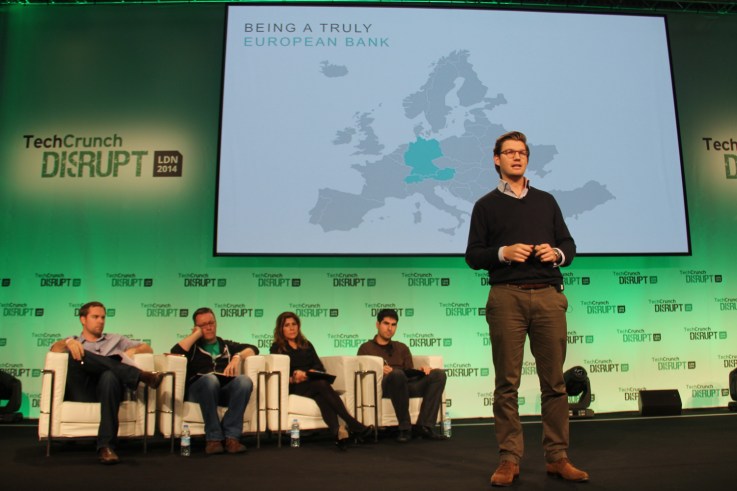
Why does it still take two days in Europe for a card transaction to show up in your bank statement? Meet Number26, the Simple of Europe — a fintech startup that promises to fix all the oddities of the European bank system. In other words, Number26 is a bank that doesn’t suck. The startup is launching today in private beta on stage at TechCrunch Disrupt London.

“We are providing Europe’s most modern current account, bank account,” co-founder and CEO Valentin Stalf told me in a phone interview before Disrupt. “Attached to it comes a MasterCard.”

As a reminder, commercial banks in Europe suck. In the U.S., you can show up and open an account in five minutes. In Europe, you need to make an appointment with a bank’s local branch, bring documents and fill a lot of forms. You can also sign up online, but you’ll have to go to the post office to send documents.

When you sign up for a Number26 account, the process is much easier than any other bank — you don’t have to physically send anything as the entire process takes place on the company’s website. The company told me that you can sign up in five minutes.

At the very end of the process, Number26 starts a video call to verify your identity. You simply show your passport to the webcam and answer a couple of questions. A call is much less painful than having to go to your local post office to send copies of your passport.

Every time you use your card, you can open the app a few seconds later to see the transaction right here on your statement

After that, you will receive a debit card that works in all MasterCard ATMs and shops. So far, Number26 doesn’t seem very different from traditional online banks in Europe.

But this is when it gets interesting. Number26 focuses a lot of its attention on the user experience of the mobile app. In addition to being a beautiful app, there are a few interesting features that make the app stand out of the crowd.

First, transactions show up in real time. Every time you use your card, you can open the app a few seconds later to see the transaction right on your statement.

“When you look at a MasterCard transaction, all of these transactions have an online authentication,” Stalf said. “The terminal contacts the MasterCard cloud and the cloud network tells that this card number is linked to this processing company. We see what’s happening with the processing company in real time, because this transaction needs to be authorized.”

Other banks could technically do the same and display transactions in real time. But it’s more difficult for them to implement these features due to their existing infrastructure.

You can also open the app and block your card with a simple button. But if you find your card a few minutes later, you can simply unblock it. You don’t need to wait and receive a new card.

If you lend your card to a friend that you don’t really trust, you can also block ATM transactions for let’s say an hour. Whenever you get your card back, you can unblock ATM transactions in the app. Everything works in real time.

Finally, Number26 added a few financial tools in its mobile app. For example, you will see how much money you spend at restaurants or clothing stores. It’s very reminiscent of Mint, but Mint is only available in the U.S. and Canada.

And then, there are all the reasons why you wouldn’t trust a startup to manage your money. Once again, it works a lot like Simple.

“Because we need a banking license, in the background, we have a banking partner,” Stalf said. “The money sits in this bank. Regulators require us to do that. And on the other end, because it’s a German banking license, all the amounts are insured until something like 6 million euros.

While the startup is based in Berlin, a German banking license lets you operate in other European markets. So far, the company accepts clients in Germany, Austria and Switzerland. But it will be very easy to scale to more European countries in the future.

For the end user, there is no card fee for EUR payments, and no service fee for your account. Number26 takes a cut of every MasterCard transaction. Its partner bank will also invest the money sitting in the bank accounts. All of this is transparent for the end user.

In the future, the startup will add new features to make the product more compelling. For instance, Number26 plans to add overdraft and savings options. It is also looking into building a corporate solution as well.

You can also expect innovative futures that you won’t find in your existing banking app. For example, the company wants to use your smartphone’s geolocation to compare it with the location of your card transactions. This way, Number26 can detect suspicious activity and ask you to accept or block a transaction.

In the long run, the company wants to integrate other fintech startups directly into your Number26 account. “We could integrate TransferWise for international transfers for example,” Stalf said. “The idea is to be the connector for finance startups.”

The team of 17 has raised $2.6 million so far (€2 million) from Earlybird Venture Capital, Redalpine Venture Partners, Axel Springer Plug and Play Accelerator. It will be hard to convince conservative customers and compete with traditional banks and their advertising money, but Number26 definitely has a chance when it comes to creating the best banking experience in Europe.

Q&A

Judges: Niko Bonatsos (General Catalyst), Jon Bradford (Techstars), Bindi Karia (Silicon Valley Bank), Brenden Mulligan (Cluster).

Question: Your app is gorgeous. There has to be a major pain point that you are solving to make people switch. How did you find that real time data was a pain point?
Answer:

Question: The relationship with the regulator is complicated. How do you do it?
Answer: We have a banking partner in Germany. We’re doing much more than using their technology. And we can do video conference calls to verify customers all over Europe.

Question: What’s the plan for making money?
Answer: We have two short term revenue streams. But we have long term plans as well, becoming a fintech hub.

BMW builds Worlds‘ First Autonomous Self Driving Drifting Car

The Ultimate Drifting Machine. BMW 2 series M235i

Enhanced Safety and precision at the vehicle’s limits with highly automated driving

Source: http://www.wired.com/2014/01/bmw-builds-self-drifting-car/

BMW is showing off a modified 2-Series Coupe and 6-Series Gran Coupe that can race around a track at the limits of adhesion, and slide around corners like a throttle-happy Formula Drift ace.

Both cars are outfitted with a LIDAR system, 360-degree radar, ultrasonic sensors, and cameras that track the environment. Partnered with the electronic braking, throttle, and steering control that’s standard on all new BMWs, the prototypes can run through a high-speed slalom, perform precise lane changes, and slide around corners, without any driver intervention.