
Archiv der Kategorie: Marketing

Roaming Regulierung EU Draft 2016-09-05

Regulierungs-Text aus: https://ec.europa.eu/digital-single-market/en/news/draft-commission-implementing-regulation-roaming-fair-use-policy PART-2016-207353V1

Highlights:


Aus für Roaming-Gebühren: EU macht Vorschlag für „Fair Use“

Im Sommer 2017 fallen Roaming-Gebühren für Handytelefonate im EU-Ausland weg. Mit einer „Fair Use“-Regel will die EU-Kommission verhindern, dass Kunden sich Preisunterschiede in den Ländern auf Dauer zu Nutze machen.

Die EU-Kommission hat am Montag in Brüssel einen Entwurf vorgelegt, wie das endgültige Aus für Gebührenaufschläge bei Handygesprächen im EU-Ausland umgesetzt werden soll. Ab Sommer 2017 sollen die Mobilfunknetzbetreiber keine Aufschläge mehr berechnen dürfen, wenn Kunden im EU-Ausland telefonieren. In ihrem Entwurf für die Umsetzung macht die Kommission Vorschläge für „Fair Use“-Regeln, die einen Missbrauch verhindern sollen. Der Vorschlag wird nun mit den Mitgliedsstaaten und der europäischen Regulierungsgremium abgestimmt. Mitte Dezember will die Kommission dann die Regeln offiziell machen.

Fair Use: „Bis zu 90 Tage in einem anderen Land“

Mit den Fair-Use-Regeln will die Kommission auch den Befürchtungen der Netzbetreiber entgegenkommen, dass Nutzer mit einem günstigen Tarif aus dem einen europäischen Land sich dauerhaft in einem anderen Land aufhalten, wo sie mehr bezahlen müssten. Brüssel fürchtet, das könnte langfristig zu steigenden Preisen führen. Um das zu verhindern, schlägt die Kommission eine Frist von 90 Tagen vor.

Bis zu 90 Tage sollen sich EU-Bürger in einem anderen Land aufhalten und dort zu Konditionen ihres Vertrages telefonieren und surfen können, bis der Netzbetreiber Aufschläge erheben kann. Zugleich sollen Netzbetreiber aber verlangen dürfen, dass sich der Kunde mindestens einmal alle 30 Tage in sein Heimatnetz einbucht. Das schränkt die 90 Tage deutlich ein: Ein paar Wochen Urlaub oder eine Dienstreise ist abgedeckt, das zweimonatige Praktikum schon nicht mehr.

Aufschläge

Auch die danach möglichen Aufschläge möchte die EU-Kommission begrenzen. Sie sollennicht über den Großhandelspreisen liegen, die sich die Netzbetreiber gegenseitig berechnen. Die Obergrenzen für die Großhandelspreise werden derzeit noch von Kommission, Parlament und den Vertretern der Mitgliedsstaaten abgestimmt. Die EU-Kommission schlägt eine Obergrenze von 4 Cent pro Minute, 1 Cent pro SMS und 0,85 Cent pro Megabyte vor.

Für Menschen, die im Grenzgebiet wohnen oder grenzüberschreitend pendeln, schlägt die Kommission Sonderregelungen vor. Wenn sich das Handy dort ins Netz des Nachbarlandes einbucht, sollte das den Bürgern dort nicht zum Nachteil sein. Solange sie sich am selben Tag auch wieder im Netz des Heimatlandes einbuchen, solle das nicht als Roaming angerechnet werden.

Pre-Paid-Handel

Auch paneuropäischen Handel von billigen Pre-Paid-Karten will die Kommission vorbeugen. So sollen die Netzbetreiber verlangen können, dass eine Pre-Paid-Karte schon eine Weile im Heimnetz aktiv gewesen ist, bevor sie die Karte für Roaming aufs eigene Netz lassen.

Die EU hatte im vergangenen Jahr nach langen Debatten beschlossen, die Roaming-Gebühren bis Sommer 2017 komplett abzuschaffen. In Deutschland sind die Netzbetreiber schon dazu übergegangen, ihre Tarife um die Nutzung im EU-Ausland zu erweitern.

Liebes Heise-Team: Hier ist Euer Artikel verlinkt: http://www.heise.de/newsticker/meldung/Aus-fuer-Roaming-Gebuehren-EU-macht-Vorschlag-fuer-Fair-Use-3314269.html

Virales Marketing: Erfolg durch Ansteckung

Viralmarketing-Virus-Internet
Wer seinen Facebook-Account öffnet, findet jeden Tag mindestens ein witziges, trauriges, spannendes oder faszinierendes Video, das von einem Freund geteilt wurde. Man selbst ist wiederum so begeistert davon, dass man ebenfalls auf Teilen klickt und den Inhalt damit unter einer neuen Gruppe von Leuten verbreitet. Und so geht es immer weiter… Wenn ein Unternehmen virales Marketing betreibt und damit einen Erfolg erzielt, verbreitet sich die Botschaft wie ein Lauffeuer durchs Netz. Wie der Name es schon sagt, gleicht es einem Virus, der sich von Mensch zu Mensch überträgt. Was so vielversprechend klingt, funktioniert allerdings nur, wenn man die Menschen erreicht, sie berührt und diese den Inhalt aus freien Stücken weiterverbreiten. Worauf es beim viralen Marketing ankommt…

Traditionelles Marketing versus virales Marketing

Traditionelles Marketing richtet sich an klassische Medien wie Fernsehen, Radio oder auch Print-Medien. In Zeiten von Facebook und Co. verliert es aber immer mehr seine Bedeutung – schon die Masse der verbreiteten Werbebotschaften ist hier so hoch, dass viele Menschen sie gar nicht mehr wahrnehmen oder sogar bewusst auslassen. Jeder kennt es: Wird der Spielfilm wieder einmal durch Werbung unterbrochen, zappen wir lieber quer durchs Programm. Sehen wir in einer Zeitschrift eine Werbeanzeige, blättern wir weiter und vergessen sie.

Virales Marketing geht anders an die Konsumenten heran: Es basiert auf der freiwilligen Verbreitungvon Informationen und Botschaften, jeder einzelne wird sozusagen selbst zum Werbeträger. Dabei gilt: Ist der Virus von hoher Qualität, wird er auch verbreitet – schnell und kostenlos, wodurch sich eine virale Kampagne für Unternehmen vielfach bezahlt machen kann.

Die Werbebotschaften beim viralen Marketing folgen dabei einem bestimmten Erfolgskonzept: Sie sind emotional, behandeln Themen, die eine möglichst breite Masse betreffen und haben nicht den aufdringlichen Beigeschmack, der klassischer Werbung oft anhaftet.

Virales Marketing gibt es in verschiedenen Formen

Wie andere Marketingmaßnahmen kann auch das virale Marketing unterschiedliche Formen der Kommunikation für sich nutzen. Die häufigsten dabei sind:

  • Videos
  • Fotos
  • Blogbeiträge
  • Podcasts

Die beliebteste und gleichzeitig auch die bekannteste Form sind Videos, in denen das Werbeobjekt zwar kurz erwähnt wird – das Hauptaugenmerk liegt aber auf dem Storytelling. Diese Geschichte ist es, die das virale Marketing so erfolgreich machen kann. Oder eben auch nicht, wenn der erhoffte Effekt ausbleibt.

Viraler Content zieht die Aufmerksamkeit der Betrachter regelrecht an, er versetzt in Erstaunen, bringt zum Lachen, informiert, schockiert oder begeistert. Kaum jemand kann sich ihm entziehen – ein Virus, der schnell und effektiv verbreitet wird.

Virales Marketing: Diese Elemente gehören dazu

Einzelne Elemente des viralen Marketings sind auf unterschiedliche Bedürfnisse und Emotionen des Konsumenten ausgerichtet. Das Ziel dabei ist aber am Ende immer dasselbe: Die Menschen sollen angeregt werden, über eine Marke, ein Produkt oder auch eine Person zu reden und die Inhalte untereinander zu teilen. Klassische Mundpropaganda.

Zum viralen Marketing gehören dabei mehrere Elemente, die voneinander unterschieden werden:

  • Pass-along: Das Weiterreichen ist der Kern jeder viralen Marketingkampagne. Beim Pass-along wird die Werbebotschaft als solche erkannt und ohne weitere Aufforderung durch die Betrachter mit anderen geteilt. Für Unternehmen ist dies besonders wertvoll, da eine riesige Verbreitung ohne weitere Kosten erreicht werden kann.
  • Incentivised viral: Eine direktere Form des viralen Marketing, bei der dem Konsumenten ein Bonus für eine bestimmte Handlung versprochen wird. Dieses Marketingelement ist nicht nur darauf ausgerichtet, eine bestimmte Reichweite zu erlangen, sondern im besten Fall auch eine dauerhafte Beziehung zum Kunden zu knüpfen. Dazu gehören zum Beispiel Rabatte oder die Teilnahme an Gewinnspielen, wenn der Inhalt geteilt wird oder ein Bonus, wenn man einen Freund anwirbt.
  • Undercover: Bemerken Konsumenten die Werbebotschaft nicht bewusst, spricht man vomundercover Marketing. Dies kann beispielsweise der Fall sein, wenn scheinbar alltägliche Menschen ein Produkt benutzen und anpreisen, obwohl es sich dabei eigentlich um bezahlte Profis handelt.
  • Buzz: Hier geht es darum, Gerüchte zu streuen um ins Gespräch zu kommen. Diese Vorgehensweise ist allerdings nicht die Angenehmste und im schlimmsten Fall mit hohen Risiken verbunden.. Das Ziel dabei ist, so viel Aufmerksamkeit wie möglich zu bekommen – jedes Mittel ist dabei willkommen, nach dem Motto: Schlechte Publicity ist besser als keine Publicity.

Virales Marketing: Die Vorteile

Virales Marketing bietet einige Vorteile, vorausgesetzt der Virus trifft den Nerv der Zeit und wird entsprechend in den sozialen Netzwerken verbreitet.

Hier ein Überblick:

  • Ökonomisch: Der vielleicht größte Vorteil für Unternehmen. Der Inhalt verbreitet sich völlig kostenlos und erzielt dabei oft eine Reichweite, von denen andere Maßnahmen nur träumen können. Viraler Content erreicht ohne Probleme mehrere Millionen Klicks und wird tausendfach geteilt.
  • Persönlich: Virales Marketing hat eine höhere Glaubwürdigkeit, da die Inhalte oft von Personen weitergegeben werden, die man gut kennt und denen man vertraut. Es entsteht nicht das Gefühl, man würde durch Werbung manipuliert werden.
  • Langwierigkeit: Der langfristige Effekt des viralen Marketing ist ein häufiger Kritikpunkt. Viele glauben, dass kaum ein Nutzen bleibt, nachdem der erste Hype verflogen ist. Tatsächlich kann so aber die Bekanntheit langfristig gesteigert werden, wenn es gelingt, den viralen Hit mit der Marke zu verknüpfen.

Virales Marketing: 4 Regeln

mimagephotography/shutterstock.comWer glaubt, eine erfolgreiche virale Kampagne wäre leicht zu erstellen, liegt damit falsch. Dies zeigt sich schon daran, wie wenige der täglich millionenfach verbreiteten Inhalte tatsächlich viral werden. Es braucht gut durchdachte und vor allem innovative Ideen. Gerade das wird mit der Zeit immer schwieriger, denn gerade im Internet gibt es kaum etwas, dass man noch nie gesehen hat.
Zu erfolgreichem viralen Marketing gehört also mehr, als nur Content zu erstellen und diesen auf eine Social-Media-Plattform zu laden. An diese vier Regeln sollte man sich halten, um die Chancen zu erhöhen:

  • Emotionalität

    Viral verbreitet werden Inhalte, die berühren und Gefühle vermitteln, die man mit anderen teilen möchte. Neutraler oder emotionsloser Content wird es schwer haben, sich durchzusetzen, da er weniger Menschen anspricht.

  • Leichte Verbreitung

    Damit virales Marketing funktionieren kann, muss es so leicht wie möglich sein, den Inhalt zu verbreiten. Ein einfacher Klick sollte dafür ausreichen, wie es in sozialen Medien möglich ist. Verzichten sollte man auf unnötige Anmeldungen, um Zugriff auf ein Video oder ein Bild zu erhalten.

  • Einzigartigkeit

    Ein solcher Virus funktioniert nur ein einziges Mal, anschließend werden Konsumenten immun. Es bringt daher nichts, eine andere virale Kampagne nachzuahmen. Wer keine eigene Idee hat, steht meist ohnehin nur als schlechte Kopie des Originals da.

  • Geschwindigkeit

    Virales Marketing funktioniert rasant, innerhalb weniger Stunden und Tage hat scheinbar das halbe Internet bereits davon erfahren. Dabei sollte allerdings darauf geachtet werden, dass dieVerbreitung nicht ins Stocken gerät. Es ist kaum möglich, den Inhalt zu einem späteren Zeitpunkt noch einmal ins Rollen zu bringen.

http://karrierebibel.de/virales-marketing/

Marketing in Perfection – How Apple Outmarkets Samsung

These two tech giants have very different marketing strategies. Which one are you emulating?

Apple and Samsung ran back-to-back phone ads, providing a perfect illustration of why Samsung never manages to get traction against Apple.

Here are the two ads:

https://www.youtube.com/watch?v=4snreaKYqFI

Samsung’s ad is all about the product. It consists of visual images of the product along with a list of its features.

Apple’s ad is all about the consumer. It didn’t even show the product. Instead, it showed what one consumer did with the product.

Two very similar products; two very different marketing strategies. Which is more effective?

Well, if you look at long-term financial performance and the ability to extract profit out of the phone market, Apple is totally kicking Samsung’s butt.

Here’s why. As I’ve written previously, all great marketing messages answer three questions, in the proper order:

  1. What’s in it for me?
  2. Why buy it from you?
  3. What’s the next step?

Samsung’s ad only answers the first two questions indirectly. It assumes that the consumer immediately knows why somebody would want those features. In the NBA ad (which was slightly different than the ad above), Samsung then resorts to a freebie discount.

(Just to be clear, offering a discount is by definition a desperate marketing move.)

Apple’s ad answers the first two questions immediately. Like the person who filmed this clip, you can do extraordinary things with your iPhone. It then leaves the call to action implicit: Buy an iPhone (and become extraordinary).

Every week I run into companies (and individuals) that echo Samsung’s market strategy. They go on and on about the „what“ and just assume that everyone will understand the „why.“

Very rarely do I run into companies (or individuals) that echo Apple’s strategy and make their marketing about that which the customer, client, or buyer wants to accomplish or dreams about becoming.

So I have this question for you: When you market or sell, are you talking about yourself, your company, your brand, and your product? Because if you are, you’re probably losing customers.

Look: In business, it’s not about you. It’s never about you. It’s always about the other person. Apple’s been illustrating this fact for more than 30 years. How long will it take for everyone else to get it?


http://www.inc.com/geoffrey-james/what-you-can-learn-from-how-apple-out-markets-samsung.html

Apple Watch: Life’s too short for slow computers

Don’t buy a watch that makes you wait

Here’s the problem with the Apple Watch: it’s slow.

It was slow when it was first announced, it was slow when it came out, and it stayed slow when Watch OS 2.0 arrived. When I reviewed it last year, the slowness was so immediately annoying that I got on the phone with Apple to double check their performance expectations before making „it’s kind of slow“ the opening of the review.

I was thinking about this in the context of two stories today: Intel abandoning their smartphone chips and Apple’s Tim Cook saying that eventually we’ll look back on the Watch as a huge hit like the iPod and iPhone.

Intel built its entire business on our unquenchable thirst for power in the PC era — the company rode Moore’s Law to higher and higher levels of performance, and when the mobile revolution arrived and the industry and consumers reprioritized battery life and heat, Intel began faltering. Computers got fast enough — Apple’s new MacBook has a brand-new Core M processor in it, but it’s not fast. It’s just capable of doing all the things you might want it to do. And it’s great. Everyone I know who has one loves it.

The same thing is true in a different way for smartphones and tablets: iPad sales have slowed because most of them are fast enough to run a bunch of video streaming services and the browser, and that’s what people use them for. Smartphones are ridiculously powerful; so much so that their upgrade cycle dramatically outpaces the ability of developers to actually make use of their features. I still haven’t seen a good use of 3D Touch on the iPhone 6S; I suspect we will never see anyone make use of LG’s Friends modules for the G5. We are surrounded by powerful, capable computers, and we use so little of their maximum capability. The only thing that even threatens to drive a major hardware cycle in the near future is VR, and we’ll see how long that lasts.

But then I look at the Apple Watch and it’s so obviously underpowered. We can sit around and argue about whether speeds and feeds matter, but the grand ambition of the Apple Watch is to be a full-fledged computer on your wrist, and right now it’s a very slow computer. If Apple believes the Watch is indeed destined to become that computer, it needs to radically increase the raw power of the Watch’s processor, while maintaining its just-almost-acceptable battery life. And it needs to do that while all of the other computers around us keep getting faster themselves. It’s a hard road, but Apple is obviously uniquely suited to invest in ambitions that grand, with billions in the bank, a top-notch chip design unit, and the ability to focus on the long-term.

The other choice is to pare the Watch down, to reduce its ambitions, and make it less of a computer and more of a clever extension of your phone. Most of the people I see with smartwatches use them as a convenient way to get notifications and perhaps some health tracking, not for anything else. (And health tracking is pretty specialized; Fitbit seems to be doing just fine serving a devoted customer base.)

If you ask me, I think it’s better to slowly stack new capabilities on top of more powerful hardware than to push out a million ideas that work too slowly in practice. And it seems I’m not alone in this — here’s John Gruber, a week ago:

My hope is that Apple does more than just make the second generation watch faster/thinner/longer-lasting, and takes a step back and reconsiders some of the fundamental aspects to the conceptual design.

Are smartwatches computers, or not? And if they’re computers, how fast do they have to be to be useful computers? The most interesting thing about the Apple Watch is how sharply it throws those questions into relief.

http://www.theverge.com/2016/5/3/11578082/lifes-too-short-for-slow-computers

Intel’s new smartphone strategy is to quit

Atom chip cancellation puts Intel’s mobile processor plans on ice

Late on Friday night, Intel snuck out the news that it’s bailing on the smartphone market. Despite being the world’s best known processor maker, Intel was only a bit player in the mobile space dominated by Qualcomm, Apple, and Samsung, and it finally chose to cut its losses and cancel its next planned chip, Broxton. This followed downbeat quarterly earnings, 12,000 job cuts, and a major restructuring at a company that’s had a very busy April. Intel is still one of the giants of the global tech industry, but it’s no longer as healthy and sprightly as it used to be.

The bane of Intel’s existence for the past decade or so has been the transition to mobile computing. It wasn’t supposed to be that way. Having secured a commanding lead as the premier provider of desktop PC processors, Intel had a clear-eyed strategy for extending its dominance into the mobile realm.

A series of ignominious failures has left Intel reeling

With the help of Microsoft in 2006, Intel inaugurated the category of Ultra-Mobile PCs (UMPCs), which were the stylus- and touch-friendly precursors to today’s ultra-versatile tablets. They combined low-voltage Celeron and Pentium M chips with Windows Vista, and like everything else touched by Vista, they flopped. Unattainable pricing and inadequate battery life consigned the UMPC to the status of a historical footnote. The same fate befell Intel’s Mobile Internet Device (MID) initiative, which saw the chipmaker pushing and incentivizing its hardware partners to build mini internet tablets like the Nokia N810. Pervasive problems with affordability, battery life, clunky design, and ill-suited software prevented MIDs from ever becoming a mass-market success.

On the software front, Intel recognized the need for a tailored operating system to make the most of mobile PCs and sought to develop its own Linux variant titled Moblin. Moblin never convinced anyone outside of Intel, and was eventually merged with Nokia’s Maemo to produce MeeGo, which in turn merged with Samsung’s Bada and is now known as Tizen. Well, it’s only barely known, even by owners of its most successful product, the Gear S2 smartwatch. The series of post-Moblin software mergers has been merely the consolidation of repeated mobile failures.

Intel’s ventures into mobile hardware and software development show that even a great idea is only as good as its execution. The MIDs and UMPCs of yesteryear were aimed at the same usage scenarios as the phablets and pro tablets of today — but they were compromised and premature, and therefore rejected by the market.

This has cost Intel dearly, with the company lavishing billions on developing suitable processors and modems to put into its various mobile undertakings. The multibillion-dollar mobile costs have spiraled in recent years — a loss of $3.1 billion in 2013 was followed by a loss of $4.3 billion in 2014 — which eventually forced Intel to combine its mobile and PC earnings reports in order to disguise its unproductive spending.

The tragedy of Intel’s mobile failure is that the company foresaw all the threats to its business and acted to preempt them. It just didn’t do so very well. That being said, Intel’s the victim of its bad decision making almost as much as its poor execution.

Favoring WiMAX over LTE was a historically bad decision

One of the fateful choices that Intel made around 2009 was to commit itself to WiMAX as the 4G standard of the future. Qualcomm went the other way, prioritizing LTE instead, and now the latter has a significant lead in designing and integrating LTE modems, while the former is scrambling and struggling to catch up. The total defeat of WiMAX almost wiped out Sprint, its biggest US purveyor and advocate, and it put Intel on the backfoot in adopting the true 4G standard of the future, which turned out to be LTE. At this point, even if Intel were to double its already vast spending, bridging the gap of years of research, development, and experience would be practically impossible.

In spite of its unhappy mobile history, Intel persisted in trying to compete because it knew how central mobile devices were becoming to our lives. Last year, its Atom processors even looked like they had a shot at denting Qualcomm’s market dominance, thanks in large part to the Qualcomm Snapdragon 810 chip’s power and heat issues. There was a small opening, but this year’s Snapdragon 820 is an absolute beast that conclusively shuts the door on any further Intel incursions.

Read more: Intel sees itself as a ‘communications and connectivity company’

The top three smartphone vendors — Apple, Samsung, and Huawei — each produce their own processors. At Mobile World Congress this year, Xiaomi, another large-scale smartphone maker, co-branded its launch event with Qualcomm. And global names like LG, HTC, and Sony basically only shop at the Snapdragon aisle for their flagship phones. Intel’s most loyal hardware partner is Asus, which makes a habit of announcing interesting new devices at Computex in June and not shipping them until the end of the year. The most feted Intel Atom-powered smartphone to date is probably the ZenFone 2, a distinction that speaks for itself.

Without any unique advantages to its Atom CPU line and no captive market like it has on the desktop, Intel is right to bow out of the smartphone processor race. It’s a merciless competition that has already ousted big names like Nvidia and Texas Instruments, and Intel will be better off figuring out different parts of the mobile computing world where it can participate profitably. CEO Brian Krzanich put „the cloud and data center“ first atop a list of Intel’s new priorities in a recent blog post, reiterating the idea that the company will transition to facilitating connectivity as its main area of competence. Discrete Intel LTE modems will still be around, and the company seems to think it can recapture its mobile competitiveness by being a leader in the adoption of the incoming 5G wireless standards. To that end, Intel doesn’t intend to kill off Atom entirely, and still plans to offer a chip for tablets later this year, codenamed Apollo Lake.

Even Moore’s Law is hitting a wall

To its credit, Intel has always operated under the assumption that mobile computing will eventually supplant the desktop and consign the old PC boxes to niche-use status. We email on our phones, ideate on our phablets, and write and create on our tablets — as Steven Sinofsky, former boss of Windows, recently articulated with respect to the iPad Pro. The primary form of personal computer is changing, which is why ultrabooks and hybrid laptops are so prominent in Intel’s marketing and development efforts. The low-power Core M, Intel told me last year, was the most important variant of the Skylake processor family, and the company’s ongoing mission is to move with its users to more portable form factors.

Intel remains a diverse and strongly profitable company. There will always be PC gamers and video producers looking for the latest and fastest CPU. But while the core business that’s kept Intel going for so many years isn’t disappearing, its importance and primacy are being steadily eroded by the insatiable growth of mobile computing. Even Moore’s Law, the Intel co-founder’s prediction about the constant growth of processing power in chips, is hitting a wall now. Intel’s desktop CPUs are being pushed further back on the roadmap while some of its mobile ones are being deleted entirely.

It’s an uncertain future for what used to be one of the most assured companies in tech.

http://www.theverge.com/2016/5/3/11576216/intel-atom-smartphone-quit

Apple Pursues New Search Features for a Crowded App Store

Apple Inc. has constructed a secret team to explore changes to the App Store, including a new strategy for charging developers to have their apps more prominently displayed, according to people familiar with the plans.

Among the ideas being pursued, Apple is considering paid search, a Google-like model in which companies would pay to have their app shown at the top of search results based on what a customer is seeking. For instance, a game developer could pay to have its program shown when somebody looks for “football game,” “word puzzle” or “blackjack.”

Paid search, which Google turned into a multibillion-dollar business, would give Apple a new way to make money from the App Store. The growing marketing budgets of app developers such as “Clash of Clans” maker Supercell Oy have proven to be lucrative sources of revenue for Internet companies, including Facebook Inc. and Twitter Inc.

About 100 employees are working on the project, including many engineers from Apple’s advertising group iAd that’s being scaled back, said the people, who asked not to be identified because the plans are private. The effort is being spearheaded by Apple Vice President Todd Teresi, who led iAd.

If Apple goes through with the idea, “it’s going to be huge,” said Krishna Subramanian, the co-founder of Captiv8, which helps brands market using social media. “Anything that you can do to help drive more awareness to your app, to get organic downloads, is critical.”

In addition to paid search, the team is trying to improve the way customers browse in the App Store. The new search team hasn’t been working long and it’s unclear when any new changes will be introduced.

Apple declined to comment.

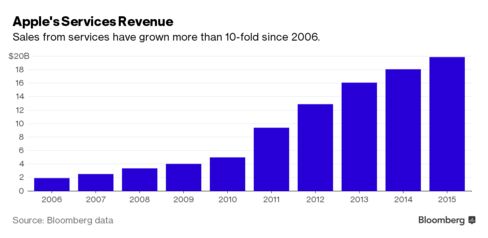
The App Store is a vital part of the Cupertino, California-based company’s business. The more software that customers download, the more likely they are to keep buying Apple’s products rather than switch to a phone or tablet made by another manufacturer. The store’s success was a key reason the iPhone and iPad became so popular with consumers and is central to Chief Executive Officer Tim Cook’s strategy of getting more sales from online services. Apple currently gets about 30 percent of each app sale, which is part of the $20 billion in services revenue the company generated last fiscal year.

The attempt to improve search is a sign that Apple knows the App Store has become harder for customers to navigate. First introduced in 2008, the store now has more than 1.5 million apps, with customers downloading more than 100 billion since its debut. App developers have for years urged the iPhone maker to add fresh discovery tools for users, arguing the crowded market makes it increasingly hard for people to discover new apps or build sustainable businesses.

Apple has taken steps to improve search in the past. In 2012, Apple acquired an app search-engine company named Chomp to help address the problem. In December, Cook changed the leadership of the App Store. He moved responsibility to Phil Schiller, Apple’s senior vice president of worldwide marketing, and away from Eddy Cue, the senior vice president for Internet, software and services, whose portfolio has expanded as Apple has built out new online services such as Apple Pay and Apple Music.


http://www.bloomberg.com/news/articles/2016-04-14/apple-said-to-pursue-new-search-features-for-crowded-app-store

Approaches for Navigating Influencer Marketing

shutterstock_292452563

For the first few years of its life, Instagram was an ad-free community. By 2017, however, it will produce nearly $3 billion in mobile ad revenue, and 34 percent of American agency professionals cite it as the social network of choice for client campaigns.

The opening of the advertising floodgates definitely has Instagram users on edge. They fear that the feed they tap into for inspiration and escape will be tainted by the presence of advertisers, who are simply in the business of paying for eyeballs. But for savvy marketers and advertisers, there’s a key tactic to turn to when approaching the platform: influencer activation.

Influencers may have fewer followers than mainstream celebrities, but they powerfully impact their fans, who take their advice seriously. Companies such as Burberry, American Apparel, Land Rover, TOMS and Johnnie Walker partner with Instagram celebrities to reach consumers and create positive buzz around their brands.

But massive multinational companies aren’t the only ones that can leverage the power of this growing trend. Brands of all sizes are already enjoying success from influencer-driven Instagram campaigns. It’s a different conversation than the one centered on traditional paid media, and it’s growing in importance as brands try to forge meaningful connections with their audiences.

Here are a few tips and trends marketers should consider when looking to add an influencer strategy to their plans:

1. Marketers are diving into their own data

Tech tools are enabling companies to analyze opportunities and target highly segmented user groups with relevant content. If Neiman Marcus wants to launch a last-call promotion in some of its markets, it can approach fashion personalities who have influence in those areas, narrowing the options based on their number of followers and potential reach. Neiman Marcus can sign a deal with an influencer—paying for the exposure he or she can deliver—and drive sales through his or her followers.

Marketers should be tracking customers’ data so they can identify the influencers among them. Pay attention to social media trends, and use metrics to effectively market through them. This tracking will require layering on a few data points, from first-party data to social monitoring tools. Brands can see real-time numbers on their followers, how followers interact with their accounts, and how active followers are with other accounts. They may be surprised by the amount of exposure a core base of fans can bring to a brand via social channels.

2. Scalable technology is breaking down barriers to activation

Until recently, only top influencers and brands had been involved in this space. However, new platforms not only take the legwork out of influencer activation, but they also let marketers activate more influencers for less money. It’s the rise of the mid-tier influencer—and “there’s an app for that.”

Apps like Popular Pays allow brands to not only identify a pool of potential influencers, but also submit creative briefs with pricing and restrictions to that pool. Influencers can choose whether to opt in. This is an excellent way for a brand to generate social-ready creative that aligns with its brand in an efficient and cost-effective manner. Platforms like these are eliminating the barriers to entry and decentralizing the market—much like what Uber and Airbnb have done for transportation and lodging.

3. A shift from aspirational to transactional posts is underway

Consumers often follow people for their inspirational or aspirational content—think Kirsten Alana’s luxury travel-themed Instagram. But 2016 will be the year of transactional posts, with influencers guiding followers toward specific purchases or providing product information.

Marketers must identify content creators who are popular among their target audience members and strategize which products or services they can promote through them. But don’t lose sight of why customers followed these people. Make sure promotions advance their goals and meet a specific need.

4. Influencer content will be run directly

Many companies are chomping on the influencer activation bit, but others—including brands like McDonald’s and Ben & Jerry’s— are starting to integrate this technique into their more traditional media buys. Despite consumer pushback, there’s something to be said for running ads directly through the platform.

Influencers can gain brands valuable word-of-mouth marketing, but when it comes to targeting, reach and frequency, buying platform direct is the better option. Going site direct guarantees marketers get their brands’ content in front of someone in their market—something that’s not possible with influencers because brands simply don’t have access to the full scope of their followers’ data. Activate the influencer, take the content and run it directly to amplify it beyond his or her individual stream.

It makes sense why marketers are waking up to the power of these savvy personalities on Instagram and other social channels. Word of mouth has always been the most powerful form of marketing, and we’re seeing that on a much larger scale with the ease of content creation. Essentially, anyone with access to a smartphone has the ability to become his or her own publishing company. As marketers continue to refine their messages for a specific audience, they need to work with influencers who can educate their followers about their brand and help them sell to the right people.

Aubry Parks-Fried is a senior manager of digital innovations, social, and native at Centro. Centro develops digital advertising and media management software to help advertisers streamline and scale digital campaigns.

http://www.adweek.com/socialtimes/4-approaches-for-navigating-influencer-marketing-in-2016/636380