Archiv der Kategorie: Innovatoren

Successful at the Age of 25


Um erfolgreich zu werden, gibt es kein Patentrezept. Das mussten auch die lernen, die es tatsächlich zu Erfolg, Ruhm, Ehre und internationaler Berühmtheit gebracht haben. Denn die Wege, die sie dorthin geführt haben, könnten unterschiedlicher nicht sein.

Donald Trump

Donald Trump arbeitete als Projektentwickler im Immobilienkonzern seines Vaters und übernahm mit 25 Jahren die Leitung des Unternehmens, das er als eine seiner ersten Handlungen von „Elizabeth Trump & Son“ in „The Trump Organization“ umtaufte.

Zugegeben, Donald Trump hatte es auch recht leicht im Leben. Der milliardenschwere Immobilien-Mogul, der aktuell vor allem durch das Rennen um die US-Präsidentschaftskandidatur Schlagzeilen macht, wuchs in einer reichen Familie auf. Sein Vater versuchte aber trotzdem, ihm den verantwortungsbewussten Umgang mit Geld beizubringen. Der junge Donald musste zum Beispiel leere Flaschen auf den Baustellen des Familienkonzerns einsammeln, um sein Taschengeld aufzubessern.

Elon Musk

Elon Musk führte mit 25 Jahren seine erste Internetfirma.

Im Alter von 24 Jahren schmiss Musk seine Promotion in angewandter Physik an der Stanford Universität hin und gründete Zip2. Mit seiner Firma, die online Geschäftsverzeichnisse und einen Kartendienst bereitstellte, wollte Musk von der boomenden Internetbranche in den späten 90er Jahren profitieren – und hatte Erfolg. Rund vier Jahre später wurde Zip2 von Compaq aufgekauft. Das Geld aus dem Verkauf, immerhin 307 Millionen Dollar, nutzte Musk um seine nächste Firma zu gründen: PayPal.

Eric Schmidt

Heute ist Eric Schmidt Vorstandsvorsitzender von Alphabet (ehemals Google). Als er 25 Jahre alt war, baute er sich gerade sein umfangreiches IT-Wissen auf, dass ihn letztendlich in diese Position brachte.

Nach seinem Masterabschluss blieb Schmidt an der Berkeley Universität um zu promovieren. Für seine Doktorarbeit, die er im Alter von 27 Jahren abschloss, befasste er sich mit der Vernetzung von Computern und komplexen Aspekten der Software-Entwicklung. Während des Sommers arbeitete er außerdem in der Forschungsabteilung des Xerox Palo Alto Research Centers. Dort wurde unter anderem der computergestützte Arbeitsplatz entwickelt, den wir heute kennen und nutzen.

Jeff Bezos

Jeff Bezos hatte mit 25 Jahren einen Job in der Bankenbranche.

Mit 24 Jahren heuerte der heutige Amazon-Chef bei Bankers Trust an, einer Bank mit Schwerpunkt auf Vermögensverwaltung und Investmentbanking. Dort entwickelte er eine für damalige Verhältnisse revolutionäre Software für die Bankenbranche. In der Folge wurde er nur zwei Jahre später, also mit 26, zum Vize-Präsidenten von Bankers Trust befördert.

Larry Ellison

Der Oracle-Gründer hielt sich mit Gelegenheitsjobs als Programmierer über Wasser.

Das Programmieren hat sich Ellison in seiner Jugend selbst beigebracht. Mit 22 Jahren zog er dann nach Berkeley, um damit auch Geld zu verdienen. Während der folgenden acht Jahre tingelte er von einem Job zum nächsten und arbeitet unter anderem für die US-Bank Wells Fargo oder den Multimedia-Konzern Ampex. Bei letzterem lernte Ellison auch Bob Miner und Ed Oats kennen, die späteren Mitgründer von Oracle.

Marissa Mayer

Marissa Mayer war Angestellte bei Google.

Genauer gesagt wurde sie im Alter von 24 Jahren als 20. Google-Mitarbeiter eingestellt. Sie war zu dieser Zeit auch die einzige Frau beim späteren Suchmaschinen-Giganten. Mayer blieb Google 13 Jahre lang treu, bevor sie ihren heutigen Posten als Chefin von Yahoo antrat.

Mark Cuban

Der Self-Made-Milliardär war mit 25 noch Barkeeper in Dallas.

Nachdem er seinen Abschluss an der Universität von Indiana in der Tasche hatte, zog Mark Cuban nach Dallas und arbeitete dort zunächst als Barkeeper. Anschließend verkaufte er Computerprogramme für die Firma Your Business Software, die ihn aber nach nicht einmal einem Jahr feuerte. Daraufhin gründete Cuban seine eigene Firma MicroSolutions, die er im Alter von 30 Jahren für 6 Millionen Dollar an CompuServe verkaufte.

Mark Zuckerberg

Mark Zuckerberg führte mit 25 Jahren ein Unternehmen, das endlich Geld einbrachte.

Der Facebook-Gründer hat früh angefangen: Bereits fünf Jahre harte Arbeit hatte er vor seinem 25. Geburtstag in Facebook gesteckt. Dafür bekam er mit 25 Jahren aber ein besonderes Geschenk: Im gleichen Jahr, nämlich 2009, schrieb Facebook erstmals schwarze Zahlen und überstieg die Marke von 300 Millionen Nutzern.

Richard Branson

Mit 25 Jahren stand der Virgin-Gründer bereits an der Spitze eines breit gefächerten Unternehmens.

Schon im Alter von 20 Jahren eröffnete Richard Branson seinen eigenen Plattenladen unter dem Namen „Virgin“. Zwei Jahre später folgte ein Tonstudio und mit 23 Jahren nannte Branson auch ein Plattenlabel sein eigen. In den Jahren zwischen seinem 25. und seinem 30. Geburtstag baute der Virgin-Chef sein Unternehmen weiter aus und machte es zu einem international agierenden Großkonzern.

Sheryl Sandberg

Im Alter von 25 Jahren machte Sheryl Sandberg ihren Master-Abschluss an der Harvard Business School.

Eigentlich hatte die Geschäftsführerin von Facebook ihr Studium in Harvard bereits im Alter von 22 Jahren mit dem Bachelor abgeschlossen und einen Job bei der Weltbank ergattert, wo sie mit dem späteren US-Finanzminister Larry Summers zusammenarbeitete. Sie beschloss dann jedoch, an der Harvard Business School doch noch ihren Master zu machen. Diesen hatte sie 1995 schließlich auch in der Tasche. Bis sie zu Facebook kam, sollte es anschließend aber noch einige Jahre dauern.

Steve Jobs

Apple-Gründer Steve Jobs brachte seine Firma mit 25 Jahren an die Börse und wurde so zum Millionär.

Nach dem ersten Handelstag der Apple-Aktie im Dezember 1980 war Steve Jobs Konzern am Markt bereits stolze 1,2 Milliarden Dollar wert. Das machte auch ihn schlagartig reich. Seinem Biografen erzählte Jobs später, dass er an diesem Tag einen Schwur geleistet hätte: Er würde es nicht zulassen, dass Geld irgendwann einmal sein Leben zerstöre.

Warren Buffett

Das Orakel von Omaha lebte mit 25 Jahren in Omaha (wer hätte es gedacht?) und arbeitet dort als Investmentbanker.

Bereits in seinen frühen 20ern fing Warren Buffett bei Buffet-Falk & Company an, dem Unternehmen seines Vaters, und tätigte dort Investitionen für seine Kunden. Mit 26 Jahren zog es ihn aber schließlich von Omaha nach New York, wo er als Wertpapieranalyst für seinen Mentor Benjamin Graham arbeitete. Im gleichen Jahr rief er mit Buffett Partnership Ltd. auch seine eigene Investmentfirma ins Leben und legte den Grundstein für seinen heute legendären Ruf.


Quelle: http://www.finanzen.net/nachricht/private-finanzen/Business-Insider-Was-Warren-Buffett-Jeff-Bezos-und-10-weitere-erfolgreiche-Menschen-im-Alter-von-25-Jahren-gemacht-haben-4584303

Source: http://uk.businessinsider.com/what-12-highly-successful-people-were-doing-at-25-2015-10?r=US&IR=T

Apple’s Chinese Miracle Is Over

Source: http://www.bloombergview.com/articles/2015-10-28/apple-s-chinese-miracle-is-over

Perhaps the most important number in Apple’s quarterly release on Tuesday came from China, and it’s not the good news Apple makes out. The company’s over reliance on the Chinese market is starting to hinder its progress despite management’s attempts to give it a positive spin.

During Tuesday’s earnings call, Apple chief executive Tim Cook sang the praises of the Chinese market, saying it will one day be Apple’s largest. In fiscal 2015, which ended for Apple on Sept. 26, Greater China provided 25 percent of the company’s revenue, for the first time overtaking Europe, responsible for just 21.6 percent of Apple sales. An economic slowdown? Not according to Cook, who is worth quoting at length here:

Frankly, if I were to shut off my web and shut off the TV and just look at how many customers are coming in our stores regardless of whether they’re buying, how many people are coming online, and in addition looking at our sales trends, I wouldn’t know there was any economic issue at all in China. And so I don’t know how unusual we are with that. I think that there’s a misunderstanding, probably particularly in the Western world, about China’s economy, which contributes to the confusion. That said, I don’t think it’s growing as fast as it was; but I also don’t think that Apple’s results are largely dependent on minor changes in growth.

The statistics Cook cites in support of this view are impressive: 87 percent growth in iPhone sales year-on-year in Greater China (which includes Hong Kong, Taiwan and Macau) despite the entire market’s 4 percent growth; revenue almost twice as high in the last quarter as a year ago; and the iPhone 6 now the bestselling smartphone in China, with the iPhone 6 Plus at number three. These numbers are less relevant, however, than two others: a drop in quarter-on-quarter sales in Greater China and an erosion of Apple’s overall market share there.

In the last quarter of fiscal 2015, Apple made $12.5 billion in revenue in Greater China, a 5.4 percent drop compared to the previous three months, despite the inclusion of the first weekend of iPhone 6s sales in the fourth quarter, 2015 data. In 2014, the new iPhone 6 wasn’t immediately available in China, so the fourth quarter didn’t benefit from the new product boost — and still sales were higher than in the previous three months.

Apple in China

Cook is wrong to say the Chinese slowdown isn’t affecting his company’s sales. The effect has been immediate and quite obvious. But Apple’s market share in the Asia Pacific region, which includes China, wasn’t growing even before it manifested itself.

According to data compiled by Bloomberg Intelligence, in the second quarter of this year, Apple’s market share of smartphone unit shipments in the region dropped to 7.7 percent from 10.8 percent in the previous quarter as Chinese leaders Huawei and Xiaomi increased their shares. Apple is the Asian smartphone market leader in terms of value, but its share by that measure also dropped in the second quarter — to 34.1 percent from 42.7 percent in the previous three months. Again, Huawei and Xiaomi posted gains, although Korean producers such as Samsung and LG also managed to pick up some of Apple’s losses. As Apple’s revenue in the region dropped, it was unlikely to have made share gains in the last quarter.

Cook is banking on the future growth of the Chinese middle class, and that’s an obvious long-term bet to make, but under the current economic conditions, this growth is not likely to be explosive. Besides, Apple won’t even be able to grow its sales at the same rate because many Chinese consumers will opt for better-value devices from local producers, as they’re already doing, judging by the market share data.

Improving distribution in China yielded strong revenue gains for Apple this year. Greater China accounted for 53 percent of the company’s revenue growth in fiscal 2015. Unless China’s economic troubles are miraculously cured over the next year or Huawei and Xiaomi stop making cutting-edge devices for a fraction of Apple’s prices, this growth engine has stalled. Nor does Apple have any comparable opportunities for extensive growth anywhere else in the world.

Cook’s bet on China was, of course, no mistake: It would be a crime for a device producer not to develop a strong presence in the world’s most populous country. Focusing on China was a business decision that produced gains comparable to a ground-breaking product launch, especially in 2015. There are no more miracles coming out of China, however, and no more technological rabbits coming out of Apple’s hat. It’s time for some stagnation and retrenchment — at least by this company’s remarkably high standards.

Source: http://www.bloombergview.com/articles/2015-10-28/apple-s-chinese-miracle-is-over

Number26 Is A Bank Designed For The 21st Century

Source: http://techcrunch.com/2014/10/20/number26-is-a-bank-designed-for-the-21st-century/


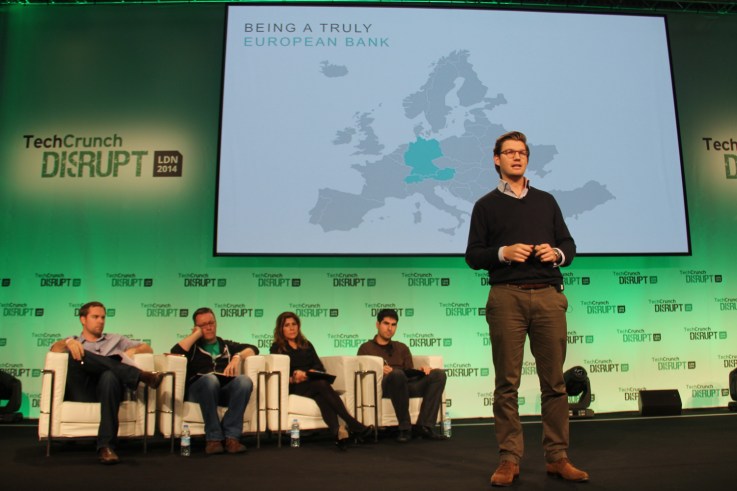
Why does it still take two days in Europe for a card transaction to show up in your bank statement? Meet Number26, the Simple of Europe — a fintech startup that promises to fix all the oddities of the European bank system. In other words, Number26 is a bank that doesn’t suck. The startup is launching today in private beta on stage at TechCrunch Disrupt London.

“We are providing Europe’s most modern current account, bank account,” co-founder and CEO Valentin Stalf told me in a phone interview before Disrupt. “Attached to it comes a MasterCard.”

As a reminder, commercial banks in Europe suck. In the U.S., you can show up and open an account in five minutes. In Europe, you need to make an appointment with a bank’s local branch, bring documents and fill a lot of forms. You can also sign up online, but you’ll have to go to the post office to send documents.

When you sign up for a Number26 account, the process is much easier than any other bank — you don’t have to physically send anything as the entire process takes place on the company’s website. The company told me that you can sign up in five minutes.

At the very end of the process, Number26 starts a video call to verify your identity. You simply show your passport to the webcam and answer a couple of questions. A call is much less painful than having to go to your local post office to send copies of your passport.

Every time you use your card, you can open the app a few seconds later to see the transaction right here on your statement

After that, you will receive a debit card that works in all MasterCard ATMs and shops. So far, Number26 doesn’t seem very different from traditional online banks in Europe.

But this is when it gets interesting. Number26 focuses a lot of its attention on the user experience of the mobile app. In addition to being a beautiful app, there are a few interesting features that make the app stand out of the crowd.

First, transactions show up in real time. Every time you use your card, you can open the app a few seconds later to see the transaction right on your statement.

“When you look at a MasterCard transaction, all of these transactions have an online authentication,” Stalf said. “The terminal contacts the MasterCard cloud and the cloud network tells that this card number is linked to this processing company. We see what’s happening with the processing company in real time, because this transaction needs to be authorized.”

Other banks could technically do the same and display transactions in real time. But it’s more difficult for them to implement these features due to their existing infrastructure.

You can also open the app and block your card with a simple button. But if you find your card a few minutes later, you can simply unblock it. You don’t need to wait and receive a new card.

If you lend your card to a friend that you don’t really trust, you can also block ATM transactions for let’s say an hour. Whenever you get your card back, you can unblock ATM transactions in the app. Everything works in real time.

Finally, Number26 added a few financial tools in its mobile app. For example, you will see how much money you spend at restaurants or clothing stores. It’s very reminiscent of Mint, but Mint is only available in the U.S. and Canada.

And then, there are all the reasons why you wouldn’t trust a startup to manage your money. Once again, it works a lot like Simple.

“Because we need a banking license, in the background, we have a banking partner,” Stalf said. “The money sits in this bank. Regulators require us to do that. And on the other end, because it’s a German banking license, all the amounts are insured until something like 6 million euros.

While the startup is based in Berlin, a German banking license lets you operate in other European markets. So far, the company accepts clients in Germany, Austria and Switzerland. But it will be very easy to scale to more European countries in the future.

For the end user, there is no card fee for EUR payments, and no service fee for your account. Number26 takes a cut of every MasterCard transaction. Its partner bank will also invest the money sitting in the bank accounts. All of this is transparent for the end user.

In the future, the startup will add new features to make the product more compelling. For instance, Number26 plans to add overdraft and savings options. It is also looking into building a corporate solution as well.

You can also expect innovative futures that you won’t find in your existing banking app. For example, the company wants to use your smartphone’s geolocation to compare it with the location of your card transactions. This way, Number26 can detect suspicious activity and ask you to accept or block a transaction.

In the long run, the company wants to integrate other fintech startups directly into your Number26 account. “We could integrate TransferWise for international transfers for example,” Stalf said. “The idea is to be the connector for finance startups.”

The team of 17 has raised $2.6 million so far (€2 million) from Earlybird Venture Capital, Redalpine Venture Partners, Axel Springer Plug and Play Accelerator. It will be hard to convince conservative customers and compete with traditional banks and their advertising money, but Number26 definitely has a chance when it comes to creating the best banking experience in Europe.

Q&A

Judges: Niko Bonatsos (General Catalyst), Jon Bradford (Techstars), Bindi Karia (Silicon Valley Bank), Brenden Mulligan (Cluster).

Question: Your app is gorgeous. There has to be a major pain point that you are solving to make people switch. How did you find that real time data was a pain point?
Answer:

Question: The relationship with the regulator is complicated. How do you do it?
Answer: We have a banking partner in Germany. We’re doing much more than using their technology. And we can do video conference calls to verify customers all over Europe.

Question: What’s the plan for making money?
Answer: We have two short term revenue streams. But we have long term plans as well, becoming a fintech hub.

Elon Musk: How I Became The Real ‚Iron Man‘ by transforming 3 industries

This is how Elon Musk transformed three industries and became the real Tony Stark.

Elon Musk, the entrepreneur who helped create PayPal, built America’s first viable fully electric car company, started the nation’s biggest solar energy supplier, and may make commercial space travel a reality in our lifetime (Documentation 2014)

Conversation with Elon Musk in Detroit on electric cars and rock bottom oil prices (2015)

Conversation with Elon Musk on SpaceX, Tesla and his personal life

This is the new Tesla Model X (2015)


Elon Musik playing video games in his Bel Air 7 Bedroom Mansion (2014)

Elon Musk launches Tesla Model X

Elon Musk debuts the long awaited Tesla Model X at a special launch event held at Tesla’s Fremont factory in front of lucky owners and members of the media. Elon unveils more details about the falcon wings opening mechanism which includes an innovative sonar sensor that goes through metal.

Elon Musk: „We try to be a leader in apocalyptic defense scenarios“

Lessons from Taylor Swift and her ‘raving fan culture’

http://humanelevation.tonyrobbins.com/blog/career/taylor-swift-pop-star-power-broker

Forget everything you think you know about Taylor Swift. She’s no longer a performer, singer, pop star or celebrity — strictly speaking. She is CEO and executive manager of the brand Taylor Swift. And she’s building it in a brilliant way.

No CEO under 30 since Mark Zuckerberg has successfully launched and maintained a consistent aura of excitement, engagement and growth more effectively than Swift. What’s her secret? She instinctually and innately keeps her fan base suspended in a constant state of hysteria through many of Tony Robbins’ 7 Strategies for Creating Raving Fans.

Give more than you promote

As profiled by the Los Angeles Times, Taylor Swift was born into a generation who came of age with social media and seamlessly integrate online communication within the full narrative of their relationships. But Swift is more than just adept at social trends and platforms; she makes direct and authentic connections with fans by casually replying to their posts, liking and favoriting their pictures and reposting their own selfies holding her album cover. As Matt Britton, CEO of youth maturing agency MRY, told the New York Times, „When you do that, you generate a kind of advocacy and excitement that no level of advertising could.“

She doesn’t use social for marketing, she uses it for mentioning. And it means everything to her fans.

Once these simple but lasting connections are made, fans feel more invested in her everyday life and activities, the way they would with any friend. Swift’s tweets and posts act as a delightful flip-side to the infamously brutal singe line, late-night email replies Steve Jobs would fire back at Apple fans.

Create unexpected surprises

Swift’s mastery of social media as a tool to add more value to her fans goes so much further than conversational replies and likes. In the weeks leading up to the launch of her, now, multi-platinum „1989“ album, she personally “Tay-lurked“ popular channels like Instagram, Tumblr and Twitter to read raw customer feedback, rewarding supporters with personal invitations to a “special Taylor Swift opportunity,” bringing fans into one of her several “Secret Sessions” pre-release listening events held at one of her own homes in Beverly Hills, Nashville, New York and Rhode Island.

Any company can throw a product pre-release bash, but Swift personally appeared at each of them, turning what could have been a publicity calculation into a casual hangout — sitting on the floor and informally talking through her inspirations and influences, as naturally as any 25-year-old would. The magnified social media outpouring from these events helped rocket her album debut sales to over one million on release.

“She has been able to take one person and spread herself out into millions of itty-bitty pieces of Taylor Swift and touch as many people as possible,” Mr. Britton said. “When you do that, you generate a kind of advocacy and excitement that no level of advertising could.”

Run your business in open transparency

Swift’s intuitive promotional style make headlines, but it’s her business moves that send waves through industry and spin headlines across international media. Having built a powerful public platform, she’s become renown for her ability to spotlight and create change for professional artists everywhere, regardless of fame or audience size. Many fans jokingly ask her over Twitter, to help save a canceled television show or to add features to Instagram. But this only underlines her ability to create real movement through messaging.

Most notably, she removed her entire catalog from Spotify’s streaming after issuing a public statement clearly written by her personally, rather than drafted by a PR firm.

„Music is art, and art is important and rare. Important, rare things are valuable. Valuable things should be paid for. It’s my opinion that music should not be free, and my prediction is that individual artists and their labels will someday decide what an album’s price point is. I hope they don’t underestimate themselves or undervalue their art.“

In all issues of communication, from casual social media to press releases, Swift’s brand messages are entirely consistent in their openness and earnestness. This naturally became international news, fueling debates around royalty payments for artists everywhere. As reported by Time, artists on Spotify streaming earn on average less than one cent per play, or $0.006 and $0.0084.

She was only getting started. In what’s been heralded as the first significant sign of the post-Jobs Apple, Swift then released this statement challenging Apple Music’s launch policy to withhold payment to artists in exchange for the value of promotion:

„I’m sure you are aware that Apple Music will be offering a free 3 month trial to anyone who signs up for the service. I’m not sure you know that Apple Music will not be paying writers, producers, or artists for those three months. I find it to be shocking, disappointing, and completely unlike this historically progressive and generous company.“

What’s shocking is how quickly Apple, under Tim Cook’s leadership, conceded. Within hours, one of the most profitable, successful and globally admired companies, in history, changed direction and agreed to pay streaming royalties. Her short showdown with Apple Music’s policies is an example of the leadership any CEO, owner or entrepreneur can incorporate — by thinking beyond self-interest to how can improve experience for others, you give your customers a reason to believe.

And when you make them believe in you they’ll always buy from you.

Always reward your best clients and give back

Her most powerful, surprising and genius move was also her most simple and heartfelt.

On December 31st, 2014, Swift released a low-fi, homemade video of herself wrapping gifts she’d personally chosen for a selection of her fans, in her own home. Intercut with the footage were real, raw fan reactions as they unwrapped the presents and read the hand-written notes, most hardly able to speak through tears of joy — receiving personal presents from Swift naturally caused the merriest of meltdowns. The video reaches an unexpected pinnacle as Swift then drives from New York to Connecticut to personally deliver gifts to one special fan and her young son. Rather than simply dropping off for a photo op, she spends time playing and visiting — all the action underscored by her newly released single.

The video, likely produced for less than the costs of the gifts, rebranded the holiday as „Swiftmas“ and naturally went viral. It immediately platformed up the media chain into a feel-good headline story, creating an extravaganza of free PR and marketing time as clips were played endlessly through mainstream news channels and media broadcasts. With not a penny spent on ad placement, PR or traditional marketing pushes.

For Swift, this move was effortless. Entirely congruent to her personality — heartfelt, earnest and generous. From a more calculated personality, a stunt like this could easily backfire and create cynicism or hostility. Instead, her fans celebrated, non-fans took notice and marketers reveled in her show of gentle force, all connecting with her ability to contribute to her fans’ experience and create joy.

The obvious question becomes — what will she do next?

A celebratory culture empowers employees and inspires a long term audience that vocalizes your message, recruits new customers and helps you generate greater sales. If you can create a culture of raving fans, congruously within your image, you will provide more value than anyone else in your field.

Swift falls in love with her fans, not her fame

The most expensive and consuming challenge for any business is acquiring new customers — so, conversely, the simplest solution is to continually serve that same customer while compelling them to recruit, rave and spread your story.

Any organization, leader or brand who can maintain a high level of customer loyalty will always overwhelm the competition though their consistent ability to anticipate, surprise and fulfill their audience’s needs at the most fundamental and personal levels. The most successful organizations remain so because consumers and clients adopt the brand identity into their own, through purchase, use, external signaling (logos, merchandise) and social events.

Discover new and entirely authentic ways to delight, empower and surprise your customers and watch as they become an audience of raving fans — like the thousands of stadiums of smiling faces cheering for Taylor Swift.

Österreich: Die Steiermark will Teststrecke für selbstfahrende Autos werden

Source: http://futurezone.at/science/steiermark-will-teststrecke-fuer-selbstfahrende-autos-werden/155.431.535

In der Steiermark sollen autonome Fahrzeuge getestet werden

In der Steiermark sollen autonome Fahrzeuge getestet werden – Foto: Audi
Steiermark will Modellregion für autonomes Fahren werden, in der die Hersteller ihre selbstfahrenden Fahrzeuge testen können. Davon sollen auch die 220 steirischen Automobilzuliefer-Firmen profitieren.

Bei den Technologiegesprächen in Alpbach im August hat Infrastrukturminister Alois Stöger „Teststrecken“ für autonom fahrende Autos angekündigt, am Montag hat die Steiermark offiziell aufgezeigt, diese Testregion werden zu wollen. „Wir haben in der Steiermark die perfekten Voraussetzungen dafür, die österreichische Modellregion zu werden“, sagt Franz Lückler, CEO des ACstyria Autoclusters. Gemeinsam mit der Politik und der Wirtschaft wurde offiziell das „Projekt Z“ gestartet, bei dem die Steiermark zur Teststrecke werden will. „Es gibt 220 Unternehmen, die im AutoCluster zusammengefasst sind, von AT&S, Magna, AVL-List, NXP, ams bis hin zu Infineon. Sie alle leisten bereits heute einen wertvollen Beitrag für die Zukunft der Mobilität.“ Das autonome Fahren könne zu einem Umsatzturbo für die steirischen Zulieferbetriebe werden.

pk.jpg
Verkaufs- und Marketing-Vorstand bei Magna, Gerd Brusius (stehend), ACstyria-CEO Franz Lückler, Wirtschaftslandesrat Christian Buchmann (v. l. hockend) – Foto: ACstyria/Kanizaj

Schützenhilfe hat der ACStyria Autocluster von Wirtschaftslandesrat Christian Buchmann bekommen, der bereits an das Infrastrukturministerium herangetreten ist:  „Die Steiermark hat schon früh erkannt, dass Mobilität eine spannende Thematik ist“, so Buchmann. „50.000 Menschen sind bei uns allein im Mobilitätsbereich beschäftigt, die Wertschöpfung beträgt 14,5 Milliarden Euro.“ Hinzu komme, dass dadurch eine enge Zusammenarbeit mit außeruniversitären und universitären Instituten, allen voran der TU Graz, bestehe.

Gesellschaftliche Akzeptanz gefordert

Die Wirtschaft steht freilich hinter dem Projekt Z. „Wir sind schon seit Jahren aktiv in diesem Feld unterwegs“, sagt AT&S-Generaldirektor Andreas Gerstenmayer, der auch Vorsitzender des Forschungsrats in der Steiermark. „Wir arbeiten mit den bedeutendsten Zulieferern zusammen und sind bei der Entwicklung von Assistenz-, Fahrzeugerkennungs-Systemen oder auch der Car2Car-Communication beteiligt.“ Doch neben Teststrecken fordert Gerstenmayer vor allem eines, „eine gesellschaftliche Akzeptanz. Die technischen Lösungen gibt es ja schon, aber die Ängste in der Bevölkerung müssen abgebaut werden.“ Autonomes Fahren bringe mehr Sicherheit, und das müsse man den Menschen klar machen, denn für 90 Prozent aller Verkehrsunfälle sei der Mensch verantwortlich. Man müsse die Menschen von den positiven Seiten der Technologie überzeugen, dürfe aber freilich nicht auf die heiklen Themen wie Datennutzung und Datensicherheit vergessen.

„Europa muss bei diesem Thema auch vorne dabei sein“, sagt Magna-Vizepräsident Gerd Brusius, der sich einen raschen Start des Projekt Z wünscht. „Wir brauchen die Möglichkeit, autonomes Fahren im rechtlichen Rahmen hier zu testen, um die Wettbewerbsfähigkeit zu erhalten.“ Es gäbe ohnehin noch sehr viele Themen, die in diesem Zusammenhang geklärt werden müssen, von Gesetzen bis hin zu versicherungstechnischen Fragen. Brusius: „Tatsache ist, dass diese Technologie die Zukunft des Automobils drastisch verändern wird.“

Jonathan Ive – The Shape of Things to Come


Source: http://www.newyorker.com/magazine/2015/02/23/shape-things-come

Top Dogs The Secret to become an ‚extreme success‘

Bill Gates, Steve Jobs, Elon Musk, Richard Branson

top-dogs

The Secret to become an extreme success?

Extreme success results from an extreme personality and comes at the cost of many other things. Extreme success is different from what I suppose you could just consider ’success‘, so know that you don’t have to be Richard or Elon to be affluent and accomplished and maintain a great lifestyle. Your odds of happiness are better that way. But if you’re extreme, you must be what you are, which means that happiness is more or less beside the point. These people tend to be freaks and misfits who were forced to experience the world in an unusually challenging way. They developed strategies to survive, and as they grow older they find ways to apply these strategies to other things, and create for themselves a distinct and powerful advantage. They don’t think the way other people think. They see things from angles that unlock new ideas and insights. Other people consider them to be somewhat insane.

Be obsessed.

Be obsessed.

Be obsessed.

If you’re not obsessed, then stop what you’re doing and find whatever does obsess you. It helps to have an ego, but you must be in service to something bigger if you are to inspire the people you need to help you (and make no mistake, you will need them). That ’something bigger‘ prevents you from going off into the ether when people flock round you and tell you how fabulous you are when you aren’t and how great your stuff is when it isn’t.

Don’t pursue something because you „want to be great“. Pursue something because it fascinates you, because the pursuit itself engages and compels you. Extreme people combine brilliance and talent with an insane work ethic, so if the work itself doesn’t drive you, you will burn out or fall by the wayside or your extreme competitors will crush you and make you cry.

Follow your obsessions until a problem starts to emerge, a big meaty challenging problem that impacts as many people as possible, that you feel hellbent to solve or die trying. It might take years to find that problem, because you have to explore different bodies of knowledge, collect the dots and then connect and complete them.

It helps to have superhuman energy and stamina. If you are not blessed with godlike genetics, then make it a point to get into the best shape possible. There will be jet lag, mental fatigue, bouts of hard partying, loneliness, pointless meetings, major setbacks, family drama, issues with the Significant Other you rarely see, dark nights of the soul, people who bore and annoy you, little sleep, less sleep than that. Keep your body sharp to keep your mind sharp. It pays off.

Learn to handle a level of stress that would break most people.

Don’t follow a pre-existing path, and don’t look to imitate your role models. There is no „next step“. Extreme success is not like other kinds of success; what has worked for someone else, probably won’t work for you. They are individuals with bold points of view who exploit their very particular set of unique and particular strengths. They are unconventional, and one reason they become the entrepreneurs they become is because they can’t or don’t or won’t fit into the structures and routines of corporate life. They are dyslexic, they are autistic, they have ADD, they are square pegs in round holes, they piss people off, get into arguments, rock the boat, laugh in the face of paperwork. But they transform weaknesses in ways that create added advantage — the strategies I mentioned earlier — and seek partnerships with people who excel in the areas where they have no talent whatsoever.

They do not fear failure — or they do, but they move ahead anyway. They will experience heroic, spectacular, humiliating, very public failure but find a way to reframe until it isn’t failure at all. When they fail in ways that other people won’t, they learn things that other people don’t and never will. They have incredible grit and resilience.They are unlikely to be reading stuff like this. (This is *not* to slam or criticize people who do; I love to read this stuff myself.) They are more likely to go straight to a book: perhaps a biography of Alexander the Great or Catherine the Great or someone else they consider Great. Surfing the ‚Net is a deadly timesuck, and given what they know their time is worth — even back in the day when technically it was not worth that — they can’t afford it.

I could go on, it’s a fascinating subject, but you get the idea. I wish you luck and strength and perhaps a stiff drink should you need it.

Further Reading: http://mashable.com/2015/04/22/how-to-be-great-jobs-musk-branson/


Facebooks WhatsApp reaches the next level with its Voice Calling Functionality

Read the Full Story here: http://www.forbes.com/sites/parmyolson/2015/04/07/facebooks-whatsapp-voice-calling/

Whatsapp-Future

„WhatsApp’s head office is among the most impressive you can find in start-up infested Mountain View, California, with glass walls cascading down from a rooftop patio that apparently glows at night.

You’d never guess that one of the most disruptive forces in the history of the telecommunications industry was housed inside.

Like the older, smaller digs it once frequented down the road on Bryant Street, there is no hint of corporate signage out in front. Just an abstract sculpture called “Caring” by California artist Archie Held, and a small Zen garden tucked in a corner of the lobby.

All very calming, but not for mobile carriers. This time last year, WhatsApp’s then-470 million users had already erased an estimated $33 billion in SMS revenue from wireless operators. That number is growing. Between 2012 and 2018 the entire telecommunications industry will have lost a combined $386 billion between 2012 and 2018 because of OTT services like WhatsApp and Skype, according to Ovum Research.

Today WhatsApp has more than 700 million people using it at least once a month, sending more than 10 billion messages a day. At its current rate of growth it should pass the 1 billion user mark before the end of 2015. The company doesn’t push through many updates. While other messaging apps like WeChat, Kik and Facebook Messenger host content and e-commerce services to become all-encompassing platforms, WhatsApp has limited its new features to communications.

Now the stakes for the world’s biggest messaging company are about to get much higher as it pushes through one of the most fundamental methods of communication out there: voice calling.

In February WhatsApp began rolling out the feature to select users across the world who could receive calls through the app. Receiving a call allowed them to make calls too. Then last week it offered an application file on its website which, if downloaded, allowed anyone with an Android phone to call other WhatsApp users.

The feature is expected to launch on Windows Phones and iOS phones soon, and already, around 20 million people including 2 million in Germany have been able to test it, says Pamela Clark-Dickson, a telecom analyst at Ovum Research, citing a source close to Facebook.

WhatsApp’s staff of approximately 80 people were spread thinly across three stories in their impressive 20,000 square foot building when I last visited in late 2014. The edgy graffiti that once adorned WhatsApp’s walls had taken on a more sophisticated, Banksy-like flavor inside: marking the third floor’s entrance was a huge mural of a woman riding a bicycle in Hong Kong, a reminder of WhatsApp’s international popularity.

WhatsApp had been living a hermetic, four-year existence in the Silicon Valley bell jar before Facebook swooped in and bought the company for $22 billion in February 2014. It continued that air of secrecy in the months afterwards, except now it was subject to a steady stream of visitors and it needed a pair of security guards to mind the entrance to its headquarters.

WhatsApp’s resources with Facebook were only just starting to converge in the wake of their landmark deal, with Facebook now helping with legal matters and public affairs. “We were very cheap when we were WhatsApp,” said Neeraj Arora, WhatsApp’s long-time business development head when asked about how money was being spent. “We’re more disciplined now because we are part of a public company.”

Yet Facebook’s largesse makes it easier to pull off big expansion plans. At the top floor, Arora pulled back one of the blinds and pointed to the roof of another building about a block away that was still under construction.

Milling about on top in ant-like proportions were half a dozen construction workers wearing bright yellow vests. This was WhatsApp’s next headquarters, scheduled to be ready for them to move in in 2015: an 80,000-square-foot colossus that would include a gym and a floor big enough for all departments to be together once again.

WhatsApp had actually leased the building before the Facebook deal, a confident move by the founders who fully believed that in three-to-five years they would have a workforce of around 500.

Today with big plans to become a comprehensive communications service and all-round-new-breed of phone company, that looks more likely than ever.

Though many of us already make free calls on Skype, Viber or Apple’s FaceTime, WhatsApp’s calling service stands to be the most popular of them all simply because it has the highest single number of active users.

“It has the potential to affect mobile voice revenues [for carriers] more so than LINE or Viber or even Skype, which is not that big on mobile,” says Clark-Dickson.

That’s troubling news for carriers like AT&T or Vodafone for two reasons. WhatsApp’s rise coincides with the gradual erosion of a carrier’s relationship with consumers, relegating them to the grey world of infrastructure inhabited by Cisco and Ericsson, packet-based networks whose primary role is to transport data.

It will also cost them revenue. Voice minutes are already falling across the industry, according to Ovum, which says mobile network revenues will contract for the first time in 2018 as over-the-top services like WhatsApp push us towards using data rather than voice minutes.

While mobile data revenues will grow by a compound annual rate of 8% to reach $586.4 billion globally in 2019, voice will decline by 3% over the same period, to $472.7 billion. North America and Western Europe will be hardest-hit with respect to mobile voice revenues, with these regions representing nearly 80% of the global voice revenue decline.

This points to the frustrating paradox for carriers: enormous growth but tighter margins. Consumers have developed an insatiable demand for data, Facebooking, YouTubing and Netflixing on their mobile phones at all hours of the day. Cisco predicts mobile data traffic will increase 11-fold from 2013 to 2018. But the average revenue per user (ARPU) for carriers is falling, because the cost of data is getting cheaper. Imagine McDonald’s customers buying 10 times more food, but only ordering french fries.

Data used to contribute a disproportionately high level of revenue in relation to traffic when it was mainly related to SMS. Back in 2005 for instance, someone sending 3,000 text messages was sending less than 0.1MB data per month. Now that load has increased into the gigabytes. ARPU for carriers has remained steady since 2010, but what’s changed is that data now makes up more than half of their total revenue, and overshadowed voice for the first time earlier this year.

Data is essentially devouring voice. T-Mobile and Verizon are already dealing with this by launching Voice over LTE which transforms a voice call into a data call, and doubling the amount of data available to customers for the same price.

With voice and SMS margins dwindling, carriers may eventually be forced to stick to flat-rate data plans which are being pioneered by younger operators like 3 and Tele2, and taking full advantage of their expensive new 4G networks. WhatsApp’s voice feature might not necessarily be a disaster for carriers if it boosts their data revenues further. But Clark-Dickson warns that “even if data traffic revenue increased, it would not go back to the old revenue days.”

What’s infuriating for carriers is how WhatsApp and its ilk can run a potentially profitable service on top of their expensive infrastructure. Just last year, carriers bid more than $40 billion on new wireless spectrum at a government auction for a high-band spectrum that could carry more data than usual. Good timing for WhatsApp’s voice plans, since the new spectrum will lead to smoother connections and less hiccups in the service, though it could take around two years for the faster data speeds to kick in.

For their part, Koum and his team have long insisted that WhatsApp is no enemy to carriers. Instead they’ve partnered with more than 100 of them around the world, asking carriers to not count the use of WhatsApp against their data allowance. In other words, when a customer’s data allowance runs out, they can still use WhatsApp. It’s unclear how those partnerships will develop when voice kicks in. T-Mobile has formed a similar partnership with Facebook and with music streaming, and the model is helping around half the world’s carriers improve their revenue prospects, according to one recent survey.

Still, some carriers have taken their time before getting on board with WhatsApp. It took a while, for instance, before leading Latin American carrier America Movil agreed to partner with the company.

WhatsApp has rolled out its voice feature in a characteristically slow and methodical way, introducing it to tranches of users at a time. Its founders Jan Koum and Brian Acton were more interested in making sure the service worked reliably than getting it out to their user base quickly.

Voice is trickier than messaging to do well. Real-time communications services have to contend with drop-outs and lags, as anyone who’s ever made a Skype call will know. That’s a big reason why WhatsApp is behind schedule on voice, according to people at the company. Co-founder Koum originally said the feature would be available in the second half of 2014, but it’s only just becoming available now.

For mobile operators, the extra time to prepare for what could be a major disruption to one of their most precious revenue sources is a small silver lining, says Clark-Dixon. “Mobile operators had 12 months to prepare and plan for this, so they know what’s coming,” she says. Still, she adds, “I don’t think operators have moved quickly enough.”

Carriers have increasingly bundled data, voice and SMS into a single rate, while operators like Vodafone and Sprint have signed up to the Rich Communication Services (RCS) standard, their own version of a web-based service to compete with apps like Viber and WhatsApp.

RCS, marketed under the name joyn, has been around for eight years. Yet until a year ago carriers offered these web-based services through their own third-party apps, says Clark-Dixon. Only recently have they started integrating them into an Android phone’s native dialler and texting applications. The number of people who have phones with the service are likely in the single-digit millions, she estimates, which means it could be too little too late to counteract the expected popularity of WhatsApp voice calling.

WhatsApp is still a ways off from being what you could call a phone company, with all the infrastructure and back-end billing and customer care services that entails. But it’s also graduating from the status of simple OTT player to a new kind of communications service provider. In the meantime, it should heed the mistakes of carriers who moved too slowly in the face of disruptive upstarts.

“We’ve been waiting a year for [WhatsApp voice calling] and it’s still only available on Android. It’s rolling out across market slowly,” Clark-Dickson warns, pointing to competitors like Viber, LINE and WeChat who have already have voice calling enabled for some time. “It needs to move more quickly in communications and with VoIP.”