Archiv der Kategorie: Innovation

The 12 Most Influential Mobile Phones

Motorola engineer Martin Cooper made telecommunications history when he placed the first cellphone call 40 years ago. And who did he call, you ask? His rivals at Bell Labs, of course. Oh snap!

Still, it took another decade for the mobile phone to reach the masses, because Motorola didn’t make the DynaTAC available until March 1983. And in an example of just how quaint the tech business was back then, Motorola had a press event 10 years before the phone was on sale.

Which brings us to April 3, 1973, when the company that eventually brought us the Razr and Droid introduced the mobile phone. Forty years later, we’re still dropping calls like bad habits and struggling to get a signal inside a supermarket. Not that it matters, because we rarely use our phones to make phone calls. Instead, they’re a gateway to our digital lives, a means of doing everything from sending texts to updating our status to posting photos and listening to music.

Thousands of phones have come and gone, and most of them seem to run on Android. But the number of handsets that could be called truly groundbreaking is surprisingly small. Here they are.

Yeah, yeah, we’ve probably missed your favorite. And you’ll probably tell us about it in a comment typed on your phone.

Above: Motorola DynaTAC 8000X — 1983

The DynaTAC was the first commercially available cellphone and the culmination of all the research Cooper had done since joining Motorola in 1954.

The phone resembled those the military used in the field. The svelte handset weighed 28 ounces and was 10 inches tall, not including the antenna nearly as long as the phone. It wasn’t exactly something you could shove in a pocket or purse. Still, it wasn’t attached to a car and you could walk around with it, so there was that.

Such mobility wasn’t cheap. The DynaTAC would dig a $4,000 hole into your bank account. But that didn’t stop early adopters from diving into the swanky world of mobile calling. The phone had a cameo alongside Gordon Gekko in Wall Street and with über-preppy Zack Morris on the teen drama Saved By the Bell.

Photo: Motorola

Motorola MicroTAC — 1989

The MicroTAC introduced the flip-phone form factor that would eventually be adopted by the StarTAC. Beyond setting the standard for phones, it popularized the idea of being able to put a mobile phone in your pocket.

The phone, billed as the “MicroTAC Pocket Cellular Telephone,” was the smallest available when it was released. It was a lilliputian 9 inches long when open and weighed a mere 12.3 ounces. For the sake of comparison, the enormous Galaxy Note II is just shy of 6 inches long and weighs 6.4 ounces.

Still, the “little” phone packed a lot of amazing features, including security codes, currency calculator, hands-free operation and, perhaps most conveniently, a phone book to store names and numbers. It was the beginning of the end of having to actually remember anyone’s number.

Photo: Motorola

Nokia 3210 — 1999

The Nokia 3210 was, for many people, the gateway drug of phones. It also was among the first to tuck the antenna inside the handset. (The Toshiba TCP-6000 was the first, but that was the phone’s only claim to fame.) The little Finnish candybar phone was the first mobile communication device of the masses.

Its monochromatic screen did more than give you a heads up about incoming calls. It introduced a generation to the greatest mobile-phone game ever: Snake. The addictive game, based on computer game from the 1970s, featured a snake that grew as it consumed pixels. The object was to make the longest snake possible without having it eat itself.

And you thought Angry Birds was silly.

Nokia sold 160 million T9-enabled 3210s before replacing it with 3310 in late 2000.

Photo: Nokia

Sony Ericsson T68I — 2002

The T68i was the bridge between dumb phones and smartphones and, it could be argued, the most awesome cellphone ever. It included such groundbreaking features at Bluetooth, two-way MMS, simple WAP browsing and e-mail. And it had a cool color screen, a first for Ericsson.

The phone was so far ahead that it appeared in the Bond film Die Another Day. If it was good enough for 007, it was good enough for you. And it proved that people wanted more from their phones than calls and texts. Although the phone never saw the sales numbers of the Nokie 3210, it enjoyed a cultlike following.

Photo: Sony Ericsson

Danger Hiptop/Sidekick — 2002

While the suits and salesmen went nuts for RIM’s BlackBerry, the rest of us typed texts on our own QWERTY keyboard six-shooter, the Danger Hiptop. The phone, aka the T-Mobile Sidekick, was just as connected as a BlackBerry sans BBM, but didn’t make you look like a dork.

The Hiptop had online connectivity and a huge (for the time) 2.6-inch screen that flipped out, making it the swtichblade of the truly connected nerd. It came with a monochrome screen to start, but that soon gave way to color.

Designed by Danger, the Hiptop’s OS supported apps and could communicate not only via SMS but also with instant messaging services like AOL’s AIM. Adored by nerds and teenage girls alike, the Hiptop was the first real smartphone to hit the market.

Photo: Danger

BlackBerry 6210 — 2003

While the T68i put e-mail in your pocket, and the Hiptop made nerds drool, it was the BlackBerry 6210 that made cellphones indispensable to the business world by giving us instant, always-on access to our e-mails.

Little did we know that blessing would become a curse.

Its QWERTY keyboard and solid ability to actually, you know, make phone calls introduced the world to the modern BlackBerry experience of web browsing, e-mails, BlackBerry Messenger and SMS. It jump-started the smartphone market and spawned a class of humans known as crackberry addicts.

The combination of leading-edge technology and an excellent keyboard allowed RIM to utterly dominate the smartphone sector until a small company in Cupertino, California, decided to join the party.

Photo: BlackBerry

Treo 600 — 2003

After filling the pockets of nerds with its PDA (personal digital assistants), Palm set its sights on the mobile phone market with the Treo brand. The phone set the standard for smartphone features that followed.

The Treo 600 came with a camera, an MP3 player and an OS that would influence the iOS dock and the Android homescreen. Apps? Mappable keys? Everything laid out in a neat grid? Yeah, the Treo had all that, with a QWERTY keyboard.

The Treo’s 2.5-inch screen held a world of possibilities. Unfortunately, Palm was slow to update its OS and couldn’t keep up with the competition, even after releasing the Palm Pre with WebOS.

Photo: PalmOne

Motorola RAZR — 2004

The Razr was the first must-have phone. The thin flip phone was stylish and, if the commercials were to believed, would stick like a knife if dropped onto the floor.

While throwing the phone at walls like a knife was a bad idea, the Razr had a great four-year run, selling 130 million units. Is there any wonder why?

The Razr looked like it was straight out of the future. The numerical keyboard was cut from a single piece of metal. Its clamshell aluminum body and colored glass screen were gorgeous. And the damn thing worked like a charm. It was the last dumb phone that truly mattered.

Never mind that it also was the last Motorola phone that truly mattered.

Photo: Ariel Zambelich/Wired

Motorola Rokr — 2005

The Rokr was the first phone to play nicely with iTunes, and it was such a big deal that Steve Jobs himself introduced the phone to the public. Too bad it was a horrible, horrible phone.

Sure it worked with iTunes, but it held no more than 100 songs. And getting them onto the phone was as quick and comfortable as a root canal without anesthesia. And then there was the UI. Dear god, the UI. Sluggish doesn’t begin to describe it.

Still, the Rokr was a milestone because it opened the door to the phone as a media player. It could have been the iPhone. Instead, it inspired Apple to make the iPhone.

Photo: Motorola

Nokia N95 — 2007

The N95 expanded on ideas first seen in the T68i, with features usually found in smartphones and without the gigantic physical QWERTY keyboard form factor. It was stylish and functional, two things sorely missing in the smartphone world.

The N95 wasn’t the first to feature GPS with optional turn-by-turn navigation, a 5-megapixel camera that shot video, or a radio tuner. But it packaged those features in a gorgeous phone. It made design matter. The front of the phone slid up to reveal a numeric keyboard and slid down to reveal media buttons that controlled the onboard MP3 player.

It looked good, had a ton of functions and, thanks to the camera flash, those late-night photos at the club actually looked good.

Photo: Nokia

Apple iPhone — 2007

This is the phone that changed everything. It was the first smartphone with features people wanted, even if they didn’t know it yet. It was different in every way, from its stunning design to its ease of use to the things it would allow us to do.

Of course, we didn’t see that at first. All we could do was gripe about an app store with empty shelves, a single button on the bezel and the fact we couldn’t cut-and-paste anything. It seems so quaint now, when so much of what iOS pioneered has become the norm for smartphones.

No less important was how Apple changed how handset makers dealt with carriers. The balance of power shifted from the likes of AT&T and Verizon to Apple and Samsung.

Nearly six years and five iterations later, the iPhone still sets the standard.

Photo: Ariel Zambelich/Wired

HTC Dream — 2008

The Dream, marketed as the T-Mobile G1 here in the United States, was the first Android phone when it hit the market in 2008. That made it the first phone to challenge the iPhone in the touchscreen smartphone wars.

At first, it was a QWERTY-only affair, but the update to Android 1.5 introduced an onscreen keyboard so you no longer had to slide the screen up to tap out messages. The 3.2-inch screen showcased the operating system that Google purchased from Android Inc.

While the HTC Dream and the first version of Android were a bit of a dud next to the iPhone, the operating system and phones that ran it became more and more impressive as the years passed. Now Android devices are on par, or better than, the phone from Cupertino.

But as we’ve seen before, all of this could change. Like Apple did before, a company with zero history in the phone market could emerge with a new and exciting way to call your friends and tell them, “Hey, guess what I’m doing,” and change the industry again.

Photo: HTC

Quelle: http://www.wired.com/gadgetlab/2013/04/influential-cellphones

Young people value access over ownership

The smartphone generation will be perfectly happy not dealing with the expense and hassle of car ownership — why would they when they can order up an autonomous Zipcar with a tap on their iPhone X?

Zitat aus: http://www.wired.com/geekdad/2012/10/self-driving-cars/

Self-Driving Cars

Google Self-Driving Car (photo by Flickr user MarkDoliner, CC Licensed)

Google Self-Driving Car (photo by Flickr user MarkDoliner, CC Licensed)


Over the past few years, there has been steady progress in the development of self-driving automobiles, and it’s pretty clear that we’re finally on the cusp of this technology going mainstream. As far as I’m concerned, driving is a waste of time, energy, and human life, so I, for one, welcome our autonomous vehicular overlords.

Signs of Change

The assertion that self-driving cars are on the verge of becoming a practical reality may seem a little bold, but the signs are clearly there. For example, California recently legalized autonomous vehicles, making them now legal in three states (Nevada and Florida are the other two). In fact, in relation to this, Bernard Lu, an attorney for the California Department of Motor Vehicles even went so far as to state that “The technology is ahead of the law in many areas” — and that was back in 2010.

And it’s not just some random GeekDad blogger that considers self-driving vehicles to be a near-term probability. GM predicts partially autonomous vehicles by 2015 and fully autonomous vehicles by 2020. Looking even further ahead, the IEEE predicts that 75% of vehices will be fully autonomous by 2040.

Simply put, the technology required to make self-driving cars a reality already exists right now. It’s currently expensive, but the cost will drop as economies of scale kick in.

The Tech Behind It

So what is the tech that makes autonomous vehicles possible? Well, the poster child for self-driving cars is definitely Google’s ongoing Driverless Car project. At last tally, the Google fleet has driven accident-free for over 300,000 miles (480,000 km), making it clear that the concept is completely viable. Each Google Driverless car is equipped with GPS, radar, video cameras, lidar (laser radar), and a lot of real-time computing power. Basic navigation relies on maps and GPS, with live sensor input to react to real-time changes. The entire setup costs about $150,000, which is obviously well beyond the reach of 99% of drivers, but, as mentioned above, this cost will scale down readily.

Another emerging technology that figures prominently in the future of autonomous vehicles is the concept of vehicular communication systems. Obviously vehicle-to-vehicle (V2V) communication and vehicle-to-infrastructure (V2I) communication will make it possible to dynamically route traffic in such a way as to maximize flow and minimize travel times. Say good-bye to traffic jams and road rage, kids.

Why it Will Be Great

In addition to no more traffic jams, self-driving cars promise many other benefits:

  • Fewer traffic collisions (computers are better than humans at focused, repetitive tasks such as driving)
  • Increased roadway capacity and reduced traffic congestion (V2V and V2I make dynamic traffic routing possible)
  • Relief of vehicle occupants from driving chores (you can sleep, watch a movie, read a book, knit a pair of socks, etc. instead of wasting time behind the wheel)
  • Everyone can enjoy the benefits of travel regardless of their physical abilities, age, or other current restrictions (and, yes, that means no more drunk drivers and innocent victims)
  • You’ll never need to worry about finding a parking spot close to your destination (the car will drop you off, then go park itself until you signal it back again)
  • Improved energy efficiency due to minimization of start/stop driving, and elimination of the weight of the unnecessary driver in some circumstances
  • Car-sharing services like Zipcar will be much more practical
  • Reduced need for traffic police, red light cameras, and other safety enforcement measures
  • Cargo transport and delivery vehicles will not need a driver at all

All of the above and more will make the society of the future a very different place than what we’re used to now. That kind of change is likely going to take some adjustment for us older folks, but what about the upcoming generations that will grow up with this? Well, we’re already seeing some signs of a change in attitude there.

The Millennials

Interestingly, the Millennials (people born between 1980 and 2000, approximately) have very different attitudes toward driving than us older folks. In particular, the Millennials are far less interested in drivingthan their parents and grand-parents. There are, of course, plenty of reasons for this attitude, including rising gas costs, an anemic economy, depressed wages, and increasing re-urbanization – none of which is likely to change much in the near future. All of these factors lead to a demographic that is open to the reinvention of vehicular transportation. As Sheryl Connelly, head of global consumer trends at Ford, said, “Young people value access over ownership.

The smartphone generation will be perfectly happy not dealing with the expense and hassle of car ownership — why would they when they can order up an autonomous Zipcar with a tap on their iPhone X?

Obstacles

Of course, there are going to be some bumps in the road on the way to our self-driving future. First up is the usual human resistance to change, though 50% of people surveyed today said they would be comfortable riding in a driverless car. That degree of acceptance suggests a rapid uptake once the technology becomes reasonable in price.

Another guaranteed problem is concern about safety. As mentioned before, autonomous vehicles will be far more reliable than human drivers; however, there will inevitably be an accident involving a self-driving car, and the event will be sensationalized by the media. In the end though, the desire to decrease the number of traffic-related fatalities in the world will drive adoption (just for reference, over 30,000 people die each year in vehicle-related deaths in the US alone).

From the GeekDad perspective, the most worrisome thing about autonomous vehicles that I can think of is the possibility of vulnerabilities in the software. We have serious issues with exploits in current operating systems and applications — how much riskier will it be when the compromised computer is rolling along at 60mph? Clearly these systems are going to require a level of security that will embarrass today’s military-grade gear.

Future Consequences

So what are the implications of large-scale adoption of self-driving vehicles? An obvious thought is the corresponding redesign of the road system. Just as we now have commuter lanes, there will undoubtedly be dedicated lanes for driverless vehicles. In fact, eventually the majority of lanes will be reserved for autonomous vehicles, with a few “slow” lanes left over for manually-operated cars and horse-drawn buggies. And if we look even further ahead, eventually it will be illegal to drive a car on public roads.

Another anticipated change relates to the fact that driverless cars need not even be “cars.” Vehicles of the future won’t necessarily just transport humans, so there will likely be a wide spectrum of designs, from large cargo transports to small pizza delivery mini-mobiles. Of course, the technology behind self-driving cars will transfer easily to trains, streetcars, subways, ships, and possibly even aircraft (though that last one makes me a little nervous).

As with any other labor-saving advance in technology, an inevitable consequence of autonomous vehicles will be the elimination of a lot of jobs. Yes, there will be new jobs created to build and service these vehicles, but I’m pretty sure that far more jobs will be eliminated than created. In theory, this should mean that the overall efficiency of the system is increased, and humans will have increased time available to do more valuable work; in practice though, the transition involves a lot of disruption.

Conclusion…

The signs are clear: autonomous vehicles are coming. The technology is already real, and it’s just a matter of scaling down the cost. Once that happens, there will be rapid adoption of driverless automobiles that will result in a complete redefinition of travel. Yes, there are some negatives to this impending transition, but overall, the shift to self-driving vehicles will be a net-positive for society.

And If you’re interested in autonomous vehicles, be sure to check out Brad Templeton’s Robocar page.

The Future of Automobiles (Autonomous Driving)

Clifford Nass talks about why the automobile is so central to modern life. He discusses the future of autonomous vehicles and describes the human element of auto-mobility.

There is the Google Car Approach and there is the Car Manufacturers Approach.

Originally presented in the Stanford Continuing Studies Program.


Die Zukunft des Individualverkehrs – Automatisiertes Fahren 2020

Was geschieht mit dem Individualverkehr, wenn Fahrzeuge uns autonom überall hintransportieren, wohin wir wollen?

Die Antwort darauf, beantwortet ein Zitat aus der Kommentarsektion von Spiegel Online:

„Ich lese mit großer Begeisterung diesen Beitrag. Es ist ja schon verschiedentlich über die Versuche, den Staßenverkehr zu automatisieren, berichtet worden, was mich dazu veranlasst hat, ein wenig weiterzudenken.

Was geschieht denn, wenn Autos sich selbsttätig bewegen können?
Gibt es dann noch einen Grund, ein eigenes Fahrzeug zu besitzen?

Der Individualverkehr ist ein System, das so vielfach redundant Kapazitäten bereithält, dass dem Systemtheoretiker der Irrsinn dieses Zustandes beispielhaft ist.

Die Abschaffung dieses Systems [Anm. des Individualverkehrs] zugunsten eines Fahrzeugparkes, der von geeigneten Unternehmen vorrätig gehalten wird und auf die jeder gegen Vergütung zugreifen kann (Führerschein? worzu!) birgt wirtschaftliche Vorteile einer solchen Dimension, dass der Privat- PKW verschwinden wird.
Die städtebaulichen Folgen werden ebenso enorm sein.
Das ist eine der aufregendsten Zukunftsvisionen, die ich kenne.

Weiters – Funktionsweise des Radars:

„Wissen Sie, wie die modernen Radar-Säulen arbeiten? Ein solch modernes Auto hätte natürlich (Radar-)Sensoren. Mit diesen Sensoren könnte es gleichzeitig den Vordermann, alle Autos um das Fahrzeug herum und auch eventuelle Fußgänger und sonstige Objekte um das Fahrzeug einzeln(!!!) beobachten. Das schaffen wir Menschen nicht annähernd. Sobald ein Objekt sich dem zu erwartenden Fahrweg des Fahrzeugs gefährlich nähert, leitet der Computer (Ausweich-)Maßnahmen ein. Der Computer weiß allerdings dann bereits, dass links neben uns ein weiteres Fahrzeug fährt, während der menschliche Autofahrer das erst beim instinktiven Ausweichen feststellt. Außerdem könnte dieses Fahrzeug dann alle nachfahrenden Fahrzeuge über die bevorstehende Notbremsung warnen und so Auffahrunfälle beinahe gänzlich ausschließen.
Automatisches Fahren auf der Autobahn wäre für mich ein Traum. Es würden Tonnen an Kraftstoff und Nerven gespart. Wie oft erlebe ich, dass ich ein Fahrzeug überhole, anschließend von diesem Fahrzeug wiederrum überholt werde um es dann einige Zeit später wieder zu überholen.
Ich fahre jedoch mit Tempomat immer gleichschnell (sofern es der Verkehr erlaubt) und möglichst weit rechts! Dass dann alle gleich langsam fahren müssen, halte ich nicht für notwendig.
Bei wenig Verkehr sollte man seine Wunschgeschwindigkeit wählen können und bei viel Verkehr werden 2 oder 3 Geschwindigkeiten vorgegeben und dann vom Fahrzeug im Verkehrsfluss selbständig gehalten.“

Diskutieren Sie mit uns: innovativer@dieidee.eu

Artikel: http://www.spiegel.de/auto/aktuell/automatisiertes-fahren-2025-fahren-autos-selbststaendig-a-873582.html

Quelle: http://www.spiegel.de/auto/aktuell/automatisiertes-fahren-2025-fahren-autos-selbststaendig-a-873582.html#spCommentsBoxPager

the reversed Osborne Effect


I’ve spent the last few days checking out the fourth-generation iPad, looking — no, hunting — for ways Apple‘s new flagship tablet differentiates itself from the previous model. While it’s hardly coal mining, it been an extremely challenging task.

iPad 4 looks almost exactly the same as what I’ll refer to from now on as the iPad 3, the tiny Lightningconnector port being the only sign this is a different product. While Apple has found a new love for progress in debuting the fourth-gen iPad a mere six months after iPad 3 (its mobile products used to iterate on tight annual schedule), it’s clearly not messing with success.

It’s also not going to do anything to upstage the pretty young ingenue in its product lineup, the iPad mini. Whereas the mini was the star of Apple’s most recent product circus, the company’s chief gadget wrangler, Phil Schiller, said everything he had to say about iPad 4 in less than three minutes. If you blinked, you missed a whole new iPad.

The result: Most people don’t even know there’s a new 10-inch iPad, which is probably just what Apple wants. While the iPad mini provides curious onlookers and anyone considering a smaller tablet something to look at, the same big-screen iPad is still there, still starting at $499, still setting the standard for the whole tablet market. The message: Sleep easy, world, because nothing’s changed.

Except it has. The iPad 4 performs noticeably better than the iPad 3. This isn’t just a matter of benchmarks or “theoretical” numbers, but those are certainly superior. Web sites load faster, apps launch quicker and the most processor-taxing iPad games run perfectly on the new iPad. Whether you’re a casual surfer or a power user, the new iPad improves your experience.

More Guts, a Bit More Glory

Apple A6X

The iPad 4′s powers are due largely to the new A6X processor. Apple launched the A6 chip with the iPhone 5 in September, and the iPad takes it up a notch with quad-core graphics. Just like the iPad 3, the beefier graphics processing is needed to render images for the 2,048 x 1,536 retina display. The screen is the same, but Apple says it now performs up to twice as fast.

It’s not a lie. In benchmark tests, we found the iPad 4 performs at least twice as fast, looking at raw processing power. RunningGeekbench’s app, the iPad 4 got an overall score of 1,769 while its predecessor was ranked at just 768 — a massive difference. In repeated runs of SpeedTest.net, which tests connection speed, the iPad 4 was on average about 20% faster than iPad 3 on the same Wi-Fi network.

In real-world tasks, that translates into media-rich websites such as CNN.com (and Mashable, come to think of it) loading almost instantaneously and graphics-intensive apps launching lickety-split. In launching Solar Walk, for instance, a retina-optimized app loaded with high-res renderings of the solar system, the iPad 4 called it up a lot faster than iPad 3, saving several seconds. (Check out the video below for the full demo.)

Games launch faster, too. However, for actual gameplay, I couldn’t detect any difference at all. Slices, parries and stabs against the monstrous rivals in Infinity Blade II was fast and responsive on both iPads. Blasting pirates in Galaxy on Fire HD 2 was a pixel-perfect exercise on the two tablets, even at maximum resolution. And zombie brains from The Walking Dead spattered just as well on the iPad 3 as the iPad 4.

Playing games continuously on both tablets, the iPad 3 appeared to lose battery life considerably faster than the iPad 4. Apple does say the new processor runs more efficiently than the iPad 3′s, but the extra juice could be attributable to the device simply being brand new.

In any case, game developers have clearly built their games for the iPad 3, which was the best possible iPad experience for the last six months, so no game is going to choke the tablet the way Crysis used to be the gaming stress test for PCs. It’s going to take time for devs to create apps that really challenge the iPad 4, but when they do, the A6X processor will be waiting.

Eyes Front

The other upgrade to the iPad 4 is the front-facing camera, which is now an improved model able to capture 1.2-megapixel photos and 720p video. The upgrade puts it in line with pretty much all of Apple’s other products with front-facing cameras — from the MacBook Air to the iPad mini to the iPod touch.

The improvement is welcome. The iPad is an excellent device for video chatting because of its portability and Apple’s FaceTime service, which is generally superior in quality to rivals like Skype. With a good connection, the clarity is markedly better than on the iPad 3.

Any self-portraits you take with the front camera are improved as well. Shots are more detailed, with better color. Of course, if you really need to snap some pics of something, you may as well use the 5-megapixel camera in back, which is the same design as iPad 3.

Apple says the A6X chip improves both image stabilization and facial recognition, but in my short time with the iPad 4, I couldn’t detect any improvement over the iPad 3 on either of those features.

Lightning Strikes

lightning-thin

Then of course there’s the Lightning connector, the big physical change from the previous model. In the iPad, though, Lightning’s small size doesn’t provide much benefit, Whereas Apple was able to shrink the iPhone considerably by replacing the dock connector with the smaller port, the iPad retains the same weight and dimensions.

To the user, Lightning doesn’t provide a lot of benefit over the old dock connector other than ensuring your iPad won’t go obsolete overnight. It’s great for Apple, though. Adding Lightning to the iPad proper brings the new port to all of Apple’s portable devices in time for the holiday — an impressive feat considering the connector didn’t exist officially until a month and a half ago.

Apart from the connector, there’s really no physical difference from the iPad 3. On our iPad, the label that indicates the storage capacity is missing, although that might simply be because it’s a review unit.

Why the iPad 4 Exists Now

When Apple unveiled the fourth-generation iPad, many owners of the iPad 3 were angry. After all, they had shelled out serious cash for the new iPad with retina display with a confidence that it wouldn’t be obsolete six months later. It was the Osborne Effect, but in reverse.

Yet here we are. Now there’s a shinier, newer iPad with a much faster processor, a better camera and that oh-so-cute Lightning connector. Dammit.

But there’s really nothing to be angry about, because iPad 3 owners aren’t missing out on anything significant. The iPad 2′s screen to a retina display — that was a major upgrade, but the spec bumps in iPad 4, while significant, don’t have much practical benefit yet.

It will take awhile for A6X-optimized apps to arrive, and the iPad 3 is already plenty fast. The front camera is improved, but it’s not like I was unrecognizable on FaceTime before. About the only thing with serious, tangible benefits is upgraded Wi-Fi, but in that case we’re talking only a few seconds difference, typically.

Forget the iPad 3 for a second, though, and it’s hard not to marvel at what Apple’s created here. Not only is the iPad 4 a turbocharged tablet with an impressive display, but it’s got a large selection of apps (275,000, at Apple’s last count) made especially for it.

That’s something no Android or Windows tablet can claim. As impressive as the Microsoft Surface and Nexus 10 are as devices, good luck finding Infinity Blade in either one of their app stores.

So while the iPad 4 isn’t worth the upgrade for iPad 3 owners, for anyone else thinking about a new full-size tablet this holiday, the choice is clear. The iPad, already the standard-bearer in the category, is now twice as powerful, has even faster connectivity and — oh yeah — is supported by the most consistent and easy-to-use mobile ecosystem in existence and the deepest tablet app selection by far.

Rival tablets may be able to beat Apple on price, and perhaps even a spec or two, but no one else comes close in terms of experience. Come to your senses and get an iPad already. There’s a reason it’s the most popular tablet in the world, and it’s never been clearer than in the iPad 4.

At least until the iPad 5 comes out.

Source: http://mashable.com/2012/11/09/ipad-4-review/#view_as_one_page-gallery_box8643

Apple to lose market leadership – stock plunges


Apple logo

Apple’s stock dropped by more than 4% in early trading Wednesday, to as low as $556 a share, its lowest price in five months.

More significantly for investors, the stock is now down more than 20% in less than two months from its peak price of $705 a share on Sept. 21 when the iPhone 5 hit store shelves. This trading situation is commonly referred to as a bear market, with no bottom in sight.

For Apple, a combination of factors have plagued the stock over the past six weeks and continue to push down the price.

Supply Constraints

The stock’s initial downfall was caused largely by concern about supply constraints impacting sales of the iPhone 5. The stock began to decline after Apple reported lower-than-expected opening weekend sales for the device in late September, a fact that the company suggested was due to limited supply rather than demand.

Since then, CEO Tim Cook has assured investors that Foxconn, Apple’s manufacturing partner, has significantly improved production and will continue to catch up to demand. However, Foxconn’s chief renewed concerns Wednesday by noting at a business event that the manufacturer is still “falling short” of demand for the iPhone 5. 

Executive Shake-Up

Apple dropped a bombshell last week when it announced a big executive shake-up, including the departures of the company’s iOS chief Scott Forstall and retail chief John Browett. Apple shrewdly announced the move on a day when the stock market was closed because of Hurricane Sandy, but once trading resumed, the stock began to drop.

For investors, the announcement raised concerns about the stability of Apple’s elite management team without Steve Jobs, and the departure of Forstall in particular raised concerns about the future of Apple’s mobile product innovations.

Competition in the Tablet Space

A particularly negative research report about Apple’s dwindling dominance in the tablet market didn’t exactly help the company’s stock either. According to IDC, Apple’s share of the tablet market declined from nearly 60% in the third quarter of 2011 to 50% in the third quarter this year, showing just how much the competition has grown.

Declining Profit Margin

Apple is clearly working to maintain its hold on the tablet market with the release of a new smaller and cheaper iPad mini. However, the downside, as the company pointed out in its most recent earnings call, is that this and other new devices are expected to cut into the company’s profit margins.

Apple projects that it will report a much lower profit margin in the December quarter than analysts had previously expected. Cook attributed this to the prolific roll out of new products, which have higher costs, and the fact that some products like the iPad mini are being sold closer to cost. At the end of the day, Apple’s absurdly high profit margins for its product is the big selling point for investors. As a result, some analysts reacted to the news by cutting their price targets for the stock.

Patent Verdict

Most recently, the stock took another hit after a federal jury in Texas ruled that Apple’s FaceTime video chat feature infringed on several patents held by VirnetX, a patent holding firm. The court ordered Apple to pay $368 million and VirnetX could potentially push to ban sales of Apple products that use these patents.

All in all, it has been a tough few weeks for Apple even with the successful launch of several new products.

AAPL Chart

Image courtesy of Flickr, kevin dooley

Source: http://mashable.com/2012/11/07/why-apple-stock-is-tanking/

IPAD 5 soon out on the Market (2012)

The IPad out on the market for some days now, the successor is on the way already. Rumors tell that Apple will react in the first or second Quarter of 2013 to the introduction of the Google Nexus.

Analyst Ming-Chi Kuo of KGI Securities thinks Apple may feel pressure from Microsoft’s new Surface tablet, especially considering that the fourth-generation iPad is the same weight and thickness as the third-generation model.

„Though the iPad mini is expected to be successful, we think launching the lighter, thinner 9.7″ iPad as quickly as possible matters more for Apple strategically,“ Kuo explained.

If Microsoft Surface does catch on with consumers and businesses, it would pose a risk to Apple’s current dominance of the „post-PC“ world. For that reason, he thinks Apple will move quickly to redesign the iPad once again in the near future.

Apple is expected to employ „GF DITO“ touchscreen technology, otherwise known as GF2, in its redesigned iPad, according to Kuo. In combination with more power-efficient chips, Apple is expected to „dramatically lower the weight and thickness of the 9.7″ iPad,“ Kuo wrote.

Apple is said to already be employing GF2 display technology in the new iPad mini. That helped to make the device 23 percent thinner and 53 percent lighter than the full-size iPad.

The fourth-generation iPad unveiled by Apple on Tuesday marked an uncharacteristically short product life cycle for the company. It completely replaced the third-generation model, while the $399 iPad 2 remains without a high-resolution Retina display.

The new fourth-generation iPad carries the same price points as its predecessor, while packing in faster performance with a new A6X processor that Apple said doubles the speed of the system’s CPU and GPU. It also features Apple’s new Lightning connector, replacing the legacy 30-pin design found on the third-generation model.

Customers who recently purchased a third-generation iPad may be able to return their purchase and exchange it for the updated fourth-generation model at certain Apple retail stores.

Source: http://appleinsider.com/articles/12/10/24/apple-predicted-to-launch-lighter-thinner-97-ipad-as-quickly-as-possible

Why Google will crack Apple on the Tablet-Front soon

The Nexus 10 has the weaker eco-system in comp. with the IPAD 4 (Ipad with retina display) but is due to the introduction of Android 4.2 on the best track to become the new leader on the Tablet-Market.

The IOS System has lost its pace and is made competitive again with a new processor.

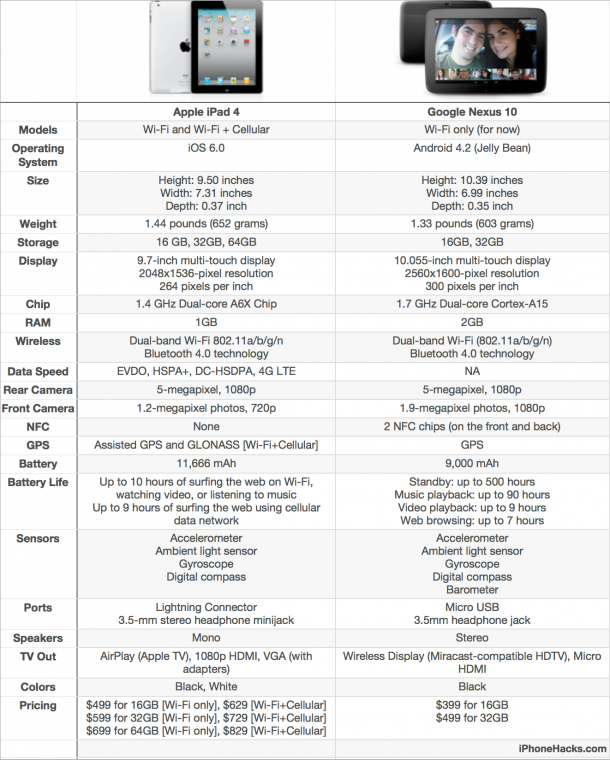
The specs tell the truth. Apple with its IPAD 4 has lost the lead and Google with the Nexus 10 has become the winner (on numbers). X-Mas 2012 will reflect in sales numbers who will be number one.

Source: Iphonehacks.com

Interview mit Martin Bliem (CEO camarg)

Wer sind Martin Bliem und Christian Miletzky?

Martin Bliem ist CEO von camarg (www.camarg.at), der Firma, die mit Chelino den weltweit ersten intelligenten Stuhl mit integrierter Aufstehhilfe entwickelt hat.

Christian Miletzky ist ein technisch versierter Designer, der neben F&E für die Produktion zuständig ist.

DieIdee InnovationsAgentur (www.dieIdee.eu): Worum geht es bei Eurer Geschäftsidee Chelino – der intelligente Stuhl?

Martin Bliem CEO von camarg (www.camarg.at): Unser Plan war es älteren und körperlich eingeschränkten Personen mit innovativen und gleichzeitig optisch anspruchsvollen Produkten den Alltag zu erleichtern, bzw. die Selbständigkeit zu sichern.
Daraus ergab sich Chelino: Ein Stuhl mit integrierter Aufstehhilfe. Er ermöglicht ein Setzen und Aufstehen ohne Kraftanstrengung.
Zusätzlich steht Chelino auf Rollen, damit die Person zu einem Tisch rollen kann. Damit Chelino beim Setzen und Aufstehen die notwendige Stabilität und Sicherheit gibt, sind die hinteren Rollen mit automatischen Bremsen ausgestattet, die sich von selbst aktivieren wenn sich der Benutzer Setzen oder Aufstehen möchte.

DieIdee InnovationsAgentur (www.dieIdee.eu): Was zeichnet den Stuhl aus – Warum habt ihr ihn beim österreichischen Patentamt angemeldet?

Martin Bliem CEO von camarg (www.camarg.at): Weltweit gibt es keine vergleichbare Aufstehhilfe, die Personen mit körperlichen Einschränkungen ein Setzen an einen Tisch ermöglicht und ohne jegliche Stromzufuhr auskommt.
Die Kombination aus Funktionalität, Design und einfacher Bedienung macht Chelino einzigartig und er wurde dafür auch schon mehrefach ausgezeichnet. Durch die Patentanmeldung haben wir einen Schutz mit dem unser Produkt auf unseren wichtigen Märkten nicht kopiert werden kann.

DieIdee InnovationsAgentur (www.dieIdee.eu): Martin, aus Deiner bisherigen Erfahrung heraus: Was sind die wichtigsten Eigenschaften, die einen erfolgreichen Unternehmer auszeichnen?

Martin Bliem CEO von camarg (www.camarg.at): Die Fähigkeit Details bis ins kleinste Detail zu lösen, aber dabei niemals den Überblick über das Gesamte zu verlieren. Kreativität und hohe Lernfähigkeit, um sich neuem Herausforderungen stellen zu können.
Charisma und Optimismus, um Leute von der Idee begeistern zu können. Einfühlungsvermögen, Gespühr fürs Wesentliche, Aufrichtigkeit und Durchsetzungsvermögen um mit einem Team ein Ziel zu erreichen.

DieIdee InnovationsAgentur (www.dieIdee.eu): „Was sind die Eigenschaften des erfolgreichen Start-up Teams? Was sollte man mitbringen?“

Martin Bliem CEO von camarg (www.camarg.at): Ein Team erfordert einen Leader, der motiviert und das Ziel nie aus den Augen verliert.
Die Teammitglieder dürfen und sollen unterschiedlich sein. So bringt jeder seinen eigenen unverkennbaren Charakter mit einzigartigen Erfahrungen und angeeignetem Wissen in das Unternehmen ein. Das Team sollt dabei aber auch gut miteinander auskommen. Man verbringt viel Zeit gemeinsam und die sollte man auch wertschätzen.
Von jedem Teammitglied wird Durchhalteverhalten, Optimismus, eine hohe Frusttoleranz, sowie möglichst eine finanzielle Unabhängigkeit abverlangt. Das stabile soziale Umfeld, trägt und fängt in schwierigen Zeiten und motiviert zum Weitermachen.

DieIdee InnovationsAgentur (www.dieIdee.eu): Wie sieht eine Aufgabenverteilung im Team konkret aus?

Martin Bliem CEO von camarg (www.camarg.at):Ich (Martin) bin für die Geschäftsführug zuständig. Das bedeutet bei einem Unternehmen von überschaubarer Größe, dass es kaum einen Bereich gibt, in dem man nicht mitwirkt. Prinzipiell haben wir aber unsere Aufgaben schon verteilt. Ich bin für Finanzen, Marketing und Vertrieb zuständig und Christian für die Entwicklung, Produktion und Einkauf. Unsere Mitarbeiterin Cornelia Ernekl ist vorrangig für den Verkauf zuständig.

DieIdee InnovationsAgentur (www.dieIdee.eu): Was waren die großen Hürden, die Ihr erfolgreich gemeinsam gemeistert habt?

Martin Bliem CEO von camarg (www.camarg.at): Für die Finanzierung des Projekts war es notwenid mehre Förderungen zu bekommen. Dies ist uns sehr gut gelungen, was vermutlich an dem Produkt liegt, dessen Nutzen offensichtlich ist. Die größte Herausforderung in der dreijährigen Entwicklung lag dabei in der Berücksichtigung der körperlichen Einschränkungen, die man als junger und gesunder Mensch nicht hat und daher leicht übersieht.
Darüber hinaus bedurfte es an viel Kreativität und Denkarbeit um die notwendige Sicherheit mit einem optisch schönen Design zu vereinbaren.
Es sollte ein Stuhl entstehen, der eine Lebenserleichterung integriert, aber nicht als Hilfsmittel sondern ein schönes Möbel wahrgenommen würde. Das Ergebnis kann sich zeigen lassen. Chelino hat mehrere Innovations-, Design- und Medizinproduktpreise gewonnen, darunter eine reddot Auszeichnung und eine Auszeichnung für eines der besten zehn in Österreich erteilten Patente im Jahr 2011.

DieIdee InnovationsAgentur (www.dieIdee.eu): Hast Du eine Entscheidung, in der Gründungsphase, bisher bereut?

Martin Bliem CEO von camarg (www.camarg.at): Prinzipiell haben wir unsere Sache gut gemacht und wir dürfen zufrieden mit unserer bisherigen Leistung sein. Natürlich kann man Dinge auch besser machen. So lernt man aus Erfahrung und würde viele Dinge beim zweiten Mal anders machen. Manchmal ärgert man sich auch, weil man Dinge nicht im Vorhinein richtig eingeschätzt und angepackt hat, aber ich denke das ist überall so. Solange man einen Fehler nicht zweimal begeht, weiß man zumindest, dass man ein System geschaffen hat, das die Fehlerwahrscheinlichkeit reduziert.

DieIdee InnovationsAgentur (www.dieIdee.eu): Was sind die für Dich wichtigsten Startbedingungen für ein Startup? Deine Checkliste?

Martin Bliem CEO von camarg (www.camarg.at): Eine super Idee, an die man selbst und andere glauben. Manchmal ist man selbst zu optimistisch, und es ist gut, Feedback von Außen zu bekommen…
Daraus muss ein in sich stimmiger und möglichst realistischer Businessplan entstehen. Bodenständige Überlegungen sind hier oft wichtiger als wissenschaftliche Ansätze.
Geld ist sehr wichtig. Man sollte sehr genau wissen woher das Geld für das Unternehmen und Privatleben herfließt. Die gewinnbringenden Umsätze kommen immer viel später als man glaubt. Sich darauf verlassen, dass man damit Kredite in der Zukunft begleichen kann, sollte man mit Vorsicht genießen. Stets sollte daher ein Ausstiegszenario einkalkuliert werden.

DieIdee InnovationsAgentur (www.dieIdee.eu): Rätst Du Jungunternehmern ohne perfektes Setup (Personal, Know-how) zu starten?

Martin Bliem CEO von camarg (www.camarg.at): Der Kapitaleinsatz ist hier sehr ausschlaggebend.
Bei finanziellen low-involvements wie etwa bei Dienstleistungen die ohne hohen Kapitaleinsatz und Entwicklungskosten auskommen, ist ein Start mit einem relativ niedrigen Risiko verbunden.
Bei finanziellen high-involvments (z.B. Produktentwicklungen) – sieht die Sache anders aus. Entwicklungen dauern oft länger als gedacht und für die Vermarktung des Produkts sind dann nochmals Investitionskosten vonnöten, die die Entwicklungskosten um ein Mehrfaches übersteigen.

DieIdee InnovationsAgentur (www.dieIdee.eu): Wie wichtig ist Geld ?

Martin Bliem CEO von camarg (www.camarg.at): Wenn Du die Miete nicht bezahlen kannst, die laufenden Kosten nicht im Griff hast, wird es schwierig.
Haushalten, vorplanen und das Budget zu kalkulieren ist immer wichtig und Pflicht.
Man sollte sich auch darauf einstellen, dass privat mehrere Jahre ein absoluter Verzicht notwendig ist.

DieIdee InnovationsAgentur (www.dieIdee.eu): Wordrap. „Auffallen?“

Martin Bliem CEO von camarg (www.camarg.at): Positiv auffallen ist sehr wichtig. Das beginnt bei der Präsentation eines Förderungsansuchens und endet bei dem Verkaufsgespräch bei einem Kunden. Man sollte stets versuchen Dinge so zu tun, dass sie Neugierde und Aufmerksamkeit erzeugen.
Eine Möglichkeit in der Öffentlichkeit aufzufallen sind Wettbewerbe. Es gibt hier eine Vielzahl von Möglichkeiten, die man alle ergreifen sollte.

DieIdee InnovationsAgentur (www.dieIdee.eu): Innere Motivation?

Martin Bliem CEO von camarg (www.camarg.at): Ich (Martin) wollte eine Firma gründen, um das Unternehmertum kennenzulernen. Mein Wunsch ist es mehrere Jahre hart für etwas sinnvolles zu arbeiten, etwas aufzubauen und dann anschließend von dem Geschaffenen zu profitieren.

Meine (Christian) Motivation liegt im erhalt der Unabhängigkeit. Mir ist es wichtig mein Leben nach meinen Vorstellungen zu leben und im Beruf viel Freiheiten zu bewahren.

DieIdee InnovationsAgentur (www.dieIdee.eu): Umsatz zu Gewinn?

Martin Bliem CEO von camarg (www.camarg.at): Das Erfreulichste für den Selbstständigen ist es den break-even zu erreichen. So bleibt man unabhängig von Investoren und weiß, dass man eine Basis geschaffen hat auf der man aufbauen kann.

DieIdee InnovationsAgentur (www.dieIdee.eu): Absatzmarkt?

Martin Bliem CEO von camarg (www.camarg.at): Derzeit verteiben wir unsere Produkte im deutschsprachigen Raum. In ca. 2-3 Jahren sollen weitere Absatzmärkte in der EU und USA erschlossen werden.

DieIdee InnovationsAgentur (www.dieIdee.eu): Austesten von Ideen?

Martin Bliem CEO von camarg (www.camarg.at): Für die Produktentwicklung ist es ideal wenn man potentielle Kunden als Testpartner gewinnen kann. So können Neuentwicklung ohne viel Aufwand von dritten bewertet werden. Mehrere Testpartner sind zu bevorzugen jedoch sollte der Tatsächliche Verkauf und Produktvorstellungen erst begonnen werden, wenn das Produkt marktreif und auslieferbar ist.

Qualitätsüberprüfungen und Langzeittests sollte man ernst und konsequent durchführen. Ein kaputtes Produkt am anderen Ende der Welt bei einem Kunden kann mehr kosten als es einbringt.

DieIdee InnovationsAgentur (www.dieIdee.eu): Womit beschäftigst Ihr Euch derzeit? Was ist in Zukunft geplant?

Martin Bliem CEO von camarg (www.camarg.at): Derzeit führen wir mit mehreren Investoren Gespräche. Vorraussichtlich wird gemeinsam mit Businessangels dieem Herbst eine GmbH gegründet.
Im Bereich der Produktentwicklung arbeiten wir an einem neuen Modell mit einer weitern intelligenten Lösung, die wir aber hier noch nicht verraten möchten.

DieIdee InnovationsAgentur (www.dieIdee.eu): Wie sieht Eure Distributionspolitik aus?

Martin Bliem CEO von camarg (www.camarg.at):Wir vertreiben Chelino sowohl direkt als auch indirekt über Sanitätshäuser und Möbelhäuser.
Viele Kunden werden durch unsere Homepage aufmerksam und melden sich direkt bei uns – auf www.camarg.at
Wir bieten interessierte Kunden ein persönliches Beratungsgespräch und eine anschließende gratis Testwoche. Durchschnittlich verbleiben danach 9 von 10 Chelinos bei dem neuen Besitzer was die hohe Kundenzufriedenheit wiederspiegelt.

DieIdee InnovationsAgentur (www.dieIdee.eu): Vielen Dank für das Gespräch.

Dieser Text unterliegt dem Copyright von dieIdee InnovationsAgentur.
Auszüge auch nur teilweise bedürfen der ausdrücklichen schriftlichen Genehmigung von dieIdee InnovationsAgentur.
Anfragen bitte unter copyrights@dieIdee.eu