Today, Porsche announced it’s investing more than a billion dollars to bring the Mission E to production. As in, you’ll be able to buy one. We’re light on details—like the size of the battery, or when we’ll actually see one on the road—but we’ve got the most important numbers. The motor (or motors, Porsche hasn’t said) will produce more than 600 horsepower. The four-seater Mission E will go from 0 to 62 mph in under 3.5 seconds. And it will go 310 miles on a charge.
Porsche, which faces increasingly strict fuel emission standards from US and European authorities, been working with batteries for a few years now, with top notch results. It already offers plug-in hybrid versions of the Panamera and Cayenne, it’s successfully raced a 911 hybrid. Then there’s the flat-out amazing gas-electric 918 Spyder supercar and 919 Hybrid that won at Le Mans this year. So it makes sense to make the next step a full electric.
Compared to Tesla’s current range-topper, the excellent Model S P90D, the Mission E will offer a bit less power and a slower acceleration time. But Porsche wins on range—the longest-legged Tesla goes roughly 286 miles on a charge. Here, the Germans have a second advantage: They’re working on an 800-volt charger that will power the car up to 80 percent in just 15 minutes, half the time it takes the Tesla.
Porsche, which faces increasingly strict fuel emission standards from US and European authorities, been working with batteries for a few years now, with top notch results. It already offers plug-in hybrid versions of the Panamera and Cayenne, it’s successfully raced a 911 hybrid. Then there’s the flat-out amazing gas-electric 918 Spyder supercar and 919 Hybrid that won at Le Mans this year. So it makes sense to make the next step a full electric.
Porsche plans to build the battery into the floor of the car, like Tesla does, so you can expect a very low center of gravity, great news for performance. But really, the Mission E wins on looks. The Model S and Model X SUV are lovely designs, but the Porsche is simply gorgeous, in the way only a Porsche can be. We’ve only seen the concept version, but hopefully Porsche will be smart enough to change as little as possible on the way to production.
Apple is known for being one of the most challenging and exciting places to work, so it’s not surprising to learn that getting a job there is no easy task.
Like Google and other big tech companies, Apple asks both technical questions based on your past work experience and some mind-boggling puzzles.
We combed through recent posts on Glassdoor to find some of the toughest interview questions candidates have been asked.
Some require solving tricky math problems, while others are simple but vague enough to keep you on your toes.
“If you have 2 eggs, and you want to figure out what’s the highest floor from which you can drop the egg without breaking it, how would you do it? What’s the optimal solution?” — Software Engineer candidate
„You have a 100 coins laying flat on a table, each with a head side and a tail side. 10 of them are heads up, 90 are tails up. You can’t feel, see or in any other way find out which side is up. Split the coins into two piles such that there are the same number of heads in each pile.“ — Software Engineer candidate
AP Photo/Ariel Schalit
„Describe yourself, what excites you?“ — Software Engineer candidate
„There are three boxes, one contains only apples, one contains only oranges, and one contains both apples and oranges. The boxes have been incorrectly labeled such that no label identifies the actual contents of the box it labels. Opening just one box, and without looking in the box, you take out one piece of fruit. By looking at the fruit, how can you immediately label all of the boxes correctly?“ — Software QA Engineer candidate
„Scenario: You’re dealing with an angry customer who was waiting for help for the past 20 minutes and is causing a commotion. She claims that she’ll just walk over to Best Buy or the Microsoft Store to get the computer she wants. Resolve this issue.“ — Specialist candidate
„Have you ever disagreed with a manager’s decision, and how did you approach the disagreement? Give a specific example and explain how you rectified this disagreement, what the final outcome was, and how that individual would describe you today.“ — Software Engineer candidate
Jamie Squire / Getty
“You put a glass of water on a record turntable and begin slowly increasing the speed. What happens first — does the glass slide off, tip over, or does the water splash out?“ — Mechanical Engineer candidate
Digital Trends
„Tell me something that you have done in your life which you are particularly proud of.“ — Software Engineering Manager candidate
„Given an iTunes type of app that pulls down lots of images that get stale over time, what strategy would you use to flush disused images over time?“ — Software Engineer candidate
iTunes
„If you’re given a jar with a mix of fair and unfair coins, and you pull one out and flip it 3 times, and get the specific sequence heads heads tails, what are the chances that you pulled out a fair or an unfair coin?“ — Lead Analyst candidate
slgckgc/flickr
„What was your best day in the last 4 years? What was your worst?“ — Engineering Project Manager candidate
Kreatives Denken, knifflige Logikprobleme Den Jobkandidaten werden je nach dem Bereich, für den sie sich bewerben, Fragen zu ihrem technischen Verständnis gestellt. Teilweise müssen sie Empathie beweisen oder Logikrätsel lösen und kreatives Denken an den Tag legen.
Frage an einen Softwareentwickler: Wenn Sie zwei Eier halten und überprüfen möchten aus welcher Höhe Sie sie fallen lassen können, ohne sie kaputt zu machen. Wie würden Sie das angehen?
Frage an einen Hardware-Ingenieur: Sie stellen ein Glas Wasser auf einen Plattenspieler, der sich zunehmend schneller dreht. Was geschieht zuerst: rutscht das Glas herunter, schwappt das Wasser über oder kippt das Glas um?
Frage an einen Kandidaten für den Telefonsupport: Erklären Sie einem Achtjährigen wie ein Modem/Router funktioniert.
Frage an einen Bewerber im globalen Vertrieb: Wie viele Kinder kommen täglich zur Welt?
Frage für einen Family-Room-Bewerber: Sie wirken sehr positiv, was sorgt bei Ihnen für schlechte Laune?
Frage an einen Apple-Specialist-Kandidaten: Warum änderte Apple seinen Namen von Apples Computer Incorporated zu Apple Inc.?
Frage an einen Software-Entwickler: Auf einem Tisch liegen 100 Münzen. Zehn mit der Kopfseite nach oben, 90 mit der Zahl. Sie können weder erfühlen, noch sehen, noch auf irgendeine andere Weise herausfinden mit welcher Seite die Münzen nach oben zeigen. Wie teilen sie die Münzen in zwei Stapel, damit bei beiden dieselbe Anzahl mit dem Kopf nach oben zeigt?
Frage an einen Software-Entwickler: Wie würden Sie einen Toaster testen?
Frage an einen Bewerber im globalen Vertrieb: Wie berechnen Sie die Kosten für einen Kugelschreiber?
Frage an einen Apple-Specialist-Kandidaten: Sie haben es mit einer verärgerten Kundin zu tun, die seit 20 Minuten auf Hilfe wartet und für Wirbel sorgt. Sie sagt, dass sie nun zu Best Buy oder einem Microsoft-Store geht, um den Computer zu kaufen, die sie möchte. Lösen Sie dieses Problem.
Fragen an einen Bewerber für den Apple-Care-Telefonsupport: Ein Mann ruft an und hat einen Computer, der im Grunde nur noch Schrott ist. Was tun Sie?
Click to Open Overlay GalleryBuried deep within each cell in Sergey Brin’s body—in a gene called LRRK2, which sits on the 12th chromosome—is a genetic mutation that has been associated with higher rates of Parkinson’s. Rafa JennSeveral evenings a week, after a day’s work at Google headquarters in Mountain View, California, Sergey Brin drives up the road to a local pool. There, he changes into swim trunks, steps out on a 3-meter springboard, looks at the water below, and dives.
Brin is competent at all four types of springboard diving—forward, back, reverse, and inward. Recently, he’s been working on his twists, which have been something of a struggle. But overall, he’s not bad; in 2006 he competed in the master’s division world championships. (He’s quick to point out he placed sixth out of six in his event.)
The diving is the sort of challenge that Brin, who has also dabbled in yoga, gymnastics, and acrobatics, is drawn to: equal parts physical and mental exertion. “The dive itself is brief but intense,” he says. “You push off really hard and then have to twist right away. It does get your heart rate going.”
There’s another benefit as well: With every dive, Brin gains a little bit of leverage—leverage against a risk, looming somewhere out there, that someday he may develop the neurodegenerative disorder Parkinson’s disease. Buried deep within each cell in Brin’s body—in a gene called LRRK2, which sits on the 12th chromosome—is a genetic mutation that has been associated with higher rates of Parkinson’s.
Not everyone with Parkinson’s has an LRRK2 mutation; nor will everyone with the mutation get the disease. But it does increase the chance that Parkinson’s will emerge sometime in the carrier’s life to between 30 and 75 percent. (By comparison, the risk for an average American is about 1 percent.) Brin himself splits the difference and figures his DNA gives him about 50-50 odds.
That’s where exercise comes in. Parkinson’s is a poorly understood disease, but research has associated a handful of behaviors with lower rates of disease, starting with exercise. One study found that young men who work out have a 60 percent lower risk. Coffee, likewise, has been linked to a reduced risk. For a time, Brin drank a cup or two a day, but he can’t stand the taste of the stuff, so he switched to green tea. (“Most researchers think it’s the caffeine, though they don’t know for sure,” he says.) Cigarette smokers also seem to have a lower chance of developing Parkinson’s, but Brin has not opted to take up the habit. With every pool workout and every cup of tea, he hopes to diminish his odds, to adjust his algorithm by counteracting his DNA with environmental factors.
“This is all off the cuff,” he says, “but let’s say that based on diet, exercise, and so forth, I can get my risk down by half, to about 25 percent.” The steady progress of neuroscience, Brin figures, will cut his risk by around another half—bringing his overall chance of getting Parkinson’s to about 13 percent. It’s all guesswork, mind you, but the way he delivers the numbers and explains his rationale, he is utterly convincing.
Brin, of course, is no ordinary 36-year-old. As half of the duo that founded Google, he’s worth about $15 billion. That bounty provides additional leverage: Since learning that he carries a LRRK2 mutation, Brin has contributed some $50 million to Parkinson’s research, enough, he figures, to “really move the needle.” In light of the uptick in research into drug treatments and possible cures, Brin adjusts his overall risk again, down to “somewhere under 10 percent.” That’s still 10 times the average, but it goes a long way to counterbalancing his genetic predisposition.
It sounds so pragmatic, so obvious, that you can almost miss a striking fact: Many philanthropists have funded research into diseases they themselves have been diagnosed with. But Brin is likely the first who, based on a genetic test, began funding scientific research in the hope of escaping a disease in the first place.
His approach is notable for another reason. This isn’t just another variation on venture philanthropy—the voguish application of business school practices to scientific research. Brin is after a different kind of science altogether. Most Parkinson’s research, like much of medical research, relies on the classic scientific method: hypothesis, analysis, peer review, publication. Brin proposes a different approach, one driven by computational muscle and staggeringly large data sets. It’s a method that draws on his algorithmic sensibility—and Google’s storied faith in computing power—with the aim of accelerating the pace and increasing the potential of scientific research. “Generally the pace of medical research is glacial compared to what I’m used to in the Internet,” Brin says. “We could be looking lots of places and collecting lots of information. And if we see a pattern, that could lead somewhere.”
In other words, Brin is proposing to bypass centuries of scientific epistemology in favor of a more Googley kind of science. He wants to collect data first, then hypothesize, and then find the patterns that lead to answers. And he has the money and the algorithms to do it.
Click to Open Overlay GalleryGiven what seems like very bad news, most of us would actually do what Brin did: Go over our options, get some advice, and move on with life. Nathan Fox
Brin’s faith in the power of numbers—and the power of knowledge, more generally—is likely something he inherited from his parents, both scientists. His father, Michael, is a second-generation mathematician; his mother Eugenia is trained in applied mathematics and spent years doing meteorology research at NASA. The family emigrated from Russia when Brin was 6. At 17, he took up mathematics himself at the University of Maryland, later adding a second major in computer science. When he reached Stanford for his PhD—a degree he still hasn’t earned, much to his parents’ chagrin—he focused on data mining. That’s when he began thinking about the power of large data sets and what might come of analyzing them for unexpected patterns and insights.
Around the same time, in 1996, Brin’s mother started to feel some numbness in her hands. The initial diagnosis was repetitive stress injury, brought on by years of working at a computer. When tests couldn’t confirm that diagnosis, her doctors were stumped. Soon, though, Eugenia’s left leg started to drag. “It was just the same as my aunt, who had Parkinson’s years ago,” she recalls. “The symptoms started in the same way, at the same age. To me, at least, it was obvious there was a connection.”
At the time, scientific opinion held that Parkinson’s was not hereditary, so Brin didn’t understand his mother’s concern. “I thought it was crazy and completely irrational,” he says. After further tests at Johns Hopkins and the Mayo Clinic, though, she was diagnosed with Parkinson’s in 1999.
Even after the LRRK2 connection was made in 2004, Brin still didn’t connect his mother’s Parkinson’s to his own health. Then, in 2006, his wife-to-be, Anne Wojcicki, started the personal genetics company 23andMe (Google is an investor). As an alpha tester, Brin had the chance to get an early look at his genome. He didn’t find much of concern. But then Wojcicki suggested he look up a spot known as G2019S—the notch on the LRRK2 gene where an adenine nucleotide, the A in the ACTG code of DNA, sometimes substitutes for a guanine nucleotide, the G. And there it was: He had the mutation. His mother’s 23andMe readout showed that she had it, too.
Brin didn’t panic; for one thing, his mother’s experience with the disease has been reassuring. “She still goes skiing,” he says. “She’s not in a wheelchair.” Instead, he spent several months mulling over the results. He began to consult experts, starting with scientists at the Michael J. Fox Foundation and at the Parkinson’s Institute, which is not far from Google’s headquarters. He quickly realized it was going to be impractical to keep his risk from the public. “I can’t talk to 1,000 people in secret,” he says. “So I might as well put it out there to the world. It seemed like information that was worthy of sharing and might even be interesting.”
So one day in September 2008, Brin started a blog. His first post was called simply “LRRK2.”
“I know early in my life something I am substantially predisposed to,” Brin wrote. “I now have the opportunity to adjust my life to reduce those odds (e.g., there is evidence that exercise may be protective against Parkinson’s). I also have the opportunity to perform and support research into this disease long before it may affect me. And, regardless of my own health, it can help my family members as well as others.”
Brin continued: “I feel fortunate to be in this position. Until the fountain of youth is discovered, all of us will have some conditions in our old age, only we don’t know what they will be. I have a better guess than almost anyone else for what ills may be mine—and I have decades to prepare for it.”
In a sense, we’ve been using genetics to foretell disease risk forever. When we talk about “family history,” we’re largely talking about DNA, about how our parents’ health might hint at our own. A genetic scan is just a more modern way to link our familial past with our potential future. But there’s something about the precision of a DNA test that can make people believe that chemistry is destiny—that it holds dark, implacable secrets. This is why genetic information is sometimes described as “toxic knowledge”: Giving people direct access to their genetic information, in the words of Stanford bioethicist Hank Greely, is out and out “reckless.”
It’s true that in the early days of the science, genetic testing meant learning about a dreaded degenerative disease like Huntington’s or cystic fibrosis. But these diseases, although easy to identify, are extremely rare. Newer research has shown that when it comes to getting sick, a genetic predisposition is usually just one factor. The vast majority of conditions are also influenced by environment and day-to-day habits, areas where we can actually take some action.
But, surprisingly, the concept of genetic information as toxic has persisted, possibly because it presumes that people aren’t equipped to learn about themselves. But research shows this presumption to be unfounded. In 2009, The New England Journal of Medicine published results of the Risk Evaluation and Education for Alzheimer’s Disease study, an 11-year project that sought to examine how people react to finding out that they have a genetic risk for Alzheimer’s. Like Parkinson’s, Alzheimer’s is a neurodegenerative condition centering on the brain. But unlike Parkinson’s, Alzheimer’s has no known treatment. So learning you have a genetic predisposition should be especially toxic.
In the study, a team of researchers led by Robert Green, a neurologist and geneticist at Boston University, contacted adults who had a parent with Alzheimer’s and asked them to be tested for a variation in a gene known as ApoE. Depending on the variation, an ApoE mutation can increase a person’s risk for Alzheimer’s from three to 15 times the average. One hundred sixty-two adults agreed; 53 were told they had the mutation.
The results were delivered to the participants with great care: A genetic counselor walked each individual through the data, and all the subjects had follow-up appointments with the counselor. Therapists were also on call. “People were predicting catastrophic reactions,” Green recalls. “Depression, suicide, quitting their jobs, abandoning their families. They were anticipating the worst.”
But that isn’t what happened. People told that they were at dramatically higher risk for developing Alzheimer’s later in life seemed to process the information and integrate it into their lives, often choosing to lead more healthy lifestyles. “People are handling it,” Green says. “It doesn’t seem to be producing any clinically apparent distress.”
In other experiments, Green has further challenged the conventional wisdom about the toxicity of genetic information: He has begun questioning the need for counselors and therapists. “We’re looking at what happens if you don’t do this elaborate thing. What if you do it like a lab test in your doctor’s office? We’re treating it more like cholesterol and less like Huntington’s disease.”
In other words, given what seems like very bad news, most of us would do what Sergey Brin did: Go over our options, get some advice, and move on with life. “Everyone’s got their challenges; everyone’s got something to deal with,” Brin says. “This is mine. To me, it’s just one of any number of things that I could get in old age. And the most important factor is that I can do something about it.”
High-Speed Science
Can a model fueled by data sets and computational power compete with the gold standard of research? Maybe: Here are two timelines—one from an esteemed traditional research project run by the NIH, the other from the 23andMe Parkinson’s Genetics Initiative. They reached almost the same conclusion about a possible association between Gaucher’s disease and Parkinson’s disease, but the 23andMe project took a fraction of the time.—Rachel Swaby
Traditional Model
1. Hypothesis: An early study suggests that patients with Gaucher’s disease (caused by a mutation to the GBA gene) might be at increased risk of Parkinson’s.
2. Studies: Researchers conduct further studies, with varying statistical significance.
3. Data aggregation: Sixteen centers pool information on more than 5,500 Parkinson’s patients.
4. Analysis: A statistician crunches the numbers.
5. Writing: A paper is drafted and approved by 64 authors.
6. Submission: The paper is submitted to The New England Journal of Medicine. Peer review ensues.
7. Acceptance:NEJM accepts the paper.
8. Publication: The paper notes that people with Parkinson’s are 5.4 times more likely to carry the GBA mutation.
Total time elapsed: 6 years
Parkinson’s Genetics initiative
1. Tool Construction: Survey designers build the questionnaire that patients will use to report symptoms.
2. Recruitment: The community is announced, with a goal of recruiting 10,000 subjects with Parkinson’s.
3. Data aggregation: Community members get their DNA analyzed. They also fill out surveys.
4. Analysis: Reacting to the NEJM paper, 23andMe researchers run a database query based on 3,200 subjects. The results are returned in 20 minutes.
5. Presentation: The results are reported at a Royal Society of Medicine meeting in London: People with GBA are 5 times more likely to have Parkinson’s, which is squarely in line with the NEJM paper. The finding will possibly be published at a later date.
Total time elapsed: 8 months
If Brin’s blog post betrayed little fear about his risk for Parkinson’s, it did show a hint of disappointment with the state of knowledge on the disease. (His critique was characteristically precise: “Studies tend to have small samples with various selection biases.”)
His frustration is well founded. For decades, Parkinson’s research has been a poor cousin to the study of Alzheimer’s, which affects 10 times as many Americans and is therefore much more in the public eye. What is known about Parkinson’s has tended to emerge from observing patients in clinical practice, rather than from any sustained research. Nearly all cases are classified as idiopathic, meaning there’s no known cause. Technically, the disease is a result of the loss of brain cells that produce the neurotransmitter dopamine, but what causes those cells to die is unclear. The classic symptoms of the condition—tremors, rigidity, balance problems—come on gradually and typically don’t develop until dopamine production has declined by around 80 percent, meaning that a person can have the disease for years before experiencing the first symptom.
As far as treatments go, the drug levodopa, which converts to dopamine in the brain, remains the most effective. But the drug, developed in 1967, has significant side effects, including involuntary movements and confusion. Other interventions, like deep-brain stimulation, are invasive and expensive. Stem cell treatments, which generated great attention and promise a decade ago, “didn’t really work,” says William Langston, director of the Parkinson’s Institute. “Transferring nerve cells into the brain and repairing the brain has been harder than anybody thought.”
There are, however, some areas of promise—including the 2004 discovery of the LRRK2 connection. It’s especially common among people of Ashkenazi descent, like Brin, and appears in just about 1 percent of Parkinson’s patients. Rare as the mutation is, however, LRRK2 cases of Parkinson’s appear indistinguishable from other cases, making LRRK2 a potential window onto the disease in general.
LRRK2 stands for leucine-rich repeat kinase. Kinases are enzymes that activate proteins in cells, making them critical to cell growth and death. In cancer, aberrant kinases are known to contribute to tumor growth. That makes them a promising target for research. Drug companies have already developed kinase inhibitors for cancer; it’s a huge opportunity for Parkinson’s treatment, as well: If overactive kinases interfere with dopamine-producing cells in all Parkinson’s cases, then a kinase inhibitor may be able to help not just the LRRK2 carriers but all people with the disease.
Another promising area for research is that delay between the loss of dopamine-producing cells and the onset of symptoms. As it stands, this lag makes treatment a much more difficult problem. “By the time somebody has full-blown Parkinson’s, it’s way too late,” Langston says. “Any number of promising drugs have failed, perhaps because we’re getting in there so late.” But doctors can’t tell who should get drugs earlier, because patients are asymptomatic. If researchers could find biomarkers—telltale proteins or enzymes detected by, say, a blood or urine test—that were produced before symptoms emerged, a drug regimen could be started early enough to work.
And indeed, Brin has given money to both these areas of research, predominantly through gifts to the Parkinson’s Institute and to the Michael J. Fox Foundation, which is committed to what’s called translational research—getting therapies from researchers to the clinic as quickly as possible. Last February the Fox Foundation launched an international consortium of scientists working on LRRK2, with a mandate for collaboration, openness, and speed. “The goal is to get people to change their behavior and share information much more quickly and openly,” says Todd Sherer, head of the Fox Foundation’s research team. “We need to change the thinking.”
As Brin’s understanding of Parkinson’s grew, though, and as he talked with Wojcicki about research models, he realized that there was an even bolder experiment in the offing.
In 1899, scientists at Bayer unveiled Aspirin, a drug it offered as an effective remedy for colds, lumbago, and toothaches, among other ills. How aspirin—or acetylsalicylic acid—actually worked was a mystery. All people knew was that it did (though a discouraging side effect, gastric bleeding, emerged in some people).
It wasn’t until the 1960s and ’70s that scientists started to understand the mechanism: Aspirin inhibits the production of chemicals in the body called prostaglandins, fatty acids that can cause inflammation and pain. That insight proved essential to understanding the later discovery, in 1988, that people who took aspirin every other day had remarkably reduced rates of heart attack—cases in men dropped by 44 percent. When the drug inhibits prostaglandins, it seems, it inhibits the formation of blood clots, as well—reducing the risk of heart attack or stroke.
The second coming of aspirin is considered one of the triumphs of contemporary medical research. But to Brin, who spoke of the drug in a talk at the Parkinson’s Institute last August, the story offers a different sort of lesson—one drawn from that period after the drug was introduced but before the link to heart disease was established. During those decades, Brin notes, surely “many millions or hundreds of millions of people who took aspirin had a variety of subsequent health benefits.” But the association with aspirin was overlooked, because nobody was watching the patients. “All that data was lost,” Brin said.
In Brin’s way of thinking, each of our lives is a potential contribution to scientific insight. We all go about our days, making choices, eating things, taking medications, doing things—generating what is inelegantly called data exhaust. A century ago, of course, it would have been impossible to actually capture this information, particularly without a specific hypothesis to guide a researcher in what to look for. Not so today. With contemporary computing power, that data can be tracked and analyzed. “Any experience that we have or drug that we may take, all those things are individual pieces of information,” Brin says. “Individually, they’re worthless, they’re anecdotal. But taken together they can be very powerful.”
In computer science, the process of mining such large data sets for useful associations is known as a market-basket analysis. Conventionally, it has been used to divine patterns in retail purchases. It’s how Amazon.com can tell you that “customers who bought X also bought Y.”
But a problem emerges as the data in a basket become less uniform. This was the focus of much of Brin’s work at Stanford, where he published several papers on the subject. One, from 1997, argued that given the right algorithms, meaningful associations can be drawn from all sorts of unconventional baskets—”student enrollment in classes, word occurrence in text documents, users’ visits of Web pages, and many more.” It’s not a stretch to say that our experiences as patients might conceivably be the next item on the list.
This is especially true given the advances in computational power since 1997, when Brin and his fellow Stanford comp-sci student Larry Page were starting Google. “When Larry and I started the company,” Brin says, “we had to get some hard drives to, you know, store the entire Web. We ended up in a back alley in San Jose, dealing with some shady guy. We spent $10,000 or $20,000, all our life savings. We got these giant stacks of hard drives that we had to fit in our cars and get home. Just last week I happened to go to Fry’s and I picked up a hard drive that was 1 terabyte and cost like $100. And it was bigger than all those hard drives put together.”
This computing power can be put to work to answer questions about health. As an example, Brin cites a project developed at his company’s nonprofit research arm, Google.org. Called Google Flu Trends, the idea is elegantly simple: Monitor the search terms people enter on Google, and pull out those words and phrases that might be related to symptoms or signs of influenza, particularly swine flu.
In epidemiology, this is known as syndromic surveillance, and it usually involves checking drugstores for purchases of cold medicines, doctor’s offices for diagnoses, and so forth. But because acquiring timely data can be difficult, syndromic surveillance has always worked better in theory than in practice. By looking at search queries, though, Google researchers were able to analyze data in near real time. Indeed, Flu Trends can point to a potential flu outbreak two weeks faster than the CDC’s conventional methods, with comparable accuracy. “It’s amazing that you can get that kind of signal out of very noisy data,” Brin says. “It just goes to show that when you apply our newfound computational power to large amounts of data—and sometimes it’s not perfect data—it can be very powerful.” The same, Brin argues, would hold with patient histories. “Even if any given individual’s information is not of that great quality, the quantity can make a big difference. Patterns can emerge.”
Brin’s tolerance for “noisy data” is especially telling, since medical science tends to consider it poisonous. Biomedical researchers often limit their experiments to narrow questions that can be rigorously measured. But the emphasis on purity can mean fewer patients to study, which results in small data sets. That limits the research’s “power”—a statistical term that generally means the probability that a finding is actually true. And by design it means the data almost never turn up insights beyond what the study set out to examine.
Increasingly, though, scientists—especially those with a background in computing and information theory—are starting to wonder if that model could be inverted. Why not start with tons of data, a deluge of information, and then wade in, searching for patterns and correlations?
This is what Jim Gray, the late Microsoft researcher and computer scientist, called the fourth paradigm of science, the inevitable evolution away from hypothesis and toward patterns. Gray predicted that an “exaflood” of data would overwhelm scientists in all disciplines, unless they reconceived their notion of the scientific process and applied massive computing tools to engage with the data. “The world of science has changed,” Gray said in a 2007 speech—from now on, the data would come first.
Gray’s longtime employer, Bill Gates, recently made a small wager on the fourth paradigm when he invested $10 million in Schrödinger, a Portland, Oregon-based firm that’s using massive computation to rapidly simulate the trial and error of traditional pharmaceutical research.
And Andy Grove, former chair and CEO of Intel, has likewise called for a “cultural revolution” in science, one modeled on the tech industry’s penchant for speedy research and development. Grove, who was diagnosed with Parkinson’s in 2000 and has since made the disease his casus belli, shakes his fist at the pace of traditional science: “After 10 years in the Parkinson’s field, we may finally have three drugs in Phase I and Phase II trials next year—that’s more than ever before. But let’s get real. We’ll get the results in 2012, then they’ll argue about it for a year, then Phase III results in 2015, then argue about that for a year—if I’m around when they’re done …” He doesn’t finish his thought. “The whole field is not pragmatic enough. They’re too nice to themselves.”
Grove disagrees somewhat with Brin’s emphasis on patterns over hypothesis. “You have to be looking for something,” he says. But the two compare notes on the disease from time to time; both are enthusiastic and active investors in the Michael J. Fox Foundation. (Grove is even known to show up on the online discussion forums.)
In the world of traditional drug research, however, there’s more than a little skepticism about swapping out established biomedical approaches for technological models. Derek Lowe, a longtime medicinal chemist and author of a widely read drug industry blog, grants that big hardware and big data can be helpful. But for a disease as opaque as Parkinson’s, he argues, the challenge of drug development will always come down to basic chemistry and biology. “I don’t have a problem with data,” Lowe says. “The problem is that the data is tremendously noisy stuff. We just don’t know enough biology. If Brin’s efforts will help us understand that, I’m all for it. But I doubt they will.”
To be sure, biomedicine, and pharmaceutical research in particular, is not the same as software or computer chips. It’s a much more complicated process, and Brin acknowledges as much: “I’m not an expert in biological research. I write a bunch of computer code and it crashes, no big deal. But if you create a drug and it kills people, that’s a different story.” Brin knows that his method will require follow-up research to get through the traditional hoops of drug discovery and approvals. But, he adds, “in my profession you really make progress based on how quick your development cycle is.”
So, with the cooperation of the Parkinson’s Institute, the Fox Foundation, and 23andMe, he has proposed a new development cycle. Brin has contributed $4 million to fund an online Parkinson’s Disease Genetics Initiative at 23andMe: 10,000 people who’ve been diagnosed with the disease and are willing to pour all sorts of personal information into a database. (They’ve tapped about 4,000 so far.) Volunteers spit into a 23andMe test tube to have their DNA extracted and analyzed. That information is then matched up with surveys that extract hundreds of data points about the volunteers’ environmental exposures, their family history, disease progression, and treatment response. The questions range from the mundane (“Are you nearsighted?”)—to the perplexing (“Have you had trouble staying awake?”). It is, in short, an attempt to create the always-on data-gathering project that Brin believes could aid all medical research—and, potentially, himself. “We have no grand unified theory,” says Nicholas Eriksson, a 23andMe scientist. “We have a lot of data.”
Click to Open Overlay GalleryWhy not do science differently? Gather tons of data, then start searching for correlations. Steven Wilson
It’s hard to overstate the difference between this approach and conventional research. “Traditionally, an experiment with 10 or 20 subjects was big,” says the Parkinson’s Institute’s Langston. “Then it went up to the hundreds. Now 1,000 subjects would be a lot—so with 10,000, suddenly we’ve reached a scale never seen before. This could dramatically advance our understanding.”
Langston offers a case in point. Last October, the New England Journal of Medicinepublished the results of a massive worldwide study that explored a possible association between people with Gaucher’s disease—a genetic condition where too much fatty substances build up in the internal organs—and a risk for Parkinson’s. The study, run under the auspices of the National Institutes of Health, hewed to the highest standards and involved considerable resources and time. After years of work, it concluded that people with Parkinson’s were five times more likely to carry a Gaucher mutation.
Langston decided to see whether the 23andMe Research Initiative might be able to shed some insight on the correlation, so he rang up 23andMe’s Eriksson, and asked him to run a search. In a few minutes, Eriksson was able to identify 350 people who had the mutation responsible for Gaucher’s. A few clicks more and he was able to calculate that they were five times more likely to have Parkinson’s disease, a result practically identical to the NEJM study. All told, it took about 20 minutes. “It would’ve taken years to learn that in traditional epidemiology,” Langston says. “Even though we’re in the Wright brothers early days with this stuff, to get a result so strongly and so quickly is remarkable.”
Mark Hallett, chief of the Human Motor Control section at the National Institute of Neurological Disorders and Stroke, saw Langston present his results at a recent conference and came away very impressed. “The quality of the data is probably not as good as it could be, since it’s provided by the patient,” he says. “But it’s an impressive research tool. It sounds like it’d be useful to generate new hypotheses as opposed to prove anything.”
But hypotheses are what Parkinson’s research needs more of, especially now that we can study people who, like Brin, have an LRRK2 mutation. Since some of these carriers don’t get the disease, we should try to discern why. “This is an information-rich opportunity,” Brin says. “It’s not just the genes—it could be environment or behaviors, it could be that they take aspirin. We don’t know.”
This approach—huge data sets and open questions—isn’t unknown in traditional epidemiology. Some of the greatest insights in medicine have emerged from enormous prospective projects like the Framingham Heart Study, which has followed 15,000 citizens of one Massachusetts town for more than 60 years, learning about everything from smoking risks to cholesterol to happiness. Since 1976, the Nurses Health Study has tracked more than 120,000 women, uncovering risks for cancer and heart disease. These studies were—and remain—rigorous, productive, fascinating, even lifesaving. They also take decades and demand hundreds of millions of dollars and hundreds of researchers. The 23andMe Parkinson’s community, by contrast, requires fewer resources and demands far less manpower. Yet it has the potential to yield just as much insight as a Framingham or a Nurses Health. It automates science, making it something that just … happens. To that end, later this month 23andMe will publish several new associations that arose out of their main database, which now includes 50,000 individuals, that hint at the power of this new scientific method.
“The exciting thing about this sort of research is the breadth of possibilities that it tests,” Brin says. “Ultimately many medical discoveries owe a lot to just some anecdotal thing that happened to have happened, that people happened to have noticed. It could have been the dime they saw under the streetlight. And if you light up the whole street, it might be covered in dimes. You have no idea. This is trying to light up the whole street.”
Sergey Brin is different. Few people have the resources to bend the curve of science; fewer still have spouses who run genetics companies. Given these circumstances and his data-driven mindset, Brin is likely more comfortable with genetic knowledge than most of us. And few people are going to see their own predicament as an opportunity to forge a new sort of science. So yeah, he’s different.
Ask Brin whether he’s a rare breed, and you won’t get much; on-the-record self-reflection doesn’t come easily to him. “Obviously I’m somewhat unusual in the resources that I can bring to bear,” he allows. “But all the other things that I do—the lifestyle, the self-education, many people can do that. So I’m not really that unique. I’m just early. It’s more that I’m on the leading edge of something.”
A decade ago, scientists spent $3 billion to sequence one human genome. Today, at least 20 people have had their whole genomes sequenced, and anyone with $48,000 can add their name to the list. That cost is expected to plummet still further in the next few years. (Brin is in line to have his whole genome sequenced, and 23andMe is considering offering whole-genome tests, though the company hasn’t determined a price.)
As the cost of sequencing drops and research into possible associations increases, whole genome sequencing will become a routine part of medical treatment, just as targeted genetic tests are a routine part of pregnancy today. The issue won’t be whether to look; it will be what to do with what’s found.
Today, the possibility of a rudimentary genetic test appearing on the shelves of Walgreens is headline news—delivered, inevitably, with the subtext that ordinary people will come undone upon learning about their genetic propensities. But other tests have gone from incendiary to innocuous. (Walgreens already stocks at-home paternity tests and HIV tests.) And other disclosures have gone from radical to routine. (In 1961, 90 percent of physicians said they wouldn’t tell their patients if they had cancer.) And other data points have gone from baffling to banal. (Blood pressure, LDL cholesterol, and blood sugar are now the stuff of watercooler chats.)
So, too, will it go with DNA. We’ll all find out about our propensities for disease in great detail and be compelled to work our own algorithms to address that risk. In many cases, this will be straightforward. There will be things we can do today and treatments we can undergo tomorrow.
But in some cases, undoubtedly, we may find ourselves in a circumstance like Brin’s, with an elevated risk for a disease with no cure. So we’ll exercise more, start eating differently, and do whatever else we can think of while we wait for science to catch up. In that way, Brin’s story isn’t just a billionaire’s tale. It’s everyone’s.
This historical chart compiled by Statista shows how quickly and utterly Apple has dominated the smartphone market. Samsung is now the only other major handset company earning significant profits from smartphones.
Five years ago, the iPhone was still the top profit-maker, but a lot of other companies were in the game. Since then, the platform battle has become a two-player race between Apple’s iOS and Google’s Android, driving third-way competitors like BlackBerry and Microsoft/Nokia down into the loss zone. The fierce competition between Android handset makers, particularly with the rise of inexpensive Chinese Android phones, has also sucked a lot of profit out of the market.
Well that took no time at all. Intelligence agencies rolled right into the horror and fury in the immediate wake of the latest co-ordinated terror attacks in the French capital on Friday, to launch their latest co-ordinated assault on strong encryption — and on the tech companies creating secure comms services — seeking to scapegoat end-to-end encryption as the enabling layer for extremists to perpetrate mass murder.
There’s no doubt they were waiting for just such an ‘opportune moment’ to redouble their attacks on encryption after recent attempts to lobby for encryption-perforating legislation foundered. (A strategy confirmed by a leaked email sent by the intelligence community’s top lawyer, Robert S. Litt, this August — and subsequently obtained by the Washington Post — in which he anticipated that a “very hostile legislative environment… could turn in the event of a terrorist attack or criminal event where strong encryption can be shown to have hindered law enforcement”. Et voila Paris… )
Speaking to CBS News the weekend in the immediate aftermath of the Paris attacks, former CIA deputy director Michael Morell said: “I think this is going to open an entire new debate about security versus privacy.”
“We, in many respects, have gone blind as a result of the commercialization and the selling of these devices that cannot be accessed either by the manufacturer or, more importantly, by us in law enforcement, even equipped with search warrants and judicial authority,” added New York City police commissioner, William J. Bratton, quoted by the NYT in a lengthy article probing the “possible” role of encrypted messaging apps in the Paris attacks.
Elsewhere the fast-flowing attacks on encrypted tech services have come without a byline — from unnamed European and American officials who say they are “not authorized to speak publicly”. Yet are happy to speak publicly, anonymously.
The NYT published an article on Sunday alleging that attackers had used “encryption technology” to communicate — citing “European officials who had been briefed on the investigation but were not authorized to speak publicly”. (The paper subsequently pulled the article from its website, as noted by InsideSources, although it can still be read via the Internet Archive.)
The irony of government/intelligence agency sources briefing against encryption on condition of anonymity as they seek to undermine the public’s right to privacy would be darkly comic if it weren’t quite so brazen.
Seeking to outlaw technology tools that are used by the vast majority of people to protect the substance of law-abiding lives is not just bad politics, it’s dangerous policy.
Here’s what one such unidentified British intelligence source told Politico: “As members of the general public get preoccupied that the government is spying on them, they have adopted these applications and terrorists have found them tailor-made for their own use.”
It’s a pretty incredible claim when you examine it. This unknown spook mouthpiece is saying terrorists are able to organize acts of mass murder as a direct consequence of the public’s dislike of government mass surveillance. Take even a cursory glance at the history of terrorism and that claim folds in on itself immediately. The highly co-ordinated 9/11 attacks of 2001 required no backdrop of public privacy fears in order to be carried out — and with horrifying, orchestrated effectiveness.
In the same Politico article, an identified source — J.M. Berger, the co-author of a book about ISIS — makes a far more credible claim: “Terrorists use technology improvisationally.”
Of course they do. The co-founder of secure messaging app Telegram, Pavel Durov, made much the same point earlier this fall when asked directly by TechCrunch about ISIS using his app to communicate. “Ultimately the ISIS will always find a way to communicate within themselves. And if any means of communication turns out to be not secure for them, then they switch to another one,” Durov argued. “I still think we’re doing the right thing — protecting our users privacy.”
Bottom line: banning encryption or enforcing tech companies to backdoor communications services has zero chance of being effective at stopping terrorists finding ways to communicate securely. They can and will route around such attempts to infiltrate their comms, as others have detailed at length.
Here’s a recap: terrorists can use encryption tools that are freely distributed from countries where your anti-encryption laws have no jurisdiction. Terrorists can (and do) build their own securely encrypted communication tools. Terrorists can switch to newer (or older) technologies to circumvent enforcement laws or enforced perforations. They can use plain old obfuscation to code their communications within noisy digital platforms like the Playstation 4 network, folding their chatter into general background digital noise (of which there is no shortage). And terrorists can meet in person, using a network of trusted couriers to facilitate these meetings, as Al Qaeda — the terrorist group that perpetrated the highly sophisticated 9/11 attacks at a time when smartphones were far less common, nor was there a ready supply of easy-to-use end-to-end encrypted messaging apps — is known to have done.
Point is, technology is not a two-lane highway that can be regulated with a couple of neat roadblocks — whatever many politicians appear to think. All such roadblocks will do is catch the law-abiding citizens who rely on digital highways to conduct more and more aspects of their daily lives. And make those law-abiding citizens less safe in multiple ways.
There’s little doubt that the lack of technological expertise in the upper echelons of governments is snowballing into a very ugly problem indeed as technology becomes increasingly sophisticated yet political rhetoric remains grounded in age-old kneejerkery. Of course we can all agree it would be beneficial if we were able to stop terrorists from communicating. But the hard political truth of the digital era is that’s never going to be possible. It really is putting the proverbial finger in the dam. (There are even startups working on encryption that’s futureproofed against quantum computers — and we don’t even have quantum computers yet.)
Another hard political truth is that effective counter terrorism policy requires spending money on physical, on-the-ground resources — putting more agents on the ground, within local communities, where they can gain trust and gather intelligence. (Not to mention having a foreign policy that seeks to promote global stability, rather than generating the kind of regional instability that feeds extremism by waging illegal wars, for instance, or selling arms to regimes known to support the spread of extremist religious ideologies.)
The draft Investigatory Powers Bill also has some distinctly ambiguous wording when it comes to encryption — suggesting the U.K. government is still seeking to legislate a general ability that companies be able to decrypt communications. Ergo, to outlaw end-to-end encryption. Yes, we’re back here again. You’d be forgiven for thinking politicians lacked a long-term memory.
Effective encryption might be a politically convenient scapegoat to kick around in the wake of a terror attack — given it can be used to detract attention from big picture geopolitical failures of governments. And from immediate on the ground intelligence failures — whether those are due to poor political direction, or a lack of resources, or bad decision-making/prioritization by overstretched intelligence agency staff. Pointing the finger of blame at technology companies’ use of encryption is a trivial diversion tactic to detract from wider political and intelligence failures with much more complex origins.
But seeking to outlaw technology tools that are used by the vast majority of people to protect the substance of law-abiding lives is not just bad politics, it’s dangerous policy.
Mandating vulnerabilities be built into digital communications opens up an even worse prospect: new avenues for terrorists and criminals to exploit. As officials are busy spinning the notion that terrorism is all-but only possible because of the rise of robust encryption, consider this: if the public is deprived of its digital privacy — with terrorism applied as the justification to strip out the robust safeguard of strong encryption — then individuals become more vulnerable to acts of terrorism, given their communications cannot be safeguarded from terrorists. Or criminals. Or fraudsters. Or anyone incentivized by malevolent intent.
If you want to speculate on fearful possibilities, think about terrorists being able to target individuals at will via legally-required-to-be insecure digital services. If you think terror tactics are scary right now, think about terrorists having the potential to single out, track and terminate anyone at will based on whatever twisted justification fits their warped ideology — perhaps after that person expressed views they do not approve of in an online forum.
In a world of guaranteed insecure digital services it’s a far more straightforward matter for a terrorist to hack into communications to obtain the identity of a person they deem a target, and to use other similarly perforated technology services to triangulate and track someone’s location to a place where they can be made the latest victim of a new type of hyper-targeted, mass surveillance-enabled terrorism. Inherently insecure services could also be more easily compromised by terrorists to broadcast their own propaganda, or send out phishing scams, or otherwise divert attention en masse.
The only way to protect against these scenarios is to expand the reach of properly encrypted services. To champion the cause of safeguarding the public’s personal data and privacy, rather than working to undermine it — and undermining the individual freedoms the West claims to be so keen to defend in the process.
While, when it comes to counter terrorism strategy, what’s needed is more intelligent targeting, not more mass measures that treat everyone as a potential suspect and deluge security agencies in an endless churn of irrelevant noise. Even the robust end-to-end encryption that’s now being briefed against as a ‘terrorist-enabling evil’ by shadowy officials on both sides of the Atlantic can be compromised at the level of an individual device. There’s no guaranteed shortcut to achieve that. Nor should there be — that’s the point. It takes sophisticated, targeted work.
But blanket measures to compromise the security of the many in the hopes of catching out the savvy few are even less likely to succeed on the intelligence front. We have mass surveillance already, and we also have blood on the streets of Paris once again. Encryption is just a convenient scapegoat for wider policy failures of an industrial surveillance complex.
So let’s not be taken in by false flags flown by anonymous officials trying to mask bad political decision-making. And let’s redouble our efforts to fight bad policy which seeks to entrench a failed ideology of mass surveillance — instead of focusing intelligence resources where they are really needed; honing in on signals, not drowned out by noise.
n the US 28% of cars are leased. While it is uncommon to lease inexpensive vehicles and family cars, close to half of all luxury cars are. That percentage is only higher in one other car-segment: electric vehicles (EVs): In the first 3 quarters of 2015 75% of new EVs have been leased!
The most common explanation is that EVs are still too expensive to buy. Another popular reason is that customers do not trust the durability of electric powertrains and lithium-ion battery technology. Finally, customers claim that driving range might be an issue and thus prefer leasing over buying (more on my thoughts on driving range anxiety)
All 3 reasons play a major role. All of them have been researched by J.D. Power back in 2010. However, they don’t sufficiently explain the high lease rates among EV customers today. Here are three insights why car leases are 3-4x more common in the EV segment and why car ownership is becoming rare among young customers.
GenY (Millennials) Adapts New Purchasing Habits
Average Earnings for Young Adults in $2013
Cars Sold in Millions per Generation
Car leases are already the most popular way of „purchasing“ a luxury and electric vehicle (EV). First, I documented why millennials/younger customers are more likely to lease. Second, I described why technology changes can lead to reduced interest in buying. Finally, I tried to proof that smartphones have given users the ability to experience freedom without owning a car.
These 3 points lead to an assumption: GenY, as the second largest car buying generation, is leading the ownership disruption in the car segment. They buy fewer cars per 1000 citizens, have the highest % of leases and have different expectations for cars (in terms of technologies and features). How can car manufacturers attract GenY and bring driving back?
Lets take a look outside the car industry. How are technology firms attracting young customers? The smartphone market, like the car market, has taken a hit in the last few years. The handset replacement cycle has slowed down significantly. It is the slowest since the introduction of the iPhone in 2007. In 2014, 143 million mobile phones were sold in the United States (-15%). Of them ~90% were smartphones. 2007 users upgraded their phones every ~19 months; today they upgrade every 26+ months.
Mitten im Silicon Valley entsteht mit „Atieva“ ein weiterer Tesla-Konkurrent, der 2018 sein erstes Elektroauto auf den Markt bringen will. Hinter dem Start-up stecken Investoren aus China. Ein Österreicher ist mit an Bord.
Woran im Gebäude hinter dem schwarzen Schild mit einem roten Logo und dem „Atieva“-Schriftzug am 125 Constitution Drive im kalifornischen Menlo Park – keine fünf Minuten von der Facebook-Zentrale entfernt – gearbeitet wird, kann man erahnen, wenn man auf die Webseite klickt. „Atieva designt und kreiert im Herzen des Silicon Valley ein Elektroauto, das den Durchbruch bringt. Wir definieren, was ein Auto sein kann und bauen ein Fahrzeug von Grund neu auf.“ Die Silhouette eines Fahrzeugs deutet an, dass das Elektroauto eine sehr sportliche Linie haben wird.
Die Arieva-Zentrale in Menlo Park – fünf Minuten von Facebook entfernt – Foto: futurezone
Investoren aus China
Bis dato hat Atieva 131 Millionen Dollar erhalten, die zwei Investoren sind Beijing Automotive und das chinesische Netflix, Leshi Internet Information & Technology, auch als LeTV bekannt. Anfang des Jahres hat deren CEO Jia Yueting Aktien im Gesamtwert von 1,6 Milliarden Dollar verkauft, 1,2 Milliarden davon investierte er in einige Projekte, an denen sein Unternehmen arbeitet – neben einem eigenen Smartphone und einem Smart-TV floß das Geld auch in die Entwicklung eines Elektroautos. Schon im vergangenen Jahr hat Yueting angekündigt, ein „Elektrisches Superauto“ bauen zu wollen. In Kalifornien arbeiteten bereits 200 Mitarbeiter an diesem Projekt – ein Drittel davon ehemalige Tesla-Mitarbeiter, weiters Ex-Entwickler von Audi, BMW und Bosch. Gerüchten im Valley zufolge soll LeTV auch bei einem weiteren Tesla-Konkurrenten, Faraday, beteiligt sein.
Hinter Atieva steckt Bernard Tse, der das Unternehmen bereits 2007 gemeinsam mit Sam Weng gegründet hat. Tse war davor vier Jahre bei Tesla, wo er auch im Vorstand des von Elon Musk gegründeten Unternehmens war und dieses kurz vor dem ersten Tesla Roadstar, der 2008 auf den Markt kam, verließ. Gemeinsam mit Tse verließ auch der erste Tesla-CEO und Tesla-Mitgründer Martin Eberhard das Unternehmen.
Von der Batterie zum Auto
Atieva wollte anfangs aber kein Auto bauen, sondern Software für das Batterie-Management in den Elektroautos programmieren. Im Zuge dieser Arbeit sei man drauf gekommen, dass man durchaus auch Autos bauen könne, denn bei Elektroautos stellten ja der Elektromotor, die Batterie und das Energiemanagement die Herausforderung dar und nicht die Karosserie. Im „Stealth Mode“ hat man in den vergangenen zwei Jahren das Konzept eines Autos entwickelt, im Frühjahr 2016 – nachdem Tesla das neue Modell präsentiert hat – soll auch das Atieva-Modell vorgestellt werden. Gerüchten zufolge gibt es ein halbes Dutzend Design-Entwürfe, aus denen eines gewählt wird. Unklar ist auch, ob das Auto unter der Marke „Atieva“ auf den Markt kommt oder ob eine neue Automarke kreiert wird.
Die Ziele von Atieva
Die Atieva-Elektroautos sollen günstiger sein als die Tesla-Modelle, sollen eine noch bessere Reichweite haben, Smartphones und Tablets besser integrieren und komfortabler sein. Einer der Gründe, warum sich Teslas in Asien nicht gut verkaufen, ist der Sitzkomfort im Fonds des Wagens – durch die Dicke der Batterie sitzt man hinten sehr hoch, bzw. ist die Beinfreiheit gering. Vor allem in China, wo sich Geschäftsleute chauffieren lassen, sind die Tesla ob des geringen Raumangebots kein Renner geworden. In China werden jährlich nur 4000 Exemplare verkauft.
Fotos der Modell-Entwürfe gibt es von Atieva freilich keine, angeblich gibt es ein halbes Dutzend, welches Modell gebaut wird, hängt davon ab, wie das neue Tesla-Modell, das im März 2016 vorgestellt wird, aussieht.
Wie das erste Arieva-Auto aussehen wird, ist noch top secret – Foto: futurezone
Ausdauernder als Tesla
Bei den Ladestationen sind drei Szenarien möglich – es wird eine eigene Ladeinfrastruktur aufgebaut, Partnerschaften mit Firmen, die bereits erfolgreich im Ladestationen-Geschäft präsent sind, wie etwa ChargePoint oder Blink oder mit einem großen OEM (Original Equipment Manufacturer/Erstausrüster) zu kooperieren, Ladestationen ankaufen und diese als Eigenbrand zu vertreiben. Tesla hat mit dem Supercharger eine Ladestation auf den Markt gebracht, die derzeit die wohl effektivste auf dem Markt ist, in 30 Minuten liefert der Supercharger eine Ladung für etwa 270 Kilometer Reichweite. Zum Vergleich: eine herkömmliche Ladestation schafft in einer halben Stunde nur etwa 135 Kilometer, steckt man das Auto zu Hause an die Steckdose, bringt eine 30-Minuten-Ladung 27 Kilometer.
Atieva zeigt Interesse für das gleiche Ladesystem, das Porsche auch für seinen Concep-Car „Mission E“ angekündigt hat. Die neue 800-Volt-Ladestation liefert innerhalb von 15 Minuten Energie für etwa 400 Kilometer.
Kooperation mit großen Konzernen
Was die Batterien anlangt, ist die Entscheidung noch nicht getroffen, Atieva will aber vor allem mit großen Elektrozulieferern sprechen, die Batterien in einer großen Stückzahl herstellen können. Auch die Möglichkeit, die Batterien so wie Tesla selbst herzustellen, steht noch im Raum. Tatsache ist, dass es einige große Hersteller gibt, die nicht mit Tesla kooperieren, gerne auf den Zug der Elektrofahrzeuge aufspringen würden. Panasonic ist bei Tesla an Bord, LG, Samsung, Mitsubishi, Wanxiang, Sony, Byd etc. interessieren sich sehr stark, ebenfalls mit einem Elektrofahrzeug-Hersteller zu kooperieren.
Der Österreicher Sini Ninkovic arbeitet bei Atieva – Foto: Ninkovic
Tiroler an Bord
Auch ein Österreicher ist bei Atieva an Bord, der 29-jährige Tiroler Sini Ninkovic ist seit August 2015 dabei. Ninkovic war vor Atieva bei BMW, wo er u.a. auch für die i3 und i8-Serie verantwortlich war, bevor er nach Kalifornien übersiedelte und seinen MBA (Master of Business Administration) an der Universität Berkeley machte. Er schreibt einen eigenen Elektrofahrzeuge-Blog. Über sein Engagement bei Atieva darf er nicht sprechen, aber: „Elektroautos sind die Zukunft“, sagt er im futurezone-Gespräch. „aber nicht alleine wegen dem Antrieb, der Vorteile für die Umwelt mit sich bringen kann. Ein Elektroauto ist durchgängig an, durchgängig connected. Das erlaubt eine Zukunft in der das Elektroauto in seiner Funktionalität einem zukünftigen Smartphone ähnlicher ist als einem heutigen Auto.“
US-Auto-Start-ups
Der Erfolg des letzten US-Auto-Startups ist schon lange her. Vor Tesla schaffte Chrysler einen erfolgreichen Einstieg, aber das war vor 90 Jahren. DeLorean – jene Firma, die das Zurück-in-die-Zukunft-Auto baute – sperrte nach 9000 verkauften Exemplaren nach sieben Jahren 1982 zu. Das letzte amerikanische Elektroauto-Unternehmen war Fisker Karma, das nur zwei Jahre 2011 bis 2013 existierte und nach etwa 2500 verkauften Exemplaren pleite war.
There’s something about quotes that we all find irresistible. Maybe it’s that they tend to come from ordinary people who have gone on to do extraordinary things in their lives. Perhaps it’s the vast array of professions, circumstances, niches and places they come from that fascinate us. Or it could be that by reading their words we tap into something we feel is possible for ourselves as well. Whatever it is, there’s nothing like a great quote to get your revved up.
Here are 21 inspiring quotes that will get you hyped up and keep you motived as an entrepreneur.
1. I can accept failure. Everyone fails at something. But I cannot accept not trying. — Michael Jordan
Just like the great Yoda once said, “Do, or do not. There is no try.” You may fail at some things in your life, but you’ll fail at life if you don’t continually try and do new things.
2. Be patient with yourself. Self-growth is tender, it’s holy ground. There’s no greater investment. — Stephen Covey
It is common to be in a rush to reach the destination called success. There’s success with a romantic partner, which usually means marriage or success with a business, which usually means an IPO or exit strategy. Success is often measured by the destination. However, if you can learn to be patient, and continually improve yourself while enjoying the journey, the trip to every success will be as pleasant as the destination. Improving yourself is always worth the investment.
3. In every success story, you will find someone who has made a courageous decision. — Peter F. Drucker
Success takes a spirit of adventure and an aptitude for bravery. It isn’t that the brave don’t have fears, it’s that they chose to move forward anyway.
4. If you can dream it, you can do it. — Walt Disney
Every great success starts with a big vision. What’s yours?
5. We must train from the inside out. Using our strengths to attack and nullify any weaknesses. It’s not about denying a weakness may exist but about denying its right to persist. — Vince McConnell
Investing in yourself means a continual assessment of self-improvement, and that process weeds out our weaknesses. It’s not about perfection, but if we focus on overcoming our inner obstacles to success, we can conquer the world within and then the world outside.
6. All of the great leaders have had one characteristic in common: it was the willingness to confront unequivocally the major anxiety of their people in their time. This, and not much else, is the essence of leadership. — John Kenneth Galbraith
Leadership, like entrepreneurship, takes courage and the ability to remain comfortable in times of discomfort. The more you can cultivate being at ease during times of challenge, the greater your life and your leadership will be.
7. My best advice to entrepreneurs is this: Forget about making mistakes, just do it. — Ajaero Tony Martins
Don’t focus on the failures. Focus on the journey toward results. It’s better to do something and fail than to not try anything at all.
8. Achievement seems to be connected with action. Successful men and women keep moving. They make mistakes but they don’t quit. — Conrad Hilton
There is action required for all success. Success never means a lack of failures along the path, but always means your continue down the path even after stumbling or falling. It’s the old proverb that you might fall down nine times, but to be successful you must stand up 10 times.
9. Ambition is the steam that drives men forward on the road to success. Only the engine under full steam can make the grade. — Maxi Foreman
You need a big vision and some lofty ambition to change the world, even if the world you aspire to change is only your own local community. Dream big and take action toward those ambitions.
10. Continuous learning is the minimum requirement for success in any field. — Dennis Waitley
Never stop learning. If you aren’t learning, then you’re quickly becoming obsolete. Surround yourself with smart people who will always challenge you with new ideas, new technologies and show you new ways things could be done.
11. Everyone who achieves success in a great venture solved each problem as they came to it. They helped themselves and they were helped through powers known and unknown to them at the time they set out on their voyage. They kept going regardless of the obstacles they met. — W. Clement Stone
Failure is a theme with great quotes and great leaders because it’s so personal and also so universal. Rise up from challenges and move forward after your failures and you will meet with success.
12. Experience taught me a few things. One is to listen to your gut no matter how good something sounds on paper. The second is that you are generally better off sticking with what you know and the third is that sometimes, your best investments are the ones you don’t make. — Donald Trump
You should trust your inner voice and go with your gut, even when it’s telling you not to do something — perhaps especially when it’s telling your not to do something. Learning to trust your own judgment will take you far.
13. Failure isn’t failure unless you don’t learn from it. — Dr. Ronald Niednagel
Yes, you need to move forward after failure, but perhaps the most important thing about failure is the lesson you learn from it. What can you change in the future to not repeat the mistakes of your past? So long as you change a different variable every time you attack the same problem, you’ll find a way to overcome and reach a solution.
14. Enthusiasm is the sparkle in your eyes, the swing in your gait, the grip of your hand and the irresistible surge of will and energy to execute your ideas. — Henry Ford
When you love what you do, you have the passion you’ll need to fuel the often intense road of entrepreneurship. Keep that passion alive.
15. Desire is the key to motivation, but it’s determination and commitment to an unrelenting pursuit of your goal — a commitment to excellence — that will enable you to attain the success you seek. — Mario Andretti
Desire, like passion, fuels you forward during times of challenge to achieve your success. Every entrepreneur should have a healthy dose of desire to reach their big vision if they want to eventually arrive at success.
16. The secret of joy in work is contained in one word: excellence. To know how to do something well is to enjoy it. — Pearl Buck
You should strive for excellence in all you do. It’s a hallmark of innovation and integrity to reach excellence in your work.
17. If you hear a voice within you saying ‘you are not a painter’ then by all means paint and that voice will be silenced. — Vincent Van Gogh
This is a great quote because it emphasizes the importance of action. If you don’t know how to paint, the best way — really the only way — to learn is to pick up a paintbrush. You don’t need to be an entrepreneur to get started with your first endeavor. You need to get started with your first endeavor to be an entrepreneur.
18. You are to set your own value, communicate that value to the world, and then not settle for less. Sound daunting? That’s just because it takes you out of your comfort zone. You have got to stop being an obstacle on your own path to wealth and security and happiness. You must understand that valuing yourself is well within your control. — Suze Orman
One thing that is easy to do when you’re starting as an entrepreneur is to put yourself on sale. When you don’t have an understanding of your own value and worth, don’t expect others to either. This isn’t so much a dollar sum as it is a belief in yourself, in your innate ability to succeed and the drive to move your way forward to success. Know your worth and then act on it.
19. The greatest discovery of my generation is that people can alter their lives by altering their attitudes. — William James
The greatest single factor you can consciously decide to implement right now is your attitude. Be outrageously, contagiously optimistic and resilient. Decide now that your attitude is going to be amazing to be around for others.
20. Failure is just a resting place. It is an opportunity to begin again more intelligently. — Henry Ford
Learn from your mistakes and take each failure as an opportunity to begin again, but with a new knowledge to apply to the steps ahead.
21. The entrepreneur is essentially a visualizer and actualizer. He can visualize something, and when he visualizes it he sees exactly how to make it happen. — Robert L. Schwartz
When you have a big vision, and you combine that perspective with action, there’s nothing you can’t do.
Die klassische SIM-Karte ist am Ende. Laut Telekom wird sie schon ab 2016 von der sogenannte eSIM abgelöst. Diese ist fest in ein Mobilgerät integriert und kann beispielsweise für einen Anbieterwechsel umprogrammiert werden.
Nach 25 Jahren soll die klassische SIM-Karte vom Markt verschwinden. An ihre Stelle tritt schon ab 2016 die sogenannte eSIM, ist sich die Deutsche Telekom sicher. Dabei handelt es sich um eine fest in ein Mobilgerät integrierte, von außen programmierbare SIM-Karte. Das E steht für embedded.
Damit würde der Tausch der SIM-Karte etwa beim Anbieter- oder Gerätewechsel entfallen. Künftig müssten Kunden beispielsweise nur noch den Identifikationscode eines Mobilgeräts einscannen und es so aktivieren. Automatisch werde es dann bereits mit anderen eingebundenen Geräten vernetzt sein, so die Telekom im hauseigenen Blog. Kunden sollen so über einen Vertrag mehr Endgeräte verwalten können als bisher.
Erste Lösungen in Tablets und Wearables
Die Telekom arbeitet nach eigenen Angaben seit Jahren in internationalen Gremien unter dem Dach der GSMA an einem offenen Standard für die eSIM. Er soll die technischen Anforderungen bestimmen und die Regeln für die Profilverwaltung festlegen. „Wir sind überzeugt, dass der neue eSIM Standard ab 2016 in den Markt kommt und sich dann ab 2017 richtig durchsetzt“, heißt es im Blog des Telekommunikationsunternehmens.
Die ersten Lösungen sollen in Tablets und Wearables angeboten werden. Anfangs werde es Hybridlösungen aus eSIM und Plastikkarte geben, so die Telekom weiter. In zehn Jahren werde die klassische SIM dann völlig verschwunden sein.
Apple und Samsung in „fortgeschrittenen“ Verhandlungen
Bereits im Sommer berichtete die Financial Times von Verhandlungen zwischen dem Branchenverband GSMA, Mobilfunkanbietern sowie Apple und Samsung über die Einführung einer umprogrammierbaren SIM für Mobilgeräte. Der Branchenverband zeigte sich seinerzeit optimistisch, eine formelle Vereinbarung mit Apple zu erzielen.
Der US-Konzern führte bereits im vergangenen Jahr die sogenannte Apple SIM ein, die ebenfalls nicht mehr an einen Anbieter geknüpft ist. So sollen Apple-Kunden den Netzanbieter etwa im Urlaub oder auf Geschäftsreisen direkt vom iPad aus wechseln können. Auch in Deutschland ist die Apple SIM mit iPad Air 2 und iPad mini 4 erhältlich. Bisher haben Kunden aber keine große Anbieterauswahl. Zu den Partnern der Apple SIM gehören die Telekom in Form von T Mobile in den USA, EE in Großbritannien sowie GigSky
I met Edward Snowden in a hotel in central Moscow, just blocks away from Red Square. It was the first time we’d met in person; he first emailed me nearly two years earlier, and we eventually created an encrypted channel to journalists Laura Poitras and Glenn Greenwald, to whom Snowden would disclose overreaching mass surveillance by the National Security Agency and its British equivalent, GCHQ.
This time around, Snowden’s anonymity was gone; the world knew who he was, much of what he’d leaked, and that he’d been living in exile in Moscow, where he’s been stranded ever since the State Department canceled his passport while he was en route to Latin America. His situation was more stable, the threats against him a bit easier to predict. So I approached my 2015 Snowden meeting with less paranoia than was warranted in 2013, and with a little more attention to physical security, since this time our communications would not be confined to the internet.
Our first meeting would be in the hotel lobby, and I arrived with all my important electronic gear in tow. I had powered down my smartphone and placed it in a “faraday bag” designed to block all radio emissions. This, in turn, was tucked inside my backpack next to my laptop (which I configured and hardened specifically for traveling to Russia), also powered off. Both electronic devices stored their data in encrypted form, but disk encryption isn’t perfect, and leaving these in my hotel room seemed like an invitation to tampering.
Most of the lobby seats were taken by well-dressed Russians sipping cocktails. I planted myself on an empty couch off in a nook hidden from most of the action and from the only security camera I could spot. Snowden had told me I’d have to wait awhile before he met me, and for a moment I wondered if I was being watched: A bearded man wearing glasses and a trench coat stood a few feet from me, apparently doing nothing aside from staring at a stained-glass window. Later he shifted from one side of my couch to the other, walking away just after I made eye contact.
Eventually, Snowden appeared. We smiled and said good to see you, and then walked up the spiral staircase near the elevator to the room where I would be conducting the interview, before we really started talking.
It also turns out that I didn’t need to be quite so cautious. Later, he told me to feel free to take out my phone so I could coordinate a rendezvous with some mutual friends who were in town. Operational security, or “opsec,” was a recurring theme across our several chats in Moscow.
In most of Snowden’s interviews he speaks broadly about the importance of privacy, surveillance reform, and encryption. But he rarely has the opportunity to delve into the details and help people of all technical backgrounds understand opsec and begin to strengthen their own security and privacy. He and I mutually agreed that our interview would focus more on nerdy computer talk and less on politics, because we’re both nerds and not many of his interviews get to be like that. I believe he wanted to use our chats to promote cool projects and to educate people. For example, Snowden had mentioned prior to our in-person meeting that he had tweeted about the Tor anonymity system and was surprised by how many people thought it was some big government trap. He wanted to fix those kinds of misconceptions.
Our interview, conducted over room-service hamburgers, started with the basics.
Micah Lee: What are some operational security practices you think everyone should adopt? Just useful stuff for average people.
Edward Snowden: [Opsec] is important even if you’re not worried about the NSA. Because when you think about who the victims of surveillance are, on a day-to-day basis, you’re thinking about people who are in abusive spousal relationships, you’re thinking about people who are concerned about stalkers, you’re thinking about children who are concerned about their parents overhearing things. It’s to reclaim a level of privacy.
The first step that anyone could take is to encrypt their phone calls and their text messages. You can do that through the smartphone app Signal, by Open Whisper Systems. It’s free, and you can just download it immediately. And anybody you’re talking to now, their communications, if it’s intercepted, can’t be read by adversaries. [Signal is available for iOS and Android, and, unlike a lot of security tools, is very easy to use.]
You should encrypt your hard disk, so that if your computer is stolen the information isn’t obtainable to an adversary — pictures, where you live, where you work, where your kids are, where you go to school. [I’ve written a guide to encrypting your disk on Windows, Mac, and Linux.]
Use a password manager. One of the main things that gets people’s private information exposed, not necessarily to the most powerful adversaries, but to the most common ones, are data dumps. Your credentials may be revealed because some service you stopped using in 2007 gets hacked, and your password that you were using for that one site also works for your Gmail account. A password manager allows you to create unique passwords for every site that are unbreakable, but you don’t have the burden of memorizing them. [The password manager KeePassX is free, open source, cross-platform, and never stores anything in the cloud.]
The other thing there is two-factor authentication. The value of this is if someone does steal your password, or it’s left or exposed somewhere … [two-factor authentication] allows the provider to send you a secondary means of authentication — a text message or something like that. [If you enable two-factor authentication, an attacker needs both your password as the first factor and a physical device, like your phone, as your second factor, to login to your account. Gmail, Facebook, Twitter, Dropbox, GitHub, Battle.net, and tons of other services all support two-factor authentication.]
We should not live lives as if we are electronically naked.
We should armor ourselves using systems we can rely on every day. This doesn’t need to be an extraordinary lifestyle change. It doesn’t have to be something that is disruptive. It should be invisible, it should be atmospheric, it should be something that happens painlessly, effortlessly. This is why I like apps like Signal, because they’re low friction. It doesn’t require you to re-order your life. It doesn’t require you to change your method of communications. You can use it right now to talk to your friends.
Micah Lee and Edward Snowden, Moscow, Russia.
Photo: Sue Gardner
Lee: What do you think about Tor? Do you think that everyone should be familiar with it, or do you think that it’s only a use-it-if-you-need-it thing?
Snowden: I think Tor is the most important privacy-enhancing technology project being used today. I use Tor personally all the time. We know it works from at least one anecdotal case that’s fairly familiar to most people at this point. That’s not to say that Tor is bulletproof. What Tor does is it provides a measure of security and allows you to disassociate your physical location. …
But the basic idea, the concept of Tor that is so valuable, is that it’s run by volunteers. Anyone can create a new node on the network, whether it’s an entry node, a middle router, or an exit point, on the basis of their willingness to accept some risk. The voluntary nature of this network means that it is survivable, it’s resistant, it’s flexible.
[Tor Browser is a great way to selectively use Tor to look something up and not leave a trace that you did it. It can also help bypass censorship when you’re on a network where certain sites are blocked. If you want to get more involved, you can volunteer to run your own Tor node, as I do, and support the diversity of the Tor network.]
Lee: So that is all stuff that everybody should be doing. What about people who have exceptional threat models, like future intelligence-community whistleblowers, and other people who have nation-state adversaries? Maybe journalists, in some cases, or activists, or people like that?
Snowden: So the first answer is that you can’t learn this from a single article. The needs of every individual in a high-risk environment are different. And the capabilities of the adversary are constantly improving. The tooling changes as well.
What really matters is to be conscious of the principles of compromise. How can the adversary, in general, gain access to information that is sensitive to you? What kinds of things do you need to protect? Because of course you don’t need to hide everything from the adversary. You don’t need to live a paranoid life, off the grid, in hiding, in the woods in Montana.
What we do need to protect are the facts of our activities, our beliefs, and our lives that could be used against us in manners that are contrary to our interests. So when we think about this for whistleblowers, for example, if you witnessed some kind of wrongdoing and you need to reveal this information, and you believe there are people that want to interfere with that, you need to think about how to compartmentalize that.
Tell no one who doesn’t need to know. [Lindsay Mills, Snowden’s girlfriend of several years, didn’t know that he had been collecting documents to leak to journalists until she heard about it on the news, like everyone else.]
When we talk about whistleblowers and what to do, you want to think about tools for protecting your identity, protecting the existence of the relationship from any type of conventional communication system. You want to use something like SecureDrop, over the Tor network, so there is no connection between the computer that you are using at the time — preferably with a non-persistent operating system like Tails, so you’ve left no forensic trace on the machine you’re using, which hopefully is a disposable machine that you can get rid of afterward, that can’t be found in a raid, that can’t be analyzed or anything like that — so that the only outcome of your operational activities are the stories reported by the journalists. [SecureDrop is a whistleblower submission system. Here is a guide to using The Intercept’s SecureDrop server as safely as possible.]
And this is to be sure that whoever has been engaging in this wrongdoing cannot distract from the controversy by pointing to your physical identity. Instead they have to deal with the facts of the controversy rather than the actors that are involved in it.
Lee: What about for people who are, like, in a repressive regime and are trying to …
Snowden: Use Tor.
Lee: Use Tor?
Snowden: If you’re not using Tor you’re doing it wrong. Now, there is a counterpoint here where the use of privacy-enhancing technologies in certain areas can actually single you out for additional surveillance through the exercise of repressive measures. This is why it’s so critical for developers who are working on security-enhancing tools to not make their protocols stand out.
Lee: So you mentioned that what you want to spread are the principles of operational security. And you mentioned some of them, like need-to-know, compartmentalization. Can you talk more about what are the principles of operating securely?
Snowden: Almost every principle of operating security is to think about vulnerability. Think about what the risks of compromise are and how to mitigate them. In every step, in every action, in every point involved, in every point of decision, you have to stop and reflect and think, “What would be the impact if my adversary were aware of my activities?” If that impact is something that’s not survivable, either you have to change or refrain from that activity, you have to mitigate that through some kind of tools or system to protect the information and reduce the risk of compromise, or ultimately, you have to accept the risk of discovery and have a plan to mitigate the response. Because sometimes you can’t always keep something secret, but you can plan your response.
Lee: Are there principles of operational security that you think would be applicable to everyday life?
Snowden: Yes, that’s selective sharing. Everybody doesn’t need to know everything about us. Your friend doesn’t need to know what pharmacy you go to. Facebook doesn’t need to know your password security questions. You don’t need to have your mother’s maiden name on your Facebook page, if that’s what you use for recovering your password on Gmail. The idea here is that sharing is OK, but it should always be voluntary. It should be thoughtful, it should be things that are mutually beneficial to people that you’re sharing with, and these aren’t things that are simply taken from you.
If you interact with the internet … the typical methods of communication today betray you silently, quietly, invisibly, at every click. At every page that you land on, information is being stolen. It’s being collected, intercepted, analyzed, and stored by governments, foreign and domestic, and by companies. You can reduce this by taking a few key steps. Basic things. If information is being collected about you, make sure it’s being done in a voluntary way.
For example, if you use browser plugins like HTTPS Everywhere by EFF, you can try to enforce secure encrypted communications so your data is not being passed in transit electronically naked.
Lee: Do you think people should use adblock software?
Snowden: Yes.
Everybody should be running adblock software, if only from a safety perspective …
We’ve seen internet providers like Comcast, AT&T, or whoever it is, insert their own ads into your plaintext http connections. … As long as service providers are serving ads with active content that require the use of Javascript to display, that have some kind of active content like Flash embedded in it, anything that can be a vector for attack in your web browser — you should be actively trying to block these. Because if the service provider is not working to protect the sanctity of the relationship between reader and publisher, you have not just a right but a duty to take every effort to protect yourself in response.
Lee: Nice. So there’s a lot of esoteric attacks that you hear about in the media. There’s disk encryption attacks like evil maid attacks, and cold-boot attacks. There’s all sorts of firmware attacks. There’s BadUSB and BadBIOS, and baseband attacks on cellphones. All of these are probably unlikely to happen to many people very often. Is this something people should be concerned about? How do you go about deciding if you personally should be concerned about this sort of attack and try to defend against it?
Snowden: It all comes down to personal evaluation of your personal threat model, right? That is the bottom line of what operational security is about. You have to assess the risk of compromise. On the basis of that determine how much effort needs to be invested into mitigating that risk.
Now in the case of cold-boot attacks and things like that, there are many things you can do. For example, cold-boot attacks can be defeated by never leaving your machine unattended. This is something that is not important for the vast majority of users, because most people don’t need to worry about someone sneaking in when their machine is unattended. … There is the evil maid attack, which can be protected against by keeping your bootloader physically on you, but wearing it as a necklace, for example, on an external USB device.
You’ve got BadBIOS. You can protect against this by dumping your BIOS, hashing it (hopefully not with SHA1 anymore), and simply comparing your BIOS. In theory, if it’s owned badly enough you need to do this externally. You need to dump it using a JTAG or some kind of reader to make sure that it actually matches, if you don’t trust your operating system.
There’s a counter to every attack. The idea is you can play the cat-and-mouse game forever.
You can go to any depth, you can drive yourself crazy thinking about bugs in the walls and cameras in the ceiling. Or you can think about what are the most realistic threats in your current situation? And on that basis take some activity to mitigate the most realistic threats. In that case, for most people, that’s going to be very simple things. That’s going to be using a safe browser. That’s going to be disabling scripts and active content, ideally using a virtual machine or some other form of sandboxed browser, where if there’s a compromise it’s not persistent. [I recently wrote about how to set up virtual machines.] And making sure that your regular day-to-day communications are being selectively shared through encrypted means.
Lee: What sort of security tools are you currently excited about? What are you finding interesting?
Snowden: I’ll just namecheck Qubes here, just because it’s interesting. I’m really excited about Qubes because the idea of VM-separating machines, requiring expensive, costly sandbox escapes to get persistence on a machine, is a big step up in terms of burdening the attacker with greater resource and sophistication requirements for maintaining a compromise. I’d love to see them continue this project. I’d love to see them make it more accessible and much more secure. [You can read more about how to use Qubes here and here.]
Something that we haven’t seen that we need to see is a greater hardening of the overall kernels of every operating system through things like grsecurity [a set of patches to improve Linux security], but unfortunately there’s a big usability gap between the capabilities that are out there, that are possible, and what is attainable for the average user.
Lee: People use smartphones a lot. What do you think about using a smartphone for secure communications?
Snowden: Something that people forget about cellphones in general, of any type, is that you’re leaving a permanent record of all of your physical locations as you move around. … The problem with cellphones is they’re basically always talking about you, even when you’re not using them. That’s not to say that everyone should burn their cellphones … but you have to think about the context for your usage. Are you carrying a device that, by virtue of simply having it on your person, places you in a historic record in a place that you don’t want to be associated with, even if it’s something as simple as your place of worship?
Lee: There are tons of software developers out there that would love to figure out how to end mass surveillance. What should they be doing with their time?
Snowden: Mixed routing is one of the most important things that we need in terms of regular infrastructure because we haven’t solved the problem of how to divorce the content of communication from the fact that it has occurred at all. To have real privacy you have to have both. Not just what you talked to your mother about, but the fact that you talked to your mother at all. …
The problem with communications today is that the internet service provider knows exactly who you are. They know exactly where you live. They know what your credit card number is, when you last paid, how much it was.
You should be able to buy a pile of internet the same way you buy a bottle of water.
We need means of engaging in private connections to the internet. We need ways of engaging in private communications. We need mechanisms affording for private associations. And ultimately, we need ways to engage in private payment and shipping, which are the basis of trade.
These are research questions that need to be resolved. We need to find a way to protect the rights that we ourselves inherited for the next generation. If we don’t, today we’re standing at a fork in the road that divides between an open society and a controlled system. If we don’t do anything about this, people will look back at this moment and they’ll say, why did you let that happen? Do you want to live in a quantified world? Where not only is the content of every conversation, not only are the movements of every person known, but even the location of all the objects are known? Where the book that you leant to a friend leaves a record that they have read it? These things might be useful capabilities that provide value to society, but that’s only going to be a net good if we’re able to mitigate the impact of our activity, of our sharing, of our openness.
Lee: Ideally, governments around the world shouldn’t be spying on everybody. But that’s not really the case, so where do you think — what do you think the way to solve this problem is? Do you think it’s all just encrypting everything, or do you think that trying to get Congress to pass new laws and trying to do policy stuff is equally as important? Where do you think the balance is between tech and policy to combat mass surveillance? And what do you think that Congress should do, or that people should be urging Congress to do?
Snowden: I think reform comes with many faces. There’s legal reform, there’s statutory reform more generally, there are the products and outcomes of judicial decisions. … In the United States it has been held that these programs of mass surveillance, which were implemented secretly without the knowledge or the consent of the public, violate our rights, that they went too far, that they should end. And they have been modified or changed as a result. But there are many other programs, and many other countries, where these reforms have not yet had the impact that is so vital to free society. And in these contexts, in these situations, I believe that we do — as a community, as an open society, whether we’re talking about ordinary citizens or the technological community specifically — we have to look for ways of enforcing human rights through any means.
That can be through technology, that can be through politics, that can be through voting, that can be through behavior. But technology is, of all of these things, perhaps the quickest and most promising means through which we can respond to the greatest violations of human rights in a manner that is not dependent on every single legislative body on the planet to reform itself at the same time, which is probably somewhat optimistic to hope for. We would be instead able to create systems … that enforce and guarantee the rights that are necessary to maintain a free and open society.
Lee: On a different note — people said I should ask about Twitter — how long have you had a Twitter account for?
Snowden: Two weeks.
Lee: How many followers do you have?
Snowden: A million and a half, I think.
Lee: That’s a lot of followers. How are you liking being a Twitter user so far?
Snowden: I’m trying very hard not to mess up.
Lee: You’ve been tweeting a lot lately, including in the middle of the night Moscow time.
Snowden: Ha. I make no secret about the fact that I live on Eastern Standard Time. The majority of my work and associations, my political activism, still occurs in my home, in the United States. So it only really make sense that I work on the same hours.
Lee: Do you feel like Twitter is sucking away all your time? I mean I kind of have Twitter open all day long and I sometimes get sucked into flame wars. How is it affecting you?
Snowden: There were a few days when people kept tweeting cats for almost an entire day. And I know I shouldn’t, I have a lot of work to do, but I just couldn’t stop looking at them.
Lee: The real question is, what was your Twitter handle before this? Because you were obviously on Twitter. You know all the ins and outs.
Snowden: I can neither confirm nor deny the existence of other Twitter accounts.







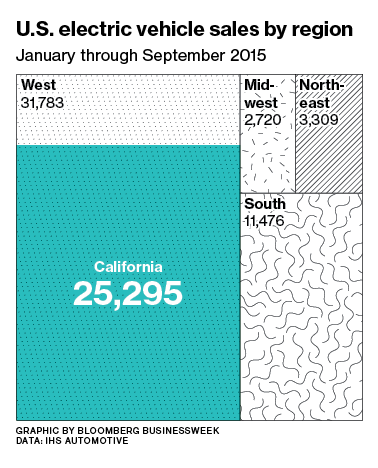


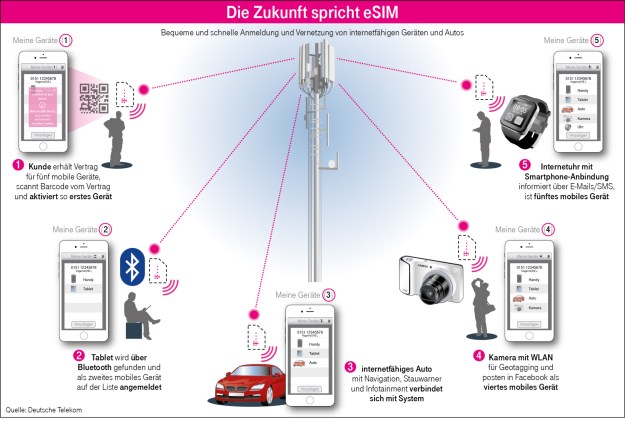

 TheIdea – The Innovation Agency
