Archiv für den Monat Juni 2016

How Apple lost its way: Steve Jobs’ love of simplicity is gone


Ken Segall, who worked alongside the tech giant’s co-founder, says company’s incredible growth was rooted in his love of simplicity – but things have changed
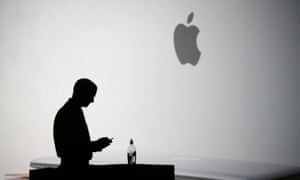
 Steve’ Jobs’ vision, strength and charisma made him the benevolent dictator – able to align all the forces within Apple.
Steve’ Jobs’ vision, strength and charisma made him the benevolent dictator – able to align all the forces within Apple. Photograph: Sipa Press/Rex Features

Four years ago, I wrote a book about Apple and the power of simplicity. It was the result of my observation, having worked with Steve Jobs as his ad agency creative director in the “think different” years, when Apple’s stellar growth was rooted in Steve’s love of simplicity.

This love – you might call it obsession – could be seen in Apple’s hardware, software, packaging, marketing, retail store design, even the company’s internal organization.

But that was four years ago.

Though Apple’s customers remain fiercely loyal, the natives are getting restless. A growing number of people are sensing that Tim Cook’s Apple isn’t as simple as Steve’s Apple. They see complexity in expanding product lines, confusing product names, and the products themselves.

Is this just perception, or is it reality? Has Apple developed a problem with simplicity? Or is it simply maturing as one should expect from a global company? It’s difficult to be objective because Apple has become the world’s most overanalyzed company. It’s created passionate fans and passionate detractors.

My experience with Steve has led me to admire Apple – but I also believe in tough love. This is a good time to put emotions aside and take a cold, hard look at Apple’s current “state of simplicity”.

Steve Jobs, master of simplicity
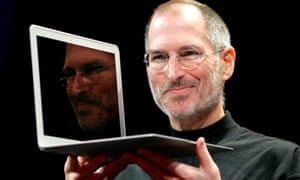
Steve Jobs holds up the new MacBook Air at a conference in 2008.
Pinterest
Steve Jobs holds up the MacBook Air at a conference in 2008. Photograph: Jeff Chiu/AP

First, we need to get one critical fact out of the way: Steve Jobs cannot be replaced. He had the credibility of the founder, extraordinary instinct, vision and energy, and he could make things happen by sheer force of will. It’s just not possible for Apple to be the same without him – but it can still succeed.

Tim Cook has a different style. Remember, he was handpicked by Steve to be Apple’s next leader, and he certainly knows how to make Apple run efficiently. He also recognizes that he doesn’t have Steve’s many talents, so he relies on the expertise of others in those areas where he is less experienced – such as product design and marketing.

That’s where things get a little more complicated. Steve’s vision, strength and charisma made him the benevolent dictator – able to align all the forces within Apple. That kind of performance doesn’t come as naturally to Tim.

Simplicity in the product lines
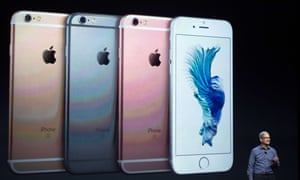
Apple CEO Tim Cook introduces the iPhone 6S last year.
Pinterest
Apple CEO Tim Cook introduces the iPhone 6S last year. Photograph: Josh Edelson/AFP/Getty Images

Apple now sells three different iPhones, four different iPads and three different MacBooks. The Apple Watch comes in seemingly infinite combinations of sizes and bands. The Apple universe is exploding with complexity! Or is it?

One could easily argue that a watch is a fashion product, so the decision here makes sense. And there is ample precedent for Apple expanding existing product lines. The original iPod, for example, successfully grew into a family of products.

Markets mature. A bigger audience has more diverse needs. If Apple were to ignore those needs, they would only force customers to go elsewhere. (As they did for several years by not making a big-screen iPhone.)

So, yes, Apple’s product lines have become more complicated. But really, are they that complicated? The company’s entire selection of products can easily fit on an average-size table. When a company cares about simplicity, it offers the right choices – not endless choices.

Simplicity in software
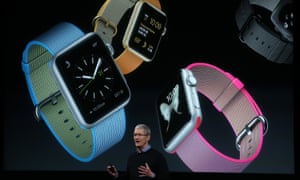
Cook speaks about the Apple Watch at the Apple headquarters earlier this year in Cupertino, California.
Pinterest
Cook speaks about the Apple Watch at the Apple headquarters earlier this year in Cupertino, California. Photograph: Justin Sullivan/Getty Images

Critics have had a field day complaining about the growing complexity of Apple software. Apple Music has been attacked mercilessly, and deservedly so. I personally find parts of it to be bewildering.

Apple’s ability to make software solid and simple has come under attack from a number of normally pro-Apple sites. Not that it excuses Apple, but many forget that such lapses also happened on Steve’s watch. He famously went ballistic over the flawed launch of Apple’s early cloud effort called MobileMe.

The fact is, even the best of companies make mistakes from time to time. What’s alarming the Apple crowd today is that the flaws and complexities now seem to be creeping into the products more frequently.

Simplicity in product naming
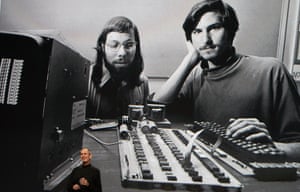
Steve Jobs speaks during an Apple event in 2010 – with a photo of him and Steve Wozniak in the background.
Pinterest
Steve Jobs speaks during an Apple event in 2010 – with a photo of him and Steve Wozniak in the background. Photograph: Justin Sullivan/Getty Images

Once upon a time, Apple’s product naming was extremely simple. Computers were Macs and consumer products were i-devices.

Now the consumer products are offered as i-things and Apple-things (Apple Watch, Apple Pay, Apple Music). But we’ll give Apple a pass on this one because the i is obviously on its last legs, and a transition like this doesn’t happen overnight.

I’m less forgiving when it comes to iPhone naming. With the current models consisting of iPhone 6S, iPhone 6S Plus and SE, Apple’s naming scheme is becoming noticeably less simple.

Then there’s the issue of the S. For some reason, Apple has decided that every other year, it should just add an S to the current model number, because the S-year improvements are internal only. So Apple’s own actions have served to train the public that S years are the “off years”. This is an absurdity, given that such revolutionary features as Siri, Touch ID and 64-bit processing have all been introduced in S models.

The S naming has only served to confuse customers, and make it significantly more difficult for marketing to do its job.

Complicated, yes. But bear in mind that Steve is the guy who started iPhone with the S-names in the first place.

Simplicity in marketing
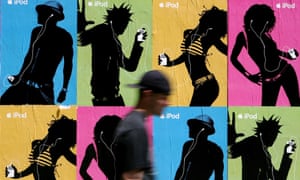
A pedestrian passes a wall covered with Apple iPod advertisements in 2005.
Pinterest
A pedestrian passes a wall covered with Apple iPod advertisements in 2005. Photograph: Justin Sullivan/Getty Images

Apple has a lengthy, award-winning history in advertising. Even marketers in other industries have long considered Apple ads to be the gold standard.

This isn’t because Steve Jobs created great ads himself – it’s because he was adament about keeping the process simple. He trusted a small group of smart people at his longtime ad agency and he was actively involved in the process, week to week.

There were no middlemen, no multiple levels of approvals, and no focus group research. Trust me, few companies on earth work this way. It was Steve’s way of keeping complexity at bay.

With Steve’s passing, things changed dramatically. Apple is building a large in-house marketing group. Teams compete to produce new campaigns. More people are involved. In short, Apple is now managing its marketing more like a big company and less like a startup.

Does simplicity still rule at Apple?
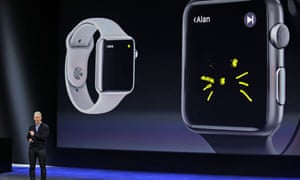
Cook explains the features of the new Apple Watch last year.
Pinterest
Cook explains the features of the new Apple Watch last year. Photograph: Eric Risberg/AP

I have zero doubt that Apple believes deeply in the power of simplicity. Simplicity is at the heart of the company’s products and the foundation of its vision for the future.

But simplicity is a matter of perception, and it’s hard to ignore the fact that Apple is struggling to present a simple image to its customers.

There is serious work to be done in rebuilding the perception of simplicity that helped Apple become the world’s most valuable company. Existing problems need fixing, as do the internal processes that have allowed complicated products to make it into the hands of customers.

That said, it’s important to put Apple’s issues in context. Despite its current challenges – and its lapses – I don’t see any other technology creating a simple experience as well as Apple.

We live in a complicated world, and the companies that deliver simplicity are the ones who win in the end.

https://www.theguardian.com/technology/2016/jun/02/ken-segall-apple-steve-jobs-simplicity
Would you bet against sex robots? AI could leave half of world unemployed!

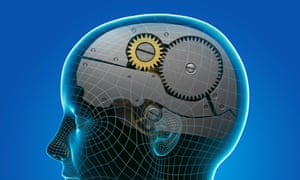
Thought Mechanism08 Dec 2011 --- A side view of a human female head with the human mind represented as a gear system. --- Image by Science Picture Co./Corbis
Artificial intelligence could put more than half the planet’s population out of a job, a computer scientist says. Photograph: Science Picture Co./Corbis

Machines could put more than half the world’s population out of a job in the next 30 years, according to a computer scientist who said on Saturday that artificial intelligence’s threat to the economy should not be understated.

Expert Moshe Vardi told the American Association for the Advancement of Science (AAAS): “We are approaching a time when machines will be able to outperform humans at almost any task.

“I believe that society needs to confront this question before it is upon us: if machines are capable of doing almost any work humans can do, what will humans do?”

Physicist Stephen Hawking and the tech billionaires Bill Gates and Elon Musk issued a similar warning last year. Hawking warned that AI “could spell the end of the human race” and Musk said it represents “our biggest existential threat”.

The fear of artificial intelligence has even reached the UN, where a group billing itself the Campaign to Stop Killer Robots met with diplomats last year.

Vardi, a professor at Rice University and Guggenheim fellow, said that technology presents a more subtle threat than the masterless drones that some activists fear. He suggested AI could drive global unemployment to 50%, wiping out middle-class jobs and exacerbating inequality.

Unlike the industrial revolution, Vardi said, “the AI revolution” will not be a matter of physically powerful machines that outperform human laborers, but rather a contest between human wit and mechanical intelligence and strength. In China the question has already affected thousands of jobs, as electronics manufacturers, Foxconn and Samsung among them, develop precision robots to replace human workers.

In his talk, the computer scientist alluded to economist John Maynard Keynes’ rosy vision of a future in which billions worked only a few hours a week, with intelligent machines to support their easy lifestyles – a prediction embraced wholesale by Google head of engineering Ray Kurzweil, who believes “the singularity” of super-AI could bring about utopia for a future hybrid of mankind.

Vardi insisted that even if machines make life easier, humanity will face an existential challenge.

“I do not find this a promising future, as I do not find the prospect of leisure-only life appealing,” he said. “I believe that work is essential to human wellbeing.”

Computer scientist Bart Selman told reporters at the conference that as self-driving cars, “household robots, service robots” and other intelligent systems become more common, humans will “sort of be in a symbiosis with those machines, and we’ll start to trust them and start to work with them”.

Selman, a professor at Cornell University, said: “Computers are basically starting to hear and see the way humans do,” thanks to advances in big data and “deep learning”.

Vardi predicted that driving will be almost fully automated in the next 25 years, and asked, for all the benefits of technology, “what can humans do when machines can do almost everything?”

He said that technology has already massively changed the US economy in the last 50 years. “We were all delighted to hear that unemployment went down to 4.8%” this month, he said, “but focusing on the monthly job report hides the fact that for the last 35 years the country has been in economic crisis.”

Citing research from MIT, he noted that although Americans continue to drive GDP with increasing productivity, employment peaked around 1980 and average wages for families have gone down. “It’s automation,” Vardi said.

He also predicted that automation’s effect on unemployment would have huge political consequences, and lamented that leaders have largely ignored it. “We are in a presidential election year and this issue is just nowhere on the radar screen.”

He said that virtually no human profession is totally immune: “Are you going to bet against sex robots? I would not.”

Last year, the consultant company McKinsey published research about which jobs are at risk thanks to intelligent machines, and found that some jobs – or at least well-paid careers like doctors and hedge fund managers – are better protected than others. Less intuitively, the researchers also concluded that some low-paying jobs, including landscapers and health aides, are also less likely to be changed than others.

In contrast, they concluded that 20% of a CEO’s working time could be automated with existing technologies, and nearly 80% of a file clerk’s job could be automated. Their research dovetails with Vardi’s worst-case scenario predictions, however; they argued that as much as 45% of the work people are paid to do could be automated by existing technology.

Vardi said he wanted the gathering of scientists to consider: “Does the technology we are developing ultimately benefit mankind?

“Humanity is about to face perhaps its greatest challenge ever, which is finding meaning in life after the end of ‘in the sweat of thy face shalt thou eat bread’,” he said. “We need to rise to the occasion and meet this challenge.”

In the US, the labor secretary, Thomas Perez, has told American seaports that they should consider robotic cranes and automatic vehicles in order to compete with docks around the world, despite the resistance of unions. In 2013, two Oxford professors predicted that as much as 47% of the US workforce, from telemarketers to legal secretaries and cooks, were vulnerable to automation.

Dire forecasts such as Vardi’s are not without their critics, including Pulitzer-winning author Nicholas Carr and Stanford scientist Edward Geist. Carr has argued that human creativity and intuition in the face of complex problems is essentially irreplaceable, and an advantage over computers and their overly accurate reputation.

Walking the line between the pessimists and optimists, Martin Ford, author of Rise of the Robots: Technology and the Threat of a Jobless Future, has suggested that automation will come down to politics today, telling National Geographic that if scientists and governments don’t address the issue “for lots of people who are not economically at the top, it’s going to be pretty dystopian”.

https://www.theguardian.com/technology/2016/feb/13/artificial-intelligence-ai-unemployment-jobs-moshe-vardi