Schlagwort-Archive: Facebook

Media Companies: Don’t Let Your Traffic Run Out the Side Door

With the launch of Facebook’s Instant Articles, media companies have two choices: (a) integrate deeply with Facebook — fast load times! better experience! (b) skip this opportunity and risk falling further behind in the traffic race driven from Facebook. Given that Facebook has become such a huge traffic driver to so many media sites, in reality, most have no choice to make. Yet while Facebook and, of course, Google drive significant traffic volume, that traffic is not always the best. It is often one page only, and comes with very short sessions. Especially on mobile. It doesn’t have to be this way.

Before the Internet, when readers picked up a newspaper, magazine, a book, pretty much any piece of media, they started at the front. An editor chose what went first, what was shown biggest, what might appear “above the fold”. This was the “front door” and it mattered.

But as media began to flourish online, this shifted dramatically. The “side door” became the new “front door”. Traffic came directly to articles — links indexed by Google, links shared on Facebook, Twitter, Digg, Reddit, email, etc. Importantly, users who entered through the side door compounded the metrics that media companies could monetize.

Subsequently, editors have moved from deciding what goes on the front door to managing data and optimizing getting the most traffic from SEO or social. Some start-up media companies are now going as far as giving up on owning houses all together and instead living inside the halls of social platforms like Facebook.

No question, side door traffic is important. But the truly valuable and beloved companies have built a real front door — one that converts to repeatable, direct visits.

Social media companies understand this — traditional media companies could stand to learn from them. Instagram is a great example of a company that started through the side door, and quickly transitioned users to its own version of a front door. Users who came to Instagram via links shared on Facebook and Twitter quickly learned to visit Instagram directly. Every opportunity for exposure of this content was obsessively converted into users who began to sign up for Instagram and got sucked into it as a preferred way to view photos and content from celebrities, media, and friends. Similarly, Meerkat is working hard to pull off the same. (Disclosure: Josh Elman is an investor in Meerkat.) For Meerkat, a strong front door is everything now — it means an audience of people opening the app and using Meerkat to discover the live streams they want to see instead of just keeping an eye out for a tweet in their stream.

Jonah Peretti discussed the potential of recognizing your distributed audiences and finding ways to monetize them during his recent keynote at SXSW. But he didn’t touch on the significant numbers that BuzzFeed sees in their direct audience on site. With over 200 million uniques, Buzzfeed has developed a dedicated, loyal and fanatical audience which has become a key part of spreading into the larger distributed audiences.

The Three Audiences for Any Online Property

There is a framework for how to think about users in these different groups — the Loyalists, the Subscribers and the Casuals — and why it’s important to get as many of them to come regularly to your front door.

The Loyalists

Loyalists are what make companies worth billions of dollars. Loyalists love a property enough to come to it directly and regularly. They are an audience that is sticky and not going away. At HuffingtonPost, when a big news story would break, the front page traffic would surge — not just the side door traffic from the article of the story spreading. People had learned to think of it in the context of important news. This applies to non-media properties, too. For Uber, this means opening the app when I need a ride.

Loyalists are also vital to growing the Subscribers and Casuals audience. It is the loyalists who share content seconds after publish — creating opportunities for the company to grow the Subscribers and Casuals audience.

The Subscribers

Subscribers come back to a property over and over — though often through the side door. Subscribers will like a property on Facebook, follow them on Twitter and/or subscribe to their emails. Their discovery mechanism is still Facebook, Twitter, Email etc. But they have decided to consciously invite that property into their stream. They often engage with that content, clicking to sites as often as 10x a week and frequently sharing the content with their network.

Subscribers are living in a world where their feed is getting increasingly confusing and over-saturated. They will miss most of the content from the properties they subscribe to — especially as the algorithmic feeds on those platforms shift.

The Casuals

If an online property is built correctly, the casuals should be the largest audience. This is the group of people who come by and visit when they are exposed to an interesting link. In the best cases, casuals have become familiar with the property enough to recognize it in their streams, but they are still not yet enticed to dive deeper and to start actively following that property.

If the most successful media companies were tracking and releasing their casual audience numbers, they would be well past 10 billion and likely nearing on 20 to 30 billion impressions. For media companies, it is increasingly vital that they find ways to monetize these audiences, giving opportunities to premium sponsors to play part in this extended reach.

The Long View on Conversion

When a Casual user visits a site for the first time, the property often tries very hard to convert them. Immediately, the user is bombarded by popup screens to “like on Facebook”, or “subscribe by email”, or ads which attempt to monetize the user. All of these experiences can scare the Casual right off of the site.

Better to play it cool. Perhaps wait until the third time a Casual user visits to say, “Hi! We see you here a lot. Do you want to subscribe?”

It takes time to do this, but the right investments can lead to significant numbers of Loyalists. At RebelMouse we are seeing this happen with clients like the Dodo, who had a single video on Facebook reach more than 30 million casuals. The foundation is built on a core group of loyalists who make Dodo their homescreen, install the app and come back through native notifications. This has allowed their organic reach to grow exponentially and build a material subscriber audience in a short period of time.

The best companies need to prove that they can use the side door not just as an endgame but as way to convert into real front door traffic. Companies who abandon the quest for a loyalist audience are deciding — consciously or not — to build a much less ambitious company, one that relies on an ecosystem that can change its rules on a whim. They also are unlikely to be able to build the same size of extended audience because they lack the consistent seeding of content that loyalists bring.


Facebook’s WhatsApp Will Be How the World Makes Phone Calls

Further Reading: http://www.wired.com/2015/04/facebooks-whatsapp-worlds-next-phone

WhatsApp is the world’s most popular smartphone messaging app, letting more than 800 million people send and receive texts on the cheap. But it’s evolving into something more.

On Tuesday, the company, which is owned by Facebook, released a new version of the app that allows people with iPhones to not only text people, but actually talk to them. This built on a similar move the company made at the end of March, when it quietly released an Android update that did the same thing. And in the week following the addition of voice calling on Android, WhatsApp-related traffic increased about 5 percent on carrier networks, according to a study by Allot Communications—an Israeli company that helps manage wireless network traffic worldwide.

That figure will likely get a lot bigger as WhatsApp shifts from being the world’s favorite messaging app to become a more wide-ranging—and bandwidth-intensive—communication tool.

Others have offered internet voice calls on smartphones, most notably Skype and Viber. But WhatsApp is different. So many people already use the app, and the company is intent on keeping it free (or nearly free). Though it has little traction here in the US, WhatsApp is enormously popular in parts of Europe and the developing world—areas where there’s a hunger for cheap communication. The result is an app that could bring inexpensive Internet calls to an audience of unprecedented size.

Developing World

The rapidly evolving WhatsApp is but one face of the dramatic technological changes sweeping across the developing world. So many companies are working to bring affordable smartphones to the market, from China’s Xiaomi to the Silicon Valley’s Cyanogen, as many others, from China’s WeChat to Viber, push cheap communication services onto these devices.

These technologies face the usual obstacles—and WhatsApp is no exception. Though the app is expected to reach a billion users by year’s end, its push into voice calls could alienate many wireless carriers. If you have free internet calls, after all, you don’t need to pay for cellular calls. Some carriers may fight the tool as a result, says Allot associate vice president Yaniv Sulkes.

But the same could be said of messaging on WhatsApp. It too cuts into the carriers’ way of doing things. And yet, WhatsApp has thrived. It has so much traction in large part because it has cultivated partnerships with carriers, striking deals that bundle its app with lost-cost wireless services. According another Allot survey, about 37 percent of the carriers now have deals with WhatsApp or similar inexpensive Internet-based services—a sharp rise over the past few years. “More and more operators are adopting the strategy of ‘let’s partner with them’ rather than ‘let’s fight them,’” Sulkes says.

In the meantime, Facebook is pushing for somewhat similar arrangements, through its Internet.org initiative, that bundle limited Internet access with access to specific apps. Mark Zuckerberg and company have encountered some opposition to these deals. But the combined might of Facebook and WhatsApp will be hard for carriers to resist.

Video Next?

As WhatsApp spreads, Sulkes believes, it will keep pushing into new services. After rolling out voice calling, he says, it may venture into video calling. The app already lets you send files, including videos, and other messaging apps, such as SnapChat, already have ventured into video calls.

None of these tools—video calls, voice calls, file sharing—are new technologies. But not everyone has them. WhatsApp has the leverage to change that. The app has grabbed hold of the developing world in rapid fashion, and now it can serve as a platform for bringing all sorts of modern communications to the far reaches of the globe. Yes, there’s another major obstacle to overcome: so much of the developing world doesn’t have the network infrastructure to accommodate these kinds of modern services. But Facebook is set to change that, too.

Whatsapp Calls on Iphone

Further Reading: http://www.forbes.com/sites/amitchowdhry/2015/04/21/whatsapp-voice-calling-ios/ and http://www.macrumors.com/2015/04/21/whatsapp-gains-voice-calling/

WhatsApp, the popular mobile messaging service owned by Facebook, has released a major update to its iPhone app today. The update includes the highly-anticipated WhatsApp Calling feature, which rolled out to every Android user late last month. The WhatsApp Calling feature is comparable to Skype and the FaceTime Audio service on iOS. Data charges may apply while using the WhatsApp Calling feature.

“Call your friends and family using WhatsApp for free, even if they’re in another country. WhatsApp calls uses your phone’s Internet connection rather than your cellular plan’s voice minutes,” said WhatsApp in its app update description. 

Unfortunately, The WhatsApp Calling feature is rolling out slowly so you may not see it right away. The new calling feature should be available for every iOS user within the next few weeks. Prior to launching WhatsApp Calling for Android, the messaging company ran a lengthy beta test.

WhatsApp version 2.12.1 also includes an iOS 8 share extension, a quick camera button in chats, the ability to edit your contacts right from WhatsApp and an option to send multiple videos at once. You can also crop and rotate videos before sending them. The iOS 8 share extension lets you share photos, videos and links to WhatsApp from other apps. And the quick camera button lets you seamlessly capture photos and videos or choose a recent camera roll photo or video.

WhatsApp Update For iOS / Credit: WhatsApp

How does WhatsApp Calling for iOS work? If someone calls you through WhatsApp, you will see a push notification from the messaging service showing who the call is from. Once you answer the call, you will notice that there are options to mute the call or put it on speakerphone. You can also send a message to the person calling you. If the WhatsApp Calling feature for iOS is similar to the Android app, then you will see a Calls tab that has a list of your incoming, outgoing and missed WhatsApp calls. Personally, I do not have access to WhatsApp Calling for iOS app yet.

Launched in 2009, WhatsApp started out as a simple group text messaging app. Four years later, WhatsApp added a voice messaging service. And then Facebook acquired WhatsApp for $19 billion in February 2014. Several months ago, WhatsApp launched a desktop client called WhatsApp Web — which you can activate with an Android, BlackBerry, Windows Phone or Nokia S60 device.

Earlier this month, WhatsApp hit 800 million monthly active users. WhatsApp has been adding about 100 million monthly active users every four months since August. In January, WhatsApp hit 700 million monthly active users. WhatsApp now has more users than every other messaging app, including Facebook Messenger. It took Facebook about 8 years to hit 1 billion users. Facebook now has about 1.4 billion monthly users and Facebook Messenger has roughly 600 million users.“

„After promising to deliver voice calling capabilities back in 2014, WhatsApp has finally delivered, introducing voice over IP features in its latest update. With the new version of the app, it’s possible for WhatsApp users to call friends and family directly within the app using a Wi-Fi or cellular connection at no cost.

The introduction of voice calling to the Facebook-ownedWhatsApp app puts it on par with Facebook’s other messaging app, Facebook Messenger, which gained voice calling back in 2013. It also allows the app to better compete with other iOS-based VoIP calling options like Skype and FaceTime Audio.

Today’s WhatsApp update also brings a few other features, including the iOS 8 share extension for sharing videos, photos, and links to WhatsApp from other apps, contact editing tools, and the ability to send multiple videos at one time.

What’s new
-WhatsApp Calling: Call your friends and family using WhatsApp for free, even if they’re in another country. WhatsApp calls use your phone’s Internet connection rather than your cellular plan’s voice minutes. Data charges may apply. Note: WhatsApp Calling is rolling out slowly over the next several weeks.

-iOS 8 share extension: Share photos, videos, and links right to WhatsApp from other apps.

-Quick camera button in chats: Now you can capture photos and videos, or quickly choose a recent camera roll photo or video.

-Edit your contacts right from WhatsApp.

-Send multiple videos at once and crop and rotate videos before sending them.

WhatsApp can be downloaded from the App Store for free. The new WhatsApp calling feature will be rolling out to users over the next few weeks.“

Facebooks WhatsApp reaches the next level with its Voice Calling Functionality

Read the Full Story here: http://www.forbes.com/sites/parmyolson/2015/04/07/facebooks-whatsapp-voice-calling/

Whatsapp-Future

„WhatsApp’s head office is among the most impressive you can find in start-up infested Mountain View, California, with glass walls cascading down from a rooftop patio that apparently glows at night.

You’d never guess that one of the most disruptive forces in the history of the telecommunications industry was housed inside.

Like the older, smaller digs it once frequented down the road on Bryant Street, there is no hint of corporate signage out in front. Just an abstract sculpture called “Caring” by California artist Archie Held, and a small Zen garden tucked in a corner of the lobby.

All very calming, but not for mobile carriers. This time last year, WhatsApp’s then-470 million users had already erased an estimated $33 billion in SMS revenue from wireless operators. That number is growing. Between 2012 and 2018 the entire telecommunications industry will have lost a combined $386 billion between 2012 and 2018 because of OTT services like WhatsApp and Skype, according to Ovum Research.

Today WhatsApp has more than 700 million people using it at least once a month, sending more than 10 billion messages a day. At its current rate of growth it should pass the 1 billion user mark before the end of 2015. The company doesn’t push through many updates. While other messaging apps like WeChat, Kik and Facebook Messenger host content and e-commerce services to become all-encompassing platforms, WhatsApp has limited its new features to communications.

Now the stakes for the world’s biggest messaging company are about to get much higher as it pushes through one of the most fundamental methods of communication out there: voice calling.

In February WhatsApp began rolling out the feature to select users across the world who could receive calls through the app. Receiving a call allowed them to make calls too. Then last week it offered an application file on its website which, if downloaded, allowed anyone with an Android phone to call other WhatsApp users.

The feature is expected to launch on Windows Phones and iOS phones soon, and already, around 20 million people including 2 million in Germany have been able to test it, says Pamela Clark-Dickson, a telecom analyst at Ovum Research, citing a source close to Facebook.

WhatsApp’s staff of approximately 80 people were spread thinly across three stories in their impressive 20,000 square foot building when I last visited in late 2014. The edgy graffiti that once adorned WhatsApp’s walls had taken on a more sophisticated, Banksy-like flavor inside: marking the third floor’s entrance was a huge mural of a woman riding a bicycle in Hong Kong, a reminder of WhatsApp’s international popularity.

WhatsApp had been living a hermetic, four-year existence in the Silicon Valley bell jar before Facebook swooped in and bought the company for $22 billion in February 2014. It continued that air of secrecy in the months afterwards, except now it was subject to a steady stream of visitors and it needed a pair of security guards to mind the entrance to its headquarters.

WhatsApp’s resources with Facebook were only just starting to converge in the wake of their landmark deal, with Facebook now helping with legal matters and public affairs. “We were very cheap when we were WhatsApp,” said Neeraj Arora, WhatsApp’s long-time business development head when asked about how money was being spent. “We’re more disciplined now because we are part of a public company.”

Yet Facebook’s largesse makes it easier to pull off big expansion plans. At the top floor, Arora pulled back one of the blinds and pointed to the roof of another building about a block away that was still under construction.

Milling about on top in ant-like proportions were half a dozen construction workers wearing bright yellow vests. This was WhatsApp’s next headquarters, scheduled to be ready for them to move in in 2015: an 80,000-square-foot colossus that would include a gym and a floor big enough for all departments to be together once again.

WhatsApp had actually leased the building before the Facebook deal, a confident move by the founders who fully believed that in three-to-five years they would have a workforce of around 500.

Today with big plans to become a comprehensive communications service and all-round-new-breed of phone company, that looks more likely than ever.

Though many of us already make free calls on Skype, Viber or Apple’s FaceTime, WhatsApp’s calling service stands to be the most popular of them all simply because it has the highest single number of active users.

“It has the potential to affect mobile voice revenues [for carriers] more so than LINE or Viber or even Skype, which is not that big on mobile,” says Clark-Dickson.

That’s troubling news for carriers like AT&T or Vodafone for two reasons. WhatsApp’s rise coincides with the gradual erosion of a carrier’s relationship with consumers, relegating them to the grey world of infrastructure inhabited by Cisco and Ericsson, packet-based networks whose primary role is to transport data.

It will also cost them revenue. Voice minutes are already falling across the industry, according to Ovum, which says mobile network revenues will contract for the first time in 2018 as over-the-top services like WhatsApp push us towards using data rather than voice minutes.

While mobile data revenues will grow by a compound annual rate of 8% to reach $586.4 billion globally in 2019, voice will decline by 3% over the same period, to $472.7 billion. North America and Western Europe will be hardest-hit with respect to mobile voice revenues, with these regions representing nearly 80% of the global voice revenue decline.

This points to the frustrating paradox for carriers: enormous growth but tighter margins. Consumers have developed an insatiable demand for data, Facebooking, YouTubing and Netflixing on their mobile phones at all hours of the day. Cisco predicts mobile data traffic will increase 11-fold from 2013 to 2018. But the average revenue per user (ARPU) for carriers is falling, because the cost of data is getting cheaper. Imagine McDonald’s customers buying 10 times more food, but only ordering french fries.

Data used to contribute a disproportionately high level of revenue in relation to traffic when it was mainly related to SMS. Back in 2005 for instance, someone sending 3,000 text messages was sending less than 0.1MB data per month. Now that load has increased into the gigabytes. ARPU for carriers has remained steady since 2010, but what’s changed is that data now makes up more than half of their total revenue, and overshadowed voice for the first time earlier this year.

Data is essentially devouring voice. T-Mobile and Verizon are already dealing with this by launching Voice over LTE which transforms a voice call into a data call, and doubling the amount of data available to customers for the same price.

With voice and SMS margins dwindling, carriers may eventually be forced to stick to flat-rate data plans which are being pioneered by younger operators like 3 and Tele2, and taking full advantage of their expensive new 4G networks. WhatsApp’s voice feature might not necessarily be a disaster for carriers if it boosts their data revenues further. But Clark-Dickson warns that “even if data traffic revenue increased, it would not go back to the old revenue days.”

What’s infuriating for carriers is how WhatsApp and its ilk can run a potentially profitable service on top of their expensive infrastructure. Just last year, carriers bid more than $40 billion on new wireless spectrum at a government auction for a high-band spectrum that could carry more data than usual. Good timing for WhatsApp’s voice plans, since the new spectrum will lead to smoother connections and less hiccups in the service, though it could take around two years for the faster data speeds to kick in.

For their part, Koum and his team have long insisted that WhatsApp is no enemy to carriers. Instead they’ve partnered with more than 100 of them around the world, asking carriers to not count the use of WhatsApp against their data allowance. In other words, when a customer’s data allowance runs out, they can still use WhatsApp. It’s unclear how those partnerships will develop when voice kicks in. T-Mobile has formed a similar partnership with Facebook and with music streaming, and the model is helping around half the world’s carriers improve their revenue prospects, according to one recent survey.

Still, some carriers have taken their time before getting on board with WhatsApp. It took a while, for instance, before leading Latin American carrier America Movil agreed to partner with the company.

WhatsApp has rolled out its voice feature in a characteristically slow and methodical way, introducing it to tranches of users at a time. Its founders Jan Koum and Brian Acton were more interested in making sure the service worked reliably than getting it out to their user base quickly.

Voice is trickier than messaging to do well. Real-time communications services have to contend with drop-outs and lags, as anyone who’s ever made a Skype call will know. That’s a big reason why WhatsApp is behind schedule on voice, according to people at the company. Co-founder Koum originally said the feature would be available in the second half of 2014, but it’s only just becoming available now.

For mobile operators, the extra time to prepare for what could be a major disruption to one of their most precious revenue sources is a small silver lining, says Clark-Dixon. “Mobile operators had 12 months to prepare and plan for this, so they know what’s coming,” she says. Still, she adds, “I don’t think operators have moved quickly enough.”

Carriers have increasingly bundled data, voice and SMS into a single rate, while operators like Vodafone and Sprint have signed up to the Rich Communication Services (RCS) standard, their own version of a web-based service to compete with apps like Viber and WhatsApp.

RCS, marketed under the name joyn, has been around for eight years. Yet until a year ago carriers offered these web-based services through their own third-party apps, says Clark-Dixon. Only recently have they started integrating them into an Android phone’s native dialler and texting applications. The number of people who have phones with the service are likely in the single-digit millions, she estimates, which means it could be too little too late to counteract the expected popularity of WhatsApp voice calling.

WhatsApp is still a ways off from being what you could call a phone company, with all the infrastructure and back-end billing and customer care services that entails. But it’s also graduating from the status of simple OTT player to a new kind of communications service provider. In the meantime, it should heed the mistakes of carriers who moved too slowly in the face of disruptive upstarts.

“We’ve been waiting a year for [WhatsApp voice calling] and it’s still only available on Android. It’s rolling out across market slowly,” Clark-Dickson warns, pointing to competitors like Viber, LINE and WeChat who have already have voice calling enabled for some time. “It needs to move more quickly in communications and with VoIP.”

Facebook Is Testing A New App Called ‚Phone‘

Source: http://www.forbes.com/sites/parmyolson/2015/03/23/carriers-facebook-phone-app/
Further Reading: http://www.forbes.com


Facebook has accidentally leaked information about a new app that it’s testing, called ‘Phone,’ and this news should come as no surprise to anyone who believes Facebook wants to be at the center of how we communicate with the world around us. That includes with all elements of texting (through Messenger and WhatsApp) and increasingly, voice.

The app appears to be some sort of native dialler for Android that shows information about who is calling, and which automatically blocks calls from commonly blocked numbers. A spokesman confirmed to Venture Beat that Facebook was testing the service, after Android Police first posted a screenshots of an install update that should have only been seen by Facebook’s internal network. Thanks to Apple’s closed system it’s unlikely Facebook is even exploring making such an app for iOS.

Why does Facebook want to give its users a native dialler? Facebook has allowed users to make video calls through its desktop client since 2011, and voice calls through Facebook Messenger since early 2013. But both these services require that people on either end of the line are using the same Facebook feature, and the calls can only take place over a mobile carrier data network or WiFi.

A native dialler application would appear to be Facebook’s first service that coordinates with a carrier’s all-important voice network.

(It has yet to be confirmed that ‘Phone’ will filter calls being made to your phone number and not just between Facebook users, but the former seems likely. The video and audio calling features that Facebook already has don’t seem popular enough that users would want a separate app just to block VoIP calls – and most of the calls you want to block are spammers and marketers who managed to get hold of your mobile phone number anyway.)

In essence, Facebook appears to be trying to wedge itself a little further into the relationship between its users and carriers, when users are carrying out one of the most fundamental acts that telcos rely on to make money – making voice calls. That’s a crucial step both symbolically and practically, and the fact that the service is called ‘Phone’ suggests Facebook eventually wants to be part of the phone-calling experience that carriers still dominate.

International carriers like Vodafone and BT Group are still stinging from the huge bite of SMS revenues that WhatsApp, the globally popular messaging service with 700 million active users, took out over the last five years with its free texting service.

The messaging service, which Facebook bought last year, is now rolling out a free voice-calling service. While that won’t involve a native dialler, it looks set to take yet another chunk out of carrier revenues, this time in voice.

Should carriers be worried about Phone? It’s easy to dismiss a new, forthcoming app from Facebook as yet another failed experiment that will get tossed on the same heap where Slingshot, Poke and the Android launcher Facebook Home reside.

Yet even if Facebook’s users don’t fall in love with Phone, and the service doesn’t go much further beyond the testing phase, there’s no question the social network wants to become a more integral hub for our everyday communications. That could eventually mean weaning consumers off their reliance on carriers’ voice and texting services, and driving the role of carriers further down into the ground as “dumb pipes” that transport our data and not too much more.

Ciao Facebook! Facebook Ade!

Facebook Ade

Gastkommentar von Univ.Prof. Dr. Sarah Spiekermann, Head of Institute for Management Information Systems, Vienna University of Economics and Business, 1090 Vienna

Gestern habe ich mich von Facebook abgemeldet. Was für ein super Gefühl! Genau so, wie Hape Kerkeling es in seinem Buchtitel ausdrückt: „Ich bin dann mal weg“. Ich weiß, daß einige meiner prominentesten Postingfreunde mich für verrückt erklären werden. Wie kann man nur so einen günstigen Vertriebskanal für die Eigenmarke aufgeben? Aber ich finde das eigentlich einen ganz normalen Schritt. Facebook ist doch out, oder nicht? Ist der fallende Aktienkurs nicht ein klares Indiz dafür?

Auf jeden Fall ist es so, dass in meinen eigenen Studien mit über 1500 Facebook-Usern in Österreich und Deutschland im letzten Winter 53% der Befragten angaben, schon mal darüber nachgedacht zu haben, ihre Zeit auf Facebook zu reduzieren. 47% haben zugestimmt, dass Facebook sie zunehmend langweilt. Und 72 % sagen sogar, dass wenn Facebook alle ihre Informationen morgen löschen würde, würden sie diesen nicht nachtrauern.

Also wozu länger Zeit dort verlieren? Nur aus Mangel an Alternativen? Was interessiert mich die alte Pizza auf dem Essenstisch eines entfernten Verwandten? Die meisten Leute geben ohnehin auf Facebook nicht das preis, was sie wirklich beschäftigt. Nur rund 20% tun das. Der Rest der Gemeinde sind Mitleser (34%) oder sogar Zyniker (34%)! Und nur 11% glauben daran, dass sich die Leute in Facebook ehrlich so darstellen, wie sie sind.

Channel Overload

Neben dieser recht ernüchternden Faktenlage, die gegen die langfristige Dominanz des sozialen Netzwerks spricht, gibt es aus meiner Sicht noch drei weitere Gründe, warum Facebook den Zenit seiner eigenen Bedeutung überschritten hat (zumindest in der gegenwärtigen Form): Zum einen ist da der „Channel Overload“. „Channel Overload“ bezieht sich auf ein Gefühl der Überforderung, das sich einstellt, wenn das breite Spektrum von digitalen Kanälen Überhand nehmen, die heute zeitgleich und permanent unsere Aufmerksamkeit einfordern.

Irgendwann kippt das Ganze und die Leute steigen bei der einen oder anderen Plattform aus. Zweitens glaube ich, dass sich viele Leute die Haltung der Firma Facebook zum Datenschutz nicht mehr lange gefallen lassen. Wenn beispielsweise die Schufa beginnt, die Kreditwürdigkeit von Leuten auch auf Basis von deren Facebook-Profilen zu bewerten, dann hört jeder Spaß am like-button-Duddeln auf. 72% meiner Befragten gaben übrigens an, dass sie die Weiternutzung ihrer Facebook Informationen am liebsten unterbinden würden. Und schließlich ist da noch dieses wissenschaftlich interessante Phänomen der Besitzpsychologie. Wir finden dieses ganz klar bei unseren untersuchten Facebook-Usern. Ungefähr 30% haben sie ausgebildet.

Wer sie hat, der identifiziert sich stark mit seinem eigenen Profil, empfindet die eigenen Informationen als persönlichen Besitz und fühlt sich auf der Plattform zu Hause. Aber wie bei so vielen Anschaffungen, die man so macht, ist doch eins klar: irgendwann muss mal wieder was Neues her!“
(Sarah Spiekermann)

Ciao Facebook!

„Yesterday I quit Facebook. What a great feeling! It is like Hape Kerkeling’s book title „I’m Off Then“.

Yesterday I quit Facebook. What a great feeling! It is like Hape Kerkeling’s book title „I’m Off Then“. I know that some of my most prominent posting-friends on the platform will call this step crazy foolishness. How can you give up such a cheap sales-channel for your personal brand? But I actually find this step totally natural. I think Facebook is out, or not? The stock exchange may predict this very well already. For sure, my own studies on Facebook with over 1500 Austrian and Germany users last winter showed that 53% have already thought about reducing time on the platform. 47% agreed that they are increasingly bored by the platform. And 72% even said that if Facebook deleted all their data tomorrow they wouldn’t feel sorry. So why lose more time there? Only because there aren’t many alternatives right now? Why waste my time with photos of an old pizza of some acquaintances? Most people don’t tell what they care about anyways. Only 20% do. The rest of the folks on Facebook are just reading along (34%) or are even cynical about what their ‚friends‘ are posting (34%). And only 11% believe that people present themselves on Facebook in the way they really are.

„Channel overload“

Besides these facts that challenge the long-term dominance of this social network there are three other reasons why I believe that Facebook has passed its own best: First there is „channel overload“. I define channel overload as a perception of overload that sets in when the broad spectrum of digital channels that require our attention become rampant. At some point the whole thing collapses and people drop out of one or the other platform. Second, I think that people will get more and more upset with the poor protection of their privacy on Facebook. The German credit-rating agency Schufa has announced, for example, that they want to use Facebook data to add to their understanding of peoples‘ credit-worthiness. If Facebook allows for this kind of activity on the basis of their user data, then users‘ fun will soon drop. And finally there is this interesting phenomenon of psychology of ownership. We clearly find it among some 30% of Facebook users. Those who perceive psychology of ownership identify strongly with their personal profile, perceive their information as personal property and feel at home on the platform. But as with so many acquisitions: At some point one needs a change!“
(Sarah Spiekermann)

mit freundlicher Genehmigung von Sarah Spiekermann, Head of Institute for Management Information Systems, Vienna University of Economics and Business, 1090 Vienna

Origininal derStandard.at, 20.8.2012 publiziert auf http://derstandard.at/1345164561340/Facebook-Ade
Originally derStandard.at, 20.8.2012 published @ http://derstandard.at/1345164560796/Ciao-Facebook

Das Ende von Facebook? Top Investor Peter Thiel steigt aus

Peter Thiel Gründer von Paypal steigt aus Facebook aus.

2004 mit einem Investment von 500.000 Dollar gestartet, sind seine 22.3 Mio. Aktien nunmehr 446 Mio. Dollar wert. Die Aktie verlor seit dem Börsendebut mehr als die Hälfte an Wert.

Ein „Insider“, der beim erstmöglichen Zeitpunkt Kasse macht: Zeichen des drohenden Innovationsrückgangs bei Facebook?

Den Mangel eines eigenen Betriebssystems für mobile Rechner auszugleichen und sich gleich gegen drei potente Gegner zu positionieren (Apple mit IOS, Google mit Android und Microsoft mit Windows Phone) erscheint als wenig gangbare Alternative. Was bleibt?

Ein Kundenstock, der sich weniger häufig einloggt als früher, quasi ein E-mail für die Welt, mit gleichzeitiger Sharing-Möglichkeit von digitalen Daten.

Instagram, Facebook & largest social networks on mobile (smartphones)

As per of END OF 2011 these are the LARGEST SOCIAL NETWORKS ON MOBILE

Name User Country
Facebook mobile 425 M USA
Mobile QQ (Tencent) 200 M China
Sina (Weibo) 150 M China
RenRen 61 M China
iMessenger (Apple) 58 M USA
Mig33 55 M Singapore
Twitter mobile 55 M USA
Blackberry Messenger 50 M Canada
Mxit 50 M South Africa
Nimbuzz 50 M Netherlands
Skype Mobile (Microsoft) 40 M USA
Gree 35 M Japan
Instagram 30 M USA
Mobile Cyworld (SK) 25 M South Korea
Mobage Town (DeNA) 25 M Japan
Mocospace 22 M USA
Whatsapp 20 M USA
FourSquare 15 M USA
Mixi 15 M Japan

Quellen:
http://www.telekom-presse.at/Die_groessten_sozialen_Netze_nach_mobilen_Nutzern.id.19635.htm
http://communities-dominate.blogs.com/brands/2012/04/largest-mobile-social-networks-today-by-size-of-user-base.html

Music Streaming in der Cloud, die early adopters stage ist vorbei

Begonnen hat alles 1999 mit Napster, einer 2001 durch Gerichtsbeschlüsse dichtgemachte Inkarnation freier digitaler Musik, eine Tauschbörse.

5 Jahre später: Wer im Jahr 2006 Musik auf legalem Wege hören wollte, war auf Online-Radios, Webradios (mittels des kostenlosen Musikplayers Winamp) angewiesen. In den Anfängen steckten interaktive Services, wo nach Eingabe von Musikpräferenzen (Künstlername, Songtitel) weitere relevante Titel dem Endkunden vorgespielt wurden. vgl. Pandora Webstreaming Der Endkunde konnte nicht den genauen Titel bestimmen, den er hören wollte, sondern ausschließlich Genre, und Künstlername.

5 Jahre später: 2011. die Music Streaming Services, sind Erwachsen geworden. Nahezu jeder Big Player im Internet hat im Jahr 2010 bis 2011 sein eigenes Music Streaming Angebot online gestellt. Facebook hat sich mit dem Europäischen Marktführer Spotify zusammengetan, Google hat Google Music Beta gelauncht, Apple launcht die iCloud und Microsoft ist sichtlich bemüht den Anschluss nicht zu verlieren.

Wie sieht die nahe Zukunft aus?

„Songs werden Links, abspielbar mittels einem Klick, direkt aus einem Newsfeed, einer E-Mail oder einem Facebook Profil Posting.“

Zur Finanzierung: Spotify, gegründet 2008, besitzt eine große Userbasis, die nicht bereits ist für eine Music Streaming Leistung Geld in die Hand zu nehmen. Sie werden mit Online-Werbung verwöhnt, und hören ein paar Minuten Werbung zwischen den gestreamten Songs. Für User, die das nicht möchten, hat Spotify eine Bezahlvariante im Angebot. Je nach Nutzerklasse werden somit Ad-Revenues bzw. Direct-Payments des Usersrelevant.

Daniel Ek, Gründer von Spotify:

Durch die Schaffung des IPhones und von Facebook wurde es erstmals sinnvoll möglich Streaming Services anzubieten. Iphone und Facebook definierten zwei Meilensteine des Digitalen Lebens – des mobilen Webzugangs und des Social Netzworkings. Durch Smartphones können Streaming Music Services on the Go genutzt werden; durch soziale Netzwerke können User ihre Musik von Freunden bekommen, anstatt sie mühsam in Online-Börsen zu suchen.

95% aller Streams müssen innerhalb von 200 Millisekunden ausgeliefert werden. Wird diese Zeit überschritten, fällt dem User dies als störende Verzögerung negativ auf.

Ek ist überzeugt, er wird Itunes mittels eines simplen Tricks überholen. Social Networking bietet einen entscheidenden Unterschied zu tradionellem Itunes (oder Music Store) Kauf. Das Erlebnis der sozialen Interaktion.
Auf einer Streaming Platform steht das Erlebnis und Entdeckungs-Moment im Vordergrund, wogegen auf einer Bezahlplattform Musik nicht „ausprobiert“ (also gratis gestream) werden kann. Es muss bezahlt werden. Auf Spotify können einzelne Songs, sogar ganze Alben in den Posteingang eines Freundes gelegt werden. Social Interaction 3.0 mit dem Ziel möglichst viele Kunden von Freemium Kunden zu Pay-Kunden zu konvertieren.

Facebok und Spotify – eine Romanze:
Durch die extreme Marktmacht von Facebook kann Facebook diese sogar noch verstärken, wenn es als „Social Hub“ auftritt. Einem Ort, wo user sich aufhalten, und Dinge gemeinsam tun. Musik hören zum Beispiel, diese mit Freunden tauschen, die sich auf einen Knopfdruck damit verbinden können. Gibt es bereits von Youtube? Ja richtig, aber youtube gehört dem Konkurrenten google, dem man mit dieser Strategie User abspenstig machen möchte.
Zuckerberg stellt klar wo die Reise hingeht: Facebook wird kein Music Anbieter. Dafür stellt man die Zusammenarbeit mit Partnern in den Vordergrund. Partner, die sich um Lizenzierung und rechtliche Rahmenbedingungen kümmern.
Auch wenn dies mehrere Musik-Partner sein können.

Die Transformation von analog zu digital hat die Musikindustrie verändert wie keine andere Branche, hart und unvorbereitet. 2012 werden wir die seamless Integration in Social Networks (google+) und apples cloud services erleben. Seien Sie gespannt. innovativ@dieIdee.eu

Quelle: http://www.wired.com/magazine/2011/10/ff_music/all/1

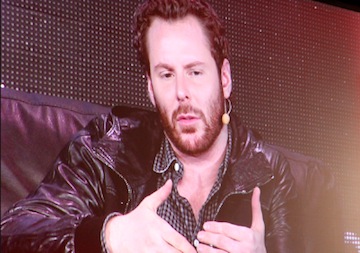
Sean Parker „Power Users leave Facebook“

Spotify investor and former Facebook President Sean Parker had some harsh words for his favorite social network: Its problem isn’t privacy, it’s that some of its most active users are leaving for other services.

“The threat to Facebook is that power users have gone to Twitter or Google+,” Parker told the Web 2.0 Summit. They are leaving, he says, because Facebook isn’t giving them enough ways to manage a glut of information.

Parker: The digital revolution has removed barriers to sharing music. It doesn’t cost extra to create another copy of a song anymore and it’s easier than ever to get recommendations for music from friends. The result is that labels are lagging behind because they have layers of bureaucracy and protocols they no longer need. Bands are responding by using other distribution mediums (such as Spotify) in order to take charge of their own destinies.

Quelle: http://mashable.com/2011/10/17/sean-parker-web-2-summit/