Schlagwort-Archive: Apple

What Happens When Apple Designs A Product That Doesn’t Solve A Problem

Apple has repositioned the Apple Watch as „the ultimate device for a healthy life“—and left Gucci and productivity nerds in the dust.
[All Images: via Apple]

When the Apple Watch debuted in 2015, Apple told us it would be fashionable. It would usher in a new platform for high-tech fads covered in Vogue. It was going to save us time—one second at a time. It was going to do all sorts of things we couldn’t even imagine yet, like sharing your heartbeat, or scribbling a shape to a loved one.

But at this week’s Apple event, as the company introduced the Apple Watch 2, those promises seemed long forgotten. Instead, in a hero video, a mountain biker flew through the air, stuck the landing, and seemed to answer a call coming through from his mom; another flew up a steep climb before texting he was on his way. A presentation from Nike followed, encouraging users to run on Sundays, because supposedly, people who exercise on Sundays are more active overall. Then Tim Cook subtly dropped what sounded like a new tagline: „It’s the ultimate device for a healthy life.“

It was a remarkable pivot, and it hints at the watch’s fundamental shortcoming: It’s a product without an apparent use case. Whereas the iPhone put miniature computers into our hands, and the MacBook fulfilled the promise of truly portable personal computing, the watch is a solution in search of a problem. Apple does not disclose sales figures, but a recent report from the research firm IDC claims Apple Watch sales dipped almost 57% in the first quarter of 2016—this despite that sales at competitors such as Fitbit are up.

Perhaps it should come as little surprise, then, that Apple has backed into the de facto selling point of wearables, a new, old narrative: The watch will make you swole.

The Fashion Pitch

It made sense why Apple chased fashion. The field was crowded with fitness bands, and Apple no doubt wanted the watch to be something more desirable. Apple recruited Burberry’s Angela Ahrendts, and paid her $70 million to build Apple into a bona fide retail powerhouse—along with an all-star fashion team including Paul Deneve, Mark Newson, Catherine Monier, and Marcela Aguilar. Apple’s fashion push was about more than the watch, of course—it was about turning Apple into a lifestyle brand. But the watch was a linchpin.

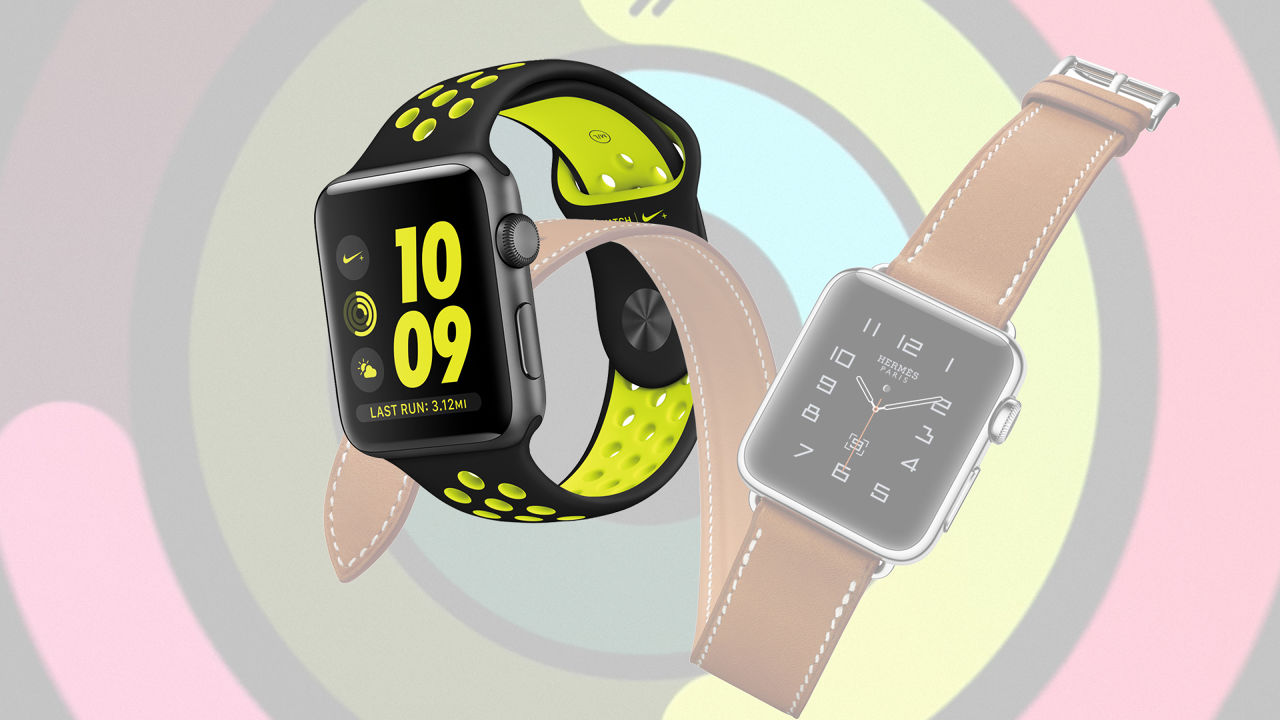
When the watch debuted publicly at Paris Fashion Week, and Karl Lagerfeld was photographed trying one on, it seemed destined for immortality. The company recruited big-name designers, like Hermes, to create bands as easily as they do developers to make apps. And what were assuredly highly coordinated sponsorship campaigns, stars like Beyoncé wore them on Instagram. They even made a version in gold—for five figures—and forced appointments to try it on with white glove service. That watch has since been discontinued.

The problem with positioning the watch around fashion? At best, the Apple Watch can’t be fashionable for very long because fashion is fleeting. At worst, the Apple Watch just wasn’t that fashionable to begin with. Apple may have sold a billion iPhones, but iPhones don’t live all day, every day, on your wrist.

The Productivity Pitch

So fashion was a reach. The Apple Watch just needed a killer app, something that made it indispensable to a modern connected worker. The Apple Watch’s value at launch became „glances,“ which was supposed to help make you a more productive person. That meant checking your wrist for the time, or a text message, as if this was a breakthrough the world had never imagined before.

Of course, it doesn’t take much longer to pull a phone from your pocket than to check your wrist, and it’s certainly no less rude to your lunch mate. That promise of seconds saved, on a $350 device, just didn’t mean too much to a nation where most U.S. citizens have less than $1,000 in their bank account.

The Fitness Pitch

And so we’re back to this week, at Apple’s iPhone 7 event, where they showed off the Apple Watch 2, a device that’s almost entirely unchanged, except for a new way of marketing it. Did you see the watch controlling smart lights? Or appearing on a catwalk? Or giving someone directions to a meeting?

No. But there were burpees and golf swings! Aside from introducing a new, white ceramic version—a nod to current design trends—and quickly mentioning some new bands from Hermes, Apple ignored all this fashion and productivity stuff. But Apple was sure to show a splashy home-brew dunking machine, a metal arm that stress-drenched Apple Watches in a tank like they were strapped to an angry Michael Phelps swimming the 200-meter fly. Apple was sure to give Nike several minutes to introduce its custom Nike Plus branded version. „You can wear it when swimming, surfing, or just doing that occasional cannonball,“ Apple COO Jeff Williams said. The Cannonball: The Apple Watch’s first killer app.

And in case you think I’m editing the presentation for argument’s sake, realize, no moment was free from fitness. Heck, even when the software developer Niantic introduced Pokémon Go Apple Watch support, the script rounded about to tease the 4.6 billion kilometers players had taken since the game launched. Even this moment of unbridled, monster-catching recreation had to become quantified fitness on Apple’s stage.

Who Cares If The Apple Watch Is A Fitness Thingie?

So by now you’re probably thinking, „Okay, fine, Apple backtracked a bit, but now it knows what the Apple Watch is for. It reverse-engineered its purpose. Isn’t that enough?“

There’s one problem with Apple backing into this position selling a wearable fitness tracker: People abandon their fitness trackers. Multiple studies have found that after a few months, many people stop caring about all their pedometer graphs and sleep cycles. (Anyone who has worn a Fitbit knows why. Sooner or later, all of this life quantification isn’t really all that meaningful unless you’re literally in training.) Even Nike knew to abandon ship after more or less creating the category with the FuelBand. It’s a lot easier, and lower risk, to leave the hardware to Apple and just brand it.

And let’s be honest about the Apple Watch as a fitness device: It’s fine. Call it great if you want. But it’s not the 10-generational-leap better than all of its competitors, like the iPhone was when it changed the entire smartphone market. It’s just the shiniest of fitness bands in a largely commoditized fitness band market.

But perhaps the company has its eye on the long game. Aside from being yet another fitness tracker, the Apple Watch is also also a network-connected health-focused gadget that interfaces with the most popular smartphone in the world, on the wrists of millions of test subjects in the sort of worldwide, cross-ethnographic field study that that health industry could never match. And while the U.S. smartphone market makes a healthy $400 billion in revenue, the U.S. health care market pulls in $1.668 trillion.

If the Apple Watch is ready and waiting—with 5 or 10 years of proven reliability—whenever our doctors and insurers inevitably tag us like cattle to track our daily activity? Then it’s the one purpose for the Apple Watch that’s worth backing into.
https://www.fastcodesign.com/3063525/what-happens-when-apple-designs-a-product-that-doesnt-solve-a-problem

Facebook Is Not a Technology Company

At the close of trading this Monday, the top five global companies by market capitalization were all U.S. tech companies: Apple, Alphabet (formerly Google), Microsoft, Amazon, and Facebook.

Bloomberg, which reported on the apparent milestone, insisted that this “tech sweep” is unprecedented, even during the dot-com boom. Back in 2011, for example, Exxon and Shell held two of the top spots, and Apple was the only tech company in the top five. In 2006, Microsoft held the only slot—the others were in energy, banking, and manufacture. But things have changed. “Your new tech overlords,” Bloomberg christened the five.

But what makes a company a technology company, anyway? In their discussion of overlords, Bloomberg’s Shira Ovide and Rani Molla explain that “Non-tech titans like Exxon and GE have slipped a bit” in top valuations. Think about that claim for a minute, and reflect on its absurdity: Exxon uses enormous machinery to extract the remains of living creatures from geological antiquity from deep beneath the earth. Then it uses other enormous machinery to refine and distribute that material globally. For its part, GE makes almost everything—from light bulbs to medical imaging devices to wind turbines to locomotives to jet engines.

Isn’t it strange to call Facebook, a company that makes websites and mobile apps a “technology” company, but to deny that moniker to firms that make diesel trains, oil-drilling platforms, and airplane engines?

Part of the problem has to do with the private language of finance. Markets segment companies by industry, and analysts track specific sectors and subsectors. Exxon is an energy industry stock, while GE straddles energy, transportation, public utility, healthcare, and finance. The “technology” in the technology sector is really synecdoche for “computer technology.” Companies in that sector deal in software, semiconductors, hardware manufacturing, peripherals, data processing services, digital advertising, and so forth.

“Technology” has become so overused … that the term has lost all meaning.

For the NASDAQ exchange, where most so-called technology companies are traded, those industries are based on the Industry Classification Benchmark (ICB), a classification system developed by the London Stock Exchange’s FTSE Group. The ICB breaks the market down into 10 industries, each of which is broken down further into supersectors, sectors, and subsectors. The ICB technology industry counts “Internet” as a subsector of “Software & Computer Services,” for example. Companies are assigned to sectors and subsectors based on the (largest) source of their revenue (thus, GE is considered an energy company).

A company like Microsoft fits squarely into Technology, Software & Computer Services, because that’s where the majority of its revenue derives. Likewise, Apple is a traditional ICB “technology” company, in the sense that it makes most of its money from selling computer hardware. But the other companies in Bloomberg’s Monday top five are technology companies in a mostly vestigial way.

Almost all of Google’s and Facebook’s revenue, for example, comes from advertising; by that measure, there’s an argument that those firms are really Media industry companies, with a focus on Broadcasting and Entertainment. Of course, Alphabet is a lot like GE, or at least it aspires to be, with its investments in automotive (Self-Driving Car Project), health care (Calico), consumer goods (Nest), utilities (Fiber). But the vast majority of its revenue comes from Google’s ad business.

Amazon generates a lot of revenue from its Amazon Web Services (AWS) business—perhaps as much as $10 billion this year. It also derives revenue from manufacturing and selling computer hardware, like the Fire and Kindle. But thevast majority of Amazon’s revenue comes from international sales of consumer goods. Amazon is sort of a tech company, but really it’s a retailer.

A day later, at the close of the markets Tuesday, August 2, the tech sweep was already history. Exxon Mobil had pushed Facebook out of position five, topping the, uh, online broadcast media company’s $352 billion market cap by $8 billion, or 2 percent. Warren Buffett’s conglomerate Berkshire Hathaway also closed Tuesday at $354 billion in total value. Among Berkshire Hathaway’s top revenue drivers are insurance, manufacturing, and the obscure but ubiquitous McClane Company, which provides supply-chain management and logistics services for the grocery industry. It brought in $28 billion in revenue last year, or about $10 billion more than Facebook. Johnson & Johnson, which sells consumer and industrial health products from Actifed to Zyrtec, wasn’t far behind, with a $345 billion market capitalization at the close of business Tuesday.

Every industry uses computers, software, and internet services. If that’s what “technology” means, then every company is in the technology business—a useless distinction. But it’s more likely that “technology” has become so overused, and so carelessly associated with Silicon Valley-style computer software and hardware startups, that the term has lost all meaning. Perhaps finance has exacerbated the problem by insisting on the generic industrial term “technology” as a synonym for computing.

There are companies that are firmly planted in the computing sector. Microsoft and Apple are two. Intel is another—it makes computer parts for other computer makers. But it’s also time to recognize that some companies—Alphabet, Amazon, and Facebook among them—aren’t primarily in the computing business anyway. And that’s no slight, either. The most interesting thing about companies like Alphabet, Amazon, and Facebook is that they are not (computing) technology companies. Instead, they are using computing infrastructure to build new—and enormous—businesses in other sectors. If anything, that’s a fair take on what “technology” might mean as a generic term: manipulating one set of basic materials to realize goals that exceed those materials.

http://www.theatlantic.com/technology/archive/2016/08/facebook-is-not-a-technology-company/494183

Battle of the assistants

Https%3a%2f%2fblueprint-api-production.s3.amazonaws.com%2fuploads%2fcard%2fimage%2f121380%2fcortanavssirionmacosthumb
Image: patrick lux/Getty Images

Despite what science-fiction wisdom says, talking to your computer is not normal. Sitting in the middle of a modern, open floor-plan office and saying „Hello, Computer,“ will garner some head-turns and a few scowls.

No matter. Companies like Microsoft, Amazon and Apple are convinced we want to talk to everything, including our desktop and laptop computers. Side-eye looks be damned.

Which brings us to today. Almost a year since Microsoft brought Cortana to Windows 10, Apple is following suit with Siri for the newly rechristened macOS.

Windows 10 with Cortana is, obviously, a shipping product, while macOS with Siri integration is in early beta. Even so, I can’t look at Siri’s first desktop jaunt in a vacuum, so when Apple supplied me with a MacBook running the beta of macOS Sierra (due to come to consumers in the fall), I compared the two desktop-based voice assistants. As you might surmise, they’re quite similar, but they have significant and strategic differences.

Where did they come from?

Siri arrives on the desktop as the oldest of the growing class of digital assistants, appearing first on the iPhone 4S in 2011. It’s long been rumored that it would eventually come to the Mac, so no one was surprised when Apple announced exactly that earlier this month at its Worldwide Developers Conference.

Cortana (which was named for the synthetic intelligence in Microsoft’s popular Halo game series), arrived with Windows 10 in 2015, a year after the digital assistant’s formal introduction on Windows Phone at the 2014 Microsoft Build conference.


Siri macOS

Siri lives in two spots on the desktop and asks you to let the system know your location.

Image: Apple

Like Cortana, Siri has a permanent place on the macOS desktop. Actually, it has two. A tiny icon in the upper right corner and then another in the macOS dock. Both launch the familiar Siri „waiting to help you“ wave.

On Windows, Cortana sits next to the Start Button. it has a circular halo icon and, next to that, the ever-present „Ask me anything.“


cortana

A click on the Cortana logo opens this Cortana window.

Image: microsoft

It’s at this point that the two assistants diverge. Cortana is a voice assistant, but, by default, it’s a text-driven one. Most people who use it will type something into the Cortana box. If you want to speak to Cortana — as I did many times for this article — you have to click the little microphone icon icon on the right side of the Cortana box.

While Cortana combines universal search with the digital assistant, Apple’s Siri drawn a line between the two.

Importantly, you can put Cortana in an always-listening mode, so it (she?) will wake when you say „Hey Cortana.“ Even though you can also wake the mobile Siri with „Hey Siri,“ macOS offers no such always-listening feature. For the purposes of this comparison, I left „Hey Cortana“ off.

Siri is a voice assistant. It has no text box. A click on either Siri icon opens the same black box in the upper right-hand side of the macOS desktop (it actually slides in from offscreen — a nice touch). As soon as you hit that button, Siri is listening, waiting for you to ask a question.

Sitting right next to Siri is Spotlight, which last year got a significant update. It’s a universal search that can pore over you Mac, the Web, iTunes, the App Store, maps.

So while Microsoft’s Cortana combines universal search with the digital assistant, Apple’s drawn a line between the two — sort of. Spotlight can perform many of the same searches as Siri. However, if you type a question into Spotlight, it may launch Siri. A trigger word appears to be „What’s.“

I really don’t know why Apple chose to keep Spotlight and Siri separate, but they may reconsider in future versions of macOS.

Battle of the assistants

It’s early days for Siri on the desktop, but I’m already impressed with its performance and intelligence — especially as it compares to Microsoft’s Cortana.

To test the two voice assistants, I first closed my office door. I wanted to speak in a normal voice and didn’t want to attract any annoyed stares.

Both Siri on macOS and Cortana start by asking you to open up your privacy settings a bit. They simply do their jobs better if they know where you are. So I followed Siri’s instructions and turned on location services on the macOS.


Here’s something else Siri on macOS and Cortana have in common: Both can tap into your system to, for example, find files and make system-level adjustments, but they’re both pretty inconsistent. Siri on macOS, obviously, is still a work in progress, so take these criticisms with a grain of salt. Even so, I suspect that there will, at least for some time, be limits to what Siri can do even after the forma macOS launch, especially as long as Spotlight survives.

When I asked Siri to „increase my screen brightness,“ it opened a System Preferences: Brightness slider box within Siri and told me „I made the screen a little brighter.“

Impressive.

When I asked Cortana the same question, it opened a Bing search result inside the Cortana box, which told me how to adjust screen brightness, but didn’t do it for me.

On the other hand, when I told Cortana to turn off my Wi-Fi, it turned it off, it returned a message of „Wi-Fi is now off“ and showed the setting to confirm.


Cortana and Siri Wi-Fi

On the left is how Cortana handles voice commands for turning on and off Wi-Fi. On the right is how Siri does it. When you turn off Wi-Fi (networking), you basically disable Siri.

Image: APPLE/MICROSOFT/COMPOSITE/MASHABLE

Siri can turn off Wi-Fi, too, but doing so also renders Siri for macOS useless. Unlike Cortana, it needs an Internet connection to work, which means once Siri on macOS has turned it off, you can’t use it to turn Wi-Fi back on. Even if you turn off network connectivity, Cortana will still be able to search your system.

Siri and Cortana excel at natural-language queries (asking questions in sentences), but Siri comes across as the smarter system.

It’s easy to check your schedule through both systems — you just need to ask one of them about your next appointment. However, Siri goes a big step further.


Siri on macOS

Changing you schedule should be this easy everywhere.

Image: apple

When I asked it about my next appointment, it showed me one for Thursday at 11:00 a.m. I then clicked the microphone icon below the calendar result and asked Siri, „Can you move that to 11:10.“ Siri responded, „Okay, I’ll make that change to your event. Shall I reschedule it?“ It then offered the option of confirming the change or cancelling it with my voice. Siri on macOS actually maintains the context between queries — that feels more like the future.

When I asked Cortana to make a similar change, it sent me to a Bing search result. (By the way, both voice assistants use Bing and neither will let you change it to Google.)

The level of conversational prowess in Siri could be a real game-changer and certainly puts Microsoft on notice.


macOS Siri

These are questions I can’t just ask Cortana.

Image: apple/composite/, mashable

Cortana and Siri on macOS both boast system access, but Siri does a better job of keeping track of system specs. I can ask about the speed of my system and how much iCloud storage I have left in Siri. Cortana, unfortunately, has no clue about my OneDrive storage and when I asked „How fast is my PC?“ I only got a Bing search result.

Where’s my stuff and who are you

Siri and Cortana each do a good job of finding system files that contain a keyword. For both, I asked, „Find me files with [keyword],“ and they both quickly showed me local, relevant results. Siri, however, excels at making results persistent. You can pin whatever you find to the notification center.


Cortana and Siri on macOS

On the left you can see that Cortana does a good job with image search, but won’t let me drag and drop from the window. On the right, Siri on macOS found me puppy pics and let me drag and drop one into an email that I plan to send to you.

Image: apple/microsoft/composite/mashable

Similarly, both voice assistants do a good job of finding images, but only Siri on macOS lets me drag and drop one of the image results into a document or email. When I tried to do the same thing with a Cortana result, it only dragged and dropped the HTML for the original query.

Siri did struggle with contacts. I tried initiating a text and got stuck in a sort of infinite loop — it just kept going back to asking me which of my duplicate contacts I wanted to text. This felt like a pre-release bug.

No winners yet

Since Apple is still working Siri for macOS, it’s way too soon to crown a voice-assistant champion. Even so, Siri on mac OS is already faster (Cortana’s voice recognition seems plodding by comparison) and it’s already outstripping Cortana on the intelligence front. On the other hand, Cortana truly shines when you can type into it, a feat impossible in Siri for macOS, unless you start in Spotlight and use one of the magic words to auto-launch Siri.

Microsoft, of course, has its own big Cortana update in the wings as part of the Windows 10 Anniversary Update due later this summer. It will increase Cortana’s intelligence and utility (order plane tickets, shop), but based on what I’ve seen in Siri for macOS, it may only help Cortana achieve parity on some features, while still leaving it trailing in others.

mashable.com/2016/06/22/siri-macos-vs-cortana

Apple confirms iOS kernel code left unencrypted intentionally

When Apple released a preview version of iOS 10 at its annual developers conference last week, the company slipped in a surprise for security researchers — it left the core of its operating system, the kernel, unencrypted.

“The kernel cache doesn’t contain any user info, and by unencrypting it we’re able to optimize the operating system’s performance without compromising security,” an Apple spokesperson told TechCrunch.

Apple has kept the inner workings of the kernel obfuscated by encryption in previous versions of iOS, leaving developers and researchers in the dark. The kernel manages security and limits the ways applications on an iPhone or iPad can access the hardware of the device, making it a crucial part of the operating system.

Although encryption is often thought to be synonymous with security, the lack of encryption in this case doesn’t mean that devices running iOS 10 are less secure. It just means that that researchers and developers can poke around in the kernel’s code for the first time, and any security flaws will come to light more quickly. If flaws are revealed, they can be quickly patched.

Leaving the kernel unencrypted is a rare move of transparency for Apple. The company is so notoriously secretive about its products that some security experts speculated in the MIT Technology Review that the lack of encryption in the kernel was accidental. But such a mistake would be so shocking as to be practically unbelievable, researchers said. “This would have been an incredibly glaring oversight, like forgetting to put doors on an elevator,” iOS security expert Jonathan Zdziarski told the MIT Technology Review.

Apple has begun to shift towards greater transparency, particularly on security issues, in the wake of its battle with the FBI over unlocking an iPhone used by the San Bernardino shooter. When the FBI attempted to compel Apple to unlock the phone, CEO Tim Cook penned a rare open letter to Apple’s customers, explaining his decision to resist. “We feel we must speak up in the face of what we see as an overreach by the U.S. government,” Cook wrote. (The FBI eventually dropped its request after paying a third party to break into the device.)

Opening up the kernel’s code for inspection could weaken the market for security flaws like the one the FBI is presumed to have used to get into the San Bernardino iPhone. If flaws are revealed quickly and widely, it will reduce the prices law enforcement and black markets will pay for them — and it could mean quicker fixes for Apple’s customers.

Apple confirms iOS kernel code left unencrypted intentionally

Marketing in Perfection – How Apple Outmarkets Samsung

These two tech giants have very different marketing strategies. Which one are you emulating?

Apple and Samsung ran back-to-back phone ads, providing a perfect illustration of why Samsung never manages to get traction against Apple.

Here are the two ads:

https://www.youtube.com/watch?v=4snreaKYqFI

Samsung’s ad is all about the product. It consists of visual images of the product along with a list of its features.

Apple’s ad is all about the consumer. It didn’t even show the product. Instead, it showed what one consumer did with the product.

Two very similar products; two very different marketing strategies. Which is more effective?

Well, if you look at long-term financial performance and the ability to extract profit out of the phone market, Apple is totally kicking Samsung’s butt.

Here’s why. As I’ve written previously, all great marketing messages answer three questions, in the proper order:

  1. What’s in it for me?
  2. Why buy it from you?
  3. What’s the next step?

Samsung’s ad only answers the first two questions indirectly. It assumes that the consumer immediately knows why somebody would want those features. In the NBA ad (which was slightly different than the ad above), Samsung then resorts to a freebie discount.

(Just to be clear, offering a discount is by definition a desperate marketing move.)

Apple’s ad answers the first two questions immediately. Like the person who filmed this clip, you can do extraordinary things with your iPhone. It then leaves the call to action implicit: Buy an iPhone (and become extraordinary).

Every week I run into companies (and individuals) that echo Samsung’s market strategy. They go on and on about the „what“ and just assume that everyone will understand the „why.“

Very rarely do I run into companies (or individuals) that echo Apple’s strategy and make their marketing about that which the customer, client, or buyer wants to accomplish or dreams about becoming.

So I have this question for you: When you market or sell, are you talking about yourself, your company, your brand, and your product? Because if you are, you’re probably losing customers.

Look: In business, it’s not about you. It’s never about you. It’s always about the other person. Apple’s been illustrating this fact for more than 30 years. How long will it take for everyone else to get it?


http://www.inc.com/geoffrey-james/what-you-can-learn-from-how-apple-out-markets-samsung.html

lower-cost gadgetry that lasts a lot longer could be a dire omen for high-margin hardware companies like Apple

This week, Intel CEO Brian Krzanich announced that people are keeping their PCs a lot longer before upgrading: The average has increased from four years to as many as six.

The tablet-refresh cycle isn’t much shorter than that, to Apple’s eternal chagrin. Even iPhone sales have started to taper off, partly because people are keeping their phones longer or choosing cheaper Android phones.

What’s happening is pretty simple. The hardware and the software running on any device itself have become way less interesting than the web apps and services, like the ones that Google and Amazon have made the core of their business.

Why buy a $700 iPhone when a $200 Android phone can access the same YouTube or Amazon Music as everyone else? All you need to do to get new Facebook features is refresh your browser or update your app. You don’t need a high-performance device to participate in the 21st century.

It’s a stark contrast with the traditional model for consumer electronics, where you’re expected to upgrade the hardware to keep pace with the new features they release.

And it could be a dire omen for high-margin hardware companies like Apple.

Meanwhile, web-first companies like Amazon and Google are more than happy to exploit this, even as our notions of what a computer actually is continue to shift. Just look at devices like Google Chromecast and the Amazon Echo.

Chromecast, Echo, case in point

Since 2013, Google has sold 25 million Chromecast devices — the completely amazing $35 dongles that turn any TV into a smart TV. That’s right, $35.

The real brilliance of the Chromecast lies in what it isn’t, rather than what it is. It doesn’t have an interface of its own. You just push a button on your phone and have whatever YouTube video you’re watching or Spotify album you’re listening to appear on your TV screen.

A nice side effect: It’s relatively simple to take an existing smartphone app and add Chromecast streaming capabilities, and literally tens of thousands of apps have done that integration.

You don’t have to think about it or learn a new interface; you just click and go.Mike George Amazon VP of EchoGettyAmazon VP of Echo Mike George.

It means that every single day, I get more return on the initial $35 investment in the Chromecast I bought in 2014. But since all of the good stuff is happening in the apps, not the Chromecast itself, it’s extremely unlikely that I will ever have to replace this Chromecast, barring a hardware malfunction.

You could probably say the same thing about the Amazon Echo home voice assistant. Developers have released almost 1,000 „skills“ for the Amazon Echo’s Alexa platform, including the ability to call an Uber, play Spotify music, or order a Domino’s pizza.

These gadgets are getting better, not worse, the longer they stay on shelves. And while there may be periodic minor hardware improvements, they’re way more minor than the gap between an iPhone 5 and an iPhone 6, and far less necessary to keep getting maximum value from the device.

The pressure is on

This move is going to keep putting pressure on hardware-first manufacturers — especially those who rely on high margins, like Apple.

The Chromecast and the Echo are relatively cheap gadgets — because all the important, useful stuff about them lives in the cloud, they’re optimized to be small, efficient, and unobtrusive.

Tesla autopilotTeslaTesla’s autopilot mode scanning the road.

Amazon doesn’t need to make money on the Echo itself, as long as it drives more commerce to its retail business. Same with Google: as long as the Chromecast gets more people to watch YouTube videos and download more stuff from Google Play, they don’t have to make money from the gadget itself.

And you’re seeing more of this all over, like when Tesla made thousands of its electric cars partially self-driving with an overnight software update. The gadget Tesla drivers already owned — in this case a car — suddenly got way more useful.

This trend isn’t going to kill off the smartphone, or the PC, or the tablet. But it means lower-cost gadgetry that lasts a lot longer. We’re only seeing the early stages of this shift now, but it has a lot of potential to shake up how we think about and how we buy our devices.

www.businessinsider.de/apple-iphone-vs-web-services-2016-6

How Apple lost its way: Steve Jobs’ love of simplicity is gone


Ken Segall, who worked alongside the tech giant’s co-founder, says company’s incredible growth was rooted in his love of simplicity – but things have changed

 Steve’ Jobs’ vision, strength and charisma made him the benevolent dictator – able to align all the forces within Apple.
Steve’ Jobs’ vision, strength and charisma made him the benevolent dictator – able to align all the forces within Apple. Photograph: Sipa Press/Rex Features

Four years ago, I wrote a book about Apple and the power of simplicity. It was the result of my observation, having worked with Steve Jobs as his ad agency creative director in the “think different” years, when Apple’s stellar growth was rooted in Steve’s love of simplicity.

This love – you might call it obsession – could be seen in Apple’s hardware, software, packaging, marketing, retail store design, even the company’s internal organization.

But that was four years ago.

Though Apple’s customers remain fiercely loyal, the natives are getting restless. A growing number of people are sensing that Tim Cook’s Apple isn’t as simple as Steve’s Apple. They see complexity in expanding product lines, confusing product names, and the products themselves.

Is this just perception, or is it reality? Has Apple developed a problem with simplicity? Or is it simply maturing as one should expect from a global company? It’s difficult to be objective because Apple has become the world’s most overanalyzed company. It’s created passionate fans and passionate detractors.

My experience with Steve has led me to admire Apple – but I also believe in tough love. This is a good time to put emotions aside and take a cold, hard look at Apple’s current “state of simplicity”.

Steve Jobs, master of simplicity

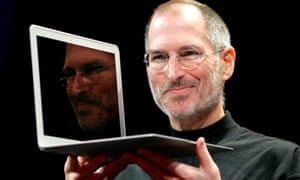
Steve Jobs holds up the new MacBook Air at a conference in 2008.
Pinterest
Steve Jobs holds up the MacBook Air at a conference in 2008. Photograph: Jeff Chiu/AP

First, we need to get one critical fact out of the way: Steve Jobs cannot be replaced. He had the credibility of the founder, extraordinary instinct, vision and energy, and he could make things happen by sheer force of will. It’s just not possible for Apple to be the same without him – but it can still succeed.

Tim Cook has a different style. Remember, he was handpicked by Steve to be Apple’s next leader, and he certainly knows how to make Apple run efficiently. He also recognizes that he doesn’t have Steve’s many talents, so he relies on the expertise of others in those areas where he is less experienced – such as product design and marketing.

That’s where things get a little more complicated. Steve’s vision, strength and charisma made him the benevolent dictator – able to align all the forces within Apple. That kind of performance doesn’t come as naturally to Tim.

Simplicity in the product lines

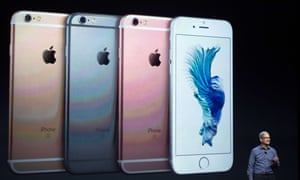
Apple CEO Tim Cook introduces the iPhone 6S last year.
Pinterest
Apple CEO Tim Cook introduces the iPhone 6S last year. Photograph: Josh Edelson/AFP/Getty Images

Apple now sells three different iPhones, four different iPads and three different MacBooks. The Apple Watch comes in seemingly infinite combinations of sizes and bands. The Apple universe is exploding with complexity! Or is it?

One could easily argue that a watch is a fashion product, so the decision here makes sense. And there is ample precedent for Apple expanding existing product lines. The original iPod, for example, successfully grew into a family of products.

Markets mature. A bigger audience has more diverse needs. If Apple were to ignore those needs, they would only force customers to go elsewhere. (As they did for several years by not making a big-screen iPhone.)

So, yes, Apple’s product lines have become more complicated. But really, are they that complicated? The company’s entire selection of products can easily fit on an average-size table. When a company cares about simplicity, it offers the right choices – not endless choices.

Simplicity in software

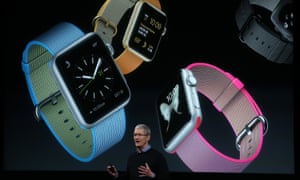
Cook speaks about the Apple Watch at the Apple headquarters earlier this year in Cupertino, California.
Pinterest
Cook speaks about the Apple Watch at the Apple headquarters earlier this year in Cupertino, California. Photograph: Justin Sullivan/Getty Images

Critics have had a field day complaining about the growing complexity of Apple software. Apple Music has been attacked mercilessly, and deservedly so. I personally find parts of it to be bewildering.

Apple’s ability to make software solid and simple has come under attack from a number of normally pro-Apple sites. Not that it excuses Apple, but many forget that such lapses also happened on Steve’s watch. He famously went ballistic over the flawed launch of Apple’s early cloud effort called MobileMe.

The fact is, even the best of companies make mistakes from time to time. What’s alarming the Apple crowd today is that the flaws and complexities now seem to be creeping into the products more frequently.

Simplicity in product naming

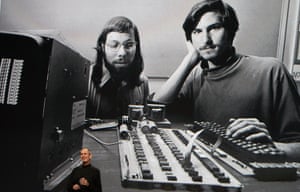
Steve Jobs speaks during an Apple event in 2010 – with a photo of him and Steve Wozniak in the background.
Pinterest
Steve Jobs speaks during an Apple event in 2010 – with a photo of him and Steve Wozniak in the background. Photograph: Justin Sullivan/Getty Images

Once upon a time, Apple’s product naming was extremely simple. Computers were Macs and consumer products were i-devices.

Now the consumer products are offered as i-things and Apple-things (Apple Watch, Apple Pay, Apple Music). But we’ll give Apple a pass on this one because the i is obviously on its last legs, and a transition like this doesn’t happen overnight.

I’m less forgiving when it comes to iPhone naming. With the current models consisting of iPhone 6S, iPhone 6S Plus and SE, Apple’s naming scheme is becoming noticeably less simple.

Then there’s the issue of the S. For some reason, Apple has decided that every other year, it should just add an S to the current model number, because the S-year improvements are internal only. So Apple’s own actions have served to train the public that S years are the “off years”. This is an absurdity, given that such revolutionary features as Siri, Touch ID and 64-bit processing have all been introduced in S models.

The S naming has only served to confuse customers, and make it significantly more difficult for marketing to do its job.

Complicated, yes. But bear in mind that Steve is the guy who started iPhone with the S-names in the first place.

Simplicity in marketing

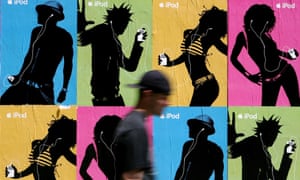
A pedestrian passes a wall covered with Apple iPod advertisements in 2005.
Pinterest
A pedestrian passes a wall covered with Apple iPod advertisements in 2005. Photograph: Justin Sullivan/Getty Images

Apple has a lengthy, award-winning history in advertising. Even marketers in other industries have long considered Apple ads to be the gold standard.

This isn’t because Steve Jobs created great ads himself – it’s because he was adament about keeping the process simple. He trusted a small group of smart people at his longtime ad agency and he was actively involved in the process, week to week.

There were no middlemen, no multiple levels of approvals, and no focus group research. Trust me, few companies on earth work this way. It was Steve’s way of keeping complexity at bay.

With Steve’s passing, things changed dramatically. Apple is building a large in-house marketing group. Teams compete to produce new campaigns. More people are involved. In short, Apple is now managing its marketing more like a big company and less like a startup.

Does simplicity still rule at Apple?

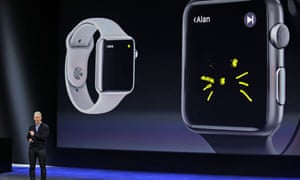
Cook explains the features of the new Apple Watch last year.
Pinterest
Cook explains the features of the new Apple Watch last year. Photograph: Eric Risberg/AP

I have zero doubt that Apple believes deeply in the power of simplicity. Simplicity is at the heart of the company’s products and the foundation of its vision for the future.

But simplicity is a matter of perception, and it’s hard to ignore the fact that Apple is struggling to present a simple image to its customers.

There is serious work to be done in rebuilding the perception of simplicity that helped Apple become the world’s most valuable company. Existing problems need fixing, as do the internal processes that have allowed complicated products to make it into the hands of customers.

That said, it’s important to put Apple’s issues in context. Despite its current challenges – and its lapses – I don’t see any other technology creating a simple experience as well as Apple.

We live in a complicated world, and the companies that deliver simplicity are the ones who win in the end.

https://www.theguardian.com/technology/2016/jun/02/ken-segall-apple-steve-jobs-simplicity

Apple will open Siri to developers

Https%3a%2f%2fblueprint-api-production.s3.amazonaws.com%2fuploads%2fcard%2fimage%2f96805%2fhttps---blueprint-api-production.s3.amazonaws.com-uploads-card-image-84672

Apple has big plans for Siri that will make the company’s famous assistant a lot more useful, according to a new report.

The company will soon open up Siri to developers with new software tools that will allow Siri to tap into more third-party services, according to a new report in The Information. Apple is also working on a new pice of a hardware, an Amazon Echo rival that will work with Apple’s smart home platform.

Apple plans to put Siri in the hands of developers with a new software development kit (SDK) that will reportedly be called the Siri SDK. The Siri SDK could launch at next months’s World Wide Developer Conference, where Apple typically previews the newest version of IOS and its latest developer tools.

The SDK will require „some work“ by developers to make their apps accessible by Siri, the report says.

Siri already works with a few third-party services, like Yelp and Bing, but hasn’t been widely available to developers since it was acquired by Apple in 2010. Prior to its acquisition, Siri worked with many third-party services. (Some of the original Siri team is now working on a new AI Assistant called Viv, which will also work with third-parties like Uber.)

Apple is also reportedly working on a new speaker that allows people to use voice commands to play music and control HomeKit-enabled smart home devices, like lights, locks and thermostats. It’s unclear if the speaker will also be unveiled at WWDC in June, as Apple typically reserves new hardware for other events.

Though the new smart speaker sounds a lot like Amazon’s Echo and Google’s recently unveiled Google Assistant, Apple’s device predates both, according to The Information’s sources.

The report is just the latest sign that Apple has big plans for Siri next month. Earlier reports have suggested Apple will bring Siri to the Mac and — in what could very well be a hint of a Siri-themed WWDC — the company used Siri to reveal the dates of this year’s developer conference.

http://mashable.com/2016/05/24/apple-siri-sdk-report

Apple received a $1 billion investment from Warren Buffet

Apple_buffett
Warren Buffett’s firm invested more than $1 billion in Apple earlier this year. It’s down more than $200 million to date.
Image: John Peterson/Ap

They call him the „Oracle of Omaha“ because he just seems to know how to pick stocks that go up.

Still, Warren Buffett (and his deputies) aren’t perfect.

Buffett’s company, Berkshire Hathaway, dropped about $1.1 billion on Apple stock in the first quarter of 2016, snapping up 9.8 million shares in the company, according to a company filing on Monday.

It’s Buffett’s first major bite of Apple, and so far, it’s a bit sour.

Apple’s stock has struggled so far this year after reporting its first sales decline in more than a decade. Buffett’s original investment is now worth about $888 million, a decline of more than $200 million in a matter of months.

Companies like Berkshire Hathaway are required by the Securities and Exchange Commission to disclose their investments at the end of each quarter, meaning that four times a year the public gets a look at how some of the biggest investments are positioned.

Buffett’s investments, through Berkshire Hathaway, are some of the most closely watched. His career has become legendary among investors. Buffett began selling chewing gum as a six-year-old to one of the richest self-made people in history.

His net worth is now estimated to be around $66 billion, according to Forbes.

Buffett’s popularity means that when he buys certain stocks — or more precisely, when it’s revealed he has purchased certain stocks — they tend to go up partially just due to his influence.

That appeared to happen on Monday morning, as Apple shares rose 2.2% to start the week.

It is, however, important to note that reports indicate Buffett himself did not make the investment. It was made by one of his deputies, who also have control of billions of dollars in investment capital.

Even without Buffett’s personal touch, the move came as a bit of a surprise. Buffett is known for avoiding tech companies, since they tend to be rather expensive by some classic investing metrics.

That position seems to be changing slightly. Buffett has also been associated with a bid for Yahoo, although only in terms of financing for another party.

http://mashable.com/2016/05/16/warren-buffett-apple-1-billion

Facebook and Google are destined to become Apple and Microsoft

People don’t always remember this, but when Microsoft first started, one of its biggest partners was Apple — manufacturer of the Apple II, the gold standard for early PCs.

That partnership, always tenuous, didn’t last.

Microsoft would go on to partner with IBM, paving the way to the era of Windows dominance on a wide range of cheap computers.

Apple would have its well-documented ups and downs before ultimately locking down the high-end computer market.

Today, Google announced Daydream, a new initiative designed to make virtual reality cheaper and more accessible to everybody, in partnership with vendors  Samsung, HTC, LG, Huawei, Alcatel, ZTE, Xiaomi and Asus.

And assuming that virtual reality really does take off and become the next great computing paradigm, like the tech industry thinks it will, it looks like history is going to repeat itself — with Google in the role of Microsoft and Facebook playing the part of Apple.

This is not necessarily a good thing.

Early days

The Apple II wasn’t the first computer, by any measure. But when it launched in 1977, the whole idea of personal computing was nothing more than a hobbyist’s pastime. In fact, the Apple I was a do-it-yourself computer kit.

The big breakthrough of the Apple II was taking all of the complicated techie stuff and placing it in one pre-built box so anybody could use it and build software for it. It was so successful and influential that it kicked off a product line that lasted through the Apple IIe in 1993.

Still, Microsoft saw opportunity. While the Apple II and, later, the Apple Macinstosh were popular, they were also prohibitively expensive for most people. With Apple the sole manufacturer of those computers, there was no reason to ever drop the price. So Microsoft performed an end-run and circumvented Apple entirely.

Apple II MacFlickr/gmahenderApple II

Microsoft sold Windows to any and every PC manufacturer, building a thriving ecosystem of computers from different companies that nonetheless offered compatible software. PC prices cratered, PC manufacturers blossomed, Microsoft’s stock went way up, and Apple’s future became far less certain.

It’s basically the same thing that Google would go on to do with Android itself, making the mobile operating system available for free to phone manufacturers. Now, you can get an Android phone that costs less than $100 or more than $700, your choice. Google now wants to repeat the trick, this time with virtual reality.

Virtual insanity

Just like Apple before it, Facebook is maintaining a tight grip over Oculus, and its flagship Oculus Rift VR headset, which it bought for $2 billion in 2014.

Because of that, it carries the same pluses and minuses as the Apple II and Macintosh before it. It’s engineered to Just Work, streamlining away all the things that made virtual reality never catch on before. But it’s also expensive, with $599 for the Oculus Rift headset alone, plus the fact that you’ll need a $1,200-ish PC just to use it.

Google’s vision for the future of virtual reality is a little broader. Its first-ever virtual reality play was the $20-ish Google Cardboard, literally a cardboard box that you can slot just about any smartphone into.

Much like Microsoft with Windows. Google has turned to partners to realize the dream of Daydream. It’s providing a blueprint for a virtual reality headset that anybody can build from, and a specification for building phones that are compatible with it.

Oculus Rift Oculus TouchOculus VROculus Rift

There are some limits — Daydream is only going to work with certain, pre-certified new phones — but the general idea is that it’s always going to be cheaper and more accessible to power virtual reality with a smartphone that you probably already own, than an expensive gaming PC that only true power-users care to maintain.

Facebook, for its part, hasn’t ignored this trend. The Samsung Gear VR, co-developed by Oculus, is a lower-end headset also powered by a phone. Still, it only works with Samsung’s own Galaxy phones, which are always on the higher end of the price spectrum.

Google Daydream is, on paper, more inclusive of lower-end and cheaper smartphones. It may never be as powerful as the Oculus Rift, but if it works, it’ll ignite an explosion of cheap VR from every manufacturer, making it a new standard, at the cost of some overall control.

Just like Windows.

Vision for the future

So you have Facebook’s Oculus at the Apple-esque high end of virtual reality, and Google Daydream at the low-to-middle that’s long been Microsoft’s forte in PCs.

That’s great, except not really. If the long decades of Apple’s history with Microsoft have taught us anything, it’s that consumers suffer the most when tech giants have turf wars. Remember the dark days of the great Windows/Mac divide?

Right now, virtual reality is such a young market that these companies don’t feel the need to compete.

Google Daydream headsetGoogleThe current design for the Google Daydream headset.

But you already can’t legitimately get Google’s YouTube app on Facebook’s Oculus Home virtual reality operating system. If virtual reality takes off, expect to see a lot more territorialism between Facebook’s growing ecosystem of apps and services, and Google’s established base.

Eventually, Apple and Microsoft came to terms. Microsoft builds some of the best iPhone apps around; Apple promotes Office on its iPad Pro tablet.

To get to that happier place, though, it took a strange journey, and a long maturation of the overall technology behind computing and the internet. We’re just at the beginning of even glimpsing the potential of virtual reality. And if Google and Facebook really follow history, we’re in for a long, tough, bitter fight.

http://www.businessinsider.de/facebook-vr-versus-google-vr-2016-5