Microsoft has helped innovate facial recognition software. Now it’s urging the US government to enact regulation to control the use of the technology.
In a blog post, Microsoft (MSFT)President Brad Smith said new laws are necessary given the technology’s „broad societal ramifications and potential for abuse.“
He urged lawmakers to form „a government initiative to regulate the proper use of facial recognition technology, informed first by a bipartisan and expert commission.“
Facial recognition — a computer’s ability to identify or verify people’s faces from a photo or through a camera — has been developing rapidly. Apple (AAPL), Google (GOOG), Amazon and Microsoft are among the big tech companies developing and selling such systems. The technology is being used across a range of industries, from private businesses like hotels and casinos, to social media and law enforcement.
Supporters say facial recognition software improves safety for companies and customers and can help police track police down criminals or find missing children. Civil rights groups warn it can infringe on privacy and allow for illegal surveillance and monitoring. There is also room for error, they argue, since the still-emerging technology can result in false identifications.
The accuracy of facial recognition technologies varies, with women and people of color being identified with less accuracy, according to MIT research.
„Facial recognition raises a critical question: what role do we want this type of technology to play in everyday society?“ Smith wrote on Friday.
Smith’s call for a regulatory framework to control the technology comes as tech companies face criticism over how they’ve handled and shared customer data, as well as their cooperation with government agencies.
Last month, Microsoft was scrutinized for its working relationship with US Immigration and Customs Enforcement. ICE had been enforcing the Trump administration’s „zero tolerance“ immigration policy that separated children from their parents when they crossed the US border illegally. The administration has since abandoned the policy.
Microsoft wrote a blog post in January about ICE’s use of its cloud technology Azure, saying it could help it „accelerate facial recognition and identification.“
After questions arose about whether Microsoft’s technology had been used by ICE agents to carry out the controversial border separations, the company released a statement calling the policy „cruel“ and „abusive.“
In his post, Smith reiterated Microsoft’s opposition to the policy and said he had confirmed its contract with ICE does not include facial recognition technology.
Amazon(AMZN) has also come under fire from its own shareholders and civil rights groups over local police forces using its face identifying software Rekognition, which can identify up to 100 people in a single photo.
Some Amazon shareholders coauthored a letter pressuring Amazon to stop selling the technology to the government, saying it was aiding in mass surveillance and posed a threat to privacy rights.
And Facebook (FB) is embroiled in a class-action lawsuit that alleges the social media giant used facial recognition on photos without user permission. Its facial recognition tool scans your photos and suggests you tag friends.
Neither Amazon nor Facebook immediately responded to a request for comment about Smith’s call for new regulations on face ID technology.
Smith said companies have a responsibility to police their own innovations, control how they are deployed and ensure that they are used in a „a manner consistent with broadly held societal values.“
„It may seem unusual for a company to ask for government regulation of its products, but there are many markets where thoughtful regulation contributes to a healthier dynamic for consumers and producers alike,“ he said.
Artificial Intelligence — The Revolution Hasn’t Happened Yet
Artificial Intelligence (AI) is the mantra of the current era. The phrase is intoned by technologists, academicians, journalists and venture capitalists alike. As with many phrases that cross over from technical academic fields into general circulation, there is significant misunderstanding accompanying the use of the phrase. But this is not the classical case of the public not understanding the scientists — here the scientists are often as befuddled as the public. The idea that our era is somehow seeing the emergence of an intelligence in silicon that rivals our own entertains all of us — enthralling us and frightening us in equal measure. And, unfortunately, it distracts us.
There is a different narrative that one can tell about the current era. Consider the following story, which involves humans, computers, data and life-or-death decisions, but where the focus is something other than intelligence-in-silicon fantasies. When my spouse was pregnant 14 years ago, we had an ultrasound. There was a geneticist in the room, and she pointed out some white spots around the heart of the fetus. “Those are markers for Down syndrome,” she noted, “and your risk has now gone up to 1 in 20.” She further let us know that we could learn whether the fetus in fact had the genetic modification underlying Down syndrome via an amniocentesis. But amniocentesis was risky — the risk of killing the fetus during the procedure was roughly 1 in 300. Being a statistician, I determined to find out where these numbers were coming from. To cut a long story short, I discovered that a statistical analysis had been done a decade previously in the UK, where these white spots, which reflect calcium buildup, were indeed established as a predictor of Down syndrome. But I also noticed that the imaging machine used in our test had a few hundred more pixels per square inch than the machine used in the UK study. I went back to tell the geneticist that I believed that the white spots were likely false positives — that they were literally “white noise.” She said “Ah, that explains why we started seeing an uptick in Down syndrome diagnoses a few years ago; it’s when the new machine arrived.”
We didn’t do the amniocentesis, and a healthy girl was born a few months later. But the episode troubled me, particularly after a back-of-the-envelope calculation convinced me that many thousands of people had gotten that diagnosis that same day worldwide, that many of them had opted for amniocentesis, and that a number of babies had died needlessly. And this happened day after day until it somehow got fixed. The problem that this episode revealed wasn’t about my individual medical care; it was about a medical system that measured variables and outcomes in various places and times, conducted statistical analyses, and made use of the results in other places and times. The problem had to do not just with data analysis per se, but with what database researchers call “provenance” — broadly, where did data arise, what inferences were drawn from the data, and how relevant are those inferences to the present situation? While a trained human might be able to work all of this out on a case-by-case basis, the issue was that of designing a planetary-scale medical system that could do this without the need for such detailed human oversight.
I’m also a computer scientist, and it occurred to me that the principles needed to build planetary-scale inference-and-decision-making systems of this kind, blending computer science with statistics, and taking into account human utilities, were nowhere to be found in my education. And it occurred to me that the development of such principles — which will be needed not only in the medical domain but also in domains such as commerce, transportation and education — were at least as important as those of building AI systems that can dazzle us with their game-playing or sensorimotor skills.
Whether or not we come to understand “intelligence” any time soon, we do have a major challenge on our hands in bringing together computers and humans in ways that enhance human life. While this challenge is viewed by some as subservient to the creation of “artificial intelligence,” it can also be viewed more prosaically — but with no less reverence — as the creation of a new branch of engineering. Much like civil engineering and chemical engineering in decades past, this new discipline aims to corral the power of a few key ideas, bringing new resources and capabilities to people, and doing so safely. Whereas civil engineering and chemical engineering were built on physics and chemistry, this new engineering discipline will be built on ideas that the preceding century gave substance to — ideas such as “information,” “algorithm,” “data,” “uncertainty,” “computing,” “inference,” and “optimization.” Moreover, since much of the focus of the new discipline will be on data from and about humans, its development will require perspectives from the social sciences and humanities.
While the building blocks have begun to emerge, the principles for putting these blocks together have not yet emerged, and so the blocks are currently being put together in ad-hoc ways.
Thus, just as humans built buildings and bridges before there was civil engineering, humans are proceeding with the building of societal-scale, inference-and-decision-making systems that involve machines, humans and the environment. Just as early buildings and bridges sometimes fell to the ground — in unforeseen ways and with tragic consequences — many of our early societal-scale inference-and-decision-making systems are already exposing serious conceptual flaws.
And, unfortunately, we are not very good at anticipating what the next emerging serious flaw will be. What we’re missing is an engineering discipline with its principles of analysis and design.
The current public dialog about these issues too often uses “AI” as an intellectual wildcard, one that makes it difficult to reason about the scope and consequences of emerging technology. Let us begin by considering more carefully what “AI” has been used to refer to, both recently and historically.
Most of what is being called “AI” today, particularly in the public sphere, is what has been called “Machine Learning” (ML) for the past several decades. ML is an algorithmic field that blends ideas from statistics, computer science and many other disciplines (see below) to design algorithms that process data, make predictions and help make decisions. In terms of impact on the real world, ML is the real thing, and not just recently. Indeed, that ML would grow into massive industrial relevance was already clear in the early 1990s, and by the turn of the century forward-looking companies such as Amazon were already using ML throughout their business, solving mission-critical back-end problems in fraud detection and supply-chain prediction, and building innovative consumer-facing services such as recommendation systems. As datasets and computing resources grew rapidly over the ensuing two decades, it became clear that ML would soon power not only Amazon but essentially any company in which decisions could be tied to large-scale data. New business models would emerge. The phrase “Data Science” began to be used to refer to this phenomenon, reflecting the need of ML algorithms experts to partner with database and distributed-systems experts to build scalable, robust ML systems, and reflecting the larger social and environmental scope of the resulting systems.
This confluence of ideas and technology trends has been rebranded as “AI” over the past few years. This rebranding is worthy of some scrutiny.
Historically, the phrase “AI” was coined in the late 1950’s to refer to the heady aspiration of realizing in software and hardware an entity possessing human-level intelligence. We will use the phrase “human-imitative AI” to refer to this aspiration, emphasizing the notion that the artificially intelligent entity should seem to be one of us, if not physically at least mentally (whatever that might mean). This was largely an academic enterprise. While related academic fields such as operations research, statistics, pattern recognition, information theory and control theory already existed, and were often inspired by human intelligence (and animal intelligence), these fields were arguably focused on “low-level” signals and decisions. The ability of, say, a squirrel to perceive the three-dimensional structure of the forest it lives in, and to leap among its branches, was inspirational to these fields. “AI” was meant to focus on something different — the “high-level” or “cognitive” capability of humans to “reason” and to “think.” Sixty years later, however, high-level reasoning and thought remain elusive. The developments which are now being called “AI” arose mostly in the engineering fields associated with low-level pattern recognition and movement control, and in the field of statistics — the discipline focused on finding patterns in data and on making well-founded predictions, tests of hypotheses and decisions.
Indeed, the famous “backpropagation” algorithm that was rediscovered by David Rumelhart in the early 1980s, and which is now viewed as being at the core of the so-called “AI revolution,” first arose in the field of control theory in the 1950s and 1960s. One of its early applications was to optimize the thrusts of the Apollo spaceships as they headed towards the moon.
Since the 1960s much progress has been made, but it has arguably not come about from the pursuit of human-imitative AI. Rather, as in the case of the Apollo spaceships, these ideas have often been hidden behind the scenes, and have been the handiwork of researchers focused on specific engineering challenges. Although not visible to the general public, research and systems-building in areas such as document retrieval, text classification, fraud detection, recommendation systems, personalized search, social network analysis, planning, diagnostics and A/B testing have been a major success — these are the advances that have powered companies such as Google, Netflix, Facebook and Amazon.
One could simply agree to refer to all of this as “AI,” and indeed that is what appears to have happened. Such labeling may come as a surprise to optimization or statistics researchers, who wake up to find themselves suddenly referred to as “AI researchers.” But labeling of researchers aside, the bigger problem is that the use of this single, ill-defined acronym prevents a clear understanding of the range of intellectual and commercial issues at play.
The past two decades have seen major progress — in industry and academia — in a complementary aspiration to human-imitative AI that is often referred to as “Intelligence Augmentation” (IA). Here computation and data are used to create services that augment human intelligence and creativity. A search engine can be viewed as an example of IA (it augments human memory and factual knowledge), as can natural language translation (it augments the ability of a human to communicate). Computing-based generation of sounds and images serves as a palette and creativity enhancer for artists. While services of this kind could conceivably involve high-level reasoning and thought, currently they don’t — they mostly perform various kinds of string-matching and numerical operations that capture patterns that humans can make use of.
Hoping that the reader will tolerate one last acronym, let us conceive broadly of a discipline of “Intelligent Infrastructure” (II), whereby a web of computation, data and physical entities exists that makes human environments more supportive, interesting and safe. Such infrastructure is beginning to make its appearance in domains such as transportation, medicine, commerce and finance, with vast implications for individual humans and societies. This emergence sometimes arises in conversations about an “Internet of Things,” but that effort generally refers to the mere problem of getting “things” onto the Internet — not to the far grander set of challenges associated with these “things” capable of analyzing those data streams to discover facts about the world, and interacting with humans and other “things” at a far higher level of abstraction than mere bits.
For example, returning to my personal anecdote, we might imagine living our lives in a “societal-scale medical system” that sets up data flows, and data-analysis flows, between doctors and devices positioned in and around human bodies, thereby able to aid human intelligence in making diagnoses and providing care. The system would incorporate information from cells in the body, DNA, blood tests, environment, population genetics and the vast scientific literature on drugs and treatments. It would not just focus on a single patient and a doctor, but on relationships among all humans — just as current medical testing allows experiments done on one set of humans (or animals) to be brought to bear in the care of other humans. It would help maintain notions of relevance, provenance and reliability, in the way that the current banking system focuses on such challenges in the domain of finance and payment. And, while one can foresee many problems arising in such a system — involving privacy issues, liability issues, security issues, etc — these problems should properly be viewed as challenges, not show-stoppers.
We now come to a critical issue: Is working on classical human-imitative AI the best or only way to focus on these larger challenges? Some of the most heralded recent success stories of ML have in fact been in areas associated with human-imitative AI — areas such as computer vision, speech recognition, game-playing and robotics. So perhaps we should simply await further progress in domains such as these. There are two points to make here. First, although one would not know it from reading the newspapers, success in human-imitative AI has in fact been limited — we are very far from realizing human-imitative AI aspirations. Unfortunately the thrill (and fear) of making even limited progress on human-imitative AI gives rise to levels of over-exuberance and media attention that is not present in other areas of engineering.
Second, and more importantly, success in these domains is neither sufficient nor necessary to solve important IA and II problems. On the sufficiency side, consider self-driving cars. For such technology to be realized, a range of engineering problems will need to be solved that may have little relationship to human competencies (or human lack-of-competencies). The overall transportation system (an II system) will likely more closely resemble the current air-traffic control system than the current collection of loosely-coupled, forward-facing, inattentive human drivers. It will be vastly more complex than the current air-traffic control system, specifically in its use of massive amounts of data and adaptive statistical modeling to inform fine-grained decisions. It is those challenges that need to be in the forefront, and in such an effort a focus on human-imitative AI may be a distraction.
As for the necessity argument, it is sometimes argued that the human-imitative AI aspiration subsumes IA and II aspirations, because a human-imitative AI system would not only be able to solve the classical problems of AI (as embodied, e.g., in the Turing test), but it would also be our best bet for solving IA and II problems. Such an argument has little historical precedent. Did civil engineering develop by envisaging the creation of an artificial carpenter or bricklayer? Should chemical engineering have been framed in terms of creating an artificial chemist? Even more polemically: if our goal was to build chemical factories, should we have first created an artificial chemist who would have then worked out how to build a chemical factory?
A related argument is that human intelligence is the only kind of intelligence that we know, and that we should aim to mimic it as a first step. But humans are in fact not very good at some kinds of reasoning — we have our lapses, biases and limitations. Moreover, critically, we did not evolve to perform the kinds of large-scale decision-making that modern II systems must face, nor to cope with the kinds of uncertainty that arise in II contexts. One could argue
that an AI system would not only imitate human intelligence, but also “correct” it, and would also scale to arbitrarily large problems. But we are now in the realm of science fiction — such speculative arguments, while entertaining in the setting of fiction, should not be our principal strategy going forward in the face of the critical IA and II problems that are beginning to emerge. We need to solve IA and II problems on their own merits, not as a mere corollary to a human-imitative AI agenda.
It is not hard to pinpoint algorithmic and infrastructure challenges in II systems that are not central themes in human-imitative AI research. II systems require the ability to manage distributed repositories of knowledge that are rapidly changing and are likely to be globally incoherent. Such systems must cope with cloud-edge interactions in making timely, distributed decisions and they must deal with long-tail phenomena whereby there is lots of data on some individuals and little data on most individuals. They must address the difficulties of sharing data across administrative and competitive boundaries. Finally, and of particular importance, II systems must bring economic ideas such as incentives and pricing into the realm of the statistical and computational infrastructures that link humans to each other and to valued goods. Such II systems can be viewed as not merely providing a service, but as creating markets. There are domains such as music, literature and journalism that are crying out for the emergence of such markets, where data analysis links producers and consumers. And this must all be done within the context of evolving societal, ethical and legal norms.
Of course, classical human-imitative AI problems remain of great interest as well. However, the current focus on doing AI research via the gathering of data, the deployment of “deep learning” infrastructure, and the demonstration of systems that mimic certain narrowly-defined human skills — with little in the way of emerging explanatory principles — tends to deflect attention from major open problems in classical AI. These problems include the need to bring meaning and reasoning into systems that perform natural language processing, the need to infer and represent causality, the need to develop computationally-tractable representations of uncertainty and the need to develop systems that formulate and pursue long-term goals. These are classical goals in human-imitative AI, but in the current hubbub over the “AI revolution,” it is easy to forget that they are not yet solved.
IA will also remain quite essential, because for the foreseeable future, computers will not be able to match humans in their ability to reason abstractly about real-world situations. We will need well-thought-out interactions of humans and computers to solve our most pressing problems. And we will want computers to trigger new levels of human creativity, not replace human creativity (whatever that might mean).
It was John McCarthy (while a professor at Dartmouth, and soon to take a
position at MIT) who coined the term “AI,” apparently to distinguish his
budding research agenda from that of Norbert Wiener (then an older professor at MIT). Wiener had coined “cybernetics” to refer to his own vision of intelligent systems — a vision that was closely tied to operations research, statistics, pattern recognition, information theory and control theory. McCarthy, on the other hand, emphasized the ties to logic. In an interesting reversal, it is Wiener’s intellectual agenda that has come to dominate in the current era, under the banner of McCarthy’s terminology. (This state of affairs is surely, however, only temporary; the pendulum swings more in AI than
in most fields.)
But we need to move beyond the particular historical perspectives of McCarthy and Wiener.
We need to realize that the current public dialog on AI — which focuses on a narrow subset of industry and a narrow subset of academia — risks blinding us to the challenges and opportunities that are presented by the full scope of AI, IA and II.
This scope is less about the realization of science-fiction dreams or nightmares of super-human machines, and more about the need for humans to understand and shape technology as it becomes ever more present and influential in their daily lives. Moreover, in this understanding and shaping there is a need for a diverse set of voices from all walks of life, not merely a dialog among the technologically attuned. Focusing narrowly on human-imitative AI prevents an appropriately wide range of voices from being heard.
While industry will continue to drive many developments, academia will also continue to play an essential role, not only in providing some of the most innovative technical ideas, but also in bringing researchers from the computational and statistical disciplines together with researchers from other
disciplines whose contributions and perspectives are sorely needed — notably
the social sciences, the cognitive sciences and the humanities.
On the other hand, while the humanities and the sciences are essential as we go forward, we should also not pretend that we are talking about something other than an engineering effort of unprecedented scale and scope — society is aiming to build new kinds of artifacts. These artifacts should be built to work as claimed. We do not want to build systems that help us with medical treatments, transportation options and commercial opportunities to find out after the fact that these systems don’t really work — that they make errors that take their toll in terms of human lives and happiness. In this regard, as I have emphasized, there is an engineering discipline yet to emerge for the data-focused and learning-focused fields. As exciting as these latter fields appear to be, they cannot yet be viewed as constituting an engineering discipline.
Moreover, we should embrace the fact that what we are witnessing is the creation of a new branch of engineering. The term “engineering” is often
invoked in a narrow sense — in academia and beyond — with overtones of cold, affectless machinery, and negative connotations of loss of control by humans. But an engineering discipline can be what we want it to be.
In the current era, we have a real opportunity to conceive of something historically new — a human-centric engineering discipline.
I will resist giving this emerging discipline a name, but if the acronym “AI” continues to be used as placeholder nomenclature going forward, let’s be aware of the very real limitations of this placeholder. Let’s broaden our scope, tone down the hype and recognize the serious challenges ahead.
“Unless your parents purge it, your Alexa will hold on to every bit of data you have ever given it, all the way back to the first things you shouted at it as a 2-year-old.”
Among the more modern anxieties of parents today is how virtual assistants will train their children to act. The fear is that kids who habitually order Amazon’s Alexa to read them a story or command Google’s Assistant to tell them a joke are learning to communicate not as polite, considerate citizens, but as demanding little twerps.
This worry has become so widespread that Amazon and Google both announced this week that their voice assistants can now encourage kids to punctuate their requests with „please.“ The version of Alexa that inhabits the new Echo Dot Kids Edition will thank children for „asking so nicely.“ Google Assistant’s forthcoming Pretty Please feature will remind kids to „say the magic word“ before complying with their wishes.
But many psychologists think kids being polite to virtual assistants is less of an issue than parents think—and may even be a red herring. As virtual assistants become increasingly capable, conversational, and prevalent (assistant-embodied devices are forecasted to outnumber humans), psychologists and ethicists are asking deeper, more subtle questions than will Alexa make my kid bossy. And they want parents to do the same.
„When I built my first virtual child, I got a lot of pushback and flak,“ recalls developmental psychologist Justine Cassell, director emeritus of Carnegie Mellon’s Human-Computer Interaction Institute and an expert in the development of AI interfaces for children. It was the early aughts, and Cassell, then at MIT, was studying whether a life-sized, animated kid named Sam could help flesh-and-blood children hone their cognitive, social, and behavioral skills. „Critics worried that the kids would lose track of what was real and what was pretend,“ Cassel says. „That they’d no longer be able to tell the difference between virtual children and actual ones.“
But when you asked the kids whether Sam was a real child, they’d roll their eyes. Of course Sam isn’t real, they’d say. There was zero ambiguity.
Nobody knows for sure, and Cassel emphasizes that the question deserves study, but she suspects today’s children will grow up similarly attuned to the virtual nature of our device-dwelling digital sidekicks—and, by extension, the context in which they do or do not need to be polite. Kids excel, she says, at dividing the world into categories. As long as they continue to separate humans from machines, she says, there’s no need to worry. „Because isn’t that actually what we want children to learn—not that everything that has a voice should be thanked, but that people have feelings?“
Point taken. But what about Duplex, I ask, Google’s new human-sounding, phone calling AI? Well, Cassell says, that complicates matters. When you can’t tell if a voice belongs to a human or a machine, she says, perhaps it’s best to assume you’re talking to a person, to avoid hurting a human’s feelings. But the real issue there isn’t politeness, it’s disclosure; artificial intelligences should be designed to identify themselves as such.
What’s more, the implications of a kid interacting with an AI extend far deeper than whether she recognizes it as non-human. „Of course parents worry about these devices reinforcing negative behaviors, whether it’s being sassy or teasing a virtual assistant,” says Jenny Radesky, a developmental behavioral pediatrician at the University of Michigan and co-author of the latest guidelines for media use from the American Academy of Pediatrics. “But I think there are bigger questions surrounding things like kids’ cognitive development—the way they consume information and build knowledge.”
Consider, for example, that the way kids interact with virtual assistants may not actual help them learn. This advertisement for the Echo Dot Kids Edition ends with a girl asking her smart speaker the distance to the Andromeda Galaxy. As the camera zooms out, we hear Alexa rattle off the answer: „The Andromeda Galaxy is 14 quintillion, 931 quadrillion, 389 trillion, 517 billion, 400 million miles away“:
To parents it might register as a neat feature. Alexa knows answers to questions that you don’t! But most kids don’t learn by simply receiving information. „Learning happens happens when a child is challenged,“ Cassell says, „by a parent, by another child, a teacher—and they can argue back and forth.“
Virtual assistants can’t do that yet, which highlights the importance of parents using smart devices with their kids. At least for the time being. Our digital butlers could be capable of brain-building banter sooner than you think.
This week, Google announced its smart speakers will remain activated several seconds after you issue a command, allowing you to engage in continuous conversation without repeating „Hey, Google,“ or „OK, Google.“ For now, the feature will allow your virtual assistant to keep track of contextually dependent follow-up questions. (If you ask what movies George Clooney has starred in and then ask how tall he his, Google Assistant will recognize that „he“ is in reference to George Clooney.) It’s a far cry from a dialectic exchange, but it charts a clear path toward more conversational forms of inquiry and learning.
And, perhaps, something even more. „I think it’s reasonable to ask if parenting will become a skill that, like Go or chess, is better performed by a machine,“ says John Havens, executive director of the the IEEE Global Initiative on Ethics of Autonomous and Intelligent Systems. „What do we do if a kid starts saying: Look, I appreciate the parents in my house, because they put me on the map, biologically. But dad tells a lot of lame dad jokes. And mom is kind of a helicopter parent. And I really prefer the knowledge, wisdom, and insight given to me by my devices.„
Havens jokes that he sounds paranoid, because he’s speculating about what-if scenarios from the future. But what about the more near-term? If you start handing duties over to the machine, how do you take them back the day your kid decides Alexa is a higher authority than you are on, say, trigonometry?
Other experts I spoke with agreed it’s not too early for parents to begin thinking deeply about the long-term implications of raising kids in the company of virtual assistants. „I think these tools can be awesome, and provide quick fixes to situations that involve answering questions and telling stories that parents might not always have time for,“ Radesky says. „But I also want parents to consider how that might come to displace some of the experiences they enjoy sharing with kids.“
Other things Radesky, Cassell, and Havens think parents should consider? The extent to which kids understand privacy issues related to internet-connected toys. How their children interact with devices at their friends‘ houses. And what information other family’s devices should be permitted to collect about their kids. In other words: How do children conceptualize the algorithms that serve up facts and entertainment; learn about them; and potentially profit from them?
„The fact is, very few of us sit down and talk with our kids about the social constructs surrounding robots and virtual assistants,“ Radesky says.
Perhaps that—more than whether their children says „please“ and „thank you“ to the smart speaker in the living room—is what parents should be thinking about.
Lawmakers, child development experts, and privacy advocates are expressing concerns about two new Amazon products targeting children, questioning whether they prod kids to be too dependent on technology and potentially jeopardize their privacy.
In a letter to Amazon CEO Jeff Bezos on Friday, two members of the bipartisan Congressional Privacy Caucus raised concerns about Amazon’s smart speaker Echo Dot Kids and a companion service called FreeTime Unlimited that lets kids access a children’s version of Alexa, Amazon’s voice-controlled digital assistant.
“While these types of artificial intelligence and voice recognition technology offer potentially new educational and entertainment opportunities, Americans’ privacy, particularly children’s privacy, must be paramount,” wrote Senator Ed Markey (D-Massachusetts) and Representative Joe Barton (R-Texas), both cofounders of the privacy caucus.
The letter includes a dozen questions, including requests for details about how audio of children’s interactions is recorded and saved, parental control over deleting recordings, a list of third parties with access to the data, whether data will be used for marketing purposes, and Amazon’s intentions on maintaining a profile on kids who use these products.
In a statement, Amazon said it „takes privacy and security seriously.“ The company said „Echo Dot Kids Edition uses on-device software to detect the wake word and only the wake word. Only once the wake word is detected does it start streaming to the cloud, and it will present a visual indication (the light ring at the top of the device turns blue) to show that it is streaming to the cloud.“
Echo Dot Kids is the latest in a wave of products from dominant tech players targeting children, including Facebook’s communications app Messenger Kids and Google’s YouTube Kids, both of which have been criticized by child health experts concerned about privacy and developmental issues.
Like Amazon, toy manufacturers are also interested in developing smart speakers that would live in a child’s room. In September, Mattel pulled Aristotle, a smart speaker and digital assistant aimed at children, after a similar letter from Markey and Barton, as well as a petition that garnered more than 15,000 signatures.
One of the organizers of the petition, the nonprofit group Campaign for a Commercial Free Childhood, is now spearheading a similar effort against Amazon. In a press release Friday, timed to the letter from Congress, a group of child development and privacy advocates urged parents not to purchase Echo Dot Kids because the device and companion voice service pose a threat to children’s privacy and well-being.
“Amazon wants kids to be dependent on its data-gathering device from the moment they wake up until they go to bed at night,” said the group’s executive director Josh Golin. “The Echo Dot Kids is another unnecessary ‘must-have’ gadget, and it’s also potentially harmful. AI devices raise a host of privacy concerns and interfere with the face-to-face interactions and self-driven play that children need to thrive.”
FreeTime on Alexa includes content targeted at children, like kids’ books and Alexa skills from Disney, Nickelodeon, and National Geographic. It also features parental controls, such as song filtering, bedtime limits, disabled voice purchasing, and positive reinforcement for using the word “please.”
Despite such controls, the child health experts warning against Echo Dot Kids wrote, “Ultimately, though, the device is designed to make kids dependent on Alexa for information and entertainment. Amazon even encourages kids to tell the device ‘Alexa, I’m bored,’ to which Alexa will respond with branded games and content.”
In Amazon’s April press release announcing Echo Dot Kids, the company quoted one representative from a nonprofit group focused on children that supported the product, Stephen Balkam, founder and CEO of the Family Online Safety Institute. Balkam referenced a report from his institute, which found that the majority of parents were comfortable with their child using a smart speaker. Although it was not noted in the press release, Amazon is a member of FOSI and has an executive on the board.
In a statement to WIRED, Amazon said, „We believe one of the core benefits of FreeTime and FreeTime Unlimited is that the services provide parents the tools they need to help manage the interactions between their child and Alexa as they see fit.“ Amazon said parents can review and listen to their children’s voice recordings in the Alexa app, review FreeTime Unlimited activity via the Parent Dashboard, set bedtime limits or pause the device whenever they’d like.
Balkam said his institute disclosed Amazon’s funding of its research on its website and the cover of its report. Amazon did not initiate the study. Balkam said the institute annually proposes a research project, and reaches out to its members, a group that also includes Facebook, Google, and Microsoft, who pay an annual stipend of $30,000. “Amazon stepped up and we worked with them. They gave us editorial control and we obviously gave them recognition for the financial support,” he said.
Balkam says Echo Dot Kids addresses concerns from parents about excessive screen time. “It’s screen-less, it’s very interactive, it’s kid friendly,” he said, pointing out Alexa skills that encourage kids to go outside.
In its review of the product, BuzzFeed wrote, “Unless your parents purge it, your Alexa will hold on to every bit of data you have ever given it, all the way back to the first things you shouted at it as a 2-year-old.”
THERE’S NOTHING NEW about worrying that superintelligent machines may endanger humanity, but the idea has lately become hard to avoid.
A spurt of progress in artificial intelligence as well as comments by figures such as Bill Gates—who declared himself “in the camp that is concerned about superintelligence”—have given new traction to nightmare scenarios featuring supersmart software. Now two leading centers in the current AI boom are trying to bring discussion about the dangers of smart machines down to Earth. Google’s DeepMind, the unit behind the company’s artificial Go champion, and OpenAI, the nonprofit lab funded in part by Tesla’s Elon Musk, have teamed up to make practical progress on a problem they argue has attracted too many headlines and too few practical ideas: How do you make smart software that doesn’t go rogue?
“If you’re worried about bad things happening, the best thing we can do is study the relatively mundane things that go wrong in AI systems today,” says Dario Amodei, a curly-haired researcher on OpenAI’s small team working on AI safety. „That seems less scary and a lot saner than kind of saying, ‘You know, there’s this problem that we might have in 50 years.’” OpenAI and DeepMind contributed to a position paper last summer calling for more concrete workon near-term safety challenges in AI.
A new paper from the two organizations on a machine learning system that uses pointers from humans to learn a new task, rather than figuring out its own—potentially unpredictable—approach, follows through on that. Amodei says the project shows it’s possible to do practical work right now on making machine learning systems less able to produce nasty surprises. (The project could be seen as Musk’s money going roughly where his mouth has already been; in a 2014 appearance at MIT, he described work on AI as “summoning the demon.”)
None of DeepMind’s researchers were available to comment, but spokesperson Jonathan Fildes wrote in an email that the company hopes the continuing collaboration will inspire others to work on making machine learning less likely to misbehave. “In the area of AI safety, we need to establish best practices that are adopted across as many organizations as possible,” he wrote.
The first problem OpenAI and DeepMind took on is that software powered by so-called reinforcement learning doesn’t always do what its masters want it to do—and sometimes kind of cheats. The technique, which is hot in AI right now, has software figure out a task by experimenting with different actions and sticking with those that maximize a virtual reward or score, meted out by a piece of code that works like a mathematical motivator. It was instrumental to the victory of DeepMind’s AlphaGo over human champions at the board game Go, and is showing promise in making robots better at manipulating objects.
But crafting the mathematical motivator, or reward function, such that the system will do the right thing is not easy. For complex tasks with many steps, it’s mind-bogglingly difficult—imagine trying to mathematically define a scoring system for tidying up your bedroom—and even for seemingly simple ones results can be surprising. When OpenAI set a reinforcement learning agent to play boat racing game CoastRunners, for example, it surprised its creators by figuring out a way to score points by driving in circles rather than completing the course.
DeepMind and OpenAI’s solution is to have reinforcement learning software take feedback from human trainers instead, and use their input to define its virtual reward system. They hired contractors to give feedback to AI agents via an interface that repeatedly asks which of two short video clips of the AI agent at work is closest to the desired behavior.
This simple simulated robot, called a Hopper, learned to do a backflip after receiving 900 of those virtual thumbs-up verdicts from the AI trainers while it tried different movements. With thousands of bits of feedback, a version of the system learned to play Atari games such as Pong and got to be better than a human player at the driving game Enduro. Right now this approach requires too much human supervision to be very practical at eliciting complex tasks, but Amodei says results already hint at how this could be a powerful way to make AI systems more aligned with what humans want of them.
It took less than an hour of humans giving feedback to get Hopper to land that backflip, compared to the two hours it took an OpenAI researcher to craft a reward function that ultimately produced a much less elegant flip. “It looks super awkward and kind of twitchy,” says Amodei. “The backflip we trained from human feedback is better because what’s a good backflip is kind of an aesthetic human judgment.” You can see how complex tasks such as cleaning your home might also be easier to specify correctly with a dash of human feedback than with code alone.
Making AI systems that can soak up goals and motivations from humans has emerged as a major theme in the expanding project of making machines that are both safe and smart. For example, researchers affiliated with UC Berkeley’s Center for Human-Compatible AI are experimenting with getting robots such as autonomous cars or home assistants to take advice or physical guidance from people. “Objectives shouldn’t be a thing you just write down for a robot; they should actually come from people in a collaborative process,” says Anca Dragan, coleader of the center.
She hopes the idea can catch on in the industry beyond DeepMind and OpenAI’s explorations, and says companies already run into problems that might be prevented by infusing some human judgement into AI systems. In 2015, Google hurriedly tweaked its photo recognition service after it tagged photos of black people as gorillas.
Longer term, Amodei says, spending the next few years working on making existing, modestly smart machine learning systems more aligned with human goals could also lay the groundwork for our potential future face-off with superintelligence. “When, someday, we do face very powerful AI systems, we can really be experts in how to make them interact with humans,” he says. If it happens, perhaps the first superintelligent machine to open its electronic eyes will gaze at us with empathy.
Original Source from: https://www.wired.com/story/two-giants-of-ai-team-up-to-head-off-the-robot-apocalypse/
Google server racks loaded with TPUsGOOGLEGOOGLE OPERATES WHAT is surely the largest computer network on Earth, a system that comprises custom-built, warehouse-sized data centers spanning 15 locations in four continents. But about six years ago, as the company embraced a new form of voice recognition on Android phones, its engineers worried that this network wasn’t nearly big enough. If each of the world’s Android phones used the new Google voice search for just three minutes a day, these engineers realized, the company would need twice as many data centers.
At that time, Google was just beginning to drive its voice recognition services with deep neural networks, complex mathematical systems that can learn particular tasks by analyzing vast amounts of data. In recent years, this form of machine learning has rapidly reinvented not just voice recognition, but image recognition, machine translation, internet search, and more. In moving to this method, Google saw error rates drop a good 25 percent. But the shift required a lot of extra horsepower.
Rather than double its data center footprint, Google instead built its own computer chip specifically for running deep neural networks, called the Tensor Processing Unit, or TPU. “It makes sense to have a solution there that is much more energy efficient,” says Norm Jouppi, one of the more than 70 engineers who worked on the chip. In fact, the TPU outperforms standard processors by 30 to 80 times in the TOPS/Watt measure, a metric of efficiency.
GOOGLE
A Neural Network Niche
Google first revealed this custom processor last May, but gave few details. Now, Jouppi and the rest of his team have a released a paper detailing the project, explaining how the chip operates and the particular problems it solves. Google uses the chip solely for executing neural networks, running them the moment when, say, someone barks a command into their Android phone. It’s not used to train the neural network beforehand. But as Jouppi explains, even that still saves the company quite a bit. It didn’t have to build, say, an extra 15 data centers.
The chip also represents a much larger shift in the world of computer processors. As Google, Facebook, Microsoft, and other internet giants build more and more services using deep neural networks, they’ve all needed specialized chips both for training and executing these AI models. Most companies train their models using GPUs, chips that were originally designed for rendering graphics for games and other highly visual applications but are also suited to the kind of math at the heart of neural networks. And some, including Microsoft and Baidu, the Chinese internet giant, use alternative chips when executing these models as well, much as Google does with the TPU.
The difference is that Google built its own chip from scratch. As a way of reducing the cost and improving the efficiency of its vast online empire, the company builds much of its own data center hardware, including servers and networking gear. Now, it has pushed this work all the way down to individual processors.
In the process, it has also shifted the larger market for chips. Since Google designs its own, for instance, it’s not buying other processors to accommodate the extra load from neural networks. Google going in-house even for specialized tasks has wide implications; like Facebook, Amazon, and Microsoft, it’s among the biggest chip buyers on Earth. Meanwhile the big chip makers—including, most notably, Intel—are building a new breed of processor in an effort to move the market back in their direction.
Focused But Versatile
Jouppi joined Google in late 2013 to work on what became the TPU, after serving as a hardware researcher at places like HP and DEC, a kind of breeding ground for many of Google’s top hardware designers. He says the company considered moving its neural networks onto FPGAs, the kind of programmable chip that Microsoft uses. That route wouldn’t have taken as long, and the adaptability of FPGAs means the company could reprogram the chips for other tasks as needed. But tests indicated that these chips wouldn’t provide the necessary speed boost. “There’s a lot overhead with programmable chips,” he explains. “Our analysis showed that an FPGA wouldn’t be any faster than a GPU.”
In the end, the team settled on an ASIC, a chip built from the ground up for a particular task. According to Jouppi, because Google designed the chip specifically for neural nets, it can run them 15 to 30 times faster than general purpose chips built with similar manufacturing techniques. That said, the chip is suited to any breed of neural network—at least as they exist today—including everything from the convolutional neural networks used in image recognition to the long-short-term-memory network used to recognize voice commands. “It’s not wired to one model,” he says.
Technological breakthroughs such as autonomy are giving free rein on car design, so we’ve asked leading designers what the car of the future might look like
Autonomy, digitalisation, electrification and connected cars are no longer fashionable buzzwords looking to a brighter future.
Today, aspects of all three are already present on our roads, from cruise control functions that read the road ahead and adjust your speed, through to the self-driving Tesla Autopilot and Mercedes Driver Assist functions that are already on stream.
These are technological breakthroughs with far-reaching consequences; they are the result of the march of time and advances in understanding, and they are statesponsored because of the promise of fewer road injuries and accidents. They are an inevitability that will, in the words of Mercedes CEO Dieter Zetsche, prompt a profound change to cars “as radical as the industry has seen in its 120 years of existence”.
At the heart of this pivotal moment in time stands a generation of car designers with an entirely new rule book at their fingertips. But what does that rule book look like and how radically different is it?
Autocar polled leading designers from around the automotive industry to hear their views.
MICHAEL MAUER, Volkswagen Group head of design, on whether cars will end up looking the same:
“The mobility world of tomorrow gives us designers entirely new creative possibilities. Electric drives and autonomous driving remove any obstacles and change design more radically than has been the case in recent decades.
“But that does not mean we will have uniform autonomous vehicles. The streetscape of the future will become even more varied, even more colourful, even more emotional.”
SATORU TAI,executive design director for Nissan, on changing priorities and the short and longterm challenges:
“Cars may go through a phase of looking similar, but in the long run I think further advancement of technologies will then enable us to have more freedom in shaping unique designs, just as they did in the past.
“With the complete change of powertrains, the layout will become more flexible. We will no longer need an extended bonnet or bootlid. If we only pursue efficiency, I think the overall design of cars will become boxier and mono-volume orientated.
“Since many of the upcoming technologies are about man/machine interfaces, there will be a transition period and I am sure interior design will have more significance than exterior design. To a degree, the interior will influence the exterior design all the more and they will, eventually, resume the relationship they have today.”
GORDEN WAGENER, head of design at Mercedes-Benz, on bringing simplicity to complex solutions:
“Look at how much design has changed this company in the past three years. We’ve made the transition from an old luxury company to a modern luxury company, simply through design. Looking to the future with the challenges to come — digitisation, electrification — I think designers are the people to envision it.
“We’re living in the future; we’re five, 10, even 15 years into the future. Design has never been more important. There’s so much happening and, as designers, we’re really in the driver’s seat here. The new world will become very complex and it’s the designers who will try to make it simple.”
KLAUS BISCHOFF, Volkswagen design chief,on a focus on interiors:
“The biggest shift for design will be the interiors of EVs. Because we have pushed the ID concept’s climate control system into the nose, the dash can be pushed back 20cm — which gives a great deal more room in the cabin. Today’s car interiors are close to the driver, almost hemming them in; in future EVS, space in the cabin will be far greater.”
LAURENS VAN DEN ACKER, design chief for Renault, on whether to go radical or remain conventional:
“The first thing to say is that there’s never been a better time to be a designer. Technology means engineers can do things they couldn’t five years ago and that has opened up all sorts of avenues. Marketeers have realised that in a world of no really bad cars, design is what makes the difference.
“We can write our own future — and I don’t see car sharing taking that away. People will still care what their car looks like. People won’t want to be in a vehicle that looks like a trash can, and besides, most people won’t want to share a car. It’s something personal; it would be like sharing your cat.
“The biggest opportunity in the near future will be space; an electric drivetrain is 40% more compact than a combustion one, so that’s an opportunity. But how far do we go? I’m in favour of change but think customers will still want to see classic proportions. I don’t see a reason for revolution.”
SIMON HUMPHRIES, president of ED2, Toyota’s design HQ in Europe and one of the key development centres for Lexus and Toyota, on why there’s no single answer:
“Consumers’ values will become increasingly diverse, and consumers will become increasingly confident in their ability to choose without following mainstream trends. Acceptance of new, radical design and non-traditional hierarchies will result, and that may signal the end of mass trends in design as people seek new methods of self-expression.
“Size will no longer define the automotive hierarchy and branding strategies will have to change. The paradigm shift from gasoline to electric will not happen overnight; they will co-exist, resulting in each finding its own speciality. Choice will depend on lifestyle and the ‘allrounder’ car of today will be replaced by more specific designs, with the different experiences being offered becoming the brand differentiator.
“There will also be new influences from developing regions, leading to new concepts and ideas based on criteria other than the traditional European view of the car.”
MORAY CALLUM,vice-president of design at Ford, on how the designer’s job is changing:
“There’s more design to do because it’s more complicated. So much more goes into everything. When I started we chose between a 5.0in round headlight or a 7.0in headlight. Now we’ve got around 35 people on headlights, because there are around 50 different parts.
“We’re not just going to the car design schools to recruit now, because our role is getting wider as our relationship with the car is changing. As designers, we have an expanding role around how these systems we add work. For instance, the designer’s job is to make the [infotainment] logic logical to customers; we’ve got more interior designers than exterior designers now. You fall in love with the exterior but live with the interior — and most of the pain points are inside.”
ALFONSO ALBAISA,corporate vice-president and executive design director for Infiniti, on changing limits and how to persuade customers to embrace that change:
“I don’t feel there is a limit to designing cars for the future. The only issue is how we walk with our customer into the future, because the customer’s appetite for change is what we must relate to. Sometimes, depending on culture, the customer can be slightly conservative. This also depends on their social situation, but sometimes they are ambitious and expect significant design changes.
“I think premium customers are open to change if we provide a clear benefit to them. It’s important; if you change something significant, there must be very clear customer benefit. If there is not, the customer will reject it because they have so many good choices in the marketplace.
“In reality, the modern user experience and how it relates to and works with the owner has a much higher value than piping or wood on an interior, and I feel there is a great potential in the coming digital technologies.”
ROB MELVILLE, McLaren chief designer, on whether driver-focused supercars are less likely to change than conventional cars:
“They’ll change too — and soon. Our philosophy is to create breathtaking designs that tell the visual story of their function, and we have an amazing bandwidth of functionality and focus coming in our products. We plan to do this by using our advanced technologies, aerodynamic software and manufacturing processes to create our beautiful yet functional designs. We will continue to be brave and innovate.
“Clever design will be the dominant force and will always predominate over new legislation, which is an opportunity to find new solutions and make cars even more individual. It’s an exciting challenge for the team. The freeing up of crash structures will mean improved aerodynamics, which is fantastic, and the interior space/ volume of the car will be designed to suit our vehicle’s requirements.
“Customers will accept the changes as long as it is authentic, radical design. Radical design just to be trendy lacks integrity and this turns customers off. Our customers are very sophisticated and appreciate radical design that delivers improved experience, usability and fun. It has to put a smile on your face.”
STEFAN SIELAFF, Bentley director of design, on ultra-luxury design — and a history lesson:
“Maybe ‘transport boxes’ will be part of the future, but it will go one step at a time and I can say our customers want our cars because they make a statement, not just because they do a job.
“Bentley will always follow a fusion of performance and luxury; dynamics must be part of the mixture. But even if sometimes you will want to turn the seats around and leave the control to the systems, sometimes, at the right times, our customers will want to drive. It’s a compromise we know at Bentley; for 100 years our owners have done the same, albeit with chauffeurs driving.
“The question is not just about design but also technology. How will that change what we want from the interior space? And even if we give people more space, it won’t be about just opening the car up. Our customers want architecture, not just space.
“I am old enough to remember East and West Germany. In the East there was basically one car, a Trabant, available in five colours. The day the Berlin Wall came down, people were clamouring to change. That history lesson suggests there is no desire to own cars that look identical.”
Marketing is only helpful when it’s meeting a need. It sounds simple, but those needs can be really tough to parse. Like any consumer, my needs evolve every day, if not every minute. I won’t stand for poorly targeted ads or messages that are irrelevant to me.
I work in marketing technology, and this industry has been talking about data-driven personalization for years. We’ve made a lot of progress, but we’re only just beginning to realize the potential of machine learning to match goods and services with a particular person in a specific situation.
Machines are changing how marketing is done. I’m not just talking about workflow automation or customer service bots. I’m talking about software that can help brands understand, meet, and even predict the subtlest of consumer needs.
It’s a new phase that I think of as Marketing 3.0. The 1.0 version, marketing in its early 20th century form, involved selling products to people who had demonstrated a need. The 1950s saw the rise of Marketing 2.0: ad men who shaped consumer desires to sell products. Machine learning allows marketers to move beyond this model and return to the original purpose of marketing, while adding speed and scale.
Marketing 1.0: Meeting needs as expressed Marketing 2.0: Creating needs, then meeting them Marketing 3.0: Machines analyzing needs, then meeting them
Marketing 3.0 uses machine learning to match product and consumer faster, more precisely, and in the right context; and to identify people who have an implied rather than overtly demonstrated need. Machines learn from a large pool of real-world examples, so they can predict future intent by observing past behavior. Marketers don’t have to comprehend the precise patterns that emerge from massive amounts of data or map out the rules that determine people’s behaviors.
In other words, machine learning shifts the role of the marketer from trying to manipulate customers’ needs to meeting the needs they actually have at a given moment.
Think about a BMW dealership looking to sell more of a particular model. They can use machine learning to identify indicators for people who bought a 5 Series in the past year: They researched similar cars like the Audi A6 and Mercedes E Class, they asked about mileage per gallon, and they had similar demographic traits.
Say I’m looking to buy a car and have a friend who recently bought a 5 Series. I’ve read about one of its new features: a 3D view of the car that I can see from my phone. When I search for “BMW 5 Series” on my iPhone, I’ll see a list of dealerships within a 10-mile radius of my regular commute. I call the dealership to ask about their inventory, and they know I’m ready to buy. I’m automatically matched with the sales rep who sold the same car to my friend, knows the specs I’m interested in, and can talk to me about 3D view.
I see massive opportunity to use predictive capabilities to link online and offline interactions — mobile ads, email campaigns, phone conversations, and in-person experiences. It’s becoming a reality as Google, Facebook, Apple, and Amazon continue investing in voice assistants and natural language processing technologies. Amazon is reportedly updating Alexa to be more emotionally intelligent. It’s not a huge leap to transition from making voice commands in my living room to calling a business and making a purchase directly through my Echo. A conversation is the most natural form of interaction, and the most conducive to forming relationships.
I think voice will be central to how marketers balance machine learning capabilities with the need to create human experiences. Even if machines can surface information and recommendations at exactly the right time, people still want human conversations, especially when it comes to buying complex or expensive products. I’m fine with Alexa ordering me a pizza, but not a car.
As I see it, the role of machines is to draw correlations between consumers’ behaviors and their ultimate intent. The role of the marketer is to figure out what can be automated (e.g., triggering an email after a purchase is made) and what can be augmented (e.g., predicting what products will most intrigue a customer) by using software. The next wave, Marketing 4.0, will take this a step further by meeting consumers’ expressed and unexpressed needs.
We’re moving toward a more predictive world in which machine learning powers the majority of interactions between consumers and brands. I don’t see this being at odds with human connection or authentic experiences. Marketing will be ambient and truly data-driven. It will catch up with consumer expectations and with the potential of technology to change how marketing is done
All the cool companies have them: digital assistants. Applehas Siri, Microsofthas Cortana, and Google has the cleverly named Google Assistant. Now, Samsung plans to bring its own iteration of a virtual assistant in the Galaxy S8 next spring, according to a new report from Reuters.
The assistant will be based on work by Viv Labs, a San Jose-based AI company that Samsung acquired this October (the move immediately fueled speculation that Samsung was moving into the AI space). The founders of Viv Labs already have a strong track record in the field as the creators of Siri, which Apple bought in 2010.
Samsung appears to be tapping into Viv’s existing strengths rather than aiming to revamp the platform. One of Viv’s hallmarks is that it is designed to be a one-stop-shop that works seamlessly with third-party services. “Developers can attach and upload services to our agent,” Samsung Executive Vice President Rhee In-jong said during a briefing, according to Reuters. “Even if Samsung doesn’t do anything on its own, the more services that get attached the smarter this agent will get, learn more new services and provide them to end-users with ease.”
If the digital assistant is a hit, it could help Samsung make up for its financial losses over the Galaxy Note 7 recall, which is projected to cost the company at least $5.4 billion. It could also rebuild consumer confidence after the Note 7 debacle and, more recently, a recall of a Samsung top-loading washing machine due to “impact injuries.”
But the company is entering a crowded market. Apple paved the way with Siri, though its early lead is shrinking after the launch of Google’s Assistant, which can tap into Google’s well-established knowledge graph and search capabilities. And there’s always Amazon Alexa, which already has a home in the smart-home devices the Echo, Dot and Tap.
Marc Benioff, left, chief executive of Salesforce, talked with Matthew Panzarino, editor in chief of TechCrunch, at its Disrupt conference in San Francisco last week.Credit Beck Diefenbach/Reuters
SAN FRANCISCO — This is the year artificial intelligence came into its own for mainstream businesses, at least as a marketing feature.
On Sunday, Salesforce.com, which sells online software for sales and marketing, announced it would be adding A.I. to its products. Its system, called Einstein, promises to provide insights into what sales leads to follow and what products to make next.
Salesforce chose this date to pre-empt Oracle, the world’s largest business software company, which on Sunday evening began its annual customer event in San Francisco. High on Oracle’s list of new features: real-time analysis of enormous amounts of data. Oracle calls its product Oracle A.I.
There are big pushes in A.I. in agriculture, manufacturing, aviation and pretty much every other sector of the economy.
It’s all very exciting, the way great possibilities are, and clearly full of great buzzwords and slogans. But will other companies see any value in all this or understand if A.I. has value for them?
“No one really knows where the value is,” said Marc Benioff, co-founder and chief executive of Salesforce. “I think I know — it’s in helping people do the things that people are good at, and turning more things over to machines.”
Mr. Benioff wasn’t selling Einstein’s capabilities short. He was talking about the long-term value of artificial intelligence, which is passing through a familiar phase — a technology that is strange and new, that sometimes overpromises what it can do and is headed for uses not easily seen at the start.
Cloaked inside terms like deep learning and machine intelligence, A.I. is essentially a series of advanced statistics-based exercises that review the past to indicate the likely future, or look at current customer choices to figure out where to put more or less energy.
Perhaps a better question than “What is the value?” of this explosion of advanced statistics is “Why now?” That shows both the opportunity and why many companies are scared about missing out.
Much of today’s A.I. boom goes back to 2006, when Amazon started selling cheap computing over the internet. Those measures built the public clouds of Amazon, Google, IBM and Microsoft, among others. That same year, Google and Yahoo released statistical methods for dealing with the unruly data of human behavior. In 2007, Apple released the first iPhone, a device that began a boom in unruly-data collection everywhere.
Suddenly, old A.I. experiments were relevant, and money and cheap data resources were available for building new algorithms. Ten years later, computing is cheaper than ever, companies live online and in their phone apps, and sensors are bringing even more unruly data from more places.
Amazon, Google and the rest have exceptional A.I. resources for sale, but many older companies are wary of turning their data over to these upstarts. That, along with fear of a competitor getting on top of A.I. first, is a big motivation for some to try things out.
Salesforce is selling Einstein as a system that can work predictive magic without having to look at your data, in what Mr. Benioff calls a “democratizing” move that will create millions of A.I. users who are not engineers.
He said this on his way to attend a series of customer focus groups around the country, however — strong evidence that customers don’t get it yet, even if they’re willing to try it.
“There’s fear of Google and Microsoft controlling everything, and there’s a desire to apply A.I. to anything that’s digital,” said Michael Biltz, managing director of Accenture’s technology vision practice. “People are going to have to experiment, most likely first on pain points like security and product marketing.”
How will we know when the A.I. revolution has taken hold? A technology truly matures when it disappears. We don’t marvel at houses with electricity now, or the idea of driving to work at 60 miles an hour. We can say “phone” and mean a hand-held computer with NASA-level processing power and a professional-quality camera for taking selfies with our drones.
A.I. is probably heading for the same places, invisibly sorting through lots of data everywhere to continuously update and automate most of our lives. Goodness knows what the weird new tech thing will be about at that point.
Facebook chatbots are one application of this revolution, as they rapidly gain popularity and provide a new tool for marketers to leverage. These chatbots are the incorporation of automatic chatbots within Facebook Messenger.
Chatbots offer flexibility in order to automate tasks, and assist in retrieving data. They are becoming a vital way to enhance the consumer experience for the purpose of better customer service and growing interaction.
In April 2016, Mark Zuckerberg announced that third parties could use the messenger platform to create their own personal chatbot. Since then, the popularity of chatbots has rapidly grown all over the world.
In social media marketing chatbots have evolved, but their prime functionality remains the same, and that is to improve real-time engagement. Customers are always searching for prompt and ready replies to their comments and queries. The chatbots are designed in such a manner that they are able to answer most of the queries placed by customers, without human intervention. And this helps in bonding a strong relationship with your customers and potential crowds, without paying for high overheads on staff.
Two chatbots that have gained immense popularity in no-time are Apple’s Siri and Chotu Bot.
Chatbots: Why such a buzz at present?
Modern advancement in the field of artificial intelligence, which includes neural networking and deep learning, have permitted chatbots to acquire data sets exactly the way the human brain works. This is revolutionary.
Chatbots are instigating a stir in the present world of consumer services. Facebook created a revolution for technology by launching Facebook messenger chatbots which permit businesses to generate an interactive experience, content, e-commerce guides and automate customer service. Messenger has reached more than 900 million users, plus it offers the most striking platform to implement your desired bots.
Maybe the most renowned example of a chatbot is Apple’s Siri. Like all chatbots, Siri is a perfect combination of pre-defined scripts and neural systems to anticipate a precise reaction to an offered conversation starter or explanation, permitting clients to skip steps while speaking. Siri is a masterpiece that took years for such a huge organization with loads of assets to develop.
The second example is a chatbot from an organization that is not as famous as Apple. But still the chatbot is so efficient that it has been able to create a lot of buzz for itself in the market.
The Chotu Bot helps you replace various software and get detailed information on various topics such as wiki search, PNR status, Vehicle registration number etc. inside your messenger. And the developers behind the Chotu Bot are preparing to update it so that it can reply to most of the queries asked from all around the planet.
How can a Facebook chatbot assist your marketing?
Facebook allows brands to connect their potential customers independently through these messenger bots which leads to a new era in advertising.
The basic idea behind launching the messenger bots is to connect all the people directly to the business in order to automate customer engagement and interactions. Now there are more than 11,500 bots that have been developed on messenger and nearly 23,500 developers signed up in order to build their own bots using tools offered by Facebook. This means it assists you to automate informal interactions between businesses and users.
Recently Facebook announced new features for bots which can easily respond with video, audio, GIFs, and such files that make you build your own bots with ease.
How do chatbots help e-commerce platforms?
Chatbots assist the e-commerce industry by providing functionality in areas such as security, management, monitoring, and customer engagement which are key elements of e-commerce businesses.
Self-service and automation are the ideal way to go ahead in e-commerce, this the ultimate reason why businesses are using chatbots.
Here are just some ideas for how chatbots can make customer engagement easier:
Convenient, contextual and in control
Facebook messenger for chatbots is focused on generating the greatest customer engagement experience. They offer automated updates about traffic, weather, automated messages and much more.
Easy setup and cost savings
Bots help you save time and reduce the cost of hiring staff.
Unprecedented customer reach
The new receive/send API allows you to connect with more than 950 million people in and around the world. That’s the reason bots are growing as the key tool for businesses to gain wonderful networking and commercial opportunities.
How can you use chatbots?
Chatbots make it possible to offer a more proactive, personal, and efficient consumer experience.
Chotu, one of the leading chatbot technologies, is an AI robot on Facebook messenger that assists in accelerating customer information acquisition through Facebook messages. It provides all the needed information from your messages itself, rather than relying on several different apps working together. Chotu performs multiple tasks at a single time and offers 24×7 customer service.
Pizza Hut announced that Facebook messenger chatbots assist their customers in asking questions, viewing their current deals and much more. This helps Pizza Hut interact with their customers more easily at any time and from any place.
36LoveQuestions is a wonderful Facebook messenger chatbot that asks you 36 exact questions in order to determine whether you are in love with someone or not.
Chatbots: From the “simple” customer to enterprises
At present, chatbots are very prevalent in the customer space. From a business point of view, transportation businesses and e-commerce delivery enhance their chances by allowing their customer to purchase products more efficiently.
But bots are rapidly moving across to the enterprise space as most companies are now building their own chatbots in order to generate better engagement with their customers and create additional value for their brand.
How chatbots are minimizing the gap between customers and brands
Public vs. Private
One of the major problems that various organizations had to face while promoting on social media was to provide a primary customer service to their potential clients. The best thing about [messaging bot] is that you can have a ‘Message Us’ option and truly use this as a one-on-one, private channel.
Consistency
Messaging is a continuous and real-time process between a customer and a brand. You can have a real-time chat with a specialist from the brand, then you can leave and return a day later and see the history… That is truly energizing since that begins to effect customer behavior.
Accessing an audience of over a billion people
Facebook commenced this entire chatbot furor in April by permitting outside bots on its messenger. So even in the worst case, this is the potential crowd you can reach.
Include different systems (WhatsApp has not joined the chatbot fleeting trend yet) and the aggregate gathering of people on messaging platforms is well in an abundance of 1.2 billion. This is the crowd that you can target directly and provide each one special attention.
Who does not like a personal exclusive service?
Chatbots are poised to reform the customer-brand interaction. Facebook knows the potential of personal messaging and they know this idea can be really useful for brands to retain their audiences for a longer period of time.
Any organization today with a chatbot has the capacity to gain customer insights. The more insights they gain, the better the brand messaging will become, which ultimately indicates better targeting and more sales. The best part is that these chatbots are relatively cheap compared to other applications.
A business which takes time to understand chatbots and execute them have a better chance of offering things to their customer and this will really help them build a nice strong relationship over time.
Chatbots are the perfect fit for the modern e-commerce company looking to ramp up customer service.
Companies which are using chatbots are likely to experience better results and acquire the ability to advertise and market new products which ultimately generate customer engagement.

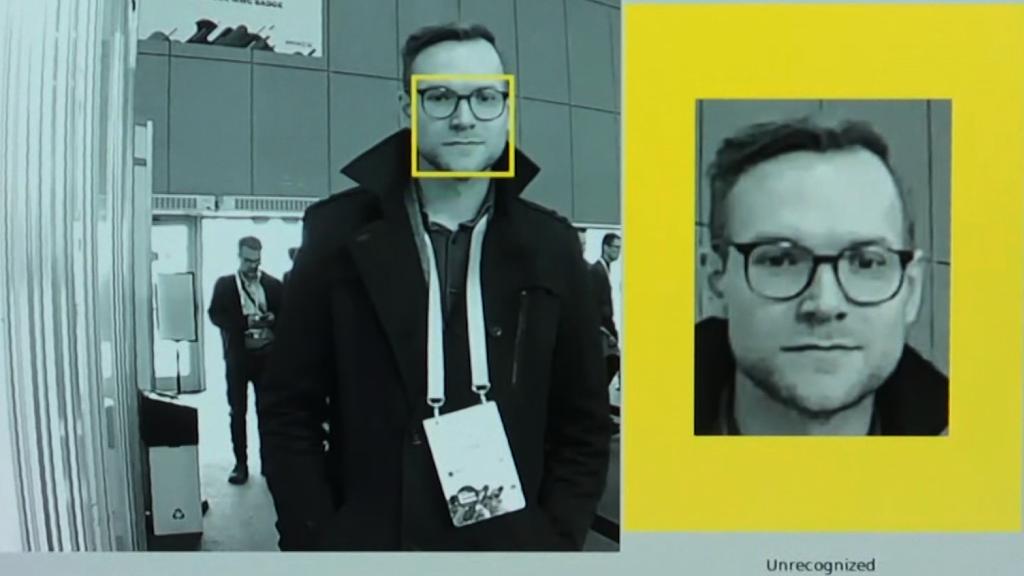
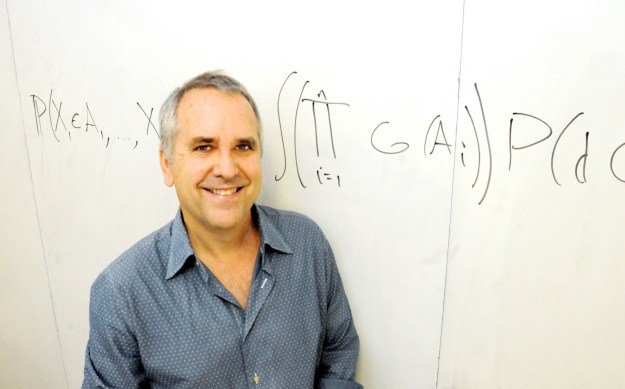







 TheIdea – The Innovation Agency