Apple received a $1 billion investment from Warren Buffet

Apple_buffett
Warren Buffett’s firm invested more than $1 billion in Apple earlier this year. It’s down more than $200 million to date.
Image: John Peterson/Ap

They call him the „Oracle of Omaha“ because he just seems to know how to pick stocks that go up.

Still, Warren Buffett (and his deputies) aren’t perfect.

Buffett’s company, Berkshire Hathaway, dropped about $1.1 billion on Apple stock in the first quarter of 2016, snapping up 9.8 million shares in the company, according to a company filing on Monday.

It’s Buffett’s first major bite of Apple, and so far, it’s a bit sour.

Apple’s stock has struggled so far this year after reporting its first sales decline in more than a decade. Buffett’s original investment is now worth about $888 million, a decline of more than $200 million in a matter of months.

Companies like Berkshire Hathaway are required by the Securities and Exchange Commission to disclose their investments at the end of each quarter, meaning that four times a year the public gets a look at how some of the biggest investments are positioned.

Buffett’s investments, through Berkshire Hathaway, are some of the most closely watched. His career has become legendary among investors. Buffett began selling chewing gum as a six-year-old to one of the richest self-made people in history.

His net worth is now estimated to be around $66 billion, according to Forbes.

Buffett’s popularity means that when he buys certain stocks — or more precisely, when it’s revealed he has purchased certain stocks — they tend to go up partially just due to his influence.

That appeared to happen on Monday morning, as Apple shares rose 2.2% to start the week.

It is, however, important to note that reports indicate Buffett himself did not make the investment. It was made by one of his deputies, who also have control of billions of dollars in investment capital.

Even without Buffett’s personal touch, the move came as a bit of a surprise. Buffett is known for avoiding tech companies, since they tend to be rather expensive by some classic investing metrics.

That position seems to be changing slightly. Buffett has also been associated with a bid for Yahoo, although only in terms of financing for another party.

http://mashable.com/2016/05/16/warren-buffett-apple-1-billion

Facebook and Google are destined to become Apple and Microsoft

People don’t always remember this, but when Microsoft first started, one of its biggest partners was Apple — manufacturer of the Apple II, the gold standard for early PCs.

That partnership, always tenuous, didn’t last.

Microsoft would go on to partner with IBM, paving the way to the era of Windows dominance on a wide range of cheap computers.

Apple would have its well-documented ups and downs before ultimately locking down the high-end computer market.

Today, Google announced Daydream, a new initiative designed to make virtual reality cheaper and more accessible to everybody, in partnership with vendors  Samsung, HTC, LG, Huawei, Alcatel, ZTE, Xiaomi and Asus.

And assuming that virtual reality really does take off and become the next great computing paradigm, like the tech industry thinks it will, it looks like history is going to repeat itself — with Google in the role of Microsoft and Facebook playing the part of Apple.

This is not necessarily a good thing.

Early days

The Apple II wasn’t the first computer, by any measure. But when it launched in 1977, the whole idea of personal computing was nothing more than a hobbyist’s pastime. In fact, the Apple I was a do-it-yourself computer kit.

The big breakthrough of the Apple II was taking all of the complicated techie stuff and placing it in one pre-built box so anybody could use it and build software for it. It was so successful and influential that it kicked off a product line that lasted through the Apple IIe in 1993.

Still, Microsoft saw opportunity. While the Apple II and, later, the Apple Macinstosh were popular, they were also prohibitively expensive for most people. With Apple the sole manufacturer of those computers, there was no reason to ever drop the price. So Microsoft performed an end-run and circumvented Apple entirely.

Apple II MacFlickr/gmahenderApple II

Microsoft sold Windows to any and every PC manufacturer, building a thriving ecosystem of computers from different companies that nonetheless offered compatible software. PC prices cratered, PC manufacturers blossomed, Microsoft’s stock went way up, and Apple’s future became far less certain.

It’s basically the same thing that Google would go on to do with Android itself, making the mobile operating system available for free to phone manufacturers. Now, you can get an Android phone that costs less than $100 or more than $700, your choice. Google now wants to repeat the trick, this time with virtual reality.

Virtual insanity

Just like Apple before it, Facebook is maintaining a tight grip over Oculus, and its flagship Oculus Rift VR headset, which it bought for $2 billion in 2014.

Because of that, it carries the same pluses and minuses as the Apple II and Macintosh before it. It’s engineered to Just Work, streamlining away all the things that made virtual reality never catch on before. But it’s also expensive, with $599 for the Oculus Rift headset alone, plus the fact that you’ll need a $1,200-ish PC just to use it.

Google’s vision for the future of virtual reality is a little broader. Its first-ever virtual reality play was the $20-ish Google Cardboard, literally a cardboard box that you can slot just about any smartphone into.

Much like Microsoft with Windows. Google has turned to partners to realize the dream of Daydream. It’s providing a blueprint for a virtual reality headset that anybody can build from, and a specification for building phones that are compatible with it.

Oculus Rift Oculus TouchOculus VROculus Rift

There are some limits — Daydream is only going to work with certain, pre-certified new phones — but the general idea is that it’s always going to be cheaper and more accessible to power virtual reality with a smartphone that you probably already own, than an expensive gaming PC that only true power-users care to maintain.

Facebook, for its part, hasn’t ignored this trend. The Samsung Gear VR, co-developed by Oculus, is a lower-end headset also powered by a phone. Still, it only works with Samsung’s own Galaxy phones, which are always on the higher end of the price spectrum.

Google Daydream is, on paper, more inclusive of lower-end and cheaper smartphones. It may never be as powerful as the Oculus Rift, but if it works, it’ll ignite an explosion of cheap VR from every manufacturer, making it a new standard, at the cost of some overall control.

Just like Windows.

Vision for the future

So you have Facebook’s Oculus at the Apple-esque high end of virtual reality, and Google Daydream at the low-to-middle that’s long been Microsoft’s forte in PCs.

That’s great, except not really. If the long decades of Apple’s history with Microsoft have taught us anything, it’s that consumers suffer the most when tech giants have turf wars. Remember the dark days of the great Windows/Mac divide?

Right now, virtual reality is such a young market that these companies don’t feel the need to compete.

Google Daydream headsetGoogleThe current design for the Google Daydream headset.

But you already can’t legitimately get Google’s YouTube app on Facebook’s Oculus Home virtual reality operating system. If virtual reality takes off, expect to see a lot more territorialism between Facebook’s growing ecosystem of apps and services, and Google’s established base.

Eventually, Apple and Microsoft came to terms. Microsoft builds some of the best iPhone apps around; Apple promotes Office on its iPad Pro tablet.

To get to that happier place, though, it took a strange journey, and a long maturation of the overall technology behind computing and the internet. We’re just at the beginning of even glimpsing the potential of virtual reality. And if Google and Facebook really follow history, we’re in for a long, tough, bitter fight.

http://www.businessinsider.de/facebook-vr-versus-google-vr-2016-5

12 Ways AI Will Disrupt Your C-Suite

McKinsey & Company estimates that as much as 45% of the tasks currently performed by people can be automated using existing technologies. If you haven’t made an effort to understand how artificial intelligence will affect your company, now is the time to start.

(Image: geralt via Pixabay)

(Image: geralt via Pixabay)

Artificial Intelligence (AI) is gaining momentum across industries with the help of companies such as IBM, Google, and Microsoft. McKinsey & Company estimates that as much as 45% of the tasks currently performed by people can be automated using current technologies — not only low-level rote tasks, but high-level knowledge work as well.

„Our point of view is that there is no function, no industry, almost no role that won’t potentially be affected by this set of technologies — not just every occupation, but every activity within each occupation,“ said Michael Chui, a partner with McKinsey Global Institute, in an interview. „It’s not just automating the labor that’s being done, but the work people do will have to change as well. Understanding how to take advantage of these technologies is going to be critically important.“

Even if your company isn’t actively experimenting with it, AI is finding its way in via online transactions and modern cyber-security systems, among other examples. As AI technologies and their use-cases start to take hold across industries, it’s time for the C-suite to pay attention.

If you haven’t made an effort to understand how AI will affect your company, now is the time to start.

The attitude of C-[suite] executives should be to add AI as a top strategic priority,“ said George Zarkadakis, digital lead at global professional services firm Willis Towers Watson and author of In Our Own Image: Savior or Destroyer? The History and Future of Artificial Intelligence, in an interview. „This time, technology will move faster than ever, and the laggards will pay a hefty price.“

Of course, the impact of AI is not limited to technological change and innovation. It also involves cultural evolution and, in some cases, revolution.

„Today’s leaders have time, as well as a responsibility, to understand what’s ahead of them before acting,“ said Deborah Westphal, CEO of strategic consulting and advisory firm Toffler Associates, in an interview. „It’s important to ask the hard questions, and then, using those insights, determine the best action for an organization.“

In short, AI is going to affect a lot of things in the near future, some of which have not yet been anticipated.

Organizational Intelligence Explodes 

Organizations are using AI to solve problems at scale. Michele Goetz, a principal analyst at Forrester Research, estimates that most organizations only take advantage of 10% to 30% of their data, with most of that still being structured, transactional information. 
'There's a difference in what AI technology is going to bring to the organization compared to what other technologies have brought,' said Goetz, in an interview. '[The C-suite executives] will have better visibility into market opportunities and [become aware of] threats faster. Because they can see their environment more holistically and clearly, they'll understand partners and customers better. It's [also] going to change the way employees work.'     
(Image: geralt via Pixabay)

Organizational Intelligence Explodes

Organizations are using AI to solve problems at scale. Michele Goetz, a principal analyst at Forrester Research, estimates that most organizations only take advantage of 10% to 30% of their data, with most of that still being structured, transactional information.

„There’s a difference in what AI technology is going to bring to the organization compared to what other technologies have brought,“ said Goetz, in an interview. „[The C-suite executives] will have better visibility into market opportunities and [become aware of] threats faster. Because they can see their environment more holistically and clearly, they’ll understand partners and customers better. It’s [also] going to change the way employees work.“

First-Mover Advantage 

The seeds of what some are calling The Exponential Age were planted long ago, manifesting themselves as exponential increases in processing power, storage capacity, bandwidth utilization, and -- as a result of all of that -- digital information. The same rule applies to machine learning.     
'True AI learns at an exponential rate, evolves and sometimes even rewrites better versions of itself,' said Walter O'Brien, founder and CEO of Scorpion Computer Services, in an interview. 'Because of this factor, the first company to market can also be the first to gather the most training data material -- for example, Google's Voice recognition on cell phones. The lessons learned can be encoded as heuristics or subtle guidelines which become the IP of the company -- for example, the definition of Google's relevance scores. This all creates a barrier to competition.'
Imagine cramming 250 years of human thinking into 90 minutes. Scorpion Computer Services' AI platform does that.
(Image: skeeze via Pixabay)

First-Mover Advantage

The seeds of what some are calling The Exponential Age were planted long ago, manifesting themselves as exponential increases in processing power, storage capacity, bandwidth utilization, and — as a result of all of that — digital information. The same rule applies to machine learning.

„True AI learns at an exponential rate, evolves and sometimes even rewrites better versions of itself,“ said Walter O’Brien, founder and CEO of Scorpion Computer Services, in an interview. „Because of this factor, the first company to market can also be the first to gather the most training data material — for example, Google’s Voice recognition on cell phones. The lessons learned can be encoded as heuristics or subtle guidelines which become the IP of the company — for example, the definition of Google’s relevance scores. This all creates a barrier to competition.“

Imagine cramming 250 years of human thinking into 90 minutes. Scorpion Computer Services‘ AI platform does that.

Employees May Lead The Charge 

AI is creeping into organizations in various ways, online and embedded in enterprise applications. The trend is accelerating, necessitating the C-suite's attention, since it will at some point noticeably affect corporate culture and business strategy. 
'The tipping point for the acceptance and widespread application of AI will not come from the C-suite, but from employees seeing the benefits of AI in their daily lives through applications like intelligent personal assistants and smart devices,' said Robert DeMaine, lead technology sector analyst at global advisory service company Ernst & Young (EY), in an interview. 'Like the [bring your own device] trend, employees will begin to use their own 'smart' personal productivity applications in the office, challenging the organization to reassess its policies. AI will change corporate culture from the bottom up, not the top down.' 
(Image: Broadmark via Pixabay)

Employees May Lead The Charge

AI is creeping into organizations in various ways, online and embedded in enterprise applications. The trend is accelerating, necessitating the C-suite’s attention, since it will at some point noticeably affect corporate culture and business strategy.

„The tipping point for the acceptance and widespread application of AI will not come from the C-suite, but from employees seeing the benefits of AI in their daily lives through applications like intelligent personal assistants and smart devices,“ said Robert DeMaine, lead technology sector analyst at global advisory service company Ernst & Young (EY), in an interview. „Like the [bring your own device] trend, employees will begin to use their own ’smart‘ personal productivity applications in the office, challenging the organization to reassess its policies. AI will change corporate culture from the bottom up, not the top down.“

Organizational Structures Will Shift 

Hierarchical organizational structures adversely affect business agility and the ability to drive value from data. Similarly, the lingering barriers between departments and business units limit a company's ability to derive additional types of value from data because data remains trapped in silos. 
'Projectized' organizations, which operate in a matrix environment, are better positioned to take full advantage of AI systems [than] vertical organizations are,' said Armen Kherlopian, VP of analytics and research at business process transformation company Genpact, in an interview. 'This is because these so-called projectized organizations can more readily gain access to resources and key business channels across the enterprise. Additionally, the levers associated with [business] value do not fit neatly into vertical groups.' 
Genpact estimates nearly $400 billion of digital investments were wasted globally in 2015 because of a failure to align expected results throughout organizations. 
(Image: geralt via Pixabay)

Organizational Structures Will Shift

Hierarchical organizational structures adversely affect business agility and the ability to drive value from data. Similarly, the lingering barriers between departments and business units limit a company’s ability to derive additional types of value from data because data remains trapped in silos.

„Projectized“ organizations, which operate in a matrix environment, are better positioned to take full advantage of AI systems [than] vertical organizations are,“ said Armen Kherlopian, VP of analytics and research at business process transformation company Genpact, in an interview. „This is because these so-called projectized organizations can more readily gain access to resources and key business channels across the enterprise. Additionally, the levers associated with [business] value do not fit neatly into vertical groups.“

Genpact estimates nearly $400 billion of digital investments were wasted globally in 2015 because of a failure to align expected results throughout organizations.

AI Requires Context 

AI systems need a lot of input to produce the appropriate output. Since each company, its culture, and its objectives are unique, AI systems need to be trained on those details in order to assist employees effectively, and to serve the needs of the organization accurately. Unlike traditional analytics systems, which can be built without regard to some of the softer organizational issues, AI requires organizations to be aware of the information they're bringing in and why they're bringing it in. 
'There is a clear trend towards machines becoming more intelligent so that humans can work more intelligently with them,' said George Zarkadakis. 'Although machines will increasingly gain more autonomy, they will do so within the human space and within human norms and ethics.' 
(Image: terg via Pixabay)

AI Requires Context

AI systems need a lot of input to produce the appropriate output. Since each company, its culture, and its objectives are unique, AI systems need to be trained on those details in order to assist employees effectively, and to serve the needs of the organization accurately. Unlike traditional analytics systems, which can be built without regard to some of the softer organizational issues, AI requires organizations to be aware of the information they’re bringing in and why they’re bringing it in.

„There is a clear trend towards machines becoming more intelligent so that humans can work more intelligently with them,“ said George Zarkadakis. „Although machines will increasingly gain more autonomy, they will do so within the human space and within human norms and ethics.“

Organizations Have To Adapt 

AI automates some tasks and assists with others, both displacing and complementing the work employees do. The C-suite needs to think about how the shifting division of labor can influence the way a company is managed and how it's organized.  
'AI is impacting many aspects of the business, from workflow management to advertising strategy. It can enable executives to make better, faster, and more accurate business decisions to streamline operations, allocate resources, understand market trends, and connect with customers,' said Robert DeMaine, lead technology sector analyst at EY. 'As a result, executives will need to be prepared to address a number of business issues, including reassessing internal operations, a changing workforce, sales and marketing strategies, and shifting investment priorities.'  
(Image: badalyanrazmik via Pixabay)

Organizations Have To Adapt

AI automates some tasks and assists with others, both displacing and complementing the work employees do. The C-suite needs to think about how the shifting division of labor can influence the way a company is managed and how it’s organized.

„AI is impacting many aspects of the business, from workflow management to advertising strategy. It can enable executives to make better, faster, and more accurate business decisions to streamline operations, allocate resources, understand market trends, and connect with customers,“ said Robert DeMaine, lead technology sector analyst at EY. „As a result, executives will need to be prepared to address a number of business issues, including reassessing internal operations, a changing workforce, sales and marketing strategies, and shifting investment priorities.“

It's Not All About Technology 

AI is gaining momentum as entrepreneurs, industry behemoths, and companies in-between bring AI products, tools, APIs, and services to market. However, as always, the successful application of technology isn't simply about technology. It's about technology, people, and processes.
'A company will be distinguished by how well it works using AI, and increasingly human-digital convergence, rather than by which specific AI technologies it chooses to deploy,' said Deborah Westphal, CEO of strategic consulting and advisory firm Toffler Associates. 'If a company only addresses the technological elements, without addressing the organizational people and process aspects, it may see a short-term gain, but will suffer in the longer term and likely be [sur]passed by those companies that addressed the internal questions first.'  
(Image: avtar via Pixabay)

It’s Not All About Technology

AI is gaining momentum as entrepreneurs, industry behemoths, and companies in-between bring AI products, tools, APIs, and services to market. However, as always, the successful application of technology isn’t simply about technology. It’s about technology, people, and processes.

„A company will be distinguished by how well it works using AI, and increasingly human-digital convergence, rather than by which specific AI technologies it chooses to deploy,“ said Deborah Westphal, CEO of strategic consulting and advisory firm Toffler Associates. „If a company only addresses the technological elements, without addressing the organizational people and process aspects, it may see a short-term gain, but will suffer in the longer term and likely be [sur]passed by those companies that addressed the internal questions first.“

Employee Empowerment Is Necessary 

Companies have worked toward democratizing the use of data analytics, enabling managers and employees to make better decisions faster. As the velocity of business continues to accelerate at scale with the help of AI, even more employee empowerment will be necessary.  
'AI and greater human-digital convergence magnify the strengths and weaknesses of an existing corporate culture, particularly with respect to how much autonomy is afforded to an organization's people,' said Deborah Westphal of Toffler Associates. 'Given a faster rate of change and near real-time environment in which to make decisions, an organization's people who don't have the necessary autonomy will find that its processes, no matter how good, will break down quickly and its ability to serve its customers [will be] compromised.'  
(Image: alan8197 via Pixabay)

Employee Empowerment Is Necessary

Companies have worked toward democratizing the use of data analytics, enabling managers and employees to make better decisions faster. As the velocity of business continues to accelerate at scale with the help of AI, even more employee empowerment will be necessary.

„AI and greater human-digital convergence magnify the strengths and weaknesses of an existing corporate culture, particularly with respect to how much autonomy is afforded to an organization’s people,“ said Deborah Westphal of Toffler Associates. „Given a faster rate of change and near real-time environment in which to make decisions, an organization’s people who don’t have the necessary autonomy will find that its processes, no matter how good, will break down quickly and its ability to serve its customers [will be] compromised.“

Learn By Doing  

Companies successfully using AI make a point of investing in people and talent. They also actively encourage innovation and experimentation so they can learn quickly from mistakes and capitalize on opportunities, hopefully faster than their competitors. 
'Hire talent that knows how to do this. Start experimenting with it and learn how to use it,' said Michael Chui, a partner with McKinsey Global Institute. 'I don't think this is something you plan for five years and then get started. It's something you learn by doing. When you see something working, the ability to scale is important.' 
(Image: janeb13 via Pixabay)

Learn By Doing

Companies successfully using AI make a point of investing in people and talent. They also actively encourage innovation and experimentation so they can learn quickly from mistakes and capitalize on opportunities, hopefully faster than their competitors.

„Hire talent that knows how to do this. Start experimenting with it and learn how to use it,“ said Michael Chui, a partner with McKinsey Global Institute. „I don’t think this is something you plan for five years and then get started. It’s something you learn by doing. When you see something working, the ability to scale is important.“

Expect The Unexpected 

AI should not be viewed as simply another technology acquisition, because different things are required to get it up and running successfully. Because the purpose of AI is to provide a superhuman analytic or problem-solving capacity, its training cannot be limited to executing mindlessly on a task.  
'You can't assume that how you train these systems is going to produce the results in the context you want them to be produced,' said Michele Goetz, a Forrester principal analyst. 'There has to be an emotional element [because] if you're introducing AI in your call center, you don't want to offend your customers.'
Because AI learns from itself, as well as from its human trainers, unexpected circumstances can arise which may be positive or negative.
(Image: geralt via Pixabay)

Expect The Unexpected

AI should not be viewed as simply another technology acquisition, because different things are required to get it up and running successfully. Because the purpose of AI is to provide a superhuman analytic or problem-solving capacity, its training cannot be limited to executing mindlessly on a task.

„You can’t assume that how you train these systems is going to produce the results in the context you want them to be produced,“ said Michele Goetz, a Forrester principal analyst. „There has to be an emotional element [because] if you’re introducing AI in your call center, you don’t want to offend your customers.“

Because AI learns from itself, as well as from its human trainers, unexpected circumstances can arise which may be positive or negative.

Pay Attention To Possibilities 

Data-driven companies, including IBM, Google, Microsoft, Amazon, and Netflix, are constantly pushing the envelope of what's possible in order to accelerate innovation, differentiate themselves, and, in some cases, cultivate communities that can extend the breadth and depth of AI techniques and use-cases. It's wise for C-suite executives to understand the kind of value AI can provide, and how that value might help the company achieve its strategic objectives.  
'Machine learning techniques are what make a company like Amazon truly successful. Being able to learn from historical data in order to recommend to a given shopper what [she] may buy next is a key differentiator. Yet, the real 'Deep Learning' techniques are still just emerging,' said Mike Matchett, senior analyst and consultant at storage analysis and consulting firm Taneja Group, in an interview. 'Google will not just win 'Go' championships, but will drive cars with [AI], optimize their data center with [AI], and in my opinion, will try to own the global optimization clearing house for the Internet of Things.'
(Image: como-esta via Pixabay)

Pay Attention To Possibilities

Data-driven companies, including IBM, Google, Microsoft, Amazon, and Netflix, are constantly pushing the envelope of what’s possible in order to accelerate innovation, differentiate themselves, and, in some cases, cultivate communities that can extend the breadth and depth of AI techniques and use-cases. It’s wise for C-suite executives to understand the kind of value AI can provide, and how that value might help the company achieve its strategic objectives.

„Machine learning techniques are what make a company like Amazon truly successful. Being able to learn from historical data in order to recommend to a given shopper what [she] may buy next is a key differentiator. Yet, the real ‚Deep Learning‘ techniques are still just emerging,“ said Mike Matchett, senior analyst and consultant at storage analysis and consulting firm Taneja Group, in an interview. „Google will not just win ‚Go‘ championships, but will drive cars with [AI], optimize their data center with [AI], and in my opinion, will try to own the global optimization clearing house for the Internet of Things.“

Change Is At Hand 

The composition of the C-suite is changing to take better advantage of data. Data-savvy executives are replacing their traditional counterparts, new roles are being created, and leaders generally are finding themselves under pressure to understand the value and impact of data, analytics, and machine learning.  
'As the C-suite becomes increasingly filled with analytical minds and more data scientists are hired, a cultural shift naturally takes place. Some of the new, fast-growing executive roles [include] chief data scientist, chief marketing technology officer, [and] chief digital officer. All are aligned with the growing demand and anticipation for AI,' said David O'Flanagan, CEO and cofounder of cloud platform provider Boxever.
At many levels, non-traditional candidates are displacing traditional roles. For example, the Society of Actuarial Professionals is actively promoting the fact that although most actuaries work in the insurance industry, there are non-traditional employment opportunities, including data analytics and marketing. O'Flanagan expects more members of the workforce to have backgrounds in fields of study such as econometrics.
(Image: geralt via Pixabay)

Change Is At Hand

The composition of the C-suite is changing to take better advantage of data. Data-savvy executives are replacing their traditional counterparts, new roles are being created, and leaders generally are finding themselves under pressure to understand the value and impact of data, analytics, and machine learning.

„As the C-suite becomes increasingly filled with analytical minds and more data scientists are hired, a cultural shift naturally takes place. Some of the new, fast-growing executive roles [include] chief data scientist, chief marketing technology officer, [and] chief digital officer. All are aligned with the growing demand and anticipation for AI,“ said David O’Flanagan, CEO and cofounder of cloud platform provider Boxever.

At many levels, non-traditional candidates are displacing traditional roles. For example, the Society of Actuarial Professionals is actively promoting the fact that although most actuaries work in the insurance industry, there are non-traditional employment opportunities, including data analytics and marketing. O’Flanagan expects more members of the workforce to have backgrounds in fields of study such as econometrics.

http://www.informationweek.com/big-data/12-ways-ai-will-disrupt-your-c–suite/d/d-id/1325557

Magna may be helping Apple to build the iCAR /iKARR

apple carSamantha Lee/Business Insider
Apple $90.52
AAPL +/-+0.18 %+0.20

Disclaimer

If Apple wants to bring a car to production, it’ll likely need a good bit of help to get it there. Right now, it’s looking like some of that help will likely come from the Canada-based automotive company Magna International.

Though there aren’t yet concrete facts regarding when, how, and even if an Apple car will exist, a ton of rumors have already surfacedincluding one highly-probable tip about how Apple probably won’t be building this supposed car itself.

That’s where Magna would come in.

Magna is a massive company.

Magna is a massive company.

Markus Leodolter/AP Images

Magna first began business in the early 1950’s. By the end of the decade, they were contracted out by General Motors to make small interior parts.

By the early 1960’s, Magna had two fully-operational plants running and its shares were being publicly traded on the Toronto Stock Exchange.

Now, Magna is the original equipment manufacturer of auto parts for a ton of different car brands and it also does full assembly for a handful of cars.

Though it has thrown the idea around of operating its own automotive brand, Magna’s primary involvement in the automotive world is primarily centered around part supplying.

Magna Steyr, Magna’s „contract manufacturing“ arm, currently assembles the Mercedes-Benz G-Class and the Mini Countryman.

Magna Steyr, Magna's "contract manufacturing" arm, currently assembles the Mercedes-Benz G-Class and the Mini Countryman.

Magna

Magna Steyr has plants across Europe and Asia.

Magna Steyr has plants across Europe and Asia.

Magna

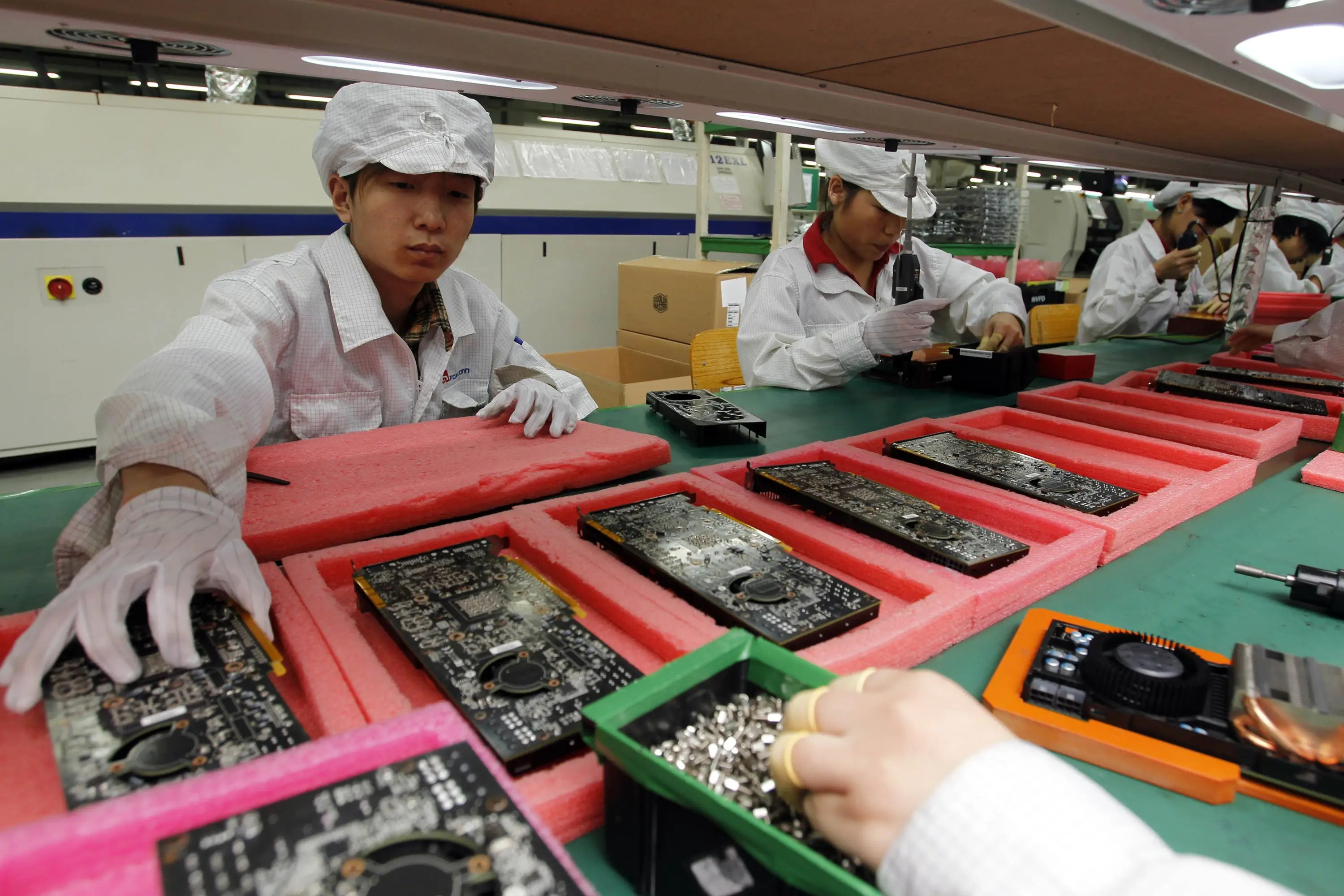
Similar to what Foxconn is to Apple currently, Magna would likely produce parts and assemble vehicles for Apple, if an Apple car was to hit production.

Similar to what Foxconn is to Apple currently, Magna would likely produce parts and assemble vehicles for Apple, if an Apple car was to hit production.

Kin Cheung/AP

The rumor is that the Apple car will be built at one of Magna’s Austrian facilities and that there’s currently research being done at a secret facility in Berlin.

The rumor is that the Apple car will be built at one of Magna's Austrian facilities and that there's currently research being done at a secret facility in Berlin.

Markus Leodolter/AP Images

[Source: Clean Technica]

For now, though, it’s still not certain the company is actually working with Apple.

For now, though, it's still not certain the company is actually working with Apple.

Magna

Apple and Magna did not immediately respond  to a request for comment.

Where TOP entrepreneurs Bill Gates and Elon Musk started as interns

Bill GatesYouTube/Gates NotesBill Gates

We take a look at 20 successful entrepreneurs — and where they worked as lowly interns (sometimes unpaid) before making it big.


1. Katia Beauchamp

The cofounder of cosmetics subscription service BirchBox interned at NBC Universal as a summer associate for digital distribution in 2010 — the same year she started her company while an MBA student at Harvard Business School.

2. Kayvon Beykpour

The CEO and co-founder of Periscope, the live video-streaming app, completed two internships before starting college in 2007. He was a summer intern at a media agency and then spent a year interning at software company Autodesk before getting a degree in computer science from Stanford University.

3. Neil Blumenthal

The Warby Parker co-founder and co-CEO was an intern for consulting firm McKinsey & Company in the summer of 2009. He started the eyewear company in 2010 while pursuing an MBA at the University of Pennsylvania’s Wharton School of Business.

REUTERS/Shannon Stapleton

4. Sean Combs

Better known as Puff Daddy, P.Diddy, or just Diddy, the hip-hop artist interned at Uptown Records in New York after dropping out of Howard University. He was eventually fired from the record label and started his own successful venture in 1993, Bad Boy Records.

Chip Somodevilla / Getty

5. Bill Gates

The billionaire and Microsoft founder had an interest in more than just technology from early on. He was a congressional page for his state legislature in Seattle and later a congressional page for the House of Representatives in 1973, at the age of 18.

Diane Bondareff/Invision for Staples/AP

6. Lori Greiner

The Shark Tank and QVC host started out as a journalist before jumping into entrepreneurship. She interned for The Chicago Tribune while still an undergraduate student at Loyola University Chicago.

Taylor Hill/Getty Images

7. Elizabeth Holmes

The controversial founder of Theranos interned at the Genome Institute in Singapore doing research on SARS the summer after her first year at Stanford University. Before completing her sophomore year, she dropped out to work full time on her health-tech startup.

Steve Jennings/Getty

8. Ryan Hoover

The founder of Product Hunt, a site that curates new products, started as a social-media marketing intern at e-gaming site InstantAction while still a student at Oregon University.

He rose to marketing analyst and product manager in 2010 before moving to mobile game startup PlayHaven and later starting his own venture in 2013.

Justin Sullivan / Getty

9. Steve Jobs

The Apple founder had a voracious hunger for knowledge since childhood. At 12, he cold-called Bill Hewlett asking for frequency counterparts. The Hewlett-Packard founder agreed to give him the parts and offered Jobs a summer internship at HP as well.

Paul Morigi/Getty Images

„Shark Tank“ investor Daymond John speaks on stage at the Thurgood Marshall College Fund 27th Annual Awards Gala at the Washington Hilton on November 16, 2015 in Washington, DC.

10. Daymond John

The ‚Shark Tank‘ host and founder of the hip-hop inspired clothing brand FUBU was an apprentice electrician working in the Bronx at 10 years old.

11. Betsey Johnson

The 73-year-old fashion designer and founder of her namesake fashion label started her career working for Mademoiselle magazine the summer after graduating from Syracuse University in 1964.

Sarah Jacobs

12. Payal Kadakia

In 2002, she started her first career in finance while still an undergraduate at MIT with a summer internship at investment bank J.P. Morgan. She interned at consulting company Monitor Group (now Monitor Deloitte) the following year. It wasn’t until 2011 that Kadakia founded her membership program for fitness classes, originally called Classtivity — now ClassPass.

13. Andy Katz-Mayfield

The co-founder of shaving company Harry’s started his career as a college intern at management consulting firm Bain & Company — where he met co-founder Jeff Raider. He later worked in marketing and business operations for the National Basketball Association. The duo launched Harry’s in 2013.

Getty / Steve Jennings

14. Max Levchin

The serial entrepreneur who co-founded PayPal, social app developer Slide, and online lending startup Affirm started his career in the Soviet Union. At 13, the Kiev native worked at a local college computer lab as a programmer in exchange for access to the computers after hours.

15. Shan-Lyn Ma

The co-founder of online wedding registry Zola and former senior director at Gilt Groupe was a marketing intern at Yahoo while pursuing her MBA degree at Stanford University. The Singapore-born entrepreneur also worked at an education startup while still an undergraduate at the University of New South Wales in Australia.

16. Kavin Mittal

Prior to becoming an entrepreneur, the founder of Delhi-based messaging app Hike Messenger held several internships while completing a master’s in electrical engineering at Imperial College London.

He was an associate vehicle engineer intern for McLaren Racing, an associate technology manager at Google, and a summer analyst at Goldman Sachs.

AP Photo/Jack Plunkett

17. Elon Musk

The billionaire entrepreneur and Tesla Motors founder held several internships before making it in the big leagues. He was a summer intern at the Bank of Nova Scotia, while still at Queens University in Ontario; an intern at Microsoft Canada; and a video game programmer for Rocket Science Games. Musk later moved to California to start a PhD in physics and interned at Pinnacle Research, an energy storage startup.

Lucas Jackson/Reuters Pictures

Snapchat CEO Evan Spiegel.

18. Evan Spiegel

The Snapchat founder and CEO worked as an unpaid intern for Red Bull after high school. Later, while completing a degree in product design at Stanford University, he interned at biotech company Abraxis BioScience and worked at software company Intuit.

Reuters/Philippe Wojazer

19. Kevin Systrom

The Instagram co-founder and CEO worked as a technical and business intern at podcasting platform startup Odeo — created by Evan Williams and Noah Glass, who later cofounded Twitter — where he created the Odeo Widget and „otherwise caused trouble.“ He was still an undergraduate at Stanford University at the time.

Gary Vaynerchuk

20. Gary Vaynerchuk

The VaynerMedia founder and #AskGaryVee Show and DailyVee host started out his career bagging ice for $2 an hour in the basement of his family store, Shopper’s Discount Liquors.

He later transformed it into the successful retailer Wine Library before launching his social-media consulting agency and YouTube series.

http://www.businessinsider.com/where-bill-gates-elon-musk-and-18-more-successful-entrepreneurs-started-as-interns-2016-5

Apple Watch: Life’s too short for slow computers

Don’t buy a watch that makes you wait

Here’s the problem with the Apple Watch: it’s slow.

It was slow when it was first announced, it was slow when it came out, and it stayed slow when Watch OS 2.0 arrived. When I reviewed it last year, the slowness was so immediately annoying that I got on the phone with Apple to double check their performance expectations before making „it’s kind of slow“ the opening of the review.

I was thinking about this in the context of two stories today: Intel abandoning their smartphone chips and Apple’s Tim Cook saying that eventually we’ll look back on the Watch as a huge hit like the iPod and iPhone.

Intel built its entire business on our unquenchable thirst for power in the PC era — the company rode Moore’s Law to higher and higher levels of performance, and when the mobile revolution arrived and the industry and consumers reprioritized battery life and heat, Intel began faltering. Computers got fast enough — Apple’s new MacBook has a brand-new Core M processor in it, but it’s not fast. It’s just capable of doing all the things you might want it to do. And it’s great. Everyone I know who has one loves it.

The same thing is true in a different way for smartphones and tablets: iPad sales have slowed because most of them are fast enough to run a bunch of video streaming services and the browser, and that’s what people use them for. Smartphones are ridiculously powerful; so much so that their upgrade cycle dramatically outpaces the ability of developers to actually make use of their features. I still haven’t seen a good use of 3D Touch on the iPhone 6S; I suspect we will never see anyone make use of LG’s Friends modules for the G5. We are surrounded by powerful, capable computers, and we use so little of their maximum capability. The only thing that even threatens to drive a major hardware cycle in the near future is VR, and we’ll see how long that lasts.

But then I look at the Apple Watch and it’s so obviously underpowered. We can sit around and argue about whether speeds and feeds matter, but the grand ambition of the Apple Watch is to be a full-fledged computer on your wrist, and right now it’s a very slow computer. If Apple believes the Watch is indeed destined to become that computer, it needs to radically increase the raw power of the Watch’s processor, while maintaining its just-almost-acceptable battery life. And it needs to do that while all of the other computers around us keep getting faster themselves. It’s a hard road, but Apple is obviously uniquely suited to invest in ambitions that grand, with billions in the bank, a top-notch chip design unit, and the ability to focus on the long-term.

The other choice is to pare the Watch down, to reduce its ambitions, and make it less of a computer and more of a clever extension of your phone. Most of the people I see with smartwatches use them as a convenient way to get notifications and perhaps some health tracking, not for anything else. (And health tracking is pretty specialized; Fitbit seems to be doing just fine serving a devoted customer base.)

If you ask me, I think it’s better to slowly stack new capabilities on top of more powerful hardware than to push out a million ideas that work too slowly in practice. And it seems I’m not alone in this — here’s John Gruber, a week ago:

My hope is that Apple does more than just make the second generation watch faster/thinner/longer-lasting, and takes a step back and reconsiders some of the fundamental aspects to the conceptual design.

Are smartwatches computers, or not? And if they’re computers, how fast do they have to be to be useful computers? The most interesting thing about the Apple Watch is how sharply it throws those questions into relief.

http://www.theverge.com/2016/5/3/11578082/lifes-too-short-for-slow-computers

Intel’s new smartphone strategy is to quit

Atom chip cancellation puts Intel’s mobile processor plans on ice

Late on Friday night, Intel snuck out the news that it’s bailing on the smartphone market. Despite being the world’s best known processor maker, Intel was only a bit player in the mobile space dominated by Qualcomm, Apple, and Samsung, and it finally chose to cut its losses and cancel its next planned chip, Broxton. This followed downbeat quarterly earnings, 12,000 job cuts, and a major restructuring at a company that’s had a very busy April. Intel is still one of the giants of the global tech industry, but it’s no longer as healthy and sprightly as it used to be.

The bane of Intel’s existence for the past decade or so has been the transition to mobile computing. It wasn’t supposed to be that way. Having secured a commanding lead as the premier provider of desktop PC processors, Intel had a clear-eyed strategy for extending its dominance into the mobile realm.

A series of ignominious failures has left Intel reeling

With the help of Microsoft in 2006, Intel inaugurated the category of Ultra-Mobile PCs (UMPCs), which were the stylus- and touch-friendly precursors to today’s ultra-versatile tablets. They combined low-voltage Celeron and Pentium M chips with Windows Vista, and like everything else touched by Vista, they flopped. Unattainable pricing and inadequate battery life consigned the UMPC to the status of a historical footnote. The same fate befell Intel’s Mobile Internet Device (MID) initiative, which saw the chipmaker pushing and incentivizing its hardware partners to build mini internet tablets like the Nokia N810. Pervasive problems with affordability, battery life, clunky design, and ill-suited software prevented MIDs from ever becoming a mass-market success.

On the software front, Intel recognized the need for a tailored operating system to make the most of mobile PCs and sought to develop its own Linux variant titled Moblin. Moblin never convinced anyone outside of Intel, and was eventually merged with Nokia’s Maemo to produce MeeGo, which in turn merged with Samsung’s Bada and is now known as Tizen. Well, it’s only barely known, even by owners of its most successful product, the Gear S2 smartwatch. The series of post-Moblin software mergers has been merely the consolidation of repeated mobile failures.

Intel’s ventures into mobile hardware and software development show that even a great idea is only as good as its execution. The MIDs and UMPCs of yesteryear were aimed at the same usage scenarios as the phablets and pro tablets of today — but they were compromised and premature, and therefore rejected by the market.

This has cost Intel dearly, with the company lavishing billions on developing suitable processors and modems to put into its various mobile undertakings. The multibillion-dollar mobile costs have spiraled in recent years — a loss of $3.1 billion in 2013 was followed by a loss of $4.3 billion in 2014 — which eventually forced Intel to combine its mobile and PC earnings reports in order to disguise its unproductive spending.

The tragedy of Intel’s mobile failure is that the company foresaw all the threats to its business and acted to preempt them. It just didn’t do so very well. That being said, Intel’s the victim of its bad decision making almost as much as its poor execution.

Favoring WiMAX over LTE was a historically bad decision

One of the fateful choices that Intel made around 2009 was to commit itself to WiMAX as the 4G standard of the future. Qualcomm went the other way, prioritizing LTE instead, and now the latter has a significant lead in designing and integrating LTE modems, while the former is scrambling and struggling to catch up. The total defeat of WiMAX almost wiped out Sprint, its biggest US purveyor and advocate, and it put Intel on the backfoot in adopting the true 4G standard of the future, which turned out to be LTE. At this point, even if Intel were to double its already vast spending, bridging the gap of years of research, development, and experience would be practically impossible.

In spite of its unhappy mobile history, Intel persisted in trying to compete because it knew how central mobile devices were becoming to our lives. Last year, its Atom processors even looked like they had a shot at denting Qualcomm’s market dominance, thanks in large part to the Qualcomm Snapdragon 810 chip’s power and heat issues. There was a small opening, but this year’s Snapdragon 820 is an absolute beast that conclusively shuts the door on any further Intel incursions.

Read more: Intel sees itself as a ‘communications and connectivity company’

The top three smartphone vendors — Apple, Samsung, and Huawei — each produce their own processors. At Mobile World Congress this year, Xiaomi, another large-scale smartphone maker, co-branded its launch event with Qualcomm. And global names like LG, HTC, and Sony basically only shop at the Snapdragon aisle for their flagship phones. Intel’s most loyal hardware partner is Asus, which makes a habit of announcing interesting new devices at Computex in June and not shipping them until the end of the year. The most feted Intel Atom-powered smartphone to date is probably the ZenFone 2, a distinction that speaks for itself.

Without any unique advantages to its Atom CPU line and no captive market like it has on the desktop, Intel is right to bow out of the smartphone processor race. It’s a merciless competition that has already ousted big names like Nvidia and Texas Instruments, and Intel will be better off figuring out different parts of the mobile computing world where it can participate profitably. CEO Brian Krzanich put „the cloud and data center“ first atop a list of Intel’s new priorities in a recent blog post, reiterating the idea that the company will transition to facilitating connectivity as its main area of competence. Discrete Intel LTE modems will still be around, and the company seems to think it can recapture its mobile competitiveness by being a leader in the adoption of the incoming 5G wireless standards. To that end, Intel doesn’t intend to kill off Atom entirely, and still plans to offer a chip for tablets later this year, codenamed Apollo Lake.

Even Moore’s Law is hitting a wall

To its credit, Intel has always operated under the assumption that mobile computing will eventually supplant the desktop and consign the old PC boxes to niche-use status. We email on our phones, ideate on our phablets, and write and create on our tablets — as Steven Sinofsky, former boss of Windows, recently articulated with respect to the iPad Pro. The primary form of personal computer is changing, which is why ultrabooks and hybrid laptops are so prominent in Intel’s marketing and development efforts. The low-power Core M, Intel told me last year, was the most important variant of the Skylake processor family, and the company’s ongoing mission is to move with its users to more portable form factors.

Intel remains a diverse and strongly profitable company. There will always be PC gamers and video producers looking for the latest and fastest CPU. But while the core business that’s kept Intel going for so many years isn’t disappearing, its importance and primacy are being steadily eroded by the insatiable growth of mobile computing. Even Moore’s Law, the Intel co-founder’s prediction about the constant growth of processing power in chips, is hitting a wall now. Intel’s desktop CPUs are being pushed further back on the roadmap while some of its mobile ones are being deleted entirely.

It’s an uncertain future for what used to be one of the most assured companies in tech.

http://www.theverge.com/2016/5/3/11576216/intel-atom-smartphone-quit

Ford patent spoofs bigger engine sound for fuel savings

It appears there’s a new wrinkle in the downsizing and turbocharging trend that’s putting a big dent in real-world fuel savings: Drivers aren’t shifting early enough. That shouldn’t be too surprising if you’ve driven something like Ford’s 1-liter EcoBoost Fiesta. With an offbeat 3-cylinder growl and the surge of turbo boost, that engine begs to be revved. Ford’s solution, according to a recent patent, is to fool these drivers by piping in artificial engine noise to simulate an engine with more cylinders.

Ford found that many drivers „shift by ear“ rather than watching the tachometer. And with these downsized, slower-revving engines that are becoming the industry norm, the auditory clues about shift points get lost on the drivers. Ford claims that this cancels out the advantages of the down-sized turbo engines because they’re not being driven within the envelope of greatest efficiency.

The solution is to train the driver to shift earlier by piping in a low-amplitude noise that occurs between cylinder firings, which increases the cylinder count to the driver’s ear. Ford’s patent allows the virtual cylinder count to be doubled or even tripled depending on how many artificial noises are superimposed between cylinder firings.

The company imagines this will be most beneficial on turbocharged 2- and 3-cylinder engines, and since manual transmissions aren’t terribly common in American mass-market cars, this seems aimed at two groups: Europeans (who still buy small cars with manual transmissions in large numbers) and sports car buyers. Whether you like Ford’s proposed system or not, at least it’s less-invasive fuel-saving solution than cutting power or artificially limiting RPM.


http://www.autoblog.com/2016/05/09/ford-patent-spoofs-bigger-engine-sound-for-fuel-savings/

Adam Cheyer, you just made Siri 10 times better – VIV Technologies

In the Interview with Adam Cheyer from Late 2013 TheIdea Innovation Agency asked Adam Cheyer, what’s next, we said, Viv, coming up soon. https://dieidee.eu/2013/10/30/siri-and-google-now-what-would-have-happened-to-siri-if-steve-jobs-was-still-alive/

See for yourself, how Viv is the future of Chatbots and personal digital Assistants,
Disrupt-Conference TechCrunch Siri-CEO Dag Kittlaus „Viv“ Technologies

How does it work?
It’s patented technology is called „dynamic program generation“.  The Bot does programming real-time, in the background. And it does integrate interfaces to other data sources and bots too.

The full video goes here: