Archiv der Kategorie: Web Development

Preisdiskrimierung, Big Data und objektiv richtige Preise einer Ware aufgrund persönlicher Werteinschätzung

Amazon Echo schlägt Wellen

Netzwerklautsprecher mit integriertem Personal Assistant

Original: http://www.heise.de/newsticker/meldung/Amazon-Echo-Netzwerklautsprecher-mit-integriertem-Personal-Assistant-2443970.html?hg=1&hgi=3&hgf=false

Bild: Amazon.com


Amazon hat überraschend „Echo“ vorgestellt, einen Netzwerklautsprecher, der nicht nur Musik abspielt, sondern permanent lauscht und auf Zuruf Fragen beantwortet, die Todo-Liste ergänzt und mehr.

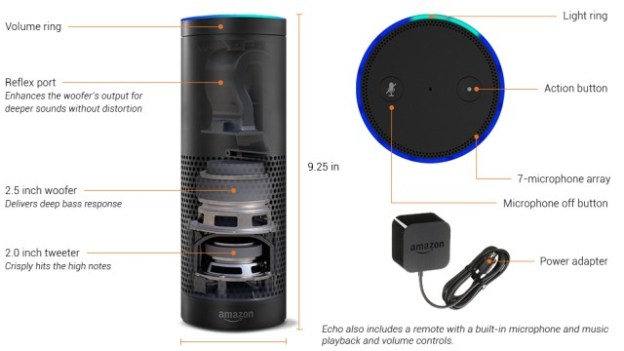
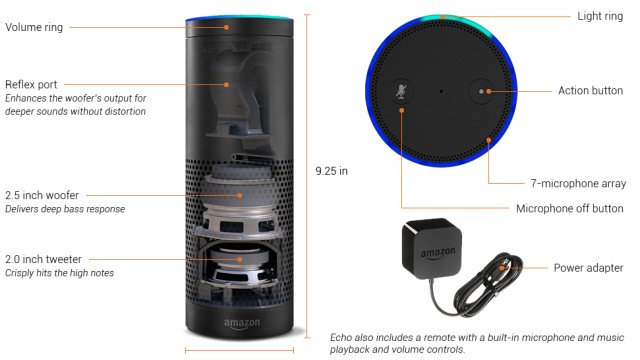
Die knapp 24 cm hohe schwarze Röhre mit einem Durchmesser von 8,3 cm „Amazon Echo“ ist einerseits ein über Bluetooth und WLAN verbundener Netzwerklautsprecher, der sich von Smartphone oder Tablet mit Musik von iTunes, Pandora und Spotify beschicken lässt. Andererseits wartet der mit Fernfeldmikrofonen und Spracherkennung ausgerüstete Echo auf Sprachkommandos. Dabei betont Amazon in dem Werbespot, dass man Echo nicht anbrüllen muss, sondern „überall im Raum gehört“ wird. Wie Apples „Siri“ und Googles „Ok, Google“ aktiviert ein offenbar wählbares Keyword – im Video „Alexa“ – den integrierten Personal Assistant. Alternativ soll man den Echo offenbar mit der dem Amazon Fire TV beiliegenden Voice Remote mit Mikrofontaste steuern können.
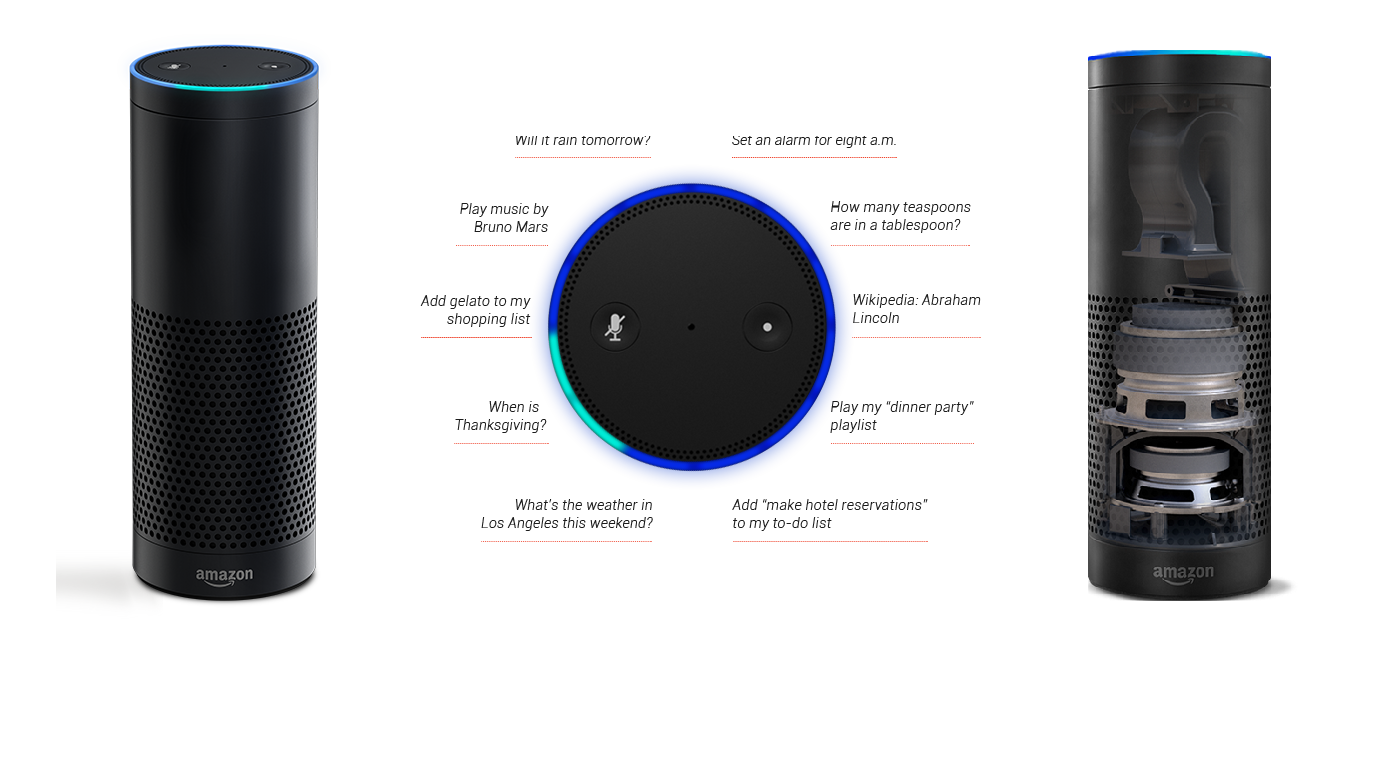
Laut Amazon gibt Echo Auskunft über das Wetter, buchstabiert Wörter, stellt den Wecker, spielt die Lieblingsmusik, rezitiert Wikipedia-Einträge, fügt der Einkaufsliste Einträge hinzu und so weiter. Das „Hirn“ von Echo sind die Amazon Web Services, über die ständig neue Kommandos ergänzt werden sollen.

Hochwertige Bass-Lautsprecher (2,5 Zoll) mit Bassreflex und Hochtöner (2 Zoll) versprechen klaren und verzerrungsfreien omnidirektionalen Klang. Über die Sprachsteuerung sollen sich Amazon (Prime) Music, iHeartRadio und TuneIn steuern lassen, während Musik von Spotify, iTunes und Pandora nur über Bluetooth von Mobilgeräten aus übertragen werden.

Amazon Echo gibt es vorerst nur in den USA zum Preis von 199 US-Dollar; Prime-Kunden müssen nur 99 US-Dollar bezahlen. Noch kann aber nicht jeder Echo kaufen. Interessenten müssen sich bewerben und bekommen eine Mail von Amazon, falls das Los auf sie fällt.

http://www.youtube.com/watch?v=KkOCeAtKHIc

Fans von „Star Trek: The Next Generation“ („Computer … !?) werden ihre Freude an dem Gerät haben, wenn Echo das verspricht, was der Werbeclip von Amazon suggeriert. Auf Privatsphäre bedachte Naturen werden hingegen einen großen Bogen um den Lautsprecher machen und keinesfalls eine Amazon-Wanze im Wohnzimmer dulden – Microsoft kann ein Lied davon singen, man erinnere sich an das Horch und Guck der Xbox One. Ob es da hilft, dass Echo einen Schalter zum Deaktivieren des Mikrofon-Arrays besitzt, ist fraglich.

Doch was bezweckt Amazon mit dem Echo? Es wird ja kaum darum gehen, Eric Schmidt bloß zu beweisen, dass Amazon tatsächlich Googles größter Konkurrent ist. Sollte es wie beim Kindle (Fire) oder Fire TV (Stick) vor allem darum gehen, Amazons Inhalte besser an die Kunden zu bringen – also Bücher, Videos und Musik? Wohl kaum. Im Endeffekt dürfte es darum gehen, den Nutzern den perfekten Shopping-Assistenten an die Seite zu stellen, der die ausgesprochenen Wünsche direkt in dem Amazon-Einkaufskorb platziert …

Das liegt wohl an den grundverschiedenen Voraussetzungen. Star Trek
spielt aus menschlicher Sicht in einer Zukunft, in der die Existenz
des Individuums (zumindest der Spezies Mensch) ganz
selbstverständlich durch die allgemeinverfügbare Technik gesichert
ist. An der Stelle läßt sich die Technik wirklich nur noch gemäß der
Überzeugung der Spackeria (die sind seit NSA auch recht still
geworden) im Rahmen von Peinlichkeit gegen andere einsetzen. Heute
geht es dagegen darum, das Individuum bis an die Grenze der
(ökonomischen) Existenzfähigkeit auszupressen – und manchmal auch
darüber hinaus! (Source: http://www.heise.de/newsticker/foren/S-Re-Reaktion-der-Science-Fiction-Fans/forum-287951/msg-26049853/read/)

Die Zeit ergänzt: http://www.zeit.de/wirtschaft/2014-10/absolute-preisdiskriminierung

Jeder hat seinen Preis

Unendlich viele Preise für ein Produkt: Einer der größten kapitalistischen Träume ist gerade dabei, in Erfüllung zu gehen. Big Data macht es möglich

Konsum

Supermarkt  |  © dpa

Die Zeichen dafür, dass sich das kapitalistische Nirwana nähert, mehren sich. Florian Stahl sieht sie überall. Beim Einkauf im Netz, in den USA, in Deutschland. Beispielsweise kürzlich in New York, als sich der Professor für quantitatives Marketing an der Universität Mannheim bei Booking ausloggte, die Cookies löschte, dann seine Hotelanfrage noch einmal startete, diesmal anonym. Da war das gleiche Zimmer plötzlich günstiger. Weil der Algorithmus ihn nicht mehr identifizieren konnte, schlug er ihm einen anderen Preis vor. „Die Preismechanismen sind dabei, sich zu ändern“, sagt Stahl, „und zwar fundamental“.

Im Prenzlauer Berg, im Kaiser’s Supermarkt in der Winsstraße, wo sich Berlin früher zum Flirten traf, drängen sich die Kunden vor einem roten Ständer mit einem Bildschirm. Sie halten eine Karte vor den mannshohen Apparat. Weißes Licht streichelt ihre Hände, ihre Extrakarte wird gescannt, ein leises Summen begleitet das Erscheinen des Bons, darauf ihre Preisabschläge. Dann bin ich dran.

Ich checke ein in die Beta-Phase der dritten industriellen Revolution. Bald soll mich der Kaiser’s Algorithmus komplett verstehen, meine Wünsche vorhersagen können, noch aber kennt er mich nicht. Er hat bisher keinen einzigen Kassenzettel von mir gescannt, nur meine neue Extrakarte. Es ist ein Riesenerfolg in der Kundenkarten-Welt: Ein Drittel der Stammkäufer wurde in den ersten zwei Monaten seit der Einführung Nutzer. Mein Ausdruck zeigt „Ihre persönlichen Angebote heute“: Je 20 Prozent Abschlag für Harry Brot (noch nie gehört) und Bärenmarke Alpenfrische Vollmilch (dachte, die machen nur Kaffeesahne); für Barilla Nudeln gibt es 30 Prozent, für Ritter Sport und Lätta Margarine sogar 40.

Jeder zahlt einen anderen Preis

Hannes Grassegger ist Ökonom und schreibt unter anderem für "Brand Eins", DIE ZEIT oder die "NZZ". Er hat einen Essay über den Umgang mit dem neuen Datenkapitalismus veröffentlicht: "Das Kapital bin Ich"  |  © Kein & Aber

Hannes Grassegger ist Ökonom und schreibt unter anderem für „Brand Eins“, DIE ZEIT oder die „NZZ“. Er hat einen Essay über den Umgang mit dem neuen Datenkapitalismus veröffentlicht: „Das Kapital bin Ich“ | © Kein & Aber  |  © Kein & Aber

Vor gut hundert Jahren beobachtete Arthur Cecile Pigou, Professor in Cambridge, ein seltsames Phänomen: Er sah ins Herz des Kapitalismus und es war leer. Der Preis, um den sich die Marktwirtschaft als System der freien Preise dreht, existierte in Wahrheit gar nicht. In The Economics of Welfare von 1920 beschrieb Pigou seine Beobachtung im Kapitel Das spezielle Problem der Eisenbahntarife: Für eine identische Leistung, die gleiche Bahnfahrt von A nach B, zahlten Menschen freiwillig verschiedene Tarife, je nach Klasse. Pigou erkannte, was für die Ökonomie heute so elementar ist wie die Unschärferelation für die Physik: Es gibt keinen objektiv richtigen Preis einer Ware. Es gibt einzig persönliche Werteinschätzungen.

„Preisdiskriminierung“ nannte Pigou die Unterscheidung von Menschen nach den Preisen, die sie für das gleiche Produkt zu zahlen bereit sind. Für Händler ist sie eine wunderbare Möglichkeit, mehr für die gleiche Leistung zu kassieren. In der Vollendung der Preisdiskriminierung, der „Preisdiskriminierung ersten Grades“ könnten Anbieter, so Pigou, jedem einzelnen Käufer einen Höchstpreis für die Bahnfahrt setzen – und ihm so alles abnehmen, was er überhaupt zu zahlen bereit ist. Fortan lernte jeder Ökonomiestudent die totale Preisdiskriminierung als den heiligen Gral des Kapitalismus kennen.

An der Kaiser’s Kasse zeige ich die Extrakarte, piep!, registriert. Jeder Kauf verändert meine zukünftigen Preise: Ladenpreis minus persönlicher Rabatt. Erst einmal bin ich auf keines der Angebote eingegangen, weder Lätta noch Ritter Sport. Am Scanner hole ich mir den nächsten Bon. Wieder das gleiche Angebot. Dreimal muss ich da durch. Dann ist der Algorithmus angeblich soweit.

Personalisierte Angebote als letzte Möglichkeit, den Umsatz zu steigern

Fixe Preise schaffen einen versteckten Sozialvertrag, wie einheitliche Krankenkassenprämien. Hinter Einheitspreisen in Supermärkten, Bahnhöfen und Drogerien steckt ein Gesellschaftskonzept: Alle Käufer sollen gleich sein.
Einheitspreise schaffen Gewinner und Verlierer – dem einen ist etwas eigentlich mehr wert, dem nächsten ist es fast zu teuer. So subventionieren wir einander, vom Joghurtkauf bis zur Taxifahrt. Am meisten profitiert der Durchschnittsmensch. Im Massenmarkt seien personalisierte Preise bislang technisch unmöglich, sagt Florian Stahl, weil sie das Wissen über die Wertschätzung des Käufers für ein bestimmtes Produkt zu einem bestimmten Moment voraussetzten. In diese Wertschätzung könne theoretisch alles einfließen, bis hin zur Wetterlage, wie bei Eis oder Jacken. „Den individuellen Höchstpreis zu erkennen, ist eigentlich ein unendliches Problem“, sagt Stahl.

Lange entsprachen Preise im Alltag dem geschätzten Wert dessen, was unterschiedliche Käufer im Schnitt zu zahlen bereit waren. Bis die Computer kamen, das Internet, Facebook, Google, Scanner, Produkt-IDs, In-Store-Cams, Smartphones – ein Arsenal zur Datafizierung von Personen, deren Vorlieben, Verwandtschaftsverhältnissen, Jobs, Bewegungsmustern, Wertvorstellungen. Seit Kurzem gibt es nun Algorithmen, die die Daten zu dynamischen, individuellen Preisen zusammenrechnen können, wie zuerst die Flugpreise, dann die Hotelpreise, die Elektrizitätspreise und so weiter. Jetzt deutet sich an, dass sich alles herunterbrechen lässt auf den Einzelnen. Es ist, als ob ein Märchen wahr würde.

Das Klingelschild ist golden, Oderberger Straße 44, beste Lage im Prenzlauer Berg, direkt neben dem Modeladen Kauf Dich Glücklich. SO1 steht an der Klingel, kurz für Segment of One. Während in den USA mehr als die Hälfte aller Handelsunternehmen mit sogenannten Price Intelligence Verfahren und dynamischen Preisen experimentiert, jeder zwanzigste Preis bereits personalisiert ist, während die Preisschilder in Frankreich zunehmend durch Digitalanzeigen ersetzt werden, ist das Berliner Start-up SO1 einer der ersten deutschen Anbieter für totale Preisdiskriminierung.

Hier arbeiten 15 Statistiker, ITler, Ökonomen. Menschen, die Google und Henkel verlassen haben, um eine Vision Wirklichkeit werden zu lassen. Sie stecken hinter den roten Automaten in derzeit 30 Berliner Kaiser’s Testmärkten. Die Extrakarte sei eigentlich wie ein physischer Cookie, erklärt der junge Chef und Mitgründer Raimund Bau. SO1 trage die absolute Preisdifferenzierung aus dem Netz, wo Amazon oder Zalando längst so arbeiteten, in die Welt. Die Karten hätten eine anonyme Kundennummer, man brauche im Gegensatz zu anderen Kundenkarten keine persönlichen Informationen wie Namen oder Adresse. Darauf ist Bau stolz. Erfasst würden an der Kasse nur Kaufzeit, Produktnummer, Kartennummer und der gezahlte Preis. „Bei uns laufen die Daten aus den Kassen zusammen. Wir können beispielsweise identifizieren, wer ein Pepsikäufer ist, sogar wenn er nie Pepsi bei Kaiser’s gekauft hat.“ Das ergebe sich allein aus der erfassten Kombination gekaufter Produkte. Jedes Produkt sei ein statistischer Hinweis auf andere Produktvorlieben, so wie Weleda-Shampoo auf Bio-Obst hinweist.

Auf Basis der Wahrscheinlichkeiten, die aus Testmärkten bekannt seien, könnten nicht nur Vorlieben errechnet werden, so Bau, sondern auch die persönliche Zahlungsbereitschaft und Preissensibilität. „Wenn wir den Cola-Absatz erhöhen wollen, finden wir heraus, ob Du als Pepsi-Liebhaber für Cola ein potenzieller Kunde bist. Ob Du es wiederholt kaufen würdest, wenn Du es einmal ausprobierst. Wie viel wir Dir zahlen müssten, um Dich zum Cola-Kauf zu bringen.“ Lohne sich der Kunde für Cola, biete man ihm an den roten Automaten genau den passenden Preisnachlass für Cola. Resultat seien individuelle Preise.

Der gläserne Kunde

Heute arbeite SO1 noch mit Bons, bald werde vieles über Apps laufen, sagt Bau. „PayPal, Mastercard, Google arbeiten sicherlich an ähnlichen Methoden.“ Absolute Preisdiskriminierung sei eine weltweite Bewegung, die kaum aufzuhalten sei, weil in gesättigten Märkten wie dem Lebensmittelhandel der Preiswettkampf der einzige Weg sei, den Umsatz zu steigern. „Persil wäscht jetzt noch weißer“ ziehe nicht mehr, sagt Bau. Und altbekannte Promotionen via Coupons oder Rabattmarken hätten aufgrund der Streuung kaum Effekt. Sie würden vor allem von Leuten genutzt, die das Produkt sowieso kaufen würden. Die Extrakarte bringe dagegen pro Nutzer Umsatzsteigerungen im mittleren zweistelligen Prozentbereich. Für Bau eine Win-Win-Win-Win-Situation für Kunde, Händler, Produzent und SO1.

Das will sich auch IBM nicht entgehen lassen. Demandtec heißt die Software des Konzerns. Große Ketten, Lebensmittelhändler, Drogerien oder Baumärkte sollen sie nutzen, um ihre Preise auf Basis von persönlichen Kaufmustern, Konkurrenzpreisen oder anderen Einflüssen ständig zu optimieren. Das ermöglicht verschiedene Preise von Supermarkt zum Onlineshop zum Mobilgerät oder zwischen Gebieten. Eine zweite IBM-Software namens Xtify bietet Techniken, um Kunden jederzeit ortsbezogen mit Angeboten anzusprechen.

Alle Informationen werden zusammengenommen

Viele Geschäfte haben sich derweil zu veritablen Überwachungsdiensten entwickelt. Das Ziel: Kunden bis ins Detail ausforschen. In der Schweiz können die beiden führenden Supermarktketten Migros und Coop 80 Prozent aller Einkäufe Haushalten zuordnen, dank der Kundenkarten. Niemand weiß mehr über die Schweizer, über ihre Allergien, Aufenthaltsorte, Gewohnheiten, Familienstrukturen, Adressen. Bei der US-Kette Safeways nutzt fast die Hälfte aller Kunden eine App, die ihnen im Supermarkt spezifische Nachlässe anzeigt, beruhend auf der eigenen Shoppingvergangenheit. So entstehen personalisierte Preise.

Ich habe Harry Brot und Barilla Nudeln verbilligt gekauft. Die beiden Angebote fehlen jetzt auf dem dritten Ausdruck. Sonst ist alles beim Alten. Noch ein Einkauf, dann kann ich sehen, was der Kaiser’s Algorithmus von mir denkt. Ob er mir Cola anbietet?

„Von der Ernährung über die Mobilität bis zur Energieversorgung sind elementare Bereiche unseres Lebens von den neuen Preismodellen betroffen“, sagt der St. Galler Ökonom und Zukunftsforscher Joël Cachelin. Und diese Preise würden durch uns unbekannte und unüberprüfbare Kriterien bestimmt.

Alles wird verknüpft

Die für den Einzelnen bedrohlichste Möglichkeit wäre künftig die Verknüpfung aller Informationen über Firmen und Netzwerke hinweg. Jede unserer Handlungen und Äußerungen, auch vergangene, würde den Preis beeinflussen, den wir für etwas zahlen. Das Netz würde zu einer Art Credit History, wie Kritiker des neuen Facebook Werbedienstes Atlas befürchten.

In Dänemark bietet der Reiseveranstalter Spies derzeit schon Sonderpreise für Paare an, die in ihren Ferien nachweislich ein Kind zeugen. Der Werbegag ist ein Versuch, mit Preisen einem der größten Probleme Dänemarks zu begegnen: dem Mangel an Nachwuchs. Preise sind eines der wichtigsten Steuerungsmittel unserer Gesellschaft. Sie sind Politik. „Die Zeiten des Sozialvertrags im Preis gehen zu Ende“, sagt Florian Stahl. Zukünftig könnten Menschen sogar Identitäten tauschen, um niedrigere Preise zu zahlen.

Brotpreise starten Revolutionen. Was aber passiert mit einer Gesellschaft, deren Preissystem sich komplett ändert?

Nach dem dritten Einkauf gehe ich zum Automaten, um endlich mein persönliches Angebot zu erhalten. Das Licht des Scanners wärmt meine Hand. Mein Rabatt erscheint mit sanftem Summen. 20 Prozent auf Bärenmarke Milch, 40 Prozent auf Lätta Margarine.

Die Sueddeutsche schließt den Themenblock: http://www.sueddeutsche.de/digital/neues-produkt-echo-amazon-erfindet-den-lauschsprecher-1.2209840

Amazon erfindet den Lauschsprecher
Amazon Echo: Eine Dystopie in Zylinderform.
AmazonEchoDystopie

Die Gebrauchsanweisung für Amazons neues Produkt hat in ihrer deutschen Ausgabe 351 Seiten und erzählt nebenbei noch die Geschichte einer totalitären Diktatur. Es ist das Buch „1984“ von George Orwell – und das wichtigste Instrument in dieser Dystopie ist der Televisor, der bei allen Bürgern zu Hause fest installiert ist. Er hört alles, kann sprechen und dient auch als Fernseher.

Einen kleinen Unterschied gibt es allerdings: Ein Fernseher ist Amazons „Echo“ nicht und es bleibt auch jedem selbst überlassen, ob er die kleine, schicke, schwarze Säule bei sich zu Hause aufstellt, wo sie fortan auf Sprachkommando reagiert und ihrem Besitzer Fragen beantwortet. Wie zum Beispiel: Alexa, wie viel Uhr ist es? Alexa, wie buchstabiert man Mountainbike? Alexa, wie kocht man Bolognese? Das Codewort Alexa aktiviert Echo.

Das Gerät kann all das, weil es permanent mit dem Netz verbunden ist – und weil Echo offenbar alles hört, was um die kleine Säule herum gesprochen wird. Kein Hersteller hatte bislang die Chuzpe, dieses Gerät wirklich zu bauen und anzubieten. Amazon, der Lieferkonzern, hat die Chuzpe, unsere Gesellschaft zu verändern. Wenig innovative Buchhandlungen und Verlage zu ruinieren. Unseren Konsum zu protokollieren. Produkte will der Konzern seinen Kunden künftig per Drohne liefern – Amazon weiß schon, was gut für uns ist. Dieser Konzern also hat den Televisor gebaut. Herzlichen Glückwunsch!

Die Standleitung zu einem Amazon-Server

Und warum auch nicht. Die gesamte Umgebung um uns herum sammelt Daten. Unsere Handys sowieso, unsere Autos, Bankautomaten, Kassen, Kameras, öffentliche wie private, Payback-Karten, Webseiten, die wir besuchen. Dass Echo da so heraussticht, liegt an zwei Aspekten. Erstens: Echo soll im Wohn- und Schlafzimmer stehen. Das Gerät überwacht – oder bereichert – unser zu Hause. Zweitens: Echo ist, wie man es von Amazon kennt und erwartet, ein besonders innovatives Produkt. Es ist ein Wagnis, aber eines das sich lohnen könnte. Echo rückt uns dort näher ans Netz, wo wir bislang konsequent offline sind. Im Wohnzimmer, beim Faulenzen, beim Kochen, beim Schlafen, im Bett. Echo ist, einem Handy nicht unähnlich, die Standleitung unseres Lebens zu einem Amazon-Server. 199 Dollar kostet das Gerät in den USA, bislang können nicht alle Kunden bestellen, Amazon testet noch, wie das neue, ungewohnte Gerät angenommen wird.

Vielleicht hat Amazon deshalb einen betont konservativen Werbespot zu Echo gedreht, der vor allem suggeriert: Echo macht das Leben einfacher. Ansonsten bleibt alles, wie es ist. Vati hört die Nachrichten mit Echo, Mutti kann den neuen Mitbewohner erst nicht richtig bedienen, aber rafft es dann doch noch – so einfach ist Echo! – und kann in Ruhe mit Echos Hilfe kochen. Und es stimmt ja auch: Nicht das Gerät ist das größte Problem, sondern die fehlenden Regeln für das Gerät. Der Zwang, dem Kunden transparent zu zeigen, was mit ihm geschieht, wenn er das Gerät verwendet. Echo ist nämlich nur die Vorderseite des Produktes, das man erwirbt. Den schwarzen Zylinder kann man anfassen, aber für den Kunden nicht greifbar ist der Amazon-Webserver, der mit Echo verbunden ist und der mit jedem Wort, das in Echos Hörweite fällt, dazu lernt. Über den Sprechenden. Über seinen Tonfall, seine Stimmung, seine Wünsche, seine Probleme, seine Hoffnungen, sein Leben.

Daten, die besonders wertvoll sind

Echo sammelt jene Kategorie von Daten, die besonders wertvoll und besonders kritisch ist, nämlich personenbezogene Daten. Und der Service wäre nicht halb so bedenklich, wenn er klar geregelt wäre und für den Nutzer vollkommen transparent wäre, wie und wo seine Daten liegen, wer sie bekommt und was mit ihnen angestellt wird. Aber welchen Gesetzen gehorcht Echo überhaupt? Amerikanischen? Deutschen? Wer hat Zugriff auf die Daten? Was geschieht mit den Profilen, die unweigerlich entstehen, wenn Echo immer lauscht?

Amazon in Deutschland konnte eine entsprechende Anfrage der Süddeutschen Zeitung nicht beantworten und verweist auf die amerikanische Pressestelle, die bislang nicht reagiert hat. Auf der Echo Produktseite, auf der sich bislang nur amerikanische Nutzer um ein Gerät bewerben können, sind die Vorteile von Echo ausführlich erklärt. Der tolle Klang der Lautsprecher, wie genau Echo höre, was gesprochen wird, wie sich Echo mit anderen Geräten verbinden lässt. Der Hinweis zum Datenschutz aber führt nur zur ganz gewöhnlichen Amazon.com-Datenschutzseite, die Allgemeinplätze und Standardtexte für den Nutzer bereithält. Wer Echo besitzt, weiß deshalb tatsächlich nicht, wie ihm geschieht. Vielleicht ist es nochmal an der Zeit, die 351 Seiten der inoffiziellen Gebrauchsanweisung zu lesen.

Why Amazon has no profit—and why it works

Amazon has a tendency to polarize people. On one hand, there is the ruthless, relentless, ferociously efficient company that’s building the Sears Roebuck of the 21st century. But on the other, there is the fact that almost 20 years after it was launched, it has yet to report a meaningful profit. This chart captures the contradiction pretty well—massive revenue growth, no profits, or so it would seem. But actually, neither of these lines gives you a good sense of what’s really going on.

Amazon discloses revenue in three segments—Media, Electronics & General Merchandise (‘EGM’) and ‘Other’, which is mostly AWS. As this chart shows, these look very different (this and most of the following ones use ’TTM’—trailing 12 months, which smooths out the seasonal fluctuations and makes it easier to see the underlying trends). The media business is still growing, but it’s the general merchandise that has powered the explosion in revenue in the past few years. Meanwhile, the ‘Other’ line is growing but is still much smaller.

Splitting out the detail, we can see this trend both in North America (NA) and internationally…

Though the takeoff is particularly strong in the USA.

Media overall was only 25% of Amazon’s revenue last quarter, and 20% of North America.

And if we go back to ‘Other’ and zoom in, the growth is pretty dramatic there too.

It seems pretty likely that these businesses, selling very different products bought with different bargaining positions to different people with different shipping costs, have different margin potential.

This still doesn’t really give an accurate picture, though. Amazon is in fact organized not just in these segments, but in dozens and dozens of separate teams, each with their own internal P&L and a high degree of autonomy. So, say, shoes in Germany, electronics in France or makeup in the USA are all different teams. Each of these businesses, incidentally, sets its own prices. Meanwhile, all of these businesses are at different stages of maturity. Some are relatively old, and well established, and growing slower, and are profitable. Others are new startups building their business and losing money as they do so, like any other new business. Some are very profitable, and some sell at cost or at as loss-leaders to drive traffic and loyalty to the site. Books are a good example. There’s a widespread perception that Amazon sells books at a loss, but the average sales price actually seems to be very close to physical retailers—it discounts some books, but not all, and despite all the argument in the Agency lawsuits, quite how many and how much is (deliberately) as clear as mud.

Amazon is a bundle.

The clearest  expression of this is Prime, in which (amongst other things) entertainment content is included at a high fixed cost to Amazon (buying the rights) but no marginal cost beyond bandwidth, as a way to enhance the appeal of being a Prime ‘member’. Prime membership in turn draws people to switch more and more of their online and offline spending to Amazon. Trying to look at the profitability of the video alone misses the point.

And then there are the third party sales. Just as AWS is a platform both for Amazon’s own internal technologies and for thousands of startups, so too the logistics and commerce infrastructure themselves are a platform for lots and lots of different Amazon businesses, and also for lots of other companies selling physical products through Amazon’s site. Third party sales of products through Amazon’s own platform are now 40% of unit sales, and the fees charged to these vendors are now 20% of Amazon’s revenue.

This means, in passing, that for close to half of the units sold on Amazon.com, Amazon does not set the price, it just takes a margin. This alone should point to the weakness of the idea that Amazon’s growth is based on selling at cost or at a loss.

The tricky thing about these third party (‘3P’) sales is that Amazon only recognizes revenue from the services it provides to those companies, not the value of the goods sold. So if you buy a pair of shoes on Amazon from a third party, Amazon might collect payment through your Amazon account and ship them from its warehouse using its shipping partners—but only show the shipping and payment fees it charged to the shoe vendor as revenue. It does not disclose the gross revenue (‘GMV’). Given that (as it does disclose) third party sales tend to have a higher unit value, this means that the total value of goods that pass though Amazon with Amazon taking a percentage is perhaps double the revenue that Amazon actually reports. So, the revenue line is not really telling you what’s going on, and this is also one reason why gross margin is pretty misleading too. Gross profit has risen from 22.4% in 2011 to 27.2% in 2013, but this does not really reflect a change in consumer pricing and margins thereof, but rather this change in mix.

So, we have dozens of separate businesses within Amazon, and over two million third party seller accounts, all sitting on top of the Amazon fulfillment and commerce platform. Some of them are mature and profitable, and some are not. And someone at Amazon has the job of making sure that each quarter, this nets out to as close to zero as possible, at least as far as net income goes. That is, the problem with net income is that all it tells us is that every quarter, Amazon spends whatever’s left over to get the number to zero or thereabouts. There’s really no other way to achieve that sort of consistency.

If you listen closely, Amazon itself tells us this. The image below comes straight from Amazon—originally it was a napkin sketch by Jeff Bezos. Note that there’s no arrow pointing outwards labeled  ‘take profits.’ This is a closed loop.

(Source: Amazon)

(Source: Amazon)

In any case, profits as reported in the net income line are a pretty bad way to try to understand a business like this—actual cash flow is better. As the saying goes, profit is opinion but cash is a fact, and Amazon itself talks about cash flow, not net income (Enron, for obvious and nefarious reasons, was the other way around). Amazon focuses very much on free cash flow (FCF), but it’s very useful to look also at operating cash flow (OCF), which is simply what you get adding back capital expenditure (‘capex’). In effect, OCF is the bulk of  running the business before the costs of the infrastructure, M&A and financing costs. This shows you the effect of selling at low prices. As we can see here, Amazon’s OCF margin has been very roughly stable for a decade, but the FCF has fallen, due to radically increased capex.

In absolute terms, you can therefore see a business that is spinning out rapidly growing amounts of operating cash flow—over $5bn in the last 12 months—and ploughing it back into the business as capex.

Charting this as lines rather than areas shows just how consistent the growth in capex has been.

One might suggest that in a logistics business with rapid revenue growth, rapid capex growth is only natural, and one should look at the ratio of capex to sales by itself. But in fact, the increase here is even more dramatic. Starting in 2009, Amazon began spending far more on capex for every dollar that comes in the door, and there’s no sign of the rate of increase slowing down.

If Amazon had held capex/sales at the same ratio from 2009, before it exploded, then FCF would look like this. That difference adds up to just over $3bn of cash in the last 12 months. That is, if Amazon was spending the same on capex per dollar of revenue as it was in 2009, it would have kept $3bn more in cash in the last 12 months.

So where’s all the extra capex going? And, crucially, does it need to stay at these new, higher levels to support Amazon’s business, or can it come back down in the future?

It’s pretty apparent that the money is going into more fulfillment capacity (warehouses, to put it crudely) and to AWS. Hence, this chart shows an enormous increase in Amazon’s physical infrastructure, as measured in square feet—this is almost all fulfillment rather than data centers, though Amazon no longer gives a split.

Pulling apart precisely where the money’s going, though, is a little fiddlier. The increase is driven by some combination of four things:

  1. More capacity for more products, including 3P products
  2. Proximity—as Amazon builds warehouses closer to customers, the shipping time goes down and so too does the shipping cost, a further flywheel effect for Prime
  3. AWS
  4. More expensive warehouses—that is, the existing business is becoming more expensive to run

The first two of these are straightforward investment in the future, often delivering higher future margins. AWS is a black box and a much debated puzzle, but it is also pretty much the definition of a new business that requires investment to grow. The real bear case here would be the last point— that the existing business is becoming more capex-intensive—that more dollars of capex are needed for every dollar of current revenue.

Just to make life harder for those looking to understand Amazon’s financials, the warehouse expansion, capex expansion and AWS build-out all started at roughly the same time, and at that same moment Amazon changed the way it reports to make it very hard to pick them apart. Until 2010 it split both property and asset value between fulfillment and data centers, but at that point it stopped, probably not by coincidence (in 2010 Amazon had just 775,000 square feet for data centers and customer service combined). In the meantime, there are various metrics (capex per square foot, for example) that would show a shift of spending from cheap warehouse to expensive data centers—but they would also show a shift from maintaining existing warehouses to building new ones. So there is no direct, easy way we can see the split.

We can still, though, get a something of a sense of the key warehouse question—has the business gotten more expensive to run? It looks like the answer is no. First, the third party sales do not seem to be the issue: ratio of 3P units has not gone up at anything like the way the capex/sales has over the same period (here’s that chart again).

Neither is there any sign of a shift in the fulfillment costs over the period (Amazon seems to have forgotten to stop disclosing these). The physical product mix hasn’t got dramatically more expensive to ship, so would it get dramatically more capex-intensive to warehouse? This is obviously not an exact proxy, but it seems unlikely.

15.png

So, though we can’t be sure, it looks like the capex is not going up because Amazon’s existing business has become more expensive to run, but because Amazon is investing the growing pool of operation cash flow into the future. All of this brings us back to the beginning—Amazon’s business is delivering very rapid revenue growth but not accumulating any surplus cash or profits, because every penny of cash is being ploughed back into expanding the business further. But, this is not because any given business runs permanently at a loss—it is because the profits from what is already there are spent on making new businesses. In the past, that was mostly in operations, but in recent years the investment firehose has again been pointed at capex.

How long will this investment go on for? Well, do we believe that the conversion of products and businesses to online commerce is finished? Let’s rebase that revenue chart, and look at it as share of US retail revenue. Excluding gasoline, food and things like timber and plants, all hard to ship, at least for now, Amazon has about 1%.

Overall, US commerce is growing very consistently:

And Amazon is taking an accelerating share of it.

Amazon has perhaps 1% of the US retail market by value. Should it stop entering new categories and markets and instead take profit, and by extension leave those segments and markets for other companies? Or should it keep investing to sweep them into the platform? Jeff Bezos’s view is pretty clear: keep investing, because to take profit out of the business would be to waste the opportunity. He seems very happy to keep seizing new opportunities, creating new businesses, and using every last penny to do it.

Still, investors put their money into companies, Amazon and any other, with the expectation that at some point they will get cash out. With Amazon, Bezos is deferring that profit-producing, investor-rewarding day almost indefinitely into the future. This prompts the suggestion that Amazon is the world’s biggest ‘lifestyle business’—Bezos is running it for fun, not to deliver economic returns to shareholders, at least not any time soon.

But while he certainly does seem to be having fun, he is also building a company, with all the cash he can get his hands on, to capture a larger and larger share of the future of commerce. When you buy Amazon stock (the main currency with which Amazon employees are paid, incidentally), you are buying a bet that he can convert a huge portion of all commerce to flow through the Amazon machine. The question to ask isn’t whether Amazon is some profitless ponzi scheme, but whether you believe Bezos can capture the future. That, and how long are you willing to wait?


Source: http://qz.com/262701/why-amazon-has-no-profit-and-why-it-works/

Is Amazon A Giant Ponzi Scheme Dressed In Drag?

The recent run-up in Amazon.com’s (NASDAQ:AMZN) stock price inspired me to revisit an old thorn in my side. AMZN is up 12.2% since the beginning of 2013, despite a very tough retail sales environment and despite the fact that California and some other states now collect what is known as „the Amazon tax.“ In addition, a bill to collect a Federal Internet sales tax was reintroduced in Congress two weeks ago: Online sales tax.

With this in mind, I decided to peruse AMZN’s 2012 10-K, something I had not done in years, to see what was going beneath the headline „veneer“ applied heavily to AMZN’s quarterly sales and net income results.

I knew that AMZN was using some controversial accounting methodologies, but when I pulled apart the financial statements and applied some old fashioned financial analysis, what I found with regard to AMZN’s cost structure, cash flow and true profitability was quite shocking. Looking at some income statements, cash flow from operations and balance sheet indicators, some of which Wall Street never discusses – AMZN looks somewhat like a Ponzi scheme. I say this because I believe it is likely that a serious cash problem for AMZN will develop if its sales growth slows down or even goes flat.

Let’s look at some numbers I put together by „pulling apart“ AMZN’s financial statements from its 2012 10-K (linked for your convenience). I created the table below to focus on what I consider to be the key metrics in understanding the true ability of AMZN’s business model to generate meaningful cash flow. Standard GAAP/adjusted-GAAP accounting statements often use accounting gimmicks that mask true profitability, which I’ll demonstrate below:

Amazon-Ponzi-Scheme

First, I wanted to look at cash flow generated by operations. This number is a fairly „clean“ indicator of how profitable the business model is, as it adjusts the reported income for all non-cash charges, adjusts for any non-operating gains/losses and reflects cash required to finance receivables and make vendor financing payments. As you can see, despite robust sales growth over the last three years, the cash generated by each additional dollar of sales is decreasing rapidly, as reflected by the trend shown in line (1) above. While it’s true that a smaller percentage of a growing sales number is still an increase, you can see that from 2011 to 2012 sales jumped by $13 billion but operational cash flow only increased by $271 million. This is a red flag. Please note, this cash flow number does not include AMZN’s big capex program – it’s purely a measure of AMZN’s organic operational profitability

Second, I believe a big part of the declining cash flow margin comes from AMZN’s cost of fulfillment – the cost delivering products to the end-buyer. I have always believed that AMZN’s business model generated tremendous sales growth because AMZN’s fulfillment strategy, in effect, heavily „subsidizes“ the all-in price paid by the customer. As you can see in (2) above, AMZN’s fulfillment costs have increased as a percent of its cost of goods sold in each of the last three years.

In fact, the way AMZN accounts for fulfillment is quite controversial: AMZN’s accounting. AMZN does not include fulfillment costs in its cost of goods sold (COGS), despite the fact that shipping – getting sold products to the buyer – is an integral part of the all-in cost of products sold in AMZN’s business model/strategy. AMZN’s „holy grail“ is that it can sell products over the Internet more profitably than „brick and mortar“ retailers, so the cost of delivery should be part of the cost of sales.

It’s a grey area of FASB rules, but not including this expense in the COGS distorts AMZN’s gross margins vs. that of competitors. (2) in the table above shows AMZN’s gross margin with and without fulfillment costs. As you can see from the difference in the two metrics, AMZN is heavily incentivized to keep the cost of fulfillment out of its COGS calculation. Gross margin is a key metric for analyzing profitability. In 2012, Target’s (NYSE:TGT) gross margin was 31%, Wal-Mart’s (NYSE:WMT) was 25% and Best Buy’s (NYSE:BBY) was 24.6%. You can see why AMZN has refused to consider fulfillment costs as part of the cost of a product, despite the fact that it is a key component in generating revenue. Fulfillment costs have been a rising part of AMZN’s overall product cost. As the cost of energy, and there the cost of shipping, increases it will put even more of a squeeze on the cash margin AMZN earns with each sale.

Third, AMZN’s operating margin is razor thin compared to its comparables. You can see from (3) in the table above that it’s been deteriorating quickly over the last three years. For 2012, TGT and WMT had operating margins of 7.6% and 5.6%, respectively. Remember, AMZN’s theory with its business model is that it can operate less expensively than its „brick and mortar“ rivals. The numbers for the last three years suggest that AMZN fails to deliver on this.

Let’s now look a little more deeply at the cash being generated by AMZN’s operations and why I believe AMZN resembles more of a Ponzi scheme than people realize. In addition to cash being generated by sales, „cash provided by operations“ also includes changes in working capital. Inventory is a use of cash; accounts receivable, accounts payable and other current liability accruals are sources of cash.

Retailers tend to have a much larger amount of accounts payable than they do receivables. Cash comes immediately from sales and companies negotiate payment terms from vendors, etc, thereby giving retailers the „float“ on cash generated by operations. In order for this model to work, it is important for sales to grow over time, as the „velocity“ of „cash in“ needs to stay ahead of the velocity of „cash out,“ otherwise a liquidity problem can develop.

I chose to isolate and focus on AMZN’s accrued expenses because the payables have been increasing at a normal rate. However, the accrued expense account (3) has been increasingly a significant portion of AMZN’s „cash provided by operations,“ – its „cash in.“ As you can see from the table above, accrued expenses are growing and have gone from just 17% of cash flow from operations to over 47%. This is a big red flag.

Accrued expenses are largely cash from the sale of gift cards. If gift cards go unused, and some do, they accrue 100% to operating income. AMZN doesn’t disclose the other sources of accrued expenses, but it isolates „unearned revenues“ in its cash flow statement (4) – this is gift card cash. As you can see, gift card sales have been a growing source of cash funding over the last three years, representing 43% of cash generated by operations in 2012. If I didn’t know exactly what business AMZN was in, I would be under the impression that it was trying to become a gift card sales operation.

My point here is that – at 43% of cash generated by operations – AMZN is become increasingly reliant on the „float“ it gets from gift cards in order to fund its operations on a short term basis. If AMZN’s revenues slow down or its expenses unexpectedly increase, for whatever reason, AMZN could face liquidity problems.

What happens if sales slow down because of a bad economy or predatory competitors? On Monday (March 3) Wal-Mart announced that it was going to start going after AMZN’s „Marketplace“ web vendor business: Wal-Mart/Amazon. This will likely „cannibalize“ AMZN’s „net service sales,“ which has gone from 10% of revenues to nearly 15% over the last three years. AMZN doesn’t break out its income from its revenue segments, but its Marketplace business is likely very high margin, meaning it’s become an important part of cash generated by operations. In addition, the imposition of the internet „Amazon tax“ will increase the customer’s all-in cost to buy from AMZN, which could significantly impact sales negatively.

AMZN’s market cap as of the 3/7/2013 close is $124.5 billion. Based on 2012 operating income, it’s trading at 185x operating income. For comparison purposes, WMT and TGT trade respectively at 9.2x and 8x their 2012 operating income. The p/e comparison is irrelevant because AMZN lost money on a net income basis in 2012, but that multiple of cash flow unequivocally represents an irrational „bubble“ valuation.

AMZN’s market cap has always been one of the unsolved mysteries of the stock market. Moreover, in its entire operating history, AMZN has never generated meaningful income or cash flow. It is clearly highly overvalued relative to its peers. But, I have rarely made money either shorting the stock or buying puts. It’s been a long-time source of frustration and at this point I’m going to wait until I see the signs that the Ponzi-like cash funding scheme AMZN has in place starts to deteriorate and then I’m going to pounce hard on the short side. Given that retail sales seem to be slowing down – and by some metrics declining – with the economy, and given that Wal-Mart is going to start throwing its weight around at one of AMZN’s key sources of cash flow, I don’t think I’ll have to wait much longer.

Google Launches Project Tango, a 3D Sensor-Enabled Smartphone

Google announced an experimental Android-powered smartphone with powerful 3D sensors called Project Tango on Thursday. The phone is the latest project out of Google’s Advanced Technology and Projects (ATAP) group.

„The goal of Project Tango is to give mobile devices a human-scale understanding of space and motion,“ Johnny Lee, ATAP’s technical program lead, wrote in a Google+ post announcing the project.

The 5-inch phone will run Android and be equipped a series of 3D sensors capable of taking more than a quarter of a million measurements each second. Google envisions these sensors will have a number of applications from gaming to indoor navigation.

The phone is still in early stages of development, and the first prototypes will only be available to a limited group of developers. The first 200 prototypes, which Google expects to be distributed by mid-March, will go to a group of developers hand-picked by Google.

Google says many of those first devices will go to companies focusing on creating gaming, data processing and navigation and mapping application, but some units have been set aside for „applications we haven’t thought it yet,“ Google said. Interested developers can sign up on Project Tango’s website for a chance at getting one of the early prototypes.

Project Tango, though experimental, will likely play a big role in the upcoming Google I/O Developer Conference, which will take places from June 25 to 26.

source: http://mashable.com/2014/02/20/google-project-tango/?utm_cid=mash-com-fb-main-link


How writing about your own industry makes You an Irresistible Job Candidate

How writing about your own industry makes You an Irresistible Job Candidate?

3231178720_5e2c1c45a8_b
By Alexis Grant
When it comes to standing out online, your best bet is to offer your own original content. Blog posts or tweets that revolve around your unique ideas will make you a standout candidate.

But the truth is, not everyone has the time, writing ability or even confidence to grow a quality blog or social media account, and plenty of people who don’t have a blog still want to move up the career ladder, into more challenging and better-paying positions.

What if there was a way to show the world just how smart you are, without creating your own content?

Well, there is, and it’s a tactic you should seriously consider: sharing other people’s content.

Whether you curate on Twitter, Pinterest, LinkedIn, Tumblr or all of the above, here are five things sharing content created by others says about you — and why it can move your career forward.

1. You know your industry inside and out.

When you share an abundance of interesting information, people begin to realize you know your stuff. Not only do you know what’s going on, but you understand what’s valuable to people in your industry and what they want to read, which is just as important.

Even if you don’t consider yourself highly knowledgeable on a certain topic — if, for example, you’re looking to change careers and are using your online presence to pivot — you’ll become knowledgeable on that topic as you sift through blogs and tweets looking for quality information to share. In other words, curating content can help you become an authority in your field and help others see you as an authority.

2. You’re innovative.

Not only do you use the latest social tools to share advice and ideas, the information you share is often about your industry’s latest trends and developments, which suggests you’re forward thinking.

Anyone can say in an interview that they like to follow tech trends, but serving your community as a content curator shows the hiring manager you’re serious about learning, brainstorming and innovating.

3. You enjoy helping others.

So many people talk about themselves on social media. You’ll stand out if you get off the soapbox and instead offer helpful, valuable information, giving props to whoever created it.

This is helpful not only to the minions who read your tweets, but also to the industry leaders who wrote the blog post, tweets or updates to begin with, since you’re helping spread their content and ideas. Those thought leaders will likely appreciate your efforts and might even look to connect further with you, which could lead to more opportunities.

See why being generous online is one of the best things you can do for yourself?

4. You’re familiar with the big (and little) players in your field.

Knowing who the thought-leaders are in your field and where they hang out is just as important — if not more — than being in-the-know about innovative developments. Why? Because those people likely are part of those developing trends, or at least talking about them. In many ways, they are the trends.

In their book The Startup of You, Reid Hoffman and Ben Casnocha wrote, “If you’re looking for an opportunity, you’re really looking for people.” Knowing who’s doing what in your industry can go a long way toward helping you take the next step in your career. Curating content is a solid way to keep up with what everyone’s doing.

5. In some cases, you have access to those industry players.

Know what every employer wants more than an awesome, skilled employee? An awesome, skilled employee who knows people. Every one of your connections means a connection for your company.

If you don’t know any of the major players in your industry now, look to create those connections through sharing other people’s content. Your generosity could lead to online conversations with those people as they leave comments on your blog posts or reply to you through Twitter. Really want to get on their radar? Try an email introduction after you’ve mentioned that contact on your blog or Twitter, with the hope that they’ll recognize your name.

If you’re keen to give this a go, you’re probably wondering: What’s the best way to find quality information to share with your growing online community?

Try using an RSS tool like Feedly, organizing tweeps who share valuable information into Twitter lists, and streamlining the sharing process with apps like Hootsuite, Buffer and Twitterfeed. Before you know it, you’ll be the one who people in your industry turn to for all the best information, which makes you that much more marketable.

Have something to add to this story?

Quelle: http://mashable.com/2013/11/23/sharing-other-peoples-content/?utm_cid=mash-com-fb-main-link

The Pioneers Festival 2013

Pioneers Festival: Two founders, a palace and startups galore

  • Hofburg, Imperial Palace combined history and future technologies
  • Babywatch won this year’s Pioneers challenge
  • The Pioneers Festival provides a significant contribution to the Austrian business location”, Brigitte Jank, President of the Chamber oCommerce Vienna

Vienna, 31 October 2013 Gathering together 2,500 international guests and speakers, including Charles Adler (Kickstarter co founder), Adam Cheyer (Siri founder) and Chris Barton (Shazam co founder), Pioneers successfully pulled off another Pioneers Festival, the second event of its kind. Pioneers Festival kicked off at the House of Industry on Tuesday with its infamous Investors Day, while the actual Festival combined history and technology at the Imperial Palace the following two days.

The Investors Day The Investors Day on Tuesday, 29 October 2013 in the House of Industry was devoted to the Top 50 startups of the Pioneers Challenge and key investors including Sequoia Capital, Earlybird, and Accel Partners. Each startup was given three minutes to pitch their company to high class a jury. More than 670 startups from around the globe had applied to take part. At the end of the day, only 16 were chosen to present their ideas on the conference days.

History and technology come together in the Imperial Palace On Wednesday morning the Imperial Palace opened its doors for more than 2,500 tech enthusiasts in an environment combined with history and future technologies. After the official welcome by the two founders Andreas Tschas and Juergen Furian, the program was officially kicked off. “It’s nice to get to know new people, find new stories, learn things from lots of people with lots of experience. It’s great for me to absorb their information and their know–‐how,” said festival attendee Nadim El Gawhary of Egypt. It was up to the participants to decide what their individual Pioneers Experience should be. While inspiring talks and technology demonstrations by speakers like Phil Libin (Evernote) or Charles Adler (Kickstarter) captured the audience in the Arena, the Academy provided the school lessons for entrepreneurs they were asking for. Supported by Konica Minolta, high caliber mentors such as Dave McClure (500startups) and Chris Barton (Shazam) taught attendees what daily business really looks like.

Nobody can beat Babywatch, the finest of the Top 50 Startups The Startup Challenge Finale topped off the last day as the Top 8 startups took the stage and presented their companies. The young entrepreneurs battled it out in the Pioneers Challenge – in the end Babywatch, the home ultrasound device startup from Croatia took home the victory prize, winning the Pioneers World Tour sponsored by Coca Cola with stops in Shenzhen, Singapore, Atlanta, New York and San Francisco, and the Pioneers Award 2013.

Some impressions:

Brigitte Jank explains the constant growth of the startup scene in Vienna and acknowledges the Pioneers Festival as one of its reasons:

“The Pioneers Festival provides a significant contribution here, being a platform bridging the contact between startups and potential investors, and turning Vienna into Europe’s creative capital city,”, explains Brigitte Jank, President of the Chamber of Commerce Vienna.

Christoph Leitl, WKO President was impressed by this year’s event and pointed out the importance of the entrepreneurial spirit for Austria’s economy regarding the valuable contribution of domestic founders to Austrian business location: “Even in challenging times Austria remains an attractive business location. This is clearly proven by recent numbers on newly created companies: 114 start ups per day contribute significantly to the employment record in Austria. That brings great dynamism to our country!”

Andreas Tschas reflects on this year’s Festival: “I am extremely happy about our results after one year of hard work and would like to express my sincere thanks to everyone who supported us. There are too many people to name, however I would like to point out Konica Minolta and Pro7Sat1Puls4 as our Global Partners and their support of young entrepreneurs as a part of their corporate responsibility, as well as the Federal Ministry of Economy, Family and Youth, the Federal Ministry for Transport, Innovation and Technology, the Austria Wirtschaftsservice, the Chamber of Commerce as well as the Vienna Business Agency.”

More information on Babywatch can be found at: https://www.babywatchome.com/

All information on the Pioneers Festival: http://www.pioneersfestival.com

Press photos from Pioneers Festival can be found here: http://www.pioneers.io/festival/about/press

About Pioneers Festival: Pioneers Festival brings together national and international founders, startups, pioneers, investors, tech enthusiasts and media representatives once per year in Vienna to celebrate entrepreneurship and future technologies, to inspire and to educate. During the two day festival in the Vienna Hofburg, quality content by renowned speakers is discussed, the winners of the Pioneers Challenge are crowned, and a framework for a positive festival atmosphere is provided. Pioneers Festival was founded in the year 2012, making 30–‐31 October 2013 the second event.

Start-ups: „Wer zu wenig verlangt, wird ausgelacht“

In der Heimat von Google und Facebook unterhalten sich „die mit den Ferraris“ auf Augenhöhe mit Jungunternehmern. Drei Österreicher erzählen von ihren ersten Gehversuchen im Silicon Valley.

Redwood city. Was die Bekleidung betrifft, erfüllen Patrick Schubert und Stefan Strohmer das Silicon-Valley-Klischee perfekt. Ihre kurzen Hosen, Stoffschuhe und T-Shirts passen zum Wetter: Es ist ein typisch heißer Sommertag in Redwood City, eine halbe Stunde südlich von San Francisco. Die 78.000-Einwohner-Stadt ist Sitz des US-Softwareriesen Oracle – und derzeit auch des Büros der beiden Waldviertler und ihrer Firma Questful. Im Rahmen des Programms „Go Silicon Valley“ der Wirtschaftskammer (WKO) und des Wirtschaftsministeriums sind sie von Juli bis September im Silicon Valley. Mit großen Zielen, aber ohne Illusionen. „Einer von zehn schafft es, aus seinem Start-up halbwegs etwas zu machen. Du musst richtig Gas geben“, sagt Schubert. Nur eine Idee mitzubringen, reiche nicht. Man müsse zumindest wissen, dass sie in der Praxis funktioniert – und im Idealfall schon Kunden haben. „Das Leben hier ist teuer. Mit leeren Händen herzukommen, ist Zeitverschwendung.“

Questful ist eine Internetseite, auf der die Teilnehmer von Veranstaltungen den Vortragenden Fragen schicken können. Die anderen Zuhörer können die Fragen „liken“ und der Vortragende so die beliebtesten auswählen. Schubert (24) programmiert, Strohmer (25) macht das Management. Questful ist nicht das erste, aber das „erste große“ Projekt der beiden. Ihr erstes entwarfen sie in einem Uni-Kurs – um dann den „klassischen Start-up-Fehler“ zu machen. „Du entwickelst ein Dreivierteljahr und kommst dann drauf, dass es keinen interessiert“, sagt Schubert. Perfektionismus in der Anfangsphase ist im Silicon Valley nicht gefragt. „Am besten bringt man sein Produkt möglichst früh auf den Markt. Man darf keine Angst haben, etwas zu Schlechtes herauszubringen“, sagt Strohmer.

Understatement nicht gefragt

Understatement ist fehl am Platz – besonders gegenüber potenziellen Investoren. „Man denkt hier in ganz anderen Dimensionen“, so Schubert. In Österreich fingen Unternehmer lieber klein an – anders im Valley: „Wenn du zu einem Investor sagst, du brauchst 100.000 Dollar, nimmt er dich nicht ernst. Du musst mindestens nach 500.000 bis einer Million suchen. Wenn du zu wenig verlangst, lachen sie dich aus.“ Auch der Wirtschaftsingenieur und der Wirtschaftsinformatiker haben gelernt, groß zu denken – und suchen einen Kapitalgeber, der fürs Erste 750.000 Dollar investiert.

Noch finanzieren sie fast alles selbst. WKO und Ministerium bezahlen den Arbeitsplatz in einem Großraumbüro. Für die Reise- und Lebenshaltungskosten müssen sie selbst aufkommen. Sie teilen sich Wohnung und Auto und brauchen zu zweit rund 3500 Dollar (2622 Euro) im Monat. „Wir haben in Österreich gearbeitet und Geld gespart. Das pulvern wir jetzt raus“, sagt Strohmer selbstbewusst.

Da ist der 33-jährige Gregor Zehetner in einer komfortableren Position. Sein Arbeitgeber, die IT-Firma Phactum, für die der Oberösterreicher im Management tätig ist, bezahlt ihm und seinem Kollegen Markus Minichmayr, 35, den Aufenthalt im Valley, um „Tapkey“ für den amerikanischen Markt aufzubauen. Mit Tapkey lassen sich Türen mit Smartphone und Google-Zugangsdaten aufsperren. In den USA wollen sie Schlosshersteller finden, die mit Tapkey zusammenarbeiten. Ihre Firma ist – anders als jene von Schubert und Strohmer – nicht mehr in der Anfangsphase. „Es ist nicht so, dass wir herkommen und schauen, was passiert. Es sind schon sehr viel Zeit und Geld in dieses Projekt geflossen.“

„Jeder hilft jedem“

Das Besondere im Silicon Valley ist für Zehetner, „dass jeder mit einer Idee im Kopf herumläuft und offen darüber spricht. Dadurch erhält man extrem wertvolles Feedback“. Jeder helfe jedem, ohne sofort eine Gegenleistung zu erwarten. „Weil die Leute davon ausgehen, dass ihnen bei Bedarf auch jemand hilft.“ Sympathisch und hilfreich findet er auch, dass es keine strengen Hierarchien gebe. „Die bereits Erfolgreichen mit den Ferraris“ unterhielten sich mit den Jungunternehmern auf Augenhöhe, sagt Zehetner. „Hier ist niemand besser.“

(„Die Presse“, Print-Ausgabe, 20.09.2013)

Quelle (Originalzitat aus Onlinepresse, 19.9.2013):

http://diepresse.com/home/techscience/sillicon/1454892/Startups_Wer-zu-wenig-verlangt-wird-ausgelacht?from=gl.home_tech

Twitter Founders Move on to Their Next Big Thing

Twitter-founders

What do you work on after launching one of the largest social networks in the world? It took some time, but each of the three Twitter founders appear to have come up with their own answers to this question.

Ev Williams stepped down as Twitter’s CEO in late 2010 and scaled back his role at the company in the months that followed. He pursued new projects at The Obvious Corporation, a startup incubator that Twitter’s co-founders launched in the mid-2000s, and which served as the original home of Twitter. A few months later, Biz Stone announced that he too would be stepping away from day-to-day duties at Twitter and joining Williams at Obvious to focus on new projects.

Since then, the two Twitter founders and their team at Obvious have helped launch several startups including Medium and Branch, and have worked with or invested in a number of other promising startups like Neighborland and Findery. The underlying goal all along, according to Williams, was to use Obvious to figure out what he and Stone wanted to work on next.

„We rebooted Obvious in 2011 with a vague plan,“ Williams wrote in a blog post this week. „We started investing, incubating, and experimenting to figure out what worked and what we wanted to do at this stage in our careers; we just knew we wanted to work together do stuff that mattered.“ Now, nearly two years later, Williams says he and Stone have settled on their next projects. 

Williams says that he is now spending „about 98%“ of his time working on Medium, the publishing platform that Obvious announced a year ago.

Williams says that he is now spending „about 98%“ of his time working on Medium, the publishing platform that Obvious announced a year ago. Just like Twitter before it, Medium has been spun out from Obvious, and is now said to be operating as its own company, with a staff of about 30 people.

Stone, meanwhile, has committed himself to working on a new mobile startup called Jelly, which is also affiliated with Obvious. Details of the project are still vague, but Stone suggested in a blog post earlier in the week that it will be a free app that helps people „do good,“ and which will take up most of his time. „Personally, Jelly will command my full attention aside from some advisory roles elsewhere,“ he wrote.

Jack Dorsey, Twitter’s third co-founder, remains involved with the social network’s business operations, but most of his focus is outside the company. In October, Dorsey wrote on his personal Tumblr that he only works at Twitter on Tuesday afternoons. He spends the rest of his time running Square, the mobile payments company he co-founded in 2010 and which is now valued at more than $3 billion. As if Square isn’t enough of ambitious follow-up to Twitter, Dorsey has repeatedly expressed an interest in eventually running for mayor of New York City.

Whether these projects become the Next Big Thing like Twitter is unclear, but for each of Twitter’s founders, they represent the next big thing in their careers — and that may be just as important.

Quelle: http://mashable.com/2013/04/07/twitter-founders/

Ciao Facebook! Facebook Ade!

Facebook Ade

Gastkommentar von Univ.Prof. Dr. Sarah Spiekermann, Head of Institute for Management Information Systems, Vienna University of Economics and Business, 1090 Vienna

Gestern habe ich mich von Facebook abgemeldet. Was für ein super Gefühl! Genau so, wie Hape Kerkeling es in seinem Buchtitel ausdrückt: „Ich bin dann mal weg“. Ich weiß, daß einige meiner prominentesten Postingfreunde mich für verrückt erklären werden. Wie kann man nur so einen günstigen Vertriebskanal für die Eigenmarke aufgeben? Aber ich finde das eigentlich einen ganz normalen Schritt. Facebook ist doch out, oder nicht? Ist der fallende Aktienkurs nicht ein klares Indiz dafür?

Auf jeden Fall ist es so, dass in meinen eigenen Studien mit über 1500 Facebook-Usern in Österreich und Deutschland im letzten Winter 53% der Befragten angaben, schon mal darüber nachgedacht zu haben, ihre Zeit auf Facebook zu reduzieren. 47% haben zugestimmt, dass Facebook sie zunehmend langweilt. Und 72 % sagen sogar, dass wenn Facebook alle ihre Informationen morgen löschen würde, würden sie diesen nicht nachtrauern.

Also wozu länger Zeit dort verlieren? Nur aus Mangel an Alternativen? Was interessiert mich die alte Pizza auf dem Essenstisch eines entfernten Verwandten? Die meisten Leute geben ohnehin auf Facebook nicht das preis, was sie wirklich beschäftigt. Nur rund 20% tun das. Der Rest der Gemeinde sind Mitleser (34%) oder sogar Zyniker (34%)! Und nur 11% glauben daran, dass sich die Leute in Facebook ehrlich so darstellen, wie sie sind.

Channel Overload

Neben dieser recht ernüchternden Faktenlage, die gegen die langfristige Dominanz des sozialen Netzwerks spricht, gibt es aus meiner Sicht noch drei weitere Gründe, warum Facebook den Zenit seiner eigenen Bedeutung überschritten hat (zumindest in der gegenwärtigen Form): Zum einen ist da der „Channel Overload“. „Channel Overload“ bezieht sich auf ein Gefühl der Überforderung, das sich einstellt, wenn das breite Spektrum von digitalen Kanälen Überhand nehmen, die heute zeitgleich und permanent unsere Aufmerksamkeit einfordern.

Irgendwann kippt das Ganze und die Leute steigen bei der einen oder anderen Plattform aus. Zweitens glaube ich, dass sich viele Leute die Haltung der Firma Facebook zum Datenschutz nicht mehr lange gefallen lassen. Wenn beispielsweise die Schufa beginnt, die Kreditwürdigkeit von Leuten auch auf Basis von deren Facebook-Profilen zu bewerten, dann hört jeder Spaß am like-button-Duddeln auf. 72% meiner Befragten gaben übrigens an, dass sie die Weiternutzung ihrer Facebook Informationen am liebsten unterbinden würden. Und schließlich ist da noch dieses wissenschaftlich interessante Phänomen der Besitzpsychologie. Wir finden dieses ganz klar bei unseren untersuchten Facebook-Usern. Ungefähr 30% haben sie ausgebildet.

Wer sie hat, der identifiziert sich stark mit seinem eigenen Profil, empfindet die eigenen Informationen als persönlichen Besitz und fühlt sich auf der Plattform zu Hause. Aber wie bei so vielen Anschaffungen, die man so macht, ist doch eins klar: irgendwann muss mal wieder was Neues her!“
(Sarah Spiekermann)

Ciao Facebook!

„Yesterday I quit Facebook. What a great feeling! It is like Hape Kerkeling’s book title „I’m Off Then“.

Yesterday I quit Facebook. What a great feeling! It is like Hape Kerkeling’s book title „I’m Off Then“. I know that some of my most prominent posting-friends on the platform will call this step crazy foolishness. How can you give up such a cheap sales-channel for your personal brand? But I actually find this step totally natural. I think Facebook is out, or not? The stock exchange may predict this very well already. For sure, my own studies on Facebook with over 1500 Austrian and Germany users last winter showed that 53% have already thought about reducing time on the platform. 47% agreed that they are increasingly bored by the platform. And 72% even said that if Facebook deleted all their data tomorrow they wouldn’t feel sorry. So why lose more time there? Only because there aren’t many alternatives right now? Why waste my time with photos of an old pizza of some acquaintances? Most people don’t tell what they care about anyways. Only 20% do. The rest of the folks on Facebook are just reading along (34%) or are even cynical about what their ‚friends‘ are posting (34%). And only 11% believe that people present themselves on Facebook in the way they really are.

„Channel overload“

Besides these facts that challenge the long-term dominance of this social network there are three other reasons why I believe that Facebook has passed its own best: First there is „channel overload“. I define channel overload as a perception of overload that sets in when the broad spectrum of digital channels that require our attention become rampant. At some point the whole thing collapses and people drop out of one or the other platform. Second, I think that people will get more and more upset with the poor protection of their privacy on Facebook. The German credit-rating agency Schufa has announced, for example, that they want to use Facebook data to add to their understanding of peoples‘ credit-worthiness. If Facebook allows for this kind of activity on the basis of their user data, then users‘ fun will soon drop. And finally there is this interesting phenomenon of psychology of ownership. We clearly find it among some 30% of Facebook users. Those who perceive psychology of ownership identify strongly with their personal profile, perceive their information as personal property and feel at home on the platform. But as with so many acquisitions: At some point one needs a change!“
(Sarah Spiekermann)

mit freundlicher Genehmigung von Sarah Spiekermann, Head of Institute for Management Information Systems, Vienna University of Economics and Business, 1090 Vienna

Origininal derStandard.at, 20.8.2012 publiziert auf http://derstandard.at/1345164561340/Facebook-Ade
Originally derStandard.at, 20.8.2012 published @ http://derstandard.at/1345164560796/Ciao-Facebook