Archiv der Kategorie: Einfachheit

The 15 coolest concept cars revealed this year so far

Automakers are pushing bold, innovative ideas forward with their latest concept cars.

Faraday Thumb23Rob Ludacer

Whether it’s a car with nothing inside but a sofa and TV or an electric car resembling the Batmobile, concept cars give us a glimpse of how technology will shape the future of driving.

1. Volkswagen unveiled a microbus concept meant to give a modern spin to the classic Volkswagen bus at the Consumer Electronics Show in January.

1. Volkswagen unveiled a microbus concept meant to give a modern spin to the classic Volkswagen bus at the Consumer Electronics Show in January.

Volkswagen

Called the BUDD-e, the electric car gets up to 373 miles of range.

The doors open with a simple wave of the hand, and you can control the console’s interface by making hand gestures.

The doors open with a simple wave of the hand, and you can control the console's interface by making hand gestures.

Volkswagen

You can also use the interface to control things like the temperature and lighting in your house.

2. The big unveiling to come out of the Consumer Electronics Show was Faraday Future’s concept car, the FFZERO1.

2. The big unveiling to come out of the Consumer Electronics Show was Faraday Future's concept car, the FFZERO1.

Rob Ludacer

It can go from zero to 60 miles per hour in under three seconds.

Four motors placed over each wheel give the car a top speed of 200 miles per hour. It’s also capable of learning the driver’s preferences and automatically adjusting the internal settings.

Four motors placed over each wheel give the car a top speed of 200 miles per hour. It's also capable of learning the driver's preferences and automatically adjusting the internal settings.

Faraday Future

Although Faraday Future plans to release a production car in 2020, the FFZERO1 is just a show car.

3. LeEco, a Chinese tech company, unveiled its Tesla killer concept car at the Consumer Electronics Show.

LeEco is also partners with Faraday Future.

Called the LeSEE, the car has a top speed of 130 miles per hour. It also has an autonomous mode.

Called the LeSEE, the car has a top speed of 130 miles per hour. It also has an autonomous mode.

LeEco

The steering wheel will retract back into the dashboard when the car is in autonomous mode.

4. The Lincoln Navigator concept car comes with giant gullwing doors. It was unveiled at the New York Auto Show in March.

4. The Lincoln Navigator concept car comes with giant gullwing doors. It was unveiled at the New York Auto Show in March.

Ford

We won’t be seeing those doors in the production model of a Lincoln Navigator anytime soon, unfortunately.

The six seats inside can be adjusted 30 different ways, and there’s entertainment consoles on the back of four seats so passengers can watch TV or play games.

The six seats inside can be adjusted 30 different ways, and there's entertainment consoles on the back of four seats so passengers can watch TV or play games.

Ford

There’s even a built-in wardrobe management system in the trunk so you can turn your car into part walk-in closet.

5. BMW’s Vision Next 100 was unveiled at the Geneva Motor Show in March. It comes with an AI system called Companion that can learn your driving preferences and adjust accordingly in advance.

5. BMW's Vision Next 100 was unveiled at the Geneva Motor Show in March. It comes with an AI system called Companion that can learn your driving preferences and adjust accordingly in advance.

BMW

The side panels of the Next 100 are made of carbon fiber.

The steering wheel will retract into the dashboard when the car is in autonomous mode.

The steering wheel will retract into the dashboard when the car is in autonomous mode.

BMW

There’s also a heads-up display that will show information about your route on the windshield.

6. BMW added to its Vision 100 line in June. Here we see the Mini Vision Next 100 that was built for ridesharing.

6. BMW added to its Vision 100 line in June. Here we see the Mini Vision Next 100 that was built for ridesharing.

BMW

The car can recognize who you are when it comes to pick you up and will greet you with personalized lighting.

The steering wheel will shift into the center of the console when the car is in autonomous mode.

The steering wheel will shift into the center of the console when the car is in autonomous mode.

BMW

The BMW also comes with a heads-up display that will show information about your route on the windshield.

7. The last addition to the BMW Vision 100 line is this futuristic Rolls-Royce.

7. The last addition to the BMW Vision 100 line is this futuristic Rolls-Royce.

Rob Ludacer

The Rolls-Royce is also completely autonomous.

Because the car envisions a completely autonomous future, the interior is composed entirely of a two-person, silk sofa and a giant OLED TV.

Because the car envisions a completely autonomous future, the interior is composed entirely of a two-person, silk sofa and a giant OLED TV.

Rolls-Royce

There’s also a secret compartment in the car for storing your luggage.

8. McLaren unveiled a stunning concept car called the 675LT JVCKENWOOD at the Consumer Electronics Show.

8. McLaren unveiled a stunning concept car called the 675LT JVCKENWOOD at the Consumer Electronics Show.

McLaren

The McLaren 675LT comes with a wireless networking system so it could communicate with other cars on the road about traffic and accidents.

The car comes with a steering wheel that looks like a video game controller!

The car comes with a steering wheel that looks like a video game controller!

McLaren

The controller is meant to help the driver control the heads-up display while in motion.

9. Italian automaker Pininfarina unveiled a beautiful hydrogen-powered concept car at the Geneva Motor Show.

9. Italian automaker Pininfarina unveiled a beautiful hydrogen-powered concept car at the Geneva Motor Show.

Pininfarina

The car, called H2 Speed, refuels in just three minutes.

It has a top speed of 186 miles per hour and can go from zero to 62 miles per hour in 3.4 seconds.

It has a top speed of 186 miles per hour and can go from zero to 62 miles per hour in 3.4 seconds.

Pininfarina

The car can regenerate energy from braking.

10. Audi unveiled its connected mobility concept car in April. There’s a longboard integrated in the bumper in case you want to roll from the parking lot to work.

10. Audi unveiled its connected mobility concept car in April. There's a longboard integrated in the bumper in case you want to roll from the parking lot to work.

Audi

It conveniently pulls out when you need it and is stored in the bumper when you’d rather travel on foot!

The car’s infotainment system can calculate the fastest route based on real-time data and will suggest using the longboard if that seems faster.

The car's infotainment system can calculate the fastest route based on real-time data and will suggest using the longboard if that seems faster.

Audi

It will even show you the best parking spot to make the longboard portion of your commute shorter.

11. Aston Martin showed off a beautiful concept car in May called the Vanquish Zagato Concept.

11. Aston Martin showed off a beautiful concept car in May called the Vanquish Zagato Concept.

Aston Martin

All of the body panels in the Vanquish Zagato are made of carbon fiber.

Aston Martin made the car with Italian auto design company Zagato. The two have worked together since 1960.

Aston Martin made the car with Italian auto design company Zagato. The two have worked together since 1960.

Aston Martin

There’s not too many details on this car since it’s just a concept, but it sure is pretty.

12. Jeep showed off a crazy looking wrangler in March at the Easter Jeep Safari, an off road rally.

12. Jeep showed off a crazy looking wrangler in March at the Easter Jeep Safari, an off road rally.

Chrysler

That is a monster car.

The Wrangler Trailcat concept had to be stretched to 12 inches to accommodate the massive engine providing 707 horsepower.

The Wrangler Trailcat concept had to be stretched to 12 inches to accommodate the massive engine providing 707 horsepower.

Chrysler

It comes with racing seats from a Dodge Viper.

13. Toyota unveiled a strange-looking concept car dubbed the uBox to appeal to Generation Z in April.

13. Toyota unveiled a strange-looking concept car dubbed the uBox to appeal to Generation Z in April.

Toyota

The uBox is all-electric.

The interior is entirely customizable so it can transform into a mobile office or fit more people.

The interior is entirely customizable so it can transform into a mobile office or fit more people.

Toyota

It also comes with a nice curved glass roof that lets plenty of light inside.

14. French automaker Renault showed off a stunning, high-tech sports car dubbed the Alpine Vision in February.

The Alpine Vision is a two-door, two-seater sports car.

It can go from zero to 62 miles per hour in 4.5 seconds

The interior is decked out with a LCD gauge cluster in the center console.

15. Lastly, Croatian automaker Rimac designed a stunning, all-electric concept car for the Geneva Motor Show.

15. Lastly, Croatian automaker Rimac designed a stunning, all-electric concept car for the Geneva Motor Show.

Rimac

Called the Concept_One it can accelerate from zero to 62 miles per hour in just 2.6 seconds.

The Concept_One can reach a top speed of 185 miles per hour.

The Concept_One can reach a top speed of 185 miles per hour.

Rimac

It has a regenerative braking system that allows it to generate energy whenever it brakes.

http://www.businessinsider.com/coolest-concept-cars-revealed-in-2016-2016-6
How Apple lost its way: Steve Jobs’ love of simplicity is gone


Ken Segall, who worked alongside the tech giant’s co-founder, says company’s incredible growth was rooted in his love of simplicity – but things have changed

 Steve’ Jobs’ vision, strength and charisma made him the benevolent dictator – able to align all the forces within Apple.
Steve’ Jobs’ vision, strength and charisma made him the benevolent dictator – able to align all the forces within Apple. Photograph: Sipa Press/Rex Features

Four years ago, I wrote a book about Apple and the power of simplicity. It was the result of my observation, having worked with Steve Jobs as his ad agency creative director in the “think different” years, when Apple’s stellar growth was rooted in Steve’s love of simplicity.

This love – you might call it obsession – could be seen in Apple’s hardware, software, packaging, marketing, retail store design, even the company’s internal organization.

But that was four years ago.

Though Apple’s customers remain fiercely loyal, the natives are getting restless. A growing number of people are sensing that Tim Cook’s Apple isn’t as simple as Steve’s Apple. They see complexity in expanding product lines, confusing product names, and the products themselves.

Is this just perception, or is it reality? Has Apple developed a problem with simplicity? Or is it simply maturing as one should expect from a global company? It’s difficult to be objective because Apple has become the world’s most overanalyzed company. It’s created passionate fans and passionate detractors.

My experience with Steve has led me to admire Apple – but I also believe in tough love. This is a good time to put emotions aside and take a cold, hard look at Apple’s current “state of simplicity”.

Steve Jobs, master of simplicity

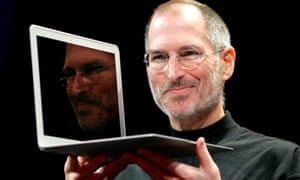
Steve Jobs holds up the new MacBook Air at a conference in 2008.
Pinterest
Steve Jobs holds up the MacBook Air at a conference in 2008. Photograph: Jeff Chiu/AP

First, we need to get one critical fact out of the way: Steve Jobs cannot be replaced. He had the credibility of the founder, extraordinary instinct, vision and energy, and he could make things happen by sheer force of will. It’s just not possible for Apple to be the same without him – but it can still succeed.

Tim Cook has a different style. Remember, he was handpicked by Steve to be Apple’s next leader, and he certainly knows how to make Apple run efficiently. He also recognizes that he doesn’t have Steve’s many talents, so he relies on the expertise of others in those areas where he is less experienced – such as product design and marketing.

That’s where things get a little more complicated. Steve’s vision, strength and charisma made him the benevolent dictator – able to align all the forces within Apple. That kind of performance doesn’t come as naturally to Tim.

Simplicity in the product lines

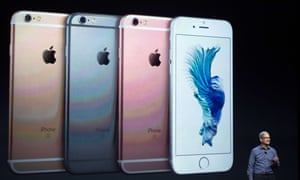
Apple CEO Tim Cook introduces the iPhone 6S last year.
Pinterest
Apple CEO Tim Cook introduces the iPhone 6S last year. Photograph: Josh Edelson/AFP/Getty Images

Apple now sells three different iPhones, four different iPads and three different MacBooks. The Apple Watch comes in seemingly infinite combinations of sizes and bands. The Apple universe is exploding with complexity! Or is it?

One could easily argue that a watch is a fashion product, so the decision here makes sense. And there is ample precedent for Apple expanding existing product lines. The original iPod, for example, successfully grew into a family of products.

Markets mature. A bigger audience has more diverse needs. If Apple were to ignore those needs, they would only force customers to go elsewhere. (As they did for several years by not making a big-screen iPhone.)

So, yes, Apple’s product lines have become more complicated. But really, are they that complicated? The company’s entire selection of products can easily fit on an average-size table. When a company cares about simplicity, it offers the right choices – not endless choices.

Simplicity in software

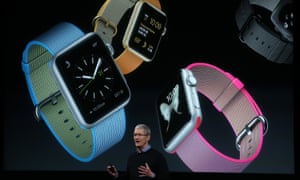
Cook speaks about the Apple Watch at the Apple headquarters earlier this year in Cupertino, California.
Pinterest
Cook speaks about the Apple Watch at the Apple headquarters earlier this year in Cupertino, California. Photograph: Justin Sullivan/Getty Images

Critics have had a field day complaining about the growing complexity of Apple software. Apple Music has been attacked mercilessly, and deservedly so. I personally find parts of it to be bewildering.

Apple’s ability to make software solid and simple has come under attack from a number of normally pro-Apple sites. Not that it excuses Apple, but many forget that such lapses also happened on Steve’s watch. He famously went ballistic over the flawed launch of Apple’s early cloud effort called MobileMe.

The fact is, even the best of companies make mistakes from time to time. What’s alarming the Apple crowd today is that the flaws and complexities now seem to be creeping into the products more frequently.

Simplicity in product naming

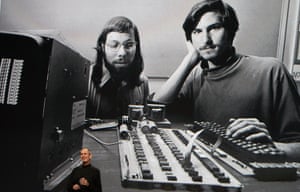
Steve Jobs speaks during an Apple event in 2010 – with a photo of him and Steve Wozniak in the background.
Pinterest
Steve Jobs speaks during an Apple event in 2010 – with a photo of him and Steve Wozniak in the background. Photograph: Justin Sullivan/Getty Images

Once upon a time, Apple’s product naming was extremely simple. Computers were Macs and consumer products were i-devices.

Now the consumer products are offered as i-things and Apple-things (Apple Watch, Apple Pay, Apple Music). But we’ll give Apple a pass on this one because the i is obviously on its last legs, and a transition like this doesn’t happen overnight.

I’m less forgiving when it comes to iPhone naming. With the current models consisting of iPhone 6S, iPhone 6S Plus and SE, Apple’s naming scheme is becoming noticeably less simple.

Then there’s the issue of the S. For some reason, Apple has decided that every other year, it should just add an S to the current model number, because the S-year improvements are internal only. So Apple’s own actions have served to train the public that S years are the “off years”. This is an absurdity, given that such revolutionary features as Siri, Touch ID and 64-bit processing have all been introduced in S models.

The S naming has only served to confuse customers, and make it significantly more difficult for marketing to do its job.

Complicated, yes. But bear in mind that Steve is the guy who started iPhone with the S-names in the first place.

Simplicity in marketing

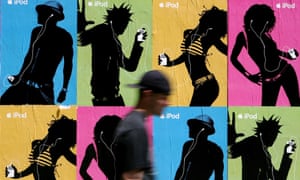
A pedestrian passes a wall covered with Apple iPod advertisements in 2005.
Pinterest
A pedestrian passes a wall covered with Apple iPod advertisements in 2005. Photograph: Justin Sullivan/Getty Images

Apple has a lengthy, award-winning history in advertising. Even marketers in other industries have long considered Apple ads to be the gold standard.

This isn’t because Steve Jobs created great ads himself – it’s because he was adament about keeping the process simple. He trusted a small group of smart people at his longtime ad agency and he was actively involved in the process, week to week.

There were no middlemen, no multiple levels of approvals, and no focus group research. Trust me, few companies on earth work this way. It was Steve’s way of keeping complexity at bay.

With Steve’s passing, things changed dramatically. Apple is building a large in-house marketing group. Teams compete to produce new campaigns. More people are involved. In short, Apple is now managing its marketing more like a big company and less like a startup.

Does simplicity still rule at Apple?

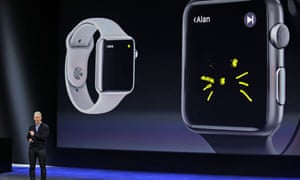
Cook explains the features of the new Apple Watch last year.
Pinterest
Cook explains the features of the new Apple Watch last year. Photograph: Eric Risberg/AP

I have zero doubt that Apple believes deeply in the power of simplicity. Simplicity is at the heart of the company’s products and the foundation of its vision for the future.

But simplicity is a matter of perception, and it’s hard to ignore the fact that Apple is struggling to present a simple image to its customers.

There is serious work to be done in rebuilding the perception of simplicity that helped Apple become the world’s most valuable company. Existing problems need fixing, as do the internal processes that have allowed complicated products to make it into the hands of customers.

That said, it’s important to put Apple’s issues in context. Despite its current challenges – and its lapses – I don’t see any other technology creating a simple experience as well as Apple.

We live in a complicated world, and the companies that deliver simplicity are the ones who win in the end.

https://www.theguardian.com/technology/2016/jun/02/ken-segall-apple-steve-jobs-simplicity

Apple will open Siri to developers

Https%3a%2f%2fblueprint-api-production.s3.amazonaws.com%2fuploads%2fcard%2fimage%2f96805%2fhttps---blueprint-api-production.s3.amazonaws.com-uploads-card-image-84672

Apple has big plans for Siri that will make the company’s famous assistant a lot more useful, according to a new report.

The company will soon open up Siri to developers with new software tools that will allow Siri to tap into more third-party services, according to a new report in The Information. Apple is also working on a new pice of a hardware, an Amazon Echo rival that will work with Apple’s smart home platform.

Apple plans to put Siri in the hands of developers with a new software development kit (SDK) that will reportedly be called the Siri SDK. The Siri SDK could launch at next months’s World Wide Developer Conference, where Apple typically previews the newest version of IOS and its latest developer tools.

The SDK will require „some work“ by developers to make their apps accessible by Siri, the report says.

Siri already works with a few third-party services, like Yelp and Bing, but hasn’t been widely available to developers since it was acquired by Apple in 2010. Prior to its acquisition, Siri worked with many third-party services. (Some of the original Siri team is now working on a new AI Assistant called Viv, which will also work with third-parties like Uber.)

Apple is also reportedly working on a new speaker that allows people to use voice commands to play music and control HomeKit-enabled smart home devices, like lights, locks and thermostats. It’s unclear if the speaker will also be unveiled at WWDC in June, as Apple typically reserves new hardware for other events.

Though the new smart speaker sounds a lot like Amazon’s Echo and Google’s recently unveiled Google Assistant, Apple’s device predates both, according to The Information’s sources.

The report is just the latest sign that Apple has big plans for Siri next month. Earlier reports have suggested Apple will bring Siri to the Mac and — in what could very well be a hint of a Siri-themed WWDC — the company used Siri to reveal the dates of this year’s developer conference.

http://mashable.com/2016/05/24/apple-siri-sdk-report

MacBook Pro is getting a 2nd screen

The MacBook Pro is reportedly getting a major redesign.

Ming-Chi Kuo, a normally reliable Apple analyst at KGI Securities, has put out a new research note claiming that Apple is planning to incorporate a second screen into the high-end Apple laptop, 9to5Mac reports.

This OLED screen would be touch-sensitive and sit above the keyboard — replacing the current function buttons (F1, F2, F3, etc.).

It could provide more flexibility and room for customisation for Apple and for users, who could potentially add shortcuts and apps they frequently use to the screen.

The report has also been corroborated by Mark Gurman, a reporter over at 9to5Mac, who has an extremely good track record at breaking news on coming Apple products.

„Source confirms Apple prepping new MacBook Pro with 2nd display for functions above the keyboard, Touch ID/Apple Pay,“ Gurman wrote on Twitter.

macbook function keys arrow skitch rumour oled second screenPete Markham/Flickr (CC)Here’s where that second screen will apparently sit.

What else is coming to the new MacBook Pros? They are also said to be „thinner and lighter,“ with 9to5Mac reporting that they will take „design cues“ from the 12-inch MacBook that Apple first introduced in May 2015 in an overhaul of the traditional MacBook line.

They will also reportedly have Touch ID support — suggesting that you will be able to unlock your MacBook and authorise purchases using your fingerprint, as you already can on the iPhone.

The MacBook Pro line has been has gone largely unchanged (apart from internal upgrades) since it introduced Retina Displays in 2012 and phased out optical drives.

Both the 13-inch and 15-inch MacBook Pros will apparently be updated with the new design, which is expected to launch in the fourth quarter of 2016.

apple macbook gold trackpad keyboard 2015 redesignMaurizo Pesce/Flickr (CC)The MacBook Pro will reportedly take „design cues“ from the newly redesigned MacBook.

If it’s true, we may see more leaks and rumours in the weeks and months ahead — but don’t expect any confirmation from Apple. The company never comments on rumoured products before they are officially announced.

http://www.businessinsider.de/macbook-pro-introduce-second-touch-screen-touch-id-report-kgi-securities-q4-2016-5

How Design Is Shaping the Future at Tech Giants Like Facebook

Design is no longer riding back seat to business. The two are inextricably linked, as evidenced at almost every major technology company in existence today. This week at Semi Permanent, Australia’s premier arts and design conference, some of the world’s best design talent will take the stage to talk about what makes design so integral to their success. Below, we asked seven leaders at some of the biggest companies how design impacts their business—here’s what they had to say.

01

Jon Lax, Director of Product at Facebook

On design’s role at Facebook:
Quite frankly, Facebook is a technology company, but technology without design is just code. The balance of engineering and design is what makes great products. I think of our role at Facebook as trying to identify and solve problems people have. If we aren’t building things that solve problems for people then we’re not building the right things. Design is a major contributor and driver of this conversation at Facebook, but not the only one. Design does not exist in a vacuum.

Credit: Facebook

02

Dantley Davis, Design Director at Netflix

On designing outside the Silicon Valley Mindset:
One of the biggest lessons we’ve learned is not designing the service for ourselves. We spend a great deal of time talking to our customers and understanding how entertainment fits into their lives. As a company based in Silicon Valley, that means we put very little emphasis on feedback from people who live here because we do not feel the are representative of the broader country or the world. Designers at Netflix travel all over the world learning new insights from people from all walks of life. We visit them in their homes, go to their work, or accompany them on their commutes. These insights fuel our product instincts and provide a level of empathy that is immeasurable.

Credit: Dantley Davis

03

Jon Wiley, Director of Immersive Design at Google

On how designers will play a role in the growing virtual reality space:
Design is about problem solving, about understanding the needs people have and creating useful, usable, and beautiful solutions. That hasn’t changed and the overall process is pretty similar. The tools and the medium are very different. And I’ve had to call upon topics I haven’t studied for decades: architecture, interior design, set design, ergonomics and how people move through and perceive different spaces.

Credit: Google

04

Hector Ouilhet, Senior Design Staff Manager at Google

On how design can help shape the future of human-computer interaction:
The thing that excites me the most is building a future that my daughter can just use without having to learn how to use it. She can be how she is with me, or her classmates, or the dog. I want to be part of this vision and momentum that drives technology in a way that is tailored toward people’s needs. In a perfect world, technology shouldn’t shape people, but we’re not there yet. The ideal would be that tech adapts to each of us. Technology should be able and resilient and adaptable enough to allow that.

Credit: Hector Ouilhet

05

Philipp Steiner, Creative Director at Teague

On the value of designers in collaborative teams:
Designers have the ability to focus on the bigger picture and focus on what some of the opportunities and objectives might be, and how to get there through collaboration. So rather than assuming right from the beginning that innovation and intellectual property is something that needs to be protected and kept under wraps, there are scenarios where companies could jointly develop ideas with design teams that collaborate and then figure out, how do we make sure that everyone involved in this endeavor will have some kind of a benefit from this innovation? Designers are a small enough community and they know how the process works, and how innovation works, so they don’t have to reinvent the wheel. All they need to focus on is how to break down the barriers and allow freer communication between these companies.

Credit: Renata Steiner

06

Kelly Sawdon, Partner and Head of Marketing at Ace Hotel

On what role design plays in a hotel experience:
We see design as the foundation or backdrop for when a hotel comes to life. To start with a good beautiful foundation allows for the events and moments and activities and experience to be that much more memorable. In this day and age, people are really seeking out experiences more and more and see luxury more as something that’s a unique adventure or experience than it is necessarily an expensive item or good.

Credit: Lindsay Byrnes

07

Jurgen Spangl, Head of Design at Atlassian

On building an experience-led corporate culture:
We decided to be experience led, not design-led, deliberately. We had those discussions internally, and the reason we chose experience-led is because it’s about the experience our customer and users have with us. And experience is bigger than just design. It’s not semantics. I actually think it’s an arrogant view to saying it’s design-led because that would be saying that only designers own the experience and that is way too narrow. We together as a company, we together as a team, need to deliver an awesome experience. At the end of the day it’s every individual support engineer or support rep out there that delivers a great exp. Things like this only happen if you have them fundamentally in your company culture.

Credit: Atlassian

http://www.wired.com/2016/05/design-shaping-future-tech-giants-like-netflix

Apples next 50 Billion Dollar Business

Apple, the world’s most valuable company, isn’t shy about revealing how many of its computers, tablets, phones, and smartwatches are in use: over 1 billion, according to CEO Tim Cook.

But that number isn’t a good reflection of how many users Apple has, because many iPhone users also own a Mac or iPad, for example.

Analysts from Credit Suisse have crunched the numbers and collected some survey data, and have figured out a good starting point for the number of global Apple users.

Apple has 588 million users worldwide, Credit Suisse estimated in a note published on Monday. If there are exactly 1 billion active Apple devices in use, these findings mean the average Apple user owns 1.7 devices.

This figure is important as Apple is trying to change its story: The vast majority of its revenue comes from selling premium hardware. But Apple wants to become „a services company,“ like Google or Microsoft, because services provide a lot of the value in using a particular device — the best phone in the world with a sub-par mapping service, for instance, isn’t as useful as a cheaper phone that knows exactly where you are.

(Those companies also trade at a much higher price-earnings ratio than Apple does. The PE ratio is the market price of the stock divided by the last four quarters of income. The higher the PE ratio, the more expensive the stock.)

To understand a services business, analysts need to know how many users it has. Credit Suisse looked into products like iTunes, App Store, Apple Music, iCloud, and Apple Pay, and concluded that Apple’s services growth and potential means that the company warrants a higher valuation than it’s currently getting.

Apple as a subscription

In fact, the note estimates that Apple services revenue could more than double by 2020 to $53 billion. Apple bragged that it managed to book $21 billion in services revenue last year, while alluding that that figure by itself was larger than some of its competitors. (Facebook reported $17.9 billion in revenue for 2015, for example.)

But it’s not just the size of Apple’s installed base that makes its services an attractive investment. Apple users are significantly richer than non-Apple users. According to Credit Suisse:

  • Emerging market Apple users have 50% higher per-capita incomes
  • Apple users use their devices more often with 63% of mobile traffic coming from Apple devices compared to 29% from Android
  • Apple users tend to replace their old devices regularly
  • Apple enjoys a nearly 90% retention rate among its customers

As Credit Suisse points out, Apple doesn’t even necessarily directly charge for all of its services. Its popular iMessage texting service, for example, is free, which means its price is essentially built into the cost of an iPhone or iPad.

As the analysts write:

While monetizing many of these services is not Apple’s primary objective, it does allow the company to price at premium levels. We would argue that whether it is the customer lock-in and essential headache of leaving the iOS ecosystem or the loyalty to the brand, the output is the same – once an individual or family is part of the Apple ecosystem, they will very rarely leave it.

The end conclusion is that while Apple books its revenues and earnings based largely upon a point of sale, the actual installed base of over 1bn active devices presents a largely reoccurring cash flow stream as users will replace and upgrade their devices due to the innovation and introduction of new products over time.

So the challenge for Apple is to increase the amount of services revenue it can generate from one of its customers — getting him or her to sign up for iCloud storage and Apple Music, for example, which come with monthly fees — while still providing good value for its premium computers and phones, which have Apple services baked into the price.

One problem is that Apple’s services can be unreliable, and have attracted snickers from those who think the company lags behind Google, Microsoft, and Amazon at providing basic software services like data storage.

But Apple’s clearly investing in this field. For example, it’s planning to open up several data centers and it’s been hiring distributed computing experts. It reportedly has a effort called „Project McQueen“ to do more of its online computing in-house. Online services are a critical challenge for the world’s most valuable company if it wants to become even more valuable.

Credit Suisse adjusted its target price for Apple to $150 from $140 per share.


www.businessinsider.de/credit-suisse-estimates-588-million-apple-users-2016-4

Most Cars Will Have Automatic Emergency Braking Standard By 2022

In a significant move, 20 automakers have agreed to make automatic emergency braking standard on their cars by September 1st, 2022. This was announced by the National Highway Traffic Safety Administration and the Insurance Institute for Highway Safety today. The announcement mentions that these automakers represent “more than 99 percent” of the auto market in this country.

Automatic emergency braking systems have long been hailed as effective measures for preventing collisions. Cars are equipped with forward-looking sensors which detect the risk of crashing into the car in front and ping the car to automatically brake should the driver not take any action.


These systems were initially only available in expensive luxury vehicles like the Mercedes-Benz S-Class but have since trickled down the cars you and I can afford. This agreement will go a long way in ensuring that mass market cars feature this technology which can prove to be the difference between life and death in such unfortunate scenarios.

Keep in mind though that this is an agreement and not regulation so there’s nothing compelling car manufacturers from abiding by this agreement. The fact that major car manufacturers in the country have decided to sign their names to the document shows their willingness to work together to bring the benefit of this system to as many people as possible.

Source: http://www.reuters.com/article/us-autos-regulations-safety-idUSKCN0WJ27E

10 Usability Heuristics for User Interface Design

This following Article is an „oldie“, but an Goodie:

Summary: Jakob Nielsen’s 10 general principles for interaction design. They are called „heuristics“ because they are broad rules of thumb and not specific usability guidelines.


Is Your Messaging App Encrypted?

Is Your Messaging App Encrypted?

messaging-apps-whatsapp

Justin Sullivan / Getty Images

https://recode.net/2015/12/21/is-your-messaging-app-encrypted

eSIM ab 2016 bei Deutscher Telekom

Quelle: http://www.heise.de/newsticker/meldung/Deutsche-Telekom-eSIM-soll-2016-kommen-2921732.html?wt_mc=nl.ho.2015-11-15

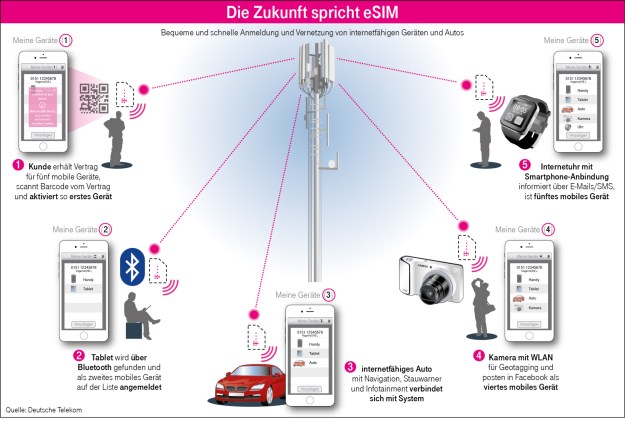
Die klassische SIM-Karte ist am Ende. Laut Telekom wird sie schon ab 2016 von der sogenannte eSIM abgelöst. Diese ist fest in ein Mobilgerät integriert und kann beispielsweise für einen Anbieterwechsel umprogrammiert werden.

Nach 25 Jahren soll die klassische SIM-Karte vom Markt verschwinden. An ihre Stelle tritt schon ab 2016 die sogenannte eSIM, ist sich die Deutsche Telekom sicher. Dabei handelt es sich um eine fest in ein Mobilgerät integrierte, von außen programmierbare SIM-Karte. Das E steht für embedded.

 esim_Deutsche.Telekom


Damit würde der Tausch der SIM-Karte etwa beim Anbieter- oder Gerätewechsel entfallen. Künftig müssten Kunden beispielsweise nur noch den Identifikationscode eines Mobilgeräts einscannen und es so aktivieren. Automatisch werde es dann bereits mit anderen eingebundenen Geräten vernetzt sein, so die Telekom im hauseigenen Blog. Kunden sollen so über einen Vertrag mehr Endgeräte verwalten können als bisher.

Erste Lösungen in Tablets und Wearables

Die Telekom arbeitet nach eigenen Angaben seit Jahren in internationalen Gremien unter dem Dach der GSMA an einem offenen Standard für die eSIM. Er soll die technischen Anforderungen bestimmen und die Regeln für die Profilverwaltung festlegen. „Wir sind überzeugt, dass der neue eSIM Standard ab 2016 in den Markt kommt und sich dann ab 2017 richtig durchsetzt“, heißt es im Blog des Telekommunikationsunternehmens.

Die ersten Lösungen sollen in Tablets und Wearables angeboten werden. Anfangs werde es Hybridlösungen aus eSIM und Plastikkarte geben, so die Telekom weiter. In zehn Jahren werde die klassische SIM dann völlig verschwunden sein.

Apple und Samsung in „fortgeschrittenen“ Verhandlungen

Bereits im Sommer berichtete die Financial Times von Verhandlungen zwischen dem Branchenverband GSMA, Mobilfunkanbietern sowie Apple und Samsung über die Einführung einer umprogrammierbaren SIM für Mobilgeräte. Der Branchenverband zeigte sich seinerzeit optimistisch, eine formelle Vereinbarung mit Apple zu erzielen.

Der US-Konzern führte bereits im vergangenen Jahr die sogenannte Apple SIM ein, die ebenfalls nicht mehr an einen Anbieter geknüpft ist. So sollen Apple-Kunden den Netzanbieter etwa im Urlaub oder auf Geschäftsreisen direkt vom iPad aus wechseln können. Auch in Deutschland ist die Apple SIM mit iPad Air 2 und iPad mini 4 erhältlich. Bisher haben Kunden aber keine große Anbieterauswahl. Zu den Partnern der Apple SIM gehören die Telekom in Form von T Mobile in den USA, EE in Großbritannien sowie GigSky