Archiv der Kategorie: e-mobility

BMW and Apple are have cut ties amid an electric-vehicle arms race

For investors, the attempts by many of the tech industry’s most powerful incumbents to disrupt the auto industry make for some exciting, and potentially lucrative, opportunities.

For the auto industry, the barbarians are at the gate.

A BMW logo is seen at the North American International Auto Show in Detroit, January 12, 2016.   REUTERS/Mark BlinchA BMW logo is seen at the North American International Auto Show in Detroit

This understandable tension underscores much of the back-and-forth between the technology and automotive communities at the moment.

Initially friendly and collaborative, relations between the two industries have turned increasingly adversarial as each develops its own self-driving cars.

Take, for example, tech giant Apple and luxury automobile standard-bearer BMW — one-time potential collaborators whose relationship appears likely to turn increasingly competitive, as a recent move by the automaker demonstrates.

BMW unveils now tech-heavy strategy

Earlier this month, BMW’s new CEO, Harald Krueger, announced an important official shift in the company’s strategy, one that clearly seeks to counter the looming competitive threats from the likes of Apple, Alphabet, and Tesla. Claiming, „We will lead the BMW Group into a new era,“ he said the company’s plans now involve launching additional versions of its i-Series of electric vehicles, including a model dubbed iNEXT.

The iNEXT will feature BMW’s forthcoming electric powertrain and lightweight body materials, and will feature an optional self-driving mode. The company will also place a greater emphasis on in-car software and services. Mobile software giants like Apple, Alphabet, andBlackBerry have each tried to consolidate market share in the budding market for smart-car software, but BMW remained largely mum on the topic in its strategy presentation.

BMW’s iNEXT vehicles won’t reach market for at least five years, which largely mirrors the product launch schedule at tech firms like Apple. This raises the possibility of a glut of electric, fully autonomous cars reaching market at roughly the same time: Google, for example, hopes to have its autonomous vehicles ready for market by then. Only Chinese search giant Baidu has an appreciably earlier target launch date for its autonomous driving project — 2018 — though its applications may be relatively limited early on.

electric vehicles hybridsREUTERS/Robert GalbraithA hybrid Toyota Prius is electrically charged at a municipal charging station near City Hall in San Francisco, California August 6, 2009.

Circling the wagons

BMW’s moves could signal the end of its relationship with Apple, with whom the German auto giant has held meetings in the past. As recently as last July, Reuters reported that Apple and BMW had met to discuss potentially working together to realize their electric-vehicle ambitions. However, Reuters said, caution on BMW’s part led to a cooling of sorts. BMW likely wishes to avoid simply becoming another parts supplier for Apple, a la Apple’s infamous assembly partner Foxconn.

More broadly, this exemplifies the natural tension currently playing out between automakers and tech companies today. Though virtually everyone sees a massive economic opportunity in revolutionizing the transportation of people and goods around the world, the automotive and technology industries each, by and large, lack a core expertise the other possesses.

Apple’s software is used and beloved by hundreds of millions of people around the world, but at present, it lacks the requisite manufacturing skills to bring its Project Titan to market at scale. Conversely, BMW produces millions of cars annually, but lacks expertise in developing software and services.

Both industries are hard at work poaching talent from each other in an effort to cover their knowledge gaps, which has led to the arms-race scenario we see playing out in the headlines. So while BMW’s more revolutionary EVs won’t reach the market for at least five years, the company’s recent moves speak to the broader continued race to shape the future of the auto industry.


http://www.businessinsider.de/bmw-apple-cut-ties-over-electric-cars-2016-3

Tesla will unveil its much-anticipated Model 3 mass-market vehicle in Los Angeles at the end of March 2016

Tesla will unveil its much-anticipated Model 3 mass-market vehicle in Los Angeles at the end of March.

Elon Musk Bill Pugliano / GettyNo Tesla-topianism, please.

Buzz before the event has pushed Tesla stock back up above $230 a share, from a crater of about $140. That’s a 40% upswing in only a month.

It has also set off a new round of what I’ll call „Tesla-topianism.“

This is the notion that the arrival of a $30,000 all-electric car in a market dominated by gas-burning vehicles will be the disruptive-innovation earthquake we’ve all been waiting for.

The Model 3 means it’s RIP for the internal combustion engine. So long, ICE! But hey, that century was a nice run.

The mistake remains the same

Bernstein’s Michael W. Parker and Mark C. Newman published a research note last week in which they enthusiastically encapsulated this bullish sentiment regarding electric vehicles, or EVs. (I’m quoting it at some length because it’s both informative and entertaining):

For car manufacturers, it is still possible to dismiss the electric vehicle as simply a rich person’s toy. This misinterpretation of „new“ as being „niche“ and „impractical“ has real pedigree. Blackberry and Nokia viewed the iPhone in these terms in 2007: why would anyone pay $600 for a phone with only one button? But with a mid-priced addition to Tesla’s product mix, the company will no longer be competing just with the BMW 5-series and Audi A6. It will be competing with the Honda Accord and Toyota Camry.

We didn’t think so. Our expectation is that the auto industry is going to have a common response to the launch of a modestly priced, attractive, electric vehicle in the first quarter of 2017: accelerate whatever they are doing in the EV space immediately.

It is very likely that the prestige, engineering and visceral thrill of German motoring has dissuaded many people from buying a Tesla Model S over the last few years. But if you agree with that statement, do you also agree with this statement: „It is very likely that the prestige, engineering and visceral thrill of Japanese motoring will dissuade many people from buying a Tesla Model 3 over the next few years“?

This is where the analysis of Tesla’s future competitive prospects tends to go wrong. The basic idea is actually correct: Tesla is aiming to transform the mobility landscape and accelerate the switch from fossil fuels to sustainable electric power. CEO Elon Musk has said as much.

But viewing Tesla’s current vehicles as luxury-market competitors doesn’t work. There’s demand for luxury cars, and there’s demand for Teslas. And the two flavors of demand aren’t the same.

Tesla was able to sell just over 50,000 vehicles last year because there are that many buyers out there who think a long-range electric car with a lot of luxury appointments and excellent performance is something they want to put in their garage.

There could be many more of this type of buyer, but EVs — even Teslas — are still difficult to own, mainly because they take a long time to recharge (gassing up, by contrast, takes just a few minutes, and gas stations are almost everywhere). And that means there’s probably a ceiling on this first wave of Tesla owners.

TeslaKim Kyung Hoon/ReutersA Tesla Model S being charged.

Why people buy Japanese cars

Enter the Model 3, which is supposed to bash through this ceiling. Hence Parker and Newman’s suggestion that no one will buy a Japanese car in the face of the overwhelming challenge from the Model 3.

The problem here is that demand for Japanese cars, especially in the US, defines a huge chunk of the mass market and has for decades, just as demand for German luxury brands like Mercedes and BMW defines the luxury segment.

Demand for Honda Accords and Toyota Camrys is demand for reliable, affordable, fuel-efficient products. It has nothing to do with demand for alternatives to gas-burning engines. You buy a Toyota Corolla because you want a way to get around that won’t let you down. You buy a Tesla because, to a degree, you want to change the world.

Anyone shopping for, say, a Honda, Toyota, Nissan, Mazda, Subaru or for that matter a Kia or a Hyundai, is unlikely to have Tesla on his or her radar. Once the Model 3 has been around for five or 10 years, that could change. But in the short term, given the miserable sales that traditional automakers have seen with EVs, it will be up to Tesla to prove that the market exists.

2015 Toyota Camry XSEToyotaA Toyota Camry.

A tough virus to get rid of

Yes, General Motors is said to be trying to beat the Model 3 to market with the Bolt EV, due to arrive in late 2016 (the Model 3 won’t hit the road until late 2017). But GM is simply doing the Bolt now because it can — the automaker is fully recovered from its 2009 bailout and bankruptcy, is printing money on big pickup trucks and SUVs, and has a CEO in Mary Barra who thinks it’s worth it to invest in the technologies and mobility services of tomorrow without betting the farm on them.

Tesla-topianism has been a tough virus to eradicate. Every time you think Tesla watchers, particularly in the finance industry, have figured out that the automaker is becoming a real car company (not a go-go growth tech company), those Tesla watchers crank up some new narrative that has Tesla doing something monumentally awesome that alters reality as we know it (that’s why the Apple analogies come fast and furious).

But then you look at the facts. For example, Toyota sold over 9 million vehicles worldwide in 2015.

Tesla and Musk could move humanity forward in terms of eventually retiring the gas-burning engine. But against staggering numbers like that, it will take Tesla decades, if it survives, to have a meaningful impact. And adding one new car to the portfolio isn’t going to speed things up.


http://www.businessinsider.de/mistake-about-tesla-and-the-model-3-2016-3

Most Cars Will Have Automatic Emergency Braking Standard By 2022

In a significant move, 20 automakers have agreed to make automatic emergency braking standard on their cars by September 1st, 2022. This was announced by the National Highway Traffic Safety Administration and the Insurance Institute for Highway Safety today. The announcement mentions that these automakers represent “more than 99 percent” of the auto market in this country.

Automatic emergency braking systems have long been hailed as effective measures for preventing collisions. Cars are equipped with forward-looking sensors which detect the risk of crashing into the car in front and ping the car to automatically brake should the driver not take any action.


These systems were initially only available in expensive luxury vehicles like the Mercedes-Benz S-Class but have since trickled down the cars you and I can afford. This agreement will go a long way in ensuring that mass market cars feature this technology which can prove to be the difference between life and death in such unfortunate scenarios.

Keep in mind though that this is an agreement and not regulation so there’s nothing compelling car manufacturers from abiding by this agreement. The fact that major car manufacturers in the country have decided to sign their names to the document shows their willingness to work together to bring the benefit of this system to as many people as possible.

Source: http://www.reuters.com/article/us-autos-regulations-safety-idUSKCN0WJ27E

Apples long way to build Cars

Apple has built no cars. Google has designed and outsourced the production of a small fleet of self-driving pod mobiles.

The newest carmaker on the block, Tesla, managed to build just 50,000 cars in 2015.

Meanwhile, in the US alone, the traditional auto industry built and sold 17.5 million cars and trucks.

This glaring imbalance between current reality and a highly speculative vision of the future hasn’t stopped pundits and tech and auto observers from transforming Apple and Google into serious auto-industry challengers.

For example, this is from a recent report by Reuters:

[G]oogle may choose to build its own engineering and design prototypes, then partner with a Chinese automaker or an Asian contractor such as Hon Hai Precision Industry’s Foxconn Technology Co that wants to enter the automotive field, several experts said.

Given Apple’s extensive iPhone and iPad manufacturing in China, it’s also been suggested that the Cupertino, California, colossus would skip out building a car in the US and would do it in the Middle Kingdom.

It’s an attractive idea, but it overlooks the vast gulf that exists between assembling smartphones and making cars. Tesla is among the most technologically advanced automakers around, and it still has to make its vehicles in a large factory with millions of dollars of giant robots and huge machines designed to bend metal. A large factory in Northern California.

The rest of the US auto industry builds the cars it sells in the US predominantly in the US. As such, the Detroit Big Three are major employers, as are the Japanese and German „transplants,“ as they’re know, which build cars and trucks in southern US states with nonunion workforces.

Some production has been moving to Mexico, but Mexico has been positioning itself as a NAFTA manufacturing partner to US companies for some time and has invested is developing an automotive supply chain.

China calls the shots

China is a different story. Ford, GM, Volkswagen, and others build cars there and sell them under familiar brands, but they can’t do this without entering into a joint venture with a Chinese partner. There’s an obvious compromise baked into this arrangement: Foreign automakers gain access to the enormous Chinese market, but they also end up sharing R&D.

Foxconn Kin Cheung APKin Cheung/APThey aren’t building cars.

It isn’t exactly a joining of equals, but Chinese automakers don’t see themselves as mere assembly lines for Western designs. They see themselves as developing a robust national manufacturing base. And while they’re building Buicks, they’re also building Chinese-brand cars and trucks.

With Apple and Google, the idea seems to be that these companies will try to transform consumer-goods manufacturers into automakers. There might be something to this in theory: Remake the automobile by designing and building it like a piece of internet-enabled consumer tech. But in practice, the car-building part of building an automobile, even an innovative self-driving one, tends to catch up to the visionaries, as Tesla has learned.

Profit margins under stress

Additionally, in Apple’s case it would be necessary to harvest a much wider profit margin than the auto industry typically throws off: 30% vs. 10% — or less, in bad times. And if you think Apple or Google has designs on selling all-electric driverless tech to willing Chinese customers, making China and not the US or Europe the main market, then you haven’t thought through either China’s congested big cities, a nightmare for driverless cars, or its still-developing roadway system, which is friendlier to trucks and SUVs.

So the game plan, as it’s being discussed outside Apple and Google, would be to build cars outside the US, using cheaper Asian labor, and then import them.

It sounds great because for Apple, in particular, that’s been a pathway to massive success.

But when it comes to the auto industry, it would be impossible. Not impossible to build some kind of more or less traditional car, but impossible to build the wildly disruptive car of the future.

www.businessinsider.de/impossible-apple-or-google-car-china-2016-3

The Evolution of the BatMobile

batman-documentary-carsWarner Bros Online

It takes more than martial-arts training and a cool cape to protect Gotham City. Over the years, Batman has relied on an evolving series of vehicles to help bring down his most infamous enemies.

The Batmobile has changed a lot since the 1941 original. It now has a more imposing, military-influenced design, as seen in „The Dark Knight“ trilogy and the upcoming „Batman v Superman: Dawn of Justice.“

Read on to see how the Batmobile has kept pace with Bruce Wayne’s quest to keep Gotham safe:

The first car to be referred to as a „Batmobile“ appeared in Detective Comics No. 48 in 1941. It was far more subtle than any of its successors. The car, which appears to be inspired by the Cord Roadster, had a small gold bat on the hood.

The first car to be referred to as a "Batmobile" appeared in Detective Comics No. 48 in 1941. It was far more subtle than any of its successors. The car, which appears to be inspired by the Cord Roadster, had a small gold bat on the hood.

DC Comics

The first drivable Batmobile came from Adam West’s 1966 live-action „Batman“ adaptation. Based on the Lincoln Futura, legendary designer George Barris dreamed up the car in 15 days.

Rather than the red and black of previous iterations, the Batmobile from the 1970s „Super Friends“ series was blue and black, with yellow details to highlight the more prominent bat insignia.

Frank Miller’s „The Dark Knight Returns“ (1986) is an important evolution. The Batmobile was overhauled to appear as a redesigned tank. Prioritizing weapons and defense was important to the much more stark version of Gotham in the comic series.

Frank Miller's "The Dark Knight Returns" (1986) is an important evolution. The Batmobile was overhauled to appear as a redesigned tank. Prioritizing weapons and defense was important to the much more stark version of Gotham in the comic series.

DC Comics

Tim Burton’s live-action adaptation of the Batmobile from 1989 is very cool. It’s sleek and imposing, and the jet-black exterior and polished finish really give off a sense of wealth, tying together Bruce Wayne and the Batman persona.

Tim Burton's live-action adaptation of the Batmobile from 1989 is very cool. It's sleek and imposing, and the jet-black exterior and polished finish really give off a sense of wealth, tying together Bruce Wayne and the Batman persona.

Warner Bros.

The 1992 debut of „Batman: The Animated Series“ began a new era. It featured the voice of Kevin Conroy as Batman and debuted the updated sleek Batmobile design seen in the later „Justice League“ spin-off.

The 1992 debut of "Batman: The Animated Series" began a new era. It featured the voice of Kevin Conroy as Batman and debuted the updated sleek Batmobile design seen in the later "Justice League" spin-off.

Warner Bros/YouTube

The Batmobile in „Batman Forever“ (1995) is one of its flashiest appearances, with an almost rib-cage-like design. Its shape is also vaguely reminiscent of the 1989 version.

„Batman & Robin“ (1997) was panned by critics, but its Batmobile isn’t the worst ever. It has a similar shape to previous live-action Batmobiles, but is black instead of the eerie blue glow of the 1995 design.

The live-action „Dark Knight“ trilogy from director Christopher Nolan introduced the Tumbler, an all-terrain, military-inspired version of the Batmobile. It could also be seen as a realization of the Batmobile in Miller’s „The Dark Knight Returns.“

The live-action "Dark Knight" trilogy from director Christopher Nolan introduced the Tumbler, an all-terrain, military-inspired version of the Batmobile. It could also be seen as a realization of the Batmobile in Miller's "The Dark Knight Returns."

REUTERS/ Toby Melville

In a first for the popular „Arkham“ video-game series, players take control of the Batmobile in the quest against Scarecrow’s fear toxin. Heavily inspired by Nolan’s Batmobile, the game also featured un-lockable „skins,“ which changed the vehicle’s appearance to match other famous Batmobile iterations.

 In a first for the popular "Arkham" video-game series, players take control of the Batmobile in the quest against Scarecrow's fear toxin. Heavily inspired by Nolan's Batmobile, the game also featured un-lockable "skins," which changed the vehicle's appearance to match other famous Batmobile iterations.

WB Games

Finally, the upcoming „Batman v Superman“ will usher in a new era for the Dark Knight. Ben Affleck will take on the role, and we’ve already gotten a close look at the new Batmobile, which weighs over 7,000 pounds and, in the film, can drive up to 205 mph.

In real life, the car can reach a speed of 90 mph.

In real life, the car can reach a speed of 90 mph.

Kirsten Acuna/Tech Insider

 http://www.businessinsider.com/batmobile-evolution-2016-3

tug-of-war over who controls and profits from the stream of user data in self-driving cars

google.carx299

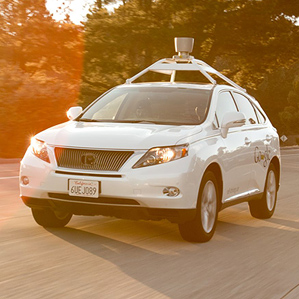
Google’s self-driving car team is expanding and hiring more people with automotive industry expertise, underscoring the company’s determination to move the division past the experimental stage.

The operation now employs at least 170 workers, according to a Reuters review of their profiles on LinkedIn, the business-oriented social network. Many are software and systems engineers, and some come from other departments at Google.

More than 40 of the employees listed on LinkedIn have previous automotive industry experience, with skills ranging from exterior design to manufacturing.

They hail from a wide range of companies, including Tesla Motors Inc, Ford Motor Co. and General Motors Co.

For a look at the composition of Google’s self-driving car team, Google has not disclosed details about the size or composition of its self-driving car team, and Johnny Luu, spokesman for Google’s car team, declined to comment.

The team could have additional members who do not publish profiles on LinkedIn.

Google has said previously that it intends to ready the technology for a marketable self-driving car by 2020, but it may never manufacture vehicles itself.

The tech giant is more likely to contract out manufacturing — much like Apple does with iPhone — or to license technology to existing car manufacturers, automotive industry experts said.

Licensing would follow the model Google has used with its Android operating system for mobile devices.

In the past four weeks, Google has advertised nearly 40 new positions on the team, and many are related to manufacturing.

The team currently has six people with such experience, including purchasing, supplier development and supply chain management.

Hires with manufacturing skills could help Google find and coordinate with a partner to build a vehicle, said Paul Mascarenas, a former Ford executive who is president of FISITA, the International Federation of Engineering Societies.

Google is also engaged in discussions with federal and state regulators about how to revise motor vehicle safety standards to accommodate autonomous cars.

The competition for technical talent is intensifying as tech and automotive companies race to build driverless vehicles.

Beyond Google, the players include Tesla, established car makers such as Daimler AG and GM and, and technology companies such as Apple Inc and Uber Technologies Inc.

Google’s team is being assembled by John Krafcik, an industry veteran who previously headed Hyundai Motor Co’s  U.S. operations and is an expert in product development and manufacturing. Krafcik joined Google in September 2015.

Another senior executive with previous automotive experience, Paul Luskin, was hired last month as operations manager, according to his Linkedin profile.

An engineer with stints at Jaguar Cars, Ford and Japanese supplier Denso Corp, Luskin most recently was president of Ricardo Defense Systems, a unit of Britain’s Ricardo PLC, according to the Linkedin profile.

Google hired industry veteran Andy Warburton in July to head the vehicle engineering team, according to his Linkedin profile.

Warburton spent two years as a senior engineering manager at Tesla and 16 years as an engineering manager at Jaguar.

A third auto veteran, Sameer Kshisagar, joined Google in November as head of global supply management on the self-driving car team. Kshisagar is a manufacturing expert who previously worked for GM, according to his Linkedin profile.

Luskin, Warburton and Kshisagar did not respond to requests for comment.

Google’s self-driving car group also has tapped people with experience beyond the auto industry, including aerospace (Boeing, SpaceX, Jet Propulsion Lab) and electronics (Intel, Samsung, Motorola), according to LinkedIn profiles.

Krafcik and Chris Urmson, director of the car team, have said they want to forge partnerships with established automakers and others to build vehicles. Krafcik made a public pitch for alliances at an auto industry conference in Detroit in January.

However, Google may have to look farther than the auto industry to find a manufacturing partner, said Raj Rajkumar, a Carnegie-Mellon University professor who advises companies on self-driving car development.

The tug-of-war over who controls — and profits from — the stream of user data in self-driving cars is „an inherent and fundamental conflict“ between Google and traditional automakers, Rajkumar said.

Instead, Google may choose to build its own engineering and design prototypes, then partner with a Chinese automaker or an Asian contractor such as Hon Hai Precision Industry’s Foxconn Technology Co that wants to enter the automotive field, several experts said.

Michael Tracy, a Michigan-based auto manufacturing consultant, said Google sees the potential of several different revenue streams from its self-driving technology, including licensing its mapping database and vehicle control software, as well as an integrated package of software, sensors and actuators that would form the backbone of a self-driving vehicle.

The least likely prospect is that Google will manufacture its own vehicles, Tracy said, due to the massive expenditures required and the stiff competition from established automakers.

http://www.voanews.com/content/googles-self-driving-car-team-beefs-up-auto-experience/3217805.html

The Electric Car Revolution Is Now Scheduled for 2022

2017 Chevrolet Bolt EV

www.wired.com/2016/02/electric-car-revolution-now-scheduled-2022

Bentley Plans To Copy Porsche’s Electric Tesla Fighter Misson-E

Bentley Plans To Copy Porsche's Electric Tesla Fighter

Volkswagen Group owns a lot of automotive brands, two of which happen to be Bentley and Porsche. A few months ago Porsche confirmed it was working on an electric sports car to go head-to-head with Tesla, and now Bentley has confirmed it will borrow Porsche’s plans and make its own electric sports car rival.

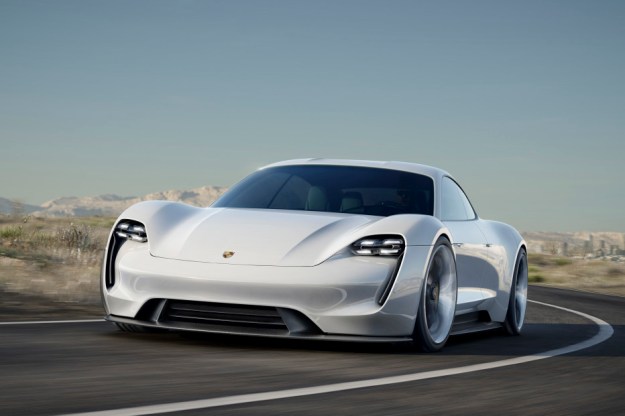
The gorgeous Mission E concept was green lit for production by Porsche with intentions of taking on Tesla’s success as a high performance electric automaker, and now Bentley wants to douse those plans in opulent luxury.

Bentley Plans To Copy Porsche's Electric Tesla Fighter

Speaking to Drive.com, Bentley board member Rolf French, who is responsible for the British luxury brand’s engineering department, confirmed plans to piggy back Porsche during the launch of the Bentayga SUV in Palm Springs last week.

While Porsche’s first all-electric model will almost certainly be a sedan, French mentioned that Bentley would have a firm idea of its plans for an electric car in the next six months, but that the hot Speed 6 coupe concept may be a viable contender to get the goods.

Bentley Plans To Copy Porsche's Electric Tesla Fighter

Whether a sedan or coupe, or both, the all-electric Bentley will take advantage of Porsche’s development of the electric batteries, motors, and other hardware for the electric platform.

It’s unclear if Bentley will pick up any of the R&D costs, but either way a second model under a different brand will help increase volume and make the massive engineering project a little easier to swallow in a market stiff on tradition.

Companies within Volkswagen “borrowing” from each other is nothing new, with the new Audi R8 based on the Lamborghini Huracan being a good example of extremely similar high performance automobiles under the same umbrella.

And like those two very special cars, it’s going to be tough to pick a favorite between Porsche’s beautiful Mission E concept and Bentley’s athletic Speed 6—if that’s the direction they take.

Photos: Bentley EXP 10 Speed 6 concept, Porsche Mission E concept

http://jalopnik.com/bentley-plans-to-copy-porsches-electric-tesla-fighter-1758385524?xing_share=news

Look out Elon – Porsche showing off the Mission E

http://www.youtube.com/watch?v=HdYg2EPMKiI

http://www.youtube.com/watch?v=cqG2iJVLkek

Porsche-MissionE-2 Porsche-MissionE-3 Porsche-MissionE-4 Porsche-MissionE-5 Porsche-MissionE-6 Porsche-MissionE-7

US-Electric-Car-Sales


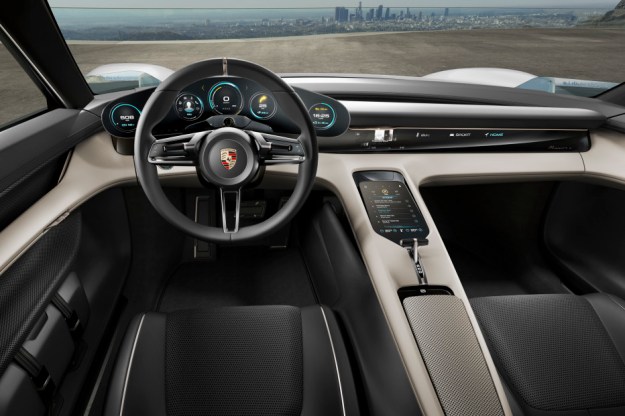
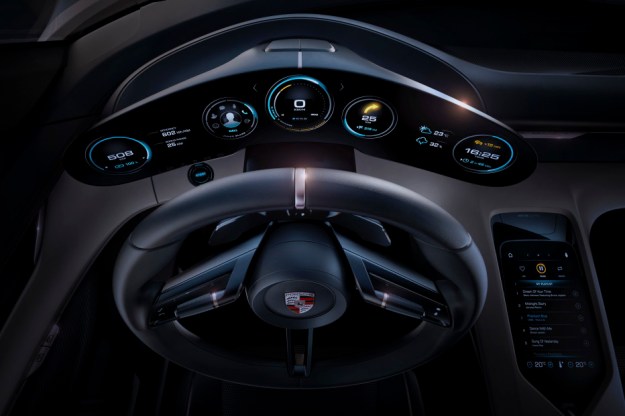
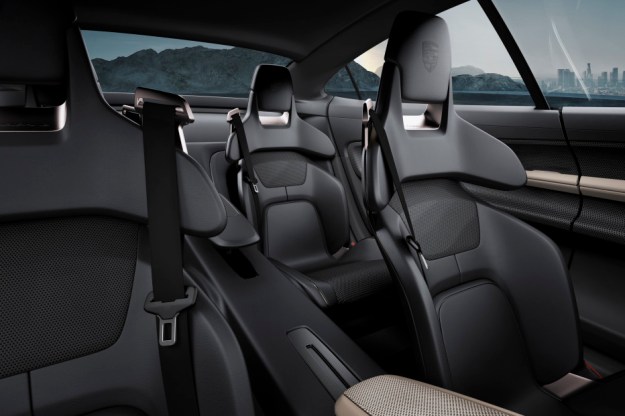
In September, Porsche showed off the Mission E, a fully electric and fully beautiful concept made to dethrone Tesla motors as the EV industry’s king of cool.

Today, Porsche announced it’s investing more than a billion dollars to bring the Mission E to production. As in, you’ll be able to buy one. We’re light on details—like the size of the battery, or when we’ll actually see one on the road—but we’ve got the most important numbers. The motor (or motors, Porsche hasn’t said) will produce more than 600 horsepower. The four-seater Mission E will go from 0 to 62 mph in under 3.5 seconds. And it will go 310 miles on a charge.

Porsche, which faces increasingly strict fuel emission standards from US and European authorities, been working with batteries for a few years now, with top notch results. It already offers plug-in hybrid versions of the Panamera and Cayenne, it’s successfully raced a 911 hybrid. Then there’s the flat-out amazing gas-electric 918 Spyder supercar and 919 Hybrid that won at Le Mans this year. So it makes sense to make the next step a full electric.

Compared to Tesla’s current range-topper, the excellent Model S P90D, the Mission E will offer a bit less power and a slower acceleration time. But Porsche wins on range—the longest-legged Tesla goes roughly 286 miles on a charge. Here, the Germans have a second advantage: They’re working on an 800-volt charger that will power the car up to 80 percent in just 15 minutes, half the time it takes the Tesla.

Porsche, which faces increasingly strict fuel emission standards from US and European authorities, been working with batteries for a few years now, with top notch results. It already offers plug-in hybrid versions of the Panamera and Cayenne, it’s successfully raced a 911 hybrid. Then there’s the flat-out amazing gas-electric 918 Spyder supercar and 919 Hybrid that won at Le Mans this year. So it makes sense to make the next step a full electric.

Porsche plans to build the battery into the floor of the car, like Tesla does, so you can expect a very low center of gravity, great news for performance. But really, the Mission E wins on looks. The Model S and Model X SUV are lovely designs, but the Porsche is simply gorgeous, in the way only a Porsche can be. We’ve only seen the concept version, but hopefully Porsche will be smart enough to change as little as possible on the way to production.

http://www.wired.com/2015/12/porsches-electric-mission-e-is-poised-to-whoop-teslas-model-s/

Disrupting automotive through adaptation of technology business model – How to attract MILLENNIALS

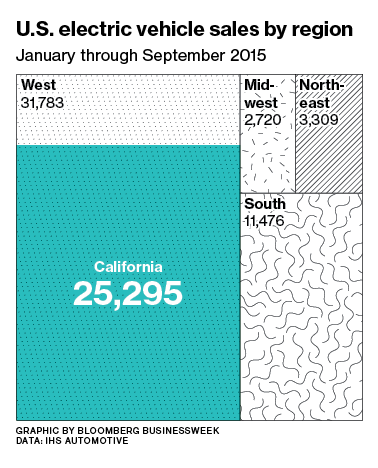
n the US 28% of cars are leased. While it is uncommon to lease inexpensive vehicles and family cars, close to half of all luxury cars are. That percentage is only higher in one other car-segment: electric vehicles (EVs): In the first 3 quarters of 2015 75% of new EVs have been leased!

The most common explanation is that EVs are still too expensive to buy. Another popular reason is that customers do not trust the durability of electric powertrains and lithium-ion battery technology. Finally, customers claim that driving range might be an issue and thus prefer leasing over buying (more on my thoughts on driving range anxiety)

All 3 reasons play a major role. All of them have been researched by J.D. Power back in 2010. However, they don’t sufficiently explain the high lease rates among EV customers today. Here are three insights why car leases are 3-4x more common in the EV segment and why car ownership is becoming rare among young customers.

GenY (Millennials) Adapts New Purchasing Habits

Picture

Average Earnings for Young Adults in $2013

Picture

Cars Sold in Millions per Generation

Car leases are already the most popular way of „purchasing“ a luxury and electric vehicle (EV). First, I documented why millennials/younger customers are more likely to lease. Second, I described why technology changes can lead to reduced interest in buying. Finally, I tried to proof that smartphones have given users the ability to experience freedom without owning a car.

These 3 points lead to an assumption: GenY, as the second largest car buying generation, is leading the ownership disruption in the car segment. They buy fewer cars per 1000 citizens, have the highest % of leases and have different expectations for cars (in terms of technologies and features). How can car manufacturers attract GenY and bring driving back?

Lets take a look outside the car industry. How are technology firms attracting young customers? The smartphone market, like the car market, has taken a hit in the last few years. The handset replacement cycle has slowed down significantly. It is the slowest since the introduction of the iPhone in 2007. In 2014, 143 million mobile phones were sold in the United States (-15%). Of them ~90% were smartphones. 2007 users upgraded their phones every ~19 months; today they upgrade every 26+ months.

Picture

Mobile Phone Upgrade Cycle


Source: http://www.ev-analyst.com/home/disrupting-automotive-by-adaptation-of-technology-business-model-3-reasons-why-car-ownership-is-dying-12

http://www.ev-analyst.com/home/disrupting-automotive-through-adaptation-of-technology-business-model-how-to-attract-millennials-22