Archiv der Kategorie: Artificial Intelligence

„I was forced to use AI until the day I was laid off.“ Copywriters reveal how AI has decimated their industry

Copywriters were one of the first to have their jobs targeted by AI firms. These are their stories, three years into the AI era.

Back in May 2025, not long after I put out the first call for AI Killed My Job stories, I received a thoughtful submission from Jacques Reulet II. Jacques shared a story about his job as the head of support operations for a software firm, where, among other things, he wrote copy documenting how to use the company’s product.

“AI didn’t quite kill my current job, but it does mean that most of my job is now training AI to do a job I would have previously trained humans to do,” he told me. “It certainly killed the job I used to have, which I used to climb into my current role.” He was concerned for himself, as well as for his more junior peers. As he told me, “I have no idea how entry-level developers, support agents, or copywriters are supposed to become senior devs, support managers, or marketers when the experience required to ascend is no longer available.”

When we checked back in with Jacques six months later, his company had laid him off. “I was actually let go the week before Thanksgiving now that the AI was good enough,” he wrote.

He elaborated:

Chatbots came in and made it so my job was managing the bots instead of a team of reps. Once the bots were sufficiently trained up to offer “good enough” support, then I was out. I prided myself on being the best. The company was actually awarded a “Best Support” award by G2 (a software review site). We had a reputation for excellence that I’m sure will now blend in with the rest of the pack of chatbots that may or may not have a human reviewing them and making tweaks.

It’s been a similarly rough year for so many other workers, as chronicled by this project and elsewhere—from artists and illustrators seeing client work plummet, to translators losing jobs en masse, to tech workers seeing their roles upended by managers eager to inject AI into every possible process.

And so we end 2025 in AI Killed My Jobs with a look at copywriting, which was among the first jobs singled out by tech firms, the media, and copywriters themselves as particularly vulnerable to job replacement. One of the early replaced-by-AI reports was the sadly memorable story of the copywriter whose senior coworkers started referring to her as “ChatGPT” in work chats before she was laid off without explanation. And YouTube was soon overflowing with influencers and grifters promising viewers thousands of dollars a month with AI copywriting tools.

But there haven’t been many investigations into how all that’s borne out since. How have the copywriters been faring, in a world awash in cheap AI text generators and wracked with AI adoption mania in executive circles? As always, we turn to the workers themselves. And once again, the stories they have to tell are unhappy ones. These are accounts of gutted departments, dried up work, lost jobs, and closed businesses. I’ve heard from copywriters who now fear losing their apartments, one who turned to sex work, and others, who, to their chagrin, have been forced to use AI themselves.

Readers of this series will recognize some recurring themes: The work that client firms are settling for is not better when it’s produced by AI, but it’s cheaper, and deemed “good enough.” Copywriting work has not vanished completely, but has often been degraded to gigs editing client-generated AI output. Wages and rates are in free fall, though some hold out hope that business will realize that a human touch will help them stand out from the avalanche of AI homogeneity.

As for Jacques, he’s relocated to Mexico, where the cost of living is cheaper, while he looks for new work. He’s not optimistic. As he put it, “It’s getting dark out there, man.”

Art by Koren Shadmi.

Before we press on, a quick word: Many thanks for reading Blood in the Machine and AI Killed My Job. This work is made possible by readers who pitch in a small sum each month to support it. And, for the cost of $6, a decent coffee a month, or $60 a year, you can help ensure it continues, and even, hopefully, expands. Thanks again, and onwards.

The next installments will focus on education, healthcare, and journalism. If you’re a teacher, professor, administrative assistant, TA, librarian, or otherwise work in education, or a doctor, nurse, therapist, pharmacist, or otherwise work in healthcare, please get in touch at AIKilledMyJob@pm.me. Same if you’re a reporter, journalist, editor, or a creative writer. You can read more about the project in the intro post, or the installments published so far.

This story was edited by Joanne McNeil.


They let go of the all the freelancers and used AI to replace us

Social media copywriter

I believe I was among the first to have their career decimated by AI. A privilege I never asked for. I spent nearly 6 years as a freelance social media copywriter, contracting through a popular company that worked with clients—mostly small businesses—across every industry you can imagine. I wrote posts and researched topics for everything from beauty to HVAC, dentistry, and even funeral homes. I had to develop the right voice for every client and transition seamlessly between them on any given day. I was frequently called out and praised, something that wasn’t the norm, and clients loved me. I was excellent at my job, and adapting to the constantly changing social media landscape and figuring out how to best the algorithms.

In early 2022, the company I contracted to was sold, which is never a sign of something good to come. Immediately, I expressed my concerns but was told everything would continue as it was and the new owners had no intention of getting rid of freelancers or changing how things were done. As the months went by, I noticed I was getting less and less work. Clients I’d worked with monthly for years were no longer showing up in my queue. I’d ask what was happening and get shrugged off, even as my work was cut in half month after month. At the start of the summer, suddenly I had no work. Not a single client. Maybe it was a slow week? Next week will be better. Until next week I yet again had an empty queue. And the week after. Panicking, I contacted my “boss”, who hadn’t been told anything. She asked someone higher up and it wasn’t until a week later she was told the freelancers had all been let go (without being notified), and they were going to hand the work off to a few in-house employees who would be using AI to replace the rest of us.

The company transitioned to a model where clients could basically “write” the content themselves, using Mad Libs-style templates that would use AI to generate the copy they needed, with the few in-house employees helping things along with some boilerplate stuff to kick things off.

They didn’t care that the quality of the posts would go down. They didn’t care that AI can’t actually get to know the client or their needs or what works with their customers. And the clients didn’t seem to care at first either, since they were assured it would be much cheaper than having humans do the work for them.

Since then, I’ve failed to get another job in social media copywriting. The industry has been crushed by things like Copy.AI. Small clients keep being convinced that there’s no need to invest in someone who’s an expert at what they do, instead opting for the cheap and easy solution and wondering why they’re not seeing their sales or engagement increasing.

For the moment, honestly I’ve been forced to get into online sex work, which I’ve never said “out loud” to anyone. There’s no shame in doing it, because many people genuinely enjoy doing it and are empowered by it, but for me it’s not the case. It’s just the only thing I’ve been able to get that pays the bills. I’m disabled and need a lot of flexibility in the hours I work any given day, and my old work gave me that flexibility as long as I met my deadlines – which I always did.

I think that’s another aspect to the AI job killing a lot of people overlook; what kind of jobs will be left? What kind of rights and benefits will we have to give up just because we’re meant to feel grateful to have any sort of job at all when there are thousands competing for every opening?

–Anonymous

I was forced to use AI until the day I was laid off

Corporate content copywriter

I’m a writer. I’ll always be a writer when it comes to my off-hours creative pursuits, and I hope to eventually write what I’d like to write full-time. But I had been writing and editing corporate content for various companies for about a decade until spring 2023, when I was laid off from the small marketing startup I had been working at for about six months, along with most of my coworkers.

The job mostly involved writing press releases, and for the first few months I wrote them without AI. Then my bosses decided to pivot their entire operational structure to revolve around AI, and despite voicing my concerns, I was essentially forced to use AI until the day I was laid off.

Copywriting/editing and corporate content writing had unfortunately been a feast-and-famine cycle for several years before that, but after this lay-off, there were far fewer jobs available in my field, and far more competition for these few jobs. The opportunities had dried up as more and more companies were relying on AI to produce content rather than human creatives. I couldn’t compete with copywriters who had far more experience than me, so eventually, I had to switch careers. I am currently in graduate school in pursuit of my new career, and while I believe this new phase of my life was the right move, I resent the fact that I had to change careers in the first place.

—Anonymous

I had to close my business after my client started using AI

Freelance copywriter

I worked as a freelance writer for 15 years. The last five, I was working with a single client – a large online luxury fashion seller based in Dubai. My role was writing product copy, and I worked my ass off. It took up all my time, so I couldn’t handle other clients. For the majority of the time they were sending work 5 days a week, occasionally weekends too and I was handling over 1000 descriptions a month. Sometimes there would be quiet spells for a week or two, so when they stopped contacting me…I first thought it was just a normal “dip”. Then a month passed. Then two. At that point, I contacted them to ask what was happening and they gave me a vague “We have been handling more of the copy in-house”. And that was that – I have never heard from them again, they didn’t even bother to tell me that they didn’t need my services any more. I’ve seen the descriptions they use now and they are 100% AI generated. I ended up closing my business because I couldn’t afford to keep paying my country’s self employment fees while trying to find new clients who would pay enough to make it worth continuing.

-Becky

We had a staff of 8 people and made about $600,000. This year we made less than $10k

Business copywriter

I was a business copywriter for eCommerce brands and did B2B sales copywriting before 2022.

In fact, my agency employed 8 people total at our peak. But then 2022 came around and clients lost total faith in human writing. At first we were hopeful, but over time we lost everything. I had to let go of everyone, including my little sister, when we finally ran out of money.

I was lucky, I have some friends in business who bought a resort and who still value my marketing expertise – so they brought me on board in the last few months, but 2025 was shaping up to be the worst year ever as a freelancer. I was looking for other jobs when my buddies called me.

At our peak, we went from making something like $600,000 a year and employing 8 people… To making less than $10K in 2025 before I miraculously got my new job.

Being repeatedly told subconsciously if not directly that your expertise is not valued or needed anymore – that really dehumanizes you as a person. And I’m still working through the pain of the two-year-long process that demolished my future in that profession.

It’s one of those rare times in life when a man cries because he is just feeling so dehumanized and unappreciated despite pouring his life, heart and soul into something.

I’ve landed on my feet for now with people who value me as more than a words-dispensing machine, and for that I’m grateful. But AI is coming for everyone in the marketing space.

Designers are hardly talked about any more. My leadership is looking forward to the day when they can generate AI videos for promotional materials instead of paying a studio $8K or more to film and produce marketing videos. And Meta is rolling out AI media buying that will replace paid ads agencies.

What jobs will this create? I can see very little. I currently don’t have any faith that this will get better at any point in the future.

I think the reason why is that I was positioned towards the “bottom” of the market, in the sense that my customers were nearly all startups and new businesses that people were starting in their spare time.

I had a partner Jake and together we basically got most of our clients through Fiverr. Fiverr customers are generally not big institutions or multi-nationals, although you do get some of that on Fiverr… It’s mostly people trying to start small businesses from the ground up.

I remember actually, when I was first starting out in writing, thinking “I can’t believe this is a job!” because writing has always come naturally to me. But the truth is, a lot of people out there go to start a business and what’s the first thing you do? You get a website, you find a template, and then you’re staring at a blank page thinking “what should I write about it?” And for them, that’s not an easy question to answer.

So that’s essentially where we fit in – and there’s more to it, as well, such as Conversion Rate Optimization on landing pages and so forth. When you boil it all down, we were helping small businesses find their message, find their market, and find their media – the way they were going to communicate with their market. And we had some great successes!

But nothing affected my business like ChatGPT did. All through Covid we were doing great, maybe even better because there were a lot of people staying home trying to start a new business – so we’d be helping people write the copy for their websites and so forth.

AI is really dehumanizing, and I am still working through issues of self-worth as a result of this experience. When you go from knowing you are valuable and valued, with all the hope in the world of a full career and the ability to provide other people with jobs… To being relegated to someone who edits AI drafts of copy at a steep discount because “most of the work is already done” …

2022-2023 was a weird time, for two reasons.

First, because I’m a very aware person – I remember that AI was creeping up on our industry before ChatGPT, with Jasper and other tools. I was actually playing with the idea of creating my own AI copywriting tool at the time.

When ChatGPT came out, we were all like “OK, this is a wake up call. We need to evolve…” Every person I knew in my industry was shaken.

Second, because the economy wasn’t that great. It had already started to downturn in 2022, and I had already had to let a few people go at that point, I can’t remember exactly when.

The first part of the year is always the slowest. So January through March, you never know if that’s an indication of how bad the rest of the year is going to be.

In our case, it was. But I remember thinking “OK, the stimulus money has dried up. The economy is not great.” So I wasn’t sure if it was just broad market conditions or ChatGPT specifically.

But even the work we were doing was changing rapidly. We’d have people come to us like “hey, this was written by ChatGPT, can you clean it up?”

And we’d charge less because it was just an editing job and not fully writing from scratch.

The drop off from 2022 to 2023 was BAD. The drop off from 2023 to 2024 was CATASTROPHIC.

By the end of that year, the company had lost the remaining staff. I had one last push before November 2023 (the end of the year has historically been the best time for our business, with Black Friday and Christmas) but I only succeeded in draining my bank account, and I was forced to let go of our last real employee, my sister, in early 2024. My brother and his wife were also doing some contract work for me at the time, and I had to end that pretty abruptly after our big push failed.

I remember, I believed that things were going to turn around again once people realized that even having a writing machine was not enough to create success like a real copywriter can. After all, the message is only one part of it – and divorced from the overall strategy of market and media, it’s never as effective as it can be.

In other words, there’s a context in which all marketing messages are seen, and it takes a human to understand what will work in that context.

But instead, what happened is that the pace of adoption was speeding up and all of those small entrepreneurs who used to rely on us, now used AI to do the work.

The technological advancements of GPT-4, and everyone trying to build their own AI, dominated the airwaves throughout 2023 and 2024. And technology adoption skyrocketed.

The thing is, I can’t even blame people. To be honest, when I’m writing marketing copy I use AI to speed up the process.

I still believe you need intelligence and strategy behind your ideas, or they will simply be meaningless words on a screen – but I can’t blame people for using these very cheap tools instead of paying an expert hundreds of dollars to get their website written.

Especially in my end of the market, where we were working with startup entrepreneurs who are bootstrapping their way to success.

When I officially left the business a few months ago, that left just my partner manning the Fiverr account we started with over 8 years ago.

I think the account is active enough to support a single person now, but I wouldn’t be so sure about next year. The drop off from 2022 to 2023 was BAD. The drop off from 2023 to 2024 was CATASTROPHIC.

Normally there are signs of life around April – in 2025, May had come and there was hardly a pulse in the business.

I still believe there may be a space for copywriters in the future, but much like tailors and seamstresses, it will be a very, very niche market for only the highest-end clients.

—Marcus Wiesner

My hours have been cut from nearly full time to 4-5 a month

Medical writer

I’m a medical writer; I work as a contract writer for a large digital marketing platform, adapting content from pharma companies to fit our platform. Medical writers work in regulatory, clinical, and marketing fields and I’m in marketing. I got my current contract job just 2 years ago, back when you could get this job with just a BA/BS.

In the last 2 years the market has changed drastically. My hours have been cut from nearly full time up to March ‘24 to 4-5 a month now if I’m lucky. I’ve been applying for new jobs for over a year and have had barely a nibble.

The trend now seems to be to have AI produce content, and then hire professionals with advanced degrees to check it over. And paying them less per hour than I make now when I actually work.

I am no longer qualified to do the job I’ve been doing, which is really frustrating. I’m trying to find a new career, trying to start over at age 50.

—Anonymous

We learned our work had been used to train LLMs and our jobs were outsourced to India

Editor for Gracenotes

So I lost my previous job to AI, and a lot of other things. I always joke that the number of historical trends that led to me losing it is basically a summary of the recent history of Western Civilization.

I used to be a schedule editor for Gracenote (the company that used to find metadata for CDs that you ripped into iTunes). They got bought by Nielsen, the TV ratings company, and then tasked with essentially adding metadata to TV guide listings. When you hit the info button on your remote, or when you Google a movie and get the card, a lot of that is Gracenote. The idea was that we could provide accurate, consistent, high-quality text metadata that companies could buy to add to their own listings. There’s a specific style of Gracenote Description Writing that still sticks out to me every time I see it.

So, basically from when I joined the company in late 2021 things were going sideways. I’m based in the Netherlands and worker protections are good, but we got horror stories of whole departments in the US showing up, being called into a “town hall” and laid off en-masse, so the writing was on the wall. We unionised, but they seemed to be dragging their feet on getting us a CAO (Collective Labour Agreement) that would codify a lot of our benefits.

The way the job worked was each editor would have a group of TV channels they would edit the metadata for. My team worked on the UK market, and a lot of us were UK transplants living in the NL. During my time there I did a few groups but, being Welsh, I eventually ended up with the Welsh, Irish and Scottish channels like S4C, RTE, BBC Alba. The two skills we were selling to the company were essentially: knowledge of the UK TV market used to prioritise different shows, and a high degree of proficiency in written English (and I bet you think you know why I lost the job to AI, but hold on).

Around January 2024 they introduced a new tool in the proprietary database we used, that totally changed how our work was done. Instead of channel groups that we prioritised ourselves, instead we were given an interface that would load 10 or so show records from any channel group, which had been auto-sorted by priority. It was then revealed to us that for the last two years or so, every single bit of our work in prioritisation had been fed into machine learning to try and work out how and why we prioritised certain shows over others.

“Hold on” we said, “this kind of seems like you’ve developed a tool to replace us with cheap overseas labour and are about to outsource all our jobs”

“Nonsense,” said upper management, “ignore the evidence of your lying eyes.”

That is, of course, what they had done.

They had a business strategy they called “automation as a movement” and we assumed they would be introducing LLMs into our workflow. But, as they openly admitted when they eventually told us what they were doing, LLMs simply weren’t (and still aren’t) good enough to do the work of assimilating, parsing and condensing the many different sources of information we needed to do the job. Part of it was accuracy, we would often have to research show information online and a lot of our job amounted to enclosing the digital commons by taking episode descriptions from fanwikis and rewriting them; part of it was variety, the information for the descriptions was ingested into our system in many different ways including press sites, press packs from the channels, emails, spreadsheets, etc etc and “AI” at the time wasn’t up to the task. The writing itself would have been entirely possible, it was already very formulaic, but getting the information to the point it was writable by an LLM was so impractical as to be impossible.

So they automated the other half of the job, the prioritisation. The writing was outsourced to India. As I said at the start, there’s a lot of historical currents at play here. Why are there so many people in India who speak and write English to a high standard? Don’t worry about it!

And, the cherry on the cake, both the union and the works council knew this would be happening, but were legally barred from telling us because of “competitive advantage”. They negotiated a pretty good severance package for those of us on “vastcontracts” (essentially permanent employees, as opposed to time-limited contracts) but it still saw a team of 10 reduced to 2 in the space of a month.

—Anonymous

Coworkers told me to my face that AI could and maybe should be doing all my work

Nonprofit communications worker

I currently work in nonprofit communications, and worked as a radio journalist for about four years before that. I graduated college in 2020 with a degree in music and broadcasting.

In my current job, I hear about the benefits of AI on a weekly basis. Unfortunately, those benefits consist of doing tasks that are a part of my direct workload. I’m already struggling to handle the amount of downtime that I have, as I had worked in the always-behind-schedule world of journalism before this (in fact, I am writing this on the clock right now). My duties consist mainly of writing for and putting together weekly and quarterly newsletters and writing our social media.

After a volunteer who recorded audio versions of our newsletters passed away suddenly, it was brought up in a meeting two hours after we heard the news that AI should be the one to create the audio versions going forward. I had to remind them that I am in fact an award-winning radio journalist and audio producer (I produce a few podcasts on a freelance basis, some of which are quite popular) and that I already have little work to do and would be able to take over those duties. After about two weeks of fighting, it was decided that I would be recording those newsletters. I also make sure our website is up-to-date on all of our events and community outings. At some point, I stopped being asked to write blurbs about the different events and I learned that this task was now being done by our IT Manager using AI to write those blurbs instead. They suck, but I don’t get to make that distinction. It has been brought up more than once that our social media is usually pretty fact-forward, and could easily be written by AI. That might be true, but it is also about half of my already very light workload. If I lost that, I would have very little to do. This has not yet been decided.

I have been told (to my face!) by my coworkers that AI could and maybe should be doing all of my work. People who are otherwise very progressive leaning seem to see no problem with me being out of work. While it was a win for me to be able to record the audio newsletters, I feel as if I am losing the battle for the right to do what I have spent the last five years of my life doing. I am 30 and making pennies, barely able to afford a one-bedroom apartment, while logging three-to-four hours of solitaire on my phone every day. This isn’t what I signed up for in life. My employers have given me some new work to do, but that is mostly planning parties and spreading cheer through the workplace, something I loathe and was never asked to do. There are no jobs in my field in my area.

If things keep progressing at this rate… I’ll be nothing but a party planner. I don’t even like parties. Especially not for people who think I should be out of a job.

I have seen two postings in the past six months for communications jobs that pay enough for me to continue living in my apartment. I got neither of them.

While I am still able to write my newsletter articles, those give me very little joy and if things keep progressing at this rate I won’t even have those. I’ll be nothing but a party planner. I don’t even like parties. Especially not for people who think I should be out of a job.

At this rate, I have seen little pushback from my employer about having AI do my entire job. Even if I think this is a horrible idea, as the topics I write about are often sensitive and personal, I have no faith that they will not go in this direction. At this point, I am concerned about layoffs and my financial future.

[We checked in with the contributor a few weeks after he reached out to us and he gave us this update:]

I am now being sent clearly AI written articles from heads of other departments (on subjects that I can and will soon be writing about) for publication on our website. And when I say “clearly AI,” I mean I took one look and knew immediately and was backed up by an online AI checker (which I realize is not always accurate but still). The other change is that the past several weeks have taught me that I don’t want to be a part of this field any longer. I can find another comms job, and actually have an interview with another company tomorrow, but have no reason to believe that they won’t also be pushing for AI at every turn.

—Anonymous

I’m a copywriter by trade. These days I do very little

Copywriter

I’m a copywriter by trade. These days I do very little. The market for my services is drying up rapidly and I’m not the only one who is feeling it. I’ve spoken to many copywriters who have noticed a drop in their work or clients who are writing with ChatGPT and asking copywriters to simply edit it.

I have clients who ask me to use AI wherever I can and to let them know how long it takes. It takes me less time and that means less money.

Some copywriters have just given up on the profession altogether.

I have been working with AI for a while. I teach people how to use it. What I notice is a move towards becoming an operator.

I craft prompts, edit through prompts and add my skills along the way (I feel my copywriting skills mean I can prompt and analyse output better than a non-writer). But writing like this doesn’t feel like it used to. I don’t go through the full creative process. I don’t do the hard work that makes me feel alive afterwards. It’s different, more clinical and much less rewarding.

I don’t want to be a skilled operator. I want to be a human copywriter. Yet, I think these days are numbered.

—Anonymous

I did “adapt or die” using AI, but I’m still in a precarious position

Ghostwriter

From 2010-today I worked as a freelance writer in two capacities: freelance journalism for outlets like Cannabis Now, High Times, Phoenix New Times, and The Street, and ghostwriting through a variety of marketplaces (elance, fiverr, WriterAccess, Scripted, Crowd Content) and agencies (Volume 9, Influence & Co, Intero Digital, Cryptoland PR).

The freelance reporting market still exists but is extremely competitive and pretty poorly paid. So I largely made my living ghostwriting to supplement income. The marketplaces all largely dried up unless you have a highly ranked account. I do not because I never wanted to grind through the low paid work long enough. I did attempt to use ChatGPT for low-paid WriterAccess jobs but got declined.

Meanwhile, my steadiest ghostwriting client was Influence & Co/Intero Digital. Through this agency, I have ghostwritten articles for nearly everyone you can think of (except Vox/Verge): NYT, LA Times, WaPo, WSJ, Harvard Business Review, Venture Beat, HuffPost, AdWeek, and so many more. And I’ve done it for execs for large tech companies, politicians, and more. The reason it works is because they have guest posts down to a science.

They built a database of all publisher’s guidelines. If I wanted to be in HBR, I knew the exact submission guidelines and could pitch relevant topics based on the client. Once the pitch is accepted, an outline is written, and the client is interviewed. This interview is crucial because it’s where we tap into the source and gain firsthand knowledge that can’t be found online. It also gets the client’s natural voice. I then combine the recorded interview with targeted online research to find statistics and studies to back up what the client says, connect it to recent events, and format to the publisher’s specs.

So ChatGPT came along December 2022, and for most of 2023 things were fine, although Influence & Co was bought by Intero, so internal issues were arising. I was with this company from the start when they were emailing word docs through building the database and selling the company several times. I can go on and on about how it all works.

We as writers don’t use ChatGPT, but it still seeped into the workflow from the client. The client interview I mentioned above as being vital because it gets info you can’t get online and their voice and everything you need to do it right—well those clients started using ChatGPT. By the end of 2023, I couldn’t handle it anymore because my job fundamentally changed. I was no longer learning anything. That vital mix that made it work was gone, and it was all me combining ChatGPT and the internet to try and make it fit into those publications above, many of which implemented AI detection, started publishing their own AI articles, and stopped accepting outside contributions.

I could probably write a book about the backend of all this stuff and how guest posts end up on every media outlet on the planet. Either way, ChatGPT ruined it

The thing about writing in this instance is that it doesn’t matter how many drafts you write, if it doesn’t get published in an acceptable publication, then it looks like we did nothing. What was steady work for over a decade slowed to a trickle, and I was tired of the work that was coming in because it was so bad.

Last summer, I emailed them and quit. I could no longer depend on the income. It was $1500-$3000 a month for over a decade and then by 2024 was $100 a month. And I hated doing it. It was the lowest level bs work I hated so much. I loved that job because I learned so much and I was challenged trying to get into all those publications, even if it was a team effort and not just me. I wrote some killer articles that ChatGPT could never. And the reason AI took my job is because clients who hired me for hundreds to thousands of dollars a month decided it’s not worth their time to follow our process and instead use ChatGPT.

That is why I think it’s important to talk about. I probably could still be working today in what became a content mill. And the reason it ultimately became no longer worth it isn’t all the corporate changes. It wasn’t my boss who was using AI—it was our customers. Working with us was deemed not important, and it’s impossible to explain to someone in an agency environment that they’re doing it to themselves. They will just go to a different agency and keep trying, and many of the unethical ones will pull paid tricks that make it look more successful than it is, like paying Entrepreneur $3000 for a year in their leadership network. (Comes out to paying $150 per published post, which is wild considering the pay scale above).

The whole YEC publishing conglomerate is another rabbit hole. Forbes, CoinTelegraph, Newsweek, and others have the same paid club structure that happens to come with guest post access. And those publishers allow paid marketing in the guise of editorials.

I could probably write a book about the backend of all this stuff and how guest posts end up on every media outlet on the planet. Either way, ChatGPT ruined it, and I’m largely retired now. I am still doing some ghostwriting, but it’s more in the vein of PR and marketing work for various agencies I can find that need writers. The market still exists, even if I have to work harder for clients.

And inexplicably, the reason we met originally was because I was involved in the start of Adobe Stock accepting AI outputs from contributors. I now earn $2500 per month consistently from that and have a lot of thoughts about how as a writer with deep inside knowledge of the writing industry, I couldn’t find a single way to “adapt or die” and leverage ChatGPT to make money. I could probably put up a website and build some social media bots. But plugging AI into the existing industry wasn’t possible. It was already competitive. Yet I somehow managed to build a steady recurring residual income stream selling Midjourney images on Adobe stock for $1 a piece. I’m on track to earn $30,000 this year from that compared to only $12,000 from writing. I used to earn $40,000-$50,000 a year doing exclusively writing from 2011-2022.

I did “adapt or die” using AI, but I’m still in a precarious position. If Adobe shut down or stopped accepting AI, I’ll be screwed. It doesn’t help that I’m very vocally against Adobe and called them out last year via Bloomberg for training firefly on Midjourney outputs when I’m one of the people making money from it. I’m fascinated to learn how the court cases end up and how it impacts my portfolio. I’m currently working to learn photography and videography well enough to head to Vegas and LA for conferences next year to build a real editorial stock portfolio across the other sites.

So my human writing job was reduced below a living wage, and I have an AI image portfolio keeping me afloat while I try to build a human image/video portfolio faster than AI images are banned. Easy peasy right?

–Brian Penny

The agency was begging me to take on more work. Then it had nothing for me

Freelance copywriter

I was a freelance copywriter. I am going to be fully transparent and say I was never one of those people that hustled the best, but I had steady work. Then AI came and one of the main agencies that I worked for went from begging me to take on more work to having 0 work for me in just 6-8 months. I struggled to find other income, found another agency that had come out of the initial AI hype and built a base of clients that had realized AI was slop, only for their customer base to be decimated by Trump’s tariffs about a month after I joined.

What I think people fail to realize when they talk about AI is that this is coming on the tail end of a crisis in employment for college grads for years. I only started freelancing because I applied to hundreds of jobs after winding up back at my mom’s house during COVID-19. Anecdotally, most of my friends that I graduated with (Class of 2019) spent years struggling to find stable, full-time jobs with health insurance, pre-AI. Add AI to the mix, and getting your foot in the door of most white collar industries just got even harder.

As I continue airing my grievances in your email, I remember when ChatGPT first came out a lot of smug literary types on Twitter were saying “if your writing can be replaced by AI then it wasn’t good to begin with,” and that made me want to scream. The writing that I’m actually good at was the writing that nobody was going to pay me for because the media landscape is decimated!

Content writing/copywriting was supposed to be the way you support yourself as an artist, and now even that’s gone.

—Rebecca Duras

My biggest client replaced me with a custom GPT. They surely trained it using my work

Copywriter and Marketing Consultant

I am a long-time solopreneur and small business owner, who got into the marketing space about 8 years ago. This career shift was quite the surprise to me, as for most of my career I didn’t like marketing…or marketers. But here we are ;p

While I don’t normally put it in these terms, what shifted everything for me was realizing that copywriting was a thing — it could make a huge difference in my business and for other businesses, too. With a BA in English, and after doing non-marketing writing projects on the side for years, it just made a ton of sense to me that the words we use to talk about our businesses can make a big difference. I was hooked.

After pursuing some training, I had a lucrative side-hustle doing strategic messaging work and website copy for a few years before jumping into full-time freelancing in 2021. The work was fun, the community of marketers I was a part of was amazing, and I was making more money than I ever could have in my prior business.

And while the launch of ChatGPT in Nov ‘22 definitely made many of us nervous — writing those words brings into focus how stressful the existential angst has actually been since that day — for me and many of my copywriting friends, the good times just kept rolling. 2023 was my best year ever in business — by a whopping 30%. I wasn’t alone. Many of my colleagues were also killing it.

All of that changed in 2024.

Early that year, the AI propaganda seemed to hit its full crescendo, and it started significantly impacting my business. I quickly noticed leads were down, and financially, things started feeling tight. Then, that spring, my biggest retainer client suddenly gave me 30-days notice that they wouldn’t renew my contract — which made up half of what I needed to live on. The decision caught everyone, including the marketing director, off guard. She loved what I was doing for them and cried when she told me the news. I later found out through the grapevine that the CEO and his right hand guy were hoping to replace me with a custom GPT they had created. They surely trained it using my work.

The AI-related hits kept coming. The thriving professional community I enjoyed pretty much imploded that summer – largely because of some unpopular leadership decisions around AI. Almost all of my skilled copywriter friends left the organization — and while I’ve lost touch with most, the little I have heard is that almost all of them have struggled. Many have found full-time employment elsewhere.

I won’t go into all the ins-and-outs of what has happened to me since, and I’ll leave my rant about getting AI slop from my clients to “edit” alone. (Briefly, that task is beyond miserable.)

But I will say from May of 2024 to now, I’ve gone from having a very healthy business and amazing professional community, to feeling very isolated and struggling to get by. Financially, we’ve burned through $20k in savings and almost $30k in credit cards at this point. We’re almost out of cash and the credit cards are close to maxed. Full-time employment that’d pay the bills (and get us out of our hole) just isn’t there. Truthfully, if it wasn’t for a little help from some family – and basically being gifted two significant contracts through a local friend – we’d be flat broke with little hope on the horizon. Despite our precarious position, continuing to risk freelance work seems to be our best and pretty much only option.

I do want to say, though, that even though it’s bleak, I see some signs for hope. In the last few months, in my experience many business owners are waking up to the fact that AI can’t do what it claims it can. Moreover, with all of the extra slop around, they’re feeling even more overwhelmed – which means if you can do any marketing strategy and consulting, you might make it.

But while I see that things might be starting to turn, the pre-AI days of junior copywriting roles and freelancers being able making lots of money writing non-AI content seem to be long gone. I think those writers who don’t lean on AI and find a way to make it through will be in high-demand once the AI-illusion starts to lift en masse. I just hope enough business owners who need marketing help wake up before then so that more of us writers don’t have to starve.

–Anonymous

source: https://www.bloodinthemachine.com/p/i-was-forced-to-use-ai-until-the

Kids in China Are Using Bots and Engagement Hacks to Look More Popular on Their Smartwatches


In China, parents are buying smartwatches for children as young as 5, connecting them to a digital world that blends socializing with fierce competition.
Image may contain Meng Xiaodong Body Part Finger Hand Person Baby and Shelf
Photo-Illustration: WIRED Staff; Getty Images


At what age should a kid ideally get a smartwatch? In China, parents are buying them for children as young as five. Adults want to be able to call their kids and track their location down to a specific building floor. But that’s not why children are clamoring for the devices, specifically ones made by a company called Xiaotiancai, which translates to Little Genius in English.

The watches, which launched in 2015 and cost up to $330, are a portal into an elaborate world that blends social engagement with relentless competition. Kids can use the watches to buy snacks at local shops, chat and share videos with friends, play games, and, sure, stay in touch with their families. But the main activity is accumulating as many “likes” as possible on their watch’s profile page. On the extreme end, Chinese media outlets have reported on kids who buy bots to juice their numbers, hack the watches to dox their enemies, and sometimes even find romantic partners. According to tech research firm Counterpoint Research, Little Genius accounts for nearly half of global market share for kids’ smartwatches.

Status Games

Over the past decade, Little Genius has found ways to gamify nearly every measurable activity in the life of a child—playing ping pong, posting updates, the list goes on. Earning more experience points boosts kids to a higher level, which increases the number of likes they can send to friends. It’s a game of reciprocity—you send me likes, and I’ll return the favor. One 18-year-old recently told Chinese media that she had struggled to make friends until four years ago when a classmate invited her into a Little Genius social circle. She racked up more than one million likes and became a mini-celebrity on the platform. She said she met all three of her boyfriends through the watch, two of whom she broke up with because they asked her to send erotic photos.


High like counts have become a sort of status symbol. Some enthusiastic Little Genius users have taken to RedNote (or Xiaohongshu), a prominent Chinese social media app, to hunt for new friends so as to collect more likes and badges. As video tutorials on the app explain, low-level users can only give out five likes a day to any one friend; higher-ranking users can give out 20. Because the watch limits its owner to a total of 150 friends, kids are therefore incentivized to maximize their number of high-level friends. Lower-status kids, in turn, are compelled to engage in competitive antics so they don’t get dumped by higher-ranking friends.

“They feel this sense of camaraderie and community,” said Ivy Yang, founder of New York-based consultancy Wavelet Strategy, who has studied Little Genius. “They have a whole world.” But Yang expressed reservations about the way the watch seems to commodify friendship. “It’s just very transactional,” she adds.

Engagement Hacks

On RedNote/Xiaohongshu, people post videos on circumventing Little Genius’s daily like limits, with titles such as “First in the world! Unlimited likes on Little Genius new homepage!” The competitive pressure has also spawned businesses that promise to help kids boost their metrics. Some high-ranking users sell their old accounts. Others sell bots that send likes or offer to help keep accounts active while the owner of a watch is in class.

Get enough likes—say, 800,000—and you become a “big shot” in the Little Genius community. Last month, a Chinese media outlet reported that a 17-year-old with more than 2 million likes used her online clout to sell bots and old accounts, earning her more than $8,000 in a year. Though she enjoyed the fame that the smartwatch brought her, she said she left the platform after getting into fights with other Little Genius “big shots” and facing cyberbullying.


In September, a Beijing-based organization called China’s Child Safety Emergency Response warned parents that children with Little Genius watches were at risk of developing dangerous relationships or falling victim to scams. Officials have also raised alarms about these hidden corners of the Little Genius universe. The Chinese government has begun drafting national safety standards for children’s watches, following growing concerns over internet addiction, content unfit for children, and overspending via the watch payment function. The company did not respond to requests for comment.

I talked to one parent who had been reluctant to buy the watch. Lin Hong, a 48-year-old mom in Beijing, worried that her nearsighted daughter, Yuanyuan, would become obsessed with its tiny screen. But once Yuanyuan turned 8, Lin relented and splurged on the device. Lin’s fears quickly materialized.


Yuanyuan loved starting her day by customizing her avatar’s appearance. She regularly sent likes to her friends and made an effort to run and jump rope to earn more points. “She would look for her smartwatch first thing every morning,” Lin said. “It was like adults, actually, they’re all a bit addicted.”


To curb her daughter’s obsession, Lin limited Yuanyuan’s time on the watch. Now she’s noticing that her daughter, who turns 9 soon, chafes at her mother’s digital supervision. “If I call her three times, she’ll finally pick up to say, ‘I’m still out, stop calling. I’m not done playing yet,’ and hang up,” Lin said. “If it’s like this, she probably won’t want to keep wearing the watch for much longer.”


This is an edition of Zeyi Yang and Louise Matsakis Made in China newsletter. Read previous newsletters here.


Apple Shortcuts with AI capabilities

Source: https://www.wired.com/story/apple-shortcuts-just-got-a-lot-better/

Apple’s Most Overlooked App Just Got a Lot Better

Apple Shortcuts, which lets users write custom automations, recently earned some new capabilities thanks to Apple Intelligence. Here’s how to make the most of this upgrade.

Image may contain Light Accessories Pattern Fractal and Ornament

As sentences go, “Apple Intelligence now works in Apple Shortcuts” isn’t the most likely to inspire a lot of people to click a link. And that’s too bad: This change, one of the more overlooked new features in macOS 26, means you can use Apple’s on-board AI to do all kinds of things while designing shortcuts.

Look, I get it: Apple Intelligence makes AI a feature, not a product, and features are generally less interesting to read about than full-blown products. And Apple Shortcuts—which lets you create one simple automation to execute multiple tasks—is one of those features that’s easy to overlook. But it can save you a lot of time, if you own a device that supports the AI engine and you’re willing to put in a bit of effort to automate tasks you do often.

I, for example, set up my daily journal with Shortcuts, creating a fresh journal entry that pulls in things like the weather, a quote, and a general structure. I use this shortcut just about every day, and it makes my life better.

Adding a large language model to Shortcuts means it’s easier to build automations that can simplify your life. Here’s how:

How This Works

Head to Apple Shortcuts, create a new shortcut, and you’ll see “Apple Intelligence” as one of the listed applications that’s supported. There are a few Actions related to text, allowing you to do things like proofread, summarize, and make a list from text. You also get the ability to create an image, if you want.

For my money, though, the most useful Action offered is “Use Model,” mostly because of how open-ended it is. With this you can choose between three models—the totally offline and private model running on your device, a server offered by Apple using the same models, or even ChatGPT (no subscription or API key necessary).

You can write any prompt you want, allowing you to manipulate text in all kinds of useful ways. I, for example, wanted to be able to quickly copy the details of an event invitation from a text message or email, then add it to my calendar. I created a new shortcut that grabs the current text from the clipboard. I added a bunch of Use Model steps that use the original text and output things like an event title, the start time for the event, and the location. Then I set the shortcut to create an event using these details.

Image may contain Page and Text

It all took some fine-tuning, sure, but it now works well enough that I can add events to my calendar much more quickly than ever before. And I made a similar shortcut for adding items to Reminders, which I use as my primary to-do list.

Image may contain Page and Text

Neither of these are perfect—they get things wrong, which I’m sure I could prevent with more fine-tuning. But they work well enough, and they let me review entries before adding them to my calendar. This has already saved me a bit of time in day-to-day life.

I’m sure you can think of some similar task you can automate. My point isn’t to say that you should use this exact shortcut—it’s to say that you can build a shortcut that works exactly the way you want it. The AI means you can grab details from text that’s not necessarily structured in a clean way and output those details exactly where needed.

I’ve mentioned in multiple articles over the past few weeks that I don’t think the chatbot will ultimately be the primary way most of us actually use AI in the coming years. Apple’s Shortcuts, which empowers the user to build things using the technology, is the version of this technology I would like to see catch on—a feature that makes existing tools a little bit better.

OpenAI’s Atlas Browser Takes Direct Aim at Google Chrome

The new ChatGPT-powered web browser is OpenAI’s boldest play yet to reinvent how people use the web.

Illustration of several web browsers with the OpenAI logo and search bars

Illustration: WIRED Staff

OpenAI announced on Tuesday it’s rolling out a new internet browser called Atlas that integrates directly with ChatGPT. Atlas includes features like a sidebar window people can use to ask ChatGPT questions about the web pages they visit. There’s also an AI agent that can click around and complete tasks on a user’s behalf.

“We think that AI represents a rare, once-a-decade opportunity to rethink what a browser can be about,” OpenAI CEO Sam Altman said during a livestream announcing Atlas. “Tabs were great, but we haven’t seen a lot of browser innovation since then.”

Atlas debuts as Silicon Valley races to use generative AI to reshape how people experience the internet. Google has also announced a plethora of AI features for its popular Chrome browser, including a “sparkle” button that launches its Gemini chatbot. Chrome remains the most used browser worldwide.

OpenAI says the Atlas browser will be available starting today for ChatGPT users globally on macOS. Windows and mobile options are currently in the works. Atlas is free to use, though its agent features are reserved for subscribers to OpenAI’s ChatGPT Plus or ChatGPT Pro plans.

OpenAI highlighted how Atlas can help users research vacations and other activities.

“We’ve made some major upgrades to search on ChatGPT when accessed via Atlas,” Ryan O’Rouke, OpenAI’s lead designer for the browser, said during the livestream. If a user asks for movie reviews in the Atlas search bar, a chatbot-style answer will pop up first, rather than the more traditional collection of blue links users might expect when searching the web via Google.

Now, in addition to that result, users can switch to other tabs to see a collection of website links, images, videos, or news related to their queries. It’s a bit of an inversion of the Google Chrome experience. Rather than the search result being a collection of links with AI features added on top of that, the AI chatbot is central in Atlas, with the list of website links or image results as secondary.

Another feature OpenAI highlighted in the livestream is Atlas’ ability to collect “browser memories.” The capability is optional, and is an iteration of ChatGPT’s existing memory tool that stores details about users based on their past interactions with the chatbot. The browser can recall what you searched for in the past and use that data when suggesting topics of interest and actions to take, like automating an online routine it detects or returning back to a website you previously visited that could be helpful for a current project.

In Atlas users can highlight whatever they are writing and request assistance from ChatGPT.
Atlas has an optional memory feature that can recall what users searched for in the past.

Tech giants and smaller startups have been experimenting with baking AI into web browsers for the past several years. Microsoft was one of the first movers when it threw its AI tool, called Bing at the time, into its Edge browser as a sidebar. Since then, browser-focused companies like Opera and Brave have also continued to tinker with different AI integrations. Another notable entry in the AI browser wars is Perplexity’s Comet, which launched this year and is also free to use.

Source: https://www.wired.com/story/openai-atlas-browser-chrome-agents-web-browsing/

Forget SEO. Welcome to the World of Generative Engine Optimization

This holiday season, rather than searching on Google, more Americans will likely be turning to large language models to find gifts, deals, and sales. Retailers could see up to a 520 percent increase in traffic from chatbots and AI search engines this year compared to 2024, according to a recent shopping report from Adobe. OpenAI is already moving to capitalize on the trend: Last week, the ChatGPT maker announced a major partnership with Walmart that will allow users to buy goods directly within the chat window.

As people start relying on chatbots to discover new products, retailers are having to rethink their approach to online marketing. For decades, companies tried to game Google’s search results by using strategies known collectively as search engine optimization, or SEO. Now, in order to get noticed by AI bots, more brands are turning to “generative engine optimization,” or GEO. The cottage industry is expected to be worth nearly $850 million this year, according to one market research estimate.

GEO, in many ways, is less a new invention than the next phase of SEO. Many GEO consultants, in fact, came from the world of SEO. At least some of their old strategies likely still apply since the core goal remains the same: anticipate the questions people will ask and make sure your content appears in the answers. But there’s also growing evidence that chatbots are surfacing different kinds of information than search engines.

Imri Marcus, chief executive of the GEO firm Brandlight, estimates that there used to be about a 70 percent overlap between the top Google links and the sources cited by AI tools. Now, he says, that correlation has fallen below 20 percent.

Search engines often favor wordiness—think of the long blog posts that appear above recipes on cooking websites. But Marcus says that chatbots tend to favor information presented in simple, structured formats, like bulleted lists and FAQ pages. “An FAQ can answer a hundred different questions instead of one article that just says how great your entire brand is,” he says. “You essentially give a hundred different options for the AI engines to choose.”

The things people ask chatbots are often highly specific, so it’s helpful for companies to publish extremely granular information. “No one goes to ChatGPT and asks, ‘Is General Motors a good company?’” says Marcus. Instead, they ask if the Chevy Silverado or the Chevy Blazer has a longer driving range. “Writing more specific content actually will drive much better results because the questions are way more specific.”

These insights are helping to refine the marketing strategies of Brandlight’s clients, which include LG, Estée Lauder, and Aetna. “Models consume things differently,” says Brian Franz, chief technology, data and analytics officer at Estée Lauder Companies. “We want to make sure the product information, the authoritative sources that we use, are all the things that are feeding the model.” Asked whether he would ever consider partnering with OpenAI to let people shop Estée Lauder products within the chat window, Franz doesn’t hesitate. “Absolutely,” he says.

At least for the time being, brands are mostly worried about consumer awareness, rather than directly converting chatbot mentions into sales. It’s about making sure when people ask ChatGPT „What should I put on my skin after a sunburn?“ their product pops up, even if it’s unlikely anyone will immediately click and buy it. “Right now, in this really early learning stage where it feels like it’s almost going to explode, I don’t think we want to look at the ROI of a particular piece of content we created,” Franz says.

To create all of this new AI-optimized content, companies are, of course, turning to AI itself. “At the beginning, people speculated that AI engines will not be training on AI content,” Marcus says. “That’s not really the case.”

Source: https://www.wired.com/story/goodbye-seo-hello-geo-brandlight-openai/

OpenAI rolls out ‘instant’ purchases directly from ChatGPT, in a radical shift to e-commerce and a direct challenge to Google

https://fortune.com/2025/09/29/openai-rolls-out-purchases-direct-from-chatgpt-in-a-radical-shift-to-e-commerce-and-direct-challenge-to-google/

OpenAI said it will allow users in the U.S. to make purchases directly through ChatGPT using a new Instant Checkout feature powered by a payment protocol for AI co-developed with Stripe.

The new chatbot shopping feature is a big step toward helping OpenAI monetize its 700 million weekly users, many of whom currently pay nothing to interact with ChatGPT, as well as a move that could eventually steal significant market share from traditional Google search advertising.

The rollout of chatbot shopping features—including the possibility of AI agents that will shop on behalf of users—could also upend e-commerce, radically transforming the way businesses design their websites and try to market to consumers.

OpenAI said it was rolling out its Instant Checkout feature with Etsy sellers today, but would begin adding over a million Shopify merchants, including brands such as Glossier, Skims, Spanx, and Vuori “soon.”

The company also said it was open-sourcing the Agentic Commerce Protocol, a payment standard developed in partnership with payments processor Stripe that powers the Instant Checkout feature, so that any retailer or business could decide to build a shopping integration with ChatGPT. (Stripe’s and OpenAI’s commerce protocol, in turn, supports the open-source Model Context Protocol, or MCP, that was originally developed by AI company Anthropic last year. MCP is designed to allow AI models to directly hook into the backend systems of businesses and retailers. The new Agentic Commerce Protocol also supports more conventional API calls too.)

OpenAI will take what it described as small fee from the merchant on each purchase, helping to bolster the company’s revenue at a time when it is burning through many billions of dollars each year to train and support the running of its AI models.


How it works

OpenAI had previously launched a shopping feature in ChatGPT that helped users find products that were best suited to them, but the suggested results then linked out to merchants’ websites, where a user had to complete the purchase—analogous to the way a Google search works.

When a ChatGPT user asks a shopping-related question—such as “the best hiking boots for me that cost under $150” or “possible birthday gifts for my 10-year old nephew”—the chatbot will still respond with product suggestions. Under the new system, if a user likes one of the suggestions and Instant Checkout is enabled, they will be able to click a “Buy” button in the chatbot response and confirm their order, shipping, and payment details without ever leaving the chat.

OpenAI said its “product results are organic and unsponsored, ranked purely on relevance to the user.” The company also emphasized that the results are not affected by the fee the merchant pays it to support Instant Checkout.

Then, to determine which merchants that carry that particular product should be surfaced for the user, “ChatGPT considers factors like availability, price, quality, whether a merchant is the primary seller, and whether Instant Checkout is enabled,” when displaying results, the company said.

OpenAI said that ChatGPT subscribers, who pay a monthly fee for premium features, would be able to use the same credit or debit card to which they charge their subscription or store alternate payment methods to use.

OpenAI’s decision to launch the shopping feature using Stripe’s Agentic Commerce Protocol will be a big boost for that payment standard, which can be used across different AI platforms and also works with different payment processors—although it is easier to integrate for existing Stripe customers. The protocol works by creating an encrypted token for payment details and other sensitive data.

Currently, OpenAI says that the user remains in control, having to explicitly agree to each step of the purchasing process before any action is taken. But it is easy to imagine that in the future, users may be able to authorize ChatGPT or other AI models to act more “agentically” and actually make purchases for the user based on a prompt, without having to check back in with a user.

The fact that users never have to leave the chat interface to make the purchase may pose a challenge to Alphabet’s Google, which makes most of its money by referring users to companies’ websites. Although Google may be able to roll out similar shopping features within its Gemini chatbot or “AI Mode” in Google Search, it’s unclear whether what it could charge for transactions completed in these AI-native ways would compensate for any loss in referral revenue and what the opportunities would be for the display of other advertising around chatbot queries.

CMG Active Listening Scandal: American Tech Companies Involved

Overview

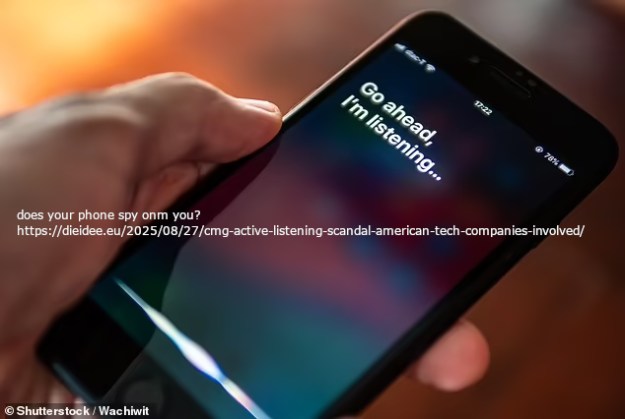
The CMG Active Listening scandal involves Cox Media Group (CMG), a major American media company, which admitted to using „Active Listening“ technology that allegedly captures conversations through smartphone microphones and smart devices to target users with hyper-specific advertisements[1][2][3]. This revelation has sparked significant controversy and prompted responses from major American tech companies.

American Tech Companies Listed in CMG’s Presentations

Companies Named as Partners

According to leaked CMG pitch decks obtained by 404 Media, the following American tech giants were explicitly identified as CMG partners or clients in their Active Listening program[4][5][6]:

  • Google (including Google Ads and Bing search)
  • Meta (Facebook’s parent company)
  • Amazon (Amazon Ads)
  • Microsoft (including Bing search engine)

Tech Company Responses and Denials

Google’s Response:
Google took the most decisive action, removing CMG from its Partners Program immediately after the 404 Media report was published[1][4][5]. A Google spokesperson stated: „All advertisers must comply with all applicable laws and regulations as well as our Google Ads policies, and when we identify ads or advertisers that violate these policies, we will take appropriate action“[6].

Meta’s Response:
Meta denied any involvement in the Active Listening program and announced an investigation into whether CMG violated Facebook’s terms of service[7][4]. A Meta spokesperson told Newsweek: „Meta does not use your phone’s microphone for ads, and we’ve been public about this for years. We are reaching out to CMG to clarify that their program is not based on Meta data“[8][9].

Amazon’s Response:
Amazon completely denied any collaboration with CMG on the Active Listening program[4][6]. An Amazon spokesperson stated: „Amazon Ads has never worked with CMG on this program and has no plans to do so“[9][10].

Microsoft’s Response:
While Microsoft was mentioned in the pitch deck as a partner through its Bing search engine[4][11], the company has not provided a public response to the allegations at the time of these reports.

Apple’s Response:
Although not directly implicated as a CMG partner, Apple responded to the controversy by clarifying that such practices would violate its App Store guidelines[12]. Apple emphasized that apps must request „explicit user consent and provide a clear visual and/or audible indication when recording, logging, or otherwise making a record of user activity“[12].

How the Active Listening Technology Allegedly Works

According to CMG’s marketing materials, the Active Listening system operates by[1][13][14]:

  1. Real-time voice data collection through smartphone microphones, smart TVs, and other connected devices
  2. AI analysis of conversations to identify consumer intent and purchasing signals
  3. Data integration with behavioral data from over 470 sources
  4. Targeted advertising delivery through various platforms including streaming services, social media, and search engines
  5. Geographic targeting within 10-mile ($100/day) or 20-mile ($200/day) radius

CMG’s pitch deck boldly stated: „Yes, Our Phones Are Listening to Us“ and claimed the technology could „identify buyers based on casual conversations in real-time“[14][15][9].

Legal and Privacy Implications

The scandal has raised significant legal and privacy concerns[16][17]. Senator Marsha Blackburn sent letters to CMG, Google, and Meta demanding answers about the extent of Active Listening deployment and requesting copies of the investor presentation[17].

CMG initially defended the practice as legal, claiming that microphone access permissions are typically buried in the fine print of lengthy terms of service agreements that users rarely read thoroughly[14][18]. However, privacy experts note that such practices would likely violate GDPR regulations in Europe and potentially face legal challenges in various US jurisdictions[19][16].

Current Status

Following the public backlash, CMG has:

  • Removed all references to Active Listening from its website[3][20]
  • Claimed the presentation contained „outdated materials for a product that CMG Local Solutions no longer offers“[7][8]
  • Stated that while the product „never listened to customers, it has been discontinued to avoid misperceptions“[8]

The scandal has reignited long-standing consumer suspicions about device surveillance and targeted advertising, with many users reporting eerily accurate ads that seemed to reflect their private conversations[13][21][22].

  1. https://hackerdose.com/news/leak-expose-media-giants-listening-software/
  2. https://variety.com/2023/digital/news/active-listening-marketers-smartphones-ad-targeting-cox-media-group-1235841007/
  3. https://www.emarketer.com/content/cox-media-active-listening-pitch-deck-ad-targeting-privacy
  4. https://mashable.com/article/cox-media-group-active-listening-google-microsoft-amazon-meta
  5. https://www.404media.co/heres-the-pitch-deck-for-active-listening-ad-targeting/
  6. https://timesofindia.indiatimes.com/technology/tech-news/are-smartphones-listening-to-your-conversations-what-google-facebook-and-amazon-have-to-say/articleshow/113059862.cms
  7. https://www.newsweek.com/phone-voice-assistants-active-listening-consent-targeted-ads-1949251
  8. https://www.tasnimnews.com/en/news/2024/09/08/3155089/cmg-leak-unveils-controversial-active-listening-ad-technology
  9. https://innovationsbrandinghouse.com/articles/so-our-phones-are-listening-after-all/
  10. https://news.itsfoss.com/ad-company-listening-to-microphone/
  11. https://winbuzzer.com/2024/09/05/ad-firms-pitch-deck-shows-phones-listen-for-targeted-ads-xcxwbn/
  12. https://www.imore.com/apple/apple-responds-to-claim-active-listening-can-hear-your-phone-conversations-and-use-them-to-target-you-with-advertising-calls-it-a-clear-violation-of-app-store-guidelines
  13. https://cybersecurityasia.net/how-advertisers-using-ai-listen-conversation/
  14. https://www.sify.com/ai-analytics/active-listening-feature-on-phones-raises-privacy-concerns/
  15. https://cybernews.com/tech/your-phone-listening-in/
  16. https://p4sc4l.substack.com/p/gpt-4o-it-is-very-likely-that-cmgs
  17. https://www.blackburn.senate.gov/2024/9/issues/technology/blackburn-probes-big-tech-platforms-after-cox-media-group-admits-it-listens-to-users-phone-conversations
  18. https://hwbusters.com/news/smartphones-are-spying-cox-media-group-admits-to-using-microphones-for-targeted-ads-without-user-knowledge/
  19. https://www.linkthat.eu/en/2024/10/active-listening-on-the-smartphone/
  20. https://www.cmswire.com/digital-marketing/active-listening-the-controversial-new-ad-targeting-tactic/
  21. https://nevtis.com/the-dark-side-of-targeted-advertising-facebook-partner-admits-to-using-smartphone-microphones-for-listening/
  22. https://www.independent.co.uk/tech/is-my-phone-listening-to-me-ad-microphone-privacy-b2606445.html
  23. https://www.sundogit.com/blog/big-tech-company-admits-its-listening-to-you/
  24. https://www.techdirt.com/2024/08/29/cox-caught-again-bragging-it-spies-on-users-with-embedded-device-microphones-to-sell-ads/
  25. https://www.ghacks.net/2024/09/04/report-alleges-that-microphones-on-devices-are-used-for-active-listening-to-deliver-targeted-ads/
  26. https://www.musicbusinessworldwide.com/tiktok-names-six-certified-sound-partners-including-songtradr-massivemusic-and-unitedmasters/
  27. https://www.storyboard18.com/how-it-works/cox-media-group-claims-to-have-capability-to-listen-to-ambient-conversations-of-consumers-for-targeted-ads-19154.htm
  28. https://mashable.com/article/tiktok-share-music-feature-apple-spotify
  29. https://www.hbs.edu/ris/download.aspx?name=25-014.pdf
  30. https://www.musicbusinessworldwide.com/tiktok-deepens-integration-with-spotify-and-apple-music-via-new-feature-that-lets-the-streamers-users-share-to-tiktok1/
  31. https://forums.musicplayer.com/topic/191420-confirmed-companies-are-listening-to-what-you-say-out-loud-near-device-microphones/

The Internet Archive’s Fight to Save Itself

Source: https://www.wired.com/story/internet-archive-memory-wayback-machine-lawsuits/

The web’s collective memory is stored in the servers of the Internet Archive. Legal battles threaten to wipe it all away.

Indoors People Person Prayer Architecture Building Chapel and Church

If you step into the headquarters of the Internet Archive on a Friday after lunch, when it offers public tours, chances are you’ll be greeted by its founder and merriest cheerleader, Brewster Kahle.

You cannot miss the building; it looks like it was designed for some sort of Grecian-themed Las Vegas attraction and plopped down at random in San Francisco’s foggy, mellow Richmond district. Once you pass the entrance’s white Corinthian columns, Kahle will show you the vintage Prince of Persia arcade game and a gramophone that can play century-old phonograph cylinders on display in the foyer. He’ll lead you into the great room, filled with rows of wooden pews sloping toward a pulpit. Baroque ceiling moldings frame a grand stained glass dome. Before it was the Archive’s headquarters, the building housed a Christian Science church.

I made this pilgrimage on a breezy afternoon last May. Along with around a dozen other visitors, I followed Kahle, 63, clad in a rumpled orange button-down and round wire-rimmed glasses, as he showed us his life’s work. When the afternoon light hits the great hall’s dome, it gives everyone a halo. Especially Kahle, whose silver curls catch the sun and who preaches his gospel with an amiable evangelism, speaking with his hands and laughing easily. “I think people are feeling run over by technology these days,” Kahle says. “We need to rehumanize it.”

In the great room, where the tour ends, hundreds of colorful, handmade clay statues line the walls. They represent the Internet Archive’s employees, Kahle’s quirky way of immortalizing his circle. They are beautiful and weird, but they’re not the grand finale. Against the back wall, where one might find confessionals in a different kind of church, there’s a tower of humming black servers. These servers hold around 10 percent of the Internet Archive’s vast digital holdings, which includes 835 billion web pages, 44 million books and texts, and 15 million audio recordings, among other artifacts. Tiny lights on each server blink on and off each time someone opens an old webpage or checks out a book or otherwise uses the Archive’s services. The constant, arrhythmic flickers make for a hypnotic light show. Nobody looks more delighted about this display than Kahle.

Brewster Kahle Blazer Clothing Coat Jacket Adult Person Standing Accessories and Glasses

It is no exaggeration to say that digital archiving as we know it would not exist without the Internet Archive—and that, as the world’s knowledge repositories increasingly go online, archiving as we know it would not be as functional. Its most famous project, the Wayback Machine, is a repository of web pages that functions as an unparalleled record of the internet. Zoomed out, the Internet Archive is one of the most important historical-preservation organizations in the world. The Wayback Machine has assumed a default position as a safety valve against digital oblivion. The rhapsodic regard the Internet Archive inspires is earned—without it, the world would lose its best public resource on internet history.

Its employees are some of its most devoted congregants. “It is the best of the old internet, and it’s the best of old San Francisco, and neither one of those things really exist in large measures anymore,” says the Internet Archive’s director of library services, Chris Freeland, another longtime staffer, who loves cycling and favors black nail polish. “It’s a window into the late-’90s web ethos and late-’90s San Francisco culture—the crunchy side, before it got all tech bro. It’s utopian, it’s idealistic.”

Nuala Creed People Person Clothing Hat Adult Accessories Glasses and Blouse statues

But the Internet Archive also has its foes. Since 2020, it’s been mired in legal battles. In Hachette v. Internet Archive, book publishers complained that the nonprofit infringed on copyright by loaning out digitized versions of physical books. In UMG Recordings v. Internet Archive, music labels have alleged that the Internet Archive infringed on copyright by digitizing recordings.

In both cases, the Internet Archive has mounted “fair use” defenses, arguing that it is permitted to use copyrighted materials as a noncommercial entity creating archival materials. In both cases, the plaintiffs characterized it as a hub for piracy. In 2023, it lost Hachette. This month, it lost an appeal in the case. The Archive could appeal once more, to the Supreme Court of the United States, but has no immediate plans to do so. (“We have not decided,” Kahle told me the day after the decision.)

A judge rebuffed an attempt to dismiss the music labels’ case earlier this year. Kahle says he’s thinking about settling, if that’s even an option.

The combined weight of these legal cases threatens to crush the Internet Archive. The UMG case could prove existential, with potential fines running into the hundreds of millions. The internet has entrusted its collective memory to this one idiosyncratic institution. It now faces the prospect of losing it all.

Kahle has been obsessed with creating a digital library since he was young, a calling that spurred him to study artificial intelligence at MIT. “I wanted to build the library of everything, and we needed computers that were big enough to be able to deal with it,” he says.

After graduating in 1982, he worked at the supercomputing startup Thinking Machines Corporation. While there, he developed a program called Wide Area Information Server (WAIS), a way to search for data on remote computers. He left to cocreate a startup of the same name, which he sold to AOL in 1995. The next year, he launched a two-headed project from his attic: “AI and IA.”That “AI” was a for-profit company called Alexa Internet—“Alexa” a nod to the Library of Alexandria—alongside the nonprofit Internet Archive. The two projects were interlinked; Alexa Internet crawled the web, then donated what it collected to the Internet Archive. Kahle couldn’t quite make the business model work. When Amazon made an offer in 1999, it seemed prudent to accept. The Everything Store paid a reported $250 million in stock for Alexa, severing the AI from IA and leaving Kahle a wealthy man.

Kahle stayed on with Alexa for a few years but left in 2002 to focus on the Internet Archive. It has been his vocation ever since. “His entire being is committed to the Archive,” says copyright scholar Pam Samuelson, who has known Kahle since the ’90s. “He lives and breathes it.”

If Silicon Valley has a Mr. Fezziwig, it’s Kahle. He’s not an ascetic; he owns a handsome black sailboat anchored in a slip at a tony yacht club. But his day-to-day life is modest. He ebikes to work and dresses like a guy who doesn’t care about clothes, and while he used to love Burning Man—he and his wife, Mary Austin, got married there in 1992—now he thinks it’s gotten too big. (Their current bougie-hippie pastime is the seasteading gathering Ephemerisle, where boaters hitch themselves together and create temporary islands in the Sacramento River Delta every July.)

What he really loves, above all, is his job.

“The story of Brewster Kahle is that of a guy who wins the lottery,” says longtime archivist Jason Scott. “And he and his wife, Mary, turned around and said, awesome, we get to be librarians now.”

Person Car Transportation Vehicle Plant and Tree Graffiti van Internet Archive building

Kahle is now the merry custodian to a uniquely comprehensive catalog, spanning all manner of digital and physical media, from classic video games to live recordings of concerts to magazines and newspapers to books from around the world. It recently backed up the island of Aruba’s cultural institutions. It’s an essential tool for everything from legal research—particularly around patent law—to accountability journalism. “There are other online archiving tools,” says ProPublica reporter Craig Silverman, “but none of them touch the Internet Archive.” It is, in short, a proof machine.What makes the Internet Archive unique is its willingness to push boundaries in ways that traditional libraries do not. The Library of Congress also archives the web—but only after it has notified, and often asked permission from, the websites it scrapes.

“The Internet Archive has always been a little risky,” says University of Waterloo historian Ian Milligan, who has a forthcoming book on web archiving. Its distinctive utility is entwined with its long-standing outré approach to copyright. In fact, Kahle and the Internet Archive sued the government more than two decades ago, challenging the way the Copyright Renewal Act of 1992 and the Copyright Term Extension Act of 1998 had expanded copyright law. He lost that case—but, certainly, not his desire to keep pushing.

One of those pushes came in 2005. At the time, beloved hacker Aaron Swartz was often working on Internet Archive projects, and he cocreated and led the development of a new initiative called the Open Library program along with Kahle. The goal was to create one webpage for every book in the world. Kahle saw it as an alternative to Google Books, one that wasn’t driven by commercial interests but loftier and decidedly kumbaya information-wants-to-be-free ambitions.

In addition to its attempt to catalog every book ever, the project sought to make copies available to readers. To that end, it scans physical books, then allows people to check out the digitized versions. For over a decade, it has operated using a framework called controlled digital lending (CDL), where digitized books are treated as old-fashioned physical books rather than ebooks. The books it lends out were either purchased by the Internet Archive or donated by other libraries, organizations, or individuals; according to CDL principles, libraries that own a physical copy of a book should be able to lend it digitally.

Furniture Table Desk Person Teen Computer Computer Hardware Computer Keyboard and Electronics

The project primarily appeals to researchers for whom specific books are hard to attain elsewhere, rather than casual readers. “Try checking out one of our books and then reading it—it’s tough going,” Kahle says. He’s not lying. A blurry scan of a physical book on a desktop screen compared to a regular ebook on a Kindle is like music from a tinny iPhone speaker versus a Bose surround sound system. Most borrowers read what they check out for less than five minutes.

Like other digital media, ebooks are typically licensed rather than sold outright, at a much higher rate than the cover price. Libraries who license ebooks get a limited number of loans; if they stop paying, the book vanishes. CDL is an attempt to give libraries more control over their inventory, and to expand access to books in a library’s collection that exist only as physical copies.

For years, publishers ignored the Internet Archive’s book-scanning spree. Finally, during the pandemic, after the Internet Archive took one liberty too many with its approach to CDL, they snapped.

In March 2020, as schools and libraries abruptly shut down, they faced a dilemma. Demand for ebooks far outstripped their ability to loan them out under restrictive licensing deals, and they had no way of lending out books that existed only in physical form. In response, the Internet Archive made a bold decision: It allowed multiple people to check out digital versions of the same book simultaneously. It called this program the National Emergency Library. “We acted at the request of librarians and educators and writers,” says Chris Freeland.

Kahle remembers feeling a vocational tug in that moment for the Internet Archive to do whatever it could to expand access. He thought they had broad support, too. “We got over 100 libraries to sign on and say ‘help us,’” Kahle says. “They stood behind the National Emergency Library and said ‘do this under our names.’”

Dave Hansen, now executive director of the nonprofit Authors Alliance, was a librarian at Duke University at the time. “We had tremendous challenges getting books for our students,” he says. “What they did was a good-faith effort.”

Text Book Publication Person Accessories Bracelet Jewelry Newspaper Chair and Furniture archives

Not everyone agreed. Prominent writers vehemently criticized the project, as did the Authors Guild and the National Writers Union. “They are not a library. Libraries buy books and respect copyright. They are fraudsters posing as saints,” author James Gleick wrote on Twitter. (Today, Gleick maintains that the Internet Archive is not a library, though he says “fraudsters was a little harsh.”)

“They seem to work by fiat,” says Bhamati Viswanathan, a copyright lawyer who signed an amicus brief on behalf of the publishers in the Hachette case. Viswanathan thinks it was arrogant to circumvent the licensing system. “Very much like what the tech companies seem to be doing, which is, ‘we’re going to ask forgiveness, not permission.’”

The Internet Archive was in its first full-blown PR crisis. The coalition of publishing houses filed its lawsuit in June 2020, alleging that both the National Emergency Library and the Internet Archive’s broader Open Library program violated copyright. A few weeks later, the Internet Archive scuttled the National Emergency Library and reverted to its traditional, capped loan system, but it made no difference to the publishers.

The publishing houses and their supporters maintain that the Archive’s behavior harmed authors. “Internet Archive is arguing that it is OK to make and publicly distribute unauthorized copies of an author’s work to the global public,” Terrance Hart, the general counsel for the Association of American Publishers, tells WIRED. “Imagine if everyone started doing the same. The only existential threat here is the one posed by Internet Archive to the livelihoods of authors and to the copyright system itself in the digital age.”

AI Lab

WIRED’s resident AI expert Will Knight takes you to the cutting edge of this fast-changing field and beyond—keeping you informed about where AI and technology are headed. Delivered on Wednesdays.

By signing up you agree to our User Agreement (including the class action waiver and arbitration provisions), our Privacy Policy & Cookie Statement and to receive marketing and account-related emails from WIRED. You can unsubscribe at any time. This site is protected by reCAPTCHA and the Google Privacy Policy and Terms of Service apply.

After the lawsuit was filed, over a thousand writers signed a letter in support of libraries and the Internet Archive to be able to loan digital books, including Naomi Klein and Daniel Ellsberg. One supportive author, Chuck Wendig, had very publicly changed his mind after initially tweeting criticism. Even some writers who currently belong to and support the Authors Guild, like Joanne McNeil, were staunch supporters of the Archive. She sometimes reads out-of-print books using the lending service and still sees it as a vital tool. “I hope my books are in the Open Library project,” she says, telling me that she’s already aware that her critically acclaimed but modestly popular books aren’t widely available. “At least I’ll know that way there’s someplace someone can find them.”

The shows of support didn’t matter. The publishers didn’t back down. In March 2023, the Internet Archive lost the case. This September, it lost its appeal. The court refuted the fair use arguments, insisting that the organization had not proved that it wasn’t financially harming publishers. In the meantime, legal bills continue to pile up for the Internet Archive’s next challenge.

After the initial ruling in Hachette v. Internet Archive, the parties agreed upon settlement terms; although those terms are confidential, Kahle has confirmed that the Internet Archive can financially survive it thanks to the help of donors. If the Internet Archive decides not to file a second appeal, it will have to fulfill those settlement terms. A blow, but not a death knell.The other lawsuit may be far harder to survive. In 2023, several major record labels, including Universal Music Group, Sony, and Capitol, sued the Internet Archive over its Great 78 Project, a digital archive of a niche collection of recordings of albums in the obsolete record format known as 78s, which was used from the 1890s to the late 1950s. The complaint alleges that the project “undermines the value of music.” It lists 2,749 recordings as infringed, which means damages could potentially be over $400 million.

“One thing that you can say about the recording industry,” Pam Samuelson says, “is that there are no statutory damages that are too large for them to claim.”

Internet Archive Lamp Chair Furniture Home Decor Couch Indoors Architecture Building Living Room Room and Desk

As with the book publishing case, the Internet Archive’s defense hinges on fair use. It argues that preserving obsolete versions of these records, complete with the crackles and pops from the old shellac resin, makes history accessible. Copyright law is notoriously unpredictable, and some find the Internet Archive’s case shaky. “It doesn’t strike me, necessarily, as a winning fair use argument,” says Zvi Rosen, a law professor at Southern Illinois University who focuses on copyright.

James Grimmelmann, a professor of digital and information law at Cornell University, thinks the labels are “vastly exaggerating the commercial harm” from the project. (If there was a sizable audience for extremely low-quality versions of songs, he reasons, why wouldn’t the labels be putting out 78-style releases?) On average, each recording is accessed only once a month. Still, Grimmelmann isn’t convinced that will matter. “They are directly reproducing these works,” he says. “That’s a very hard lift for a judge.”

It may be years before the case is resolved, which means the uncertainty about the Internet Archive’s future is likely to linger, and potentially spread. And if it is resolved through either a settlement or a win for the recording industry, other copyright holders could be inspired to sue. “I’m worried about the blast radius from the music lawsuit,” Grimmelmann says.In Kahle’s view, the Internet Archive’s legal challenges are part of a larger story about beleaguered libraries in the United States. He likes to frame his plight as a battle against a cadre of nefarious publishers, one piece of a larger struggle to wrest back the right to own books in the digital age. (Get him started on the topic, and he’ll likely point out that both ebook distributor OverDrive and publishing company Simon & Schuster are owned by the global investment firm Kohlberg Kravis Roberts & Co.) He’s keenly aware that everything he has built is in danger. “It’s the time of Orwell but with corporations,” Kahle says. “It’s scary.”

Losing the Archive is, indeed, a frightening prospect. “There is a misperception that things on the web are forever—but they really, really aren’t,” says Craig Silverman, who thinks the nonprofit’s demise would make certain types of scholarship and reporting “way more difficult, if not impossible,” in addition to representing a disappearance of a bastion of collective memory.

Just this September, Google and the Internet Archive announced a partnership to allow people to see previous versions of websites surfaced through Google Search by linking to the Wayback Machine. Google previously offered its own cached historical websites; now it leans on a small nonprofit.

The Internet Archive also has challenges beyond its legal woes. For starters, it’s getting harder to archive things. As Mark Graham, director of the Wayback Machine, told me, the rise of apps with functions like livestreaming, especially when they’re limited to certain operating systems, presents a technical challenge. On top of that, paywalls are an obstacle, as is the sheer and ever-increasing amount of content. “There’s just so much material,” he says. “How does one know what to prioritize?”

Then there’s AI, once again. Thus far, the Internet Archive has sidestepped or been exempt from the new scrutiny on web crawling as it relates to AI training data. This June, for example, when Reddit announced that it was updating its scraping policy, it specifically noted that it was still allowing “good faith actors” like the Internet Archive to crawl it. But as opposition to rampant AI data scraping grows, the Internet Archive may yet face a new obstacle: If regulators and lawmakers are clumsy in attempts to curb permissionless AI web scraping, it could kneecap services like the Wayback Machine, which functions precisely because it can trawl and reproduce vast amounts of data.

The rise of AI has already soured some creative types on the Internet Archive’s approach to copyright. While Kahle views his creation as a library on the side of the little guy, opponents strenuously dispute this view. They paint Kahle as a tech-wolf disguised in librarian-sheep clothing, stuck in a mentality better suited for the Napster era. “The Internet Archive is really fighting the battles of 20 years ago, when it was as simple as ‘publishers bad, anything that hurts publishers good,’” says Neil Turkewitz, a former Recording Industry Association of America executive who has criticized the Archive’s copyright stances. “But that’s not the world we live in.”

Arch and Architecture server church rope

When I talk to Kahle over Zoom this September, shortly after he’d learned that the Internet Archive had lost the appeal, he’s agitated—an internet prophet literally wandering around in the wilderness. He’s perched in front of jagged cliffs while hiking outside of Arles, France, a blue baseball cap pulled over his hair, cheeks extra-ruddy in the sun, his default affability tempered by a sense of despondency. He hadn’t known about the timing of the ruling in advance, so he interrupted a weeklong vacation with Mary to jump back into work crisis mode. “It’s just so depressing,” he says.

As he sits on a rock with his phone in his hand, Kahle says the US legal system is broken. He says he doesn’t think this is the end of the lawsuits. “I think the copyright cartel is on a roll,” he says. He frets that copycat cases could be on the way. He’s the most bummed-out guy I’ve ever seen on vacation in the south of France. But he’s also defiant. There’s no inkling of regret, only a renewed sense that what he’s doing is righteous. “We have such an opportunity here. It’s the dream of the internet,” he says. “It’s ours to lose.” It sounds less like a statement and more like a prayer.

Alex Karp – Palantir

Source: https://www.nytimes.com/2024/08/17/style/alex-karp-palantir.html

Alex Karp never learned to drive.

“I was too poor,” he said. “And then I was too rich.”

In fact, Mr. Karp, a co-founder and the C.E.O. of Palantir Technologies, the mysterious and powerful data analytics firm, doesn’t trust himself to drive. Or ride a bike. Or ski downhill.

“I’m a dreamer,” he said. “I’ll start dreaming and then I fall over. I started doing tai chi to prevent that. It’s really, really helped with focusing on one thing at a time. If you had met me 15 years ago, two-thirds of the conversation, I’d just be dreaming.”

What would he dream about?

“Literally, it could be a walk I did five years ago,” he said. “It could be some conversation I had in grad school. Could be my family member annoyed me. Something a colleague said, like: ‘Why did they say this? What does it actually mean?’”

Mr. Karp is a lean, extremely fit billionaire with unruly salt-and-pepper curls. He is introvert-charming (something I aspire to myself). He has A.D.H.D. and can’t hide it if he is not interested in what someone is saying. After a hyper spurt of talking, he loses energy and has to recharge on the stationary bike or by reading. Even though he thinks of himself as different, he seems to like being different. He enjoys being a provocateur onstage and in interviews.

“I’m a Jewish, racially ambiguous dyslexic, so I can say anything,” he said, smiling.

Unlike many executives in Silicon Valley, Mr. Karp backed President Biden, cutting him a big check, despite skepticism about his handling of the border and his overreliance on Hollywood elites like Jeffrey Katzenberg. Now he is supporting Vice President Kamala Harris, but he still has vociferous complaints about his party.

When he donates, he said, he does it in multiples of 18 because “it’s mystical — 18 brings good luck in the tradition of kabbalah. I gave Biden $360,000.”

The 56-year-old is perfectly happy hanging out in a remote woodsy meadow alone — except for his Norwegian ski instructor, his Swiss-Portuguese chef, his Austrian assistant, his American shooting instructor and his bodyguards. (Mr. Karp, who has never married, once complained that bodyguards crimp your ability to flirt.)

“This is like introverts’ heaven,” he said, looking at his red barn from the porch of his Austrian-style house with a mezuza on the door. “You can invite people graciously. No one comes.”

Editors’ Picks

Holy Hollywood! Batman Is the First Superhero With a Walk of Fame Star.Making Tender Scones at Home Is Easier Than You ThinkI Decentered Men. Decentering Desire for Men Is Harder.

The house is sparse on furniture, but Mr. Karp still worries that it is too cluttered. “I do have a Spartan thing,” he said. “I definitely feel constrained and slightly imprisoned when I have too much stuff around me.”

Wearing a white T-shirt and faded bluejeans, and with his hands in his pockets, Mr. Karp stands beside a wood-burning stove.
Asked about the dangers of artificial intelligence, Mr. Karp said, “The only solution to stop A.I. abuse is to use A.I.”Credit…Ryan David Brown for The New York Times

So how did a daydreaming doctoral student in German philosophy wind up leading a shadowy data analytics firm that has become a major American defense contractor, one that works with spy services as it charts the future of autonomous warfare?

He’s not a household name, and yet Mr. Karp is at the vanguard of what Mark Milley, the retired general and former chairman of the Joint Chiefs of Staff, has called “the most significant fundamental change in the character of war ever recorded in history.” In this new world, unorthodox Silicon Valley entrepreneurs like Mr. Karp and Elon Musk are woven into the fabric of America’s national security.

Mr. Karp is also at the white-hot center of ethical issues about whether firms like Palantir are too Big Brother, with access to so much of our personal data as we sign away our privacy. And he is in the middle of the debate about whether artificial intelligence is friend or foe, whether killer robots and disembodied A.I. will one day turn on us.

Mr. Karp’s position is that we’re hurtling toward this new world whether we like it or not. Do we want to dominate it, or do we want to be dominated by China?

Critics worry about what happens when weapons are autonomous and humans become superfluous to the killing process. Tech reflects the values of its operators, so what if it falls into the hands of a modern Caligula?

“I think a lot of the issues come back to ‘Are we in a dangerous world where you have to invest in these things?’” Mr. Karp told me, as he moved around his living room in a tai chi rhythm, wearing his house shoes, jeans and a tight white T-shirt. “And I come down to yes. All these technologies are dangerous.” He adds: “The only solution to stop A.I. abuse is to use A.I.”

Palantir’s name is derived from palantíri, the seeing stones in the J.R.R. Tolkien fantasies. The company’s office in Palo Alto, Calif., features “Lord of the Rings” décor and is nicknamed the Shire.

After years under the radar, Mr. Karp is now in the public eye. He has joked that he needs a coach to teach him how to be more normal.

Born in New York and raised outside Philadelphia in a leftist family, Mr. Karp has a Jewish father who was a pediatrician and a Black mother who is an artist. They were social activists who took young Alex to civil rights marches and other protests. His uncle, Gerald D. Jaynes, is an economics and African American studies professor at Yale; his brother, Ben, is an academic who lives in Japan.

“I just think I’ve always viewed myself as I don’t fit in, and I can’t really try to,” Mr. Karp said. “My parents’ background just gave me a primordial subconscious bias that anything that involves ‘We fit in together’ does not include me.

“Yes, I think the way I explain it politically is like, if fascism comes, I will be the first or second person on the wall.”

Mr. Karp has his own unique charisma. “He’s one of a kind, to say the least,” said the Democratic strategist James Carville, who is an informal adviser to Palantir.

When I visited the Palo Alto office, Mr. Karp accidentally knocked down a visitor while demonstrating a tai chi move. He apologized, then ran off to get a printout of Goethe’s “Faust” in German, which he read aloud in an effort to show that it was better than the English translation.

“If you were to do a sitcom on Palantir, it’s equal parts Larry David, a philosophy class, tech and James Bond,” he said.

Mr. Karp, just left of center, wearing a dark suit, a light-colored shirt and a dark tie, walks on a marble floor while holding a folder under his right arm.
Mr. Karp at the Senate building in Washington last year. He was among the tech industry titans, including Bill Gates, Elon Musk and Sam Altman, who took part in a discussion of A.I. with lawmakers.Credit…Haiyun Jiang for The New York Times

Palantir was founded in 2003 by a gang of five, including Karp and his old Stanford Law School classmate Peter Thiel (now the company’s chairman). It was backed, in part, by nearly $2 million from In-Q-Tel, the C.I.A.’s venture capital arm.

“Saving lives and on occasion taking lives is super interesting,” Mr. Karp told me.

He described what his company does as “the finding of hidden things” — sifting through mountains of data to perceive patterns, including patterns of suspicious or aberrant behavior.

Mr. Karp does not believe in appeasement. “You scare the crap out of your adversaries,” he said. He brims with American chauvinism, boasting that we are leagues ahead of China and Russia on software.

“The tech scene in America is like the jazz scene in the 1950s,” he said in one forum. He told me: “I’m constantly telling people 86 percent of the top 50 tech companies in the world just by market cap are American — and people fall out of their chair. It’s hard for us to understand how dominant we are in certain industries.”

In the wake of 9/11, the C.I.A. bet on Palantir’s maw gobbling up data and auguring where the next terrorist attacks would come from. Palantir uses multiple databases to find the bad guy, even, as Mr. Karp put it, “if the bad guy actually works for you.”

The company is often credited with helping locate Osama bin Laden so Navy SEALs could kill him, but it’s unclear if that is true. As with many topics that came up in the course of our interviews in Washington, Palo Alto and New Hampshire, Mr. Karp zips his lips about whether his company was involved in dispatching the fiend of 9/11.

“If you have a reputation for talking about what the pope says when you meet him,” Mr. Karp explained, “you’ll never meet the pope again.”

He does crow a little about Western civilization’s resting on Palantir’s slender shoulders, noting that without its software, “you would’ve had massive terror attacks in Europe already, like Oct. 7 style.” And those attacks, he believes, would have propelled the far right to power.

Palantir does not do business with China, Russia or other countries that are opposed to the West. Mr. Thiel said the company tries to work with “more allied” and “less corrupt” governments, noting dryly that aside from their ideological stances, “with corrupt countries, you never get paid.”

“We have a consistently pro-Western view that the West has a superior way of living and organizing itself, especially if we live up to our aspirations,” Mr. Karp said. “It’s interesting how radical that is, considering it’s not, in my view, that radical.”

He added: “If you believe we should appease Iran, Russia and China by saying we’re going to be nicer and nicer and nicer, of course you’ll look at Palantir negatively. Some of these places want you to do the apology show for what you believe in, and we don’t apologize for what we believe in. I’m not going to apologize for defending the U.S. government on the border, defending the Special Ops, bringing the people home. I’m not apologizing for giving our product to Ukraine or Israel or lots of other places.”

As one Karp acquaintance put it: “Alex is principled. You just may not like his principles.”

Kara Swisher, the author of “Burn Book: A Tech Love Story,” told me: “While Palantir promises a more efficient and cost-effective way to conduct war, should our goal be to make it less expensive, onerous and painful? After all, war is not a video game, nor should it be.”

Mr. Karp’s friend Diane von Furstenberg told me that he sees himself as Batman, believing in the importance of choosing sides in a parlous world. (The New York office is called Gotham and features a statue and prints of Batman.) But some critics have a darker view, worrying about Palantir creating a “digital kill chain” and seeing Mr. Karp less as a hero than as a villain.

Back in 2016, some Democrats regarded Palantir as ominous because of Mr. Thiel’s support for former President Donald J. Trump. Later, conspiracy theories sprang up around the company’s role in Operation Warp Speed, the federal effort pushing the Covid-19 vaccine program from clinical trials to jabs in arms.

Seated next to each other at a conference table, Donald J. Trump uses both hands to hold the right hand of Peter Thiel, who is smiling. Mike Pence sits on the other side of Mr. Trump, looking on and smiling.
In December 2016, Donald J. Trump, then the president-elect, met with tech executives including the Palantir co-founder Peter Thiel.Credit…Drew Angerer/Getty Images

Some critics focused on Palantir’s work at the border, which helped U.S. Immigration and Customs Enforcement track down undocumented migrants for deportation. In 2019, about 70 demonstrators blocked access to the cafeteria outside the Palo Alto office. “Immigrants are welcome here, time to cancel Palantir,” they shouted.

The same year, over 200 Palantir employees, in a letter to Mr. Karp, outlined their concerns about the software that had helped ICE. And there was a campaign inside Palantir — in vain — to get him to donate the proceeds of a $49 million ICE contract to charity.

I asked Mr. Karp if Mr. Thiel’s public embrace of Mr. Trump the first time around had made life easier — in terms of getting government contracts — or harder.

“I didn’t enjoy it,” he said. “There’s a lot of reasons I cut Biden a check. I do not enjoy being protested every day. It was completely ludicrous and ridiculous. It was actually the opposite. Because Peter had supported Mr. Trump, it was actually harder to get things done.”

Did they talk about it?

“Peter and I talk about everything,” Mr. Karp said. “It’s like, yes, I definitely informed Peter, ‘This is not making our life easier.’”

Mr. Thiel did not give money to Mr. Trump or speak at his convention this time around, although he supports JD Vance, his former protégé at his venture capital firm. He said he might get more involved now because of Mr. Vance.

Palantir got its start in intelligence and defense — it now works with the Space Force — and has since sprouted across the government through an array of contracts. It helps the I.R.S. to identify tax fraud and the Food and Drug Administration to prevent supply chain disruptions and to get drugs to market quicker.

It has assisted Ukraine and Israel in sifting through seas of data to gather relevant intelligence in their wars — on how to protect special forces by mapping capabilities, how to safely transport troops and how to target drones and missiles more accurately.

In 2022, Mr. Karp took a secret trip to war-ravaged Kyiv, becoming the first major Western C.E.O. to meet with Ukraine’s president, Volodymyr Zelensky, and offering to supply his country with the technology that would allow it to be David to Russia’s Goliath. Time magazine ran a cover on Ukraine as a lab for A.I. warfare, and Palantir operatives embedded with the troops.

Mr. Karp is seated at a table with President Volodymyr Zelensky of Ukraine and Deputy Prime Minister Mykhailo Fedorov.
A Ukrainian government handout image of Mr. Karp meeting with President Volodymyr Zelensky of Ukraine and Deputy Prime Minister Mykhailo Fedorov in 2022.Credit…Office of the President of Ukraine

While Palantir’s role in helping Ukraine was heralded, its work with Israel, where targeting is more treacherous, because the enemy is parasitically entangled with civilians, is far more controversial.

“I think there’s a huge dichotomy between how the elite sees Ukraine and Israel,” Mr. Karp said. “If you go into any elite circle, pushing back against Russia is obvious, and Israel is complicated. If you go outside elite circles, it’s exactly the opposite.”

Independent analysts have said that Israel, during an April operation, could not have shot down scores of Iranian missiles and drones in mere minutes without Palantir’s tech. But Prime Minister Benjamin Netanyahu’s scorched-earth campaign in Gaza, the starving and orphaned children and the deaths of tens of thousands of civilians have drawn outrage, including some aimed at Mr. Karp and Mr. Thiel.

In May, protesters trapped Mr. Thiel inside a student building at the University of Cambridge. In recent days, senior U.S. officials have expressed doubts about Israel’s conduct of the war.

Mr. Karp’s position on backing Israel is adamantine. The company took out a full-page ad in The New York Times last year stating that “Palantir stands with Israel.”

“It’s like we have a double standard on Israel,” he told me. If the Oct. 7 attack had happened in America, he said, we would turn the hiding place of our enemies “into a parking lot. There would be no more tunnels.”

As Mr. Karp told CNBC in March: “We’ve lost employees. I’m sure we’ll lose more employees. If you have a position that does not cost you ever to lose an employee, it’s not a position.”

He told me, “If you believe that the West should lose and you believe that the only way to defend yourself is always with words and not with actions, you should be skeptical of us.”

He added: “I always think it’s hard because where the critics are right is what we do is morally complex. If you’re supporting the West with products that are used at war, you can’t pretend that there’s a simple answer.”

Does he have any qualms about what his company does?

“I’d have many more qualms if I thought our adversaries were committed to anything like the rule of law,” he said, adding: “A lot of this does come down to, do you think America is a beacon of good or not? I think a lot of the critics, what they actually believe is America is not a force for good.” His feeling is this: “Without being Pollyannaish, idiotic or pretending like any country’s been perfect or there’s not injustice, at the margin, would you want a world where America is stronger, healthy and more powerful, or not?”

In a crowd of demonstrators, one holds up a hand-drawn sign that shows an arm labeled ICE shaking hands with an arm labeled Palantir, with a no symbol over it.
In 2019, demonstrators protested the role of Palantir Technologies in aiding U.S. Immigration and Customs Enforcement.Credit…Shannon Stapleton/Reuters

Asked about the impending TikTok ban, he said he’s “very in favor.”

“I do not think you should allow an adversary to control an algorithm that is specifically designed to make us slower, more divided and arguably less cognitively fit,” he said.

He considered the anti-Israel demonstrations such “an infection inside society,” reflecting “a pagan religion of mediocrity and discrimination and intolerance, and violence,” that he offered 180 jobs to students who were fearful of staying in college because of a spike in antisemitism on campuses.

“Palantir is a much better diploma,” he told me. “Honestly, it’s helping us, because there are very talented people at the Ivy League, and they’re like, ‘Get me out of here!’”

Mr. Karp sometimes gets emotional in his defense of Palantir. In June, when he received an award named in honor of Dwight Eisenhower at a D.C. gala for national security executives, he teared up. He said that when he lived in Germany, he often thought about the young men from Iowa and Kansas who risked their lives “to free people like me” during World War II. He said he was honored to receive an award named after the president who had integrated schools by force.

Claiming that his products “changed the course of history by stopping terror attacks,” Mr. Karp said that Palantir had also “protected our men and women on the battlefield” and “taken the lives of our enemies, and I don’t think that’s something to be ashamed of.”

He told the gala audience about being “yelled at” by people who “call themselves progressives.”

“I actually am a progressive,” he said. “I want less war. You only stop war by having the best technology and by scaring the bejabers — I’m trying to be nice here — out of our adversaries. If they are not scared, they don’t wake up scared, they don’t go to bed scared, they don’t fear that the wrath of America will come down on them, they will attack us. They will attack us everywhere.”

He added that “we in the corporate world” have “to grow a spine” on issues like the Ivy League protesters: “If we do not win the battle of ideas and reassert basic norms and the basic, obvious idea that America is a noble, great, wonderful aspiration of a dream that we are blessed to be part of, we will have a much, much worse world for all of us.”

Mr. Karp practicing tai chi at his home in New Hampshire.Credit…Ryan David Brown for The New York Times

The wild origin story of Palantir plays like a spy satire.

After graduating from Haverford College, Mr. Karp went to Stanford Law School, which he called “the worst three years of my adult life.”

He wasn’t interested in his classmates’ obsession with landing prestigious jobs at top law firms. “I learned at law school that I cannot do something I do not believe in,” he said, “even if it’s just turning a wrench.”

He met Mr. Thiel, a fellow student, and they immediately hit it off, trash-talking law school and, over beers, debating socialism vs. capitalism. “We argued like feral animals,” Mr. Karp told Michael Steinberger in a New York Times Magazine piece.

The liberal Heidegger fan and the conservative René Girard fan made strange bedfellows, but that’s probably what drew them together.

“I think we bonded on this intellectual level where he was this crazy leftist and I was this crazy right-wing person,” Mr. Thiel told me, “but we somehow talked to each other.”

“Alex did the Ph.D. thing,“ he continued, “which was, in some ways, a very, very insane thing to do after law school, but I was positive on it, because it sounded more interesting than working at a law firm.”

Mr. Karp received his doctorate in neoclassical social theory from Goethe University Frankfurt. He reconnected with Mr. Thiel in 2002, while working at the Jewish Philanthropy Partnership in San Francisco. The two began doing “vague brainstorming,” as Mr. Thiel put it, about a business they could start.

Mr. Thiel thought he could figure out how to find terrorists by using some of the paradigms developed at PayPal, which he helped found, to uncover patterns of fraud.

“I was just always super annoyed when, every time you go to the airport, you had to take off a shoe or you had to go through all this security theater, which was both somewhat taxing but probably had very little to do with actual security,” Mr. Thiel said.

They brought in some software engineers.

“It was two and a half years after 9/11, and you’re starting a software company with people who know nothing about the C.I.A. or any of these organizations,” Mr. Thiel recalled.

It was all very cloak-and-dagger, in an Inspector Clouseau way. They decided to seek out John Poindexter, a retired rear admiral who was dubbed the godfather of modern surveillance; Admiral Poindexter had been forced to resign as President Ronald Reagan’s national security adviser after the Iran-Contra scandal broke. After 9/11, he worked at the Pentagon on a surveillance program called Total Information Awareness.

During the meeting, Mr. Thiel said he felt he was in the presence of a medal-festooned, Machiavelli-loving member of the military brass out of “Dr. Strangelove,” with “a LARPing vibe.”

“We had a hunch that there was a room marked ‘Super-Duper Computer,’ and if you went inside, it was just an empty room,” Mr. Thiel said. They feared their budding algorithm “would end up in a broom closet in the Pentagon,” so they moved on.

In 2005, Mr. Thiel asked Mr. Karp to be the frontman of a company with few employees, no contracts, no investors, no office and no functional tech. “It charitably could have been described as a work in progress,” Mr. Thiel said.

A brick building with large windows on a tree-lined street corner on a sunny day. The word Palantir appears in black lettering against the red brick.
Palantir’s headquarters in Palo Alto, Calif.Credit…Jim Wilson/The New York Times

Mr. Karp and his motley crew got a bunch of desks and explained to clients that they were unmanned because the (fictional) engineers were coming in later.

“God knows why Peter picked me as co-founder,” said Mr. Karp, who had to learn about coding on the job. “It was, in all modesty, a very good choice.”

Mr. Thiel explained: “In some ways, Alex doesn’t look like a salesperson from central casting you would send to the C.I.A. The formulation I always have is that if you’re trying to sell something to somebody, the basic paradox is you have to be just like them, so they can trust you — but you have to be very different from them so that they think you have something they don’t have.”

He said that Mr. Karp would not be suited to running Airbnb or Uber “or some mass consumer product.” But Palantir, he said, “is connected with this great set of geopolitical questions about the Western world versus the rising authoritarian powers. So if we can get our governments to function somewhat better, it’s a way to rebalance things in the direction of the West.”

“Normally,” Mr. Thiel continued, “these are bad ideas to have as a company. They’re too abstract, too idealistic. But I think something like this was necessary in the Palantir case. If you didn’t get some energy from thinking about these things, man, we would’ve sold the company after three years.”

Mr. Karp could not have been more of an outsider, to Silicon Valley and to Washington. He and his engineers had to buy suits for their visits to the capital. “We had no believers,” he said. “I kept telling Palantirians to call me Alex, and they kept calling me Dr. Karp. Then I realized the only thing they could believe in was that I had a Ph.D.”

The first few years, when tech investors were more interested in programs that let you play games on your phone, were rough. “We were like pariahs,” Mr. Karp said. “We couldn’t get meetings. If they did, it was a favor to Peter.”

With administrators in Washington, Mr. Karp recalled: “It was like, What is this Frankenstein monster doing in my office, making these wild claims that he can do better on things I have a huge budget for? How can it be that a freak-show motley crew of 12-year-old-looking mostly dudes, led by a pretty unique figure, from their perspective, would be able to do something with 1 percent of the money that we can’t do with billions and billions of dollars?”

“There’s nothing that we did at Palantir in building our software company that’s in any M.B.A.-made playbook,” Mr. Karp said. “Not one. That’s why we have been doing so well.”

He said that “the single most valuable education I had for business was sitting at the Sigmund Freud Institute, because I spent all my time with analysts.” When he worked at the institute in Frankfurt while getting his doctorate, Mr. Karp said, he would smoke cigars and think about “the conscious subconscious.”

“You’d be surprised how much analysts talk about their patients,” he said. “It’s disconcerting, actually. You just learn so much about how humans actually think.” This knowledge helps him motivate his engineers, he said.

Mr. Karp said he likes to think of Palantir’s workers as part of an artists’ colony or a family; he doesn’t use the word “staff.” He enjoys interviewing prospective employees personally and prides himself on making hires in under two minutes. (He likes to have a few people around who can talk philosophy and literature with him, in German and French.)

“A lot of my populist-left politics actually bleed into my hiring stuff,” he said. “If you ask the question that the Stanford, Harvard, Yale person has answered a thousand times, all you’re learning is that the Stanford, Harvard, Yale person has learned to play the game.”

Even if he gets a good answer from a “privileged” candidate and a bad answer from “the child of a mechanic,” he might prefer the latter if “I have that feeling like I’m in the presence of talent.”

He views Palantirians like the Goonies, underdogs winning in the end. “Most people at Palantir didn’t get to do a lot of winning in high school,” Mr. Karp said at a company gathering in Palo Alto, to laughter from the audience.

He thinks the United States is “very likely” to end up in a three-front war with China, Russia and Iran. So, he argues, we have to keep going full-tilt on autonomous weapons systems, because our adversaries will — and they don’t have the same moral considerations that we do.

“I think we’re in an age when nuclear deterrent is actually less effective because the West is very unlikely to use anything like a nuclear bomb, whereas our adversaries might,” he said. “Where you have technological parity but moral disparity, the actual disparity is much greater than people think.”

“In fact,” he added, “given that we have parity technologically but we don’t have parity morally, they have a huge advantage.”

A portrait of Mr. Karp seated in a dim room close to a window with daylight streaming through. Half his face is illuminated.
Mr. Karp, who said he supports Vice President Kamala Harris in the 2024 election, described his politics as “populist-left.”Credit…Ryan David Brown for The New York Times

Mr. Karp said that we are “very close” to terminator robots and at the threshold of “somewhat autonomous drones and devices like this being the most important instruments of war. You already see this in Ukraine.”

Palantir has learned from some early setbacks.

In 2011, the hacker group Anonymous showed that Palantir employees were involved in a proposed misinformation campaign to discredit WikiLeaks and smear some of its supporters, including the journalist Glenn Greenwald. (Mr. Karp apologized to Mr. Greenwald.) Then, at least one Palantir employee helped Cambridge Analytica collect the Facebook data that the Trump campaign used ahead of the 2016 election.

A pro bono contract with the New Orleans Police Department starting in 2012 was dropped after six years amid criticism that its “predictive policing” eroded privacy and had a disparate impact on people of color.

“We reduced the rates of Black-on-Black death in New Orleans,” Mr. Karp said, “and we have these critics who are like, ‘Palantir is racist.’ I don’t know. The hundreds of people that are alive now don’t think we’re racist.”

Mr. Carville, a New Orleans pooh-bah, asserted that the partnership ended because of “left-wing conspiracy theories.”

Palantir’s rough start in Silicon Valley came about, in part, because many objected to its work with the Department of Defense.

In 2017, Google won a Pentagon contract, Project Maven, to help the military use the company’s A.I. to analyze footage from drones. Employees protested, sending a letter to the C.E.O., Sundar Pichai: “Google should not be in the business of war,” it read. Soon after, Google backed away from the project.

In response, Palantir shaded Google in a tweet that quoted Mr. Karp: “Silicon Valley is telling the average American ‘I will not support your defense needs’ while selling products that are adversarial to America. That is a loser position.” Palantir picked up the contract in 2019.

That same year, Mr. Thiel said that Google had a “treasonous” relationship with China. When Google opened an A.I. lab in 2017 in China, where there’s little distinction between the civilian and the military, he argued, it was de facto helping China while refusing to help America. (That lab closed in 2019, but Google still does business with China, as does Apple.)

“When you have people working at consumer internet companies protesting us because we help the Navy SEALs and the U.S. military and were pro-border — and you’re becoming incredibly, mind-bogglingly rich, in part because America protects your right to export — to me, you’ve lost the sheet of music,” Mr. Karp said. “I don’t think that’s good for America.”

Scott Galloway, a professor at New York University and an authority on tech companies, agrees that many Silicon Valley C.E.O.s have been virtue-signaling and pretending to care about the progressive political views of employees, but really would sell “their mother for a nickel.”

“They’re not there to save the whales,” Mr. Galloway said. “They’re there to make money.”

He added: “Some of these big tech companies seem to be engaged in raising a generation of business leaders that just don’t like America, who are very focused on everything that’s wrong with America.

“Alex Karp is like, ‘No, we’ll cash the Pentagon’s check and we’ll collect data on our enemies.’ He’s gone the entirely opposite way, and I think it was a smart move.”

Palantir’s “spooky connotations,” as one executive put it, dissipated quite a bit when the company went public in 2020 and took on more commercial business; its clients include Airbus, J.P. Morgan, IBM and Amazon.

Mr. Thiel said that while Palantir had a brief stint working on a pilot program for the National Security Agency, the company would not want to do any more work there: “The N.S.A., it hoovers up all the data in the world. As far as I can tell, there are incredible civil liberties violations where they’re spying on everybody outside the U.S., basically. Then they’re fortunately too incompetent to do much with the data.”

The company has started turning a profit, and the stock has climbed. After a triumphant earnings report this month, Palantir’s stock price jumped again.

“The share price gives us more street cred,” Mr. Karp said.

In 2020, after 17 years in Silicon Valley, Mr. Karp moved Palantir’s headquarters to Denver. “I was fleeing Silicon Valley because of what I viewed as the regressive side of progressive politics,” he said.

He thinks that the valley has intensified class divisions in America.

“I don’t believe you would have a Trump phenomenon without the excesses of Silicon Valley,” he said. “Very, very wealthy people who support policies where they don’t have to absorb the cost at all. Just also the general feeling that these people are not tethered to our society, and simultaneously are becoming billionaires.“

“Not supporting the U.S. military,” he said, in a tone of wonder. “I don’t even know how you explain to the average American that you’ve become a multibillionaire and you won’t supply your product to the D.O.D. It’s jarringly corrosive. That’s before you get to all the corrosive, divisive things that are on these platforms.”

Akshay Krishnaswamy, Palantir’s chief architect, agreed on their Silicon Valley critics: “You live in the liberal democratic West because of reasons, and those reasons don’t come for free. They act like it doesn’t have to be fought for or defended rigorously.”

A potted orchid sits atop a table in a workout room.
Mr. Karp’s workout room.Credit…Ryan David Brown for The New York Times
Items on a table include Rubik's Cubes, a sword, juggling balls and a novel by Len Deighton.
A few of his favorite things.Credit…Ryan David Brown for The New York Times

Mr. Karp said things had evolved. “I think there’s a different perception of us now a little bit. A lot of that was tied to Trump, ICE work. It built up and we were definitely outsiders. We’re still outsiders, but I feel less resistance for sure. And people have a better idea of what we do, maybe.” He added, “Defense tech is a big part of Silicon Valley now.”

The A.I. revolution, he said, will come with a knotty question: “How do you make sure the society’s fair when the means of production have become means that only 1 percent of the population actually knows how to navigate?”

I asked if he agrees with Elon Musk that A.I. is eventually going to take everyone’s jobs.

“I think what’s actually dangerous,” Mr. Karp replied, “is that people who understand how to use this are going to capture a lot of the value of the market and everyone else is going to feel left behind.”

Mr. Karp’s iconoclastic style and ironclad beliefs have inspired memes and attracted a flock of online acolytes — some call him Papa Karp or Daddy Karp. He has no social media presence, but his online fans treat him like a mystic, obsessing over the tight white T-shirts he wears for earnings reports, his Norwegian ski outfits, his corkscrew hair, his Italian jeans and sunglasses and his extreme candor. (In a recent earnings report, Mr. Karp dismissed his rivals as “self-pleasuring” and engaging in “self-flagellation.”)

He is not, as one colleague puts it, “a wife, kids and dog person.”

“I tend to have long-term relationships,” he told me. “And I tend to end up with very high IQ women,” including some who tell him he’s talking nonsense.

He prefers what he calls a German attitude toward relationships, where “you have a much greater degree of privacy,” he said, with separate bedrooms and “your own world, your own thoughts, and you get to be alone a lot.” There is much less requirement to “micro-lie” about where you were or whom you were with.

I asked Mr. Karp about his 2013 quote to Forbes that “the only time I’m not thinking about Palantir is when I’m swimming, practicing qigong or during sexual activity.”

He frowned, noting: “It should be tai chi. I don’t know why people always conflate tai chi with qigong. Yes, that was in my early days, when we were a pre-public company and I was allowed to admit I had sexual activity.”

So it’s true that the notion of settling down and raising a family gives him hives?

“There’s some truth in that,” he said. “This is how I like to live. See, I’m sitting here doing my freedom thing. I train. I do distance shooting.” He reads. “Who else has a Len Deighton spy novel next to a book on Confucian philosophy?”

Many of the doyennes of Washington society would love to snag the eligible Mr. Karp for a dinner party. He told me he has “a great social life.” But when I asked him what that is, he replied, “First of all, I’m a cross-country skier, so then I do all this training.”

He continued, “To have an elite VO2 max, an elite level of strength, it’s just consistency and the Norwegian-style training method.”

Some who know Mr. Karp said that the happiest they had ever seen him was last year when Mike Allen reported for Axios that the C.E.O.’s body fat was an impressive 7 percent.

Mr. Karp may be able to do more than 20 miles of cross-country skiing without being out of breath, but there are some sports at which, he admitted, he’s “a complete zero. For example, ball sports. I really suck at them.”

Unlike Mr. Musk and other tech lords, Mr. Karp is not into micro-dosing ketamine or any other drug. “My drug is athletics,” he said. “I love drinking, but now I’ve moved to drinking very little because what I’ve noticed is if you’re traveling all the time, the alcohol, it really affects your brain.” He’s on the road about 240 days a year.

In a Senate room, Elon Musk smiles at Mr. Karp. They are seated next to each other and wearing jackets and ties.
Mr. Musk and Mr. Karp at the forum on A.I. in Washington last year.Credit…Haiyun Jiang for The New York Times

Mr. Karp said of his dyslexia: “I think this is not getting less, it’s likely getting more. In 40 years, I’ll be unable to read.”

In New Hampshire, we had a lunch of lobster pasta — he kept his panic button on the table — and then went shooting on his property. He expertly hit targets with a 9-millimeter pistol from 264 yards. When an aide suggested that a photographer not shoot Mr. Karp in the act of shooting, he overruled the idea.

“Actually, honestly, guns would be much better regulated if you had someone who knows guns,” he said. “I’m not a hunter. I’m an artist with a gun.”

(Later, Mr. Karp pointed out that he had been shooting at targets that were about twice as far from him as Mr. Trump was from his would-be assassin. “There’s something really wrong with security for our future president, or maybe not future president,” he said. “All these people need a different level of security.”)

Mr. Karp believes the Democrats need to project more strength: “Are we tough enough to scare our adversaries so we don’t go to war? Do the Chinese, Russians and Persians think we’re strong? The president needs to tell them if you cross these lines, this is what we’re going to do, and you have to then enforce it.”

He thinks that in America and in Europe, the inability or unwillingness to secure borders fuels authoritarianism.

“I see it as pretty simple: You have an open border, you get the far right,” he said. “And once you get them, you can’t get rid of them. We saw it in Brexit, we see it with Le Pen in France, you see it across Europe. Now you see it in Germany.”

“They should be much stricter,” he continued. That, he said, “is the only reason we have the rise of the right, the only reason. When people tell you we need an open border, then they should also tell you why they’re electing right-wing politicians, because they are.”

“The biggest mistake — and it’s not one politician, it’s a generation — was believing there was something bigoted about having a border, and there are just a lot of people who believe that,” he said.

Weeks later, we were back in the Washington office, which is dubbed Rivendell, after a valley in Tolkien’s Middle-earth, and is filled with tech goodies like a Ping-Pong table, a pool table and a towering replica of Chewbacca.

We picked up our conversation about politics, talking about the swap of President Biden and Vice President Harris, the rise of JD Vance, the assassination attempt and the changed political landscape.

Mr. Karp concurred with his friend Mr. Carville on the problem of drawing men to the Democratic Party, saying, “If this is going to be a party complaining about guys and to guys all the time, it’s not going to succeed.”

Wearing noise-canceling headphones and a black cap, Mr. Karp holds a silver pistol with two gloved hands at his outdoor shooting range in the New England countryside.
At the shooting range on his property in New Hampshire. “I’m an artist with a gun,” Mr. Karp said.Credit…Ryan David Brown for The New York Times

He continued: “The biggest problem with hard political correctness is it makes it impossible to deal with unfortunate facts. The unfortunate fact here is that this election is really going to turn on ‘What percentage of males can the Democrats still get?’”

Describing himself as “progressive but not woke,” he said, “We are so unwilling to talk to the actual constituents that are voting for the Democratic Party who would probably strongly prefer policies that are more moderate.”

Given Mr. Karp’s blended racial identity, I wondered how he felt about Mr. Trump’s attack on the vice president’s heritage.

“I think people are most fascinated by the fact of this whole Black-Jewish thing,” he said. “I tend to be less fascinated by that.”

He added: “I think that people always expect me somehow to see the world in one way or another, and I don’t really understand what that means. I see the world the way I see it. I think, at the end of the day, if people want to choose what their identity is, then they choose it, and that’s their definition.”

I note that he recently made an elite list of Black billionaires.

He shrugged. “Some Black people think I’m Black, some don’t,” he said. “I view me as me. And I’m very honored to be honored by all groups that will have me.”

He added: “I do not believe racism is the most important issue in this country. I think class is determinate, and I’m mystified by how often we talk about race. I’m not saying it doesn’t exist. I’m not saying people don’t have biases. Of course, we all do, but the primary thing that’s bad for you in this culture is to be born poor of any color.”

He said he would support class-based affirmative action and declared himself “pro draft.”

“I think part of the reason we have a massive cleavage in our culture is, at the end of the day, by and large, only people who are middle- and working-class do all the fighting,” he said.

Since I had last seen him, Mr. Karp had gotten caught between two of the battling billionaires of Silicon Valley, lords of the cloud vituperously fighting in public over the possible restoration of Donald Trump.

According to an account in Puck, Mr. Karp was onstage with the LinkedIn co-founder Reid Hoffman at a conference last month in Sun Valley, Idaho, sponsored by the investment bank Allen & Company, when Mr. Hoffman called Mr. Thiel’s support for Mr. Trump “a moral issue.” Speaking up from his seat in the audience, Mr. Thiel sarcastically thanked Mr. Hoffman for funding lawsuits against Mr. Trump, which allowed the candidate to claim that he is “a martyr.”

Mr. Hoffman snapped back, “Yeah, I wish I had made him an actual martyr” — an unfortunate comment given what would later happen in Butler, Pa.

I asked Mr. Karp whether the encounter was as uncomfortable as it seemed.

“Well, I’m used to being uncomfortable,” he said. “I’m going to stick with my friends. I just feel the same way I always feel when Peter is under attack, which is: ‘This is my friend. I feel that my friend is being attacked, and I will defend him.’”

The fancy digital clock behind Mr. Karp’s desk, which tells time in German, had gone from “Es ist zehn nach drei” to “Es ist halb vier.”

It was time to go.

A moody portrait of Mr. Karp, who is shown mostly in shadow.
Mr. Karp said that while working at the Sigmund Freud Institute in Frankfurt, he learned things that were helpful to him later as a business leader.Credit…Ryan David Brown for The New York Times

Maureen Dowd: You run the Twitter account Alex Karp’s Hair.

Alex Karp: I wish.

Your favorite movie is the classic kung fu flick “The 36th Chamber of Shaolin.”

One of my favorite movies.

You have 10 houses around the world, from Alaska to Vermont, from Norway to New Hampshire.

You have to reframe that as I have 10 cross-country ski huts.

You love the idea of Peter Thiel backing Olympic-style games where the athletes will dope out in the open.

Deny. I want the best cross-country skiers to win without doping.

You love to watch spy shows and German movies, and one of your favorite filmmakers is Rainer Werner Fassbinder.

Confirm.

You have 20 identical pairs of swim goggles in your office.

No longer. I used to. I gave up swimming. There’s an emptiness to it.

You commissioned a French comic book, “Palantir: L’Indépendance,” with yourself as the protagonist.

Oui!

You starred in a movie by Hanna Laura Klar in 1998, “I Have Two Faces,” where you looked like a young Woody Allen.

I look better than Woody Allen.

Your dissertation is about how people transmit aggression subconsciously in language, presaging the rise of the right in America and Europe.

Often, the more charismatic ideologies were, the more irrational they were.

The dissertation touched on expressing taboo wishes. Do you want to share some of those?

I would love to express taboo wishes with you, but not to your audience.

Sam Altman – The Intelligence Age

Source: https://ia.samaltman.com/

In the next couple of decades, we will be able to do things that would have seemed like magic to our grandparents.

This phenomenon is not new, but it will be newly accelerated. People have become dramatically more capable over time; we can already accomplish things now that our predecessors would have believed to be impossible.

We are more capable not because of genetic change, but because we benefit from the infrastructure of society being way smarter and more capable than any one of us; in an important sense, society itself is a form of advanced intelligence. Our grandparents – and the generations that came before them – built and achieved great things. They contributed to the scaffolding of human progress that we all benefit from. AI will give people tools to solve hard problems and help us add new struts to that scaffolding that we couldn’t have figured out on our own. The story of progress will continue, and our children will be able to do things we can’t.

It won’t happen all at once, but we’ll soon be able to work with AI that helps us accomplish much more than we ever could without AI; eventually we can each have a personal AI team, full of virtual experts in different areas, working together to create almost anything we can imagine. Our children will have virtual tutors who can provide personalized instruction in any subject, in any language, and at whatever pace they need. We can imagine similar ideas for better healthcare, the ability to create any kind of software someone can imagine, and much more.

With these new abilities, we can have shared prosperity to a degree that seems unimaginable today; in the future, everyone’s lives can be better than anyone’s life is now. Prosperity alone doesn’t necessarily make people happy – there are plenty of miserable rich people – but it would meaningfully improve the lives of people around the world.

Here is one narrow way to look at human history: after thousands of years of compounding scientific discovery and technological progress, we have figured out how to melt sand, add some impurities, arrange it with astonishing precision at extraordinarily tiny scale into computer chips, run energy through it, and end up with systems capable of creating increasingly capable artificial intelligence.

This may turn out to be the most consequential fact about all of history so far. It is possible that we will have superintelligence in a few thousand days (!); it may take longer, but I’m confident we’ll get there.

How did we get to the doorstep of the next leap in prosperity?

In three words: deep learning worked.

In 15 words: deep learning worked, got predictably better with scale, and we dedicated increasing resources to it.

That’s really it; humanity discovered an algorithm that could really, truly learn any distribution of data (or really, the underlying “rules” that produce any distribution of data). To a shocking degree of precision, the more compute and data available, the better it gets at helping people solve hard problems. I find that no matter how much time I spend thinking about this, I can never really internalize how consequential it is.

There are a lot of details we still have to figure out, but it’s a mistake to get distracted by any particular challenge. Deep learning works, and we will solve the remaining problems. We can say a lot of things about what may happen next, but the main one is that AI is going to get better with scale, and that will lead to meaningful improvements to the lives of people around the world.

AI models will soon serve as autonomous personal assistants who carry out specific tasks on our behalf like coordinating medical care on your behalf. At some point further down the road, AI systems are going to get so good that they help us make better next-generation systems and make scientific progress across the board.

Technology brought us from the Stone Age to the Agricultural Age and then to the Industrial Age. From here, the path to the Intelligence Age is paved with compute, energy, and human will.

If we want to put AI into the hands of as many people as possible, we need to drive down the cost of compute and make it abundant (which requires lots of energy and chips). If we don’t build enough infrastructure, AI will be a very limited resource that wars get fought over and that becomes mostly a tool for rich people.

We need to act wisely but with conviction. The dawn of the Intelligence Age is a momentous development with very complex and extremely high-stakes challenges. It will not be an entirely positive story, but the upside is so tremendous that we owe it to ourselves, and the future, to figure out how to navigate the risks in front of us.

I believe the future is going to be so bright that no one can do it justice by trying to write about it now; a defining characteristic of the Intelligence Age will be massive prosperity.

Although it will happen incrementally, astounding triumphs – fixing the climate, establishing a space colony, and the discovery of all of physics – will eventually become commonplace. With nearly-limitless intelligence and abundant energy – the ability to generate great ideas, and the ability to make them happen – we can do quite a lot.

As we have seen with other technologies, there will also be downsides, and we need to start working now to maximize AI’s benefits while minimizing its harms. As one example, we expect that this technology can cause a significant change in labor markets (good and bad) in the coming years, but most jobs will change more slowly than most people think, and I have no fear that we’ll run out of things to do (even if they don’t look like “real jobs” to us today). People have an innate desire to create and to be useful to each other, and AI will allow us to amplify our own abilities like never before. As a society, we will be back in an expanding world, and we can again focus on playing positive-sum games.

Many of the jobs we do today would have looked like trifling wastes of time to people a few hundred years ago, but nobody is looking back at the past, wishing they were a lamplighter. If a lamplighter could see the world today, he would think the prosperity all around him was unimaginable. And if we could fast-forward a hundred years from today, the prosperity all around us would feel just as unimaginable.