Archiv des Autors: innovation

Easton LaChappelle – Unlimited Tomorrow

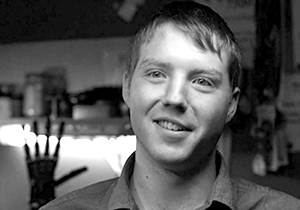
Easton LaChappelle has been taking apart things since he was a child and is now changing industries. At 14, he made his first robotic hand out of LEGOs, fishing wire, and electrical tubing.

We at Pioneers are proud to present our youngest speaker to date. We couldn’t miss the chance of flying out 19 year-old Easton LaChappelle all the way from Colorado. The young pioneer has been pulling things apart since the age of 14 and is now disrupting industries. His first robotic hand was made out of LEGO, proving that neither age nor money should decrease our game-changing ideas.

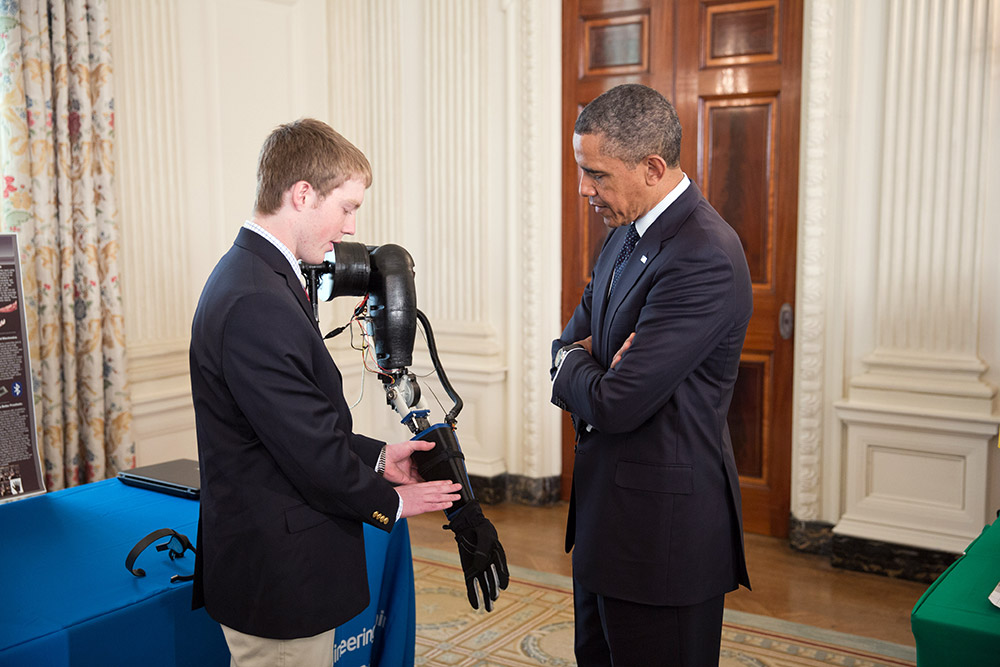
This tech hero has improved his self-taught robotics skills, and has turned his initial Lego design into a 3D-printed invention operated with his mind. His inspiration? A 7-year-old girl at a science fair, with an $80,000 prosthetic arm. Something he found outrageously unaffordable.

lachapelle-obama
His improved prototype is already online for less than $400. This young genius has even impressed President Obama, who shook hands with one of his robotic arms. A unique success story, that has already landed him a job at NASA.

At only 19, he can already tell us all about founding his own company, Unlimited Tomorrow. Where he develops an exoskeleton to help paraplegics walk again. Easton’s robotic arm and designs are all open source, helping anyone to become their own engineer.

Read more here: http://pioneers.io/blog/people/easton-lachappelle

Iphone Killer: Your phone is ruining your life!

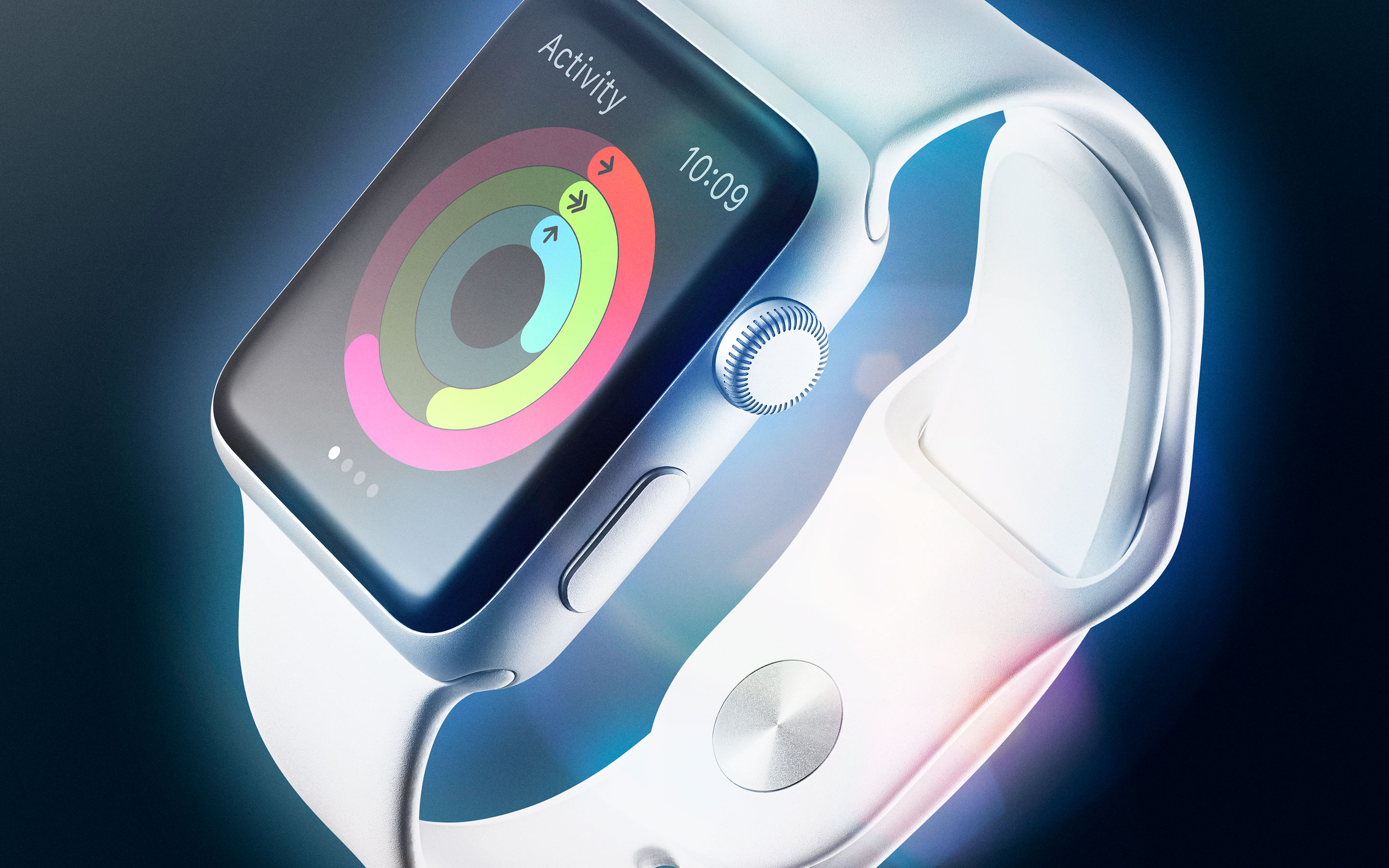
„Along the way, the Apple team landed upon the Watch’s raison d’être.

It came down to this: Your phone is ruining your life.

Like the rest of us, Ive, Lynch, Dye, and everyone at Apple are subject to the tyranny of the buzz—the constant checking, the long list of nagging notifications. “We’re so connected, kind of ever-presently, with technology now,” Lynch says. “People are carrying their phones with them and looking at the screen so much.”

They’ve glared down their noses at those who bury themselves in their phones at the dinner table and then absentmindedly thrust hands into their own pockets at every ding or buzz. “People want that level of engagement,” Lynch says. “But how do we provide it in a way that’s a little more human, a little more in the moment when you’re with somebody?” Our phones have become invasive. But what if you could engineer a reverse state of being?

What if you could make a device that you wouldn’t—couldn’t—use for hours at a time? What if you could create a device that could filter out all the bullshit and instead only serve you truly important information? You could change modern life. And so after three-plus decades of building devices that grab and hold our attention—the longer the better—Apple has decided that the way forward is to fight back.

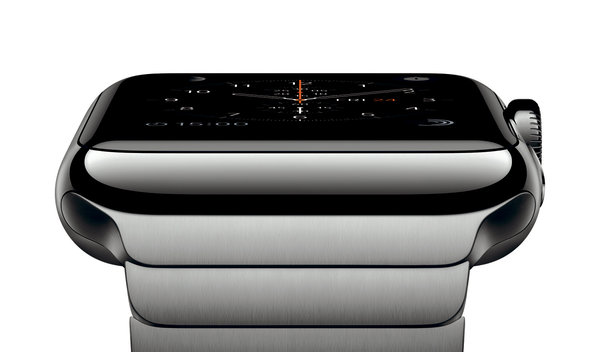
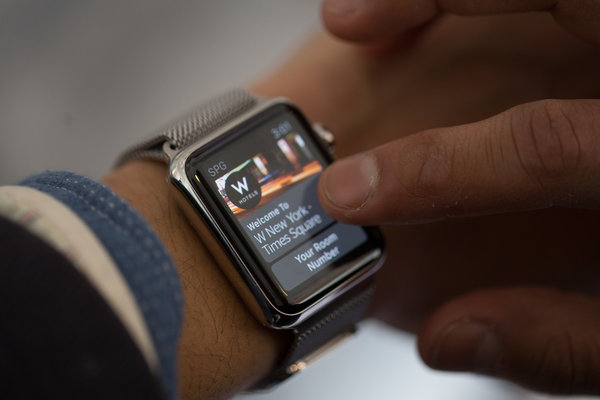
Apple, in large part, created our problem. And it thinks it can fix it with a square slab of metal and a Milanese loop strap.

AppleWatch

“ Read more here: http://www.wired.com/2015/04/the-apple-watch/

Microsoft launches MS-DOS Mobile for Lumia smartphones

http://lumiaconversations.microsoft.com/2015/04/01/microsoft-launches-ms-dos-mobile/

Today Microsoft launches MS-DOS Mobile, a new OS designed especially for Lumia smartphones.

Microsoft is going back to where productivity started for millions of people, launching a beautifully simple OS.

The MS-DOS Mobile preview is an essential download. Whether you’re going back to BASIC, or simply booting into DOS for the first time, MS-DOS Mobile marks the next step in Microsoft’s reinvention of productivity.

The OS allows you to run a number of already installed applications, while the sleuths amongst you will delight in uncovering a few extra special features – all through the medium of the much-loved C:\ prompt.

To find out how, and to learn about the story behind it, watch our exclusive launch video.

Daniel Glass who led design on the project, said:

“Turning our back on graphics was hugely liberating. We’ve dropped the resolution, and in doing so re-discovered our roots.”

“The inspiration for the graphical design is Courier New meets film noir.”

AF2015-Inline

Tom Messett, from the marketing team at Microsoft Lumia, said:

“MS-DOS Mobile allows us to look proudly back, while at the same time moving us defiantly forwards.”

“It’s simple, effective productivity re-imagined through the medium of DOS. “

AF2015-Inline1

Designed to complement the heritage feel with a new-age operation, MS-DOS Mobile has been re-built from the ground up.

Do you remember MS-DOS? Or is it the stuff of computing legend that you’re getting your hands on for the first time? Let us know what you think in the comments below.

#AchieveMore


http://www.windowscentral.com/microsoft-launches-ms-dos-mobile

Today, Microsoft has launched MS-DOS Mobile, a new OS designed especially for Lumia smartphones. In case you didn’t know, MS-DOS was installed on millions of desktops. Well, now you can install it on your phone. „Black and white text has never looked so good,“ says Tom Messett from Microsoft Lumia Marketing in the launch video. Watch the video to see glimpses of the new/old OS before deciding if you should install it on your phone.

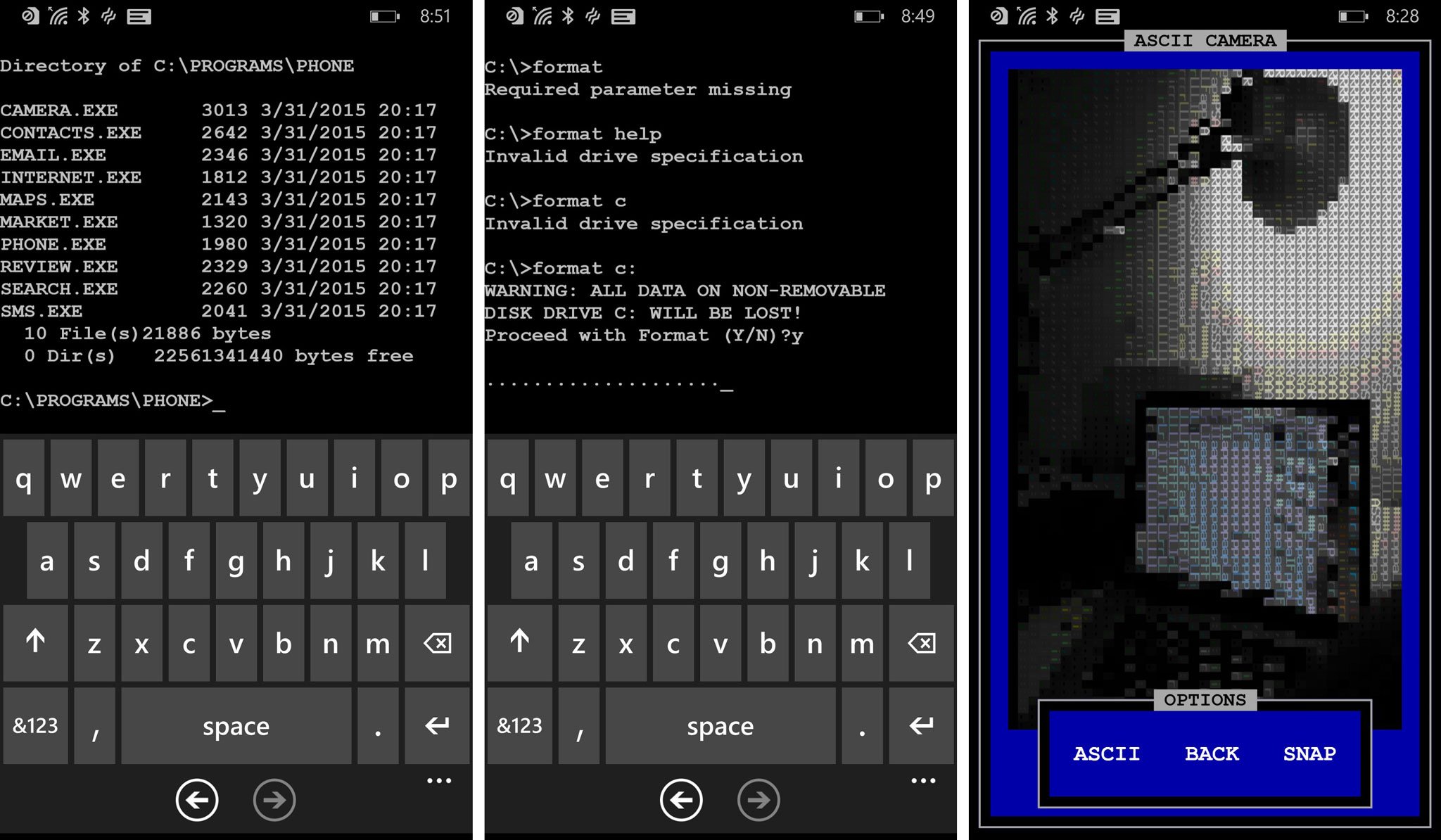
MS-DOS Mobile goes back to the basics. The user type commands to the prompt to access files and folders. The main apps are located in C:\PROGRAMS\PHONE. You can access that by typing these commands:

  • cd programs
  • cd phone
  • dir

This lists all the available apps. For example, typing camera.exe in the next line launches the camera. The camera has three modes: ASCII, B&W, and CGA. You can also switch between the front and rear camera.

MS-DOS Mobile

The ‚internet.exe‘ command in the same folder opens up Internet Explorer. You’ll briefly hear connecting sound before launching the app. There are several other programs that you can check out:

  • Contacts – Opens the contacts list.
  • Email [address] – After user types a message and presses the done button in the application bar, the platform’s email composer is launched
  • Maps [search terms] – Launches the map app with search terms
  • Market – Launches Windows Phone Store
  • Phone [number] – Launches phone app with given number
  • Review – Launches review page for this app
  • Cortana [search terms] – Launches Cortana with the search terms
  • SMS [number] – Launches SMS composer with the number

Before you start complaining how ridiculous this sounds, go check today’s date. It’s April Fools Day! Isn’t this kind of funny? We don’t want to ruin all the fun, so we suggest installing the app and navigating through the command prompts. Watch and re-watch the video for some Easter eggs as well. Hint: there’s an interesting game you can play.

Download MS-DOS Mobile for Windows Phone (Free)

QR: MS-DOS Mobile

WhatsApp Call: Details zum kostenlosen VoIP-Telefonie-Dienst

WhatsApp Call ist offiziell gestartet.

Teltarif.de zeigt Ihnen den kostenlosen VoIP-Dienst des Smartphone-Messengers in Bildern:
welche neuen Funktionen und Menüs die Android-Anwendung von WhatsApp ab sofort mit sich bringt

WhatsApp Call: So sieht die Nutzung in der Praxis aus

Nachdem ein WhatsApp Call angenommen wurde, lässt sich das Gespräch wie bei einem herkömmlichen Telefonat über das Mobilfunknetz führen. Die Übertragungsqualität ist abhängig vom verwendeten Smartphone und natürlich auch vom Internet-Zugang, der während der Verbindung am Smartphone zur Verfügung steht.

Während des Anrufs werden Name und Profilbild des Gesprächspartners angezeigt. Mit der virtuellen roten Taste lässt sich das Telefonat beenden. Dazu können die Freisprech-Funktion ein- und ausgeschaltet werden, das eigene Mikrofon lässt sich deaktivieren und wieder abschalten und es besteht auch die Möglichkeit, vorübergehend ins Chat-Fenster zu wechseln, um eine Textnachricht zu übermitteln. Diese bekommt der Gesprächspartner aber nicht sofort angezeigt, sondern erst dann, wenn er ebenfalls den Chat aufruft.

Auf der fünften Seite sehen Sie, was passiert, wenn Sie einen WhatsApp-Kunden anrufen möchten, der bereits einen WhatsApp Call führt.

WhatsApp Call während einer Sprachverbindung

Doing Business the Steve Jobs Way

Source: http://mashable.com/2015/03/24/steve-jobs-leadership-biography/

Steve Jobs started out as an asshole — but, a new book says, he got better.

That, in a nutshell, is the takeaway from Becoming Steve Jobs, a new biography of the late Apple CEO, which tries to provide nuance to the oft-told story of Jobs‘ professional rise at Apple, including the wilderness years that followed after being pushed out and his triumphant return.

The book’s authors, Brent Schlender and Rick Tetzli, suggest that much of Jobs’s professional image as a mercurial manager was shaped by „stereotypes that had been created way back in the 1980s,“ before he and Apple retreated from the press. „Perhaps that’s why the posthumous coverage reflected those stereotypes,“ the authors speculate.

Between that initial wave of press coverage and his return to Apple, Jobs‘ personality and management style shifted in subtle and not so subtle ways as a result of the struggles of NeXT, his follow-up effort, as well as inspiration from the creatives at Pixar, which he acquired and later sold to Disney. Just as importantly, the book claims Jobs was changed by falling in love with his wife, Laurene Powell Jobs, and starting a family.

Some elements of Jobs‘ management style stayed consistent, however.

He continued to push for „outrageous goals,“ as the authors put it, and he could still be severe and argumentative with colleagues. Yet the book suggests that his level of discipline, empathy and flexibility increased over the years to help compensate for his negative traits.

The book provides good lessons for all leaders, insofar as Jobs has become a widely observed case study for the archetype of the genius founder. The book highlights the sometimes contradictory leadership traits of a man who is quoted in the book as saying, „I didn’t want to be a businessman,“ and then went on to become arguably the most influential businessman of his generation. Here are the most revealing anecdotes.

Even visionaries need to hear realtalk

While Jobs often acted like someone who thought he knew best, the CEO nonetheless sought out mentors in the tech industry, including the founders of Intel, Hewlett Packard, Polaroid, National Semiconductor and others. Some, like Andy Grove, the former CEO of Intel, would remain lifelong advisors, sometimes to the exhaustion of the mentors:

Unable to sleep that night, Steve called his friend and confidant Andy Grove at 2 a.m. Steve told Grove that he was torn about whether or not to return as Apple’s CEO, and wound his way through his tortured deliberations. As the conversation dragged on, Grove, who wanted to get back to sleep, broke in and growled: „Steve, look. I don’t give a shit about Apple. Just make up your mind.“

Steve Jobs, the father figure

At NeXT, the computer company he launched after leaving Apple, Jobs was guilty of micromanaging, making impulsive bad hires and is described as an „equal-opportunity abuser“ who yelled at engineers as well as executives. But he also tried to be more of a „father figure,“ according to one former employee quoted in the book. His paternal instincts coincided with his own first attempt at being a father to the daughter he’d had out of wedlock and publicly rejected.

„Steve hosted annual ‚family picnics‘ for his employees in Menlo Park. They were kid-oriented Saturday affairs, featuring clowns, volleyball, burgers and hot dogs, and even hokey events like sack races,“ according to the book.

Later, at Pixar, Jobs gave a top filmmaker a small bonus and demanded he use it to buy a better car. „It has to be safe, and I have to approve it,“ Jobs is quoted as saying.

When he returned to Apple, Job is compelled to cut much of the staff and reorganize, but he expresses grief in a way that the brash young Jobs may not have.

„I still do it because that’s my job,“ Jobs is quoted as telling the authors. „But when I look at people when this happens, I also think of them as being five years old, kind of like I look at my kids. And I think that that could be me coming home to tell my wife and kids that I just got laid off. Or that it could be one of my kids in twenty years. I never took it so personally before.“

No reviews, little praise for direct reports

Those who worked for Jobs could expect an earful from the executive when dealing with him on any given day, but they rarely received formal reviews and feedback. „Steve didn’t believe in reviews,“ one former employee says. „He disliked all the formality. His feeling was, ‚I give you feedback all the time, so what do you need a review for?“

Likewise, he was less than generous in doling out praise to employees. Instead, he would show it by taking the best employees on walks. „Those walks mattered,“ recalled another employee. „You’d think to yourself, ‚Steve is a rock star,‘ so getting quaity time felt like an honor in some ways.“

Jobs‘ work/life balance

Early in his career, Jobs burned the midnight oil in the office along with much of his team, but by the time he returned to Apple, he was more focused on trying to balance his work with his new family.

Rather than hover over the shoulders of star engineers and programmers, he could do much of his work via email. So he would make it home for dinner almost every night, spend time with Laurene and the kids, and then work at his computer late into the night…

On many nights, Jobs would work alongside his wife, Laurene, at home. As his wife tells the authors, „Neither of us had much of a social life. It was never that important to us.“

Make time for spirituality and meditation

Some have wondered over the years how a man who famously went off to India and embraced Buddhism could reconcile that with running the largest corporation in the world. As it turns out, he continued to meditate until he and his wife had kids, which cut down what little free time he had left. In fact, according to the book, Jobs „arranged for a Buddhist monk by the name of Kobun Chino Otogawa to meet with him once a week at his office to counsel him on how to balance his spiritual sense with his business goals.“

Embrace life

After his first cancer surgery in 2004, Jobs‘ leadership style changed again. He had more sense of „urgency“ to pursue innovative products, and less time and energy to handle other business issues, ranging from human resources to manufacturing.

„When he came back from that surgery he was on a faster clock,“ Tim Cook, Apple’s current CEO, tells the authors. „The company is always running on a fast-moving treadmill that doesn’t stop. But when he came back there was an urgency about him. I recognized it immediately.“

Perhaps that’s why he and his team at Apple went on to accomplish so much in the seven years he had left.

Facebook Is Testing A New App Called ‚Phone‘

Source: http://www.forbes.com/sites/parmyolson/2015/03/23/carriers-facebook-phone-app/
Further Reading: http://www.forbes.com


Facebook has accidentally leaked information about a new app that it’s testing, called ‘Phone,’ and this news should come as no surprise to anyone who believes Facebook wants to be at the center of how we communicate with the world around us. That includes with all elements of texting (through Messenger and WhatsApp) and increasingly, voice.

The app appears to be some sort of native dialler for Android that shows information about who is calling, and which automatically blocks calls from commonly blocked numbers. A spokesman confirmed to Venture Beat that Facebook was testing the service, after Android Police first posted a screenshots of an install update that should have only been seen by Facebook’s internal network. Thanks to Apple’s closed system it’s unlikely Facebook is even exploring making such an app for iOS.

Why does Facebook want to give its users a native dialler? Facebook has allowed users to make video calls through its desktop client since 2011, and voice calls through Facebook Messenger since early 2013. But both these services require that people on either end of the line are using the same Facebook feature, and the calls can only take place over a mobile carrier data network or WiFi.

A native dialler application would appear to be Facebook’s first service that coordinates with a carrier’s all-important voice network.

(It has yet to be confirmed that ‘Phone’ will filter calls being made to your phone number and not just between Facebook users, but the former seems likely. The video and audio calling features that Facebook already has don’t seem popular enough that users would want a separate app just to block VoIP calls – and most of the calls you want to block are spammers and marketers who managed to get hold of your mobile phone number anyway.)

In essence, Facebook appears to be trying to wedge itself a little further into the relationship between its users and carriers, when users are carrying out one of the most fundamental acts that telcos rely on to make money – making voice calls. That’s a crucial step both symbolically and practically, and the fact that the service is called ‘Phone’ suggests Facebook eventually wants to be part of the phone-calling experience that carriers still dominate.

International carriers like Vodafone and BT Group are still stinging from the huge bite of SMS revenues that WhatsApp, the globally popular messaging service with 700 million active users, took out over the last five years with its free texting service.

The messaging service, which Facebook bought last year, is now rolling out a free voice-calling service. While that won’t involve a native dialler, it looks set to take yet another chunk out of carrier revenues, this time in voice.

Should carriers be worried about Phone? It’s easy to dismiss a new, forthcoming app from Facebook as yet another failed experiment that will get tossed on the same heap where Slingshot, Poke and the Android launcher Facebook Home reside.

Yet even if Facebook’s users don’t fall in love with Phone, and the service doesn’t go much further beyond the testing phase, there’s no question the social network wants to become a more integral hub for our everyday communications. That could eventually mean weaning consumers off their reliance on carriers’ voice and texting services, and driving the role of carriers further down into the ground as “dumb pipes” that transport our data and not too much more.

Wie sicher ist die eSIM (Universal SIM)?

Der Vertrags- und Netzwechsel soll mit der eSIM einfacher werden. Wird es damit auch einfacher, eine Telefonnummer gegen den Willen des Nutzers zu entführen?
Von , Teltarif.de

Ende letzten Jahres führte Apple mit dem iPad Air 2 in den USA und Großbritannien die „Universal SIM“ ein. Mit dieser kann man den Datenvertrag wechseln, ohne die SIM-Karte tauschen zu müssen. Vielmehr werden bei einem Vertragswechsel einfach die neuen Zugangsdaten auf die SIM-Karte programmiert.

Wenn man sie richtig macht, hat eine eSIM für den Kunden einige Vorteile: Der Vertragswechsel geht schneller. So ist denkbar, mal eben online einen Prepaid-Vertrag für ein lokales Netz abzuschließen, wenn man sich im Ausland aufhält, um den teuren Roaming-Entgelten zu entgehen. Für Mobilfunkhändler, insbesondere solche, die Verträge von mehreren Netzbetreibern und/oder Resellern im Angebot haben, vereinfacht sich mit der eSIM auch die Logistik.

Entsprechend verwundert es nicht, dass sich auch die Netzbetreiber hierzulande mit der programmierbaren SIM-Karte, der eSIM, beschäftigen. Während Vodafone dieser derzeit ablehnend gegenübersteht, plant die Deutsche Telekom bereits die Einführung. Der dritte Netzbetreiber, Telefònica, will hingegen erstmal den finalen Standard abwarten, bevor eine Entscheidung getroffen wird.

Wie sicher?

Wie jüngst geschrieben, ist das Prinzip, geheime Schlüssel auf SIM-Karten zu verteilen, so etwas wie das Herz der Kommunikation in den Mobilfunknetzen. Wird die Sicherheit dieser geheimen Schlüssel kompromittiert, ist die Sicherheit der mobilen Kommunikation insgesamt verloren. Dann hört künftig möglicherweise nicht nur die NSA massenhaft Handy-Telefonate mit, sondern auch der neugierige Nachbar oder bei Firmen die Konkurrenz. Ebenso ist zu fürchten, dass es dann vermehrt zu Identitätsdiebstahl kommt, dass beispielsweise Handy-Nummern vorübergehend oder dauerhaft entführt werden, um sich als jemand anderes auszugeben.

Die Erfahrung mit den zahlreichen Sicherheitslücken in Computer-Betriebssystemen lehrt: Wenn die „Guten“, also die tatsächlich mit dem Vertragswechsel beauftragen neuen Netzbetreiber, ein Update der eSIM auf einen neuen Vertrag anstoßen können, dann brauchen die „Bösen“ nur einen Fehler im Protokoll zu finden, um ebenfalls Vollzugriff auf die eSIM zu erlangen. Und solche Lücken im Protokoll kommen durchaus häufiger vor. Aktuell diskutiert wird beispielsweise die Möglichkeit, über eine Lücke in SS7 fremde Handys zu orten.

Auch ohne dass sie über das Netz programmierbar sind, gehören die geheimen Codes der SIM-Karten bereits zu den bevorzugten Angriffszielen der NSA. Zwar könnte die Möglichkeit zum Fernupdate die Sicherheit der SIM-Karten sogar erhöhen, insbesondere, wenn für dieses Update zusätzliche, nicht von der NSA überwachte Kommunikationskanäle genutzt werden. Zu fürchten ist aber, dass sich die Situation verschlechtert. In vielen Fällen sind die Ziele „mehr Sicherheit“ und „mehr Komfort“ nicht gleichzeitig zu haben. Beim Thema „SIM-Karte“ ist mein persönlicher Favorit „mehr Sicherheit“. Von daher bevorzuge ich es, auch künftig mit dem Vertrag die SIM-Karte zu wechseln.

Artikel unter: http://www.teltarif.de/esim-universal-sim-sicherheit/news/59102.html

Weitere interessante Artikel finden Sie unter: www.teltarif.de

Chinesischer Chemiekonzern ChemChina kauft italienischen Reifenhersteller Pirelli

Mit der Übernahme erhält ChemChina Zugang zur Technologie für die Herstellung von Premium-Reifen.

Der staatliche chinesische Chemiekonzern ChemChina will den italienischen Reifenhersteller Pirelli komplett übernehmen. In einem ersten Schritt haben sich die Chinesen für knapp 1,9 Milliarden Euro 26,2 Prozent der Anteile gesichert. Das Paket wurde dem Mehrheitseigner Camfin abgekauft. Der Preis je Aktie beträgt 15 Euro.

So viel wird auch den anderen Aktionären geboten. Gelingt die Komplettübernahme, müssten die Chinesen 7,1 Milliarden Euro auf den Tisch legen.

Die Italiener erhoffen sich von dem neuen Großaktionär einen besseren Zugang zum asiatischen Markt. So soll das Geschäft mit Lastwagen-Reifen mit Teilen von ChemChina zusammengelegt und so das Volumen in dem Bereich von 6 auf 12 Millionen verdoppelt werden.

Pirelli hostesses take pictures as drivers compete
Pirelli ist mit seinen Reifen auch in der Formel 1 vertreten
Foto: REUTERS/DAVID W CERNY

Pirelli erzielte im Vorjahr in 160 Ländern mehr als sechs Mrd. Euro Umsatz und ist damit der weltweit fünftgrößte Reifenproduzent. Der Firmensitz soll in Mailand bleiben. Auch die Produktion soll in Italien weitergeführt werden. Die Übernahme soll bis zum Sommer abgeschlossen sein.Die Pirelli-Aktie legte am Montag mehr als vier Prozent zu.

Artikel aus: http://kurier.at/wirtschaft/unternehmen/chinesen-kaufen-italienischen-reifenhersteller-pirelli/120.983.575

Weitere interessante Artikel finden sie unter: www.kurier.at