Archiv des Autors: innovation

Apples long way to build Cars

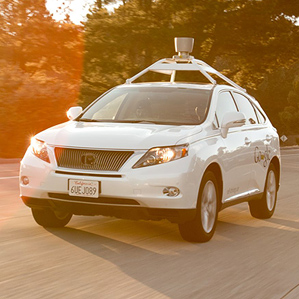
Apple has built no cars. Google has designed and outsourced the production of a small fleet of self-driving pod mobiles.

The newest carmaker on the block, Tesla, managed to build just 50,000 cars in 2015.

Meanwhile, in the US alone, the traditional auto industry built and sold 17.5 million cars and trucks.

This glaring imbalance between current reality and a highly speculative vision of the future hasn’t stopped pundits and tech and auto observers from transforming Apple and Google into serious auto-industry challengers.

For example, this is from a recent report by Reuters:

[G]oogle may choose to build its own engineering and design prototypes, then partner with a Chinese automaker or an Asian contractor such as Hon Hai Precision Industry’s Foxconn Technology Co that wants to enter the automotive field, several experts said.

Given Apple’s extensive iPhone and iPad manufacturing in China, it’s also been suggested that the Cupertino, California, colossus would skip out building a car in the US and would do it in the Middle Kingdom.

It’s an attractive idea, but it overlooks the vast gulf that exists between assembling smartphones and making cars. Tesla is among the most technologically advanced automakers around, and it still has to make its vehicles in a large factory with millions of dollars of giant robots and huge machines designed to bend metal. A large factory in Northern California.

The rest of the US auto industry builds the cars it sells in the US predominantly in the US. As such, the Detroit Big Three are major employers, as are the Japanese and German „transplants,“ as they’re know, which build cars and trucks in southern US states with nonunion workforces.

Some production has been moving to Mexico, but Mexico has been positioning itself as a NAFTA manufacturing partner to US companies for some time and has invested is developing an automotive supply chain.

China calls the shots

China is a different story. Ford, GM, Volkswagen, and others build cars there and sell them under familiar brands, but they can’t do this without entering into a joint venture with a Chinese partner. There’s an obvious compromise baked into this arrangement: Foreign automakers gain access to the enormous Chinese market, but they also end up sharing R&D.

Foxconn Kin Cheung APKin Cheung/APThey aren’t building cars.

It isn’t exactly a joining of equals, but Chinese automakers don’t see themselves as mere assembly lines for Western designs. They see themselves as developing a robust national manufacturing base. And while they’re building Buicks, they’re also building Chinese-brand cars and trucks.

With Apple and Google, the idea seems to be that these companies will try to transform consumer-goods manufacturers into automakers. There might be something to this in theory: Remake the automobile by designing and building it like a piece of internet-enabled consumer tech. But in practice, the car-building part of building an automobile, even an innovative self-driving one, tends to catch up to the visionaries, as Tesla has learned.

Profit margins under stress

Additionally, in Apple’s case it would be necessary to harvest a much wider profit margin than the auto industry typically throws off: 30% vs. 10% — or less, in bad times. And if you think Apple or Google has designs on selling all-electric driverless tech to willing Chinese customers, making China and not the US or Europe the main market, then you haven’t thought through either China’s congested big cities, a nightmare for driverless cars, or its still-developing roadway system, which is friendlier to trucks and SUVs.

So the game plan, as it’s being discussed outside Apple and Google, would be to build cars outside the US, using cheaper Asian labor, and then import them.

It sounds great because for Apple, in particular, that’s been a pathway to massive success.

But when it comes to the auto industry, it would be impossible. Not impossible to build some kind of more or less traditional car, but impossible to build the wildly disruptive car of the future.

www.businessinsider.de/impossible-apple-or-google-car-china-2016-3

Google and Facebook Team Up to Open Source their Data Centers

485508231

10 Usability Heuristics for User Interface Design

This following Article is an „oldie“, but an Goodie:

Summary: Jakob Nielsen’s 10 general principles for interaction design. They are called „heuristics“ because they are broad rules of thumb and not specific usability guidelines.


The Evolution of the BatMobile

batman-documentary-carsWarner Bros Online

It takes more than martial-arts training and a cool cape to protect Gotham City. Over the years, Batman has relied on an evolving series of vehicles to help bring down his most infamous enemies.

The Batmobile has changed a lot since the 1941 original. It now has a more imposing, military-influenced design, as seen in „The Dark Knight“ trilogy and the upcoming „Batman v Superman: Dawn of Justice.“

Read on to see how the Batmobile has kept pace with Bruce Wayne’s quest to keep Gotham safe:

The first car to be referred to as a „Batmobile“ appeared in Detective Comics No. 48 in 1941. It was far more subtle than any of its successors. The car, which appears to be inspired by the Cord Roadster, had a small gold bat on the hood.

The first car to be referred to as a "Batmobile" appeared in Detective Comics No. 48 in 1941. It was far more subtle than any of its successors. The car, which appears to be inspired by the Cord Roadster, had a small gold bat on the hood.

DC Comics

The first drivable Batmobile came from Adam West’s 1966 live-action „Batman“ adaptation. Based on the Lincoln Futura, legendary designer George Barris dreamed up the car in 15 days.

Rather than the red and black of previous iterations, the Batmobile from the 1970s „Super Friends“ series was blue and black, with yellow details to highlight the more prominent bat insignia.

Frank Miller’s „The Dark Knight Returns“ (1986) is an important evolution. The Batmobile was overhauled to appear as a redesigned tank. Prioritizing weapons and defense was important to the much more stark version of Gotham in the comic series.

Frank Miller's "The Dark Knight Returns" (1986) is an important evolution. The Batmobile was overhauled to appear as a redesigned tank. Prioritizing weapons and defense was important to the much more stark version of Gotham in the comic series.

DC Comics

Tim Burton’s live-action adaptation of the Batmobile from 1989 is very cool. It’s sleek and imposing, and the jet-black exterior and polished finish really give off a sense of wealth, tying together Bruce Wayne and the Batman persona.

Tim Burton's live-action adaptation of the Batmobile from 1989 is very cool. It's sleek and imposing, and the jet-black exterior and polished finish really give off a sense of wealth, tying together Bruce Wayne and the Batman persona.

Warner Bros.

The 1992 debut of „Batman: The Animated Series“ began a new era. It featured the voice of Kevin Conroy as Batman and debuted the updated sleek Batmobile design seen in the later „Justice League“ spin-off.

The 1992 debut of "Batman: The Animated Series" began a new era. It featured the voice of Kevin Conroy as Batman and debuted the updated sleek Batmobile design seen in the later "Justice League" spin-off.

Warner Bros/YouTube

The Batmobile in „Batman Forever“ (1995) is one of its flashiest appearances, with an almost rib-cage-like design. Its shape is also vaguely reminiscent of the 1989 version.

„Batman & Robin“ (1997) was panned by critics, but its Batmobile isn’t the worst ever. It has a similar shape to previous live-action Batmobiles, but is black instead of the eerie blue glow of the 1995 design.

The live-action „Dark Knight“ trilogy from director Christopher Nolan introduced the Tumbler, an all-terrain, military-inspired version of the Batmobile. It could also be seen as a realization of the Batmobile in Miller’s „The Dark Knight Returns.“

The live-action "Dark Knight" trilogy from director Christopher Nolan introduced the Tumbler, an all-terrain, military-inspired version of the Batmobile. It could also be seen as a realization of the Batmobile in Miller's "The Dark Knight Returns."

REUTERS/ Toby Melville

In a first for the popular „Arkham“ video-game series, players take control of the Batmobile in the quest against Scarecrow’s fear toxin. Heavily inspired by Nolan’s Batmobile, the game also featured un-lockable „skins,“ which changed the vehicle’s appearance to match other famous Batmobile iterations.

 In a first for the popular "Arkham" video-game series, players take control of the Batmobile in the quest against Scarecrow's fear toxin. Heavily inspired by Nolan's Batmobile, the game also featured un-lockable "skins," which changed the vehicle's appearance to match other famous Batmobile iterations.

WB Games

Finally, the upcoming „Batman v Superman“ will usher in a new era for the Dark Knight. Ben Affleck will take on the role, and we’ve already gotten a close look at the new Batmobile, which weighs over 7,000 pounds and, in the film, can drive up to 205 mph.

In real life, the car can reach a speed of 90 mph.

In real life, the car can reach a speed of 90 mph.

Kirsten Acuna/Tech Insider

 http://www.businessinsider.com/batmobile-evolution-2016-3

tug-of-war over who controls and profits from the stream of user data in self-driving cars

google.carx299

Google’s self-driving car team is expanding and hiring more people with automotive industry expertise, underscoring the company’s determination to move the division past the experimental stage.

The operation now employs at least 170 workers, according to a Reuters review of their profiles on LinkedIn, the business-oriented social network. Many are software and systems engineers, and some come from other departments at Google.

More than 40 of the employees listed on LinkedIn have previous automotive industry experience, with skills ranging from exterior design to manufacturing.

They hail from a wide range of companies, including Tesla Motors Inc, Ford Motor Co. and General Motors Co.

For a look at the composition of Google’s self-driving car team, Google has not disclosed details about the size or composition of its self-driving car team, and Johnny Luu, spokesman for Google’s car team, declined to comment.

The team could have additional members who do not publish profiles on LinkedIn.

Google has said previously that it intends to ready the technology for a marketable self-driving car by 2020, but it may never manufacture vehicles itself.

The tech giant is more likely to contract out manufacturing — much like Apple does with iPhone — or to license technology to existing car manufacturers, automotive industry experts said.

Licensing would follow the model Google has used with its Android operating system for mobile devices.

In the past four weeks, Google has advertised nearly 40 new positions on the team, and many are related to manufacturing.

The team currently has six people with such experience, including purchasing, supplier development and supply chain management.

Hires with manufacturing skills could help Google find and coordinate with a partner to build a vehicle, said Paul Mascarenas, a former Ford executive who is president of FISITA, the International Federation of Engineering Societies.

Google is also engaged in discussions with federal and state regulators about how to revise motor vehicle safety standards to accommodate autonomous cars.

The competition for technical talent is intensifying as tech and automotive companies race to build driverless vehicles.

Beyond Google, the players include Tesla, established car makers such as Daimler AG and GM and, and technology companies such as Apple Inc and Uber Technologies Inc.

Google’s team is being assembled by John Krafcik, an industry veteran who previously headed Hyundai Motor Co’s  U.S. operations and is an expert in product development and manufacturing. Krafcik joined Google in September 2015.

Another senior executive with previous automotive experience, Paul Luskin, was hired last month as operations manager, according to his Linkedin profile.

An engineer with stints at Jaguar Cars, Ford and Japanese supplier Denso Corp, Luskin most recently was president of Ricardo Defense Systems, a unit of Britain’s Ricardo PLC, according to the Linkedin profile.

Google hired industry veteran Andy Warburton in July to head the vehicle engineering team, according to his Linkedin profile.

Warburton spent two years as a senior engineering manager at Tesla and 16 years as an engineering manager at Jaguar.

A third auto veteran, Sameer Kshisagar, joined Google in November as head of global supply management on the self-driving car team. Kshisagar is a manufacturing expert who previously worked for GM, according to his Linkedin profile.

Luskin, Warburton and Kshisagar did not respond to requests for comment.

Google’s self-driving car group also has tapped people with experience beyond the auto industry, including aerospace (Boeing, SpaceX, Jet Propulsion Lab) and electronics (Intel, Samsung, Motorola), according to LinkedIn profiles.

Krafcik and Chris Urmson, director of the car team, have said they want to forge partnerships with established automakers and others to build vehicles. Krafcik made a public pitch for alliances at an auto industry conference in Detroit in January.

However, Google may have to look farther than the auto industry to find a manufacturing partner, said Raj Rajkumar, a Carnegie-Mellon University professor who advises companies on self-driving car development.

The tug-of-war over who controls — and profits from — the stream of user data in self-driving cars is „an inherent and fundamental conflict“ between Google and traditional automakers, Rajkumar said.

Instead, Google may choose to build its own engineering and design prototypes, then partner with a Chinese automaker or an Asian contractor such as Hon Hai Precision Industry’s Foxconn Technology Co that wants to enter the automotive field, several experts said.

Michael Tracy, a Michigan-based auto manufacturing consultant, said Google sees the potential of several different revenue streams from its self-driving technology, including licensing its mapping database and vehicle control software, as well as an integrated package of software, sensors and actuators that would form the backbone of a self-driving vehicle.

The least likely prospect is that Google will manufacture its own vehicles, Tracy said, due to the massive expenditures required and the stiff competition from established automakers.

http://www.voanews.com/content/googles-self-driving-car-team-beefs-up-auto-experience/3217805.html

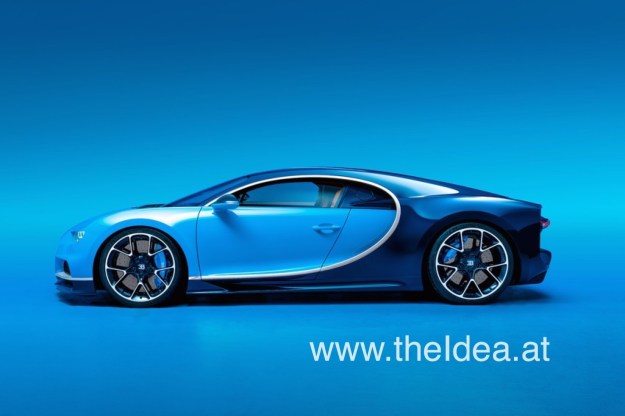
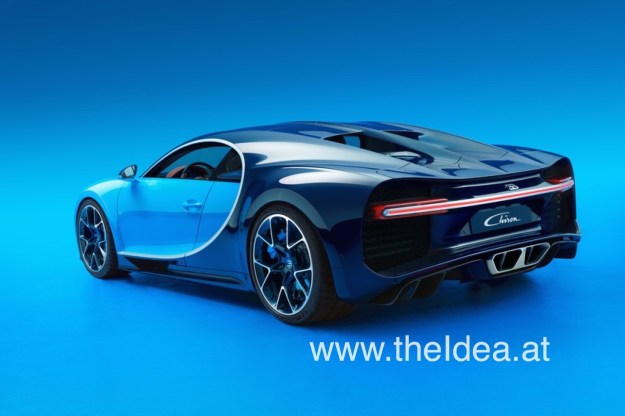
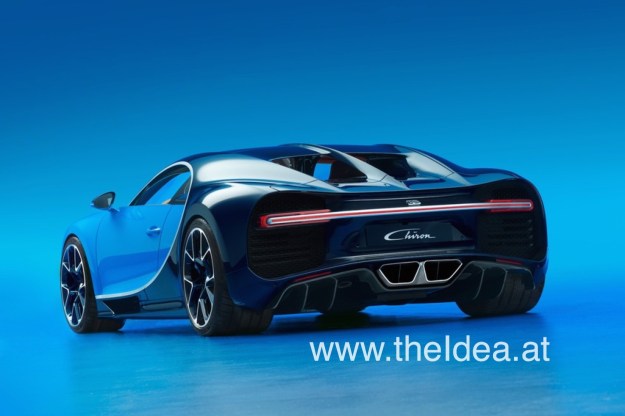
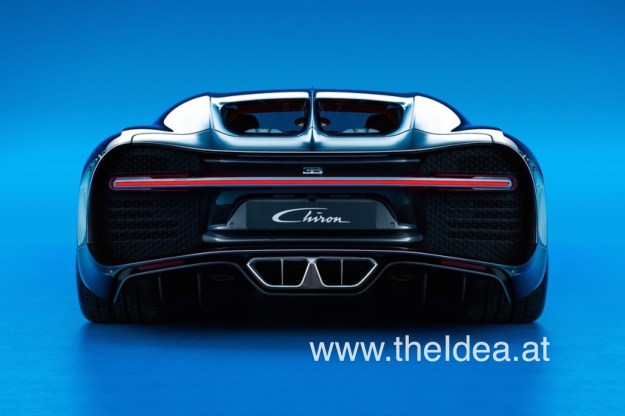
Bugatti’s $2.6 million Chiron is the fastest car in the world

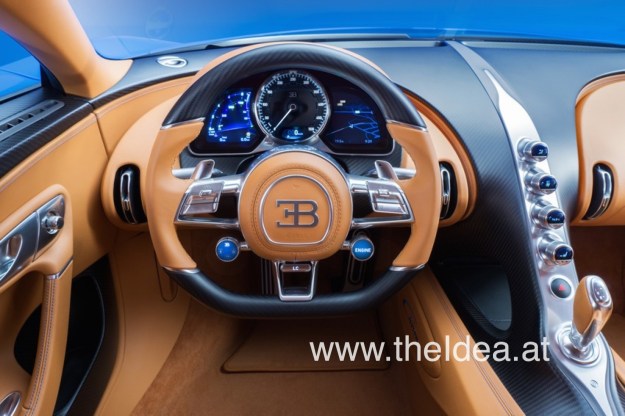
01_chiron_front_web 02_chiron_34-front_web 03_chiron_34-front_web 04_chiron_side_web 05_chiron_34-rear_web 06_chiron_34-rear_web 07_chiron_rear_web 09_chiron_engine-bay_web 15_chiron_grille_web 17_chiron_bugatti-line_web 18_chiron_driver-side_web 20_chiron_steering-wheel_web 22_chiron_speedometer_web 23_chiron_engine-knob_web 24_chiron_knob_web


You might think the super-wealthy have it pretty easy, what with their private islands, private jets and the ability to buy just about anything. But there’s been one thing they’ve not been able to buy in a while: an all-new Bugatti.

In fact, it’s been more than 11 years since the Veyron first went on sale. Can you imagine driving the same Bugatti for a decade? I can’t even.

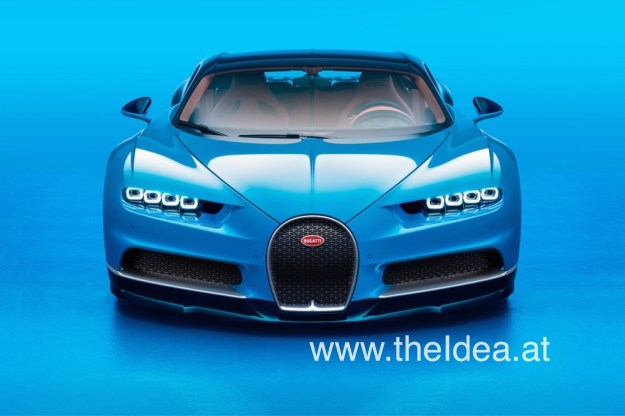
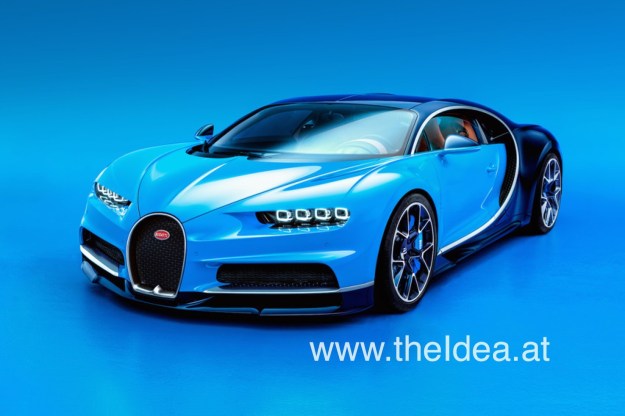
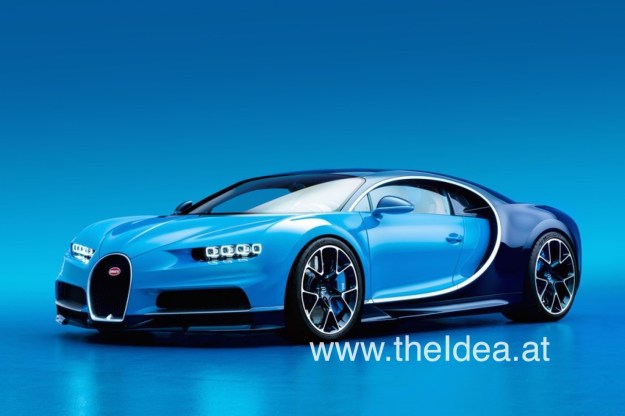
Thankfully, that more than decade-long nightmare is over; there’s finally an all-new one. It’s called the Chiron. Along with the illustrious French moniker (yes, Bugatti is French), it boasts a 1,500-horsepower 16-cylinder engine, room for two very lucky passengers and a base price of just more than $2.6 million.

W16
Let’s not mince words here. Granted, simply based upon its price tag, the new Bugatti Chiron will be the chariot of global glitterati. Though, it’s more than a coupe from an elite brand. It hits the roads as the most powerful and fastest production car ever.

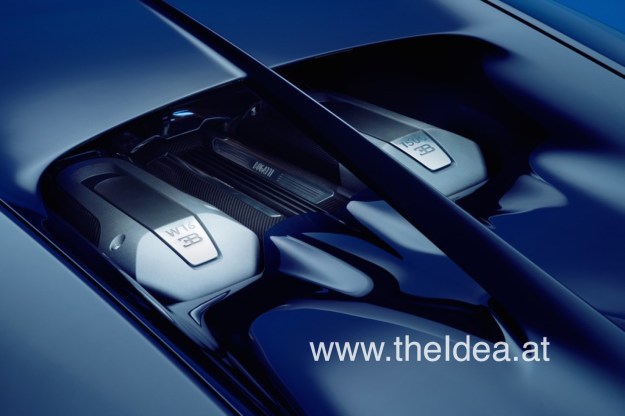
That impressive title is thanks to the 8.0-liter W16-cylinder engine mounted in the mid-rear of the car. If you’re not familiar with a W16, that’s OK. Only Bugatti uses such an engine. Imagine two V8s intertwined into one shape. That’s a W16. Imagine two V8s intertwined into one shape. That’s a W16.

Along with two-stage turbocharging (a new Bugatti development), the Chiron’s W16 produces 1,500 horsepower and 1,180 pound-feet of torque. That, along with a very stout all-wheel drive system, allows it to go 0 to 62 mph in 2.5 seconds, and on to a limited top speed (it could do more) of 261 mph (although the speedo goes up to 310 mph). To put that into perspective, a 747 lifts off the ground at 180 mph.

Understandably, to be able to safely keep the car on the road, and, you know, bring it to a stop once in a while, Bugatti engineers had to go to great technical lengths. That meant they had to develop both a chassis and a braking system as stout as the most advanced and technically complex race cars in the world. Moreover, the tires were tested to aerospace tolerances, which makes sense, given the speeds this thing can hit.

Understandably, a huge, fuel-thirsty engine like that produces a lot of tailpipe pollutants at full throttle. Accordingly, the catalytic converters (the devices that clean the exhaust gases as they pass through it) in the titanium exhaust system are six times larger than catalytic converters fitted to a mid-size sedan.

According to Bugatti, if you dissected the Chiron’s catalytic converters, you’d find surfaces — when the many layers are spread out flat — larger than the area of 30 soccer fields. And that’s just in one single car.

Electromagnetic
Of course, in creating the Chiron, Bugatti couldn’t spend all its technical energy on performance. After all, the car needs to be as opulent as it is fast.

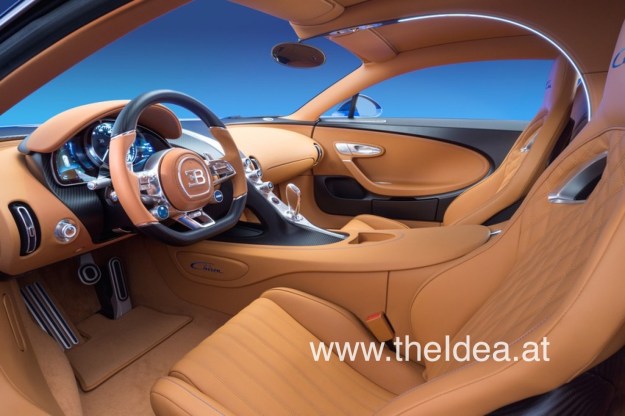
Accordingly, Bugatti engineers created a new instrument cluster with three TFT digital screens as well as an analog speedometer. Cleverly, the faster you drive the Chiron, the more the information displayed falls away. The dedicated infotainment screen fades, as the miles per hour climb in order to limit driver distraction.

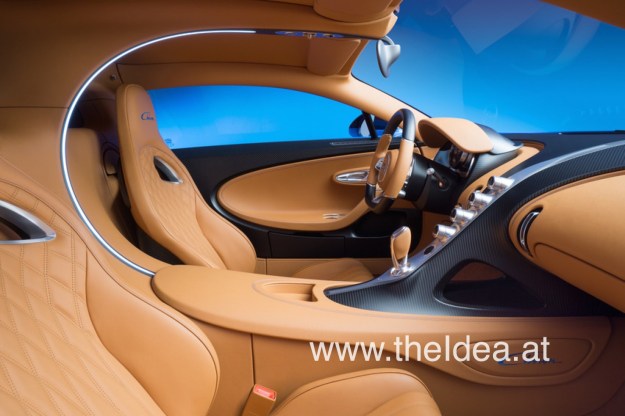
Between the driver and the passenger is the signature illuminated C-bar, which is the longest light conductor in the automotive industry. What’s more, its surrounding bezel is machined from a single piece of aluminum. Certainly, this isn’t especially techie, but it is stunning.

Effectively, the Chiron can withstand electromagnetic interference and disruption as well as a military vehicle. This means that the passengers as well as their electronics are about as safe as you can get from electronically harmful electromagnetic waves.

The Chiron effect
Of all the astounding things we’ve just discussed about the Chiron, they’re just the tip of the iceberg.

For example, the front 3D Bugatti logo is covered in gemstone. The cabin sound system was created specifically for the Chiron by the elite German audio system company “accuton” (no, I’ve not heard of it either). And the exterior has been fashioned entirely from carbon fiber.

Perhaps the most astounding thing of all, though, is the fact that — despite the years of development and painstaking attention to detail that went into its creation — Bugatti only plans to ever build 500 Chirons.

Since Bugatti is owned by the Volkswagen Group, I’d like to tell you that some of the tech and features of the Chiron will trickle down into a VW or Audi you can buy in a few years. Truthfully, if it does, it won’t be the stuff you want, like 1,500 horsepower or a gemstone-covered front grille emblem.

Instead, your future car will likely be blessed with lessons learned from Bugatti’s painstaking attention to quality, reliability and precision. That’s because, in order to build a car that can be both the world’s fastest and finest vehicle, it has to be quadruply over-engineered.

That said, I encourage you to still admire the Chiron from afar. Or, better yet, see the latest Bugatti as an aspirational vehicle. Either way, the Bugatti Chiron is going to make the lives of the super-rich very lovely indeed and your future car that much finer.

2017 Bugatti Chiron

http://mashable.com/2016/02/29/2017-bugatti-chiron


The Electric Car Revolution Is Now Scheduled for 2022

2017 Chevrolet Bolt EV

www.wired.com/2016/02/electric-car-revolution-now-scheduled-2022

Barriers To Augmented Reality Are Holding Us Back From The Holodeck

There is more money and talent invested in virtual and augmented reality than ever before. Indeed, more than $3.5 billion has been invested into virtual and augmented reality startups in the past two years. The industry is growing fast; Goldman Sachs suggests the combined hardware and software market for VR and AR will reach, on a base case, $80 billion by 2025, with a potential to reach more than $180 billion.

Many experts believe that in the long run, augmented reality will represent the larger opportunity, as the ability to introduce all manner of information and experience into the natural environment transforms markets, and indeed the nature of our existence.

Companies such as Magic Leap are attracting enormous investment on such promise. But from a technical perspective, augmented reality is considered more difficult, as creating responsive media in the real environment is full of technical challenges.

Recently, seven scientists from universities with leading research programs in virtual and augmented reality published the proceedings of discussions related to the technical challenges in realizing the AR opportunity.

Beyond the technical challenges to achieving true augmented reality, the researchers pause to consider ethics.

Co-authored by Christian Sandor, Martin Fuchs, Alvaro Cassinelli, Hao Li, Richard Newcombe, Goshiro Yamamoto and Steven Feiner, Breaking the Barriers to True Augmented Reality considers the main approaches to realizing augmented reality, as well as the technical and ethical challenges, in order to draw conclusions on what direction future development of AR might take.

First, the researchers consider the four main approaches to achieving true augmented reality, which can be represented on a scale of “decreasing order of physicality” from “manipulating atoms” to “manipulating perception.” These four approaches include:

Controlled matter: Arguably the most technically challenging approach would be to manipulate or reconfigure atoms in order to change the physical environment. Think Star Trek Holodeck. While this may seem outlandish today, there is research in this direction. The researchers point to “displays that use magnetic fields to rapidly create shapes out of ferromagnetic fluid,” and another class of displays that “levitate solid objects in a field of overlaid ultrasonic or magnetic waves.” The challenges to realizing this approach include safety and energy requirements.

Surround AR: The “next best thing to manipulating atoms is manipulating photons,” in order to make objects in the environment visually indistinguishable from physical reality. The researchers imagine environments replete with light-field displays that create very realistic visual effects. Haptics might be achieved by “stimulating the user’s skin through ultrasound waves.” The challenges to this approach include the immensity of the data processing required and the ability to achieve high resolution. Thus, technology for plenoptic displays remains “in its infancy,” even while light-field sensors have advanced.

Personalized AR: This approach revolves around displaying information only in the subset of the environment that a particular user is experiencing. Examples of this approach include some the most commonly known devices today, such as Google Glass and Microsoft’s HoloLens. Challenges to this approach include tracking at “sufficiently high update rates and low latency.”

Implanted AR: The researchers admit this may be the most “extreme” approach to achieving true augmented reality, but another option is not to manipulate the information sent to a user’s perceptual system, as in the prior three approaches, but rather to manipulate the perceptual system itself.

This approach has a long history of being depicted in science fiction, including movies such as The Matrix and Total Recall. This approach may first become widespread as new technologies augment the experience of those with conditions such as blindness. Later, it may be applied to augment the reality of the healthy.

Beyond the technical challenges to achieving true augmented reality, the researchers pause to consider ethics. Imagining such powerful technology, which may permit us to entirely manipulate the human experience of reality, raises big questions: Who will control its deployment? Who will ultimately be in control of its augmented content and for what purposes will it be used? Will individuals be freed or locked into purely commerce-driven experiences? Will augmented reality enhance our quality of life and promote better communication and deeper understanding, or “isolate and project us into a world of delusion?” Open questions.

But as the desire to sate the human imagination has driven the development of other media throughout history, augmented reality will continue to emerge, as advances in disciplines beyond just “optics, computer graphics, and computer vision” converge to make the above approaches possible.

While our experience of this world has in past included physical, biological, ethical and other practical limitations, the researchers note, augmented reality will free us from such boundaries. Market estimates, even in their billions, seem insignificant next to the scale of such ambition.

Read NYC Media Lab’s special report, Exploring Future Reality, here.

techcrunch.com/2016/02/25/barriers-to-augmented-reality-are-holding-us-back-from-the-holodeck

Digital-Savvy Millennials Will Sacrifice Privacy for Personalization – And that’s good news for marketers

Marketers have grappled with privacy regulations for years, but the rise of younger generations who are accustomed to receiving targeted digital ads may finally be changing the game for retail brands.

Speaking during a panel titled „Retail: Convergence of digital and physical,“ Nick Jones, evp of innovation and growth at Leo Burnett’s Arc Worldwide retail practice, said millennials and Gen-Z  are warming to technologies like NFC (near field communication) and mobile payments that deliver personalized content such as coupons or videos.

„By definition, things like NFC are opt-in because the shopper is making a decision to tap the product,“ he said. „The new generation of millennials and even younger audiences are getting more familiar with that kind of blended world where there isn’t quite as much of a protection of privacy.

„Frankly, they’ve kind of grown up with the personalization of content where I’m aware of where you’ve shopped, where you left a [shopping] basket, and I’m going to remind you. They see that more as a value than necessarily an intrusion of their privacy.“

http://www.adweek.com/news/technology/digital-savvy-millennials-will-sacrifice-privacy-personalization-says-leo-burnett-exec-169869