Mobile Carriers to Test Technology, Aiming for Deployment by 2020
Federal Communications Commission Chairman Tom Wheeler took a seat, grasped a set of controls, and guided an excavator — that happened to be 1,400 miles away.
By moving dirt in Dallas through a remote hook-up from the FCC’s Washington offices earlier this year, Mr. Wheeler showed the promise of what could be the largest and most lucrative expansion of the internet yet.
The agency on Thursday took a major step toward boosting wireless speeds 10-fold by voting unanimously to open little-used airwaves to purposes as varied as remote surgery, lightning-fast video downloads and factory robotics. The network that will flow over the frequencies in the next few years will be known as 5G, or fifth generation, to succeed the 4G networks that carry music and movies to smartphones today.
„We’re turning loose the incredible innovators of this country,“ Mr. Wheeler said just before the commissioners voted in Washington.
The airwaves involved were of little use until recently, because even though they carry a lot of data they don’t travel far and can be stopped by walls or even by rain drops. Engineers have begun to figure out how to aim and focus the transmissions to overcome these frailties, sending signals to new types of antennae that resemble compact smoke alarms rather than roadside towers.
The promise is an abundance of speedy information shot across short distances and linking up without the tiny delays known as latency that can plague even 4G connections, such as the barely perceptible delay that can make voice conversations awkward.
„These are huge blocks of spectrum that will deliver amazing applications to Americans,“ said Meredith Attwell Baker, president of CTIA, a trade group for wireless companies including the top four U.S. carriers, AT&T, Verizon Communications, Sprint and T-Mobile. „This is a critical first step to ensure the U.S. is in a position to lead the world in 5G.“
All four top U.S. mobile carriers have announced plans to test 5G technology, with partners including Cisco Systems, Ericsson AB, Nokia OYJ, Qualcomm andSamsung Electronics Co. Connections are projected to double by 2020 and reach 500 billion 10 years later as more mobile devices, robots, light sensors and drones all become part of the so-called internet of things.
5G will feed massive machine-to-machine communications that will encompass „everything from smart homes to real-time cargo tracking to enhanced environmental monitoring and myriad applications yet to be conceived,“ Reed Hundt, a former FCC chairman, said in a filing. Hundt is on the board of Ligado Networks, the wireless company formerly known as LightSquared.
„We’re talking about super-fast data rates, super-low latency: the kind of wireless any one would want that’s only a dream today,“ said Dean Brenner, senior vice president for government affairs at Qualcomm. The chipmaker based in San Diego, California, joined with Intel, Verizon, Samsung, Nokia and Ericsson to ask the FCC to allow higher power for base stations than the agency initially proposed.
It’s not entirely clear what uses may emerge, said Mr. Brenner.
„When we were devising 4G no one was thinking of Uber, no one in Washington was thinking of Snapchat or Instagram,“ Mr. Brenner said. „No one was thinking of Pokemon Go. The truth is, we don’t know.“
Qualcomm and competitors will work to deploy the technology as soon as possible, Mr. Brenner said. „This is going to be hyper-competitive, working with tremendous urgency,“ he said.
People in the field often talk of deployment by 2020, said Ms. Baker, the trade group leader. „We’ll see what our companies can do,“ she said.
The FCC slated airwaves in four different swathes for use by 5G. Some airwaves are to be auctioned for exclusive use by winning bidders, and others — mainly in frequencies that travel less far than the auctioned airwaves — are to be shared.
Interests including Alphabet’s Google and the New America public policy group asked that more airwaves be offered for shared use.
Carriers that win at auction may have incentive to deploy 5G only in crowded urban spaces, leaving other areas without coverage, said Michael Calabrese, director of the Wireless Future Project at the Washington-based New America.
„Nobody really knows yet what 5G will be,“ Mr. Calabrese said. „But the carriers have decided they want to control access to this spectrum for whatever it is that develops.“
Although Tesla fell far short of Wall Street estimates for earnings and revenue, the company showed progress in increasing its production capabilities, which have long been an issue for the electric automaker.
With these improvements, Tesla said it is on track to deliver 50,000 vehicles in the latter half of this year, which reaffirms its previous guidance.
Tesla shares wavered in trading after the closing bell.
The company reported a second-quarter adjusted loss of $1.06 per share on $1.56 billion in sales. That’s more than double the loss analysts, on average, were expecting. Thomson Reuters‘ consensus estimate called for a loss of 52 cents a share on revenue of $1.62 billion.
Telsa also continued to burn through cash as it invested in production improvements and the construction of its gigafactory in Nevada. But its cash position improved and stood at $3.25 billion as of June 30, fueled in part by a $1.7 billion offering in May. The company expects to log another $2.25 billion in capital expenditures this year to support its accelerated Model 3 production schedule.
Despite these results, Tesla investors remain much more focused on next year rather than these near-term earnings, said Ben Kallo, a senior research analyst at Robert W. Baird.
„I think this is actually what I call de-risking the quarter,“ Kallo told CNBC. „We got the quarter out of the way so now we got a couple months where Elon can start telling us more about the Model 3.“
Kallo is looking for the new model to be introduced in the back half of this year, and when it is, it will be a positive catalyst for the stock.
Tesla said Wednesday it completed the design phase for its Model 3, which it is being marketed as a more affordable version of its high-end cars. Some production equipment for the Model 3 is ready, and Tesla expects to begin building the body and general assembly centers later this year.
After the Model 3, the next priority will be developing the Model Y, a small crossover vehicle, CEO Elon Musk said during the company’s earnings conference call. Musk said he expects strong demand for this vehicle in the range of 500,000 to 1 million units a year.
14,402 vehicles delivered in 2Q
In a letter to shareholders, Tesla said that it finished the second quarter consistently making 2,000 vehicles per week. For the entire quarter, Tesla produced a record total of 18,345 vehicles, an 18 percent increase over the first quarter and up 43 percent over the second fiscal quarter of 2015. Nearly half of the cars it produced occurred in the final four weeks of the quarter.
Tesla said it delivered 14,402 new vehicles, consisting of 9,764 Model S and 4, 638 Model X, which was higher than the company stated in its July production update.
With the improvements in vehicle production efficiency, Telsa said it expects to make 2,200 vehicles a week by the end of the third quarter, and 2,400 a week by the end of the fiscal year.
Meanwhile, new vehicle orders rose 67 percent over the same quarter last year.
Tesla also is seeing increased demand from customers who want to lease their vehicles, and it expects direct leasing to rise from 8 percent of deliveries in the second quarter to about 15 percent of deliveries in the third quarter. While this trend is not surprising given the high cost of the Model S and Model X, Tesla will need to strike new deals with lenders to fund the program.
In its letter to shareholders, Telsa said it had reached its funding limit with a banking partner for its leasing program, but it expects to add new partners in order to continue to sign new leases.
The construction schedule for the Gigafactory manufacturing facility is on track to support volume Model 3 production in late 2017, the company said.
Favorable pricing for the Model S, which rose 3 percent sequentially, and improved manufacturing for the Model X, helped Tesla report „strong“ sequential gross margin increases. On a GAAP basis, its automotive gross margin was 23.1 percent. On a non-GAAP basis, gross margins increased 200 basis points from first-quarter to 21.9 percent.
More to come on autonomous drive technology
During the company’s conference call, Musk did not back off its push toward autonomous driving. In fact, the company said the new technology it is working on will „blow people’s minds.“
„It already blows his mind,“ he said, declining to provide more specifics information.
There has been some talk among analysts that a new version of autonomous drive technology might be rolled into the Model 3 when it is unveiled later this year.
On Monday, Tesla agreed to buy SolarCity for $2.6 billion, after first proposing the deal in June. The move signals that Tesla is trying to move from being an electric car company to a broad sustainable energy business by offering a wide range of integrated products.
Despite what science-fiction wisdom says, talking to your computer is not normal. Sitting in the middle of a modern, open floor-plan office and saying „Hello, Computer,“ will garner some head-turns and a few scowls.
No matter. Companies like Microsoft, Amazon and Apple are convinced we want to talk to everything, including our desktop and laptop computers. Side-eye looks be damned.
Which brings us to today. Almost a year since Microsoft brought Cortana to Windows 10, Apple is following suit with Siri for the newly rechristened macOS.
Windows 10 with Cortana is, obviously, a shipping product, while macOS with Siri integration is in early beta. Even so, I can’t look at Siri’s first desktop jaunt in a vacuum, so when Apple supplied me with a MacBook running the beta of macOS Sierra (due to come to consumers in the fall), I compared the two desktop-based voice assistants. As you might surmise, they’re quite similar, but they have significant and strategic differences.
Where did they come from?
Siri arrives on the desktop as the oldest of the growing class of digital assistants, appearing first on the iPhone 4S in 2011. It’s long been rumored that it would eventually come to the Mac, so no one was surprised when Apple announced exactly that earlier this month at its Worldwide Developers Conference.
Cortana (which was named for the synthetic intelligence in Microsoft’s popular Halo game series), arrived with Windows 10 in 2015, a year after the digital assistant’s formal introduction on Windows Phone at the 2014 Microsoft Build conference.
Siri lives in two spots on the desktop and asks you to let the system know your location.
Image: Apple
Like Cortana, Siri has a permanent place on the macOS desktop. Actually, it has two. A tiny icon in the upper right corner and then another in the macOS dock. Both launch the familiar Siri „waiting to help you“ wave.
On Windows, Cortana sits next to the Start Button. it has a circular halo icon and, next to that, the ever-present „Ask me anything.“
A click on the Cortana logo opens this Cortana window.
Image: microsoft
It’s at this point that the two assistants diverge. Cortana is a voice assistant, but, by default, it’s a text-driven one. Most people who use it will type something into the Cortana box. If you want to speak to Cortana — as I did many times for this article — you have to click the little microphone icon icon on the right side of the Cortana box.
While Cortana combines universal search with the digital assistant, Apple’s Siri drawn a line between the two.
Importantly, you can put Cortana in an always-listening mode, so it (she?) will wake when you say „Hey Cortana.“ Even though you can also wake the mobile Siri with „Hey Siri,“ macOS offers no such always-listening feature. For the purposes of this comparison, I left „Hey Cortana“ off.
Siri is a voice assistant. It has no text box. A click on either Siri icon opens the same black box in the upper right-hand side of the macOS desktop (it actually slides in from offscreen — a nice touch). As soon as you hit that button, Siri is listening, waiting for you to ask a question.
Sitting right next to Siri is Spotlight, which last year got a significant update. It’s a universal search that can pore over you Mac, the Web, iTunes, the App Store, maps.
So while Microsoft’s Cortana combines universal search with the digital assistant, Apple’s drawn a line between the two — sort of. Spotlight can perform many of the same searches as Siri. However, if you type a question into Spotlight, it may launch Siri. A trigger word appears to be „What’s.“
I really don’t know why Apple chose to keep Spotlight and Siri separate, but they may reconsider in future versions of macOS.
Battle of the assistants
It’s early days for Siri on the desktop, but I’m already impressed with its performance and intelligence — especially as it compares to Microsoft’s Cortana.
To test the two voice assistants, I first closed my office door. I wanted to speak in a normal voice and didn’t want to attract any annoyed stares.
Both Siri on macOS and Cortana start by asking you to open up your privacy settings a bit. They simply do their jobs better if they know where you are. So I followed Siri’s instructions and turned on location services on the macOS.
Here’s something else Siri on macOS and Cortana have in common: Both can tap into your system to, for example, find files and make system-level adjustments, but they’re both pretty inconsistent. Siri on macOS, obviously, is still a work in progress, so take these criticisms with a grain of salt. Even so, I suspect that there will, at least for some time, be limits to what Siri can do even after the forma macOS launch, especially as long as Spotlight survives.
When I asked Siri to „increase my screen brightness,“ it opened a System Preferences: Brightness slider box within Siri and told me „I made the screen a little brighter.“
Impressive.
When I asked Cortana the same question, it opened a Bing search result inside the Cortana box, which told me how to adjust screen brightness, but didn’t do it for me.
On the other hand, when I told Cortana to turn off my Wi-Fi, it turned it off, it returned a message of „Wi-Fi is now off“ and showed the setting to confirm.
On the left is how Cortana handles voice commands for turning on and off Wi-Fi. On the right is how Siri does it. When you turn off Wi-Fi (networking), you basically disable Siri.
Image: APPLE/MICROSOFT/COMPOSITE/MASHABLE
Siri can turn off Wi-Fi, too, but doing so also renders Siri for macOS useless. Unlike Cortana, it needs an Internet connection to work, which means once Siri on macOS has turned it off, you can’t use it to turn Wi-Fi back on. Even if you turn off network connectivity, Cortana will still be able to search your system.
Siri and Cortana excel at natural-language queries (asking questions in sentences), but Siri comes across as the smarter system.
It’s easy to check your schedule through both systems — you just need to ask one of them about your next appointment. However, Siri goes a big step further.
Changing you schedule should be this easy everywhere.
Image: apple
When I asked it about my next appointment, it showed me one for Thursday at 11:00 a.m. I then clicked the microphone icon below the calendar result and asked Siri, „Can you move that to 11:10.“ Siri responded, „Okay, I’ll make that change to your event. Shall I reschedule it?“ It then offered the option of confirming the change or cancelling it with my voice. Siri on macOS actually maintains the context between queries — that feels more like the future.
When I asked Cortana to make a similar change, it sent me to a Bing search result. (By the way, both voice assistants use Bing and neither will let you change it to Google.)
The level of conversational prowess in Siri could be a real game-changer and certainly puts Microsoft on notice.
These are questions I can’t just ask Cortana.
Image: apple/composite/, mashable
Cortana and Siri on macOS both boast system access, but Siri does a better job of keeping track of system specs. I can ask about the speed of my system and how much iCloud storage I have left in Siri. Cortana, unfortunately, has no clue about my OneDrive storage and when I asked „How fast is my PC?“ I only got a Bing search result.
Where’s my stuff and who are you
Siri and Cortana each do a good job of finding system files that contain a keyword. For both, I asked, „Find me files with [keyword],“ and they both quickly showed me local, relevant results. Siri, however, excels at making results persistent. You can pin whatever you find to the notification center.
On the left you can see that Cortana does a good job with image search, but won’t let me drag and drop from the window. On the right, Siri on macOS found me puppy pics and let me drag and drop one into an email that I plan to send to you.
Image: apple/microsoft/composite/mashable
Similarly, both voice assistants do a good job of finding images, but only Siri on macOS lets me drag and drop one of the image results into a document or email. When I tried to do the same thing with a Cortana result, it only dragged and dropped the HTML for the original query.
Siri did struggle with contacts. I tried initiating a text and got stuck in a sort of infinite loop — it just kept going back to asking me which of my duplicate contacts I wanted to text. This felt like a pre-release bug.
No winners yet
Since Apple is still working Siri for macOS, it’s way too soon to crown a voice-assistant champion. Even so, Siri on mac OS is already faster (Cortana’s voice recognition seems plodding by comparison) and it’s already outstripping Cortana on the intelligence front. On the other hand, Cortana truly shines when you can type into it, a feat impossible in Siri for macOS, unless you start in Spotlight and use one of the magic words to auto-launch Siri.
Microsoft, of course, has its own big Cortana update in the wings as part of the Windows 10 Anniversary Update due later this summer. It will increase Cortana’s intelligence and utility (order plane tickets, shop), but based on what I’ve seen in Siri for macOS, it may only help Cortana achieve parity on some features, while still leaving it trailing in others.
The price of bitcoin has jumped 42 percent since the beginning of June. It hasn’t been this high since early 2014. It’s moved from a total market capitalization of US$8.3 billion, to nearly US$12 billion. It’s unheard of for a currency – digital or otherwise – to skyrocket this quickly.
China has played a big part in this rally. As The Wall Street Journalrecently reported, two Chinese exchanges, Huobi and OKCoin, now collectively account for 92 percent of global trading in bitcoin.
Like dollars or yen, you can use bitcoin to buy goods and services. But, unlike paper currencies, which governments can create and print at will, no single entity controls the bitcoin network. Its mathematical rules limit the maximum number of bitcoin units to 21 million.
A network of “miners” digitally secures bitcoin transactions. When a miner completes the complex process of mining a block, he’s paid a fee – in bitcoin.
Every time 210,000 bitcoin blocks are mined, the value of mining new bitcoins is cut in half. There’s only been one “halving” since bitcoin was created eight years ago. It happened in November 2012.
Miners expect the next halving to happen in July. This is one explanation for the recent price surge. Some investors see the imminent halving – which will cut the mining fee from 25 to 12.5 bitcoins – as a reduction in supply. That’s why they’re bullish on bitcoin.
Another explanation is that blockchain, the technology at the heart of bitcoin, is gaining traction in a growing number of commercial applications, stoking investor interest.
Also, concerns over “Brexit” are adding to bitcoin demand. Some investors are worried about the financial fallout if the U.K. leaves the European Union. So they’re turning to bitcoin as a safe haven asset – treating it like a digital alternative to gold.
Reuters/StringerDamaged 100 yuan banknotes are seen on a table at a branch of China Bank in Foshan, Guangdong province, June 5, 2013. A woman brought about 400,000 yuan ($65,200), which she had kept at home, to the bank for replacement after most of the notes were bitten by white ants. Her notes were exchanged for new ones but for 60,000 yuan ($9,780) which the bank assessed and declared to be unchangeable. Picture taken June 5, 2013.
That said, the yuan is a much bigger player in this bitcoin rally.
China’s currency has been weak in recent months. It’s down 6.1 percent against the dollar since August.
Investors in China are selling yuan-denominated assets in favour of other currencies, particularly the U.S. dollar. In 2015, Chinese citizens and corporations moved an estimated US$1 trillion in capital out of China. The capital flight has slowed this year. But renewed weakness in the yuan may reaccelerate it.
China’s government wants this to stop. This is part of the reason why it prohibits individual citizens from moving more than US$50,000 per year out of the country. Even so, Chinese citizens have a variety of ways to bypass these capital controls – including bitcoin.
Bitcoin is gaining popularity as a method to quietly and anonymously move money out of China. Basically, a Chinese investor can deposit yuan in a bitcoin account and exchange the bitcoin overseas for some other currency. Fees range from one to two percent.
The price of bitcoin is volatile. So there’s a risk it might change while the transaction is being processed, causing the investor to lose money. Otherwise, it’s a relatively simple way to skirt the rules.
Still, the main reason for bitcoin’s price surge is even simpler: Good old-fashioned speculation.
In recent months, speculation driven by Chinese money has resulted in short-lived bubbles in assets as diverse as iron ore, steel rebar, cotton, and eggs – as well as in bitcoin.
All of these Chinese-driven speculations have the same basic lifeline. Whatever the explanation – lack of alternative investments, a deep-rooted gambling culture, investing naiveté, easy-money loans – each of these market booms played out the same way. Prices shot up in a speculative frenzy, and crashed once the mania faded.
Bitcoin shows all the signs of another Chinese-driven financial bubble.
That’s not to say the price of bitcoin won’t go higher. Bitcoin’s 2013 price surge, as shown above, is the stuff of legend. At the start of 2013, you could purchase a single bitcoin for around US$12. On November 29, you could sell that same single bitcoin for US$1,100.
That’s more than a 9,000 percent gain.
If the yuan starts to freefall, it’s certainly plausible that bitcoin could blast as high as it did in 2013, which would be about a 50 percent gain from current levels.
Keep in mind that China’s economy dwarfs the bitcoin market. Chinese financial deposits total over US$22 trillion. The country experienced capital outflows of US$45 billion in April alone, according to RBS (Royal Bank of Scotland). And by recent standards that’s considered moderate.
If the yuan starts a correction in earnest, and just a portion of the fleeing capital flows into bitcoin, it’s anyone’s guess how high the price of bitcoin might fly.
Nevertheless, buyer beware. When this bubble pops (as they all do), many speculators will wish they had never heard of bitcoin.
Millennials make up a crucial group of consumers. Ad agency Moosylvania asked over 3,500 millennials — defined as 20 to 35-year-olds — to select their favorite brands over the past three years. Great Questions, LLC helped rank the winning brands. These brands are the ones that came out on top. Some are surprising — others, not so much. A common theme for successful brands? Engaging with millennial consumers via social media.
100. Audi
Robert Libetti/ Business Insider
Headquarters: Ingolstadt, Germany
Place on last poll: Not applicable (*Note: Moosylvania’s previous poll from spring 2015 only contained the top 50 brands for millennials.)
Why it’s hot: Audi used a mobile app to connect with its users during the 2015 Audi Cup, allowing users to be parts of the experience.
99. Subaru
Subaru
Headquarters: Tokyo, Japan
Place on last poll: N/A
Why it’s hot: Subaru’s Winterfest integrated an entire winter culture to go with the brand. It gave Subaru owners perks such as free snowboarding clinics — and more. This helped the brand develop a different kind of image — one with the outdoors and adventure — which can be appealing to millennials.
98. Nestle
REUTERS/Brendan McDermid
Headquarters: Vevey, Switzerland
Place last poll: 34
Why it’s hot: Nestle’s Nescafe created „social art“ in Croatia by placing its red mugs all over the city. This, Moosylvania says, appealed to millennials. Nestle also manufactures many popular candies.
Why it’s hot: The „ACUVUE 1-DAY Contest“ allowed users to meet with popular celebrities and receive a brief mentorship. This has helped the brand cater to millennials, and not just be known as a producer of baby powder.
Why it’s hot: DC Shoes is about cultivating a skateboarding lifestyle. Additionally, the brand engaged its audience by with its #TraseYours campaign, wherein the Talenthouse community of artists were able to design shoes for chances to win cash prizes. Better yet, the winning design had the chance of being produced by DC Shoes.
95. Carter’s
Instagram/Carters
Headquarters: Atlanta, Georgia
Place on last poll: N/A
Why it’s hot: The Carter’s website proves that the brand has nailed ecommerce. In fact, the brand has mastered social media. Therefore, Moosylvania found that it’s very appealing to millennial parents who want to share photos of their babies (wearing Carter’s apparel, no less) with its hashtag #lovecarters. Carter’s features those photos of adorable tykes on its website, too.
94. Calvin Klein
Calvin Klein Facebook
Headquarters: New York, NY
Place on last poll: N/A
Why it’s hot: Calvin Klein utilizes popular celebrities for its campaign. It also is savvy when it comes to the social sharing culture — its #MyCalvins campaign has successfully capitalized on that.
Why it’s hot: Axe’s #KissForPeace campaign — and its corresponding ad — were right in line with Axe’s signature tone. It also engaged Axe’s consumers with the nonprofit organization, Peace One Day, and millennials love when a company supports a cause.
92. Subway
Flickr/Bubby
Headquarters: Milford, Connecticut
Place on last poll:N/A
Why it’s hot: Subway has long reigned supreme when it healthy fast food, but recently, Chipotle has dethroned the chain. The chain lost a lot of clout when Jared Fogle, the brand’s former spokesperson, was associated with child pornography.
91. Jeep
Thomson Reuters
JEEP GRAND CHEROKEE AT NEW YORK AUTOMOBILE SHOW.
Headquarters: Auburn Hills, MI
Place on last poll: N/A
Why it’s hot: Jeep engaged with its consumers with its Endless Jeep Summer campaign, wherein Jeep owners submitted videos to Vine and Instagram.
90. Anthropologie
Anthropologie
Headquarters: Philadelphia, Pennsylvania
Place on last poll: N/A
Why it’s hot: Anthropologie is Urban Outfitter’s finely curated and refined sister brand, so it makes sense that the brand chose to engage with its consumers via Pinterest, the social channel that’s all about curation, with its #PintoWin contest.
89. Publix
brownpau/flickr
Headquarters: Lakeland, Florida
Place on last poll: N/A
Why it’s hot: Publix’s app has simplified shopping. An easier shopping experience is more crucial than ever, given the rise of grocery delivery services.
88. General Mills
bpende / Flickr
Headquarters: Minneapolis, MN
Place on last poll: N/A
Why it’s hot: General Mills‘ Fiber One brand has been nailing its marketing, with its funny ads, and its socially-driven contest like #FiberOneCheesecake, which gave users the opportunity to win cheesecake for an entire year.
87. ESPN
Michelle McLoughlin/Reuters
Headquarters: Bristol, Connecticut
Place on last poll: N/A
Why it’s hot: ESPN’s Fantasy Football app engaged consumers and helped the network bring a popular past time into the next generation.
86. ACER
Amazon
Headquarters: Taipei, Taiwain
Place on last poll: N/A
Why it’s hot: Acer’s tablets work in tandem with billboards, which allows consumers to interact with brands on a whole new level.
Why it’s hot: One of Wendy’s recent marketing campaigns was ultra-focused on millennials, with the young „Red“ character in commercials and new items like pretzel cheeseburgers. Wendy’s has always emphasized being fresher than competitors, making every burger to-order and not freezing beef. In the era of Chipotle, this message resonates with millennials.
84. Trader Joe’s
Christian Storm/Business Insider
Headquarters: Monrovia, California
Place on last poll: N/A
Why it’s hot: Millennials love Trader Joe’s. Organic food, unique products, and low prices make it a hot destination for millennials. It also boasts its own unique personality — be it the Hawaiian shirts or the pun-laden signs around the stores.
83. J. Crew
J. Crew
Headquarters: New York, NY
Place on last poll: N/A
Why it’s hot: Times have been tough for preppy mainstay J. Crew, as it appeared to stray from its roots with odd selections. But a fall collection and the spring/summer 2016 lineup looked generally promising. The brand continues to connect with millennial women, largely in part due to its Creative Director, Jenna Lyons. J. Crew’s „Very Personal Styling“ also appeals to millennials, as does its somewhat-affordable wedding apparel.
82. Gucci
Thomson Reuters
File photo of a woman holding an umbrella as she walks past a company logo of a Gucci boutique outside a shopping mall in central Guangzhou
Headquarters: Florence, Italy
Place on last poll: N/A
Why it’s hot: Gucci engaged with millennial consumers with a campaign surrounding its classic loafer. The campaign included quizzes, a Pinterest board, and a #Gucci1953HorsebitLoafter hashtag, cementing the luxury brand as a participant in the social community with its own voice.
81. Costco
Thomson Reuters
Shopping carts at Costco in Fairfax, Virginia
Headquarters: Issaquah, Washington
Place on last poll: N/A
Why it’s hot: Now that Costco has partnered with Google, it can serve cash-strapped millennials in urban cities who want to buy things in bulk, but perhaps don’t have the transportation to do so. It already boasts many great deals.
80. Rue 21
Instagram/Rue 21
Headquarters: Warrendale, Pennsylvania
Place on last poll: N/A
Why it’s hot: The brand has figured out a way to pull in shoppers.When rue21 launched its new ecommerce site, it held a „Shop & Win“ contest. The contest involved a social sharing aspect as well as the promise of winning clothing.
79. Puma
Puma Facebook
Headquarters: Herzogenaurach, Germany
Place on last poll: N/A
Why it’s hot: While Puma lags in comparison to competitors Nike and Adidas, it still has managed to engage a young audience — especially with its „Dance Dictionary“ feature. Fortunately, Rihanna’s involvement with the brand is helping it tremendously.
78. Playstation
Sony
Headquarters: San Mateo, California
Place on last poll: N/A
Why it’s hot: Playstation has managed to take gaming to the next level with its Infamous: Second Son game — it features a character with the power to shock others, and yes, players can get shocked.
77. Nordstrom
Scott Olson / Getty Images
Headquarters: Seattle, Washington
Place on last poll: N/A
Why it’s hot: Nordstrom is the department store that’s managing to defy the odds. It recently announced plan to expand its lower-priced concept, Nordstrom Rack. Nordstrom managed to capture and hold onto a young audience by adding Reddit to its social media roster.
76. Nissan
Newspress
Headquarters: Yokohama, Kanagawa Perfecture, Japan
Place on last poll: N/A
Why it’s hot: Nissan’s „Open The Briefcase“ campaign last year cemented it as a car company that’s fully engaged with its consumers, as it was orchestrated via mobile devices.
75. Dodge
REUTERS/Rebecca Cook
Headquarters: Auburn Hills, Michigan
Place on last poll: N/A
Why it’s hot: When Dodge partnered with „Anchorman“ to produce an ad featuring the comically legendary Ron Burgundy (Will Ferrell), it cemented itself as a brand that communicated on the same level as many pop-culturally savvy millennials.
74. Toshiba
Thomson Reuters
Pedestrians walk past a logo of Toshiba Corp outside an electronics retailer in Tokyo
Headquarters: Minato, Tokyo, Japan
Place on last poll: N/A
Why it’s hot: Toshiba partnered up with Intel and San Francisco ad agency Peira & O’Dell for its „Beauty Inside“ campaign — a piece of branded content that featured six episodes about a character named Alex, who woke up as a different person everyday (including both celebrities…and regular people).
73. Sephora
Thomson Reuters
People walk out of the Sephora store on the Champs Elysees Avenue in Paris
Headquarters: Paris, France
Place on last poll: N/A
Why it’s hot: Sephora is the premiere destination for all things beauty. Its points and rewards system encourages brand loyalty; consumers keep coming back to obtain points to earn new products. Sephora’s app, Beauty Insider, features „Beauty Boards,“ which allow shoppers to show off their best new looks. It also serves an inspiration board, in the same vein as Pinterest.
72. Netflix
Thomson Reuters
The Netflix logo is shown in this illustration photograph in Encinitas, California
Headquarters: Los Gatos, California
Place on last poll: N/A
Why it’s hot: There’s a reason people say „Netflix and chill“ and not „cable and chill!“ Netflix’s original series such as „Orange Is The New Black“ and „Unbreakable Kimmy Schmidt“ have turned it into a very influential vehicle in pop culture. It also partnered with popular site Gawker for a documentary club, wherein viewers were able to discuss a weekly program with other people.
Why it’s hot: JCPenney has been working to execute a turnaround by focusing on engaging consumers, like with its interactive charity game during the Oscars. JCPenney recently starting incorporating Sephora units into its larger stores.
70. Banana Republic
Banana Republic
Headquarters: San Francisco, California
Place on last poll: N/A
Why it’s hot: Banana Republic partnered with the funny Instagram account #HotDudesReading — promoting First Book, a literacy program for children (and millennials love things with a good cause). Recently, Banana Republic has faced some troubles with fashion missteps and slipping sales.
Why it’s hot: The video-game development company rose to prominence with its Half-Life franchise in 1998. The brand has a huge following on Facebook and frequently posts giveaways. Steam has also become the premiere gaming platform for many people.
Why it’s hot: Pizza Hut tested out movie-projector boxes in Hong Kong, proving that the brand is always looking to innovate. Pizza Huts wacky pizzas, like its Hot Dog Stuffed Crust Pizza, certainly set sparks of intrigue (and maybe disgust) flying throughout social media and the Internet.
67. Marvel
Marvel
Headquarters: New York, NY
Place on last poll: N/A
Why it’s hot: Marvel is obviously a huge power force in pop culture — its „Avengers“ movies (amongst others) are smash hits, grossing billions of dollars worldwide. Marvel knows its movies generate tremendous hype, so it kept its „Avengers: Age of Ultron“ trailer ‚locked‘ until fans tweeted enough. Moosylvania notes that Marvel received an outrageous amount of tweets — an average of 8,100 tweets a minute worldwide — so it was obviously a successful campaign.
66. Michael Kors
Facebook
Michael Kors rose to popularity because of its handbags.
Headquarters: New York, New York
Place on last poll: N/A
Why it’s hot: Michael Kors bags and watches are very popular with millennials, although a recent rise in ubiquity (along with rapid expansion) has threatened the brand’s level of luxury. It may be too popular for its own good. Still, Moosylvania praises the brand for its memorable 2013 campaign, #WhatsInYourKors, which cemented the brand’s social voice.
65. Facebook
REUTERS/Stephen Lam
Facebook CEO Mark Zuckerberg is seen on stage during a town hall with Indian Prime Minister Narendra Modi at Facebook’s headquarters in Menlo Park, California September 27, 2015.
Headquarters: Menlo Park, California
Place on last poll: N/A
Why it’s hot: Facebook is a primary vehicle for millennial communication. The „Look Back“ campaign and the recent „memories“ feature cater to millennials‘ love for nostalgia — and better yet, they’re both focused on social sharing.
64. Bath & Body Works
AP
Headquarters: Reynoldsburg, Ohio
Place on last poll: N/A
Why it’s hot: Bath & Body works was an icon in the late ’90s and early aughts (and a mainstay for holiday gifts). Bath & Body Works capitalized on millennials‘ love for nostalgia by throwing back to its iconic older fragrances, such as Cucumber Melon and Juniper Breeze with its #FlashbackFragrance campaign.
Why it’s hot: Yes, these kids still read! And Barnes & Noble knows that. Barnes & Noble also capitalized on social media with its #BNGiftTip campaign, which helped consumers figure out what sort of items to buy for presents via the Internet.
62. AT&T
Daniel Goodman / Business Insider.com
Headquarters: Dallas, Texas
Place on last poll: N/A
Why it’s hot: AT&T had its own mini-series on Snapchat called „Snapperhero“ — and millennials love Snapchat. AT&T has encouraged its users to submit their own content for the campaign, too. Ultimately, all of it was shared on various social networks. AT&T proved it could communicate on the same level that millennials communicate on. AT&T also remains a popular phone service.
Why it’s hot: Verizon is continuing to dominate the mobile space. The company also recently purchased AOL, showing it is interested in producing more content. The company has recently endeared millennials by making its data plan cheaper. The brand also had a campaign that encouraged young people to create mobile apps.
60. Mountain Dew
Honest Slogans
Headquarters: Purchase, New York
Place on last poll: N/A
Why it’s hot: Mountain Dew has capitalized on the way many millennials communicate — via Snapchat. It announced its new flavors via the social media service. The brand also told a live story via Snapchat when it launched its new Kickstar beverage, causing Fast Company to sing its praises. „Mountain Dew is a brand that is constantly engaging with young consumers,“ the website wrote.
59. Kroger
REUTERS/Mike Blake
Breakfast cereal is shown for sale at a Ralphs grocery store in Del Mar, California, March 6, 2013.
Headquarters: Cincinnati, Ohio
Place on last poll: N/A
Why it’s hot: Kroger’s loyalty cards track what shoppers buy — so that Kroger’s shoppers don’t just receive random rewards, but rather, rewards that cater to their specific shopping needs. Kroger has been taking many steps to advance its in-store (and delivery) technology.
58. Kraft
REUTERS/Jonathan Ernst
Kraft macaroni and cheese products are seen on the shelf at a grocery store in Washington, May 3, 2012.
Headquarters: Northfield, Illinois
Place on last poll: 40
Why it’s hot: Kraft scored big points with millennials this year when it announced that starting in 2016, its original Macaroni & Cheese will get its color from natural spices like paprika instead of from artificial additives Yellow 5 and Yellow 6. Kraft’s latest ads have also appealed to millennials, Moosylvania explains, since they look more like GIFs — something millennials love.
57. Gamestop
REUTERS/Shannon Stapleton
Headquarters: Grapevine, Texas
Place on last poll: N/A
Why it’s hot: GameStop knows how to cater to its customers. It uses mobile data to help it figure out which games to stock in particular regions. GameStop has avoided the fate of becoming the next ill-fated Blockbuster, by stocking more than just games, featuring downloadable content, and making GameStop not just a store, but a social destination for game-loving shoppers.
Why it’s hot: It’s no secret — millennials are obsessed with fast casual behemoth Chipotle. Its focus on eliminating GMOs and sustainable ingredients has helped it unseat Subway as the ultimate healthy place to eat. The company is also quirky — Moosylvania points to its haiku contest, wherein consumers could write love haikus to their beloved burritos for the chances to win prizes.
55. Chick-fil-A
Hollis Johnson
Headquarters: Atlanta, Georgia
Place on last poll:
Why it’s hot: Chick-fil-A has a cult following, no doubt. Its zealots showed their devotion when they had the opportunity to dress like cows to win free food. Chick-fil-A remains a favorite destination for millennials because the food is fresh…and good.
54. Whole Foods
Mallory Schlossberg/Business Insider
Headquarters: Austin, Texas
Place on last poll:
Why it’s hot: Whole Foodsis known for selling fresh, organic food, and for suggesting healthy recipes to consumers. It has engaged consumers on its social networks by encouraging them to share their own food photos.
53. Ebay
Thomson Reuters
An eBay sign is seen at an office building in San Jose, California
Headquarters: San Jose, California
Place on last poll: N/A
Why it’s hot: Even though reselling clothes is becoming the hottest new thing in retail — and many startups are aiming to disrupt the space — eBay remains the primary place for reselling items on the Internet. eBay has also showed off its cultural colors when it suggested that artists use the hashtag #eBayArtforAll to share their own personal inspirations.
52. Asus
REUTERS/Pichi Chuang
Asus Padfone 2 tablet
Headquarters: Taipei, Taiwan
Place on last poll: 50
Why it’s hot: This Taiwanese company is a huge PC vendor. The brand is making headlines for its inexpensive Android smartphone and ZenWatch. The brand also plays on popular memes (for example, birds with arms), and has optimized its Internet friendly content, including games and videos. But as more consumers turn to Android, Asus could be challenged.
51. Taco Bell
Taco Bell Online
Headquarters: Irvine, California
Place on last poll: Taco Bell
Why it’s hot: Taco Bell remains wildly popular. It’s #breakfastdefects campaign helped the brand create its own unique, Internet-friendly culture surrounding its breakfast lineup. Taco Bell also rewards fans by giving away free food with occasional contests.
50. Dr. Pepper
By andreasivarsson on Flickr
Headquarters: Plano, Texas
Place on last poll: N/A
Why it’s hot: Dr. Pepper not only has a cult following, but it also has taken steps to lure in millennial consumers. It partnered with Spike TV’s popular show, „Lip Sync Battle“ to set up a lip sync booth in Times Square. Some people were selected to have their videos air on the television show.
49. Dove
Dove
Headquarters: Rotterdam, Netherlands
Place last year: 26
Why it’s hot: Dove, which is owned by Unilever, has been succeeding with its „real beauty“ campaigns, which emphasizes natural looks over the typically airbrushed ads, resonate well with millennials. The brand’s „Self Esteem“ Snapchat campaign, in which girls could Snapchat their insecurities and receive a positive response, highlighted the brand’s ethos.
48. HTC
Antonio Villas-Boas/Tech Insider
Headquarters: Xindian District, New Taipei, Taiwan
Place on last poll:
Why it’s hot: HTC made its consumers stars in Times Square — the company encouraged consumers to share their most gorgeous photos for a chance to be shared on a massive billboard in the iconic New York City enclave.
Why it’s hot: Hershey’s has dropped artificial colorings from its chocolate. „We are committed to making our products using ingredients that are simple and easy-to-understand, like fresh milk from local farms, roasted California almonds, cocoa beans and sugar – ingredients you recognize, know and trust,“ the company said in a news release.
46. BMW
BMW
Headquarters: Munich, Germany
Place on last poll: N/A
Why it’s hot: BMW served as an official sponsor of the United States Olympics team in 2014, and the automobile company sponsored social campaigns with incentives for consumers, like its #BMWborntoslide campaign, wherein consumers who photographed themselves sliding could a win a trip to Utah to ride in a real bobsled.
45. Ralph Lauren
Ralph Lauren
Headquarters: New York, New York
Place on last poll: 30
Why it’s hot: Ralph Lauren’s brand is available at thousands of stores worldwide. The brand has become more active on social media and hired Sports Illustrated cover model Hannah Davis to model its resort collection. The brand also encouraged consumers to be a part of its „Project Warehouse“ campaign last year, which Moosylvania says created an emotional connection between the brand and its consumers.
Why it’s hot: Cereal sales might be declining, but the company has mastered digital campaigns, which certainly appeals to millennials.
43. Coach
REUTERS/Fred Prouser
Headquarters: New York, NY
Place on last poll: N/A
Why it’s hot: Coach’s social media activity and campaigns have made the luxury brand accessible to younger shoppers who don’t have as much money. But, Coach’s ubiquity and accessibility have hurt the brand’s reputation as a luxury retailer, so the brand has been focusing on toning down its promotions to help it become more exclusive again.
42. Honda
Newspress
Headquarters: Hamamatsu, Japan
Place on last poll: 31
Why it’s hot: Honda’s fuel-efficient, compact cars appeal to millennials. But most importantly, the company’s YouTube campaigns for Honda Fit excited millennials. Honda has partnered with major companies such as iHeartRadio, Live Nation, and REVOLT for its YouTube channel.
41. Chevrolet
Chevrolet
Headquarters: Detroit, Michigan
Place on last poll: 23
Why it’s hot: Chevy’s compact, Trax SUV is a hit with urban millennials. The brand’s emoji-themed campaigns also appeal to millennials, who communicate that way.
Why it’s hot: Best Buy has been successfully growing sales and revenue through its television business. Executives at Best Buy have made it clear that 4K Ultra High Definition televisions are the future of the business. Last year, the brand appealed to consumers during the holiday season by encouraging them to post what they wanted online with a #hintingseason hashtag.
39. Macy’s
Kena Betancur/Getty
People enter the Macy’s store at the Newport Mall on November 27, 2014 in Jersey City, New Jersey.
Headquarters: Cincinnati, Ohio
Place on last poll: 16
Why it’s hot: Millennials are spending less money on clothes, which is bad news for Macy’s. In order to attract younger shoppers, the brand has been investing in trendier clothing lines and other categories like home goods and cosmetics. But Macy’s has been also focusing on its social campaign, like its #MacysLoveMoms. For every photo memory or tweet shared, the company donated $3 to a charity.
38. Express
Facebook/Express
Headquarters: Columbus, Ohio
Place on last poll: N/A
Why it’s hot: Express rewards shoppers by not just using their store credit cards, but by getting involved with Express in other ways, too — like retweeting its tweets and singing up for its text message alerts. For every 2,500 points, shoppers earn $10. This helps Express ensure customer loyalty.
37. Aeropostale
AP
Headquarters: New York, New York
Place on last poll: 46
Why it’s hot: Despite falling out of favor with the teen set, Aeropostale still maintains some loyalty with the 20-somethings who wore it in high school. The brand’s status, however, is falling fast as young people increasingly move away from logos. The brand has appealed to millennials by incorporating YouTube personality Bethany Mota into its marketing and fashion plans. (The company filed for Chapter 11 bankruptcy in May.)
36. Hewlett-Packard
Lisa Eadicicco
Headquarters: Palo Alto, California
Place on last poll: 35
Why it’s hot: Young consumers love Hewlett-Packard’s relatively inexpensive laptops. Still, they remained threatened by Apple’s dominance in the industry.
35. Gap
Hollis Johnson/Business Insider
Headquarters: San Francisco, California
Place on last poll: N/A
Why it’s hot: Although Gap’s „Dress Normal“ campaign generally misfired, it succeeded on some points. Moosylvania points to tis „Play Your Stripes“ game in collaboration with Blood Orange, where people could ‚play‘ the stripes on their clothes to create music.
34. Frito Lay
Hollis Johnson
Headquarters: Plano, Texas
Place on last poll: N/A
Why it’s hot: Lay’s won big with its Do Us A Flavor contest. People who shared their digitally designed flavors online were eligible to win bags of their designed chips — and some even got to have their flavors nationally produced. (Business Insider went ahead and tested some of these wacky flavors).
33. Toyota
Toyota
Headquarters: Toyota, Aichi Prefecture, Japan
Place on last poll: N/A
Why it’s hot: Toyota has teamed up with YouTube stars like Rhett & Link for campaigns, proving it knows how to cater to its audiences. Moosylvania also highlights its 2014 #CarsThatFeel campaign, which incorporated LED lights into Priuses for the 2014 Vivid Light Festival in Sydney Harbor. The cars had ‚personalities‘ and ‚feelings‘ and interacted with people, which is certainly intriguing.
Why it’s hot: The brand has been introducing more fresh ingredients and customizable burgers to compete with fast casual brands. It’s #PayWithLovin campaign also appealed to millennials. The company is also launching a new salad mix that is more colorful, perhaps to appeal to health-conscious millennials.
Why it’s hot: H&M knows what its consumers want. Moosylvania points to the racy campaign where shoppers could choose how David Beckham would appear in one of its ads — with or without clothes (he was wearing briefs, of course!). H&M has also managed to lure many sartorially minded shoppers with its high-profile collaborations.
30. Under Armour
Facebook/Under Armour
Headquarters: Baltimore, Maryland
Place on last poll: 45
Why it’s hot: Under Armour has exploded in popularity in recent years thanks to signing famous athletes like Stephen Curry and smart marketing of its performance-wear. The brand is rapidly catching up to competitors Lululemon and Nike, especially as it incorporates more technologically-focused apparel into its lineup.
Why it’s hot: Levi’s has benefited from young consumers‘ tendency to wear denim and casual clothing to work. But now, many millennials are abandoning denim entirely, choosing to wear athletic attire instead. To combat this problem, Levi’s has been designing jeans that are stretchy and more form-fitting in nature, to put them in line with athleisure-style apparel.
28. Dell
Lisa Eadicicco
Headquarters: Round Rock, Texas
Place last poll: 15
Why it’s hot: Dell is another company benefiting from millennials‘ reliance on technology. The company’s laptop and desktop computers are especially popular with the young set. But most crucially, Moosylvania explains that Dell really appealed to millennials by sending YouTube celebrities Smosh on a road trip, chronicling it all with a Dell Venue 8 Tablet.
Why it’s hot: Vans started out selling skater shoes, but has since gone mainstream. The company has benefited from athletic footwear becoming more fashionable than dress shoes.
Why it’s hot: Hollister signifies a beachy lifestyle. The company owned that attitude by renting a beach house in California in summer 2014, tapping top artists to perform. The brand had stylists give consumers advice online, too. The brand proved that it was in touch with its consumers favorite celebrities while also engaging in a conversation with its shoppers.
25. Victoria’s Secret
Dimitrios Kambouris/Getty Images
Headquarters: Columbus, Ohio
Place on last poll: 38
Why it’s hot: Victoria’s Secret is the undisputed leader of the lingerie market, controlling 61.8% of the market share, according to IBIS World. The company’s marketing strategy, which includes its famous Angels, is seen as one of the best in the business.
Why it’s hot: Kohl’s rewards program ensures customer loyalty without needing a store credit card. In fact, customers can earn points by doing the simplest activity such as pinning images on Pinterest. Kohl’s lower prices can also lure millennials.
22. Hot Topic
flickr / camknows
Headquarters: Industry, California
Place on last poll: N/A
Why it’s hot: Hot Topic is more than just a destination for clothing for millennials — it’s become an entire lifestyle, with its focus on the music industry and pop culture. The store even sponsors shows.
Shoppers wait in line to pay at an Old Navy store in Deer Park, N.Y.
Headquarters: San Francisco
Place on last poll: N/A
Why it’s hot: Old Navy’s digital campaigns have been massive hits — Moosylvania points to its 2014 Christmastime Vine campaign, but the company’s „#Unlimited“ viral video, which has over 12 million views on YouTube. The company has also delivered quirky spots starring Julia Louis-Dreyfus. Old Navy understands how to market content to the Internet generation, though sales have been slipping lately.
Why it’s hot: Moosylvania points out Disney’s unique campaign „Disney Side,“ wherein shoppers would walk by a billboard a the Westfield Sunrise Center in Massapequa and see iconic Disney characters. This was a huge social media hit.
20. LG Corporation
REUTERS/Gustau Nacarino
A model holds a curved G Flex smartphone by LG Electronics during the Mobile World Congress (MWC) in Barcelona February 24, 2014.
Headquarters: Busan, South Korea
Place on last poll: 48
Why it’s hot: LG’s funny #MomConfessions campaign proved the LG knew how to cater to millennials — through humor and social media.
19. Ford
REUTERS/Wolfgang Rattay
The new Ford Vignale is presented during a media preview day at the Frankfurt Motor Show (IAA) September 10, 2013.
Headquarters: Dearborn, Michigan
Place on last poll: 19
Why it’s hot: Ford is repositioning its brand to seem more luxury and compete with auto-makers like BMW and Mercedes with the launch of the new Vignale brand. The new line of compact sedans could resonate with millennials, who prefer smaller cars then their parents‘. Ford has also embraced social media with Instagram contests.
Why it’s hot: Converse has seen sales boom as more millennials wear sneakers to work and other occasions. Athletic apparel and footwear is set to outperform the industry for the next five years, according to Morgan Stanley. Converse’s „Made By You“ campaign allowed consumers to show off their unique attributes and lives — using Converse as a vehicle for it all.
Why it’s hot: American Eagle has managed to avoid the fate of many of its competitors by not falling victim to the low sale prices utilized by many fast fashion stalwarts. Most crucially, American Eagle has won the heart of millennial females with Aerie, its lingerie subset, which proudly boasts Photoshop-free ads. Since nixing Photoshop, sales have soared.
Why it’s hot: Starbucks has been expanding its menu to include more food options such as sandwiches and salads — and even wine at some locations. It has also added drive-thrus to many locations. Additionally, it allows consumers to have a say in its products — like when it had consumers vote on new frappuccino flavors in the summer, granting the winning beverage a lower price, Moosylvania notes.
Why it’s hot: PepsiCo has introduced a beverage sweetened with natural sweetener Stevia called Pepsi True. The company says the new product „will continue to provide consumers with the crisp, refreshing zero-calorie cola taste they expect from Pepsi.“ It also removed artificial ingredient aspartame from Diet Pepsi. The brand’s 2014 YouTube hit, „Unbelievable,“ was a smash with viewers, garnering over 7 million hits.
Why it’s hot: Many of Nike’s Jordan brand sneakers are prominent on the billion-dollar reselling market. A growing culture of so-called sneakerheads buy collectible footwear on eBay, Craigslist, and other sites. Jordan’s „We Are Jordan“ campaign had an interactive element, too.
Why it’s hot: Adidas is going to start offering customized shoes to appeal to millennials. It also is working to reduce the time between when products are designed and when they hit shelves. Still, the brand continues to lose market share to Nike.
12. Forever 21
REUTERS/Lucas Jackson
Women shop for clothes in clothing retail store Forever 21 in New York.
Headquarters: Los Angeles, California
Place on last poll: 36
Why it’s hot: Forever 21 offers fast fashion at unbeatable prices and has expanded tremendously in two decades.
10. Coca-Cola
Donald Bowers/Getty Images
Headquarters: Atlanta, Georgia
Place on last poll: 8
Why it’s hot: Coca-Cola remains the clear leader in the soda market. The brand also scored high points for its „Share a Coke“ campaign, which featured common names on Coke bottles. Now, with its „Tweet a Coke“ campaign, people can send Cokes to others. Still, Coca-Cola’s partnership with Keurig for the Keurig Kold failed to resonate with consumers.
11. Nintendo
YouTube/cobanermani456
Headquarters: Kyoto, Japan
Place on last poll: 13
Why it’s hot: Many millennials feel nostalgic toward Nintendo because they played its games as kids. This has led to brand loyalty in adulthood. 2015 was also the 30th anniversary of Super Mario, and the brand encouraged users to participate in a campaign called „Let’s Super Mario,“ allowing users to submit their own Mario-related content — all of which would be shared on a site where many could see it.
9. Wal-Mart
Wal-Mart
Headquarters: Bentonville, Arkansas
Place on last poll: 5
Why it’s hot: Wal-Mart gave its workers a raise this year and has pledged to adopt more humane standards for the meat it sells. It also opened smaller format stores that resonate with millennials more than supercenters. Its „Neighborhood Market“ grocery concepts could rival those of Whole Foods, and its app helps consumers find savings throughout the store.
8. Google
AP
Headquarters: Menlo Park, California
Place on last poll: 12
Why it’s hot: Google’s smartphone apps have become essential for many millennials. Its Gmail program is also extremely popular. Google continues to find ways to be a part of users‘ everyday lives.
7. Amazon
REUTERS/Phil Noble
Headquarters: Seattle, Washington
Place on last poll: 11
Why it’s hot: This year, the company started offering one-hour delivery for members of its Prime service and expanded its grocery delivery business to New York City. The company also announced a new gadget called the Dash Button, which will make it easier for consumers to order household items, such as detergent, when they are running low. Amazon has also connected with Twitter.
6. Target
Associated Press
A Target employee hands bags to a customer at the register at a Target store in Colma, Calif.
Headquarters: Minneapolis, Minnesota
Place on last poll: 6
Why it’s hot: Target invented the idea of „cheap chic“ two decades ago. Today, the company is revamping its grocery selections for millennials. Target has also worked to cement itself as the premiere destination for back-to-school college goods.
5. Microsoft
Microsoft
Nick Parker, corporate vice president of Microsoft’s OEM Division, and Felicia Guity, general manager in Microsoft’s OEM Division
Headquarters: Redmond, Washington
Place on last poll: 7
Why it’s hot: Cloud computing, mobile apps, and holographic computing are driving Microsoft to record profits. The brand recently did a demo showing how personal computers could become holographic. Its Microsoft Band even features Uber and Facebook apps — two very popular apps. Microsoft has also been using LinkedIn to comunicate with its consumers.
4. Sony
REUTERS/Toru Hanai
Sony Mobile Communications Inc President and CEO Hiroki Totoki poses with Sony’s new Xperia Z4 smartphone after a news conference in Tokyo April 20, 2015.
Headquarters: Minato, Tokyo
Place last poll: 4
Why it’s hot: Sony’s Playstation, gaming, photo, and music businesses are booming. Sony is aggressively investing in these areas. The company also has popular smartphones. Sony also utilized a concept called One Stadium Live for the 2014 World Cup, creating a single platform for all World Cup-related social media.
Why it’s hot: Samsung’s Galaxy phones and tablets are extremely popular with millennials. The brand’s latest Galaxy S6 smartphone received rave reviews.
Why it’s hot: When it comes to active wear — and apparel in general — Nike is the go-to brand. Data also shows that millennials believe exercise is essential for health, while their parents only focused on their diets. Nike has focused on incorporating top-tier technology into its clothing.
1. Apple
Business Insider / Matt Johnston
Headquarters: Cupertino, California
Place on last poll: 2
Why it’s hot: Apple has a fanatical following, and many of its customers are millennials. The company’s iPhones, iPads, and Macbooks are wildly popular. Last year, Apple made headlines with its new watch.
here’s a big shift happening in how enterprises buy and deploy software. In the last few years, open technology — software that is open to change and free to adopt — has gone from the exception to the rule for most enterprises. We’ve seen the IT stack redrawn atop powerful open-source projects, with developers opting for an “open-first” approach to building solutions. More than 78 percent of enterprises run on open source and fewer than 3 percent indicate they don’t rely on open software in any way, according to a recent market survey by Black Duck Software.
Openness is a near truism in the Valley, but today projects like Hadoop, Cassandra, Docker and Mule are infiltrating even the most conservative and dogmatic organizations. As such, startups like Cloudera, DataStax and MuleSoft are generating hundreds of millions of dollars in revenue each year from real enterprise customers by selling proprietary, value-added products around their open projects.
This is a new wave in software — one that’s not only displacing incumbent markets, but creating entirely new ones. We call these Open Adoption Software (OAS) companies, and we believe they’re primed to build meaningful businesses — and drive large economic outcomes.
We’re witnessing a big shift in how software is consumed.
OAS companies are constructed differently. They go through three phases of company building: Project, Product and Profit. Companies built atop this “3Ps” model need to look largely the same and be held to similar financial standards as traditional enterprise software businesses by the time they make it into the “Profit” phase. We discussed this a few weeks back in a panel conversation with startups and financial analysts — a timely conversation, as some of these companies reach the scale to potentially IPO. This feels an awful lot like 2003, just before the first SaaS companies started going public.
OAS is a customer-driven phenomenon
Open software has already rooted itself deep within today’s Fortune 500, with many contributing back to the projects they adopt. We’re not just talking stalwarts like Google and Facebook; big companies like Walmart, GE, Merck, Goldman Sachs — even the federal government — are fleeing the safety of established tech vendors for the promises of greater control and capability with open software. These are real customers with real budgets demanding a new model of software.
And the drumbeat is only getting louder. Each year we host 15 Fortune 500 CIOs as part of Accel’s Tech Council, and we continue to hear criticism about proprietary software (“expensive, slow to change”). Here are a few trends we identified that are driving customers toward this new model:
The Need for Speed and Control: The demand for innovation and rapid delivery means enterprises need agility from the software they adopt. Nothing is worse than waiting for a vendor to update a library when you’re trying to stick to your release schedule. Open platforms allow companies to move faster and integrate at a deeper level without fear of lock-in by removing the dependency on proprietary vendors. Enterprises are no longer beholden to a vendor’s product roadmap — they can innovate to their own requirements at any time.
Everything is Web Scale: Enterprises are delivering solutions to a global, ever-connected base of users. Consider banks that support tens of millions of end users logging into their banking apps and hundreds of thousands of employees worldwide. Traditional, proprietary vendors are unable to deal with this onslaught of data and user scale. Fortunate for them, many early web 2.0 leaders (Google, Facebook, Linkedin, Yahoo) dealt with these problems and more, contributing much of their learnings to the open community.
Developer Power and Network Effects: CIOs are empowering frontline developers to download and adopt the projects they need to drive innovation. Developers are looking to community-led technologies where they adopt, deploy and meaningfully participate. OAS extends beyond Moore’s Law by also benefitting from something akin to Metcalfe’s Law: its energy and rate of innovation grows exponentially with the developer networks around it. Open software can absorb learnings and requirements far faster than a proprietary vendor, while simultaneously hardening security and stability. Open software is in many respects, much safer. Hadoop and Docker are constantly stretched, pushed, molded and smoothed by their developer communities — they’re far more mature than their age would suggest.
All of this is to say: We’re witnessing a big shift in how software is consumed. OAS is openly adopted and openly developed, and is quickly becoming a dominant model for how enterprises build and deliver IT.
While most OAS companies have at least some amount of freely available or open-source components, open source and OAS should not be conflated. Open source describes a software development methodology, whereas OAS pertains more to a go-to-market and company-building philosophy. OAS is not about cheaper alternatives to proprietary on-premise software. It is about creating new markets more so than displacing incumbents. It’s innovative, it’s developer-driven and it’s the next wave of software adoption.
The next wave of software
With each successive wave of technology — from mainframe to client-server to ‘X’aaS (IaaS, SaaS, etc.) to OAS — software has gotten progressively easier to adopt. Therefore, adoption has happened faster and has reached a broader audience than the wave before it.
Each wave is driven by the democratization of some facet of technology. In the shift from mainframe to client-server, computers became accessible. In the shift to ‘X’aaS, hosting and WAN connectivity became accessible. Now, with the shift to OAS, developer community innovation has become accessible. OAS not only represents a new way to provide innovative functionality, but is a delivery model innovation for developers.
Through it all, the customer desire for bigger, faster and cheaper offerings remains constant. The technological innovations that each wave brings facilitate change in how software is packaged and delivered so that customers can gain some form of efficiency or cost savings.
Being openly adopted is not a panacea.
With all of these shifts, industry pundits predicted that the new wave will commoditize existing categories. While some layers of the stack do get cheaper, consumption on the layer above consequently expands dramatically as more applications are developed and new use cases emerge. This new usage outpaces any commoditization. Thus, the value of the market opportunity expands rather than contracts. Salesforce and Amazon Web Services (AWS) exemplify this. Literally thousands of new businesses exist as a result of these platforms than ever could have in the past.
OAS is not an answer to all problems
While OAS companies drive adoption much faster than their fully proprietary counterparts, being openly adopted is not a panacea. Particularly as public cloud vendors begin hosting open-source projects as a service, it’s tremendously important that these companies thoughtfully decide which parts of the product will be open and which parts won’t. There is definitely a unique failure mode in which OAS companies go too open and fail to monetize sufficiently.
While we certainly believe in OAS, not all open projects are the basis for OAS companies, and not all of these companies are going to be publicly traded — some will be niches, some will struggle, some will be M&A opportunities. It’s hard to predict the winners out of the gate. While OAS companies will likely have the same success rate as traditional software companies, there is reason to believe that the winners will be bigger than their predecessors.
These two tech giants have very different marketing strategies. Which one are you emulating?
Apple and Samsung ran back-to-back phone ads, providing a perfect illustration of why Samsung never manages to get traction against Apple.
Here are the two ads:
Samsung’s ad is all about the product. It consists of visual images of the product along with a list of its features.
Apple’s ad is all about the consumer. It didn’t even show the product. Instead, it showed what one consumer did with the product.
Two very similar products; two very different marketing strategies. Which is more effective?
Well, if you look at long-term financial performance and the ability to extract profit out of the phone market, Apple is totally kicking Samsung’s butt.
Here’s why. As I’ve written previously, all great marketing messages answer three questions, in the proper order:
What’s in it for me?
Why buy it from you?
What’s the next step?
Samsung’s ad only answers the first two questions indirectly. It assumes that the consumer immediately knows why somebody would want those features. In the NBA ad (which was slightly different than the ad above), Samsung then resorts to a freebie discount.
(Just to be clear, offering a discount is by definition a desperate marketing move.)
Apple’s ad answers the first two questions immediately. Like the person who filmed this clip, you can do extraordinary things with your iPhone. It then leaves the call to action implicit: Buy an iPhone (and become extraordinary).
Every week I run into companies (and individuals) that echo Samsung’s market strategy. They go on and on about the „what“ and just assume that everyone will understand the „why.“
Very rarely do I run into companies (or individuals) that echo Apple’s strategy and make their marketing about that which the customer, client, or buyer wants to accomplish or dreams about becoming.
So I have this question for you: When you market or sell, are you talking about yourself, your company, your brand, and your product? Because if you are, you’re probably losing customers.
Look: In business, it’s not about you. It’s never about you. It’s always about the other person. Apple’s been illustrating this fact for more than 30 years. How long will it take for everyone else to get it?
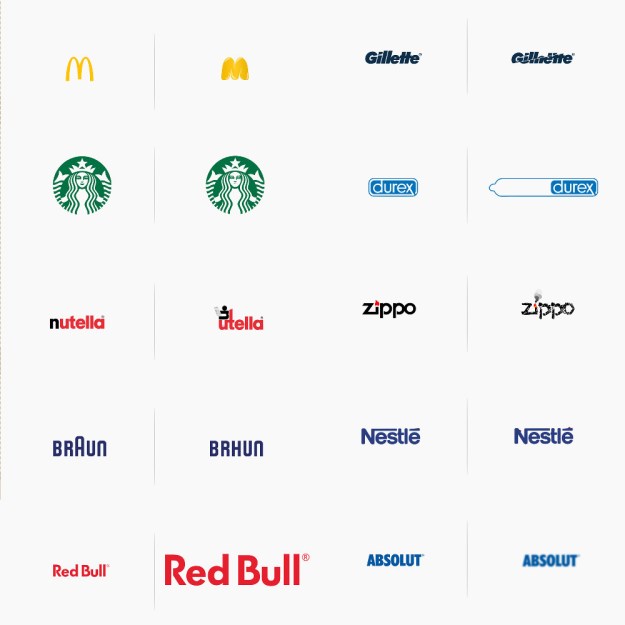
A fatter McDonalds logo? A caffeinated bitchy Starbucks logo? What would famous logos look like if they really were affected by the products they sell?
“For work, I always spend my time going around the web looking for trends and so on,” said Schembri from his home in Malta. “I was spending my weekend searching for articles and I found one on the food damages. Later on I “met” the McDonald’s logo and immediately I thought that logo was very skinny—it was a paradox, considering how fat people become after eating their products. So I decided to modify it by myself just to laugh. The rest of the story you can imagine.”
That led Schembri to doing a series of 10 logos, like fuzzing out the ABSOLUT vodka logo into how one might see it under the influence of alcohol, to putting the Durex logo inside of a condom.
Schembri’s approach is simple; he says he speaks as a product designer. “When you design something, you always start from the brand to develop a product as close as possible to the company family feeling,” he said. “This means at least 80% of the products in the market need to reflect the brand. What happens is the brands are also usually conditioned by the product image.”
A few others include a Nestle chocolate logo covered in pimples and a Zippo logo charred with smoke. Even though his playful approach can come across as critical, that wasn’t the plan.
“The idea was not to attack the brands but to create something funny,” he said. “Funny things make people smile and when people are happy they are also more inclined to share or comment—this is what this social era is teaching us, to give an emotion is the most important thing, never mind if its positive or negative, the important thing is to make people feel something.”
He feels it’s important to comment on consumption through design. “I think people in general never like to read ‘technical informational stuff’ and the key could be to give them a message, by using a funny way to make them think about something which is very important.”
The series can still be seen as critical of consumption—and specifically the consumption of edible products, like fast food. “Smoking and drinking can be dangerous but not like eating the wrong way,” said Schembri. “A wrong diet can slowly ruin your life.”
But what about Schembri? After making a comment on all the products and their logos, does he eat McDonalds and drink Starbucks coffee? He is, after all, personally connected to the brands. “I’m not addicted,” he said. “But yes, sometimes it’s the fastest way to eat when you travel a lot.”
Tired of traffic jams and tail gas? The design of electric „straddling buses“ lets cars drive underneath them, and can help reduce air pollution. Also known as land airbus, the new invention is less costly than subway systems.
Apple has big plans for Siri that will make the company’s famous assistant a lot more useful, according to a new report.
The company will soon open up Siri to developers with new software tools that will allow Siri to tap into more third-party services, according to a new report in The Information. Apple is also working on a new pice of a hardware, an Amazon Echo rival that will work with Apple’s smart home platform.
Apple plans to put Siri in the hands of developers with a new software development kit (SDK) that will reportedly be called the Siri SDK. The Siri SDK could launch at next months’s World Wide Developer Conference, where Apple typically previews the newest version of IOS and its latest developer tools.
The SDK will require „some work“ by developers to make their apps accessible by Siri, the report says.
Siri already works with a few third-party services, like Yelp and Bing, but hasn’t been widely available to developers since it was acquired by Apple in 2010. Prior to its acquisition, Siri worked with many third-party services. (Some of the original Siri team is now working on a new AI Assistant called Viv, which will also work with third-parties like Uber.)
Apple is also reportedly working on a new speaker that allows people to use voice commands to play music and control HomeKit-enabled smart home devices, like lights, locks and thermostats. It’s unclear if the speaker will also be unveiled at WWDC in June, as Apple typically reserves new hardware for other events.
Though the new smart speaker sounds a lot like Amazon’s Echo and Google’s recently unveiled Google Assistant, Apple’s device predates both, according to The Information’s sources.
The report is just the latest sign that Apple has big plans for Siri next month. Earlier reports have suggested Apple will bring Siri to the Mac and — in what could very well be a hint of a Siri-themed WWDC — the company used Siri to reveal the dates of this year’s developer conference.



 TheIdea – The Innovation Agency


