Archiv der Kategorie: e-mobility

Audi R10 V10 is a supercar for everyday life

Audi R8 12 toutHollis Johnson

When the Audi R8 arrived on the world stage in 2007, the German supercar took the automotive world by storm. In short time, the stylish Audi became not just one of the most sought-after machines in the world, but also a pop-culture icon. („Iron Man,“ anybody?)But after a decade of excellence, it was time for a successor.

How do you improve upon an icon? We’ve all heard of the sophomore slump or the disappointing sequel. After all, disasters such as „Jaws 2“ or „Speed 2“ happen way more often than an „Empire Strikes Back“ or a „Dark Knight.“

With the R8, Audi had the tall task of coming up with a sequel to its flagship model. After all, this is Tony Stark’s official ride.

For 2017, there is indeed an all-new, second-generation R8. Recently, Audi dropped off this R8 V10 Coupe Quattro S tronic for Business Insider to check out. Our ibis-white R8 V10 had a base price of $162,900, but with options the car left the showroom at $183,050.

So does the sequel live up to the hype? Let’s find out.

Photos by Hollis Johnson unless otherwise credited.


Our stunning ibis-white test car is the latest car to carry the R8 badge. But it certainly wasn’t the first.

Our stunning ibis-white test car is the latest car to carry the R8 badge. But it certainly wasn't the first.

Hollis Johnson

The R8 road car we know today is named after Audi’s all-conquering R8 Le Mans Prototype race cars. In 1999, Audi debuted the open cockpit R8R …

The R8 road car we know today is named after Audi's all-conquering R8 Le Mans Prototype race cars. In 1999, Audi debuted the open cockpit R8R ...

Audi

… and the closed cockpit R8C race cars. In its first time out, at the grueling 24 Hours of Le Mans endurance race, the R8Rs finished third and fourth. Unfortunately, neither of the R8Cs made it to the finish.

... and the closed cockpit R8C race cars. In its first time out, at the grueling 24 Hours of Le Mans endurance race, the R8Rs finished third and fourth. Unfortunately, neither of the R8Cs made it to the finish.

Audi

In 2000, Audi returned with the R8 LMP.

In 2000, Audi returned with the R8 LMP.

AP

From 2000 until it was replaced in 2006, the R8 LMP racked up an astonishing 63 victories in 79 races.

From 2000 until it was replaced in 2006, the R8 LMP racked up an astonishing 63 victories in 79 races.

REUTERS

This includes five outright victories at Le Mans in six years. Its only loss at Le Mans came at the hands of VW Group stablemate Bentley’s Speed 8. And even then, the Speed 8 that won can actually trace its roots back to the Audi R8C.

This includes five outright victories at Le Mans in six years. Its only loss at Le Mans came at the hands of VW Group stablemate Bentley's Speed 8. And even then, the Speed 8 that won can actually trace its roots back to the Audi R8C.

Audi

With this level of success. Audi was keen to provide its rivals with a lasting reminder of its prowess.

With this level of success. Audi was keen to provide its rivals with a lasting reminder of its prowess.

Audi

The result was the R8 — Audi’s first legitimate supercar. It arrived in 2007 with a 4.2-liter, 420-horsepower V8 and a 185-mph top speed.

The result was the R8 — Audi's first legitimate supercar. It arrived in 2007 with a 4.2-liter, 420-horsepower V8 and a 185-mph top speed.

Audi

Although the R8 immediately became infinitely cool and built a reputation for being great to drive and easy to live with, critics also felt the V8 lacked muscle compared with other supercars of its day.

Although the R8 immediately became infinitely cool and built a reputation for being great to drive and easy to live with, critics also felt the V8 lacked muscle compared with other supercars of its day.

Audi

That all changed with the arrival of a 525-horsepower, 5.2-liter V10 borrowed from the Lamborghini Gallardo. Now the R8 had the face-melting speed to go along with the looks.

That all changed with the arrival of a 525-horsepower, 5.2-liter V10 borrowed from the Lamborghini Gallardo. Now the R8 had the face-melting speed to go along with the looks.

Audi

For 2017, there’s a new second-generation version of the Audi supercar. It’s available in two different flavors:

For 2017, there's a new second-generation version of the Audi supercar. It's available in two different flavors:

Hollis Johnson

The hardcore R8 V10 Plus …

The hardcore R8 V10 Plus ...

Hollis Johnson

… and the tamer — but still very capable — R8 V10. Our test car was an R8 V10.

... and the tamer — but still very capable — R8 V10. Our test car was an R8 V10.

Hollis Johnson

Aesthetically, the exterior of the new R8 is an evolution of the first-generation car. The design has aged rather gracefully. After all, you don’t fix what isn’t broken.

Aesthetically, the exterior of the new R8 is an evolution of the first-generation car. The design has aged rather gracefully. After all, you don't fix what isn't broken.

Hollis Johnson

Up front, Audi’s domineering front grille makes its presence felt. Whether this new grille is an improvement over the outgoing model is in the eye of beholder.

Up front, Audi's domineering front grille makes its presence felt. Whether this new grille is an improvement over the outgoing model is in the eye of beholder.

Hollis Johnson

However, the LED headlights look terrific.

However, the LED headlights look terrific.

Hollis Johnson

On the flanks, Audi changed one of the previous-gen car’s signature features by splitting the R8’s carbon-fiber blade into two — a potentially controversial move that some will applaud while others will lament.

On the flanks, Audi changed one of the previous-gen car's signature features by splitting the R8's carbon-fiber blade into two — a potentially controversial move that some will applaud while others will lament.

Hollis Johnson

The R8’s gas cap is still located on the top portion of the carbon-fiber blade.

The R8's gas cap is still located on the top portion of the carbon-fiber blade.

Hollis Johnson

The rear of the V10 gets an adjustable spoiler, which extends at 75 mph, while the V10 Plus gets a larger unit that’s permanently bolted to the rear deck lid.

The rear of the V10 gets an adjustable spoiler, which extends at 75 mph, while the V10 Plus gets a larger unit that's permanently bolted to the rear deck lid.

Hollis Johnson

Although many of the car’s fans may prefer the aggressive front-end design …

Although many of the car's fans may prefer the aggressive front-end design ...

Hollis Johnson

… I find the rear three-quarter view to be the car’s most appealing.

... I find the rear three-quarter view to be the car's most appealing.

Hollis Johnson

Step inside and you’ll find the most impressive part of the R8.

Step inside and you'll find the most impressive part of the R8.

Hollis Johnson

Although the first-generation R8’s exterior design aged well, its interior has not. For the all-new 2017 R8, Audi has completely revamped the cabin. The result is one of the finest in any supercar. It’s covered in rich nappa leather and alcantara.

Although the first-generation R8's exterior design aged well, its interior has not. For the all-new 2017 R8, Audi has completely revamped the cabin. The result is one of the finest in any supercar. It's covered in rich nappa leather and alcantara.

Hollis Johnson

Every aspect of this cockpit is focused on the driver.

Every aspect of this cockpit is focused on the driver.

Hollis Johnson

As you can see, there isn’t much for the passenger to do.

As you can see, there isn't much for the passenger to do.

Hollis Johnson

What would normally be found on the center stack …

What would normally be found on the center stack ...

Hollis Johnson

… has been relocated to the steering wheel.

... has been relocated to the steering wheel.

Hollis Johnson

The start-stop and drive-select buttons are kinda hard to miss.

The start-stop and drive-select buttons are kinda hard to miss.

Hollis Johnson

What makes the R8 really stand out is the inclusion of Audi’s new Virtual Cockpit system. Instead of a traditional gauge cluster and infotainment screen, Virtual Cockpit integrates the two in a single 12.3-inch, high-definition display.

What makes the R8 really stand out is the inclusion of Audi's new Virtual Cockpit system. Instead of a traditional gauge cluster and infotainment screen, Virtual Cockpit integrates the two in a single 12.3-inch, high-definition display.

Hollis Johnson

Everything the driver needs to control the car’s many features can be accessed through Virtual Cockpit.

Everything the driver needs to control the car's many features can be accessed through Virtual Cockpit.

Hollis Johnson

This includes the car’s superb 12-speaker, 550-watt Bang & Olufsen stereo.

This includes the car's superb 12-speaker, 550-watt Bang & Olufsen stereo.

Hollis Johnson

The most incredible function the system offers is a full-screen map that’s unlike anything offered by other brands.

The most incredible function the system offers is a full-screen map that's unlike anything offered by other brands.

Hollis Johnson

The Virtual Cockpit is a fairly risky move for Audi. The company’s infotainment system is one of the — if not the — best in the business right now. And to make such a drastic change could have been a disaster. Fortunately for Audi, Virtual Cockpit is intuitively organized, very easy to use, and beautifully presented.

The Virtual Cockpit is a fairly risky move for Audi. The company's infotainment system is one of the — if not the — best in the business right now. And to make such a drastic change could have been a disaster. Fortunately for Audi, Virtual Cockpit is intuitively organized, very easy to use, and beautifully presented.

Hollis Johnson

Virtual Cockpit is controlled either through the traditional rotary controller and script pad, located on the center console …

Virtual Cockpit is controlled either through the traditional rotary controller and script pad, located on the center console ...

Hollis Johnson

… or with steering-wheel-mounted buttons.

... or with steering-wheel-mounted buttons.

Hollis Johnson

The sparse center stack is populated only by the car’s climate controls.

The sparse center stack is populated only by the car's climate controls.

Hollis Johnson

Our R8 test car came equipped with a pair of beautifully quilted nappa leather seats. Unlike the seats in many supercars, the R8’s 18-way adjustable seats are not only supportive, but also comfortable.

Our R8 test car came equipped with a pair of beautifully quilted nappa leather seats. Unlike the seats in many supercars, the R8's 18-way adjustable seats are not only supportive, but also comfortable.

Hollis Johnson

The R8’s center armrest doubles as …

The R8's center armrest doubles as ...

Hollis Johnson

… cup holders!

... cup holders!

Hollis Johnson

Behind the driver is the R8’s 5.2-liter V10 engine. The V10, which is shared by the Lamborghini Huracan, is an absolute gem of a motor. It’s docile in normal driving, but capable of becoming a fire-breathing power plant when called upon.

Behind the driver is the R8's 5.2-liter V10 engine. The V10, which is shared by the Lamborghini Huracan, is an absolute gem of a motor. It's docile in normal driving, but capable of becoming a fire-breathing power plant when called upon.

Hollis Johnson

These days, the R8’s V10 is a dying breed. It’s one of the few remaining supercar powerplants to take a pass on turbocharging or hybridization. As a result, the Audi delivers a more connected driving experience. No need to wait for turbos to spool up!

These days, the R8's V10 is a dying breed. It's one of the few remaining supercar powerplants to take a pass on turbocharging or hybridization. As a result, the Audi delivers a more connected driving experience. No need to wait for turbos to spool up!

Hollis Johnson

The R8 V10 Plus gets a 610-horsepower version of the engine.

The R8 V10 Plus gets a 610-horsepower version of the engine.

Hollis Johnson

The R8 V10, our test car, came with a detuned 540-horsepower variant.

The R8 V10, our test car, came with a detuned 540-horsepower variant.

Hollis Johnson

According to Audi, the 540-horsepower R8 V10 is capable of making the run to 60 mph in 3.5 seconds and can reach a top speed of 199 mph.

According to Audi, the 540-horsepower R8 V10 is capable of making the run to 60 mph in 3.5 seconds and can reach a top speed of 199 mph.

Hollis Johnson

The more powerful V10 Plus speeds up the process with a claimed 0-60 mph time of 3.2 seconds and a top speed of 205 mph.

The more powerful V10 Plus speeds up the process with a claimed 0-60 mph time of 3.2 seconds and a top speed of 205 mph.

Hollis Johnson

All R8s get Audi’s highly capable seven-speed, dual-clutch transmission. Our V10 test car handled the engine’s prodigious power with ease. The shifts were smooth and immediate in every situation we encountered during our few days with the car.

All R8s get Audi's highly capable seven-speed, dual-clutch transmission. Our V10 test car handled the engine's prodigious power with ease. The shifts were smooth and immediate in every situation we encountered during our few days with the car.

Hollis Johnson

Stopping power comes courtesy of these ventilated wave-design disc brakes.

Stopping power comes courtesy of these ventilated wave-design disc brakes.

Hollis Johnson

The R8 is incredibly smooth, steady, and easygoing. It’s very difficult to the push the car beyond its capabilities. The combination of quattro all-wheel-drive and active aerodynamics gives the car endless traction. The V10 offers instant power to get you out of trouble.

The R8 is incredibly smooth, steady, and easygoing. It's very difficult to the push the car beyond its capabilities. The combination of quattro all-wheel-drive and active aerodynamics gives the car endless traction. The V10 offers instant power to get you out of trouble.

Hollis Johnson

Alas, here lies our only issue with the R8 V10: While there’s no doubting its capabilities and competence on both road and track, the R8’s easygoing driving experience lacks the excitement and insanity one might hope for in a supercar.

Alas, here lies our only issue with the R8 V10: While there's no doubting its capabilities and competence on both road and track, the R8's easygoing driving experience lacks the excitement and insanity one might hope for in a supercar.

Hollis Johnson

In fact, you can say that this car offers a very similar experience to other high-performance Audis such as the RS7 and the RS5. This sentence serves both as praise and criticism because the R8 V10’s relaxed nature offers buyers a relatively worry-free ownership experience. On the other hand, this clinical efficiency detracts from the car’s charisma and charm. The driving experience simply doesn’t feed your soul the way other supercars can.

In fact, you can say that this car offers a very similar experience to other high-performance Audis such as the RS7 and the RS5. This sentence serves both as praise and criticism because the R8 V10's relaxed nature offers buyers a relatively worry-free ownership experience. On the other hand, this clinical efficiency detracts from the car's charisma and charm. The driving experience simply doesn't feed your soul the way other supercars can.

Hollis Johnson

In other words, the R8 V10 is the car choice should you want to tackle the 24 Hours of Le Mans in style and comfort, but not if your goal is attention.

In other words, the R8 V10 is the car choice should you want to tackle the 24 Hours of Le Mans in style and comfort, but not if your goal is attention.

Hollis Johnson

More times than not, the purchase of a supercar is an emotional buy and not a rational one. Supercars are generally useless in most daily situations and can be a great hassle to live with. The R8 isn’t. It’s one of the few cars of this genre that can be rationally justified.

More times than not, the purchase of a supercar is an emotional buy and not a rational one. Supercars are generally useless in most daily situations and can be a great hassle to live with. The R8 isn't. It's one of the few cars of this genre that can be rationally justified.

Hollis Johnson

Overall, the 2017 Audi R8 V10 is a worthy sequel to one of the most iconic cars in recent memory. Its combination of exotic looks, high performance, and day-to-day usability makes this a supercar you can live with.

Overall, the 2017 Audi R8 V10 is a worthy sequel to one of the most iconic cars in recent memory. Its combination of exotic looks, high performance, and day-to-day usability makes this a supercar you can live with.

Hollis Johnson

Dieter Zetsche beschwört den Wandel der Autobranche

Betont lässig: Daimler-Chef Dieter Zetsche brach in Paris mit den Traditionen der Autobranche. Er führte Freizeitmode vor und verkündete das neue Leitbild einer agilen Organisation.

(Foto: Daimler)

Dabei bremste Daimler bislang bei den alternativen Antrieben. Auch die jüngste Elektroauto-Studie geriet mutlos. Gelingt dennoch die Transformation zum Tech-Konzern?

Analyse von Joachim Becker

Die Schuhe sind Teil der Inszenierung: Wenn der 63-jährige Chef eines Weltunternehmens mit Jeans und Turnschuhen rumläuft, dann befindet er sich für gewöhnlich im Urlaub oder in der Midlife-Crisis. Dieter Zetsche will augenscheinlich nicht zum alten Eisen gehören. Doch sein Problem ist weniger privater als unternehmerischer Natur: Der Daimler-Boss will das Flaggschiff der deutschen Autoindustrie zur Tech-Company umbauen.

Vor einer Gründerzeit im Neckar-Valley muss er einige Altlasten bewältigen. Zum Beispiel den Erfolg des bewährten Geschäftsmodells: Trotz Rekordabsatzzahlen fordert Zetsche ein radikales Umdenken seiner Mitarbeiter. Statt sprudelnde Erlöse zu feiern, sollen sie sich an einer Revolution beteiligen. Ausgang offen.

Bisher stand Mercedes auf der Bremse

Was Zetsche auf dem Pariser Autosalon verkündet, ist eine Revolution von oben: „Wir wollen nicht nur die Verwandlung unserer Produkte vorantreiben, sondern auch die Verwandlung unserer Organisation signifikant beschleunigen.“ Bisher standen die Stuttgarter nicht nur bei alternativen Antrieben auf der Bremse. Kurz nach einer Welttournee mit Wasserstofffahrzeugen wurde 2013 die angekündigte Serienproduktion abgesagt. Im selben Jahr überließ man BMW i die Vorfahrt bei komplett neuen Elektroautos. Die ersten E-Smarts mit Hochtemperaturzellen hatten 2007 bloß Forschungscharakter. Später half Tesla auch bei der Mercedes-B-Klasse-e-cell mit Batterien nach. Trotzdem oder gerade deshalb zögerte der Elektroingenieur Zetsche, Milliarden auf eine ungewisse Elektro-Zukunft zu wetten.

Anzeige

Zetsche ist kein junger Wilder wie Elon Musk, der als New-Age-Guru einer emissionsfreien Zukunft auftritt. Der Erfolg von Tesla und vor allem die Geschwindigkeit, mit der sich das Start-up weiterentwickelt, sorgen im Daimler-Vorstand allerdings für Stirnrunzeln. Der Elektro-Pionier punktet mit Software-Updates, die neue Funktionen ins Auto bringen. Trotz gravierender Rückschläge wie beim Autopiloten will Tesla das erste autonome Auto auf den Markt bringen.

Die Serienversion des Generation EQ kommt 2018

Bei dem halsbrecherischen Technologietempo gibt es eine Reihe von Unwägbarkeiten: „Unser Zielkorridor für den Elektroabsatz im Jahr 2025 liegt zwischen 15 und 25 Prozent. Genauer können wir es einfach nicht prognostizieren“, gesteht Mercedes-Vertriebsvorstand Ola Källenius. Trotzdem legt Daimler jetzt den Schalter für die neue Elektro-Submarke EQ um. Die Serienversion des Pariser Showcars „Generation EQ“ wird ab 2018 zum Preis eines „vernünftig ausgestatteten Mercedes GLC“ (also für rund 60 000 Euro) angeboten. Mindestens neun weitere reine E-Mobile vom Kompaktauto bis zum Supersportler sollen bis 2025 folgen.

Mercedes will bis 2025 Tesla als Marktführer bei Premium-Elektrofahrzeugen ablösen. Die leistungsstarken Stromer werden aber schon Ende dieses Jahrzehnts Standard sein – als Unterscheidungsmerkmal einer Marke taugen sie dann nicht mehr. Deshalb stürzen sich die Blechbieger in weitere Abenteuer: „Viele Autohersteller wollen heute Mobilitätsanbieter werden. Das ist schön und gut. Aber die Transformation der Branche ist noch viel grundlegender“, warnt der Daimler-Boss.

Daimlers Erfolgsgeschichte geschieht zu langsam

130 Jahre lang definierte sich die Autoindustrie über Hardware. Daimler ist das beste Beispiel, wie schwierig nun das Umdenken ist: Die Stuttgarter haben zwar 2007 das flexible Einweg-Carsharing mit vollvernetzten Smarts erfunden. Doch es dauerte zehn Jahre, um Car2go auf zwei Millionen Nutzer zu bringen. Was Daimler als Erfolgsgeschichte verkauft, geschieht letztlich zu langsam, um mit neuen Wettbewerbern zu konkurrieren. Maßgeschneiderte, automatisierte Mobilitäts-Services könnten dem Verkauf von Privat-Pkw in Zukunft mehr und mehr Konkurrenz machen. Niemand weiß aber, wie und wann sich der Wandel genau vollziehen wird.

Bisher sind die Entwicklungsabteilungen der Autohersteller entlang von neuen Produkten aufgestellt. Genauso wichtig werden allerdings innovative Geschäftsmodelle sein. Daimler will den Technologiewandel vom Kundenerlebnis her neu denken: „Wir erwarten, dass sich das Auto von einem Produkt in eine ultimative Plattform verwandelt. Das ist ein fundamentaler Perspektivenwechsel“, sagt Dieter Zetsche. Diese Plattform ruhe auf vier Säulen: Vernetzung (Connected), Autonomes Fahren, Sharing und Elektromobilität. Zusammen ergeben die Anfangsbuchstaben das Wort Case. „Wir haben gerade einen neuen Unternehmensbereich mit diesem Namen gegründet, um diese Themenfelder zusammenbringen“, so Zetsche.

Noch ist unklar, was die Kunden wollen

Den Kunden in den Mittelpunkt zu stellen, ist eine prima Idee. Das Problem ist nur: Kaum ein Mercedes-Käufer hat bisher nach Elektromobilen gefragt. Geschweige denn Interesse an einer Internet-Plattform gezeigt, über die er seine Luxuskarosse mit anderen teilen kann. Genau das will Mercedes mit einer Sharing-Plattform ab November dieses Jahres in Deutschland erproben.

Zetsche stellt in Paris jedoch klar, das keine einzelne Technologie oder Dienstleistung den Unterschied machen werde, sondern ein neuartiges Gesamterlebnis von Mobilität: „Jede der Case-Säulen hat das Potenzial, die gesamte Automobilindustrie auf den Kopf zu stellen. Aber die wahre Revolution ist die Verbindung dieser Aspekte in einem umfassenden, nahtlosen Paket.“

Zetsches ständiger Balanceakt

Alt und neu, analog und digital, Sakko zur verwaschenen Jeans: Als Vordenker balanciert Zetsche ständig zwischen den Gegensätzen. Seine Grundsatzrede auf dem Pariser Autosalon klingt über weite Strekken wie ein Appell an die eigene Belegschaft: Das Schweizer Uhrwerk als Zeichen für Verlässlichkeit und Präzision im mechanischen Zeitalter – „das bleibt auch in Zukunft wichtig!“, beruhigt er seine Mitarbeiter. Schon im nächsten Moment predigt er jedoch das Credo des digitalen Zeitalters: Ihm gefalle die Idee einer „agilen Schwarmorganisation“, verkündet der Manager mit dem grauen Walrossbart: „Case wird als rechtlich getrennte Organisation ein perfekter Startpunkt für diese Vorstellung sein.“

Mehr Silicon Valley wagen, ohne die Stärken der Vergangenheit aufzugeben, lautet die Botschaft. Noch weiß allerdings niemand, wie dieses Autofahren 2.0 wirklich aussieht, geschweige denn, wie man damit Geld verdient. Elektro-Studien wie der Mercedes Generation EQ und der VW I. D. zeigen in Paris jedenfalls das genaue Gegenteil einer Design-Revolution. Mit ihren mutlos-monolithischen Grundformen pendeln sie irgendwo zwischen Van und Crossover. Bloß nicht auffallen!

Der Fluch der großen Reichweite

Damit sich die Hoffnungsträger wenigstens ein bisschen vom Mainstream unterscheiden, wurde ihnen das Dach tief ins Gesicht gedrückt. Doch der Trick funktioniert nur auf geschickt fotografierten Bildern. Wer versucht hat, auf den Rücksitzen des VW I. D. zu sitzen oder sich unter dem Dachholm des Mercedes EQ durchzuschlängeln, erkennt den Schwindel: In der Serie werden aus halbwegs schnittigen Showcars bleischwere Hochdachautos. Das ist der Fluch der großen Reichweite.

Die Physik lässt sich auch im digitalen Zeitalter nicht überlisten: Stromer mit 500 Kilometer Radius benötigen riesige Unterflur-Batteriepakete, auf denen die Passagiere thronen. Tesla kann dieses hochgebockte Kutschendesign mit einem flachen Batterieformat recht gut kaschieren. Weil kein anderer Hersteller die schmalen Rundzellen von Panasonic verwendet, werden sich die Designer mit ihren Tesla-Fightern mächtig anstrengen müssen.

Auch Matthias Müller beschwört ein „neues Zeitalter“

Dass die meisten Kunden 500 Kilometer Batteriereichweite gar nicht brauchen, ist die Ironie dieses Technologiewandels. Bisher hat kaum jemand die Stromer als Erstauto für die ganze Familie verwendet, geschweige denn Urlaubsfahrten damit geplant. Das Wettrennen um den größten Batterieradius wendet sich also nicht an die umweltbewussten Pioniere, sondern an den komfortorientierten Otto-Normalverbraucher: Einmal pro Woche Tanken ist gelernt. Bloß nicht umgewöhnen!

Auch Matthias Müller beschwört in Paris ein „neues Zeitalter“: „Die Elektromobilität und digitale Vernetzung werden zu Game Changern“. Welche Spielregeln für eine neue Generation von Kunden gelten werden, weiß aber auch das Oberhaupt des Volkswagen-Konzerns nicht sicher zu sagen. Vielleicht sind es digital animierte Innenwelten, die ein neues Markenerlebnis schaffen. Auf dem Mercedes-Stand ließ sich Müller lange die Bedienphilosophie der EQ-Studie erklären. Die hochauflösenden 3-D-Landschaften auf dem Riesenbildschirm sollten ihn wohl von der Tristesse im VW I. D. ablenken.

Quelle: http://www.sueddeutsche.de/auto/die-zukunft-von-daimler-dieter-zetsche-beschwoert-den-wandel-der-autobranche-1.3193256

Mercedes‘ Tesla killer is coming in 2019

mercedes eqScreenshot

Mercedes-Benz just made a huge move to take on Tesla.

The German automaker unveiled its all-electric SUV concept at the Paris Motor Show Thursday, and with a competitive price tag and solid range potential, it’s poised to become a big competitor in the EV space.

Called Generation EQ, the SUV concept is expected to have a range up to 310 miles.

Called Generation EQ, the SUV concept is expected to have a range up to 310 miles.

Mercedes-Benz

The production version of the SUV is expected to hit the roads in 2019, Dieter Zetsche, the head of the Mercedes-Benz car division, said at the Paris Motor Show press event. Mercedes is calling the SUV unveiled today a „close-to-production concept vehicle.“

The production version of the SUV is expected to hit the roads in 2019, Dieter Zetsche, the head of the Mercedes-Benz car division, said at the Paris Motor Show press event. Mercedes is calling the SUV unveiled today a "close-to-production concept vehicle."

Mercedes-Benz

The car will fall in the same price range as the GLC Crossover, which currently starts at $39,150. That’s a very competitive price for an electric SUV, considering Chevy Bolt’s all-electric SUV crossover will start at $37,500 when it hits showrooms at the end of 2016.

The car will fall in the same price range as the GLC Crossover, which currently starts at $39,150. That's a very competitive price for an electric SUV, considering Chevy Bolt's all-electric SUV crossover will start at $37,500 when it hits showrooms at the end of 2016.

Mercedes-Benz

The interior comes with a massive, 24-inch display that shows speed, range, driving data, and navigation information. The display will alert the driver if the car is running low on battery and of nearby charging stations. The steering wheel also comes with touch controls.

The interior comes with a massive, 24-inch display that shows speed, range, driving data, and navigation information. The display will alert the driver if the car is running low on battery and of nearby charging stations. The steering wheel also comes with touch controls.

Mercedes-Benz

The SUV comes with some autonomous features, but not many. Mercedes says the car can automatically adjust the speed and driving dynamics when approaching curves.

The SUV comes with some autonomous features, but not many. Mercedes says the car can automatically adjust the speed and driving dynamics when approaching curves.

Mercedes-Benz

The car is part of Mercedes‘ efforts to ramp up its electric-car offerings. Daimler’s chief development officer, Thomas Weber, said in May that Mercedes-Benz was aiming to add four new electric cars to its model range by 2020.

The car is part of Mercedes' efforts to ramp up its electric-car offerings. Daimler's chief development officer, Thomas Weber, said in May that Mercedes-Benz was aiming to add four new electric cars to its model range by 2020.

Mercedes-Benz


http://www.businessinsider.de/mercedes-electric-suv-production-in-2019-photos-2016-9?op=1

Paris motor show 2016 review: A-Z of all the new cars

The Paris motor show is heralded as the world’s biggest motor show, claiming more visitor footfall than any other auto show. No wonder car makers are scrambling to prepare their new car launches in time.

Here we round up all the cars, world debuts and major launches at the Paris motor show. Think of it as a handy one-stop shop for everything about the Mondial de l’Automobile, including a continuously updated list of all the key cars unveiled on the day.

The new 2017 Audi A5 Sportback: a Paris motor show debut

AUDI
A5 Sportback (above): The slinkier new five-door A5 hatchback is unveiled
Q5: Ingolstadt is readying the replacement Q5 Mk2 for a Paris debut

BMW
Concept car: 
Not the new 5-series, but a new crossover concept is coming

CITROEN
C3 (below): The French will launch chic new supermini at the Paris motor show
C3 WRC concept:

CXperience: Plug-in hybrid concept previews Citroen’s upcoming design language

Citroen C3: Paris motor show 2016 world debut

DACIA
2016 range updates: 
Fresh styling, trim and features for Sandero, Sandero Stepway and Logan MCV

FERRARI
GTC4 Lusso T:  New V8-engined version of the car formerly known as the FF
LaFerrari convertible:
 
Maranello’s taken a tin-opener to its fastest supercar

HONDA
Civic (below):  
Next Civic is another French debutant; everything you need to know about Civic Mk10
Civic Type R prototype:  New prototype offers a look at the next-gen hot hatch from Honda

2016 Honda Civic

HYUNDAI
i10: Revamped city car gets new tech and fresh styling
i20 WRC:  Get your first look at the 2017 WRC entry from Hyundai
i30:  Third-gen hatchback family confirmed for the Paris motor show
RN30 concept:  New 375bhp hot-hatch concept targets the Focus RS

INFINITI
Q60:
 UK pricing revealed for sleek new coupe
QX Sport:
 
We’re expecting a refreshed version of the new mid-sized crossover concept from Beijing
VC-T variable compression ratio engines:  CO2-crushing new engine tech at Paris

KIA
Carens:
 Practical MPV gets new styling and tech for 2016
Rio:
 
New Rio supermini to make its public debut at the French car show
Soul: Revamped Kia Soul gets new 201bhp turbo engine

The new Land Rover Discovery: covers come off at the Paris motor show

LAND ROVER
Discovery (above):  The all-new Discovery, now revealed in full, is set to be one of the big draws at Paris

LEXUS
UX crossover concept:
 Latest concept aims to showcase new tech and connectivity features
Kinetic Seat Concept:  The humble car seat, as you’ve never seen it before

MERCEDES-BENZ
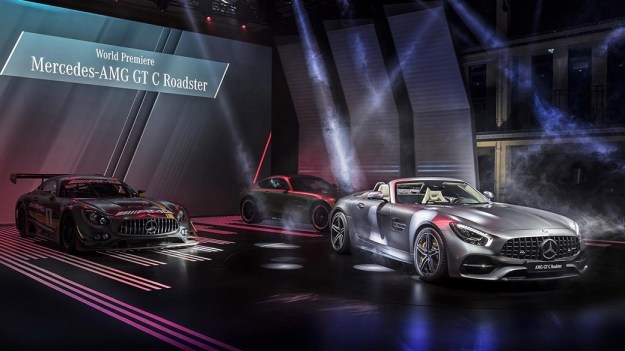
AMG GT Roadster:  French guillotine beheads Merc’s glorious sports car in Paris
AMG R50 hypercar (below):  Big Paris shock, as Merc confirms F1-engined hypercar
E-class All-Terrain:  Merc chases the Allroad dollar with E-class in wellies
Electric SUV concept:  We’re expecting a mid-sized e-crossover
GLC 43 4Matic Coupe: Sleeker version of the twin-turbo GLC SUV steps out
Vision Mercedes-Maybach 6:  A closer look at the new super-luxury concept

The new Mercedes-AMG R50 hypercar - F1-engined!

MINI
Clubman JCW:  It’s the most powerful version of Mini’s compact estate to date

MITSUBISHI
GT-PHEV Concept:  
A conceptual look ahead to the next Outlander SUV

NISSAN
Micra:  
Slicker, more Europeanised supermini takes a bow at Paris motor show

PEUGEOT
3008:  
Lumpy crossover enters the mainstream in prettier, more conventional Mk2
5008:  Double-oh Peugeot reborn as a family crossover; seen first in Paris
3008 DKR race car:  New rally-raid special shown ahead of 2017 Dakar

PORSCHE
Panamera (below):  
It’s the brand spanking new, prettier Panam sports saloon Mk2

The new 2016 Porsche Panamera: a Paris motor show launch

RENAULT
Alaskan:  
La Regie unleashes its first pick-up at its home show in Paris
Koleos:  New ‘Initiale Paris’ version of luxury SUV unveiled
Trezor:  Sleek EV coupe packs a 345bhp punch
Zoe:  Renault’s upped the Zoe’s maximum range to 250 miles

SEAT
Ateca X-Perience:  
Rugged new concept showcases potential production car

SKODA
Kodiaq:  
A major launch for Skoda as it unveils its first full-size family crossover

SMART
Fortwo and Forfour Electric Drive:  World premiere of the e-Smart is scheduled for Paris

SSANGYONG
LIV-2 SUV concept:  
This one points to the next-generation Rexton SUV, we reckon

SUZUKI
Ignis:
 European debut for the new baby crossover inspired baby
SX4 S-Cross:  Mild facelift for 2017 model year SUV

TOYOTA
C-HR crossover:  
Final production sight of the new compact SUV, after Geneva design reveal
Gazoo Racing:  New umbrella body for all Toyota’s motorsports will launch in Paris
Prius Plug-in Hybrid:  European debut for Toyota’s plug-n-play Prius
FCV Plus:  Another Euro first for this fuel-cell show car

VAUXHALL
Ampera-e: 
New EV features plenty of punch and long range, but we won’t get it – yet

VOLKSWAGEN
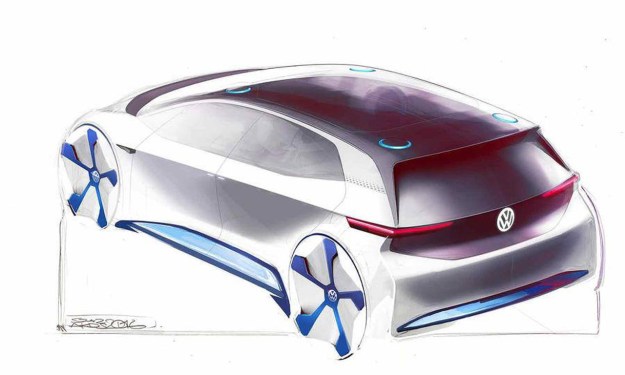
I.D. electric car concept (below):  Volkswagen promises dramatic change with new long-range EV
Volkswagen announces 13th brand:  Mystery Berlin-based brand being worked on

VW I.D. concept

http://www.carmagazine.co.uk/car-news/motor-shows-events/paris/2016/paris-motor-show-2016-review-news-photos-a-z-new-cars/

Here’s the electric car Audi is building to take on Tesla

Audi E-tron quattroAudi

Tesla’s Model S and Model X are soon going to have some serious competition.

Last September, Audi revealed its all-electric e-tron quattro concept at the Frankfurt Motor Show. The SUV, which is slated to go into production by 2018, will have three electric motors, a range of 310 miles on a single charge, and quick charging capabilities.

Here’s a look at some of the features in the e-tron quattro that we hope to see in the production version.

Like the e-tron concept, Audi will most likely include piloted driving technology in its upcoming all-electric SUV.

Like the e-tron concept, Audi will most likely include piloted driving technology in its upcoming all-electric SUV.

Audi piloted techYouTube/Audi

The e-tron quattro concept has piloted driving technology, which uses radar sensors, a video camera, ultrasonic sensors, and a laser scanner to collect data about the car’s environment and create a model of the vehicle’s surroundings in real-time.

Audi currently has a lot of this tech in its newer vehicles, so it’s likely we will see a more advanced piloted system in the production version of the e-tron quattro.


Cameras could replace side view mirrors.

Cameras could replace side view mirrors.

Audi

The e-tron quattro has curved displays built into the front section of the doors that lets the driver view what is around them. There’s no guarantee we’ll see this in the production version, but automakers are beginning to experiment with new kinds of mirror designs.

For example, GM’s a digital mirror in the Chevy Bolt and the Cadillac CT6that uses cameras to stream whatever is behind you.

It will likely be covered in screens.

It will likely be covered in screens.

Audi

The e-tron quattro concept features two touch displays in the cockpit, one to the driver’s left to control lights and the piloted driving systems and one to the right where media and navigation is controlled.

The center console has two more OLED displays for climate control and infotainment.

With its 95 kWh battery, the e-tron quattro has an impressive range of 310 miles on a single charge.

With its 95 kWh battery, the e-tron quattro has an impressive range of 310 miles on a single charge.

Audi

To put that into perspective, Tesla’s Model X SUV with all wheel drive and a 100kWh battery has a range of 289 miles on a single charge. Audi has already said its range will beat this.

It may be able to fully charge in just 50 minutes.

It may be able to fully charge in just 50 minutes.

Audi

We know the production version will have quick charging capabilities, but we don’t know exactly how fast it will work. However, we’re hoping it’s in line with the e-tron quattro concept’s charge time.

The concept car has a Combined Charging System (CCS), meaning it can be charged with a DC or AC electrical current. It can fully charge with a DC current outputting 150 kW in just about 50 minutes.


The e-tron quattro concept is equipped with induction charging technology, so it can be charged wirelessly over a charging plate.

The e-tron quattro concept is equipped with induction charging technology, so it can be charged wirelessly over a charging plate.

Audi

We can’t say if this is a definite feature the production version will have, but our fingers are crossed.

It will have super fast connectivity.

It will have super fast connectivity.

Audi

Audi announced at CES this year that it is the first automaker to support the latest standard for mobile communications: LTE Advanced.

LTE Advanced is the latest enhancement to LTE, meaning that it can deliver larger and faster wireless data payloads than 4G LTE. We can almost certainly expect to see the technology integrated into the upcoming production car.

http://www.businessinsider.de/audis-electric-vs-tesla-2016-9?op=1

Daimler präsentiert futuristisches Trio: Urban e-Truck, Vision Van und Future Bus

Der Mercedes Benz Urban eTruck feiert auf der Nutzfahrzeug-IAA seine Weltpremiere.Der Mercedes Benz Urban eTruck feiert auf der Nutzfahrzeug-IAA seine Weltpremiere.

Der Urban e-Truck, der Vision Van und der Future Bus – Mercedes zieht auf der Nutzfahrzeug-IAA die ganz große Elektroshow ab. Hinter den futuristischen Studien steckt aber mehr. Denn die Daimler AG versteht sich nicht mehr ausschließlich als Hersteller.

Es ist das gleiche Bild wie beim Pkw-Pendant in Frankfurt: Wer in diesen Tagen bei der Nutzfahrzeug-IAA in Hannover den Daimler-Stand besucht, wird auf eine Zeitreise mitgenommen. Denn hier stehen nicht die Laster von morgen, sondern die von übermorgen. Mit einem Aufwand, wie man ihn in dieser Branche so noch nicht erlebt hat, haben die Entwickler der Bus-und-Truck-Sparte aus dem Sternen-Imperium gleich drei visionäre Studien verwirklicht: Vision Van, Urban e-Truck und Future Bus.

Wie weit uns Mercedes mit diesen drei spektakulären Studien, die allesamt auf reinen Elektroantrieb setzen, in die Zukunft blicken lässt, weiß keiner genau. Wolfgang Bernhard, der für die Nutzfahrzeugsparte zuständige Daimler-Vorstand, ist allerdings überzeugt, dass die Zeitenwende bei der Elektro-Mobilität bereits eingesetzt hat und sie sich „viel dynamischer entwickelt, als wir das alle für möglich halten würden“.

Die Marschrichtung ist klar

Über 200 Kilometer soll der 25-Tonnen-Koloss rein elektrisch fahren.

Und kühn ergänzt der 56-Jährige, dass Daimler mit der Umsetzung der visionären Ideen „den Transport völlig neu erfindet“. Für Güter und Personen. Auf Autobahnen und in Städten. So sei der Urban e-Truck als erster emissionsfreier schwerer Truck die beste Antwort auf immer rigideren Zufahrtsbeschränkungen in verstopften Großstädten. Der sogenannte Verteilerverkehr im eher innerstädtischen Bereich könne mit ihm flüsterleise und sauber durchgeführt werden. Und mehr noch. Er ist komplett vernetzt, und bietet einschließlich eines intelligenten Reichweiten-Managements quasi ein Rundum-Sorglos-Paket für Transport- und Logistik-Unternehmen aus einer Hand.

Das umfasst eine flexible und effiziente Routenplanung, die Staus und sogar die Wetterlage einbezieht, die Optimierung des Energieverbrauchs, das Ansteuern der Ladestationen bis hin zum kompletten Lademanagement. „Das garantiert einen hoch effizienten Betrieb“, erklärt Bernhard. Und zudem will Daimler künftig auch noch stationäre Stromspeicher anbieten, die schon heute aus Antriebsbatterien von Elektroautos hergestellt werden. „Wir müssen uns von einem reinen Hersteller in einen Dienstleistungsanbieter verwandeln“, gibt der Kopf der Nutzfahrzeug-Division die Marschrichtung für die Zukunft vor.

Auch Langstrecke ist „physikalisch“ möglich

Während die Außenhaut des Urban e-Truck futuristisch anmutet, ist das Cockpit vergleichsweise konventionell gestaltet.

Ehrgeizige Pläne, wobei der Urban e-Truck aber allein schon technisch beeindruckt. Verantwortlich für den leisen Auftritt des 25-Tonnen-Kolosses sind zwei Elektromotoren an der Hinterachse direkt neben den Naben, die für eine Gesamtleistung von 340 PS sorgen und es im Zusammenspiel auf ein Drehmoment von 1000 Newtonmeter bringen. Damit ist volle Durchzugskraft direkt aus dem Stand garantiert. Die drei modularen Batteriepakete mit einer Gesamtleistung von 212 kWh sind immerhin für eine Reichweite von 200 Kilometern gut, was für eine Tagestour im Verteilerverkehr üblicherweise voll ausreicht. Die Ladezeit an einer 100-kW-Säule soll nur knapp über zwei Stunden betragen, allerdings sind solch potente Kraftquellen derzeit noch eine Seltenheit.

Und auch wenn die Lithium-Ionen-Akkus zusammen fast 2,5 Tonnen wiegen, wird der Stadt-Laster mit einer Nutzlast von 12,8 Tonnen, wie sie im Verteilerverkehr gängig sind, fertig. Auch der typische 7,4 Meter lange Kühlkoffer für den Frischedienst-Einsatz von Supermärkten und Einzelhandelsgeschäften mit Lebensmitteln lässt sich hinterm Fahrerhaus verbauen.

Mit seinen Drohnen soll der Vision Van vor allem den Lieferverkehr "auf der letzten Meile" revolutionieren.
Mit seinen Drohnen soll der Vision Van vor allem den Lieferverkehr „auf der letzten Meile“ revolutionieren.

Während Wolfgang Bernhard die Einführung rein elektrischer Antriebe im schweren Truck auf der Langstrecke für „physikalisch unmöglich“ hält, gibt er dem Verteiler-Lkw eine gute Chance. „Der Urban e-Truck würde im Vergleich zu einem Diesel-Lkw heute sicher einen Aufschlag in fünfstelliger Höhe erfordern“, erklärt der Nutzfahrzeug-Chef. Allerdings sei der stromernde 25-Tonner frühestens Anfang des nächsten Jahrzehnts serienreif und bis dahin seien die Batteriepreise allemal günstiger. Hinzu kämen aber auch noch die deutlich geringeren Betriebskosten. Denn erstens liegen die Stromausgaben rund 40 Prozent unter einem vergleichbaren Dieselverbrauch und zweitens besitzt ein E-Antrieb viel weniger Verschleißteile, was die Wartungs- und Instandhaltungskosten maßgeblich reduziert. Auch Ölwechsel fallen ja nicht mehr an.

Ohne Lenkrad, aber mit Drohnenlandeplatz

Mindestens genauso futuristisch von Chefdesigner Gordon Wagener gezeichnet präsentiert sich der Vision Van, der mit einer Cloud-basierten Steuerungssoftware ebenso in ein Gesamtkonzept einer komplett digitalisierten Lieferkette eingebunden werden soll. Das Fahrzeug kommuniziert beispielsweise auch über ein als „Kühlergrill“ gestaltetes Black Panel mit der Umwelt und soll vor allem den Lieferverkehr „auf der letzten Meile“ revolutionieren. So gibt es im Cockpit weder Lenkrad noch Pedalerie, dafür aber auf dem Dach zwei Landeplätze für Drohnen, die bei der Auslieferung den letzten Teil des Zustellungsweges vom Auto zum Kunden überbrücken sollen.

Eher als Meilenstein auf dem Weg zu einem autonom fahrenden Omnibus gilt der Mercedes Future Bus, der auch bereits in der Praxis bewiesen hat, dass mit einem City-Pilot an Bord zumindest teilautomatisiertes Fahren im öffentlichen Nahverkehr technisch bereits möglich ist. Auf der knapp 20 Kilometer langen Strecke vom Flughafen Amsterdam Schiphol bis nach Harlem musste der Fahrer jedenfalls kein einziges Mal Gas oder Bremse betätigen.

Dass Mercedes auf der Nutzfahrzeug-IAA mit den drei Zukunftsstudien aber nicht nur eine Show fern jeglicher Realität abzieht, beweist die Ankündigung, schon 2018 mit zwei voll elektrischen Fahrzeugen auf den Markt zu kommen. So ist ein ausschließlich mit Strom angetriebener Bus ebenso versprochen wie ein Sprinter mit E-Antrieb. Und schon im nächsten Jahr ist die Kleinserie eines Fuso e-Canter geplant. Der Kleinlaster der japanischen Tochter, ein Überbleibsel der einst gescheiterten Fusion mit Mitsubishi, setzt je nach gewünschter Reichweite auf individuelle Batteriesätze mit drei bis sechs Akkupacks à 14 kWh, mit denen die Kunden ihre Bedürfnisse in puncto Reichweite, Preis und Gewicht flexibel anpassen können. Er werde um einen vierstelligen Betrag teurer sein als ein vergleichbarer Diesel, würde in den Betriebkosten aber rund 1000 Euro auf 10.000 Kilometer einsparen und sich so bereits nach drei Jahren amortisieren.

http://www.n-tv.de/auto/Daimler-praesentiert-futuristisches-Trio-article18709651.html

Self-driving cars are here, but that doesn’t mean you can call them ‚driverless‘

Volvo Driverless Car What I imagine I could’ve been doing on my way to college instead of holding a steering wheel for nine hours. (Not actually me) Volvo

I went to college nine hours away from home — easily doable in a day’s drive, but tedious nonetheless.

On one trip through the cornfields of Indiana, I remember turning to my friend wondering why we hadn’t figured out cruise control for steering wheels. I had already been cruising at a steady 70 m.p.h. for hours with my feet on the floor. Why did I have to touch the steering wheel to keep it in the lines too?

Less than six years later, the answer is that I don’t have to touch the steering wheel anymore. Self-driving cars are here, and they’re arriving faster than many predicted.

The pace at which a self-driving car went from myth to reality has caused all sorts of problems, from a talent shortage in the field to a sudden arms race in trying to build the best self-driving car on the market. Uber’s CEO Travis Kalanick called it „existential“ for the company to develop its own driverless car technology.

Yet, there’s still a large distinction — and years of development — between the self-driving cars hitting the streets today and the driverless cars that we dream of in the future. Most „driverless“ cars today still have a driver in the front seat. Teaching a car how to drive itself (even with a driver on hand) is just the important first step.

Dreams of driverless

It’s hard not to be seduced by the images of driverless cars.

Mercedes-Benz‘ concept car shows four seats all turned to face each other. Bentley’s driverless dream comes with a holographic butler — a future staple for the high-end autonomous car. The Rolls-Royce has a two person couch with a giant TV where the driver normally sits.

Bentley Bentley

Even Larry Page is rumored to be working on a flying car so we all finally get one step closer to“The Jetsons“ future we’ve envisioned.

However, what’s not acknowledged is just how hard it is to get cars to that point. When I asked Uber’s Kalanick just what’s holding truly driverless cars back, he laughed because there’s just so much — and a lot of it just that the technology hasn’t even been developed. A self-driving car shouldn’t freak out at a four-way intersection or turn off every time it goes over a bridge.

To get in a self-driving car today, it feels like having cruise control, but for the whole car. The autopilot keeps the car’s speed steady, it stays evenly inside the lines, and maintains the proper following distance. The only way to experience a self-driving car is to either own a Tesla or live in Pittsburgh and magically hail a self-driving Uber.

After taking a ride in Otto’s self-driving truck, I explained the experience to my 92-year-old grandmother as being in a plane: You have a licensed driver who does take off and landing, or in this case, getting onto the interstate, but then once it’s clear, you just set it to autopilot.

While having „self-driving cars“ in the hands in the public is a huge milestone, it’s just the beginning in the path to full autonomy.

Truly driverless cars remain years away — but still closer than you think. Ford, for example, plans to roll out its first fully autonomous carsfor ride-sharing by 2021. Google is aiming for 2020 , and Tesla is planning to make its vehicles part of car-sharing networkonce its cars are fully autonomous.

The impacts of that will be widely felt. Merrill Lynch predicted in a 2015 report that driverless taxis like Ubers will make up 43% of new car sales by 2040. The Boston Consulting Group also wrote in a 2015 report that driverless taxi sales are bound to incline. The BCG predicts that 23% of global new car sales will come from driverless taxis by 2040, which will result in a decline in vehicle ownership in cities.

Before we get to driverless though, we need to perfect self-driving. To do that, that means putting real self-driving cars to the roads in a test. That’s why they are here and happening now. Driverless will come next.

http://www.businessinsider.com/self-driving-vs-driverless-car-difference-explained-2016-9?IR=T

BMW will electrify its regular cars – what happens to ‚i‘ models?

2017 BMW i32017 BMW i3

When the BMW i3 went on sale in the U.S. back in May 2014, it marked not only the debut of the German automaker’s first mass-market electric car, but also a new sub-brand.

BMW originally planned to group all its electric cars under the „i“ sub-brand, which currently includes all-electric and range-extended REx versions of the i3, as well as the striking and expensive i8 plug-in hybrid coupe.

But as BMW looks to expand the number of electric cars in its lineup, that strategy may soon change.

The carmaker plans to offer all-electric versions of its regular models, starting with the 3-Series sedan, X4 crossover, and Mini Cooper, reports WardsAuto.

The industry trade journal cites a report from the German newspaper Handelsblatt, which in turn is based on interviews with anonymous sources close to BMW chairman Harald Kruger.

The decision to sell all-electric versions of the 3-Series, X4, and Mini Cooper is partially motivated by the need to compete with Tesla Motors, and to match electric-car programs of other German luxury brands, the report said.

2017 BMW 330e i Performance2017 BMW 330e i Performance

The 3-Series in particular is likely the vehicle most directly targeted by the Tesla Model 3, the 215-mile, $35,000 electric sedan unveiled by the Silicon Valley company in April.

It has already been reported that an all-electric powertrain will be offered in the 3-Series—BMW’s core model—as part of a 2018 redesign.

While it initially resisted the idea, BMW may also view offering electric powertrains in its regular models as a less-expensive option than adding more dedicated „i“ models.

Both the i3 and i8 use carbon fiber-reinforced plastic body shells and aluminum subframes that aren’t shared with other models.

This reduces the profit margin of these „i“ models compared to the rest of BMW’s lineup.

In its latest 7-Series large luxury sedan, BMW has incorporated individual structural members of carbon fiber within a largely steel structure, meaning the dedicated CFRP body shells may not be needed.

2016 BMW X4 M40i2016 BMW X4 M40i

BMW is expected to launch an i5 extended-range electric crossover in 2018, as well as a convertible version of the i8 and a new electric flagship sedan code named „iNext.“

To some extent, though, the move away from dedicated BMW plug-in models has already begun.

In the U.S., the carmaker offers plug-in hybrid versions of the 3-Series sedan, as well as the X5 SUV, and the 7-Series sedan will follow.

These models wear „i Performance“ badges, but they have nonetheless obliterated the „i“ division’s short-lived monopoly on plug-in hybrids within the BMW lineup.

Whether there will be any further dedicated „i“ models after the i5 remains to be seen, but the shift in tactics underscores the slow spread of battery-electric powertrains across the lineups of more and more manufacturers.

In other words, electric powertrainsaren’t just for special vehicles any more.

http://www.greencarreports.com/news/1106218_bmw-will-electrify-its-regular-cars-what-happens-to-i-models

Mercedes-Benz unveils a van that launch delivery drones

http://www.youtube.com/watch?v=k3mvS7ojfVU

Mercedes-Benz Vans and drone tech startup Matternet have created a concept car, or as they’re calling it a Vision Van, that could change the way small packages are delivered across short distances.

The Vision Van’s rooftop serves as a launch and landing pad for Matternet’s new, Matternet M2 drones.

The Matternet M2 drones, which are autonomous, can pick up and carry a package of 4.4 pounds across 12 miles of sky on a single battery charge in real world conditions.

They are designed to reload their payload and swap out batteries without human intervention. They work in conjunction with Mercedes-Benz Vans’ on-board and cloud-based systems so that items within a van are loaded up into the drone, automatically, at the cue of software and with the help of robotic shelving systems within the van.

A self-flying, Matternet 2 drone hoists a package near a shipping container.

A self-flying, Matternet M2 drone hoists a package near a shipping container.


Matternet designed a hard-shelled case to protect and carry any given cargo. The drone’s payload can transmit data about the contents and destination of a given delivery.

For a logistics company using the Matternet M2 drones or Vision Vans, that data could serve as a kind of proof of delivery, and alert users the instant a package has arrived.

Andreas Raptopoulos, co-founder and CEO of Matternet explained that while all of this sounds and looks like the stuff of sci-fi, the vans with integrated drone technology could be put to immediate good use where regulations allow.

The Vision Van can, for example, launch a Matternet M2 drone with a payload to a final destination that’s not accessible to a van or driver, whether that’s due to traffic in a populated urban area or a lack of safe roads in a more rural or disaster-stricken area.

Mercedes-Benz Vision Van with a rooftop-integrated Matternet 2 drone.

Mercedes-Benz Vision Van with a rooftop-integrated Matternet M2 drone.


Or, the drones could fly a package from a distribution center or warehouse to a van so a driver can ultimately take the package down and walk it up to a customer’s doorstep nearby.

A division of Daimler, Mercedes-Benz may be better known for its luxury and sports cars. However, the Mercedes-Benz Vans unit sold 321,000 vehicles in 2015, according to a company financial statement, with popular models in travel and logistics including the Sprinter, Marco Polo, Vito (known as the Metris in the U.S.) and Citan.

According to a company press statement Mercedes-Benz has invested an undisclosed amount in Matternet. According to SEC filings, Matternet has so far raised $9.5 million of a targeted $11.5 million venture funding round.

Mercedes-Benz and Matternet unveil vans that launch delivery drones