Schlagwort-Archive: Apple

Magna may be helping Apple to build the iCAR /iKARR

apple carSamantha Lee/Business Insider
Apple $90.52
AAPL +/-+0.18 %+0.20

Disclaimer

If Apple wants to bring a car to production, it’ll likely need a good bit of help to get it there. Right now, it’s looking like some of that help will likely come from the Canada-based automotive company Magna International.

Though there aren’t yet concrete facts regarding when, how, and even if an Apple car will exist, a ton of rumors have already surfacedincluding one highly-probable tip about how Apple probably won’t be building this supposed car itself.

That’s where Magna would come in.

Magna is a massive company.

Magna is a massive company.

Markus Leodolter/AP Images

Magna first began business in the early 1950’s. By the end of the decade, they were contracted out by General Motors to make small interior parts.

By the early 1960’s, Magna had two fully-operational plants running and its shares were being publicly traded on the Toronto Stock Exchange.

Now, Magna is the original equipment manufacturer of auto parts for a ton of different car brands and it also does full assembly for a handful of cars.

Though it has thrown the idea around of operating its own automotive brand, Magna’s primary involvement in the automotive world is primarily centered around part supplying.

Magna Steyr, Magna’s „contract manufacturing“ arm, currently assembles the Mercedes-Benz G-Class and the Mini Countryman.

Magna Steyr, Magna's "contract manufacturing" arm, currently assembles the Mercedes-Benz G-Class and the Mini Countryman.

Magna

Magna Steyr has plants across Europe and Asia.

Magna Steyr has plants across Europe and Asia.

Magna

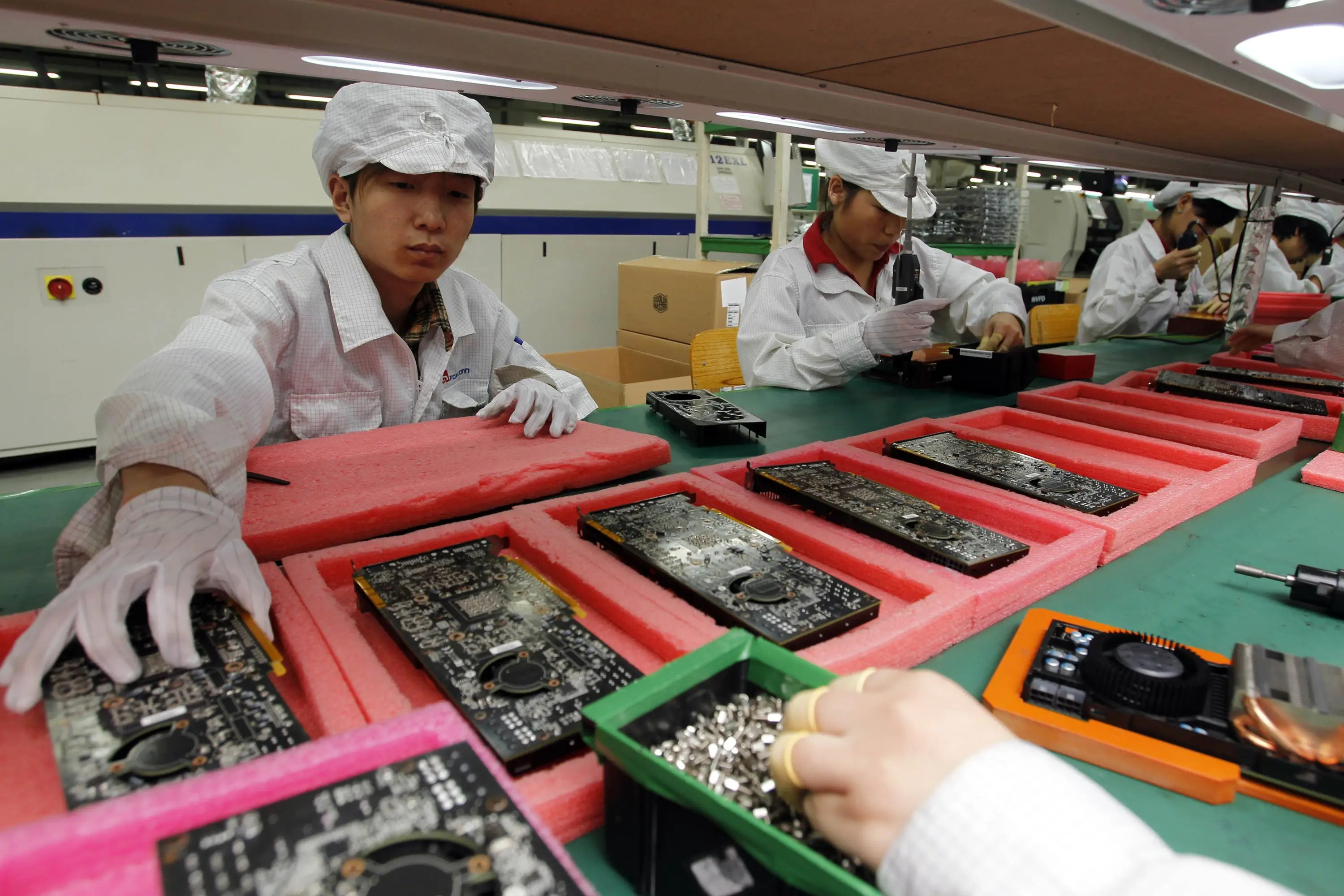
Similar to what Foxconn is to Apple currently, Magna would likely produce parts and assemble vehicles for Apple, if an Apple car was to hit production.

Similar to what Foxconn is to Apple currently, Magna would likely produce parts and assemble vehicles for Apple, if an Apple car was to hit production.

Kin Cheung/AP

The rumor is that the Apple car will be built at one of Magna’s Austrian facilities and that there’s currently research being done at a secret facility in Berlin.

The rumor is that the Apple car will be built at one of Magna's Austrian facilities and that there's currently research being done at a secret facility in Berlin.

Markus Leodolter/AP Images

[Source: Clean Technica]

For now, though, it’s still not certain the company is actually working with Apple.

For now, though, it's still not certain the company is actually working with Apple.

Magna

Apple and Magna did not immediately respond  to a request for comment.

Apple Watch: Life’s too short for slow computers

Don’t buy a watch that makes you wait

Here’s the problem with the Apple Watch: it’s slow.

It was slow when it was first announced, it was slow when it came out, and it stayed slow when Watch OS 2.0 arrived. When I reviewed it last year, the slowness was so immediately annoying that I got on the phone with Apple to double check their performance expectations before making „it’s kind of slow“ the opening of the review.

I was thinking about this in the context of two stories today: Intel abandoning their smartphone chips and Apple’s Tim Cook saying that eventually we’ll look back on the Watch as a huge hit like the iPod and iPhone.

Intel built its entire business on our unquenchable thirst for power in the PC era — the company rode Moore’s Law to higher and higher levels of performance, and when the mobile revolution arrived and the industry and consumers reprioritized battery life and heat, Intel began faltering. Computers got fast enough — Apple’s new MacBook has a brand-new Core M processor in it, but it’s not fast. It’s just capable of doing all the things you might want it to do. And it’s great. Everyone I know who has one loves it.

The same thing is true in a different way for smartphones and tablets: iPad sales have slowed because most of them are fast enough to run a bunch of video streaming services and the browser, and that’s what people use them for. Smartphones are ridiculously powerful; so much so that their upgrade cycle dramatically outpaces the ability of developers to actually make use of their features. I still haven’t seen a good use of 3D Touch on the iPhone 6S; I suspect we will never see anyone make use of LG’s Friends modules for the G5. We are surrounded by powerful, capable computers, and we use so little of their maximum capability. The only thing that even threatens to drive a major hardware cycle in the near future is VR, and we’ll see how long that lasts.

But then I look at the Apple Watch and it’s so obviously underpowered. We can sit around and argue about whether speeds and feeds matter, but the grand ambition of the Apple Watch is to be a full-fledged computer on your wrist, and right now it’s a very slow computer. If Apple believes the Watch is indeed destined to become that computer, it needs to radically increase the raw power of the Watch’s processor, while maintaining its just-almost-acceptable battery life. And it needs to do that while all of the other computers around us keep getting faster themselves. It’s a hard road, but Apple is obviously uniquely suited to invest in ambitions that grand, with billions in the bank, a top-notch chip design unit, and the ability to focus on the long-term.

The other choice is to pare the Watch down, to reduce its ambitions, and make it less of a computer and more of a clever extension of your phone. Most of the people I see with smartwatches use them as a convenient way to get notifications and perhaps some health tracking, not for anything else. (And health tracking is pretty specialized; Fitbit seems to be doing just fine serving a devoted customer base.)

If you ask me, I think it’s better to slowly stack new capabilities on top of more powerful hardware than to push out a million ideas that work too slowly in practice. And it seems I’m not alone in this — here’s John Gruber, a week ago:

My hope is that Apple does more than just make the second generation watch faster/thinner/longer-lasting, and takes a step back and reconsiders some of the fundamental aspects to the conceptual design.

Are smartwatches computers, or not? And if they’re computers, how fast do they have to be to be useful computers? The most interesting thing about the Apple Watch is how sharply it throws those questions into relief.

http://www.theverge.com/2016/5/3/11578082/lifes-too-short-for-slow-computers

Apple Pursues New Search Features for a Crowded App Store

Apple Inc. has constructed a secret team to explore changes to the App Store, including a new strategy for charging developers to have their apps more prominently displayed, according to people familiar with the plans.

Among the ideas being pursued, Apple is considering paid search, a Google-like model in which companies would pay to have their app shown at the top of search results based on what a customer is seeking. For instance, a game developer could pay to have its program shown when somebody looks for “football game,” “word puzzle” or “blackjack.”

Paid search, which Google turned into a multibillion-dollar business, would give Apple a new way to make money from the App Store. The growing marketing budgets of app developers such as “Clash of Clans” maker Supercell Oy have proven to be lucrative sources of revenue for Internet companies, including Facebook Inc. and Twitter Inc.

About 100 employees are working on the project, including many engineers from Apple’s advertising group iAd that’s being scaled back, said the people, who asked not to be identified because the plans are private. The effort is being spearheaded by Apple Vice President Todd Teresi, who led iAd.

If Apple goes through with the idea, “it’s going to be huge,” said Krishna Subramanian, the co-founder of Captiv8, which helps brands market using social media. “Anything that you can do to help drive more awareness to your app, to get organic downloads, is critical.”

In addition to paid search, the team is trying to improve the way customers browse in the App Store. The new search team hasn’t been working long and it’s unclear when any new changes will be introduced.

Apple declined to comment.

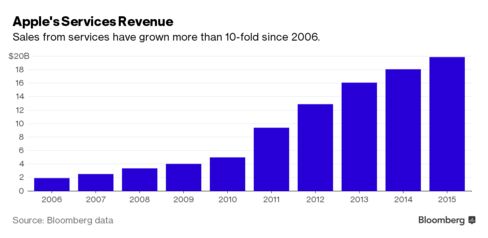
The App Store is a vital part of the Cupertino, California-based company’s business. The more software that customers download, the more likely they are to keep buying Apple’s products rather than switch to a phone or tablet made by another manufacturer. The store’s success was a key reason the iPhone and iPad became so popular with consumers and is central to Chief Executive Officer Tim Cook’s strategy of getting more sales from online services. Apple currently gets about 30 percent of each app sale, which is part of the $20 billion in services revenue the company generated last fiscal year.

The attempt to improve search is a sign that Apple knows the App Store has become harder for customers to navigate. First introduced in 2008, the store now has more than 1.5 million apps, with customers downloading more than 100 billion since its debut. App developers have for years urged the iPhone maker to add fresh discovery tools for users, arguing the crowded market makes it increasingly hard for people to discover new apps or build sustainable businesses.

Apple has taken steps to improve search in the past. In 2012, Apple acquired an app search-engine company named Chomp to help address the problem. In December, Cook changed the leadership of the App Store. He moved responsibility to Phil Schiller, Apple’s senior vice president of worldwide marketing, and away from Eddy Cue, the senior vice president for Internet, software and services, whose portfolio has expanded as Apple has built out new online services such as Apple Pay and Apple Music.


http://www.bloomberg.com/news/articles/2016-04-14/apple-said-to-pursue-new-search-features-for-crowded-app-store

Apples next 50 Billion Dollar Business

Apple, the world’s most valuable company, isn’t shy about revealing how many of its computers, tablets, phones, and smartwatches are in use: over 1 billion, according to CEO Tim Cook.

But that number isn’t a good reflection of how many users Apple has, because many iPhone users also own a Mac or iPad, for example.

Analysts from Credit Suisse have crunched the numbers and collected some survey data, and have figured out a good starting point for the number of global Apple users.

Apple has 588 million users worldwide, Credit Suisse estimated in a note published on Monday. If there are exactly 1 billion active Apple devices in use, these findings mean the average Apple user owns 1.7 devices.

This figure is important as Apple is trying to change its story: The vast majority of its revenue comes from selling premium hardware. But Apple wants to become „a services company,“ like Google or Microsoft, because services provide a lot of the value in using a particular device — the best phone in the world with a sub-par mapping service, for instance, isn’t as useful as a cheaper phone that knows exactly where you are.

(Those companies also trade at a much higher price-earnings ratio than Apple does. The PE ratio is the market price of the stock divided by the last four quarters of income. The higher the PE ratio, the more expensive the stock.)

To understand a services business, analysts need to know how many users it has. Credit Suisse looked into products like iTunes, App Store, Apple Music, iCloud, and Apple Pay, and concluded that Apple’s services growth and potential means that the company warrants a higher valuation than it’s currently getting.

Apple as a subscription

In fact, the note estimates that Apple services revenue could more than double by 2020 to $53 billion. Apple bragged that it managed to book $21 billion in services revenue last year, while alluding that that figure by itself was larger than some of its competitors. (Facebook reported $17.9 billion in revenue for 2015, for example.)

But it’s not just the size of Apple’s installed base that makes its services an attractive investment. Apple users are significantly richer than non-Apple users. According to Credit Suisse:

  • Emerging market Apple users have 50% higher per-capita incomes
  • Apple users use their devices more often with 63% of mobile traffic coming from Apple devices compared to 29% from Android
  • Apple users tend to replace their old devices regularly
  • Apple enjoys a nearly 90% retention rate among its customers

As Credit Suisse points out, Apple doesn’t even necessarily directly charge for all of its services. Its popular iMessage texting service, for example, is free, which means its price is essentially built into the cost of an iPhone or iPad.

As the analysts write:

While monetizing many of these services is not Apple’s primary objective, it does allow the company to price at premium levels. We would argue that whether it is the customer lock-in and essential headache of leaving the iOS ecosystem or the loyalty to the brand, the output is the same – once an individual or family is part of the Apple ecosystem, they will very rarely leave it.

The end conclusion is that while Apple books its revenues and earnings based largely upon a point of sale, the actual installed base of over 1bn active devices presents a largely reoccurring cash flow stream as users will replace and upgrade their devices due to the innovation and introduction of new products over time.

So the challenge for Apple is to increase the amount of services revenue it can generate from one of its customers — getting him or her to sign up for iCloud storage and Apple Music, for example, which come with monthly fees — while still providing good value for its premium computers and phones, which have Apple services baked into the price.

One problem is that Apple’s services can be unreliable, and have attracted snickers from those who think the company lags behind Google, Microsoft, and Amazon at providing basic software services like data storage.

But Apple’s clearly investing in this field. For example, it’s planning to open up several data centers and it’s been hiring distributed computing experts. It reportedly has a effort called „Project McQueen“ to do more of its online computing in-house. Online services are a critical challenge for the world’s most valuable company if it wants to become even more valuable.

Credit Suisse adjusted its target price for Apple to $150 from $140 per share.


www.businessinsider.de/credit-suisse-estimates-588-million-apple-users-2016-4

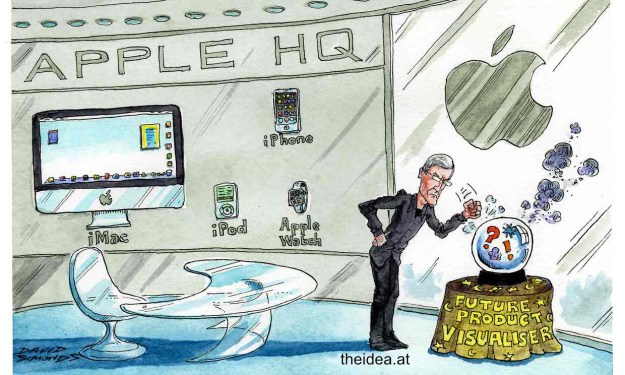
Apple The US giant, 40 years old and looking good, could soon go the dismal way of Sony and Microsoft unless it comes up with something better than the Watch

FutureProductVisualisernew

Does Apple have another 40 years ahead of it, now that it has 40 behind it? As the world’s most valuable public company hit its anniversary last week, it’s the obvious question, in a world where the pace of technological change, enabled by globalisation and the internet, is faster than ever. And the public pressures, from the row with the FBI over unlocking the San Bernardino killer’s iPhone to its tax avoidance through Ireland, aren’t shrinking either.

You only need look at Sony, the famed Japanese company that turns 70 in May (it was founded just after the second world war, in 1946), for an example of how things can go wrong. By its 40th birthday, Sony had invented the Walkman, the compact disc and the Trinitron TV. But the digital world, and then the death of founder Akio Morita, confounded it: despite the success of the PlayStation, it is a shadow of its former self, cutting jobs and struggling to find a space in which it can lead.

The death of Steve Jobs in 2011 was held to be as significant as Morita’s. Five years on, the evidence may not be obvious – but it’s there.

The first is the biggest: the iPhone. The smartphone, as a category, is unique: a computing and communications device that has a potential market of every person on earth. It has only reached about 2.5 billion people so far, but there is an obvious saturation point, even if it is a decade or so away. And analysis suggests that iPhone shipments have already plateaued.

Then, in 2010, the iPad seemed like the next big thing in computing, but in its six-year life it has gone from bang to whimper – twice as quickly as did the iPod, launched in 2001. But at least tablets sell well: the Apple Watch shows no sign of being a hit to compare with either of those, much less the iPhone.

The problem, then, is what Apple does next. Creating a portfolio of products people really want is harder than it sounds. There are well-supported rumours of a car, at some time in the future. So is Apple’s ambition to become the new General Motors? As with the phones and the tablets and the watch, one can only wonder what small slice of the world will be able to afford an Apple car, especially as there have been competitors at all sorts of prices for more than a century.

Cars might also seem old hat in a few years, given the rise of virtual reality systems which overwhelm the senses with new experiences, and artificial intelligence which can outplay the best humans. Maybe travel itself will become outdated. Microsoft (41 years old on Monday) Google (just 18) and Samsung Electronics (47, descended from the even older Samsung) are all making the running here, while Apple seems still to be sitting on the sidelines.

Apple’s power with customers lies principally in its brand, but its executives must avoid the countless dead ends that technology throws up (anyone for 3D TV?) in favour of the deeper streams that can sustain it. Beyond that, it must also stay relevant: Microsoft was once top of the pile, but the rise of the iPhone and Google’s Android left it flat-footed, and it has taken nearly a decade to start finding its way again. If Apple were to miss out on the next wave, whatever that might be, its brand would be tarnished. After that, it’s a long way down.

Chief executive Tim Cook does at least have the reassurance that there are more than 500 million people in the world using upwards of a billion Apple devices. That’s a big audience. The challenge is keeping the show entertaining enough to retain them.

The Aramco float gets stranger and stranger

Get ready for the world’s biggest – and strangest – flotation. Saudi Arabia is to sell shares in its state oil company and its deputy crown prince is prepared to talk dates, which implies seriousness. The public offering will happen next year or maybe in 2018, Mohammed bin Salman said on Friday.

This is part of a hugely ambitious restructuring of the Saudi economy in which the central feature is the establishment of a sovereign wealth fund that will seek to buy non-oil assets. Put a rough value of $2tn on Saudi Aramco – the company’s claimed oil reserves, after all, make Exxon’s look small – and this fund would put equivalent Norwegian or Singaporean versions in the shade. In theory, the Saudis could buy several of the world’s biggest companies, or vast swaths of property in western capitals, and still have spare change.

In practice, life will not be so simple. The Saudis will initially be selling “less than 5%” of Aramco, which is hardly a rushed exit from oil. And, if the state continues to own 95%-plus, whose interests come first? Aramco, remember, accounts for more than half Saudi Arabia’s GDP and it has become entwined in the state’s vast social security programme.

More share sales could follow. But it is hard to believe Saudi Arabia would ever be happy to give up management control of the company, which is what is required if Aramco is ever to be just another investment within the new sovereign wealth fund. The regime, surely, would still want to use its oil to wield political power in its rivalry with Iran.

That is the strange part of the float: investors, in effect, are being offered the chance to be back-seat passengers in a company that, to a large degree, will continue to be an arm of the Saudi state. Wait to see if the flotation documents include fully audited details of the oil and reserves, which have always been kept under close wraps. Only if full disclosure is offered is it really a new world.

Living wage isn’t a step forward for those who miss out

There has been plenty of fanfare around the national living wage. George Osborne went to Asda to highlight what the new £7.20 hourly pay floor means for millions of workers around the UK. It is Britain’s biggest pay rise by the number of people affected and has rightly been welcomed as a step to tackling working poverty, particularly among low-paying industries like retail and restaurants.

But spare a thought for those who will not see their pay packets grow this month. Only over-25s get the new national living wage. So for younger workers Osborne’s new wage merely widens the pay gap between young and old. And while it’s fashionable to demonise big business, the new pay sinners are more likely to be middle-class employers of dogwalkers, babysitters and gardeners. Millions of workers paid cash-in-hand in Britain’s shadow economy also risk missing out.

What is the largest obstacle to Apple getting into the car industry

It should be pretty clear by now that Apple (NASDAQ:AAPL) is very seriously considering making an electric car, having hired upwards of a thousand auto engineers. What’s completely up in the air is whether the company will actually release one or not. And no, it won’t look like the unicycle Apple Ride that the company teased last year.

As management debates this question internally, here is the most important argument on why Apple might be better off staying on the sidelines.

„A destroyer of capital“
Easily the most prominent reason is the sheer capital intensity of the auto business. This is a well-known characteristic of the auto industry, but it’s worth exploring in detail.

Last year, Fiat-Chrysler CEO Sergio Marchionne put out a detailed presentation, aptly entitled „Confessions of a Capital Junkie,“ arguing (again) for continued consolidation of the industry, in part citing severe overlap in development costs that could save the industry billions of dollars if they were shared. Combined with all of the capital required to manufacture vehicles, the auto industry is plagued with low returns on capital and low valuation multiples.

fca consolidation_largeFCA

A group of industry veterans discussed the argument on Automotive News, and while there was consensus about the industry’s problems, there are no easy solutions. In no uncertain terms, Bob Lutz acknowledged, „The automobile business is a destroyer of capital.“

Apple has plenty of capital, but probably isn’t anxious to begin destroying it.

Apple’s newest investing metric: „gobs of money“
Cook was recently asked if Apple can afford to spend freely to explore new areas without commercializing products (in the context of its auto hires), to which he replied, „But once we start spending gobs of money — like when we start spending on tooling and things like that — we’re committed.“ When pressed further on whether or not hiring those auto engineers qualified as „gobs of money,“ Cook answered, „No. I wouldn’t call it gobs of money.“

Apple indeed has many gobs of money (roughly a millionty gobs by my count), and is also spending heavily on both capital expenditures and research and development. In fact, you might not realize that Apple spends more in both of these categories than incumbent Detroit automakers General Motors (NYSE:GM) and Ford (NYSE:F). Tesla’s (NASDAQ:TSLA) figures are also relevant as a neighboring Silicon Valley company just entering the auto market.

Company Fiscal 2015 R&D Fiscal 2015 Capital Expenditures
Apple $8.1 billion $11.2 billion
General Motors $7.5 billion $7.8 billion
Ford $6.7 billion $7.2 billion
Tesla $718 million $1.6 billion

DATA SOURCE: SEC FILINGS.

While Apple spends heavily on capital expenditures, the key difference here is that it earnssignificantly higher returns on invested capital, since Apple scales to incredible unit volumes.

Company Return on Invested Capital (TTM) Return on Assets (TTM)
Apple 29.6% 19.4%
General Motors 10.7% 5.2%
Ford 5% 3.4%
Tesla (21.6%) (12.8%)

DATA SOURCE: MORNINGSTAR. TTM = TRAILING 12 MONTH.

If you look at Tesla’s figures, this is what Apple should expect from its capital investments in the early years of building electric cars. Getting into the auto industry would inevitably dilute these profitability figures in a meaningful way.

(Domestic) cash is king
Another important consideration is the location of Apple’s capital. Apple’s foreign reserves are well documented. Since Apple currently makes the vast majority of its products abroad via contract manufacturers, it is able to utilize those foreign reserves for the product tooling and manufacturing infrastructure. At the end of last fiscal year, Apple had $8.7 billion (net of depreciation) worth of long-lived assets in China.

But it wouldn’t be realistic or viable for Apple to manufacture vehicles in China and ship them home. An electric car weighing thousands of pounds is logistically quite different than a smartphone that fits in your pocket. Most automakers perform final assembly near the end market.

We don’t know what manufacturing model Apple would pursue, though. Contract manufacturing does exist in the realm of autos, but it’s not prevalent. For example, Magna Steyr assembles vehicles for Daimler Mercedes-Benz and BMW, and Rousch assembles prototype self-driving cars for Alphabet (domestically, no less, but in very small volumes).

If Apple pursued a similar contract manufacturing model (which Cook has hinted at), it would still likely purchase its own equipment like it does in its current model — that equipment just resides within partner facilities. There’s no avoiding the capital requirements, particularly as you increase volume expectations. And based on Cook’s comments above, the point of no return is when the company decides to start investing in tooling and manufacturing infrastructure.

However, Apple’s domestic reserves are primarily used to fund its capital return program, so committing to domestic manufacturing infrastructure would put pressure on its domestic cash position. Apple could continue raising debt to bolster domestic cash — the company enjoys extremely low costs of capital — but it would still be highly preferable to use foreign cash since most of it just idles anyway.

Itchy trigger finger
It would be incredibly expensive to develop, manufacture, and launch an electric vehicle, which is partially why many traditional automakers historically disdained EVs and other alternative fuel vehicles so much, often referring to „compliance vehicles“ with great hostility. GM’s famous killing of the EV1 is the quintessential example, although GM has changed its tune under CEO Mary Barra, who recently declared that „your petrol-fueled car will become a thing of the past“ and has prioritized EV development in a big way.

All of this being said, capital efficiency is likely a secondary concern to Apple. The company has never been a follower of traditional resource allocation policies taught at business schools, even though Cook has a traditional MBA. Apple’s primary goals have always been to make great products that have a positive impact on people’s lives and the world at large. That’s especially true if Apple believes that it can help bring positive change to an industry (such as its efforts in TV).

In many ways, the auto industry is stuck in the past, particularly on the distribution side with antiquated dealer protectionist laws, and Apple has an opportunity to help catalyze its modernization. The company is also a big believer in climate change and environmental sustainability, adding to how an Apple EV would have a positive impact on the world.

Despite the high costs, I bet Cook pulls the trigger.

http://www.businessinsider.de/largest-obstacle-apple-car-industry-2016-3

Apple Ditched Secrecy for Openness

Apple CEO Tim Cook waves goodbye after an event at the Apple headquarters in Cupertino, California

Apples long way to build Cars

Apple has built no cars. Google has designed and outsourced the production of a small fleet of self-driving pod mobiles.

The newest carmaker on the block, Tesla, managed to build just 50,000 cars in 2015.

Meanwhile, in the US alone, the traditional auto industry built and sold 17.5 million cars and trucks.

This glaring imbalance between current reality and a highly speculative vision of the future hasn’t stopped pundits and tech and auto observers from transforming Apple and Google into serious auto-industry challengers.

For example, this is from a recent report by Reuters:

[G]oogle may choose to build its own engineering and design prototypes, then partner with a Chinese automaker or an Asian contractor such as Hon Hai Precision Industry’s Foxconn Technology Co that wants to enter the automotive field, several experts said.

Given Apple’s extensive iPhone and iPad manufacturing in China, it’s also been suggested that the Cupertino, California, colossus would skip out building a car in the US and would do it in the Middle Kingdom.

It’s an attractive idea, but it overlooks the vast gulf that exists between assembling smartphones and making cars. Tesla is among the most technologically advanced automakers around, and it still has to make its vehicles in a large factory with millions of dollars of giant robots and huge machines designed to bend metal. A large factory in Northern California.

The rest of the US auto industry builds the cars it sells in the US predominantly in the US. As such, the Detroit Big Three are major employers, as are the Japanese and German „transplants,“ as they’re know, which build cars and trucks in southern US states with nonunion workforces.

Some production has been moving to Mexico, but Mexico has been positioning itself as a NAFTA manufacturing partner to US companies for some time and has invested is developing an automotive supply chain.

China calls the shots

China is a different story. Ford, GM, Volkswagen, and others build cars there and sell them under familiar brands, but they can’t do this without entering into a joint venture with a Chinese partner. There’s an obvious compromise baked into this arrangement: Foreign automakers gain access to the enormous Chinese market, but they also end up sharing R&D.

Foxconn Kin Cheung APKin Cheung/APThey aren’t building cars.

It isn’t exactly a joining of equals, but Chinese automakers don’t see themselves as mere assembly lines for Western designs. They see themselves as developing a robust national manufacturing base. And while they’re building Buicks, they’re also building Chinese-brand cars and trucks.

With Apple and Google, the idea seems to be that these companies will try to transform consumer-goods manufacturers into automakers. There might be something to this in theory: Remake the automobile by designing and building it like a piece of internet-enabled consumer tech. But in practice, the car-building part of building an automobile, even an innovative self-driving one, tends to catch up to the visionaries, as Tesla has learned.

Profit margins under stress

Additionally, in Apple’s case it would be necessary to harvest a much wider profit margin than the auto industry typically throws off: 30% vs. 10% — or less, in bad times. And if you think Apple or Google has designs on selling all-electric driverless tech to willing Chinese customers, making China and not the US or Europe the main market, then you haven’t thought through either China’s congested big cities, a nightmare for driverless cars, or its still-developing roadway system, which is friendlier to trucks and SUVs.

So the game plan, as it’s being discussed outside Apple and Google, would be to build cars outside the US, using cheaper Asian labor, and then import them.

It sounds great because for Apple, in particular, that’s been a pathway to massive success.

But when it comes to the auto industry, it would be impossible. Not impossible to build some kind of more or less traditional car, but impossible to build the wildly disruptive car of the future.

www.businessinsider.de/impossible-apple-or-google-car-china-2016-3

Apples Rate of Change — The days of enormous iPhone growth may have reached its end

Summary: Apples Rate of Change — the idea that we’ll never see an iPhone sales quarter bigger than this one, or at least not much bigger. The days of enormous iPhone growth may have reached its end.

The reports of the iPhone’s death have been greatly exaggerated.

In the wake of Apple’s recent quarterly financial results report, there’s been a lot of talk about what happens if the company has truly reached the peak of iPhone sales — and what must come next in order for Apple to keep growing.

The iPhone is a once-in-a-decade (if not once-in-a-lifetime) product, and won’t be replaced on Apple’s revenue chart any time soon. And that’s okay, for a whole bunch of reasons.

What goes up… stays up

It’s easy to assume — in part due to language commonly used by growth-obsessed investors — that the iPhone is in free fall. Not so much: iPhone sales set a record last quarter. What’s actually concerning investors is the rate of change — the idea that we’ll never see an iPhone sales quarter bigger than this one, or at least not much bigger. The days of enormous iPhone growth may have reached its end.

If you’re comparing the iPhone’s life cycle to that of Apple’s iPod, there’s reason to be terrified: The iPod sold like gangbusters for a number of years, but its decline was drastic — to the point where it got removed from Apple’s financial reports last year. That’s not going to happen with the iPhone, for a simple reason: the iPod was made largely obsolete by the smartphone. And the smartphone’s not going anywhere, not for a very long time.

That means Apple’s iPhone business is probably going to keep contributing 150 billion dollars a year for the foreseeable future. (In the last four quarters, the iPhone brought in an average of 38.9 billion per quarter. In comparison, the Mac and iPad bring in five or six billion dollars per quarter. That’s a lot of money, sure, but the two products combined pale in comparison to the phone juggernaut.) It’s enough money to make Apple one of the biggest, most profitable companies on the planet.

Could the iPhone eventually fail? The future is promised to no one, but people are going to want an internet-connected device in their pockets until there’s something even better you can stick in your ear or pop on your eyeball or connect directly to your brain.

There’s money in the ecosystem

Apple focused a lot of energy this week on communicating how well it’s doing — and how much it’s growing — in terms of services revenue. That’s the budget line covering iCloud, iTunes, Apple Music, and the App Store.

The users of Apple’s one billion active devices are all spending money on digital goods and services. It’s potentially a huge growth opportunity for the company, and it will be interesting to see what other services Apple might introduce and how much additional revenue might be generated from its existing iPhone installed base — namely, us.

But beyond offering us more content to buy, the Apple ecosystem extends outward. Consider the Apple Watch: It’s essentially an iPhone accessory, since it only works with Apple’s smartphone. It’s another product that can be marketed to existing iPhone users, generating more revenue while also tying them more tightly into the Apple ecosystem. (When an Apple Watch user considers an Android phone, they also have to consider giving up their Apple Watch — making it potentially that much easier to stick with what they know.)

There’s still room for growth

The days of rapid smartphone sales growth may well be over, and while Wall Street may not be thrilled about this, it doesn’t mean the iPhone is in any danger of disappearing. Apple still thinks there’s room for future growth, and the company’s reasons seem reasonable to me. The rapid growth of the middle class in China is creating hundreds of millions of new consumers with money to spend on brands like Apple, and products like the iPhone. Apple’s weak position in India is generally seen as a negative, but it also means there’s a huge upside if the company figures out how to crack that market.

While those of us in the most industrialized nations have benefited from fast 4G LTE cellular networks for a few years now, those networks are still rolling out in India and other emerging markets. People in those countries will buy new phones to take advantage of LTE as it comes online, and that’s a big opportunity for Apple to sell iPhones.

And then there’s switching: Apple continues to suggest that there’s a constant flow of smartphone users from Android to iPhone. It’s hard to quantify those numbers overall, but at least from Apple’s perspective, there’s a growth opportunity simply in picking up Android users who are ready for a change.

Wait for it

Okay, so the iPhone’s pretty good for now. But what about the next big thing? How does Apple ignite future growth, and protect the products it already has?

Fortunately, Apple has many, many billions of dollars in cash from its past few years of profits. And the company is investing that money in researching the next generations of products. I’m sure some of that money is going into exploring what might replace a smartphone, whether it’s a Siri-powered device that plugs into your ear, or an augmented-reality visor, or who knows what else.

In terms of finding growth, we’ve all heard the reports that Apple’s exploring the possibility of building a car. Entering new markets is never easy, but it provides huge opportunity for growth. It’s the same principle as iPhone sales in India: Apple’s current share of the automobile market is zero, which means that the sky’s the limit when it comes to gaining new customers.

The smartphone era

I’m pretty confident that when we look back to the early parts of the 21st century, we will consider this the dawn of the smartphone era. Even from the perspective of 2016, the personal computer seems to rapidly be transforming into a footnote — a technological prelude to the creation of the smartphone. Tiny devices with massive computing power and an always-on connection to a global data network, living in our pockets — they have transformed the way people live around the world, from the richest countries to some of the poorest.

Apple doesn’t need to replicate the iPhone’s success with another product to be successful, which is good, because there may not be a product as successful as the iPhone any time in the near future. (Though I’d be happy to be proven wrong when the direct-brain implants come around in 2030.) People who are searching the horizon for the next big thing as hot as the smartphone are searching in vain.

We live in the smartphone era, and considering the slowing rate of growth in smartphone sales, so does everyone else. The introduction of the iPhone was the moment this era truly began. Apple has benefited massively from that, and will continue to for the foreseeable future.

http://m.imore.com/persistence-iphone

What’s Coming From Apple in 2016: Apple Watch 2, iPhone 6c, iPhone 7, Skylake MacBooks, and More

With the launch of the Apple Watch, the iPhone 6s and the 6s Plus, the new Apple TV, and the iPad Pro, 2015 was a major year for Apple. The Apple Watch introduced a whole new category, the iPhone 6s and 6s Plus saw the debut of 3D Touch, and the iPad Pro brought Apple’s largest iOS device yet.

iOS 9, watchOS 2, and OS X 10.11 El Capitan brought refinements to Apple’s operating systems, and the fourth-generation Apple TV came with a brand new operating system, tvOS. 2015 saw a huge number of new products and software updates, and 2016 promises to be just as exciting.

A second-generation Apple Watch is in the works and could launch in early 2016, while new flagship iPhones, the iPhone 7 and the iPhone 7 Plus, are coming in late 2016. Those who love smaller devices will be excited to hear a 4-inch iPhone 6c may be coming early in 2016, and Apple’s Mac lineup is expected to gain Skylake chip updates.

whatscomingin2016
New software, including iOS 10, OS X 10.12, watchOS 3, and an upgraded version of tvOS are all expected in 2016, and Apple will undoubtedly work on improving services like HomeKit, Apple Pay, and Apple Music.

As we did for 2014 and 2015, we’ve highlighted Apple’s prospective 2016 product plans, outlining what we might see from Apple over the course of the next 12 months based on current rumors, past releases, and logical upgrade choices.

Apple Watch 2 (Early 2016)

A second-generation Apple Watch is rumored to be debuting in March of 2016, approximately one year after the launch of the first Apple Watch. A March event could see the introduction of the device, with shipments beginning in April 2016.

Early rumors suggest the Apple Watch 2 will perhaps include some of the sensors that were nixed from the first version, including skin conductivity, blood oxygen level, and blood pressure. The device may be thinner than the first Apple Watch, and it could include features like a FaceTime camera to allow Apple Watch users to make and receive FaceTime calls and an upgraded Wi-Fi chip that may allow the Apple Watch to do more without an iPhone.

applewatchtrio

The Apple Watch 2 could be thinner than the existing Apple Watch, with new sensors and a camera.
It is not clear if the new Apple Watch will continue to use the same lugs and bands as the first-generation Apple Watch, but given the large number of bands owned by Apple Watch users, it seems likely the device won’t require users to purchase all new hardware. There have been no rumors on the prospective hardware, aside from early analyst predictions pointing towards the thinner size.

Regardless, the second-generation Apple Watch is likely to be accompanied by the launch of bands in new colors and designs as Apple has set a precedent of changing the available bands multiple times per year.

Full Apple Watch roundup

iPhone 7 and 7 Plus (Late 2016)

The iPhone 7 and the iPhone 7 Plus will come at the tail end of 2016, likely making their debut in September in line with past iPhone launches. Apple is expected to continue offering the phones in 4.7 and 5.5-inch sizes, but we can count on a redesigned external chassis because 2016 marks a major upgrade year.

Details about the exterior of the phone and its internal updates are largely unknown at this early date, but based on past upgrades, we can expect a thinner body, an improved processor, and a better camera. Flagship features like 3D Touch and Touch ID will continue to be available, and Apple likely has additional features planned to make its latest iPhone stand out.

Taking into account past rumors and acquisitions, the camera is one area that could see significant improvements, perhaps incorporating a dual-lens system that offers DSLR quality in a compact size. Some of these rumors were originally attached to the iPhone 6s, but could have been delayed for later devices especially given the 2015 acquisition of Israeli camera company LinX.

iphone 6s_6s_plus_featured

The current iPhone 6s and 6s Plus. The iPhone 7 is rumored to be slimmer with no antenna bands and a new material composition.
Apple is expected to continue using in-cell display panels for the iPhone 7, which will allow it to shrink the thickness of the device, perhaps making it as thin as the 6.1mm iPod touch. The iPhone 7 is also likely to include a TFT-LCD display as the AMOLED technology Apple is rumored to be working on is not yet ready for use in iOS devices.

Analyst Ming-Chi Kuo, who often accurately predicts Apple’s plans, has said RAM could be a differentiating factor between the two iPhone 7 models. The smaller 4.7-inch iPhone 7 may continue to ship with 2GB RAM, while the larger 5.5-inch iPhone 7 Plus may ship with 3GB RAM.

Other rumors about the iPhone 7 have pointed towards the removal of the headphone jack in favor of headphones that attach to the device using the Lightning port, a change that may also help Apple shave 1mm off of the thickness of the iPhone.

Some early rumors out of the Asian supply chain have suggested the iPhone 7 may include a strengthened, waterproof frame that ditches Apple’s traditional aluminum casing for an all new material and does away with the prominent rear antenna bands on the iPhone 6, iPhone 6 Plus, iPhone 6s, and iPhone 6s Plus. The rumors of a waterproof, dust-proof casing are from somewhat unreliable sources and should not be viewed as fact until further evidence becomes available.

Full iPhone 7 roundup

iPhone 6c (Early 2016)

Since the launch of the larger-screened iPhone 6 and iPhone 6 Plus, Apple has been rumored to be working on an upgraded 4-inch iPhone for customers who prefer smaller screens. The „iPhone 6c“ is rumored to be launching during the first months of 2016, and it’s another device that could potentially make an appearance at Apple’s rumored March event. If the 4-inch iPhone launches in early 2016, it will be the first iPhone to launch outside of the fall months since 2011.

Apple’s 4-inch iPhone is described as a cross between an iPhone 5s and an iPhone 6, with an aluminum body and iPhone 6-style curved cover glass. There have been some sketchy rumors suggesting it will come in multiple colors like the iPod touch, but that has not yet been confirmed. KGI Securities analyst Ming-Chi Kuo has pointed towards „two or three“ color options for the device, but he did not specify which colors.

iphone_screen_sizes
Rumors have disagreed over whether the iPhone 6c will include an A8 processor or an A9 processor, but Kuo believes Apple will use the same A9 processor that’s used in the iPhone 6s. Other rumors out of the Asian supply chain suggest Apple could also include 2GB RAM in the device, and with an A9 processor and 2GB RAM, the iPhone 6c could be on par with the iPhone 6s when it comes to raw performance.

Other features rumored for the iPhone 6c include a 1,642 mAh battery that’s somewhat larger than the battery used in the iPhone 5s, an 8-megapixel rear-facing camera with an ƒ/2.2 aperture, a 1.2-megapixel front-facing camera, 802.11ac Wi-Fi, and Bluetooth 4.1. The iPhone 6c is not expected to include 3D Touch, as it is a flagship feature of the iPhone 6s, but it is likely to include NFC to enable Apple Pay functionality.

Full iPhone 6c roundup

iPad Air 3 (Early-to-Mid 2016)

Since the iPad launched in 2010, Apple has upgraded the tablet on a yearly basis, producing a new version each fall. In 2015, Apple did not upgrade the iPad Air 2, instead focusing on releasing the iPad Pro and the iPad mini 4. Combined with the minor update the iPad mini 2 received in 2014, Apple may be signaling its intention to update its iPads on an 18-month to two-year schedule going forward.

ipadair2
Recent rumors have suggested that Apple is developing an iPad Air 3 that will launch during the first half of 2016. Little is known about the third-generation iPad Air at this time, but it will include an upgraded processor to improve performance. It may also offer RAM upgrades and camera improvements, but it will not include the 3D Touch feature introduced with the iPhone 6s and the iPhone 6s Plus due to manufacturing difficulties expanding the technology to a larger screen size.

Apple likely has something planned to make the iPad Air 3 stand out, but it is not yet clear what that might be.

Full iPad Air roundup

MacBook Air (Early-to-Mid 2016)

Following the launch of the Retina MacBook in April of 2015, the future of the MacBook Air became uncertain. There has been speculation that the MacBook line will subsume the MacBook Air line as component prices decrease, but some recent rumors have led to hope that the MacBook Air will continue to exist alongside the Retina MacBook and the Retina MacBook Pro, offering a compromise between performance, portability, and cost.

Though it lacks the power of the Retina MacBook Pro and the Retina display of the MacBook, the MacBook Air continues to be popular with consumers for its low price point.

Current rumors suggest Apple will continue producing the MacBook Air, with plans to launch 13 and 15-inch MacBook Air models during the third quarter of 2016, perhaps unveiling the machines around the annual Worldwide Developers Conference.

The MacBook Air’s design has remained unchanged since 2010, so a 2016 redesign that focuses on a slimmer chassis with bigger screens and revamped internals is not out of the realm of possibility. Apple has been increasing the sizes of its devices, introducing a larger 5.5-inch iPhone and a 12.9-inch iPad Pro, so a 15-inch MacBook Air also seems reasonable. The rumor does not mention an 11-inch MacBook Air, suggesting it will potentially be phased out in favor of larger screen sizes and to let the 12-inch Retina MacBook stand out as the sole ultraportable machine.

retinamacbookpromacbookair

Current 11 and 13-inch MacBook Air compared to 15-inch Retina MacBook Pro
If Apple does introduce a 2016 MacBook Air, it will likely include Intel’s next-generation Skylake chips, which will offer 10 percent faster CPU performance, 34 percent faster Intel HD graphics, and 1.4 hours of additional battery life compared to the equivalent Broadwell chips in current MacBook Air models. Skylake U-Series 15-watt chips appropriate for the MacBook Air will be shipping in early 2016.

While the current rumor has suggested the new MacBook Air models will launch in the third quarter of 2016, they could potentially be ready to debut earlier in the year. The last MacBook Air update was in March of 2015 and Apple may not want to wait more than a full year before introducing a refresh.

As there haven’t been many rumors about a new MacBook Air at this time, an update should not be viewed as a sure thing. Supply chain information is not always accurate, and there’s a chance the information shared about the alleged 13 and 15-inch MacBook Air could instead apply to the Retina MacBook Pro.

Full MacBook Air roundup

Retina MacBook Pro (Early-to-Mid 2016)

Over the course of the past two years, Intel’s chip delays have significantly impacted Apple’s Retina MacBook Pro release plans, especially for the 15-inch model. Broadwell delays resulted in staggered update timelines for 13 and 15-inch models, which were last updated in March and May of 2015, respectively.

While the 13-inch Retina MacBook Pro was updated with Broadwell chips, the 15-inch machine has continued to offer Haswell processors, and Apple’s upgrade path for the 15-inch Retina MacBook Pro isn’t quite clear.

Broadwell chips appropriate for a 15-inch Retina MacBook Pro update became available in June of 2015, so Apple could release an updated 15-inch Retina MacBook Pro in early 2016 using these chips. Alternatively, and more likely, Apple could bypass Broadwell altogether in favor of a Skylake update for both the 13 and 15-inch Retina MacBook Pro.

retinamacbookpro
Skylake U-Series 28-watt chips appropriate for the 13-inch Retina MacBook Pro will begin shipping from Intel in early 2016, as will 45-watt H-Series chips with Intel Iris Pro graphics appropriate for the 15-inch Retina MacBook Pro. Exact shipping timelines for the chips are not yet known, but with an early 2016 release timeline, new Retina MacBook Pro models could come within the first few months of the year, perhaps being unveiled at the aforementioned rumored March event. Should the chips come at different times, Apple could stagger the 2016 MacBook Pro updates as it did in 2015.

Aside from prospective chip updates, little is known about the next-generation Retina MacBook Pro. Given that it’s been four years since the machine was redesigned, it’s possible we could see a refreshed, slimmer body and an improved Retina display, but there have been no rumors to suggest this is the case.

Full Retina MacBook Pro roundup

MacBook (Early-to-Mid 2016)

Skylake Core M chips appropriate for a second-generation Retina MacBook are already available, meaning refreshed Retina MacBook could be introduced at any moment. The new Core M chips offer 10 hours of battery life and 10 to 20 percent faster CPU performance compared to the Broadwell chips used in the first-generation machine.

The most notable upgrade in a second-generation Retina MacBook that uses Skylake chips would come in the form of graphics improvements, as the Skylake Core M chips offer up to 40 percent faster graphics performance.

retina_macbook_elcap_roundup_header
Beyond Skylake chips, it is not known what other improvements Apple might offer in a second-generation Retina MacBook. Given that the design was just introduced in April of 2015, the new machine will undoubtedly use the same chassis, but a Rose Gold color option to match the new Rose Gold iPhone 6s is a possibility.

If Apple is planning to introduce new Macs at a rumored Apple Watch-centric event in March, that may be when the new Retina MacBook will debut.

Full MacBook roundup

iMac (Late 2016)

Apple’s iMac, like its MacBook Pro, has been impacted by Intel’s chip delays. Current higher-end models already use Skylake graphics but lower-end models continue to use Broadwell chips. Given that the iMac lineup was just refreshed in October of 2015, another update may not come until late in 2016.

Apple’s future chip plans for the iMac are difficult to decipher, as Intel does not plan to introduce desktop class socketed Skylake chips with integrated Iris or Iris Pro graphics that would be appropriate for lower-end iMacs that use integrated graphics instead of discrete graphics.

With no prospective chips available for the lower-end iMacs, it is not clear what Apple is going to do in terms of processor upgrades, making it nearly impossible to predict when we might see the next iMac update or what it might include. Intel plans to release Kaby Lake processors in late 2016, but details on Kaby Lake chips appropriate for the iMac are not available, and it’s possible Kaby Lake could see delays.

New-iMacs-2015
There are also no rumors on other features that could be included with a next-generation iMac update, but going forward, Apple may fully drop non-Retina 21.5-inch models as hardware prices come down in favor of an all-Retina lineup.

Full iMac roundup

Software Updates

iOS 10 (Late 2016)
ios10logoEach September, Apple launches an updated version of iOS to accompany its latest iPhones. In 2016, the company is expected to debut iOS 10, the successor to iOS 9. iOS 8 and iOS 9 both focused more on features than design, so it is quite possible iOS 10 will be an update that introduces more significant design changes, similar to iOS 7.

Because iOS 9 just launched three and a half months ago, iOS 10 rumors have not yet begun. As the year progresses, we’ll get a glimpse at what to expect in September, but for now, all we know is that there’s an update coming.

Full iOS 9 roundup

OS X 10.12 (Late 2016)
osx1012mockupAlong with iOS, OS X is also updated on a yearly basis, with an update coming each fall around September or October. In 2016, we expect to see the debut of OS X 10.12, the followup to OS X 10.11 El Capitan.

El Capitan was an update designed to introduce bug fixes and build on the features that debuted with OS X 10.10 Yosemite, so it’s likely OS X 10.12 will be a bigger standalone update that includes design tweaks and new features.

Full OS X 10.11 El Capitan roundup

watchOS 3 (Early 2016)
watchos3watchOS is the software that runs on the Apple Watch, and in 2016, Apple is expected to launch a third version of the software. watchOS debuted alongside of the Apple Watch in April, while watchOS 2 came out just months later in September with iOS 9.

Apple has thus far tied its watchOS releases to iOS releases, but it’s quite possible that watchOS 3 will launch alongside an updated second-generation Apple Watch rather than alongside iOS 10 in September. A second-generation Apple Watch will potentially require some significant software updates if major hardware changes like new sensors or cameras are introduced.

New versions of the iPhone ship with new versions of iOS, so it’s logical to expect the same thing to happen with the Apple Watch, but thus far there are no rumors about the watchOS 3 update or what features might be included.

Full watchOS roundup

tvOS 10?
Apple TV software traditionally has not seen the same major software updates as iOS devices and the Apple Watch, so Apple’s plans for tvOS are not clear. So far, there have been some minor tvOS updates, but it is not yet known if Apple will push major version upgrades with new features and design changes on a yearly basis.

If Apple is planning to offer iOS-style updates for tvOS, the first major tvOS software update could come in the fall, perhaps alongside iOS 10.

Other Possibilities

Fifth-generation Apple TV
Shortly after the launch of the fourth-generation Apple TV, there was a sketchy rumor suggesting development and production had already begun on a fifth-generation Apple TV with an upgraded CPU. While it’s possible Apple has plans to release an updated Apple TV in 2016, it’s highly unlikely such a device is already in production and it’s equally unlikely Apple would release it before the fall of 2016.

Prior to the launch of the fourth-generation Apple TV, the set-top box went multiple years without a significant update. It is not clear how often Apple will update the Apple TV now that a new version has been released, so we will need to wait until later in the year for more information on the Apple TV upgrade schedule.

Full Apple TV roundup

iPad Pro 2
The iPad Pro was released in November of 2015 and Apple’s plans for a second-generation device are not yet known. For several years, Apple was updating its iPads on a yearly basis, but its more recent update timelines suggest it is potentially moving to an 18 month or 24 month upgrade cycle for iPads, making it unclear when we might see an iPad Pro 2.

With the iPad Air line, for example, Apple introduced an iPad Air 2 in 2014 but neglected to upgrade it to an iPad Air 3 in 2015. The iPad mini 2 update was similar, with a 2014 update introducing only Touch ID to the 2013 model, while the 2015 iPad mini 4 featured a more significant revamp.

ipad-pro
An iPad Pro 2 could potentially debut in 2016 with an updated processor and other improved features, but it’s also just as likely Apple will wait until mid-to-late 2017 to introduce a second-generation iPad Pro. More information on Apple’s iPad Pro plans will come later in 2016, firming up potential release timelines.

Full iPad Pro roundup

iPad mini 5
Apple introduced the iPad mini 4 in late 2015, following the launch of the iPad mini 2 in 2013 and the minor iPad mini 3 update in 2014. With Apple seemingly shifting away from a yearly upgrade cycle for its iPad lineup, we may not see an iPad mini 5 in 2016.

Instead, 2016 may see the launch of an updated iPad Air 3, followed by an iPad mini update in 2017. Apple’s iPad sales have been flagging in recent years as customers do not update their tablets as often as their phones, which has led Apple to try different upgrade strategies and cycles. With Apple’s shifting plans, it is not yet clear when the iPad mini will see another update.

Ahead of the launch of the iPad mini 4, there were some rumors that Apple would discontinue its smallest tablet, but with the iPad mini 4, Apple has signaled its intention to continue offering the iPad in three screen sizes to meet different customer needs.

Full iPad mini roundup

Mac Pro
The Mac Pro launched in late 2013, and since then, it has not seen an update. It’s quite possible 2016 will be the year Apple will refresh the machine, as potential references to an updated Mac Pro were discovered in OS X El Capitan.

Grantley Xeon E5 V3 Haswell-EP processors appropriate for a high-end Mac Pro upgrade were introduced in 2014, but Apple may be waiting on E5 V4 Broadwell-EP chips for the top-of-the-line Mac Pro that are set to launch in the first half of 2016. E3 V4 chips appropriate for lower-end machines are already available, as are Skylake E3 V5 chips.

2013_mac_pro
If this is the case, a Mac Pro launch will happen after the chips become available, with the machine perhaps seeing a mid-to-late 2016 debut.

Updated AMD FirePro graphics cards were introduced in 2015, as were cards built on AMD’s Fury platform, both of which could potentially be used in a next-generation Mac Pro. Fury graphics are more likely, and an updated Mac Pro could also include faster memory, improved storage, and Thunderbolt 3 connectivity introduced through a shift to USB-C.

In the past, prior to its 2013 redesign, the Mac Pro was updated in 2006, 2008, 2009, 2010, and 2012.

Full Mac Pro roundup

Mac mini
The Mac mini was last updated in 2014, introducing Haswell processors and features like 802.11ac WiFi and Thunderbolt 2. Given that it’s now been two years since the update, Apple could introduce new Mac mini models with Skylake processors in 2016. Two years is the longest the Mac mini has gone without a refresh.

Apple’s Mac mini line uses the same U-Series chips that are found in the MacBook Air and the 13-inch Retina MacBook Pro, and Skylake chips appropriate for an updated Mac mini will be shipping in the first months of 2016. A new Mac mini may debut in early-to-mid 2015 alongside a refreshed MacBook Air and MacBook Pro.

In the past, the Mac mini saw upgrades in 2006, 2007, 2009, 2010, 2011, and 2012 before going sans upgrade for two years after a late 2012 update.


http://www.macrumors.com/2015/12/31/what-to-expect-from-apple-in-2016/