VW falsely advertised environmentally friendly diesel cars

In advertising, there’s a big difference between pushing the truth and making false claims.

Many companies have been caught out for peddling mediocre products, using wild claims like „scientifically proven“ with „guaranteed results.“

For companies that cross the line, it can cost millions and lead to a damaged reputation.

We found 18 examples of false advertising scandals that have rocked big brands — some are still ongoing and not all companies have had to pay up, but each dealt with a fair amount of negative publicity.


VW falsely advertised environmentally friendly diesel cars.

VW falsely advertised environmentally friendly diesel cars.

AP

On March 29 this year, the Federal Trade Commission (FTC) filed a lawsuit against Volkswagen, which claimed that the car company had deceived customers with the advertising campaign it used to promote its supposedly „Clean Diesel“ vehicles, according to a press release.

In 2015, it was exposed that VW had been cheating emissions tests on its diesel cars in the US for the past seven years.

The FTC alleged that „Volkswagen deceived consumers by selling or leasing more than 550,000 diesel cars based on false claims that the cars were low-emission, environmentally friendly.“

On top of potential fines for false advertising, the company could have to pay out up to $61 billion for violating the Clean Air Act, according to Wired.

Activia yogurt said it had „special bacterial ingredients.“

Ads for Dannon’s popular Activia brand yogurt landed the company with a class action settlement of $45 million in 2010, according to ABC News. The yogurts were marketed as being „clinically“ and „scientifically“ proven to boost your immune system and able to help to regulate digestion.

The Activia ad campaign, fronted by actress Jamie Lee Curtis, claimed that the yogurt had special bacterial ingredients. As a result, the yogurt was sold at 30% higher prices than other similar products. However, the Cleveland judge overseeing the case said that these claims were unproven.

The lawsuit against Dannon began in 2008, when consumer Trish Wiener lodged a complaint. On top of the fine of $45 million, Dannon was ordered to remove „clinically“ and „scientifically proven“ from its labels, according to ABC.

Phrases similar to „clinical studies show“ were deemed permissible. Dannon denied any wrongdoing and claimed it settled the lawsuit to „avoid the cost and distraction of litigation.“

Red Bull said it could „give you wings.“

Red Bull said it could "give you wings."

ASR Photos on Flickr

Energy drinks company Red Bull was sued in 2014 for its slogan „Red Bull gives you wings.“ The company settled the class action case by agreeing to pay out a maximum of $13 million — including $10 to every US consumer who had bough the drink since 2002.

The tagline, which the company has used for nearly two decades, went alongside marketing claims that that the caffeinated drink could improve a consumer’s concentration and reaction speed.

Beganin Caraethers was one of several consumers who brought the case against the Austrian drinks company. He said he was a regular consumer of Red Bull for 10 years, but that he had not developed „wings,“ or shown any signs of improved intellectual or physical abilities.

Red Bull released this statement following the settlement:

Red Bull settled the lawsuit to avoid the cost and distraction of litigation. However, Red Bull maintains that its marketing and labeling have always been truthful and accurate, and denies any and all wrongdoing or liability.

Tesco was criticised for an ad in response to the horsemeat scandal, which suggested the problem affected „the whole food industry.“

In 2013, UK supermarket chain Tesco was criticized after it ran a „misleading“ ad campaign in the wake of its horse meat scandal, according to The Telegraph.

The supermarket had been caught selling beef contaminated with horse meat in some of its burgers and ready meals.

In an attempt to recover from the PR disaster, Tesco ran a two-page spread in national newspapers with the headline „What burgers have taught us.“

In the ad, Tesco was criticized for implying that the whole meat industry was implicated in the horse meat fiasco, which was untrue. The UK advertising regulator ASA banned the campaign.

Nearly £300 million ($432 million) was wiped off the value of Tesco following the horse meat scandal, according to The Guardian.

Kellogg said Rice Krispies could boost your immune system.

Kellogg’s popular Rice Krispies cereal had a crisis in 2010 when the brand was accused of misleading consumers about the product’s immunity-boosting properties, according to CNN.

The Federal Trade Commission ordered Kellogg to halt all advertising that claimed that the cereal improved a child’s immunity with „25 percent Daily Value of Antioxidants and Nutrients — Vitamins A, B, C and E,“ stating the the claims were „dubious.“

The case was settled in 2011. Kellogg agreed to pay $2.5 million to affected consumers, as well as donating $2.5 million worth of Kellogg products to charity, according to Law360.

Later, Kellogg said Mini-Wheats could make you smarter.

Later, Kellogg said Mini-Wheats could make you smarter.

Kellogg

In 2013, Kellogg was in even more trouble. The company agreed to pay $4 million for false advertising claims it made about Frosted Mini-Wheats. The cereal company had falsely claimed that the Mini-Wheats improved „children’s attentiveness, memory and other cognitive functions,“ according to Associated Press. The ad campaign claimed that the breakfast cereal could improve a child’s focus by nearly 20%.

In its defense, Kellogg said that the ad campaign ran four years previously and that it had since adjusted its claims about the cereal. Kellogg also noted that it „has a long history of responsible advertising.“

People who consumed the cereal during the time the ad ran (January 28, 2009 to October 1, 2009) were allowed to claim back $5 per box, with a maximum of $15 per customer, according to Associated Press.

New Balance said its shoe could help wearers burn calories.

New Balance was accused of false advertising in 2011 over a sneaker range that it claimed could help wearers burn calories, according to Reuters. Studies found that there were no health benefits from wearing the shoe.

The toning sneaker claimed to use hidden board technology and was advertised as calorie burners that activated the glutes, quads, hamstrings and calves. Plaintiffs in the lawsuit claimed to have been harmed and misled by the sneaker company.

On August 20, 2012, New Balance agreed to pay a settlement of $2.3 million, according to The Huffington Post.

Lumos Labs said Luminosity could help prevent Dementia.

Lumos Labs said Luminosity could help prevent Dementia.

Luminosity

In January 2016, the makers of popular brain-training app Luminosity were given a $2 million fine from the Federal Trade Commission, which said the company deceived players with „unfounded“ advertising claims.

The app company made false claims about being able to help prevent Alzheimer’s disease, as well as aiding players to perform better at school, the FTC found. Luminosity said in its ads that people who played the games for more than 10 minutes, three times a week would release their „full potential in every aspect of life,” according to Time.

Jessica Rich, a director at the FTC said: „“Lumosity simply did not have the science to back up its ads.“

Airborne claimed it could help ward off harmful germs.

Herbal supplement Airborne was a national hit throughout the 1990s. Marketing of the product claimed that it helped ward off harmful bacteria and germs, preventing everyday ailments like the flu and common cold.There were no studies to support Airborne’s effectiveness claims that met scientific standards — so the Center for Science in the Public Interest (CSPI) got involved.

However, there were no scientific studies to support Airborne’s effectiveness claims that met scientific standards — so the Center for Science in the Public Interest got involved.

The high-profile scandal ended with a huge settlement, with Airborne having to pay $23.3 million in the class-action lawsuit, and an additional $7 million settlement later, according to NPR.

Wal-Mart falsely advertised the price of Coke in New York.

Wal-Mart falsely advertised the price of Coke in New York.

Freebies2deals

A different Wal-Mart Coke promotion

Wal-Mart agreed to pay more than $66,000 in fines, after over-charging customers from 117 stores in New York for Coca-Cola. The supermarket chain had advertised a nationwide sale on the soft drink in 2014, where 12-packs would cost just $3.oo.

However, customers in New York State were charged $3.50. Wal-Mart staff allegedly lied about the reasons for the price-hike, telling customers that New York has a „sugar tax,“ according to Corporate Crime Reporter.

New York Attorney General Eric Schneiderman, who conducted the investigation, concluded the price violated New York State’s General Business Law 349 and 350.

Definity eye cream re-touched a model in an anti-aging ad.

In 2009, an Olay ad for its Definity eye cream showed former model Twiggy looking wrinkle-free — and a whole lot younger than her then-60 years. It turned out the ads were retouched, according to The Guardian.

The British advertising regulator ASA banned the ad, after Liberal Democrat lawmaker Jo Swinson gathered more than 700 complaints against it. The digitally-altered spots were deemed to give a „misleading impression of the effect the product could achieve.“

Olay’s parent company Procter & Gamble responded that it was „routine practice to use post-production techniques to correct for lighting and other minor photographic deficiencies before publishing the final shots as part of an advertising campaign.“

Hyundai and KIA over-advertised its cars‘ horsepower.

Hyundai and KIA over-advertised its cars' horsepower.

Hyundai

A 2001 Tiburon sport coupe.

Hyundai agreed to pay more than $85 million in a settlement in 2004, after it overstated the horsepower of cars imported to the US, according to Consumer Affairs. The class action lawsuit was on behalf of around 840,000 people who bought the 1996 to 2002 models of the Hyundai Elentra sedans and the Tiburon sport coupes.

In 2001, the Korean Ministry of Construction and Transportation had uncovered the misrepresentation, which, for some models, overstated horsepower by 10%.

The class action lawsuit was brought in southern California in September 2002. After it was settled in 2004, Hyundai sent letters offering prepaid debit cards to affected owners. They were worth up to $225.

Extenze claimed it could extend penis length.

The maker of penis enlargement pill Extenze agreed to pay $6 million to settle a class action lawsuit in 2010, according to CBS. Extenze had claimed its pills were „scientifically proven to increase the size of a certain part of the male body“ in notorious late night TV commercials.

Extenze agreed to pay $6 million to settle a false advertising class action lawsuit. CBS noted that its website was also updated to say: „These statements have not been evaluated by the Food and Drug Administration. Extenze is not intended to diagnose, treat, cure, or prevent any disease.“

Splenda said it was „made from sugar.“

The Sugar Association asked for an investigation into alternative sweetener Splenda’s „Made from Sugar“ slogan. It complained that the tagline was misleading, and that the sweetener is nothing more than „highly processed chemical compound made in a factory,“ CBS reported.

In 2007, a resulting lawsuit led by the makers of rival sweetener Equal, settled against Splenda. Equal was looking for $200 million from Splenda in the settlement for unfair profits. However, the exact amount of the settlement remains confidential, according to NBC.

L’Oreal claimed its skincare products were „clinically proven“ to „boost genes.“

L'Oreal claimed its skincare products were "clinically proven" to "boost genes."

L’Oreal

One of the offending ads.

In 2014, cosmetics company L’Oréal was forced to admit that its Lancôme Génifique and L’Oréal Paris Youth Code skincare products were not „clinically proven“ to „boost genes“ and give „visibly younger skin in just seven days,“ as stated in its advertising.

According to the FTC, the claims were „false and unsubstantiated.“

In the settlement, L’Oréal USA was banned from making claims about anti-aging, without „competent and reliable scientific evidence substantiating such claims,“ the FTC said. Though L’Oreal escaped a fine at the time, each future violation of this agreement will cost the company up to $16,000.

Eclipse said its gum could kill germs.

Eclipse gum claimed in its ads that its new ingredient, magnolia bark extract, had germ-killing properties.

A lawsuit brought by consumers alleged that the ads were misleading, according to Businessweek. Wrigley denied wrongdoing, but was ordered to pay more than $6 million to a fund that would reimburse consumers up to $10 each for the misleading product, in 2010.

Classmates.com was accused of tricking users into paying to respond to friends, who weren’t actually on the site.

Millions of people lit up when Classmates.com sent them an email saying old friends were trying to contact them, promising to rekindle old friendships and flames if subscribers upgraded to a „Gold“ membership.

But with the upgrade, the expected reunions never came. It turns out the social networking site used the ploy to get users to give up extra dollars. In 2008, one miffed user filed a suit alleging the „deceptive“ emails were false advertising. Classmates.com eventually agreed to pay out a $9.5 million settlement —$3 for every subscriber who fell for the dirty trick — to resolve the case, according to the Business Journal.

However, the website did not learn from its mistakes and in 2015 it was given another $11 million in fines, according to Consumer Affairs.

A lawsuit alleged that Taco Bell was falsely advertising its beef.

In 2011, consumers raised questions about what constituted Taco Bell’s „seasoned beef.“

According to the lawsuit reported in AdAge, the „seasoning“ used was oat filler — which means the meat isn’t seasoned beef at all, according to USDA standards. The suit alleged that the franchise had been tricking its consumers into thinking its products were of a higher grade than they actually were.

Taco Bell took the opportunity to poke fun at itself, hoping to mitigate the PR disaster. The company even took out a full-page newspaper ad thanking complainants for suing. Taco Bell was vindicated and the lawsuit was withdrawn in April 2011, according to Associated Press.

Successful Innovators at the age of 25

What were the most successful people in tech doing when they were 25?

At the time, many were already founding or making deals with multimillion-dollar companies, or simply dreaming up how they could make their dent in the universe.

In other words, it varied from tech titan to tech titan, and it all goes to show that there’s no one path to success.

To underscore that point, we’ve compiled these snapshots to show you what they were up to at 25.

Steve Jobs took his company public and became a millionaire.

Steve Jobs took his company public and became a millionaire.

Justin Sullivan/Getty Images

By the end of its first day of trading in December 1980, Apple Computer had a market value of $1.2 billion, making its cofounders very rich men. Jobs, one of the three cofounders, was 25.

He later told biographer Walter Isaacson that he made a pledge at that time to never let money ruin his life.

Larry Ellison was working odd jobs as a programmer.

Larry Ellison was working odd jobs as a programmer.

Oracle

After moving to Berkeley, California, at 22, the college dropout turned billionaire Oracle founder used what he picked up in college and taught himself about computer programming. He found odd technical jobs at places like Fireman’s Fund, Wells Fargo, and AMPEX until finally landing at Amdahl Corporation, where he worked on the first IBM-compatible mainframe system.

Jeff Bezos had a cushy job in finance.

Jeff Bezos had a cushy job in finance.

Chip Somodevilla/Getty Images

At age 24, the future Amazon founder and CEO went to work at Bankers Trust developing revolutionary software for banking institutions at that time, according to the book „Jeff Bezos: The Founder of Amazon.com“ by Ann Byers.

Two years later, Bezos became the company’s youngest vice president.

Elon Musk was running his first internet company.

Elon Musk was running his first internet company.

REUTERS/Danny Moloshok

Before turning 25, Musk dropped out of his PhD program at Stanford to join the dot-com boom and launch his first internet company, Zip2, which provided business directories and maps, Ashlee Vance reports in „Elon Musk: Tesla, SpaceX, and the Quest for a Fantastic Future.“

Compaq bought the company for $307 million four years later, and Musk used the money to launch his next startup venture, PayPal.

Marissa Mayer was still in her first year working as Google’s 20th employee.

Marissa Mayer was still in her first year working as Google's 20th employee.

AP Photo

At 24, Mayer became employee No. 20 at Google and the company’s first female engineer. She remained with the company for 13 years before moving to her current role as CEO of Yahoo.

Google didn’t have the sorts of lavish campuses it does now, Mayer said in an interview with VMakers: „During my interviews, which were in April of 1999, Google was a seven-person company. I arrived and I was interviewed at a ping pong table which was also the company’s conference table, and it was right when they were pitching for venture capitalist money, so actually after my interview Larry and Sergey left and took the entire office with them.“

Since everyone in the office interviewed you in those days, Mayer had to come back the next day for another round.

Mark Zuckerberg’s Facebook was cash positive for the first time and hit 300 million users.

Mark Zuckerberg's Facebook was cash positive for the first time and hit 300 million users.

AP Photo/Manu Fernadez

Zuckerberg had been hard at work on Facebook for five years by the time he hit age 25. In that year — 2009 — the company turned cash positive for the first time and hit 300 million users. He was excited at the time, but said it was just the start, writing on Facebook that „the way we think about this is that we’re just getting started on our goal of connecting everyone.“

The next year, he was named „Person of the Year“ by Time magazine.

Alphabet Executive Chairman Eric Schmidt was building a deep background in computer science.

Alphabet Executive Chairman Eric Schmidt was building a deep background in computer science.

Business Insider

Schmidt spent six years as a graduate student at UC Berkeley, earning a master’s and Ph.D. by age 27 for his early work in networking computers and managing distributed software development.

He spent those summers working at the famed Xerox PARC labs, which helped create the computer workstation as we know it. There, he met the founder of Sun Microsystems, where he had his first corporate job.

In his early years as a programmer, „all of us never slept at night because computers were faster at night.“

Sheryl Sandberg had met mentor Larry Summers and was getting a Harvard MBA.

Sheryl Sandberg had met mentor Larry Summers and was getting a Harvard MBA.

Jonathan Leibson/Getty Images for AOL

At age 25, Sandberg had graduated at the top of the economics department from Harvard, worked at the World Bank under her former professor, mentor, and future Treasury Secretary Larry Summers, and had gone back to Harvard to get her MBA, which she received in 1995.

She went on to work at McKinsey, and at age 29 was Summers‘ Chief of Staff when he became Bill Clinton’s Treasury Secretary.

Her time at HBS was a ways before Google, but that experience helped her see the potential of the internet, she said in a commencement speech to HBS grads last year:

„It wasn’t really that long ago when I was sitting where you are, but the world has changed an awful lot. My section, section B, tried to have HBS’s first online class. We had to use an AOL chat room and dial up service (your parents can explain). We had to pass out a list of screen names, because it was unthinkable to put your real name on the internet. And it never worked. It kept crashing … the world wasn’t set up for 90 people to communicate at once online. But for a few brief moments though, we glimpsed the future, a future where technology would power who we are and connect us to our real colleagues, our real family, our real friends.“

Bill Gates was making the first big deals of his life.

At 21, Gates founded Microsoft with Paul Allen after dropping out of Harvard, but his first big break came because of a cleverly made deal with IBM.

In 1980, IBM needed an operating system for their upcoming computer, and contracted Microsoft to create it. Instead of creating an operating system the 25 year old Gates decided to license one called CP/M86. 

He then changed course and bought a clone of that operating system called QDOS, that he could license to any company he wanted. The operating system became known as MS-DOS and became wildly popular.

Larry Page and Sergey Brin incorporated Google.

Larry Page and Sergey Brin incorporated Google.

Ralph Orlowski/Getty Images

Both Brin and Page were 25 when they started Google in 1998, having met years earlier at orientation at Stanford.

Their first investment was $100,000 from Sun Microsystem’s co-founder Andy Bechtolsheim, but there was a problem. The check was made out to Google Inc., but Google hadn’t yet been incorporated. The two filed the necessary paperwork before being able to cash the check.


Evan Spiegel is currently worth $2.1 billion.

Evan Spiegel is currently worth $2.1 billion.

AP Photo/Jae C. Hong

At age 21, Spiegel pitched the idea of Snapchat to his class at Stanford, but it didn’t go over so well. Three months after the initial pitch, the app was released under the name Picaboo, and later renamed Snapchat.

Snapchat has since gone mega viral, making Spiegel worth $2.1 billion. He’s currently 25 years old.

Michael Dell had recently taken his company public.

Michael Dell had recently taken his company public.

REUTERS/Steve Marcus

At 19, Michael Dell began selling computer parts out of his college dorm room under the name PC Limited.

After a year at college, Dell decided to leave school to focus on PC Limited, which was later renamed Dell Computer Corporation. In 1988, when Dell was 23, Dell Computer Corporation went public, raising $30 million.


Jack Dorsey was sketching out Twitter on LiveJournal.

Jack Dorsey was sketching out Twitter on LiveJournal.

Mike Blake/Reuters

At 20, Dorsey hacked into Dispatch Management Services, a courier service founded by Greg Kidd. Kidd was so impressed he hired Dorsey to drop out of NYU and join the company.

Four years later he joined LiveJournal, and sketched out his concept for Stat.us, which morphed into Twit.tr.

Satya Nadella had just joined Microsoft.

Satya Nadella had just joined Microsoft.

BI

At age 22, Nadella moved from his home in Hyderabad, India to America where he received his masters degree in Computer Science from the University of Wisconsin-Milwaukee.

Nadella then started a brief stint at Sun Microsystems before joining Microsoft at age 24, where he’s stayed ever since.

http://www.businessinsider.de/famous-tech-people-at-age-25-2016-3?op=1

The most expensive supercars in the world (2016)

Most Expensive Cars In the World

Athletes, rock stars, and A-list celebrities are all bonded by a common interest: A love and passion for fast and expensive cars.

While everyone is likely familiar with expensive cars from the likes Porsche and Rolls Royce, there exists a subset of supercars which are so expensive that they even make a regular Ferrari seem affordable by comparison. At this level, we’re not talking about cars that cost somewhere in the multi-hundred thousand dollar range. Quite the contrary, my friend. No, at this level we’re talking about cars that sell for 7 figures and can easily hit 200 mph on the speedometer.

To get you acquainted with the types of cars the wealthiest in the world keep in their garages, listed below are the 8 most expensive supercars in the world.


Koenigsegg CCXR Trevita – $4.85 million

koenigsegg ccxr trevita

Nearly $5 million for a car? Not to worry, the Koenigsegg CCXR Trevita is coated with diamonds. No, seriously. The body of the Trevita sports a pretty awesome visual appearance due to a diamond weave white carbon fibre body.

The company boasts: “For the Trevita, Koenigsegg developed something truly special. This is not paint. It’s not a tint. It’s actually white carbon fibre that shines like millions of diamonds when the sun hits the car.”

Under the hood is a 4.8-liter V8 yielding which offers up 1018 horsepower and a top speed of 254 mph. Only two models were ever produced so good luck finding one even if you have that much coin to waste, uh, I mean spend.
Lamborghini Veneno Roadster – $4.5 million

Lamborghini Veneno Roadster

With only 9 units ever made, calling the Veneno Roaster a limited edition vehicle might even be misleading. The car delivers 750 horsepower and can reach a top speed of 221 mph.

Bugatti Veyron Grand Sport Vitesse – $3.5 million

bugatti veyron grand sport vitesse

This car is insanely fast and can handle well at speeds exceeding 180 mph. This Bugatti can floor it at over 250 mph and as we highlighted previously, “the only thing preventing the car from going faster than advertised is that Michelin’s hasn’t yet figured out a way to keep its tires from exploding once they reach a consistent speed of 270 mph.”

Not only is the Bugatti Veyron wildly expensive, it’s also the most expensive car in the world to maintain. That fact, however, didn’t stop Floyd Mayweather from picking one up a few months back.

W Motors Lykan Hypersport – $3.4M

lykan hypersport

Though W Motors may not be a household name – the company was founded in Lebanon and is now based out of Dubai – its Lykan Hypersport is a supercar that impresses on all fronts. In keeping with the ‘limited edition’ motif we have going here, only 7 models of the car were ever manufactured.

For $3.4 million, you might not be surprised to learn that “each LED headlight is encrusted with 220 diamonds or a combination of any other precious or semi-precious stone chosen by the client.” Some of the other stone options include rubies, yellow diamonds and sapphires. Also not a surprise is that the car had a cameo appearance in the movie Furious 7.

The car has a reported top speed of 248 mph.

Pagani Huayra BC – $2.8 million

pagani huayra bc

Only 20 models of the Pagani Huayra BC were ever made. The car can reach a top speed of 238 mph and recently made its debut at the Geneva Motor Show

And check out those doors.

Koenigsegg One:1 – $2.8 million 

Koenigsegg One-1

Forget 0-60, the 2015 Koenigsegg One:1 can go from o to 250 mph in 20 seconds flat. The car has an out of this world top speed of 273 mph, making it the fastest production car in the world. Only 7 vehicles were ever manufactured, with 4 units earmarked for Asia, two for European customers, and just one for the U.S.

Ferrari FXX K  – $2.7 million

ferrari fxx k

Okay, so the FXX K isn’t street legal, but it’s still one sleek looking car. Only 32 models of the car were ever manufactured and they were sold rather quickly. Speed wise,  the FXX K can top 217 mph, making it the fastest Ferrari ever produced.

Ferrari F60 America – $2.5 million

Designed to commemorate Ferrari’s 60th anniversary, the F60 is an absolute beast of a vehicle. Another limited edition car, only 10 were made available in the United States. The car boasts 730 horsepower and has a top speed of 211 mph.

https://bgr.com/2016/03/29/most-expensive-cars-in-the-world

What is the largest obstacle to Apple getting into the car industry

It should be pretty clear by now that Apple (NASDAQ:AAPL) is very seriously considering making an electric car, having hired upwards of a thousand auto engineers. What’s completely up in the air is whether the company will actually release one or not. And no, it won’t look like the unicycle Apple Ride that the company teased last year.

As management debates this question internally, here is the most important argument on why Apple might be better off staying on the sidelines.

„A destroyer of capital“
Easily the most prominent reason is the sheer capital intensity of the auto business. This is a well-known characteristic of the auto industry, but it’s worth exploring in detail.

Last year, Fiat-Chrysler CEO Sergio Marchionne put out a detailed presentation, aptly entitled „Confessions of a Capital Junkie,“ arguing (again) for continued consolidation of the industry, in part citing severe overlap in development costs that could save the industry billions of dollars if they were shared. Combined with all of the capital required to manufacture vehicles, the auto industry is plagued with low returns on capital and low valuation multiples.

fca consolidation_largeFCA

A group of industry veterans discussed the argument on Automotive News, and while there was consensus about the industry’s problems, there are no easy solutions. In no uncertain terms, Bob Lutz acknowledged, „The automobile business is a destroyer of capital.“

Apple has plenty of capital, but probably isn’t anxious to begin destroying it.

Apple’s newest investing metric: „gobs of money“
Cook was recently asked if Apple can afford to spend freely to explore new areas without commercializing products (in the context of its auto hires), to which he replied, „But once we start spending gobs of money — like when we start spending on tooling and things like that — we’re committed.“ When pressed further on whether or not hiring those auto engineers qualified as „gobs of money,“ Cook answered, „No. I wouldn’t call it gobs of money.“

Apple indeed has many gobs of money (roughly a millionty gobs by my count), and is also spending heavily on both capital expenditures and research and development. In fact, you might not realize that Apple spends more in both of these categories than incumbent Detroit automakers General Motors (NYSE:GM) and Ford (NYSE:F). Tesla’s (NASDAQ:TSLA) figures are also relevant as a neighboring Silicon Valley company just entering the auto market.

Company Fiscal 2015 R&D Fiscal 2015 Capital Expenditures
Apple $8.1 billion $11.2 billion
General Motors $7.5 billion $7.8 billion
Ford $6.7 billion $7.2 billion
Tesla $718 million $1.6 billion

DATA SOURCE: SEC FILINGS.

While Apple spends heavily on capital expenditures, the key difference here is that it earnssignificantly higher returns on invested capital, since Apple scales to incredible unit volumes.

Company Return on Invested Capital (TTM) Return on Assets (TTM)
Apple 29.6% 19.4%
General Motors 10.7% 5.2%
Ford 5% 3.4%
Tesla (21.6%) (12.8%)

DATA SOURCE: MORNINGSTAR. TTM = TRAILING 12 MONTH.

If you look at Tesla’s figures, this is what Apple should expect from its capital investments in the early years of building electric cars. Getting into the auto industry would inevitably dilute these profitability figures in a meaningful way.

(Domestic) cash is king
Another important consideration is the location of Apple’s capital. Apple’s foreign reserves are well documented. Since Apple currently makes the vast majority of its products abroad via contract manufacturers, it is able to utilize those foreign reserves for the product tooling and manufacturing infrastructure. At the end of last fiscal year, Apple had $8.7 billion (net of depreciation) worth of long-lived assets in China.

But it wouldn’t be realistic or viable for Apple to manufacture vehicles in China and ship them home. An electric car weighing thousands of pounds is logistically quite different than a smartphone that fits in your pocket. Most automakers perform final assembly near the end market.

We don’t know what manufacturing model Apple would pursue, though. Contract manufacturing does exist in the realm of autos, but it’s not prevalent. For example, Magna Steyr assembles vehicles for Daimler Mercedes-Benz and BMW, and Rousch assembles prototype self-driving cars for Alphabet (domestically, no less, but in very small volumes).

If Apple pursued a similar contract manufacturing model (which Cook has hinted at), it would still likely purchase its own equipment like it does in its current model — that equipment just resides within partner facilities. There’s no avoiding the capital requirements, particularly as you increase volume expectations. And based on Cook’s comments above, the point of no return is when the company decides to start investing in tooling and manufacturing infrastructure.

However, Apple’s domestic reserves are primarily used to fund its capital return program, so committing to domestic manufacturing infrastructure would put pressure on its domestic cash position. Apple could continue raising debt to bolster domestic cash — the company enjoys extremely low costs of capital — but it would still be highly preferable to use foreign cash since most of it just idles anyway.

Itchy trigger finger
It would be incredibly expensive to develop, manufacture, and launch an electric vehicle, which is partially why many traditional automakers historically disdained EVs and other alternative fuel vehicles so much, often referring to „compliance vehicles“ with great hostility. GM’s famous killing of the EV1 is the quintessential example, although GM has changed its tune under CEO Mary Barra, who recently declared that „your petrol-fueled car will become a thing of the past“ and has prioritized EV development in a big way.

All of this being said, capital efficiency is likely a secondary concern to Apple. The company has never been a follower of traditional resource allocation policies taught at business schools, even though Cook has a traditional MBA. Apple’s primary goals have always been to make great products that have a positive impact on people’s lives and the world at large. That’s especially true if Apple believes that it can help bring positive change to an industry (such as its efforts in TV).

In many ways, the auto industry is stuck in the past, particularly on the distribution side with antiquated dealer protectionist laws, and Apple has an opportunity to help catalyze its modernization. The company is also a big believer in climate change and environmental sustainability, adding to how an Apple EV would have a positive impact on the world.

Despite the high costs, I bet Cook pulls the trigger.

http://www.businessinsider.de/largest-obstacle-apple-car-industry-2016-3

life virtual 3D teleportation in real-time (Microsoft Research)

life virtual 3D teleportation in real-time (Microsoft Research) changes meetings, events and private entertainment drastically.

Celebrities can join at remote locations with a fraction of the cost of a normal setting, enabling more flexibility in their time-schedules.

holoportation is a new type of 3D capture technology that allows high quality 3D models of people to be reconstructed, compressed, and transmitted anywhere in the world in real-time. When combined with mixed reality displays such as HoloLens, this technology allows users to see and interact with remote participants in 3D as if they are actually present in their physical space. Communicating and interacting with remote users becomes as natural as face to face communication.

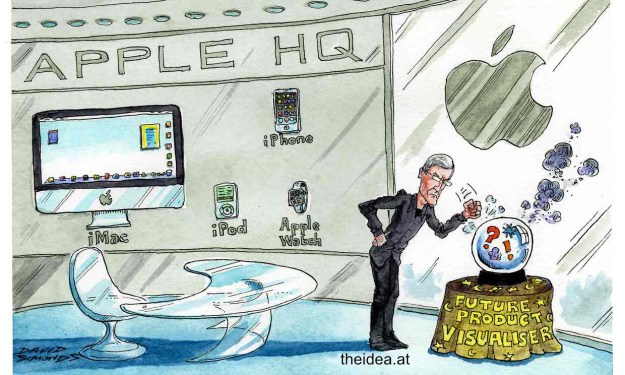
Apple Ditched Secrecy for Openness

Apple CEO Tim Cook waves goodbye after an event at the Apple headquarters in Cupertino, California

BMW and Apple are have cut ties amid an electric-vehicle arms race

For investors, the attempts by many of the tech industry’s most powerful incumbents to disrupt the auto industry make for some exciting, and potentially lucrative, opportunities.

For the auto industry, the barbarians are at the gate.

A BMW logo is seen at the North American International Auto Show in Detroit, January 12, 2016.   REUTERS/Mark BlinchA BMW logo is seen at the North American International Auto Show in Detroit

This understandable tension underscores much of the back-and-forth between the technology and automotive communities at the moment.

Initially friendly and collaborative, relations between the two industries have turned increasingly adversarial as each develops its own self-driving cars.

Take, for example, tech giant Apple and luxury automobile standard-bearer BMW — one-time potential collaborators whose relationship appears likely to turn increasingly competitive, as a recent move by the automaker demonstrates.

BMW unveils now tech-heavy strategy

Earlier this month, BMW’s new CEO, Harald Krueger, announced an important official shift in the company’s strategy, one that clearly seeks to counter the looming competitive threats from the likes of Apple, Alphabet, and Tesla. Claiming, „We will lead the BMW Group into a new era,“ he said the company’s plans now involve launching additional versions of its i-Series of electric vehicles, including a model dubbed iNEXT.

The iNEXT will feature BMW’s forthcoming electric powertrain and lightweight body materials, and will feature an optional self-driving mode. The company will also place a greater emphasis on in-car software and services. Mobile software giants like Apple, Alphabet, andBlackBerry have each tried to consolidate market share in the budding market for smart-car software, but BMW remained largely mum on the topic in its strategy presentation.

BMW’s iNEXT vehicles won’t reach market for at least five years, which largely mirrors the product launch schedule at tech firms like Apple. This raises the possibility of a glut of electric, fully autonomous cars reaching market at roughly the same time: Google, for example, hopes to have its autonomous vehicles ready for market by then. Only Chinese search giant Baidu has an appreciably earlier target launch date for its autonomous driving project — 2018 — though its applications may be relatively limited early on.

electric vehicles hybridsREUTERS/Robert GalbraithA hybrid Toyota Prius is electrically charged at a municipal charging station near City Hall in San Francisco, California August 6, 2009.

Circling the wagons

BMW’s moves could signal the end of its relationship with Apple, with whom the German auto giant has held meetings in the past. As recently as last July, Reuters reported that Apple and BMW had met to discuss potentially working together to realize their electric-vehicle ambitions. However, Reuters said, caution on BMW’s part led to a cooling of sorts. BMW likely wishes to avoid simply becoming another parts supplier for Apple, a la Apple’s infamous assembly partner Foxconn.

More broadly, this exemplifies the natural tension currently playing out between automakers and tech companies today. Though virtually everyone sees a massive economic opportunity in revolutionizing the transportation of people and goods around the world, the automotive and technology industries each, by and large, lack a core expertise the other possesses.

Apple’s software is used and beloved by hundreds of millions of people around the world, but at present, it lacks the requisite manufacturing skills to bring its Project Titan to market at scale. Conversely, BMW produces millions of cars annually, but lacks expertise in developing software and services.

Both industries are hard at work poaching talent from each other in an effort to cover their knowledge gaps, which has led to the arms-race scenario we see playing out in the headlines. So while BMW’s more revolutionary EVs won’t reach the market for at least five years, the company’s recent moves speak to the broader continued race to shape the future of the auto industry.


http://www.businessinsider.de/bmw-apple-cut-ties-over-electric-cars-2016-3

Approaches for Navigating Influencer Marketing

shutterstock_292452563

For the first few years of its life, Instagram was an ad-free community. By 2017, however, it will produce nearly $3 billion in mobile ad revenue, and 34 percent of American agency professionals cite it as the social network of choice for client campaigns.

The opening of the advertising floodgates definitely has Instagram users on edge. They fear that the feed they tap into for inspiration and escape will be tainted by the presence of advertisers, who are simply in the business of paying for eyeballs. But for savvy marketers and advertisers, there’s a key tactic to turn to when approaching the platform: influencer activation.

Influencers may have fewer followers than mainstream celebrities, but they powerfully impact their fans, who take their advice seriously. Companies such as Burberry, American Apparel, Land Rover, TOMS and Johnnie Walker partner with Instagram celebrities to reach consumers and create positive buzz around their brands.

But massive multinational companies aren’t the only ones that can leverage the power of this growing trend. Brands of all sizes are already enjoying success from influencer-driven Instagram campaigns. It’s a different conversation than the one centered on traditional paid media, and it’s growing in importance as brands try to forge meaningful connections with their audiences.

Here are a few tips and trends marketers should consider when looking to add an influencer strategy to their plans:

1. Marketers are diving into their own data

Tech tools are enabling companies to analyze opportunities and target highly segmented user groups with relevant content. If Neiman Marcus wants to launch a last-call promotion in some of its markets, it can approach fashion personalities who have influence in those areas, narrowing the options based on their number of followers and potential reach. Neiman Marcus can sign a deal with an influencer—paying for the exposure he or she can deliver—and drive sales through his or her followers.

Marketers should be tracking customers’ data so they can identify the influencers among them. Pay attention to social media trends, and use metrics to effectively market through them. This tracking will require layering on a few data points, from first-party data to social monitoring tools. Brands can see real-time numbers on their followers, how followers interact with their accounts, and how active followers are with other accounts. They may be surprised by the amount of exposure a core base of fans can bring to a brand via social channels.

2. Scalable technology is breaking down barriers to activation

Until recently, only top influencers and brands had been involved in this space. However, new platforms not only take the legwork out of influencer activation, but they also let marketers activate more influencers for less money. It’s the rise of the mid-tier influencer—and “there’s an app for that.”

Apps like Popular Pays allow brands to not only identify a pool of potential influencers, but also submit creative briefs with pricing and restrictions to that pool. Influencers can choose whether to opt in. This is an excellent way for a brand to generate social-ready creative that aligns with its brand in an efficient and cost-effective manner. Platforms like these are eliminating the barriers to entry and decentralizing the market—much like what Uber and Airbnb have done for transportation and lodging.

3. A shift from aspirational to transactional posts is underway

Consumers often follow people for their inspirational or aspirational content—think Kirsten Alana’s luxury travel-themed Instagram. But 2016 will be the year of transactional posts, with influencers guiding followers toward specific purchases or providing product information.

Marketers must identify content creators who are popular among their target audience members and strategize which products or services they can promote through them. But don’t lose sight of why customers followed these people. Make sure promotions advance their goals and meet a specific need.

4. Influencer content will be run directly

Many companies are chomping on the influencer activation bit, but others—including brands like McDonald’s and Ben & Jerry’s— are starting to integrate this technique into their more traditional media buys. Despite consumer pushback, there’s something to be said for running ads directly through the platform.

Influencers can gain brands valuable word-of-mouth marketing, but when it comes to targeting, reach and frequency, buying platform direct is the better option. Going site direct guarantees marketers get their brands’ content in front of someone in their market—something that’s not possible with influencers because brands simply don’t have access to the full scope of their followers’ data. Activate the influencer, take the content and run it directly to amplify it beyond his or her individual stream.

It makes sense why marketers are waking up to the power of these savvy personalities on Instagram and other social channels. Word of mouth has always been the most powerful form of marketing, and we’re seeing that on a much larger scale with the ease of content creation. Essentially, anyone with access to a smartphone has the ability to become his or her own publishing company. As marketers continue to refine their messages for a specific audience, they need to work with influencers who can educate their followers about their brand and help them sell to the right people.

Aubry Parks-Fried is a senior manager of digital innovations, social, and native at Centro. Centro develops digital advertising and media management software to help advertisers streamline and scale digital campaigns.

http://www.adweek.com/socialtimes/4-approaches-for-navigating-influencer-marketing-in-2016/636380

HIV Genes Successfully Edited Out of Immune Cells

HIV Genes Successfully Edited Out of Immune Cells
An electron micrograph of HIV particles infecting a human T cell. Image: National Institute of Allergy and Infectious Diseases

Researchers from Temple University have used the CRISPR/Cas9 gene editing tool to clear out the entire HIV-1 genome from a patient’s infected immune cells. It’s a remarkable achievement that could have profound implications for the treatment of AIDS and other retroviruses.

When we think about CRISPR/Cas9 we tend to think of it as a tool to eliminate heritable genetic diseases, or as a way to introduce new genes altogether. But as this new research shows, it also holds great promise as a means to eliminate viruses that have planted their nefarious genetic codes within host cells. This latest achievement now appears in Nature Scientific Reports.

Retroviruses, unlike regular run-of-the-mill viruses, insert copies of their genomes into host cells in order to replicate. Antiretroviral drugs have proven effective at controlling HIV after infection, but patients who stop taking these drugs suffer a quick relapse. Once treatment stops, the HIV reasserts itself, weakening the immune system, thus triggering the onset of acquired immune deficiency syndrome, or AIDS.

Over the years, scientists have struggled to remove HIV from infected CD4+ T-cells, a type of white blood cell that fights infection. Many of these “shock and kill” efforts have been unsuccessful. The recent introduction of CRISPR/Cas9 has now inspired a new approach.

Geneticist Kamel Khalili and colleagues from Temple University extracted infected T-cells from a patient. The team’s modified version of CRISPR/Cas9—which specifically targets HIV-1 DNA—did the rest. First, guide RNA methodically made its way across the entire T-cell genome searching for signs of the viral components. Once it recognized a match, a nuclease enzyme ripped out out the offending strands from the T-cell DNA. Then the cell’s built-in DNA repair machinery patched up the loose ends.

Not only did this remove the viral DNA, it did so permanently. What’s more, because this microscopic genetic system remained within the cell, it staved off further infections when particles of HIV-1 tried to sneak their way back in from unedited cells.

The study was performed on T-cells in a petri dish, but the technique successfully lowered the viral load in the patient’s extracted cells. This strongly suggests it could be used as a treatment. However, it could be years before we see that happen. Still, the researchers ruled out off-target effects (i.e. unanticipated side-effects of gene-editing) and potential toxicity. They also demonstrated that the HIV-1-eradicated cells were growing and functioning normally.

These findings “demonstrate the effectiveness of our gene editing system in eliminating HIV from the DNA of CD4 T-cells and, by introducing mutations into the viral genome, permanently inactivating its replication,” Khalili said in a statement. “Further, they show that the system can protect cells from reinfection and that the technology is safe for the cells, with no toxic effects.”

This technique for snipping out alien DNA could have implications for related research, including treatments for retroviruses that cause cancer and leukemia, and the suite of retroviruses currently affecting companion and farm animals. As noted by Excision BioTherapeutics’ CEO and President Thomas Malcolm, “These exciting results also reflect our ability to select viral gene targets for safe eradication of any viral genome in our current pipeline of gene editing therapeutics.”

And Malcolm has good reason to be excited: his company holds exclusive rights to commercialize this technology.

http://gizmodo.com/hiv-successfully-edited-out-of-immune-cells-1766413957?rev=1458672609052

Tesla will unveil its much-anticipated Model 3 mass-market vehicle in Los Angeles at the end of March 2016

Tesla will unveil its much-anticipated Model 3 mass-market vehicle in Los Angeles at the end of March.

Elon Musk Bill Pugliano / GettyNo Tesla-topianism, please.

Buzz before the event has pushed Tesla stock back up above $230 a share, from a crater of about $140. That’s a 40% upswing in only a month.

It has also set off a new round of what I’ll call „Tesla-topianism.“

This is the notion that the arrival of a $30,000 all-electric car in a market dominated by gas-burning vehicles will be the disruptive-innovation earthquake we’ve all been waiting for.

The Model 3 means it’s RIP for the internal combustion engine. So long, ICE! But hey, that century was a nice run.

The mistake remains the same

Bernstein’s Michael W. Parker and Mark C. Newman published a research note last week in which they enthusiastically encapsulated this bullish sentiment regarding electric vehicles, or EVs. (I’m quoting it at some length because it’s both informative and entertaining):

For car manufacturers, it is still possible to dismiss the electric vehicle as simply a rich person’s toy. This misinterpretation of „new“ as being „niche“ and „impractical“ has real pedigree. Blackberry and Nokia viewed the iPhone in these terms in 2007: why would anyone pay $600 for a phone with only one button? But with a mid-priced addition to Tesla’s product mix, the company will no longer be competing just with the BMW 5-series and Audi A6. It will be competing with the Honda Accord and Toyota Camry.

We didn’t think so. Our expectation is that the auto industry is going to have a common response to the launch of a modestly priced, attractive, electric vehicle in the first quarter of 2017: accelerate whatever they are doing in the EV space immediately.

It is very likely that the prestige, engineering and visceral thrill of German motoring has dissuaded many people from buying a Tesla Model S over the last few years. But if you agree with that statement, do you also agree with this statement: „It is very likely that the prestige, engineering and visceral thrill of Japanese motoring will dissuade many people from buying a Tesla Model 3 over the next few years“?

This is where the analysis of Tesla’s future competitive prospects tends to go wrong. The basic idea is actually correct: Tesla is aiming to transform the mobility landscape and accelerate the switch from fossil fuels to sustainable electric power. CEO Elon Musk has said as much.

But viewing Tesla’s current vehicles as luxury-market competitors doesn’t work. There’s demand for luxury cars, and there’s demand for Teslas. And the two flavors of demand aren’t the same.

Tesla was able to sell just over 50,000 vehicles last year because there are that many buyers out there who think a long-range electric car with a lot of luxury appointments and excellent performance is something they want to put in their garage.

There could be many more of this type of buyer, but EVs — even Teslas — are still difficult to own, mainly because they take a long time to recharge (gassing up, by contrast, takes just a few minutes, and gas stations are almost everywhere). And that means there’s probably a ceiling on this first wave of Tesla owners.

TeslaKim Kyung Hoon/ReutersA Tesla Model S being charged.

Why people buy Japanese cars

Enter the Model 3, which is supposed to bash through this ceiling. Hence Parker and Newman’s suggestion that no one will buy a Japanese car in the face of the overwhelming challenge from the Model 3.

The problem here is that demand for Japanese cars, especially in the US, defines a huge chunk of the mass market and has for decades, just as demand for German luxury brands like Mercedes and BMW defines the luxury segment.

Demand for Honda Accords and Toyota Camrys is demand for reliable, affordable, fuel-efficient products. It has nothing to do with demand for alternatives to gas-burning engines. You buy a Toyota Corolla because you want a way to get around that won’t let you down. You buy a Tesla because, to a degree, you want to change the world.

Anyone shopping for, say, a Honda, Toyota, Nissan, Mazda, Subaru or for that matter a Kia or a Hyundai, is unlikely to have Tesla on his or her radar. Once the Model 3 has been around for five or 10 years, that could change. But in the short term, given the miserable sales that traditional automakers have seen with EVs, it will be up to Tesla to prove that the market exists.

2015 Toyota Camry XSEToyotaA Toyota Camry.

A tough virus to get rid of

Yes, General Motors is said to be trying to beat the Model 3 to market with the Bolt EV, due to arrive in late 2016 (the Model 3 won’t hit the road until late 2017). But GM is simply doing the Bolt now because it can — the automaker is fully recovered from its 2009 bailout and bankruptcy, is printing money on big pickup trucks and SUVs, and has a CEO in Mary Barra who thinks it’s worth it to invest in the technologies and mobility services of tomorrow without betting the farm on them.

Tesla-topianism has been a tough virus to eradicate. Every time you think Tesla watchers, particularly in the finance industry, have figured out that the automaker is becoming a real car company (not a go-go growth tech company), those Tesla watchers crank up some new narrative that has Tesla doing something monumentally awesome that alters reality as we know it (that’s why the Apple analogies come fast and furious).

But then you look at the facts. For example, Toyota sold over 9 million vehicles worldwide in 2015.

Tesla and Musk could move humanity forward in terms of eventually retiring the gas-burning engine. But against staggering numbers like that, it will take Tesla decades, if it survives, to have a meaningful impact. And adding one new car to the portfolio isn’t going to speed things up.


http://www.businessinsider.de/mistake-about-tesla-and-the-model-3-2016-3