Archiv für den Monat März 2016

Google and Facebook Team Up to Open Source their Data Centers

485508231

10 Usability Heuristics for User Interface Design

This following Article is an „oldie“, but an Goodie:

Summary: Jakob Nielsen’s 10 general principles for interaction design. They are called „heuristics“ because they are broad rules of thumb and not specific usability guidelines.


The Evolution of the BatMobile

batman-documentary-carsWarner Bros Online

It takes more than martial-arts training and a cool cape to protect Gotham City. Over the years, Batman has relied on an evolving series of vehicles to help bring down his most infamous enemies.

The Batmobile has changed a lot since the 1941 original. It now has a more imposing, military-influenced design, as seen in „The Dark Knight“ trilogy and the upcoming „Batman v Superman: Dawn of Justice.“

Read on to see how the Batmobile has kept pace with Bruce Wayne’s quest to keep Gotham safe:

The first car to be referred to as a „Batmobile“ appeared in Detective Comics No. 48 in 1941. It was far more subtle than any of its successors. The car, which appears to be inspired by the Cord Roadster, had a small gold bat on the hood.

The first car to be referred to as a "Batmobile" appeared in Detective Comics No. 48 in 1941. It was far more subtle than any of its successors. The car, which appears to be inspired by the Cord Roadster, had a small gold bat on the hood.

DC Comics

The first drivable Batmobile came from Adam West’s 1966 live-action „Batman“ adaptation. Based on the Lincoln Futura, legendary designer George Barris dreamed up the car in 15 days.

Rather than the red and black of previous iterations, the Batmobile from the 1970s „Super Friends“ series was blue and black, with yellow details to highlight the more prominent bat insignia.

Frank Miller’s „The Dark Knight Returns“ (1986) is an important evolution. The Batmobile was overhauled to appear as a redesigned tank. Prioritizing weapons and defense was important to the much more stark version of Gotham in the comic series.

Frank Miller's "The Dark Knight Returns" (1986) is an important evolution. The Batmobile was overhauled to appear as a redesigned tank. Prioritizing weapons and defense was important to the much more stark version of Gotham in the comic series.

DC Comics

Tim Burton’s live-action adaptation of the Batmobile from 1989 is very cool. It’s sleek and imposing, and the jet-black exterior and polished finish really give off a sense of wealth, tying together Bruce Wayne and the Batman persona.

Tim Burton's live-action adaptation of the Batmobile from 1989 is very cool. It's sleek and imposing, and the jet-black exterior and polished finish really give off a sense of wealth, tying together Bruce Wayne and the Batman persona.

Warner Bros.

The 1992 debut of „Batman: The Animated Series“ began a new era. It featured the voice of Kevin Conroy as Batman and debuted the updated sleek Batmobile design seen in the later „Justice League“ spin-off.

The 1992 debut of "Batman: The Animated Series" began a new era. It featured the voice of Kevin Conroy as Batman and debuted the updated sleek Batmobile design seen in the later "Justice League" spin-off.

Warner Bros/YouTube

The Batmobile in „Batman Forever“ (1995) is one of its flashiest appearances, with an almost rib-cage-like design. Its shape is also vaguely reminiscent of the 1989 version.

„Batman & Robin“ (1997) was panned by critics, but its Batmobile isn’t the worst ever. It has a similar shape to previous live-action Batmobiles, but is black instead of the eerie blue glow of the 1995 design.

The live-action „Dark Knight“ trilogy from director Christopher Nolan introduced the Tumbler, an all-terrain, military-inspired version of the Batmobile. It could also be seen as a realization of the Batmobile in Miller’s „The Dark Knight Returns.“

The live-action "Dark Knight" trilogy from director Christopher Nolan introduced the Tumbler, an all-terrain, military-inspired version of the Batmobile. It could also be seen as a realization of the Batmobile in Miller's "The Dark Knight Returns."

REUTERS/ Toby Melville

In a first for the popular „Arkham“ video-game series, players take control of the Batmobile in the quest against Scarecrow’s fear toxin. Heavily inspired by Nolan’s Batmobile, the game also featured un-lockable „skins,“ which changed the vehicle’s appearance to match other famous Batmobile iterations.

 In a first for the popular "Arkham" video-game series, players take control of the Batmobile in the quest against Scarecrow's fear toxin. Heavily inspired by Nolan's Batmobile, the game also featured un-lockable "skins," which changed the vehicle's appearance to match other famous Batmobile iterations.

WB Games

Finally, the upcoming „Batman v Superman“ will usher in a new era for the Dark Knight. Ben Affleck will take on the role, and we’ve already gotten a close look at the new Batmobile, which weighs over 7,000 pounds and, in the film, can drive up to 205 mph.

In real life, the car can reach a speed of 90 mph.

In real life, the car can reach a speed of 90 mph.

Kirsten Acuna/Tech Insider

 http://www.businessinsider.com/batmobile-evolution-2016-3

tug-of-war over who controls and profits from the stream of user data in self-driving cars

google.carx299

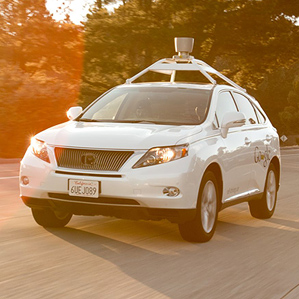
Google’s self-driving car team is expanding and hiring more people with automotive industry expertise, underscoring the company’s determination to move the division past the experimental stage.

The operation now employs at least 170 workers, according to a Reuters review of their profiles on LinkedIn, the business-oriented social network. Many are software and systems engineers, and some come from other departments at Google.

More than 40 of the employees listed on LinkedIn have previous automotive industry experience, with skills ranging from exterior design to manufacturing.

They hail from a wide range of companies, including Tesla Motors Inc, Ford Motor Co. and General Motors Co.

For a look at the composition of Google’s self-driving car team, Google has not disclosed details about the size or composition of its self-driving car team, and Johnny Luu, spokesman for Google’s car team, declined to comment.

The team could have additional members who do not publish profiles on LinkedIn.

Google has said previously that it intends to ready the technology for a marketable self-driving car by 2020, but it may never manufacture vehicles itself.

The tech giant is more likely to contract out manufacturing — much like Apple does with iPhone — or to license technology to existing car manufacturers, automotive industry experts said.

Licensing would follow the model Google has used with its Android operating system for mobile devices.

In the past four weeks, Google has advertised nearly 40 new positions on the team, and many are related to manufacturing.

The team currently has six people with such experience, including purchasing, supplier development and supply chain management.

Hires with manufacturing skills could help Google find and coordinate with a partner to build a vehicle, said Paul Mascarenas, a former Ford executive who is president of FISITA, the International Federation of Engineering Societies.

Google is also engaged in discussions with federal and state regulators about how to revise motor vehicle safety standards to accommodate autonomous cars.

The competition for technical talent is intensifying as tech and automotive companies race to build driverless vehicles.

Beyond Google, the players include Tesla, established car makers such as Daimler AG and GM and, and technology companies such as Apple Inc and Uber Technologies Inc.

Google’s team is being assembled by John Krafcik, an industry veteran who previously headed Hyundai Motor Co’s  U.S. operations and is an expert in product development and manufacturing. Krafcik joined Google in September 2015.

Another senior executive with previous automotive experience, Paul Luskin, was hired last month as operations manager, according to his Linkedin profile.

An engineer with stints at Jaguar Cars, Ford and Japanese supplier Denso Corp, Luskin most recently was president of Ricardo Defense Systems, a unit of Britain’s Ricardo PLC, according to the Linkedin profile.

Google hired industry veteran Andy Warburton in July to head the vehicle engineering team, according to his Linkedin profile.

Warburton spent two years as a senior engineering manager at Tesla and 16 years as an engineering manager at Jaguar.

A third auto veteran, Sameer Kshisagar, joined Google in November as head of global supply management on the self-driving car team. Kshisagar is a manufacturing expert who previously worked for GM, according to his Linkedin profile.

Luskin, Warburton and Kshisagar did not respond to requests for comment.

Google’s self-driving car group also has tapped people with experience beyond the auto industry, including aerospace (Boeing, SpaceX, Jet Propulsion Lab) and electronics (Intel, Samsung, Motorola), according to LinkedIn profiles.

Krafcik and Chris Urmson, director of the car team, have said they want to forge partnerships with established automakers and others to build vehicles. Krafcik made a public pitch for alliances at an auto industry conference in Detroit in January.

However, Google may have to look farther than the auto industry to find a manufacturing partner, said Raj Rajkumar, a Carnegie-Mellon University professor who advises companies on self-driving car development.

The tug-of-war over who controls — and profits from — the stream of user data in self-driving cars is „an inherent and fundamental conflict“ between Google and traditional automakers, Rajkumar said.

Instead, Google may choose to build its own engineering and design prototypes, then partner with a Chinese automaker or an Asian contractor such as Hon Hai Precision Industry’s Foxconn Technology Co that wants to enter the automotive field, several experts said.

Michael Tracy, a Michigan-based auto manufacturing consultant, said Google sees the potential of several different revenue streams from its self-driving technology, including licensing its mapping database and vehicle control software, as well as an integrated package of software, sensors and actuators that would form the backbone of a self-driving vehicle.

The least likely prospect is that Google will manufacture its own vehicles, Tracy said, due to the massive expenditures required and the stiff competition from established automakers.

http://www.voanews.com/content/googles-self-driving-car-team-beefs-up-auto-experience/3217805.html

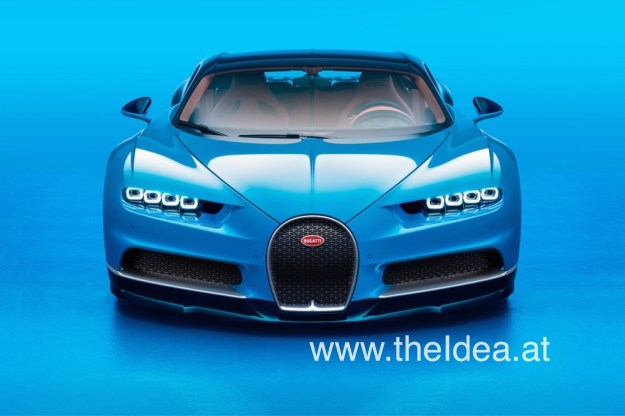
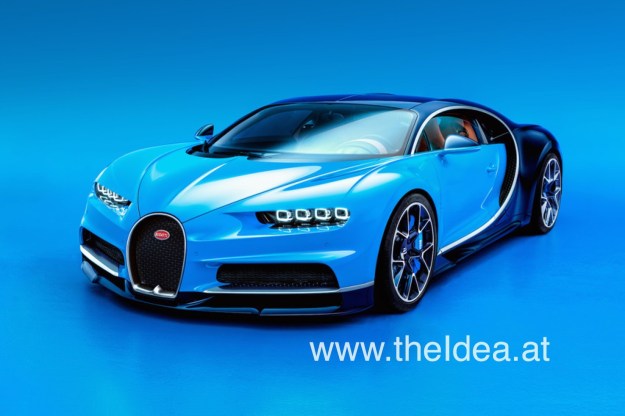
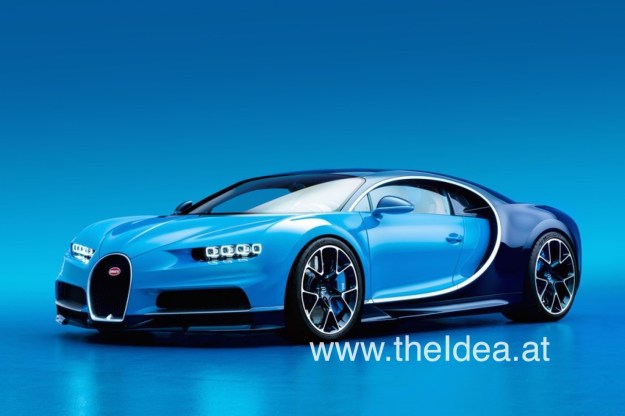
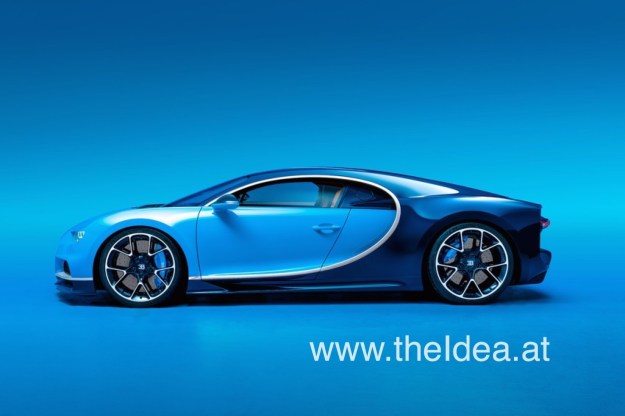
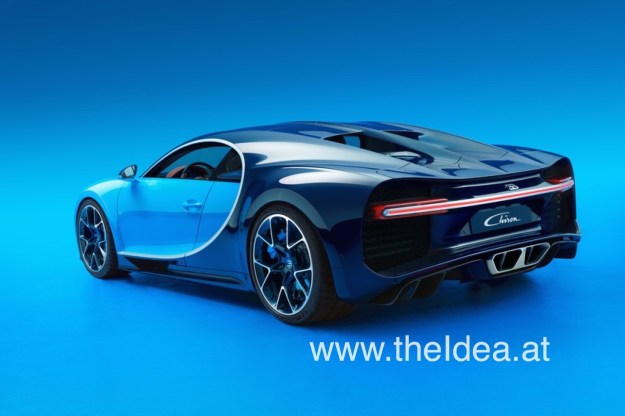
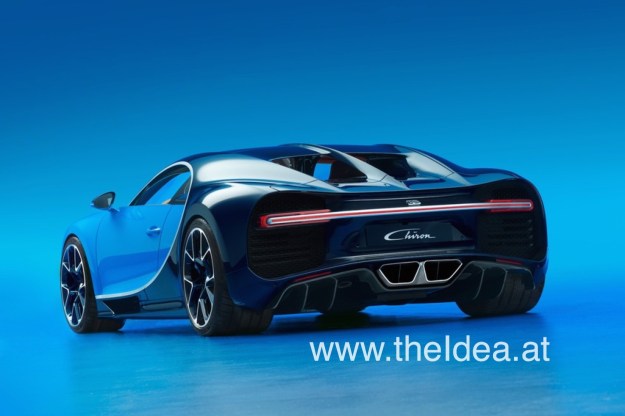
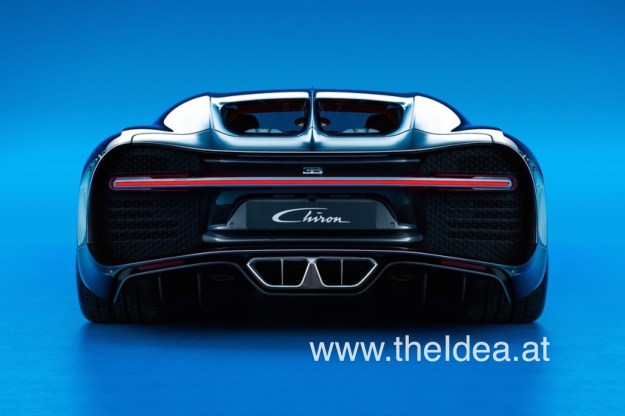
Bugatti’s $2.6 million Chiron is the fastest car in the world

01_chiron_front_web 02_chiron_34-front_web 03_chiron_34-front_web 04_chiron_side_web 05_chiron_34-rear_web 06_chiron_34-rear_web 07_chiron_rear_web 09_chiron_engine-bay_web 15_chiron_grille_web 17_chiron_bugatti-line_web 18_chiron_driver-side_web 20_chiron_steering-wheel_web 22_chiron_speedometer_web 23_chiron_engine-knob_web 24_chiron_knob_web


You might think the super-wealthy have it pretty easy, what with their private islands, private jets and the ability to buy just about anything. But there’s been one thing they’ve not been able to buy in a while: an all-new Bugatti.

In fact, it’s been more than 11 years since the Veyron first went on sale. Can you imagine driving the same Bugatti for a decade? I can’t even.

Thankfully, that more than decade-long nightmare is over; there’s finally an all-new one. It’s called the Chiron. Along with the illustrious French moniker (yes, Bugatti is French), it boasts a 1,500-horsepower 16-cylinder engine, room for two very lucky passengers and a base price of just more than $2.6 million.

W16
Let’s not mince words here. Granted, simply based upon its price tag, the new Bugatti Chiron will be the chariot of global glitterati. Though, it’s more than a coupe from an elite brand. It hits the roads as the most powerful and fastest production car ever.

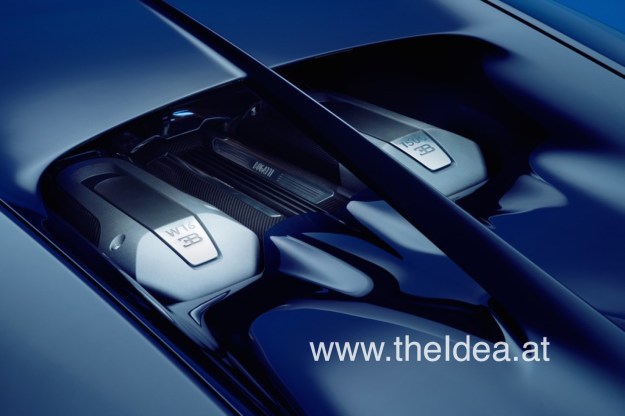
That impressive title is thanks to the 8.0-liter W16-cylinder engine mounted in the mid-rear of the car. If you’re not familiar with a W16, that’s OK. Only Bugatti uses such an engine. Imagine two V8s intertwined into one shape. That’s a W16. Imagine two V8s intertwined into one shape. That’s a W16.

Along with two-stage turbocharging (a new Bugatti development), the Chiron’s W16 produces 1,500 horsepower and 1,180 pound-feet of torque. That, along with a very stout all-wheel drive system, allows it to go 0 to 62 mph in 2.5 seconds, and on to a limited top speed (it could do more) of 261 mph (although the speedo goes up to 310 mph). To put that into perspective, a 747 lifts off the ground at 180 mph.

Understandably, to be able to safely keep the car on the road, and, you know, bring it to a stop once in a while, Bugatti engineers had to go to great technical lengths. That meant they had to develop both a chassis and a braking system as stout as the most advanced and technically complex race cars in the world. Moreover, the tires were tested to aerospace tolerances, which makes sense, given the speeds this thing can hit.

Understandably, a huge, fuel-thirsty engine like that produces a lot of tailpipe pollutants at full throttle. Accordingly, the catalytic converters (the devices that clean the exhaust gases as they pass through it) in the titanium exhaust system are six times larger than catalytic converters fitted to a mid-size sedan.

According to Bugatti, if you dissected the Chiron’s catalytic converters, you’d find surfaces — when the many layers are spread out flat — larger than the area of 30 soccer fields. And that’s just in one single car.

Electromagnetic
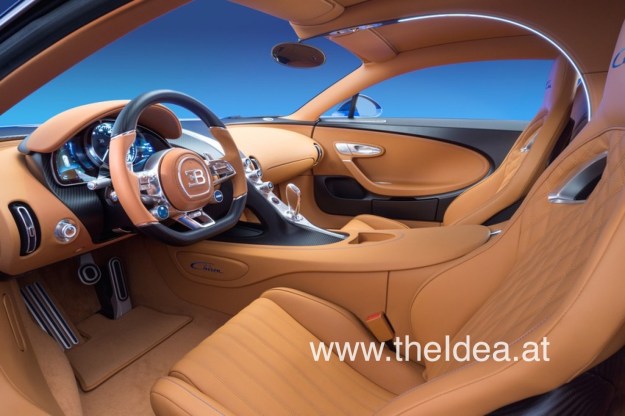
Of course, in creating the Chiron, Bugatti couldn’t spend all its technical energy on performance. After all, the car needs to be as opulent as it is fast.

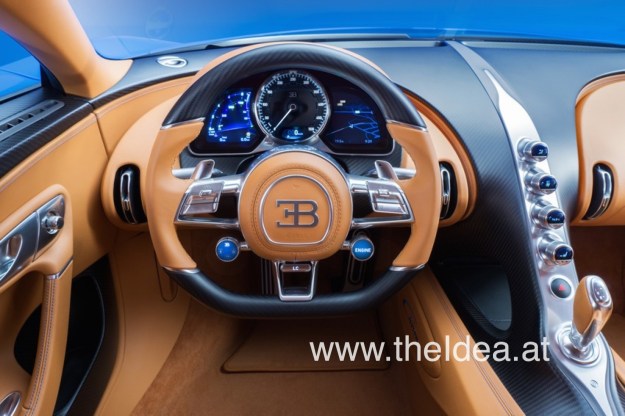
Accordingly, Bugatti engineers created a new instrument cluster with three TFT digital screens as well as an analog speedometer. Cleverly, the faster you drive the Chiron, the more the information displayed falls away. The dedicated infotainment screen fades, as the miles per hour climb in order to limit driver distraction.

Between the driver and the passenger is the signature illuminated C-bar, which is the longest light conductor in the automotive industry. What’s more, its surrounding bezel is machined from a single piece of aluminum. Certainly, this isn’t especially techie, but it is stunning.

Effectively, the Chiron can withstand electromagnetic interference and disruption as well as a military vehicle. This means that the passengers as well as their electronics are about as safe as you can get from electronically harmful electromagnetic waves.

The Chiron effect
Of all the astounding things we’ve just discussed about the Chiron, they’re just the tip of the iceberg.

For example, the front 3D Bugatti logo is covered in gemstone. The cabin sound system was created specifically for the Chiron by the elite German audio system company “accuton” (no, I’ve not heard of it either). And the exterior has been fashioned entirely from carbon fiber.

Perhaps the most astounding thing of all, though, is the fact that — despite the years of development and painstaking attention to detail that went into its creation — Bugatti only plans to ever build 500 Chirons.

Since Bugatti is owned by the Volkswagen Group, I’d like to tell you that some of the tech and features of the Chiron will trickle down into a VW or Audi you can buy in a few years. Truthfully, if it does, it won’t be the stuff you want, like 1,500 horsepower or a gemstone-covered front grille emblem.

Instead, your future car will likely be blessed with lessons learned from Bugatti’s painstaking attention to quality, reliability and precision. That’s because, in order to build a car that can be both the world’s fastest and finest vehicle, it has to be quadruply over-engineered.

That said, I encourage you to still admire the Chiron from afar. Or, better yet, see the latest Bugatti as an aspirational vehicle. Either way, the Bugatti Chiron is going to make the lives of the super-rich very lovely indeed and your future car that much finer.

2017 Bugatti Chiron

http://mashable.com/2016/02/29/2017-bugatti-chiron