Archiv des Autors: innovation

Silicon Valley legend Bill Campbell – leadership advice

Bill Campbell, widely known in Silicon Valley as „The Coach,“ died on Tuesday after a long battle with cancer.

Before entering the tech industry, Campbell served as head football coach at Columbia University and maintained a pep-talk approach when dealing with executives. Campbell’s illustrious career included a stint as an Apple executive and board member, and he served as CEO and chairman of Intuit.

He became not only an adviser to but also a close friend of power players like late Apple CEO Steve Jobs, Google cofounders Larry Page and Sergey Brin, and Twitter and Square CEO Jack Dorsey.

As Kleiner Perkins Caufield & Byers partner Randy Komisar said in an episode of his „Ventured“ podcast, Campbell’s executive-coaching style was akin to that of a psychiatrist, asking the right questions to steer his subjects to their own conclusions rather than giving mandates.

Campbell preferred to stay out of the spotlight, but we’ve collected some of his best leadership advice from relatively recent interviews.

These lessons shed light on why he was such a valuable coach to have.

Know that great products drive success. Everything else is a supporting function

Campbell was adamant that the greatest marketing in the world was useless if it didn’t advertise an excellent product. It’s why he was a fierce advocate for granting engineers creative freedom.

Source: Intuit

Trust your managers, and make sure they trust their subordinates

At companies Campbell worked at, he would aim to eliminate tensions between product managers and engineers by building a culture of trust, where managers knew that engineers were in the best position to find a solution and engineers knew managers were in the best position to guide them to that goal.

Source: Intuit

Experiment, but never at the cost of your existing business

Campbell was close friends with Ron Johnson, the Apple executive whose attempt at relaunching J.C. Penney in 2012-2013 failed miserably because, as Campbell said, he tried starting from scratch.

Source: Intuit

Spend your days doing, not planning

„Writing a list of things and checking dates and all that, that’s a bunch of bulls—, you can take the last 10 minutes of your day and do that,“ he said.

The vast majority of your day as a leader should be spent working with your team.

Source: Intuit

Your company must have unifying product principles

Even while evolving, you must ensure that your company retains its unique identity by sticking to fundamental creative principles.

„That’s what Apple does brilliantly,“ Campbell said. „Everyone knows where the design principles are trending.“

Source: Intuit

It is imperative that you stop infighting as soon as it arises

Campbell said that internal warfare „brings companies to their knees“ and that it is the CEO’s job to end tensions immediately. He said that Apple under CEO John Sculley, before Steve Jobs was brought back in to lead his company, was marked by turf wars and power grabs.

„The political problem just goes down through the organization,“ Campbell said. „Everybody’s paralyzed by the fighting that top executives have, all the time.“

He recommended that CEOs bring their warring parties into the same room and give them a deadline for settling their disputes, or else they would step in and make the decision for them.

Source: Intuit

Determine cultural values from the outset and then model them

Values allow employees to hold each other accountable, and the CEO must embody the values, or else no one will follow them.

Source: „Venture“ podcast

Evaluate your managers by what their employees think of them

Regularly survey your employees to ensure that their managers are upholding the company’s values and guiding, rather than interfering with, their work.

Source: „Venture“ podcast

Maintain a culture of respect

Campbell placed prime importance on respect when leading or consulting with a company.

For example, he said, „Larry Page takes great, great pride in making sure that [executives he hires] are humble about what they do.“

If someone continuously disrespects their colleagues to the point where they feel their opinions aren’t heard, then that person needs to be let go.

Source: „Venture“ podcast

Be honest with your team

The reason why Campbell was not only greatly respected in the Valley but also deeply admired on a personal level was because he spent time building relationships with those he worked with.

To him, the best leaders are straightforward with their praise and criticism, so that there are no illusions holding someone back from success.

Source: Fortune

http://www.businessinsider.de/bill-campbells-leadership-advice-2016-4

How to Successfully Manage Teams

Managing a team is a rewarding task that offers unique benefits and challenges. What follows are six ways to ensure you are successful at managing any kind of team.

Careful Selection

If possible, screen candidates based on a fair and standard format. This could be an entrance interview with basic questions about motivation, work styles and core competencies. Even if there are no choices, an initial interview with existing team members will allow everyone to understand preferences and backgrounds, which will help new team members better fit in and adapt to the subculture.

Proper Training

Some leaders have unrealistic expectations about employee performance and learning capacity. This means they expect employees to instantly become proficient with complex tasks and technologies that may take weeks to master. Regardless of competency, employees must be given time to process information and ask questions. This is a great way to introduce new ideas and to challenge existing, inefficient processes.

Team leaders can continue their professional development by getting an advanced degree, like a master’s degree that pertains to their career field. No matter what your field, a master’s degree can help you gain the necessary leadership experience to make a difference.

Learn Project Management

Every supervisor and team leader should be familiar with the basic principles of project management. However, they must also be prepared to train and help team members master these project management techniques and systems. One good solution is to use popular project management software. This will help team leaders better manage assignments and scheduling, as well as increase productivity and accountability.

Empower Employees

Employees need to be empowered to perform their jobs without direct supervision. This will reduce the supervisors’ work load, but can only occur when there are formal procedures and parameters that guide employees through the decision making process. Avoid micromanaging and setting up employees to fail through setting unrealistic standards.

Set Goals

Some team leaders only focus on daily operations, so they lose focus on the big picture. This can be remedied through quarterly goals collectively created by team members. These goals should be reviewed during every meeting  to realign focus and energy. Be sure to offer team members rewards for reaching the goals.

Set an Open Door Policy

New employees naturally make more mistakes if they are uncomfortable asking questions or for feedback. Team leaders can continue their professional development by getting a degree like a Master’s of Civil Engineering. No matter what your field, a master’s degree can help you gain the necessary leadership experience to make a difference.

Finally, build a team subculture that welcomes change and innovation. If you want your team to be successful, you need to take steps to better yourself and improve your skills too. These tips can help you be a more effective leader.

http://switchandshift.com/6-tips-successfully-manage-teams

The brightest minds in AI research – Machine Learning

In AI research,  brightest minds aren’t driven by the next product cycle or profit margin – They want to make AI better, and making AI better doesn’t happen when you keep your latest findings to yourself.

http://www.wired.com/2016/04/openai-elon-musk-sam-altman-plan-to-set-artificial-intelligence-free/

Inside OpenAI, Elon Musk’s Wild Plan to Set Artificial Intelligence Free
ElonMusk201604

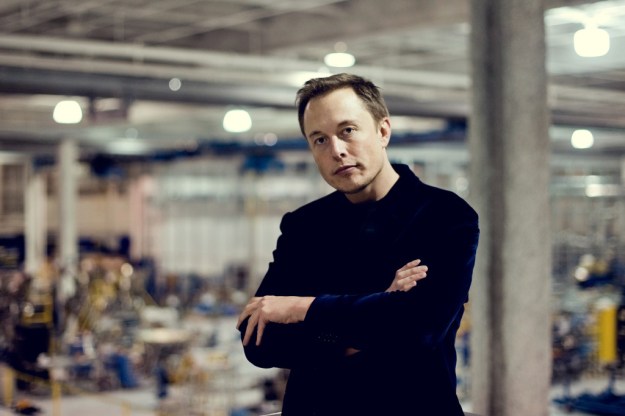
THE FRIDAY AFTERNOON news dump, a grand tradition observed by politicians and capitalists alike, is usually supposed to hide bad news. So it was a little weird that Elon Musk, founder of electric car maker Tesla, and Sam Altman, president of famed tech incubator Y Combinator, unveiled their new artificial intelligence company at the tail end of a weeklong AI conference in Montreal this past December.

But there was a reason they revealed OpenAI at that late hour. It wasn’t that no one was looking. It was that everyone was looking. When some of Silicon Valley’s most powerful companies caught wind of the project, they began offering tremendous amounts of money to OpenAI’s freshly assembled cadre of artificial intelligence researchers, intent on keeping these big thinkers for themselves. The last-minute offers—some made at the conference itself—were large enough to force Musk and Altman to delay the announcement of the new startup. “The amount of money was borderline crazy,” says Wojciech Zaremba, a researcher who was joining OpenAI after internships at both Google and Facebook and was among those who received big offers at the eleventh hour.

How many dollars is “borderline crazy”? Two years ago, as the market for the latest machine learning technology really started to heat up, Microsoft Research vice president Peter Lee said that the cost of a top AI researcher had eclipsed the cost of a top quarterback prospect in the National Football League—and he meant under regular circumstances, not when two of the most famous entrepreneurs in Silicon Valley were trying to poach your top talent. Zaremba says that as OpenAI was coming together, he was offered two or three times his market value.

OpenAI didn’t match those offers. But it offered something else: the chance to explore research aimed solely at the future instead of products and quarterly earnings, and to eventually share most—if not all—of this research with anyone who wants it. That’s right: Musk, Altman, and company aim to give away what may become the 21st century’s most transformative technology—and give it away for free.

Zaremba says those borderline crazy offers actually turned him off—despite his enormous respect for companies like Google and Facebook. He felt like the money was at least as much of an effort to prevent the creation of OpenAI as a play to win his services, and it pushed him even further towards the startup’s magnanimous mission. “I realized,” Zaremba says, “that OpenAI was the best place to be.”

That’s the irony at the heart of this story: even as the world’s biggest tech companies try to hold onto their researchers with the same fierceness that NFL teams try to hold onto their star quarterbacks, the researchers themselves just want to share. In the rarefied world of AI research, the brightest minds aren’t driven by—or at least not only by—the next product cycle or profit margin. They want to make AI better, and making AI better doesn’t happen when you keep your latest findings to yourself.

OpenAI is a billion-dollar effort to push AI as far as it will go.
This morning, OpenAI will release its first batch of AI software, a toolkit for building artificially intelligent systems by way of a technology called “reinforcement learning”—one of the key technologies that, among other things, drove the creation of AlphaGo, the Google AI that shocked the world by mastering the ancient game of Go. With this toolkit, you can build systems that simulate a new breed of robot, play Atari games, and, yes, master the game of Go.

But game-playing is just the beginning. OpenAI is a billion-dollar effort to push AI as far as it will go. In both how the company came together and what it plans to do, you can see the next great wave of innovation forming. We’re a long way from knowing whether OpenAI itself becomes the main agent for that change. But the forces that drove the creation of this rather unusual startup show that the new breed of AI will not only remake technology, but remake the way we build technology.

AI Everywhere
Silicon Valley is not exactly averse to hyperbole. It’s always wise to meet bold-sounding claims with skepticism. But in the field of AI, the change is real. Inside places like Google and Facebook, a technology called deep learning is already helping Internet services identify faces in photos, recognize commands spoken into smartphones, and respond to Internet search queries. And this same technology can drive so many other tasks of the future. It can help machines understand natural language—the natural way that we humans talk and write. It can create a new breed of robot, giving automatons the power to not only perform tasks but learn them on the fly. And some believe it can eventually give machines something close to common sense—the ability to truly think like a human.

But along with such promise comes deep anxiety. Musk and Altman worry that if people can build AI that can do great things, then they can build AI that can do awful things, too. They’re not alone in their fear of robot overlords, but perhaps counterintuitively, Musk and Altman also think that the best way to battle malicious AI is not to restrict access to artificial intelligence but expand it. That’s part of what has attracted a team of young, hyper-intelligent idealists to their new project.

OpenAI began one evening last summer in a private room at Silicon Valley’s Rosewood Hotel—an upscale, urban, ranch-style hotel that sits, literally, at the center of the venture capital world along Sand Hill Road in Menlo Park, California. Elon Musk was having dinner with Ilya Sutskever, who was then working on the Google Brain, the company’s sweeping effort to build deep neural networks—artificially intelligent systems that can learn to perform tasks by analyzing massive amounts of digital data, including everything from recognizing photos to writing email messages to, well, carrying on a conversation. Sutskever was one of the top thinkers on the project. But even bigger ideas were in play.

Sam Altman, whose Y Combinator helped bootstrap companies like Airbnb, Dropbox, and Coinbase, had brokered the meeting, bringing together several AI researchers and a young but experienced company builder named Greg Brockman, previously the chief technology officer at high-profile Silicon Valley digital payments startup called Stripe, another Y Combinator company. It was an eclectic group. But they all shared a goal: to create a new kind of AI lab, one that would operate outside the control not only of Google, but of anyone else. “The best thing that I could imagine doing,” Brockman says, “was moving humanity closer to building real AI in a safe way.”

Musk is one of the loudest voices warning that we humans could one day lose control of systems powerful enough to learn on their own.
Musk was there because he’s an old friend of Altman’s—and because AI is crucial to the future of his various businesses and, well, the future as a whole. Tesla needs AI for its inevitable self-driving cars. SpaceX, Musk’s other company, will need it to put people in space and keep them alive once they’re there. But Musk is also one of the loudest voices warning that we humans could one day lose control of systems powerful enough to learn on their own.

The trouble was: so many of the people most qualified to solve all those problems were already working for Google (and Facebook and Microsoft and Baidu and Twitter). And no one at the dinner was quite sure that these thinkers could be lured to a new startup, even if Musk and Altman were behind it. But one key player was at least open to the idea of jumping ship. “I felt there were risks involved,” Sutskever says. “But I also felt it would be a very interesting thing to try.”

Breaking the Cycle
Emboldened by the conversation with Musk, Altman, and others at the Rosewood, Brockman soon resolved to build the lab they all envisioned. Taking on the project full-time, he approached Yoshua Bengio, a computer scientist at the University of Montreal and one of founding fathers of the deep learning movement. The field’s other two pioneers—Geoff Hinton and Yann LeCun—are now at Google and Facebook, respectively, but Bengio is committed to life in the world of academia, largely outside the aims of industry. He drew up a list of the best researchers in the field, and over the next several weeks, Brockman reached out to as many on the list as he could, along with several others.

Many of these researchers liked the idea, but they were also wary of making the leap. In an effort to break the cycle, Brockman picked the ten researchers he wanted the most and invited them to spend a Saturday getting wined, dined, and cajoled at a winery in Napa Valley. For Brockman, even the drive into Napa served as a catalyst for the project. “An underrated way to bring people together are these times where there is no way to speed up getting to where you’re going,” he says. “You have to get there, and you have to talk.” And once they reached the wine country, that vibe remained. “It was one of those days where you could tell the chemistry was there,” Brockman says. Or as Sutskever puts it: “the wine was secondary to the talk.”

By the end of the day, Brockman asked all ten researchers to join the lab, and he gave them three weeks to think about it. By the deadline, nine of them were in. And they stayed in, despite those big offers from the giants of Silicon Valley. “They did make it very compelling for me to stay, so it wasn’t an easy decision,” Sutskever says of Google, his former employer. “But in the end, I decided to go with OpenAI, partly of because of the very strong group of people and, to a very large extent, because of its mission.”

The deep learning movement began with academics. It’s only recently that companies like Google and Facebook and Microsoft have pushed into the field, as advances in raw computing power have made deep neural networks a reality, not just a theoretical possibility. People like Hinton and LeCun left academia for Google and Facebook because of the enormous resources inside these companies. But they remain intent on collaborating with other thinkers. Indeed, as LeCun explains, deep learning research requires this free flow of ideas. “When you do research in secret,” he says, “you fall behind.”

As a result, big companies now share a lot of their AI research. That’s a real change, especially for Google, which has long kept the tech at the heart of its online empire secret. Recently, Google open sourced the software engine that drives its neural networks. But it still retains the inside track in the race to the future. Brockman, Altman, and Musk aim to push the notion of openness further still, saying they don’t want one or two large corporations controlling the future of artificial intelligence.

The Limits of Openness
All of which sounds great. But for all of OpenAI’s idealism, the researchers may find themselves facing some of the same compromises they had to make at their old jobs. Openness has its limits. And the long-term vision for AI isn’t the only interest in play. OpenAI is not a charity. Musk’s companies that could benefit greatly the startup’s work, and so could many of the companies backed by Altman’s Y Combinator. “There are certainly some competing objectives,” LeCun says. “It’s a non-profit, but then there is a very close link with Y Combinator. And people are paid as if they are working in the industry.”

According to Brockman, the lab doesn’t pay the same astronomical salaries that AI researchers are now getting at places like Google and Facebook. But he says the lab does want to “pay them well,” and it’s offering to compensate researchers with stock options, first in Y Combinator and perhaps later in SpaceX (which, unlike Tesla, is still a private company).

Brockman insists that OpenAI won’t give special treatment to its sister companies.
Nonetheless, Brockman insists that OpenAI won’t give special treatment to its sister companies. OpenAI is a research outfit, he says, not a consulting firm. But when pressed, he acknowledges that OpenAI’s idealistic vision has its limits. The company may not open source everything it produces, though it will aim to share most of its research eventually, either through research papers or Internet services. “Doing all your research in the open is not necessarily the best way to go. You want to nurture an idea, see where it goes, and then publish it,” Brockman says. “We will produce lot of open source code. But we will also have a lot of stuff that we are not quite ready to release.”

Both Sutskever and Brockman also add that OpenAI could go so far as to patent some of its work. “We won’t patent anything in the near term,” Brockman says. “But we’re open to changing tactics in the long term, if we find it’s the best thing for the world.” For instance, he says, OpenAI could engage in pre-emptive patenting, a tactic that seeks to prevent others from securing patents.

But to some, patents suggest a profit motive—or at least a weaker commitment to open source than OpenAI’s founders have espoused. “That’s what the patent system is about,” says Oren Etzioni, head of the Allen Institute for Artificial Intelligence. “This makes me wonder where they’re really going.”

The Super-Intelligence Problem
When Musk and Altman unveiled OpenAI, they also painted the project as a way to neutralize the threat of a malicious artificial super-intelligence. Of course, that super-intelligence could arise out of the tech OpenAI creates, but they insist that any threat would be mitigated because the technology would be usable by everyone. “We think its far more likely that many, many AIs will work to stop the occasional bad actors,” Altman says.

But not everyone in the field buys this. Nick Bostrom, the Oxford philosopher who, like Musk, has warned against the dangers of AI, points out that if you share research without restriction, bad actors could grab it before anyone has ensured that it’s safe. “If you have a button that could do bad things to the world,” Bostrom says, “you don’t want to give it to everyone.” If, on the other hand, OpenAI decides to hold back research to keep it from the bad guys, Bostrom wonders how it’s different from a Google or a Facebook.

If you share research without restriction, bad actors could grab it before anyone has ensured that it’s safe.
He does say that the not-for-profit status of OpenAI could change things—though not necessarily. The real power of the project, he says, is that it can indeed provide a check for the likes of Google and Facebook. “It can reduce the probability that super-intelligence would be monopolized,” he says. “It can remove one possible reason why some entity or group would have radically better AI than everyone else.”

But as the philosopher explains in a new paper, the primary effect of an outfit like OpenAI—an outfit intent on freely sharing its work—is that it accelerates the progress of artificial intelligence, at least in the short term. And it may speed progress in the long term as well, provided that it, for altruistic reasons, “opts for a higher level of openness than would be commercially optimal.”

“It might still be plausible that a philanthropically motivated R&D funder would speed progress more by pursuing open science,” he says.

Like Xerox PARC
In early January, Brockman’s nine AI researchers met up at his apartment in San Francisco’s Mission District. The project was so new that they didn’t even have white boards. (Can you imagine?) They bought a few that day and got down to work.

Brockman says OpenAI will begin by exploring reinforcement learning, a way for machines to learn tasks by repeating them over and over again and tracking which methods produce the best results. But the other primary goal is what’s called “unsupervised learning”—creating machines that can truly learn on their own, without a human hand to guide them. Today, deep learning is driven by carefully labeled data. If you want to teach a neural network to recognize cat photos, you must feed it a certain number of examples—and these examples must be labeled as cat photos. The learning is supervised by human labelers. But like many others researchers, OpenAI aims to create neural nets that can learn without carefully labeled data.

“If you have really good unsupervised learning, machines would be able to learn from all this knowledge on the Internet—just like humans learn by looking around—or reading books,” Brockman says.

He envisions OpenAI as the modern incarnation of Xerox PARC, the tech research lab that thrived in the 1970s. Just as PARC’s largely open and unfettered research gave rise to everything from the graphical user interface to the laser printer to object-oriented programing, Brockman and crew seek to delve even deeper into what we once considered science fiction. PARC was owned by, yes, Xerox, but it fed so many other companies, most notably Apple, because people like Steve Jobs were privy to its research. At OpenAI, Brockman wants to make everyone privy to its research.

This month, hoping to push this dynamic as far as it will go, Brockman and company snagged several other notable researchers, including Ian Goodfellow, another former senior researcher on the Google Brain team. “The thing that was really special about PARC is that they got a bunch of smart people together and let them go where they want,” Brockman says. “You want a shared vision, without central control.”

Giving up control is the essence of the open source ideal. If enough people apply themselves to a collective goal, the end result will trounce anything you concoct in secret. But if AI becomes as powerful as promised, the equation changes. We’ll have to ensure that new AIs adhere to the same egalitarian ideals that led to their creation in the first place. Musk, Altman, and Brockman are placing their faith in the wisdom of the crowd. But if they’re right, one day that crowd won’t be entirely human.

Tesla’s Model 3 Reservations Rise to 400,000

Eager Tesla customers continue to reserve the Model 3, despite the ballooning wait times.

Reservations for Tesla’s recently unveiled, mainstream electric car, the Model 3, continue to climb.

According to a speech from Tesla’s Vice President of Business Development, Diarmuid O’Connell, this week, reservations for the car are now approaching 400,000.

That’s an eye-popping figure for an electric car that’s only been available to reserve for about two weeks and won’t start shipping until the end of 2017. Many of those reservations were made before the car was even unveiled on March 31. Now Tesla needs to figure out how to make and deliver those cars on time and budget.

Many of the later orders of the Model 3 likely won’t be fulfilled until 2019, or even into 2020 (four years from now).That’s assuming Tesla will remain on track to start shipping the car at the end of next year, too.

A driveable prototype of Tesla's Model 3.
A driveable prototype of Tesla’s Model 3. Katie Fehrenbacher/Fortune

To get that volume of cars made and delivered on time, Tesla TSLA -2.56% could have to change the way it makes its cars considerably. Tesla has only delivered a little over 100,000 cars in total over its lifetime. During O’Connell’s speech at a conference in Amsterdam, he said the rapid reservation rate gives Tesla the “visibility” and “confidence” into what it would take to build the car.

Tesla CEO Elon Musk tweeted the day after revealing the Model 3 for the first time (when the car had close to 200,000 reservations) that Tesla is “definitely going to need to rethink production planning.” Tesla will likely have to expand production at both its Fremont, Calif. factory more quickly than expected, and it will soon have to start producing a greater number of batteries at its massive battery factory still under construction outside of Reno, Nevada.

O’Connell said that Tesla is “looking at ways to amplify early production.” The company is investigating possible ways to scale up initial investments and ramp up more quickly than previously anticipated. Tesla plans to use lessons learned from the difficulties it had with manufacturing the Model X, Tesla’s SUV electric car.

That car was delayed for years, and it faced slow production at the end of 2015 and into early 2016. The company has admitted hubris for the Model X in trying to fit in too many complex features into the first version of the car.

According to estimates from Cairn Energy Research Advisors, Tesla could ship a little over 400,000 of its Model 3 cars by the end of 2020. But before 2020, production of Model 3 could likely be constrained. For example, Tesla could ship 12,200 Model 3 cars in its first production year in 2017, and another 64,660 Model 3 cars in 2018.

During O’Connell’s speech, he boasted reservations for the Model 3 “have exceeded all of our expectations as far as the rate at which we received reservations,” further describing the Model 3 as “the car for which the company was really set up to build.”

O’Connell suggested that the great demand for the Model 3 delivers a message to the rest of the auto industry that there is “incredible demand” for great electric vehicles out there. In addition, the massive demand refutes the point that other automakers have made that no one wants electric cars, he argued.

To make a reservation for a Model 3 car, Tesla customers only have to put down a fully refundable deposit of $1,000. So it’s unclear how many of the reservation holders would turn into Model 3 buyers.

If all 400,000 reservation holders bought $35,000 Model 3 cars, Tesla would have booked $14 billion in orders. That’s an unprecedented sum—not just in the auto industry, but for a launch of a product in general.

Source: http://fortune.com/2016/04/15/tesla-model-3-reservations-400000/

Microsoft Research, Seeing AI

The Real Reason Microsoft Is Building So Many Computer Vision Apps

Turns out Microsoft isn’t as interested in rating mustaches or guessing ages as it is helping the visually impaired navigate the world.

For the past few years, Microsoft has been steadily releasing goofy little apps that use neural networks to perform tricks ranging from guessing your age and rating your mustache to describing photographs (often comically) and even telling you what kind of dog you look like.

But why? Entertaining though these apps are, they all seemed a little random—until a couple of weeks ago at Build 2016, when Microsoft revealed that these experiments are more than just a sum of their parts. In fact, they represent stepping stones on the road leading to Seeing AI, an augmented-reality project for the visually impaired that aims to give the blind the next best thing to sight: information.

Built by Microsoft Research, Seeing AI is an app that lives either on smartphones or Pivothead-brand smart glasses. It takes all of the tricks Microsoft developed using those „goofy“ machine learning apps and combines them into a digital Swiss Army knife for the blind. By helping the visually impaired user line up and snap a photograph using their device, the app can tell them what they’re „looking“ at; it can read menus or signs, tell you how old the person you’re talking to is, or even describe what’s happening right in front of you—say, that you’re in a park, watching a golden retriever catch an orange frisbee. Presumably, it has some excellent mustache detection skills, too.

This isn’t the first app for the blind,“ admits project lead Anirudh Koul. „But those apps are extremely limited.“ One app might be dedicated just to helping you know what color you’re looking at. Another might read menus and signs, or tell you what box you’re holding in the grocery store based on the barcode. There are even photography apps for the blind.

But the problem with all these apps is fragmentation. For a blind person, using them seamlessly is like having to screw in a different set of eyes every time you want to read a paper or identify a color. Seeing AI can do all of the above—and more—all within the same app.

Of course, having so much functionality introduces its own design challenges. According to Margaret Mitchell, Seeing AI’s vision-to-language guru, context is key when trying to decode visual information to text. „If you’re outside, for example, you don’t want it to describe the grass as a green carpet anymore than you want it to describe a blue ceiling as a clear sky when you’re indoors,“ she says. It’s also challenging to know how much information Seeing AI should give users at any given moment. Sometimes, it might be more useful to list what’s around a user, while other times, a scene-description is better, so knowing when to automatically switch between modes becomes important.

These are just some of the problems the Seeing AI team is trying to work out before their software becomes a consumer-facing product. But already, Seeing AI’s software is proving indispensable to Microsoft software engineer Saqib Shaikh, who lost his sight at the age of seven. He has helped the Seeing AI team test and tweak its software, as well as identify features that sighted people might not think of as useful, but which the visually impaired really need. For example: finding an empty seat in a restaurant. „His guidance has been amazing,“ says Mitchell. „He can exactly identify what we should be returning and why.“

Although apps that use its machine-learning algorithms are routinely released by Microsoft Garage, neither Koul nor Mitchell could say when Seeing AI would be available for everyone to download. They only say it is a „research project under development.“ But this isn’t just some silly web toy. When released, Seeing AI will be an app that can fundamentally change a person’s life, while continuing the grand tradition of accessibility pushing design forward in exciting directions.

www.fastcodesign.com/3058905/the-real-reason-microsoft-is-building-so-many-computer-vision-apps

Apple Pursues New Search Features for a Crowded App Store

Apple Inc. has constructed a secret team to explore changes to the App Store, including a new strategy for charging developers to have their apps more prominently displayed, according to people familiar with the plans.

Among the ideas being pursued, Apple is considering paid search, a Google-like model in which companies would pay to have their app shown at the top of search results based on what a customer is seeking. For instance, a game developer could pay to have its program shown when somebody looks for “football game,” “word puzzle” or “blackjack.”

Paid search, which Google turned into a multibillion-dollar business, would give Apple a new way to make money from the App Store. The growing marketing budgets of app developers such as “Clash of Clans” maker Supercell Oy have proven to be lucrative sources of revenue for Internet companies, including Facebook Inc. and Twitter Inc.

About 100 employees are working on the project, including many engineers from Apple’s advertising group iAd that’s being scaled back, said the people, who asked not to be identified because the plans are private. The effort is being spearheaded by Apple Vice President Todd Teresi, who led iAd.

If Apple goes through with the idea, “it’s going to be huge,” said Krishna Subramanian, the co-founder of Captiv8, which helps brands market using social media. “Anything that you can do to help drive more awareness to your app, to get organic downloads, is critical.”

In addition to paid search, the team is trying to improve the way customers browse in the App Store. The new search team hasn’t been working long and it’s unclear when any new changes will be introduced.

Apple declined to comment.

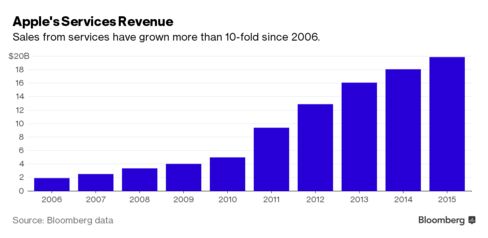
The App Store is a vital part of the Cupertino, California-based company’s business. The more software that customers download, the more likely they are to keep buying Apple’s products rather than switch to a phone or tablet made by another manufacturer. The store’s success was a key reason the iPhone and iPad became so popular with consumers and is central to Chief Executive Officer Tim Cook’s strategy of getting more sales from online services. Apple currently gets about 30 percent of each app sale, which is part of the $20 billion in services revenue the company generated last fiscal year.

The attempt to improve search is a sign that Apple knows the App Store has become harder for customers to navigate. First introduced in 2008, the store now has more than 1.5 million apps, with customers downloading more than 100 billion since its debut. App developers have for years urged the iPhone maker to add fresh discovery tools for users, arguing the crowded market makes it increasingly hard for people to discover new apps or build sustainable businesses.

Apple has taken steps to improve search in the past. In 2012, Apple acquired an app search-engine company named Chomp to help address the problem. In December, Cook changed the leadership of the App Store. He moved responsibility to Phil Schiller, Apple’s senior vice president of worldwide marketing, and away from Eddy Cue, the senior vice president for Internet, software and services, whose portfolio has expanded as Apple has built out new online services such as Apple Pay and Apple Music.


http://www.bloomberg.com/news/articles/2016-04-14/apple-said-to-pursue-new-search-features-for-crowded-app-store

Tesla Model X: When an SUV can make you vomit while out-accelerating almost every Porsche, Ferrari or Lamborghini ever made, Modena and Stuttgart have a problem.

model-x

I hate SUVs for the same reason I hate houseboats. Bad houses, bad boats. Luxury SUV’s make me sick. Is there anything more American than the idea that you can have it all, without compromise, for a price? You can’t, otherwise Escalades and Expeditions would be running in NASCAR.

Except now you can, because I just took a Tesla Model X P90D to Ojai, California, and for the first time in my life, I wanted an American car.

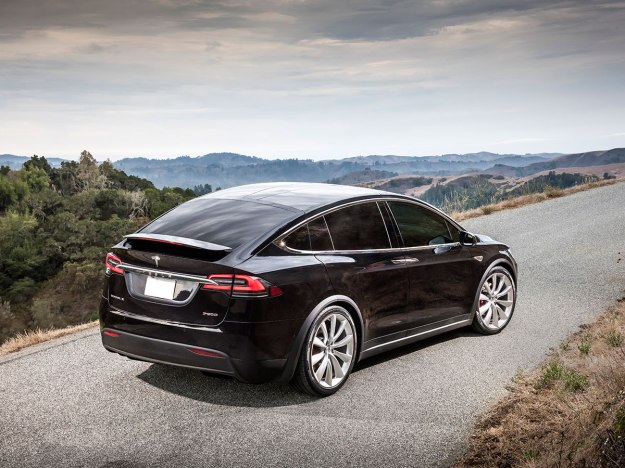
The Model X P90D represents everything I hate. It’s an awkwardly-proportioned, 5440 pound, electric, semi-autonomous, 7-seater SUV, packed full of technology that cannot possibly last, from a company critics claim cannot survive.

And I absolutely loved it.

Flaws? It’s a new company. If reliability is your concern, lease one and enjoy the most advanced, brilliant and fascinating vehicle in its class. The standard warranty is four years. Prepare for loaners.

The exterior is what it is. If you want the future now, this is what it looks like. If you’re satisfied with yesterday, you already know what’s available today. I think the X is handsome. Ish. Once behind the wheel, I didn’t care.

The Model X P90D gets about 250 miles of range. I’d like 50 more. Was it a problem? Only in my mind. As with any Tesla, you should install a high-speed charger at home. If not, prepare to meet some new friends at your nearest Tesla Supercharging station, and scratch 2-3 hours a week off your schedule.

The interior is spartan, at best. I still don’t buy into the wisdom of replacing all controls with a touchscreen, however large and gorgeous. The seats are the best I’ve ever used, and that includes the 1972 Citroen DS and SM, my personal benchmarks.

model-x-art-1

The Model X is a vehicle that makes no sense and yet perfect sense, an SUV with 716 horsepower that does 0-60 in 3.8 seconds, or 3.2 with the “Ludicrous” software upgrade.

A Ferrari Enzo does it in 3.14.

When an SUV can make you vomit while out-accelerating almost every Porsche, Ferrari or Lamborghini ever made, Modena and Stuttgart have a problem. Handling? The X is based on the same platform as the Model S sedan, which means it’s magnificent. Lower the air suspension, set the steering to Sport, and the X shrinks around you. I’ve never felt safe driving an SUV as I would a sports car, until now. Even my old Cayenne Turbo was a brick by comparison.

The Model X is the SUV someone else would have built if they had any balls.

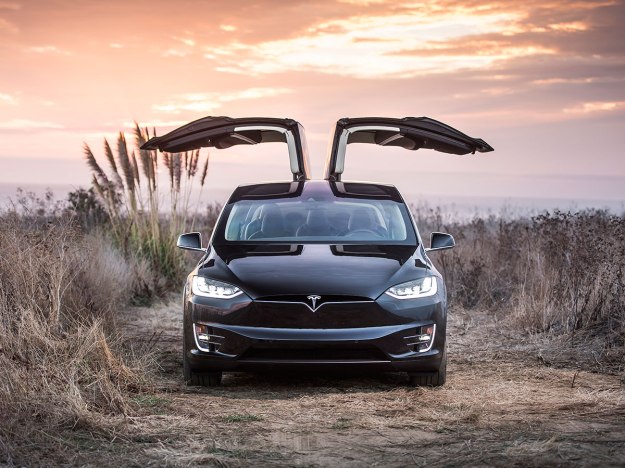
My god, those Falcon doors. Even if the X was utter junk, they could sell a year’s production based solely on these doors. Alas, you don’t need to be Nostradamus to know those will be a problem. If you lease past four years, get the extended warranty.

It has autopilot, which is what Tesla calls its Autonomous Driving suite. Light years ahead of competing systems, it is the only one today that approaches full autonomy. It’ll do 99% of the driving 90% of the time. It has a steep learning curve, but once mastered, autopilot is a revelation. Until Mercedes and Volvo come to the table, everything else is a joke.

The enormous one-piece panoramic windshield makes the cockpit feel like the first row in an IMAX theater. After driving the Model X, every other car feels like you have an eye infection. Why this windshield hasn’t been done before in the US, I don’t understand.

The Model X is the SUV someone else would have built if they had any balls. It is the world’s greatest SUV in a class of one…a class called The Future. The X is to SUV’s what the S is to luxury sedans, which is what Tesla is to the entire car industry: an icepick in the face of convention. Granted, there are stellar cars out there: the Cadillac CTS-V, the Porsche 911, the BMW M2, the Mercedes AMG-GT and the Volvo XC90, but these are jewels in the sediment of an industry left behind by true innovation. I love the Model X not merely as a vehicle, but as a profoundly American vehicle, the automotive manifestation of what this country is supposed to stand for. Ambition. Ingenuity. Confidence.

model-x-art-2

American inventor mythology is that of someone being told something couldn’t be done, and then doing it. Is there a more American story than Musk’s? The immigrant who became a tech titan, then launched a rocket company, then entered the car business?

The Model X, like Tesla the company, is an example of what happens when you apply that most American of methods to a problem. Throw out the book. Solve it from the ground up. Dealer networks suck? We’ll sell direct. Nowhere to charge? We’ll build our own network, and we’ll make it free. Autonomous Driving? Software updates? Let’s give Tesla owners access to the very best tech, and let’s wirelessly update it all the time.

By these standards, Tesla is the most American car company there is today, and the brilliant Model X is the most American car currently on the market. It is an example of what happens when a company is willing to take risks on our behalf rather than at our expense. Whatever critics may claim about Tesla’s ability to deliver, Musk’s greatest sin is his rush to sell us something truly better, which is why I deem the X worth every penny, flaws and all.

I can’t wait for the Model 3. If you believe in what really makes American great, neither should you.

http://www.thedrive.com/new-cars/2875/why-the-tesla-model-x-will-make-you-want-an-american-suv

Tesla Model X: Electric Meets Extravagant

With gull-wing doors and Lamborghini-like acceleration, Tesla’s Model X P90D Ludicrous—an electric all-wheel-drive luxury SUV—comes loaded with contradiction

WINGS OF DESIRE | The Falcon Wing Doors on the Tesla Model X P90D Ludicrous are at once thoughtfully engineered, largely impractical, and very, very cool.
WINGS OF DESIRE | The Falcon Wing Doors on the Tesla Model X P90D Ludicrous are at once thoughtfully engineered, largely impractical, and very, very cool. Photo: Tesla

LET’S ADDRESS WHAT some might consider the morally inconsistent status of an all-electric luxury SUV costing $135,400. By design, the Tesla Model X P90D Ludicrous (that’s the real name, apparently) is meant to be green and efficient—and well-to-wheel, net-to-net, EVs are way cleaner than gas-powered cars. Electric vehicles are a technical expression of our belief that the atmosphere is the blue commons, owned by all. Egalitarian in impulse, in other words.

But the Model X is also the rarest sushi of materialism, class privilege under a blister of tinted glass, a suede-lined pachinko parlor of the soul. Just remember as you pull up to Nobu in West Hollywood and supermodels come running out to the valet to take a picture with your Model X with the doors up: You’re saving the planet.

Here’s the hard part for most people: It can be both. A feature of a free society is that some have more than others; such are the risks and rewards of capitalism. This is a given. This is gravity. But everyone, no matter their lifestyles, can consume less. And, by the power of numbers, a lot of lesses add up to quite a lot.

So some Hollywood celebrity downsizes to a Gulfstream IV and now she’s Mother Earth? Well, yes. Consider it a self-imposed carbon flat tax.

F. Scott Fitzgerald said the test of a first-rate intelligence is the ability to hold two opposed ideas in mind at the same time and still function. It also seems to apply to the Model X’s famous Falcon Wing Doors, since they are simultaneously unnecessary and absolutely vital to the entire enterprise; deeply thought-through yet completely spurious; impractical and…well, more impractical. But you get used to them, because they are so cool. See above re: supermodels.

Advertisement

Or retired aerospace engineers. Or French tourists. Or the hard-core, mainlining petrolheads who kept me waiting in the parking lot at Venice Beach, Calif., while they selfied themselves, laughing madly, sitting in mid-row seats while the doors were up. When all the doors are open you can look through the Model X as if it were a picture window with a Tesla-shaped sill and sash.

Would minivan-style doors have been a more sensible technical solution to a mid-row door opening? Infinitely. You could have done the doors off the Dubonnet Xenia easier that the Model X. But the spell these doors cast—let’s call it emotional engineering—is payoff for some of the shrewdest design money ever spent.

2016 Tesla Model X P90D Ludicrous

Photo: Tesla

Price, as tested: $135,400

Powertrain: all-electric all-wheel system comprising dual three-phase, four-pole AC induction motors; liquid-cooled lithium-ion battery pack (90kWh nominal); on-board charger and supercharger enabled; permanent all-wheel drive.

Horsepower/torque: 532 hp/713 pound-feet of torque

Length/weight: 198.3 inches/5,381 pounds

Wheelbase: 116.7 inches

0-60 mph: 3.2 seconds

Towing capacity: 5,000 pounds

Cargo capacity: 77 cubic feet (total interior storage, six-seat configuration)

A bit of context: The Falcon Wing Doors came about because Tesla CEO Elon Musk liked them and wanted them, full stop. He has said he didn’t want the production car to be a dialed-back version of the concept car, which is just the sort of initiative and forward thinking that gets people cashiered from General Motors.

To aficionados, Mr. Musk’s move smacked of pride since in over a century of automotive design, from the Mercedes-Benz 300SL Gullwing to the DeLoreans to Lambos, gullwing doors have always looked cool and never really worked.

To name a few of the problems: ease of entry and exit, weather sealing and wind noise. From a safety standpoint, center-hinged overhead doors cut into the kind of rectangular geometry around a door opening that lends it rigidity.

What if it snows overnight? What if it’s raining? Where do you put the ski racks and bicycles and the Thule roof module full of hiking gear?

Who cares? Have you seen the doors open?

Most maddening was creating a dead-stable pivot point for the doors, which rise and fall slowly on the motorized breeze not like falcon wings but more like seagull wings, with a double fold. The solution required a heroic amount of costly magnesium in the car’s dorsal spine.

Mr. Musk has copped to overreach with the Model X. Maybe he tried to do too much, what with the Model X’s sensor-rich Autopilot driver aids; the dancing shuttle-craft seats; the HEPA air filtration system with the “Bioweapon Defense Mode” setting; the panoramic windscreen, a stunning soap bubble of a canopy over your head. Dude, you’re forgiven. But then again, I’m not a stockholder.

Practicality for fascination. This is the card Mr. Musk continues to play to his advantage. This is the part of the Tesla business plan that might as well have been quoted out of the Old Testament. The rich will want the riches.

2016 Tesla Model X P90D Ludicrous
2016 Tesla Model X P90D Ludicrous Photo: Tesla

Not to be confused with the Model 3 compact sedan that debuted so boffo this week, the Model X is a full-size SUV with dual electric motors front and rear, providing all-wheel drive. Although its body structure is almost entirely aluminum and magnesium, our flagship test car (P90D Ludicrous) was quoting a massive 5,381 pounds, most of it in the floor-mounted battery pack. Four-corner air suspension with five ride-height settings, from off-road to highway, is standard.

The Model X is a luxury family mover, with five-, six- or seven-passenger seating options, with a rear trunk and a frunk (a front trunk). The deeply tinted glass canopy creates a pretty magical space, although (another old lesson, relearned) the California sun is too bright through the roof glass. I understand additional tinting is available.

The front and mid-row seats are mounted on powered pedestals that glide forward as if to a Strauss waltz, easing access to the third row’s two cozy bucket seats. The seats’ pedestal mountings allow passengers more foot room than otherwise.

All the doors open electrically, which can take some getting used to. If you get in and put your right foot on the brake, the driver’s door will swing closed, even if you have not yet retrieved your left leg. The door will gently gnaw on it until you take your foot off the brake.

The price for the “standard” Model X 70S with a 70kWh battery is $80,000, which is about $5,000 more than a base Model S—a fact that is academic because Tesla won’t be building any base Model X’s for some time.

Elon Musk has copped to overreach with the Model X. Dude, you’re forgiven.

The company will instead be filling orders for the flagship P90D (“P” for performance). These will come with a face-flapping 713 pound-feet of insta-torque from two huge four-pole AC induction motors ($35,000) and the famous “Ludicrous” Drive Mode ($10,000), which essentially permits the battery to violently eject electrons in pursuit of maximum acceleration. In Ludicrous Mode, the Model X P90D max output is 532 hp.

That’s the version that Tesla provided me, and I want them to know, I’m on to their game. It is very hard to find fault with a six-seat SUV that accelerates like a Formula Atlantic open-wheeler. Jeebus. Stamp the accelerator and it goes off like a sprung mousetrap. Tesla estimates 0-60 mph in a Lambo-like 3.2 seconds. While doing so, the Model X quietly withdraws everything from your pockets and scatters it conveniently under the back seats.

And then, between 50 and 100 mph, it’s goodbye, Charlie. The P90D Ludicrous operates at an entirely different frame rate than just about anything on the street in L.A. It takes a sustainably harvested baseball bat to Panzer wagons like Porsche Cayenne Turbo and Range Rover Sport SVR.

Around the City of Angels, the sweet, effortless blurt of our EV hot-rod tempted me to do, well, questionable things. No yellow light ever turns red for the Model X P90D. No hole that opens up in traffic is ever too small or far away.

Falcon wings? Maybe Icarus. But if the Model X flies too close to the sun, there’s always more window tint.

http://www.wsj.com/articles/tesla-model-x-electric-meets-extravagant-1460046720

Fashion Ready for the AI Revolution?

If artificial intelligence has its way, discounting could disappear, thanks to software that tells retailers exactly what and how many products to buy, and when to put them on sale to sell them at full price. Online shopping could become a conversation, where the shopper describes the dress of their dreams, and, in seconds, an AI-powered search engine tracks down the closest match. Designers, merchandisers and buyers could all work alongside AI, to predict what customers want to wear, before they even know themselves.

In the last few years, a trifecta of cheap, ubiquitous, powerful computing; big data; and the development of deep learning have triggered a revolution in artificial intelligence. The computing devices that now fill our everyday lives generate large data sets, which “deep learning” algorithms analyse to find trends, make predictions and perform specific tasks, such as identifying specific objects in an image. The more data presented to the algorithm, the more it “learns” to do a task effectively.

Earlier this year, in a blog post titled What’s Next in Computing?, Chris Dixon, partner at the venture capital firm Andreessen Horowitz, wrote, “Many of the papers, data sets, and software tools related to deep learning have been open sourced. This has had a democratising effect, allowing individuals and small organisations to build powerful applications.” As a result, AI might “finally be entering a golden age,” he wrote.

No area of life or business will be insulated from AI, in the same way that no part of society hasn’t been touched by the Internet.

These developments have provoked an AI arms race. Companies like Google and Apple are snapping up AI start-ups, and in the last year, milestones in the field have arrived faster than previously expected, such as last month, when Google’s AlphaGo program beat a human champion at Go, a strategy board game considered more complex than chess.

Already, big businesses are using AI — Kensho, a data-crunching AI software, is automating finance jobs at Goldman Sachs, while Forbes uses AI to automate basic financial news stories. IBM’s Watson — a set of algorithms and software that is the company’s core AI product — is available as a cloud service, enabling research teams to rapidly analyse large amounts of data, such as millions of scientific papers, to test hypotheses and discover patterns. By 2020, the market for machine learning applications will reach $40 billion, according to International Data Corporation, a marketing firm specialising in information technology.

“No area of life or business will be insulated from AI, in the same way that there’s no part of society that hasn’t been touched by computers or the Internet,” Kenneth Cukier, data editor at The Economist and author of books including Big Data: A Revolution that Will Transform How We Work, Live and Think, told BoF. “Today it seems shocking because it’s new. But in time, AI will fade into the background as just the way things are done.”

By presenting a cheaper, faster way of doing many tasks that companies currently employ humans to do, many predict AI will radically alter industries from transportation, to healthcare, to finance. In fashion, like in other industries, driverless trucks will likely reduce companies’ logistics costs, or software like that used by Forbes could be used to write formulaic text, such as product descriptions on e-commerce sites.

But for fashion, some of the biggest opportunities are in aligning supply and demand, scaling personal customer service, and assisting designers.

Aligning supply and demand

Currently, fashion brands and retailers work with a limited amount of data, to predict what products to order and when to discount or replenish them. If they predict wrong, the result is loss of income due to mark-downs, waste and popular items selling out. By analysing large amounts of data — say, the browsing and shopping history of every single one of a fashion brand’s online customers, as well as those of its competitors — AI can tell a retailer how to align product drops to match demand, and even how to display products in a store to sell as many as possible.

AI’s ability to make predictions like these has particular implications for a trend-driven industry like fashion. Today, the fashion market is visible online: an AI can crawl e-commerce sites to see which products are selling; it can analyse consumer data to learn which colours or materials customers in a specific country — or even city — are buying; and it can scoop up swathes of information from social media to identify trends and microtrends. This data — which was not previously available — could help brands be first to market with styles that are likely to become mainstream trends.

Edited, a data analytics company specialising in fashion, is already doing this. Edited’s software has “learned” to recognise apparel products in images, and natural language processing software, which can classify these products. Edited let this loose on a bank of data on 60 million fashion products, collected from retailers and brands in over 30 countries, in over 35 languages: the result is a searchable database of organised, structured information on each of these products.

“We can process the data in seconds. No one could ever do it manually,” says Geoff Watts, chief executive officer of the company. Brands that work with Edited “usually start by analysing their competitors’ historical pricing and assortment data to make more strategic decisions, ultimately leading to better sales, stronger inventory management and less discounting,” he says.

Ganesh Subramanian, former chief operating officer of e-commerce giant Myntra, and now co-founder of Stylumia, an AI-powered tool for fashion professionals, agrees that AI could stop fashion companies making important decisions in the dark. “A trend is nothing but a movement which has a beginning and a gradual adoption,” he says. Like Edited, Stylumia uses AI to make sense of a sea of data, from videos, e-commerce sites, social media, etc. “We can not only spot trends, but also come out with what is the relevant timing for [brands and retailers] to adopt,” he says.

Scaling personal service

In the days when luxury goods could only be bought in a few physical boutiques, one-to-one customer service was at the core of the industry. The Internet changed that dramatically, giving customers a seamless — but often impersonal — way to trawl thousands of products and purchase without exchanging a word. Could AI deliver that original one-to-one service at scale?

One way to do this is through chat bots, which can exchange messages, stories and information with humans. Already, Microsoft’s XiaoIce chatbot is being used by 40 million people on Chinese microblogging platform, Weibo. (Not all attempts to have bots interact with humans have been so successful: when Micosoft unleashed Tay, another chat bot, on Twitter last month, the bot “learned” from other users and rapidly began tweeting offensive messages.)

Machine learning can also enable brands to finely personalise their offerings to each market, or even, each individual customer. Thread, an online personal styling service, combines human stylists with machine learning algorithms. The AI crunches data like what human stylists thinks would suit an individual user, where they live and what the weather is like there, as well as the user’s ratings of products on the app, which items they click, and how customers with similar purchasing habits responded to product recommendations. The AI then trawls through 200,000 fashion products and makes a judgement on what products to recommend.

“Humans are limited in many ways,” says Thread founder and chief executive officer, Kieran O’Neill. Not only can AI process a vast amount of data — it can also “remember your preferences in a way that it’s just not practical for humans to do. A computer remembers everything,” he says. Michele Goetz, principal analyst covering cognitive computing and data at Forrester, agrees: “That’s where I think AI shines, being able to scale insight.”

IBM’s Watson — which is working with over 500 partners in industries including retail — has partnered with The North Face to offer “guided shopping” online. The AI asks shoppers questions on factors such as gender, time of year and technical product details, to deliver tailored recommendations. „Online shopping can be overwhelming. There are so many choices and products from so many different sources,” says Keith Mercier, ecosystem manager of Watson. AI, he says, “can help retailers make sense of massive amounts of unstructured data to improve and personalise the online shopping experience.“

Image recognition apps such as Snap Fashion and ASAP54 are also harnessing AI to build search engines for fashion. In theory, a user can snap a picture of someone on the street wearing a dress they like, or even something as abstract as a painting, and an image-recognition search engine will search a huge database of shoppable products and serve up similar items. When BoF tested these products, the search results were far from perfect, but Kieran O’Neill bets that “in the next three years it will become pretty good.”

AI-assisted Design

„There are AI systems today that compose music, write stories, and create artwork that no one can tell is machine-generated. So fashion design is surely not beyond AI’s capabilities,” says Pedro Domingos, author of The Master Algorithm, which predicts the revolutionary impact of machine learning, “What will likely happen, however, is not that AI will completely replace designers, but will become an indispensable tool for them.“

In the same way that the work of architects like Frank Gehry and Zaha Hadid relies on computer modelling, “Fashion designers armed with AIs will be similarly able to come up with radical new ideas: AI will amplify their creativity rather than replace it,“ reasons Domingos.

“AI will absolutely challenge and replace designers,” counters Kenneth Cukier. “Let’s get real — lots of design is trial and error or boring, repetitive work. AI can help with both by making more accurate predictions of what designs will work and taking over some of the repetitive tasks.”

Approaching AI now

Some believe fashion brands should strike early and invest. “They certainly need to have in-house AI teams, like other companies, whether by building them from scratch or by acquiring start-ups,” advises Domingos. “Those who wait and see risk falling behind, particularly in a fast-moving industry like fashion, where consumers are the main drivers and tastes are fickle.”

“The old world of personal touch is not necessarily going away, but it’s not the way you’re going to grow your brand even from a luxury standpoint,” argues Michele Forrester. When fashion brands thing about AI, she says, they need to consider the next generation of luxury customers, who were born into a world of social media, and handed at birth the ability to buy anything they want, from anywhere in the world. “They don’t have the patience for a one-on-one relationship,” she says.

Indeed, the next generation of big spenders is already using AI: GPS navigation shapes their driving habits, while algorithm-driven personalised recommendations from Spotify and Netflix influence the songs and shows they consume. “If you don’t have it, you are not aligned with the experiences they’re used to,” warns Goetz.

Others are more cautious. “The top tier brands should resist the temptation to buy into the AI world right now,” says Cukier. “Their business is being good at fashion, not smart at technology… Right now, the most promising technologies are still in the lab or in field trials, like self-driving cars. Big, smart, non-technology companies can afford to wait.”

Others agree that, for the moment, partnering with third party AI specialists is the way forward. “The smartest thing a business can do, is partner with a fashion-focused tech company with AI at its core,” says Geoff Watts of Edited. “Building AI teams from scratch, or acquiring AI start-ups and retrofitting them to have a retail focus, requires a substantial investment of time and money.”

Kieran O’Neill of Thread adds that, rather than dive straight in to AI investment, brands should build a strategy around AI, and work out on what the lowest hanging fruits are for their business. Some of the brands using Thread — such as Burberry, Jigsaw and Topman — signed up to sell on the platform, not because they needed the sales, but “because they really want to be close to the AI stuff we’re doing,” he says.

“Every company in every industry should be paying very close attention to AI,” advises Martin Ford. “There is no limit to how far it can go.”

http://www.businessoffashion.com/articles/fashion-tech/is-fashion-ready-for-the-ai-revolution