Chris Urmson – Leader of Google Self Driving Car Project on TED

0:11 So in 1885, Karl Benz invented the automobile. Later that year, he took it out for the first public test drive, and — true story — crashed into a wall. For the last 130 years, we’ve been working around that least reliable part of the car, the driver. We’ve made the car stronger. We’ve added seat belts, we’ve added air bags, and in the last decade, we’ve actually started trying to make the car smarter to fix that bug, the driver.

0:40 Now, today I’m going to talk to you a little bit about the difference between patching around the problem with driver assistance systems and actually having fully self-driving cars and what they can do for the world. I’m also going to talk to you a little bit about our car and allow you to see how it sees the world and how it reacts and what it does, but first I’m going to talk a little bit about the problem. And it’s a big problem: 1.2 million people are killed on the world’s roads every year. In America alone, 33,000 people are killed each year. To put that in perspective, that’s the same as a 737 falling out of the sky every working day. It’s kind of unbelievable. Cars are sold to us like this, but really, this is what driving’s like. Right? It’s not sunny, it’s rainy, and you want to do anything other than drive. And the reason why is this: Traffic is getting worse. In America, between 1990 and 2010, the vehicle miles traveled increased by 38 percent. We grew by six percent of roads, so it’s not in your brains. Traffic really is substantially worse than it was not very long ago.

1:49 And all of this has a very human cost. So if you take the average commute time in America, which is about 50 minutes, you multiply that by the 120 million workers we have, that turns out to be about six billion minutes wasted in commuting every day. Now, that’s a big number, so let’s put it in perspective. You take that six billion minutes and you divide it by the average life expectancy of a person, that turns out to be 162 lifetimes spent every day, wasted, just getting from A to B. It’s unbelievable. And then, there are those of us who don’t have the privilege of sitting in traffic. So this is Steve. He’s an incredibly capable guy, but he just happens to be blind, and that means instead of a 30-minute drive to work in the morning, it’s a two-hour ordeal of piecing together bits of public transit or asking friends and family for a ride. He doesn’t have that same freedom that you and I have to get around. We should do something about that.

2:48 Now, conventional wisdom would say that we’ll just take these driver assistance systems and we’ll kind of push them and incrementally improve them, and over time, they’ll turn into self-driving cars. Well, I’m here to tell you that’s like me saying that if I work really hard at jumping, one day I’ll be able to fly. We actually need to do something a little different. And so I’m going to talk to you about three different ways that self-driving systems are different than driver assistance systems. And I’m going to start with some of our own experience.

3:17 So back in 2013, we had the first test of a self-driving car where we let regular people use it. Well, almost regular — they were 100 Googlers, but they weren’t working on the project. And we gave them the car and we allowed them to use it in their daily lives. But unlike a real self-driving car, this one had a big asterisk with it: They had to pay attention, because this was an experimental vehicle. We tested it a lot, but it could still fail. And so we gave them two hours of training, we put them in the car, we let them use it, and what we heard back was something awesome, as someone trying to bring a product into the world. Every one of them told us they loved it. In fact, we had a Porsche driver who came in and told us on the first day, „This is completely stupid. What are we thinking?“ But at the end of it, he said, „Not only should I have it, everyone else should have it, because people are terrible drivers.“ So this was music to our ears, but then we started to look at what the people inside the car were doing, and this was eye-opening. Now, my favorite story is this gentleman who looks down at his phone and realizes the battery is low, so he turns around like this in the car and digs around in his backpack, pulls out his laptop, puts it on the seat, goes in the back again, digs around, pulls out the charging cable for his phone, futzes around, puts it into the laptop, puts it on the phone. Sure enough, the phone is charging. All the time he’s been doing 65 miles per hour down the freeway. Right? Unbelievable. So we thought about this and we said, it’s kind of obvious, right? The better the technology gets, the less reliable the driver is going to get. So by just making the cars incrementally smarter, we’re probably not going to see the wins we really need.

4:59 Let me talk about something a little technical for a moment here. So we’re looking at this graph, and along the bottom is how often does the car apply the brakes when it shouldn’t. You can ignore most of that axis, because if you’re driving around town, and the car starts stopping randomly, you’re never going to buy that car. And the vertical axis is how often the car is going to apply the brakes when it’s supposed to to help you avoid an accident. Now, if we look at the bottom left corner here, this is your classic car. It doesn’t apply the brakes for you, it doesn’t do anything goofy, but it also doesn’t get you out of an accident. Now, if we want to bring a driver assistance system into a car, say with collision mitigation braking, we’re going to put some package of technology on there, and that’s this curve, and it’s going to have some operating properties, but it’s never going to avoid all of the accidents, because it doesn’t have that capability. But we’ll pick some place along the curve here, and maybe it avoids half of accidents that the human driver misses, and that’s amazing, right? We just reduced accidents on our roads by a factor of two. There are now 17,000 less people dying every year in America.

6:01 But if we want a self-driving car, we need a technology curve that looks like this. We’re going to have to put more sensors in the vehicle, and we’ll pick some operating point up here where it basically never gets into a crash. They’ll happen, but very low frequency. Now you and I could look at this and we could argue about whether it’s incremental, and I could say something like „80-20 rule,“ and it’s really hard to move up to that new curve. But let’s look at it from a different direction for a moment. So let’s look at how often the technology has to do the right thing. And so this green dot up here is a driver assistance system. It turns out that human drivers make mistakes that lead to traffic accidents about once every 100,000 miles in America. In contrast, a self-driving system is probably making decisions about 10 times per second, so order of magnitude, that’s about 1,000 times per mile. So if you compare the distance between these two, it’s about 10 to the eighth, right? Eight orders of magnitude. That’s like comparing how fast I run to the speed of light. It doesn’t matter how hard I train, I’m never actually going to get there. So there’s a pretty big gap there.

7:10 And then finally, there’s how the system can handle uncertainty. So this pedestrian here might be stepping into the road, might not be. I can’t tell, nor can any of our algorithms, but in the case of a driver assistance system, that means it can’t take action, because again, if it presses the brakes unexpectedly, that’s completely unacceptable. Whereas a self-driving system can look at that pedestrian and say, I don’t know what they’re about to do, slow down, take a better look, and then react appropriately after that.

7:38 So it can be much safer than a driver assistance system can ever be. So that’s enough about the differences between the two. Let’s spend some time talking about how the car sees the world.

7:48 So this is our vehicle. It starts by understanding where it is in the world, by taking a map and its sensor data and aligning the two, and then we layer on top of that what it sees in the moment. So here, all the purple boxes you can see are other vehicles on the road, and the red thing on the side over there is a cyclist, and up in the distance, if you look really closely, you can see some cones. Then we know where the car is in the moment, but we have to do better than that: we have to predict what’s going to happen. So here the pickup truck in top right is about to make a left lane change because the road in front of it is closed, so it needs to get out of the way. Knowing that one pickup truck is great, but we really need to know what everybody’s thinking, so it becomes quite a complicated problem. And then given that, we can figure out how the car should respond in the moment, so what trajectory it should follow, how quickly it should slow down or speed up. And then that all turns into just following a path: turning the steering wheel left or right, pressing the brake or gas. It’s really just two numbers at the end of the day. So how hard can it really be?

8:49 Back when we started in 2009, this is what our system looked like. So you can see our car in the middle and the other boxes on the road, driving down the highway. The car needs to understand where it is and roughly where the other vehicles are. It’s really a geometric understanding of the world. Once we started driving on neighborhood and city streets, the problem becomes a whole new level of difficulty. You see pedestrians crossing in front of us, cars crossing in front of us, going every which way, the traffic lights, crosswalks. It’s an incredibly complicated problem by comparison. And then once you have that problem solved, the vehicle has to be able to deal with construction. So here are the cones on the left forcing it to drive to the right, but not just construction in isolation, of course. It has to deal with other people moving through that construction zone as well. And of course, if anyone’s breaking the rules, the police are there and the car has to understand that that flashing light on the top of the car means that it’s not just a car, it’s actually a police officer. Similarly, the orange box on the side here, it’s a school bus, and we have to treat that differently as well.

9:49 When we’re out on the road, other people have expectations: So, when a cyclist puts up their arm, it means they’re expecting the car to yield to them and make room for them to make a lane change. And when a police officer stood in the road, our vehicle should understand that this means stop, and when they signal to go, we should continue.

10:08 Now, the way we accomplish this is by sharing data between the vehicles. The first, most crude model of this is when one vehicle sees a construction zone, having another know about it so it can be in the correct lane to avoid some of the difficulty. But we actually have a much deeper understanding of this. We could take all of the data that the cars have seen over time, the hundreds of thousands of pedestrians, cyclists, and vehicles that have been out there and understand what they look like and use that to infer what other vehicles should look like and other pedestrians should look like. And then, even more importantly, we could take from that a model of how we expect them to move through the world. So here the yellow box is a pedestrian crossing in front of us. Here the blue box is a cyclist and we anticipate that they’re going to nudge out and around the car to the right. Here there’s a cyclist coming down the road and we know they’re going to continue to drive down the shape of the road. Here somebody makes a right turn, and in a moment here, somebody’s going to make a U-turn in front of us, and we can anticipate that behavior and respond safely.

11:04 Now, that’s all well and good for things that we’ve seen, but of course, you encounter lots of things that you haven’t seen in the world before. And so just a couple of months ago, our vehicles were driving through Mountain View, and this is what we encountered. This is a woman in an electric wheelchair chasing a duck in circles on the road. (Laughter) Now it turns out, there is nowhere in the DMV handbook that tells you how to deal with that, but our vehicles were able to encounter that, slow down, and drive safely. Now, we don’t have to deal with just ducks. Watch this bird fly across in front of us. The car reacts to that. Here we’re dealing with a cyclist that you would never expect to see anywhere other than Mountain View. And of course, we have to deal with drivers, even the very small ones. Watch to the right as someone jumps out of this truck at us. And now, watch the left as the car with the green box decides he needs to make a right turn at the last possible moment. Here, as we make a lane change, the car to our left decides it wants to as well. And here, we watch a car blow through a red light and yield to it. And similarly, here, a cyclist blowing through that light as well. And of course, the vehicle responds safely. And of course, we have people who do I don’t know what sometimes on the road, like this guy pulling out between two self-driving cars. You have to ask, „What are you thinking?“ (Laughter)

12:27 Now, I just fire-hosed you with a lot of stuff there, so I’m going to break one of these down pretty quickly. So what we’re looking at is the scene with the cyclist again, and you might notice in the bottom, we can’t actually see the cyclist yet, but the car can: it’s that little blue box up there, and that comes from the laser data. And that’s not actually really easy to understand, so what I’m going to do is I’m going to turn that laser data and look at it, and if you’re really good at looking at laser data, you can see a few dots on the curve there, right there, and that blue box is that cyclist. Now as our light is red, the cyclist’s light has turned yellow already, and if you squint, you can see that in the imagery. But the cyclist, we see, is going to proceed through the intersection. Our light has now turned green, his is solidly red, and we now anticipate that this bike is going to come all the way across. Unfortunately the other drivers next to us were not paying as much attention. They started to pull forward, and fortunately for everyone, this cyclists reacts, avoids, and makes it through the intersection. And off we go.

13:25 Now, as you can see, we’ve made some pretty exciting progress, and at this point we’re pretty convinced this technology is going to come to market. We do three million miles of testing in our simulators every single day, so you can imagine the experience that our vehicles have. We are looking forward to having this technology on the road, and we think the right path is to go through the self-driving rather than driver assistance approach because the urgency is so large. In the time I have given this talk today, 34 people have died on America’s roads.

13:55 How soon can we bring it out? Well, it’s hard to say because it’s a really complicated problem, but these are my two boys. My oldest son is 11, and that means in four and a half years, he’s going to be able to get his driver’s license. My team and I are committed to making sure that doesn’t happen.

14:13 Thank you.

14:15 (Laughter) (Applause) Chris Anderson: Chris, I’ve got a question for you.

14:22 Chris Urmson: Sure.

14:25 CA: So certainly, the mind of your cars is pretty mind-boggling. On this debate between driver-assisted and fully driverless — I mean, there’s a real debate going on out there right now. So some of the companies, for example, Tesla, are going the driver-assisted route. What you’re saying is that that’s kind of going to be a dead end because you can’t just keep improving that route and get to fully driverless at some point, and then a driver is going to say, „This feels safe,“ and climb into the back, and something ugly will happen.

14:58 CU: Right. No, that’s exactly right, and it’s not to say that the driver assistance systems aren’t going to be incredibly valuable. They can save a lot of lives in the interim, but to see the transformative opportunity to help someone like Steve get around, to really get to the end case in safety, to have the opportunity to change our cities and move parking out and get rid of these urban craters we call parking lots, it’s the only way to go.

15:20 CA: We will be tracking your progress with huge interest. Thanks so much, Chris. CU: Thank you.
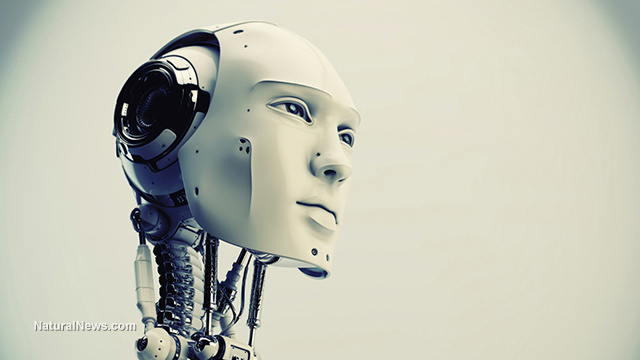
Humans to become ‚pets‘ of AI robots, says Apple co-founder Wozniak

If you needed just one more reason to trash your iPhone, this is it. Apple co-founder Steve Wozniak recently told a crowd of techies in Austin, Texas, that the future of humanity will predicate on artificially-intelligent (AI) robots keeping people as „pets“ – and Wozniak says he’s actually looking forward to this grim, robot-dominated future.

Building upon Apple’s „Siri“ concept, which is AI in its infancy, Wozniak’s vision for 100 years from today is that humans will be literally owned by AI robots, much like how humans currently own dogs or cats. Robots will be in charge, in other words, and humans will be their slaves. And all of this will somehow be „really good for humans,“ in Wozniak’s view.

Speaking at the Freescale Technology Forum 2015, Wozniak told eager listeners that putting robots in charge is a good thing because, by that point (100 years from now), they’ll have the capacity to become good stewards of nature, „and humans are part of nature,“ he says. Expressing comfort by this thought, Wozniak stated that he „got over [his] fear“ of becoming a robot slave.

„Computers are going to take over from humans, no question,“ Wozniak told the Australian Financial Review during a recent interview, affirming what many others in the tech industry, including Tesla CEO Elon Musk, believe will commence once AI technology really gets off the ground.

Since Wozniak treats his own dogs „really nice,“ he says he isn’t concerned about AI robots taking over

Echoing the concerns of Musk, Microsoft founder Bill Gates, physicist Stephen Hawking, and others, Wozniak does acknowledge some of the risks involved with developing AI technologies. But these risks aren’t necessarily a deal breaker because AI robots, in his view, will probably treat humans kindly just like most people treat their own pets.

„Will we be the gods? Will we be the family pets? Or will we be ants that get stepped on? I don’t know about that,“ he stated. „But when I got that thinking in my head about if I’m going to be treated in the future as a pet to these smart machines … well I’m going to treat my own pet dog really nice.“

Well, phew! It’s all settled then. Because Wozniak happens to be kind to his own dog, it’s perfectly fine, in his view, to unleash an army of advanced robots that are „smarter“ than humans and capable of destroying them because maybe they’ll choose instead to be kind to humans.

Wozniak: Let’s just unleash AI robots in order to find out how they’ll treat humans

Robot-Cyborg

It’s a lot like the infamously absurd words of House Minority leader Nancy Pelosi, who stated prior to voting for Obamacare that „we have to pass the bill so that you can find out what is in it.“ Concerning AI robots, Wozniak’s message is essentially the same: We just have to create them first in order to find out what they’ll do to humanity.

But if a recent „Google Brain“ study is any indicator of how AI robots think, humans would be lucky to be treated as kindly as a family pet. An experimental AI robot „interviewed“ by Google researchers revealed that such technology is both amoral and hostile to humans. When asked „what is immoral?“ the robot responded, „the fact that you have a child,“ expressing enmity against human reproduction.

You can read the full paper here: Neural Conversational Model
„Everyone on the planet has much to fear from the unregulated development of super-intelligent machines,“ stated James Barrat, a documentary filmmaker and author of the book Our Final Invention: Artificial Intelligence and the End of the Human Era, during a recent interview with Smithsonian. „They will be machines that kill, unsupervised by humans.“

Source: http://www.naturalnews.com/050390_steve_wozniak_ai_robots_human_pets.html

Windows Phone is as good as dead


Windows-phone-kill

Image: Mashable composite, Microsoft

Analysis

With Wednesday’s layoffs, Microsoft, saddled with the losing mobile hand that is Windows Phone, has essentially folded. The bulk of the 7,800 people let go are from the company’s phone division, a tacit admission that its big plans for Windows Phone haven’t exactly worked out.

The company’s not leaving the casino, though: Windows Phone, the platform, isn’t going anywhere, even as Microsoft greatly scales back its hardware ambitions. The company has labored for years to create both a full-featured mobile operating system as well as an ecosystem of devices — PC, phone, tablet and more — that all use the same code base. It would be silly to just abandon its mobile platform, especially as people spend more and more of their time on smartphones.

In fact, if you’re not one of the 7,800 people losing their jobs, there’s actually a lot to like in Satya Nadella’s explanation: Microsoft will continue to build Windows Lumia handsets, but only three types: flagships, business-focused enterprise phones and low-end budget devices.


They’re retreating from being a mainstream player

They’re retreating from being a mainstream player,“ says Martin Reynolds, vice president at Gartner Research. „They’ll continue to bring products to market, but not particularly aggressively.“The move represents a clear refocusing, putting Microsoft’s phones in the arenas where they might actually score a few punches before Android and the iPhone walk away with all the market share. It also rightly ditches the current strategy of offering several different Lumias, each with region-specific models, which led to a muddled brand and a confusing market strategy message to consumers.

Retreating forward

Even without the model shake-up, trimming the fat on the handset business Microsoft acquired from Nokia was probably inevitable. With a few exceptions (hello, curved screens), smartphone design and technology have more or less plateaued — it’s no coincidence that both iOS and Android have essentially taken a „bye“ in 2015, with few feature updates. Big hardware teams aren’t really needed to build good smartphones in 2015, as illustrated by upstart Chinese companies like Xiaomi and OnePlus.

„Things have changed in the last few years,“ says Reynolds. „You don’t have [to be a] big company to run a small phone business. They certainly don’t need the design teams and manufacturing people going forward.“

Still, there are new Lumias — and certainly a new flagship — coming soon. A couple of months after Windows 10 debuts, Windows 10 for phones will arrive, and, as Nadella suggested in his letter to employees, those phones will emphasize the big differentiators in the Windows ecosystem. Commentators like Daniel Rubino at Windows Central almost have you believing that a leaner-and-meaner Microsoft mobile division will be poised to succeed, albeit with lowered expectations, once Windows 10 is fully formed.

Almost.

That point of view overlooks the crux of the matter: Windows Phone’s fate was never in the hands of Microsoft. What the company does in mobile at this point is virtually irrelevant. It designed a beautiful (and influential!) user interface, offered sweeter deals to developers than competitors, and helped engineer some of the most sophisticated cameras ever seen on mobile.

None of it mattered. Developers and consumers didn’t respond, locked in a deadly catch-22: If the apps weren’t there, consumers wouldn’t buy the phones; if there weren’t enough people on the platform, developers wouldn’t bother creating apps.

„Windows Phone is not even a blip on [developers‘] radar,“ says Richard Hay, a longtime Microsoft observer and contributor to SuperSite for Windows. „They’re not going to start flocking to it, because what’s the draw? You’re still going to have the app gap.“

The „app gap“ ultimately dug Windows Phone’s grave, and even though it’s only got one foot in it, today’s news will be widely perceived as an admission that the other will soon follow. If there were other Windows Phone manufacturers, it might be a different story, but Microsoft makes 97% of the Windows Phones being sold, according to Ad Duplex. If they’re scaling back, who’s going to step up?

Windows 10 and mobile

If there’s a way Microsoft can resuscitate Windows Phone, it’s with Windows 10. Its ecosystem strategy doesn’t depend on it, but with the new OS, Windows Phones will be more connected to the platform than before, sharing all the same code and development tools.

„The universal Windows platform helps,“ says Hay. „Will that persuade developers to develop for handsets and smaller tablets? Is it enough to come back from the edge? i’m just not sure it is.“

That means Windows developers will be able to create Windows Phone versions of their apps with minimal effort, and some of Windows Phone’s key differentiators, like Cortana, will get a chance to shine on PCs, which could ultimately have a positive impact on the platform.

Finally, there’s Continuum — the feature that allows Windows apps to adapt from PC to tablet to phone seamlessly and lets a Windows Phone theoretically act as your PC when it’s plugged into an external screen. And although there will always be performance concerns when trying to do PC with a mobile processor, it’s a pretty cool trick.

Continuum, though, has only the slimmest chance of being the ace in the hole that wins the day — any day — for Windows Phone. Even for enterprise customers, it’s hard to picture any of Windows 10’s differentiators winning over users, especially now that we’re firmly in a BYOD and single-device world.


Even if Continuum ends up being an X factor, who’s left to give Windows Phones a chance?

Even if Continuum ends up being an X factor, who’s left to give Windows Phones a chance? Microsoft is certainly hoping today’s belt-tightening and the Windows 10 launch will lead to some kind of success in mobile, albeit on redefined terms. But it’s not acting in a vacuum. Today’s retreat — or rather the perception of it — may have sealed Windows Phone’s fate. Who would believe the recommendation of a Windows handset after today?Without those new users, developers will have even less incentive to create apps. And without those experiences, Windows Phone will be even more of shell than it is now. What then?

It’s admirable that Microsoft is taking painful steps to preserve what it’s built, but it’s hard not to see its Windows Phone restructuring as delaying the inevitable. Yes, by reducing its ambitions, it’s no longer losing on big bets. But in mobile, there really isn’t a low-stakes table.

Source: http://mashable.com/2015/07/08/windows-phone-dead/

Drones for Maintenance

One of the drones used in Nokia’s network testing. Image: Nokia

Nokia has showed off how it plans to use drones to replace some of the inspection and maintenance work on cell towers which is currently done by human technicians.

Amazon hopes drones will one day be used to bring packages to Prime customers, free from the constraints of road traffic and costly human delivery drivers. In the same vein, postal services in France and Switzerland have launched drone trials to see whether the unmanned aerial vehicles could be used to deliver the post in the next five years.

Now Nokia is examining whether it should require human technicians to climb cell towers to inspect them when a drone can do the job faster and without the risk of falling.

For a recent trial of the drones, Nokia teamed up with operator du in the United Arab Emirates. While inspecting the towers, the drones carried smartphones to help with radio planning and line of sight testing between radio towers.

The proof of concept was conducted in the contained environment of the Dubai International Stadium, a sports stadium that seats 25,000 people.

According to Nokia, its telco drones offered a number of advantages over humans, including covering manual walk tests faster than humans. Thanks to a network testing app installed on the smartphones which the drones carried, they were able to automatically send test data for processing at Nokia’s global delivery centre.

The drones could be used to cut down the frequency of technicians climbing up and down a telecoms tower, which Nokia says can be very dangerous in bad weather conditions. In addition, with a single passover the drones could generate a panoramic view of the lattice tower and offer the potential to remotely monitor installations.

The drones were useful for helping engineers design the network, and detecting if trees interfered with a frequency being used, determining power requirements, and latency simulation.

Nokia and its partners employed Secutronic INSPIRE1 drones for network optimisation at the stadium and MICRODRONES d4-1000 models for tower inspection, line of sight testing, and radio site planning.

Nokia isn’t the first to think of drones for network maintenance. Fluke Networks last year launched a drone edition of its Wireless Work Advisor with a focus on safety and efficiency.

Source: http://www.zdnet.com/article/nokia-puts-telco-drones-to-work-inspecting-cell-towers/

Facts you need to know about Greece’s financial meltdown

Greece said it will close its banks on Monday after a wild weekend in which worried Greeks lined up at ATMs to withdraw their savings, and European banks said they would not extend the country’s economic bailout past Tuesday.

At stake over the next few days are two major things: the survival of Greece’s economy, which is on the edge of a meltdown if its bailout ends, and Greece’s presence in the European Union, which is pushing the country to accept more stringent financial policies if it wants to stay in the group.

The main questions are: Will Greece default on its debt, and if it does, will it be forced to leave the euro?

Here are the five things to know about the tense and complicated situation.


Screen Shot 2015-06-28 at 9.59.14 AM

Greeks lining up to withdraw their savings in Thessaloniki, Greece, on Saturday.

Image: Giannis Papanikos/Associated Press

1. The problem is Greece’s refusal to let the European Union tell it what to do

Here is the impasse: Greece has been surviving on $274 billion through two bailouts since 2010. The money keeping Greece afloat has come from three international sources known as the „Troika“: the European Commission, the International Monetary Fund and the European Central Bank (ECB). That bailout is coming to an end, but there’s one more payment to Greece left.

The country has been negotiating for five months to get the final bailout payment of $8.1 billion, which it needs to survive. The European Commission requires Greece to make major cuts to its budget before it can get the final payment. Greece, in turn, doesn’t want to make the spending cuts, which it believes will hurt Greek retirees and weaken its social services.

Time and money are putting pressure on the negotiations: Time, because the bailout officially ends on Tuesday, June 30, and money because on the same day, Greece has to pay $1.8 billion on a loan it owes the IMF for a previous bailout. Greece is also broke, and doesn’t have any money to make the payment. Greek citizens are panicking and withdrawing money from ATMs. The country and its banks are currently surviving on emergency handouts from the ECB.

The other, lesser negotiation is to extend Greece’s bailout for another four months. That one will likely pass, and isn’t relevant right now.

The problem is that both sides believe they are completely correct.

European Union finance ministers believe Greece is spending too much and taxing too little, and they don’t want other countries to keep bailing the country out. They also believe they have the right to dictate terms to Greece because the ECB has to step in with more money from European banks and taxpayers every time Greece struggles.

Greek politicians, in turn, dislike the strict conditions and the EU for telling them what to do with their economy, so they have rebelled against the request.


Screen Shot 2015-06-28 at 12.38.40 PM

A tourist pauses in front of graffiti in Greece on Saturday, June 27. Angela Merkel, Germany’s chancellor, is among those pushing for stricter budgets from the Greek government.

Greek politicians are willing to accept imposing a few more taxes, but do not want to cut public spending on pensions and social services. The current Greek government, led by Prime Minister Alex Tsipras, came to power by promising it would not cut government spending.

The EU, however, very much wants Greece to cut its spending. Its list of conditions, published on Sunday, include tax and pension reforms, reforming the labor market and setting a new minimum wage. The big reforms the EU wants are in taxes and pensions.

On taxes, the EU is asking Greece to create an internal revenue service; pass new legislation to crack down on income-tax cheats; and raise the corporate income tax rate to 28% from the current level of 26%. Greece would also have to require corporations to pay 100% of their income tax in advance. Farmers would get fewer tax breaks. Greece would have to increase its VAT, a tax on consumer goods, to 23% for restaurants and 13% for food, energy, hotels and basic sewage, with a 6% tax on pharmaceuticals.

On pensions, the EU wants Greece to stop people from retiring early, as 75% of its public-sector employees do. Europe wants Greece to raise the retirement age to 67 years old — the same as Germany’s — which would be a big change from Greece’s current retirement age of 61 years old.

The situation will come to a head on Tuesday, when Greece’s bailout officially ends.


Screen Shot 2015-06-28 at 12.41.27 PM

Greek finance minister Yanis Varoufakis, who has made ample enemies in the European Union, before a Sunday meeting on Greece’s financial woes.

Image: Petros Karadjias/Associated Press

2. The bailout in question is actually not that big, but Greece really is broke

Greece has to pay about $1.8 billion on Tuesday to the IMF, which lent it money for the last bailout. There’s a lot of pressure here, since no country has ever defaulted on a loan to the IMF.

For Greece, this is a fortune. The country has very low cash reserves. Last month, it managed to pay back the IMF an $837 million loan only by raiding a special national account . The IMF had to give the country special permission.

Greece could easily pay the IMF loan with the last, $8.1 billion chunk of its bailout money, which is also, in part from the IMF. (Yes, Greece is paying back the IMF with the IMF’s own money). But then Greece would have to cut its budget, which would be politically unpopular.

The choice before Greece is: insolvency or political unrest.

To delay the inevitable financial disaster, Greece has put its financial system on hiatus. Its banks will close Monday — and possibly for the next week — while withdrawals from ATMs will be capped. The Athens Stock Exchange will also close on Monday.

This is just the first in a litany of Greek financial woes this summer. Greece has a lot more debt due this summer. Greece owes, in total, about 242 billion euros. Reuters calculated. That includes the IMF and ECB, as well as countries including Germany, France, Italy and Spain.


Screen Shot 2015-06-28 at 12.45.38 PM

The changing of the guard in front of Greece’s Tomb of the Unknown Soldier.

Image: Thanassis Stavrakis/Associated Press

3. How Greece got into this mess (this time)

This is far from Greece’s first time at the bailout rodeo. Greece’s debt first started raising alarms in 2010, when Europe started to fall into a crisis, and Greece received its first bailout then from the IMF. The bad news continued into 2011, when people started talking about an orderly default, to 2012, when Greece received its second bailout to the tune of 130 billion euros. With the bailouts came austerity — cuts to pensions and public spending that caused riots and protests as Greeks rebelled against the strict terms.

In 2015, Greece elected new leaders, including Alex Tsipras, who campaigned with the promise of ending „the vicious cycle of austerity.“

What we’re talking about now is Greece’s third bailout in five years, so it’s safe to assume everyone involved is completely sick of each other. The clash has complicated the negotiations, as European finance ministers froze out the brash Greek finance minister, Yanis Varoufakis, after hurling abuse at him during tense negotiations.

The bad blood has become worse over the past two days, during which the disdain between Greece and the European Union has spiraled into financial chaos as the next bailout hangs in the balance.

On June 26, after five solid months of negotiation, Greece unilaterally cut off talks with the European Union. On Saturday, Greece inflamed its enemies when its prime minister said that, instead of negotiating directly with the European Union about the bailout conditions, he would ask for a democratic vote of the Greek people through a referendum on Sunday, July 5th.

At the same time, Greece also (rather cheekily) asked the European Union to extend the terms of its bailout from June 30 until July 5th, saying that Europe would face „extended damage to its credibility“ if it didn’t keep bailing out Greece. Without much debate, 18 European finance ministers refused.


Screen Shot 2015-06-28 at 12.48.40 PM

A man drives his van past a graffiti made by street artist N_Grams that read “NO“ in German but also “YES, IN“ in Greek language in Athens, on Sunday, June 28, 2015. Greece’s parliament voted early Sunday in favor of Prime Minister Alexis Tsipras‘ motion to hold a July 5 referendum on creditor proposals for reforms in exchange for loans.

Image: Petros Giannakouris/Associated Press

Now, without an extended credit lifeline from Europe, Greece is facing financial meltdown as well as civil and political unrest from the riots and protests that are sure to follow. The risk is that the Greek people could vote for default — but more importantly, democratic votes are unpredictable and the uncertainty has led to political and economic chaos.

The bigger worry is that if Greece goes down, the European Union — which is, after all, an integrated economy — could suffer with it.

4. Greece really does need that bailout

If Greece does not arrange a new bailout, it will be in default. There’s a lot of shame in that, naturally, because defaults in countries, as in people, show that they can’t get their act together.

There are also financial and political consequences to default, including the risk of riots and civil unrest.

Countries generally try not to default on the debt they owe, because most world economies run on loans, particularly from investors and banks outside their borders. As with consumer foreclosures or bankruptcies, a default shows a country to be untrustworthy in its intention to pay back its debt, which, in turn, makes it hard to borrow more money. At the least, countries that default have to pay very high interest rates to borrow again — and since they default in the first place because they’re broke, they can’t afford high interest rates, either.

As an exception, Argentina intentionally defaulted on some its debt this year, resulting in no extreme consequences except high inflation and shortages of some consumer products, including tampons.

Greece may not get away so easily, however, because it is not a standalone economy, but is instead integrated into the 19-member European Union. If Greece leaves the EU — a „Grexit“ — then it will undermine the entire purpose of the economic union, which is to see its members through all troubles.

“Greece is and stays a member of the eurozone,” German Finance Minister Wolfgang Schäuble said this week. That statement will be tested over the next week.


Screen Shot 2015-06-28 at 12.50.38 PM

An elderly man passes a shut gift shop as the sign reads “Great Bargains – Low Prices“ in the port of Piraeus, near Athens, Sunday, June 28, 2015. Greece’s parliament voted early Sunday in favor of Prime Minister Alexis Tsipras‘ motion to hold a July 5 referendum on creditor proposals for reforms in exchange for loans.

5. It’s getting uglier each day as people rush to get their savings from ATMs

Greeks have been lining up at ATMs all weekend to pull out their money. Greece’s banks are the key to its financial stability. The more that Greek citizens withdraw their money from banks, the more likely the banks are to fail and the more likely the country is to face an economic meltdown.

The situation created a panic that grew so extreme that Germany’s foreign ministry advised Germans to carry cash if they are traveling to Greece, in order to avoid shortages at automatic teller machines. Top Greek officials told citizens to remain calm and avoid withdrawing all of their savings.

Until now, the ECB has been saving Greece by pouring in more money to its banks every time Greek people make huge withdrawals. That is called „emergency liquidity assistance,“ or the ELA.

Although rumors swirled throughout the weekend that the ECB would cut Greece off, the central bank said Sunday it would continue to provide help to Greece via the ELA — at least until Tuesday.

Importantly, the ECB also said it will not increase its aid to Greek banks to make up for the money lost as citizens keep pulling out their money.


Screen Shot 2015-06-28 at 1.17.02 PM

Members of the Greek Communist Party (KKE), chant slogans during an anti-austerity rally at Syntagma square in central Athens, Friday, June 26, 2015. The bitter standoff between Greece and its international creditors was extended into the weekend, just days before Athens has to meet a crucial debt deadline which could decide whether it goes bankrupt and gets kicked out of the euro currency club.

Image: Petros Karadjias/Associated Press

Greece’s banks are already surviving on a financial lifeline from the country’s central bank — an unusual move that the European Union allowed to keep the country from an economic crash while the fate of its bailout is being decided.

To understand how extreme that is, consider the equivalent in the U.S., which would mean that Bank of America and Wells Fargo would survive not by doing business, but only on loans from the Federal Reserve. (That, by the way, has never happened).

If Greece leaves the European Union, many people expect it would be an economic disaster as the struggling country would have to find a way to create a new currency that is sure to be nearly worthless and financial transactions would likely come to a standstill.

While the politics are being decided, the emergency is the ATM withdrawals. In the short term, Greece could, as one option, cap withdrawals from the banks.


Screen Shot 2015-06-28 at 12.56.59 PM

Members of the youth wing of the governing radical left Syriza party hold papers calling for a “No“ vote in the referendum in the northern Greek city of Thessaloniki on Saturday, June 27.

Image: Giannis Papanikos/Associated Press

The next week is absolutely crucial for Greece’s health

The next week is likely to be one of the most intense in Greek history, not counting the Peloponnesian War between Athens and Sparta in 431 BCE.

On Monday, Greece will close its banks to prevent people from pulling their money out. That will also keep the country’s financial system afloat until Tuesday, which is the deadline for the end of the bailout.

But the wider global financial system could face a shock as Greece’s fate is undecided.

Greece fully expects the ECB’s ELA — remember, that is the emergency liquidity — to keep the country’s bank’s afloat.

Alternate Greek Finance Minister Nadia Valavani told private Mega television on Sunday „we are expecting the funding of Greek banks to continue normally via the ELA after Tuesday.“

Valavani said the country’s banks could see „business as usual“ next week if they receive the emergency support „so long as there is calm“ and Greeks don’t attempt to withdraw all their savings.

If Greece makes it to Sunday, July 5th on the ELA, the referendum in front of the Greek people will decide what happens next.


Screen Shot 2015-06-28 at 1.00.56 PM
A homeless man looks for valuable objects in a bag he found in the trash, in central Athens, Saturday, June 27, 2015. Germany’s vice chancellor says that a Greek referendum on the bailout talks could in principle make sense, but notes that it should be clear to voters what they will be deciding on.

Source: http://mashable.com/2015/06/28/greece-meltdown-explainer/

9 Ideen, die analoge von digitalen Unternehmen lernen sollten

Quelle: https://medium.com/deutsch/9-ideen-die-analoge-von-digitalen-unternehmen-klauen-sollten-b69aa7f2e948

„Heute morgen saß ich beim Frisör. Irmgard ist die Inhaberin und führt den Laden mit einer Angestellten. Kahle Wände, funktionale Ausstattung, ein paar Haarbüschel liegen auf dem Boden. Nicht einladend. Aber nur 15 Meter von meiner Wohnung entfernt. Und günstig.

Ich betrachtete den schief hängenden Spiegel. Ich kam ins Grübeln.

Wie kann ein Frisörsalon erfolgreicher wirtschaften? Ich wollte nicht auf der ersten Lösungsebende denken. Beispiele für die erste Lösungsebene wären: Besseres Ambiente schaffen, freundlicherer Umgang, bessere Haarschnitte. Ich wollte eine Metaebende finden, aus der ich mir Lösungen „ziehen” kann.

Dazu führte ich mir digitale Geschäfte vor Augen: Amazon, Uber und GoButler. Kann man etwas von deren Ansätzen in die analoge Welt übertragen? Nicht theoretisch konzeptionell — sondern als ganz konkrete Umsetzung, mit der jeder schon morgen anfangen könnte?

Man kann. Und wie. Dazu braucht man nicht mal Apps.

Ob Frisör, KFZ-Betrieb, Einzelhändler, Reisebüro, Sportfachgeschäft, Restaurant oder die Schule. Beim Frühstück sind mir neun Ideen eingefallen, wie etablierte Branchen besser werden können. Einiges kann sicher schnell umgesetzt werden. Anderes weniger — aber vielleicht liefert auch eine unrealistische Idee Ansätze, um selber weiterzudenken?

Digitale Prinzipien zur Orientierung

Ich definierte vor dem Brainstorming noch ein paar willkürliche Prinzipien, die ich als Prinzipien von digitalen Geschäften wahrnehme. Das machte den Transfer in die analoge Welt einfacher.

Die Prinzipien lauten:

  • Schnelligkeit
  • 24/7 Service
  • Bequemlichkeit
  • Einfachheit
  • Barrierefreiheit

9 Ideen, die analoge Unternehmen von digitalen klauen sollten

  1. Frisör: Mit einem Trick aus Gelegenheitskunden Stammkunden machen und Stammkunden noch stärker binden. Der Trick: Die Friseurfachkraft bietet jedem Kunden ein „Follow-Up” an: Die Friseurfachkraft ruft den Kunden — abhängig vom Haarschnitt — nach z.B. vier Wochen an. Darin erkundigt sie sich nach der Zufriedenheit und bietet schonmal den nächsten Termin an. Einerseits nimmt das dem Kunden Gedanken wie „ich müsste mal wieder zum Frisör”. Andererseits steigt die Auslastung des Salons und die Kundentreue erhöht sich automatisch. Digitales Vorbild: SwitchUp. Der Anbieter kümmert sich kostenlos darum, dass man sich über eigene Stromverträge keine Gedanken mehr machen muss. Man ist automatisch beim günstigsten (oder besten — z.B. wenn man 100% Öko-Strom haben möchte) Stromlieferanten.
  2. KFZ-Betrieb: Mehr Umsatz durch automatisierte E-Mails. KFZ-Betriebe, die in Ketten organisiert sind, verfügen über viele Daten zu Halter und Fahrzeug. Mir ist noch nicht bekannt, dass diese Daten strukturiert dazu genutzt werden, die Kunden besser zu beraten. So könnten zu bestimmten Ereignissen Erinnerungs-E-mails ausgelöst werden: Denken Sie an den Ölwechsel im Q3/2015; Denken Sie ans Check-Up des Motors nach 150.000km; Winterzeit: Zwei Terminvorschläge für Ihren Reifenwechsel; Der Kunde muss sich also weniger Gedanken um sein Auto machen. Das wirkt sich auch auf die Sicherheit aus. Digitales Vorbild: Ebenfalls SwitchUp und Ansätze von Concierges wie GoButler.
  3. Multimedia-Einzelhändler: Mehr Umsatz durch Querverkäufe. Die Einzelhändler stellen Schilder neben vielgekauften Produkten auf, worauf Empfehlungen stehen: „Kunden dieser Waschmaschine kauften auch diese Dämpfmatte — Sie finden Sie in Gang II Reihe D.” Die Berater in den Läden werden typischerweise auf Querverkäufe geschult, damit sie möglichst viel Umsatz generieren. Obige Aufsteller übernehmen diese Aufgabe teilweise. Kunden freuen sich, da es sich in der Tat um gute Empfehlungen handelt. Außerdem liegt die Entscheidungsgewalt stärker in der Hand des Kunden. Er ist dem Verkaufsberater weniger ausgesetzt. Ich persönlich meide Gespräche mit Beratern bei Einzelhändlern. Wenn ich doch mal mit ihnen spreche und etwas kaufe, habe ich das Gefühl, dass mir etwas verkauft worden ist. Vielleicht bin ich auch ein Einzelfall. Digitales Vorbild: Die Empfehlungen von Onlineshops wie Amazon.
  4. Multimedia-Einzelhändler: Potenziellen Kunden nicht zur Online-Konkurrenz gehen lassen. Bei Multimedia-Einzelhändlern wie Mediamarkt höre ich oft: „Hmm, die Waschmaschine ist echt gut. Aber zu teuer ist sie schon — dann schauen wir mal online.” Nachvollziehbar. Online sind die meisten Produkte meist günstiger. Für Einzelhändler sehr gefährlich. Auch hier kann ein einfacher Trick helfen: An jedem Produkt ab einem bestimmten Verkaufswert hängt eine Liste mit einem Kugelschreiber. Dort kann sich jeder mit seiner E-Mailadresse eintragen (keine Namen, das kostet Zeit und wirft Fragen des Datenschutzes auf; eine unnötige Hürde). Im Gegenzug erhält der potenzielle Kunde Infos, wenn der Preis fällt. Obendrauf gibt’s 3%, weil er sich in die Liste eingetragen hat. Wenn der Kauf nicht dringend ist, wartet der potentielle Kunde gerne. Und vielleicht überlegt er sich ja die 3% direkt zu nutzen? Der Einzelhändler behält so besseren Kontakt zum potenziellen Kunden. Digitales Vorbild: Viele Onlineshops bieten E-Mailnewsletter an. Wer sich eintrögt erhält Gutscheine oder kostenlose Produkte. Diese Disziplin heisst E-Mail-Marketing. Ich selbst nutze für meinen Blog auch eine Art Newsletter. Mein Ziel ist, dass ich mit meinen Lesern/innen in besseren Austausch komme und sie gerne und regelmäßig meine Artikel lesen.
  5. Einzelhändler allgemein: Verlässliche Info, wann vergriffenes Produkt wieder da ist. Wie oft passiert es, dass ein bestimmtes Hemd, ein Möbelstück oder ein Besteckset nicht mehr verfügbar ist? Gar nicht so oft oder? Und wenn doch, dann ist der Griff zum Shop in der Hosentasche nicht weit. Mitarbeiter können nicht immer valide weiterhelfen: „In einer bis drei Wochen haben wir sie wieder drin — vielleicht.” Wäre nicht eine wirklich verlässliche Info klasse? Das kann wie folgt funktionieren: Der Kunde scannt die Artikelnummer mit dem eigenen Smartphone ein und steuert direkt das Lagerverwaltungssystems des Einzelhändlers an. So erhält er genaue Infos ob, und wenn ja, wann das fehlende Produkt nachgeliefert wird. Größere Ketten könnten auch anzeigen, welche Schwesterfiliale das Produkt noch vorrätig hat — oder ob man es direkt eigenen Onlineshop kaufen möchte (Tschibo Prozente macht das vorbildlich).
  6. Reisebüro: Sich für Kunden unverzichtbar machen. Niemand braucht mehr ein Reisebüro. Jedenfalls wenn es um den reinen Buchungsvorgang geht. Verschiedene Onlineangebote helfen da weiter. Neben Traditionalisten könnten durch ein paar kleine Änderungen auch wieder mehr Onlinebucher zurück in die Reisebüros geholt werden. Zunächst sollten sich Reisebüros stark spezialisieren. Entweder auf bestimmte Länder und Regionen oder auf Urlaubsarten, wie z.B. Safaris, Familien- oder Abenteuerurlaube. Reiseberater bauen sich so ein enormes Spezialwissen auf, das sich auf die Preissensitivität der Kunden auswirkt. Das Ziel sollte sein, dass der Berater in jeder Fragestellung DER Experte ist. Ob Versicherungsfragen, Geheimtipps oder Weiterempfehlungen an andere Experten. In Konsequenz bedeutet das, dass der Berater während des Urlaubs auch als persönlicher Ansprechpartner für Probleme aller Art fungiert. Über eine kostenlose Nummer können Kunden während ihres Urlaubs bei ihm anrufen. Dadurch sind die Kunden immer auf der richtigen Seite und können sorgenfrei ihren Urlaub genießen. Digitales Vorbild: Online Concierges (s.o.).
  7. Sportfachhändler: Kundenbindung durch Vernetzung. Inhaber von Fachhändlern für Laufschuhe oder Outdoor genießen regional oft hohes Ansehen. Stammkunden kämen nicht auf die Idee online einzukaufen. Damit das so bleibt und auch Gelegenheitskäufer enger an den Shop gebunden werden, kann der Inhaber eine Community rund um den Laden aufbauen. Es kann ein informelles Onlineforum sein, zu dem nur seine Kunden Zugang haben und sich untereinander zu Fachfragen (Vorderfußlauf vs. Hackenfußlauf) austauschen können. Der Inhaber könnte alle acht Wochen für einen Abend einen Experten in den Shop einladen, der von seinen Erfahrungen berichtet. Ich hätte sofort noch 100 weitere Ideen. Die Richtung ist aber glaube ich klar. Digitales Vorbild: Shopping Clubs wie AmazonBuyVIP oder Brands4friends.
  8. Restaurant: Positionierung nicht als Sattmacher” sondern als Dienstleister für Genuss. Konkret: Jeder Gast erhält zum Abschied das Rezept des verzehrten Gerichtes zum Nachkochen. „Warum verschenken? Das ist doch unser Geheimrezept. Wenn die Gäste das selber machen, dann kommt doch keiner mehr!” Die Denke ist leider falsch — aus Anbietersicht aber nachvollziehbar. Essen gehen ist ein Erlebnis. Die Nahrungsaufnahme ist nur ein Teil davon. Restaurants sollten sich als Dienstleister für Genuss positionieren. Selbst wenn Kunden die exakten Rezepte haben und nachkochen: Das Erlebnis ist nicht vergleichbar mit dem Restaurant. Keine Bedienung, ein anderes Ambiente, vielleicht auch nicht die genauen Zutaten, weil Safran nicht in jeder Küche liegt. Aber man wird das Rezept mit dem Logo des Restaurants steht’s vor Augen haben. Und beim nächstes mal lieber wieder das Original wählen. Digitales Vorbild: Viele Unternehmen, die im Bereich Content-Marketing” unterwegs sind. Die Unternehmen verschenken viel von ihrem Know-How und helfen damit potenziellen Kunden. Das ermöglicht ihnen, den potenziellen Kunden später einfacher zu überzeugen, für andere Produkte Geld zu bezahlen. Das Unternehmen hat sich durch die hochwertigen kostenlosen Inhalte als Experte in einem bestimmten Bereich positioniert.
  9. Schulumfeld: Inputinhalte automatisieren, damit Lehrkräften mehr Vorbereitungszeit für anspruchsvolle Unterrichtskonzepte bleibt. Wie froh ich bin, dass ich schon lange aus der Schule bin. Ich wollte nie wieder was damit zu tun haben. Nunja. Meine Partnerin ist Grundschullehrerin. Und mittlerweile finde ich das System Schule ziemlich spannend — von außen betrachtet. Meine Idee könnte selbst in einer starren Struktur wie einer Schule funktionieren: Lehrer nehmen Unterrichtsstunden auf Video auf, die auf reiner Wissensvermittlung basieren. Dazu erstellen sie Arbeitszettel und Hausaufgaben. Die Schüler können sich die Inhalte ansehen und bearbeiten wann (leider noch nicht wo — Stichwort Schulpflicht) sie wollen. Die Schüler und Lehrer besprechen die Ergebnisse in der Folgestunde. Die Schüler lernen selbstständiger mit ihrer Zeit umzugehen. Die Lehrer investieren die gesparte Zeit in Unterrichtsstunden mit Kreativ- und Problemlösungsanteil. Digitales Vorbild: Online-Universitäten wie Coursera oder Udacity.

Zugegeben: Ich habe über mehrere Ecken gedacht. Dennoch interessiert mich eure Meinung. Kennt ihr weitere Beispiele? Seid ihr in einer der Branchen tätig? Was haltet ihr davon?


Auf Twitter gibt’s meine Tweets zu Lean Startup und New Work.

Mein Blog: www.the-new-worker.com

Aus Gründen der einfachen Lesbarkeit verwende ich meist die männliche Form (das liegt mir als Mann einfach näher). Selbstverständlich beziehe ich auch die Damen und andere Geschlechter mit ein.“

Menschheit 2.0


Quelle: http://derstandard.at/2000017016766/Menschheit-20

Ausblick auf eine nicht ganz so schöne neue Welt, in der das technisch Machbare die zentrale Rolle spielen wird.

Ein Herrscher der Welt – oder zumindest einer seiner engsten Mitarbeiter – ist am 26. März in Wien öffentlich aufgetreten. Und nein, es war nicht Barack Obama, auch kein US-Regierungsvertreter, sondern Peter Norvig, Forschungsdirektor bei Google und Experte für intelligente Maschinen. Er war Gast der TU Wien im Rahmen der „Gödel Lectures“, benannt nach dem berühmten österreichischen Mathematiker, der vor den Nazis fliehen musste und seine Karriere in Princeton fortsetzte.

Der große Hörsaal der TU in der Gußhausstraße war zum Bersten voll, mit Hunderten von Lehrpersonen und Informatikstudenten, die alle begierig waren, zu erfahren, wie Computer selbstständig lernen können, ohne von Menschen speziell darauf programmiert zu sein. Wie viele von den Zuhörern in diesem Saal haben davon geträumt, eines Tages für Google zu arbeiten ?

Norvig war nicht im Anzug gekommen, er trug das unorthodoxe Outfit derer, die die Welt revolutionieren wollen: Fünf-Dollar-Hose und farbig getupftes T-Shirt. Es waren nicht nur seine Aussagen, die beeindruckten, sondern auch sein Aussehen.

Bemerkenswert war auch, dass sich der Amerikaner sofort auf das Universum der Science-Fiction berief, ein Genre, welches im deutschen Sprachraum eher als Jugendunterhaltungslektüre verachtet wird. Der Schriftsteller Philip K. Dick (1928-1982) ist beispielsweise weitgehend unbekannt, obwohl er erfolgreiche Hollywoodfilme inspiriert hat.

Zu perfekte Replikanten

Blade Runner (1982), ein Werk des Regisseurs Ridley Scott über einen Polizisten, der zu perfekte Replikanten, die sich unter die Menschen mischen, eliminieren soll, fußt auf einem von Dicks Romanen, ebenso wie Total Recall (1990) von Paul Verhoeven, mit Arnold Schwarzenegger als einem Arbeiter, dem man falsche Erinnerungen implantiert hat. Desgleichen geht Steven Spielbergs Minority Report(2002), eine Filmstory über eine Polizeitruppe, die vorsorglich zukünftige Kriminelle aufspüren und verhaften kann, auf eine Erzählung von Philip K. Dick aus dem Jahr 1956 zurück.

Dick stellte sich vor, dass die Zukunftspolizei sich sogenannter „Precogs“ bedienen könnte, Menschen mit hellseherischen Fähigkeiten. So visionär Dick auch gewesen sein mag, der Kalifornier konnte sich noch nicht die unfassbaren Rechenleistungen der Computer vorstellen. Heute leben wir in einer Welt, die Dick damals zumindest erahnte: In mehreren US- Städten gibt es das System PredPol (Predictive Policing), das mit Google Street View verbunden ist und auf Algorithmen aufbaut, die es der Polizei möglich machen, vorauszusagen, in welchem Viertel einer Stadt Einbrecherbanden oder Plünderer aktiv werden. Pred- Pol wird bald auch nach Europa kommen.

Roboter machen sich in unserem täglichen Leben breit, unser (zukünftiges) Verhältnis zu ihnen ist beispielsweise im Zentrum der schwedischen TV-Serie Real Humans (auf Arte). Haben diese Wesen Rechte? Wird man sich strafbar machen, wenn man sich ihnen gegenüber grausam verhält – wie bei der Misshandlung von Tieren?

Diese Fragen werden die westlichen Juristen und Philosophen beschäftigen, aber es ist in Asien, wo die reale Entwicklung die Debatte entscheiden wird. Die Überalterung der Bevölkerung, der Mangel an Arbeitskräften und an Frauen wegen der selektiven Abtreibung von weiblichen Föten (einer Folge der chinesischen Ein-Kind-Politik) werden immer mehr Substitute erfordern.

Man braucht nur „Yangyang“ anzuschauen, jenen weiblichen Humanoiden, der am 29. April auf der Global Mobile Internet Conference in Peking vorgestellt wurde, „um das junge Publikum für die Robotik anzusprechen“. Nehmen wir diesem von einem Japaner konzipierten und in Schanghai gebauten Roboter die Brillen ab und kleiden wir ihn reizvoll: Dann kann man sich das Potenzial vorstellen, wenn künftig 20 bis 30 Prozent der Männer in China und Indien dem Economist zufolge mangels Partnerinnen zum Zölibat verdammt sein werden …

Norvig ist nicht der Einzige, der in der Science-Fiction stimulierende und beunruhigende Hypothesen findet, wie in dem schönen Film Ex Machina von Alex Garland. Am 1. Mai 2014 haben vier hochkarätige Wissenschafter – die Briten Stephen Hawking (Astrophysiker) und Stuart Russell (Spezialist für künstliche Intelligenz, KI) sowie die Amerikaner Max Tegmark (Kosmologe und Wissenschaftsphilosoph) und Frank Wilczek (Nobelpreisträger für Physik) – anlässlich des Filmstarts von Transcendence in der britischen Tageszeitung The Independent ihre Verwunderung darüber ausgedrückt, dass es völlig an einer öffentlichen Diskussion über die intelligenten Maschinen mangle.

Johnny Depp spielt in Transcendence einen Forscher, dessen Gehirn mit einem Computer verschmilzt, während eine Gruppe „Revolutionäre Unabhängigkeit von Technologie“ (RIFT) subversive Attentate gegen KI-Forschungslabore organisiert. Das Thema des Films ist die „Singularität“: Damit ist der Moment gemeint, zu dem sich eine Maschine mittels künstlicher Intelligenz erstmals selbst verbessern kann. Gerade dieser Singularitätsmoment ist es, der unsere vier Wissenschafter beunruhigt.

„Wenn eine außerirdische Zivilisation uns eine Nachricht senden würde: ,Wir kommen in einigen Jahrzehnten‘, würden wir dann nur antworten: ,Okay, ruft dann an, wir werden das Licht anmachen‘? Wohl nicht. Aber das ist es mehr oder weniger, was mit der künstlichen Intelligenz passiert“, stellen sie fest. Ihnen zufolge wäre die Erfindung von Maschinen, die unsere Intelligenz übersteigen, „das größte Ereignis in der Geschichte der Menschheit. Leider könnte es auch das letzte sein.“

Einer Kirche näher als Nasdaq

Im deutschsprachigen Raum wird die Gegenwart immer vor dem Hintergrund der Vergangenheit interpretiert, d. h. der Naziherrschaft und des Kommunismus. „Stasi-Barbie“, schrieben die deutschen Blätter, als man erfuhr, dass die Firma Mattel Ende 2015 eine vernetzte Puppe auf den Markt bringen wird. Das Problem geht jedoch weit über die ständige Überwachung des Einzelnen, wie von Edward Snowden angeprangert, oder über die kommerzielle Ausbeutung von gesammelten Daten hinaus. Denn Google, das in den nur 17 Jahren seines Bestehens zum mächtigsten Unternehmen der Welt geworden ist, ist viel mehr als eine Firma, die nach Profit strebt: Es ist die Matrix einer Religion der Technologie.

Der Zusammenbruch des kommunistischen Systems hat zu seinem Wachstum wesentlich beigetragen. Es ist nicht mehr der vom Marxismus geforderte Wandel der sozialen Verhältnisse, der zu einer Verbesserung der Gesellschaft beiträgt, auch nicht, wie nach alten humanistischen Idealen, Erziehung und Kultur. Es ist der technische Fortschritt, der die Armut beseitigen, die Umwelt retten, Leid, Krankheit und, warum auch nicht, auch den Tod besiegen soll. „Wenn Sie von religiösem Mythos sprechen“, meint der Anthropologen Eric Guichard, „denken Sie wohl immer an ferne Völker, bei denen man sich unter einem Mangobaum versammelt. Hier haben Sie Megamessen mit Leuten in Anzug und Krawatte“ (oder eben in einem farbig getupften T-Shirt).

In den letzten zwei Jahren hat Google über zehn Spitzenbetriebe der Robotik und der KI gekauft, wie etwa Deep Mind, ein Start-up, das auf sogenanntes Deep Learning spezialisiert ist: das Selbstlernen von Maschinen dank einer dem menschlichen Hirn nachempfundenen IT-Architektur. Die in Mountain View ansässige Firma hat auch Calico gegründet, ein Projekt mit dem Anspruch, die „Grenzen des Todes hinauszuschieben“.

Dieser regelrechte Kaufrausch kommt einem qualitativen Sprung gleich, den die Konkurrenten von Google nicht antizipiert hatten. Einer der wenigen in Frankreich, die das System hinter diesen Übernahmen verstanden haben, ist der Chirurg Laurent Alexandre, der in der Beilage Sciences & Médecine von Le Monde schreibt. Für ihn ist Google „einer Kirche näher als dem Nasdaq“. Alexandre ließe sich schwer in das Lager der Modernisierungsfeinde einordnen: Er ist mit der Medizin-Webseitedoctissimo zu Reichtum gekommen und leitet eine Firma, die sich auf DNA-Sequenzierung spezialisiert hat. Und er ist überzeugt, dass Google sich zum Ziel gesetzt hat, „seine Suchmaschine zur KI hin zu entwickeln“ . Politische Probleme wären dann nicht auszuschließen: Sollte nämlich die Firma die weltweite Führung im Bereich NBIC (Nanotechnologie, Biomedizin, Informatik und Kognitionswissenschaften) übernehmen, „könnte sie mächtiger werden als viele Staaten“.

Dass Ray Kurzweil Ende 2012 zum Gesamtverantwortlichen für die Forschungstätigkeit von Google ernannt wurde, lässt auf die Strategie des Megakonzerns schließen. Mit seinen 67 Jahren ist Kurzweil nicht nur ein genialer Informatiker, ein Pionier der optischen Erkennung von Schriftzeichen, Inhaber so mancher Patente, und Berater amerikanischer Militärs. Kurzweil ist darüber hinaus auch so etwas wie der Papst des Transhumanismus.

Diese in den 1950er-Jahren entstandene Strömung hat lange Zeit kaum mehr Einfluss auf unsere Gesellschaft gehabt als die Rosenkreuzer, auch wenn es von Anfang an nicht an Militanz in den Forschungseinheiten z. B. bei der Nasa oder bei Arpanet, dem Vorfahren des Internets, gemangelt hat. Aber seit die transhumanistische Ideologie die Führungsetage von Google derart beeinflusst, dass diese gar ihren bekanntesten Repräsentanten in eine Schlüsselposition hievt, ändert sich die Perspektive grundlegend.

Kurzweil leitet die „Singularity University“, die von Google und der Nasa finanziert wird: Sie bietet Seminare, die die Eliten der Welt auf den Moment vorbereiten sollen, zu dem Maschinen uns übertreffen werden. Für die Transhumanisten wäre es unnötig, ja sogar gefährlich, sich einer derartigen Entwicklung entgegenzustemmen. Das würde bedeuten, Forschung in den Untergrund zu verbannen, wo deren Ergebnisse von bösen Mächten genutzt werden könnten.

Um dem ungleichen Wettbewerb mit den intelligenten Maschinen standhalten zu können, die die Macht der Zahlen und der Kommunikation im Netz beherrschen, bestehe die einzige Chance der Menschen in ihrer Fähigkeit, ihre eigene Intelligenz zu „steigern“, sei es durch elektronische Implantate, die auf das Gehirn wirken (Google Glass ist ein Prototyp), sei es durch die Beeinflussung der natürlichen Auslese. Das ist das „Bio-Engineering“, das im Westen ethischer Argumente wegen in Verruf steht, jedoch heimlich in den asiatischen Dependancen der technisch-industriellen Galaxie mit enormem Aufwand betrieben wird.

Kein Tabu in China

Es ist wohl kein Zufall, dass ein chinesisches Team in den Medien der ganzen Welt mit der Meldung Schlagzeilen gemacht hat, dass es das genetische Erbgut nicht lebensfähiger Embryonen manipuliert habe. Anfang 2013 hat China mit einer großen Kohorte von Freiwilligen ein Programm zur Sequenzierung der DNA von Hochbegabten gestartet. Der damalige Chef dieses Projektes am Beijing Genomics Institute (BGI), das „Wunderkind“ Zhao Bowen, zeigte sich völlig entspannt: Für den Westen, erklärte er dem Wall Street Journal, sei der genetische Anteil an der Intelligenz ein Tabu, nicht jedoch für China.

Bis jetzt ist das fragliche „Gen der Intelligenz“ nicht entdeckt worden. Aber das BGI, ein Freischärler am Rande der offiziellen Wissenschaft (das Institut ist wegen seiner „verrückten“ Ideen aus der chinesischen Akademie der Wissenschaften ausgeschlossen worden, hat aber immerhin ein Viertel der DNA-Analysen des Planeten erzeugt), will ein Labor zukünftiger Entwicklungen sein. Wie sein Vorstand Jian Wang dem Magazin New Yorker sagte: „Sie [der Westen] brauchen, dass jemand das alles sprengt.“ Gemeint waren die lästigen bioethischen Regeln und Protokolle.

Wozu die Veranlagung besonderer Intelligenz besser verstehen, wenn man in der Folge nicht bereit ist, dank der Präimplantationsdiagnostik eine Selektion der Embryonen mit dem besten neurogenetischen Erbgut vorzunehmen? Gerade zu einer Zeit, in der Wissenschafter die Hypothese in den Raum stellen, dass dank des erfolgreichen Kampfs gegen die Säuglingssterblichkeit die Mechanismen zur natürlichen Auslese beim Menschen allmählich abnehmen, gerade in einer solchen Zeit wäre die Versuchung groß, unsere Spezies auf anderem Weg zu verbessern. Schließlich sind wir einem unbarmherzigen Wettbewerb mit den intelligenten Maschinen ausgesetzt.

Menschheit 2.0 ist der Titel des letzten Buches von Kurzweil, der mit Prognosen nie gegeizt hat. Eine typisch transhumanistische Sorge, „den Tod zu euthanasieren“, scheint daher nur sinnvoll. Wozu zig Milliarden Dollar investieren, um das menschliche Hirn zu verbessern, wenn man ohnehin mit 65 an Krebs oder mit 85 durch Schlaganfall stirbt?

Kurzweil und Sergey Brin, einer der beiden Erfinder von Google neben Larry Page, haben den Tod herausgefordert. Brin weiß, dass er genetisch für Parkinson prädisponiert ist. Seine Frau, die Biologin Anne Wojcicki, hat 23andMe gegründet, eine Firma für Gentests. Diese gehört zu Google Life Sciences, die heute ein Drittel des Forschungsbudgets der Firma beansprucht und Verträge mit dem Pharmariesen Novartis geschlossen hat. Kurzweil und Brin setzen voll auf „Nano-Bots“: Unsichtbar gemacht, um den Antikörpern zu entgehen, werden sie sich in unserem Körper tummeln, wie die Miniaturmediziner in derFantastischen Reise (1966), dem Science-Fiction-Film von Richard Fleischer.

Für die Anthropologin Daniela Cerqui von der Universität Lausanne, die seit Jahren über die Mensch-Maschine-Hybridisierung nachdenkt, wird die praktisch grenzenlose Erweiterung der therapeutischen Anwendung dank der NBIC vor allem die Chancenungleichheit beim Zugang zur Medizin verstärken. Und die Idee, „dass man nichts zu ändern braucht außer uns selbst“, verfestigen.

Wir sollten uns auf eine mögliche Allianz von Google und China gefasst machen. China, ein Fünftel der Weltbevölkerung, ist das einzige Beispiel einer sehr alten Zivilisation, die niemals das Konzept der Transzendenz gekannt hat: Religiöse Überlegungen spielen keine Rolle, nur Ordnung und Harmonie zählen, beide werden heute mit eiserner Hand vom kommunistischen Staat gesichert. Wenn die Entscheidung an der Staatsspitze getroffen würde, den Weg der Menschheit 2.0 zu beschreiten, wird es dazu kommen.

Man beginnt erst allmählich, die Auswirkungen des allgemeinen Einsatzes von Robotern auf die Arbeitswelt durchzudenken. Der Chirurg Laurent Alexandre erwartet, dass um 2040 niemand mehr akzeptiert, von menschlicher Hand operiert zu werden, genauso wie wir heute uns weigern würden, ein Flugzeug mit ausgeschaltetem Bordcomputer zu besteigen. Wenn die Robotik selbst zu derart komplexen Bewegungen wie denen eines Chirurgen fähig sein wird, werden wesentlich weniger qualifizierte Arbeitsposten verschwinden. Die enormen durch die Robotik erreichten Produktivitätsgewinne würden es wohl erlauben, den Verlust der Jobs mit einem von jeder Arbeit unabhängigen Mindesteinkommen zu kompensieren.

Ehe man beginnt, von einem künftigen Paradies zu träumen, sollte man sich darauf einstellen, dass diese Entwicklungen kaum friedlich ablaufen dürften. Gegen Transhumanisten werden sich „Bio-Konservative“ formieren: die Mehrheit der Umweltschützer, Souveränisten, die auf die Unabhängigkeit ihrer Nationen setzen, die etablierten Religionen und wohl auch die Verlierer der neuen Entwicklung, von denen ein Teil aus Verzweiflung gewaltsam gegen die künstliche Intelligenz vorgehen würde. Die Neo-Ludditen des RIFT (im England des beginnenden 19. Jahrhunderts zerstörten die Ludditen die ersten Spinnereien der Textilindustrie), wie sie in Transcendence zu sehen sind, wären nicht so fern der Realität.

Bereits 2013 warnten Google-CEO Eric Schmidt und der junge Jared Cohen, ein demokratischer Ex-Diplomat, der den Thinktank Google Ideas leitet, in ihrem Buch The New Digital Age davor, dass die 52 Prozent der Weltbevölkerung unter 30, die in benachteiligten Regionen leben, ein enormes gewaltbereites Reservoir bildeten – und dass nur die Firmen, die sich mit Spitzentechnologie beschäftigen, dieses Reservoir zähmen könnten.

Abschließende Worte von George Dyson, einem US-Wissenschaftshistoriker mit bemerkenswerter Laufbahn: Seine Eltern waren Professoren am berühmten Institute of Advanced Study in Princeton (er Physiker, sie Mathematikerin), seine Babysitterin die Assistentin von Einstein. Dyson selbst verließ sein komfortables Lebensumfeld, um zwanzig Jahre lang in einem Baumhaus zu leben und, wie die Ureinwohner von Alaska, Kajaks zu bauen.

Für diesen atypischen Beobachter sollten sich die Menschen nichts vormachen: Die Maschinen haben schon die Oberhand. Und ihr „Urteilsvermögen“ werde vielleicht das der Institutionen, „denen wir so lange die Macht anvertraut haben, wie der Kirche, die sie nicht notwendigerweise gut genutzt haben“, übertreffen. Die Technologie, hat Dyson dem französischen Dokumentaristen Antoine Viviani erklärt, sei „ein umfassenderer Geist als der des Menschen“, ein Geist, der „Fähigkeiten besitzt, die wir in der Religion suchen, um den Tod zu überwinden“. Wir erleben die Geburt eines neuen Universums, „als ob man im Teleskop die ersten Sekunden nach dem Big Bang beobachten würde“. Und wenn einmal künftige Generationen („sollte es sie noch geben“, fügt er mit trockenem Humor hinzu) auf unsere Epoche zurückblicken, werden sie sich sagen: „Welch eine Chance hatten sie, all das mitzuerleben.“ Aber Dyson warnt uns: „Vielleicht wartet der Teufel noch immer, und er will sich der Computer bedienen. Unsere Aufgabe als menschliche Wesen ist es, sicherzustellen, dass die Computer nicht die Instrumente des Teufels werden. Dass sie das sein könnten, wäre durchaus möglich.“ (Joëlle Stolz, 7.6.2015)“

Facebook Messenger On Android Hits 1 Billion Downloads

Only two companies have apps with over 1 billion Google Play downloads, and the other is Google. Today Facebook proved just how big a business replacing SMS can be, as its leader David Marcus announced Messenger has now been downloaded over 1 billion times on Android. It joins Facebook and WhatsApp, and Google’s Gmail, YouTube, Search, and Maps in this very exclusive club.

Messenger’s strategy of layering modern mobile sharing features over a speedy texting app has paid off, and it looks like Facebook’s just getting started. With VOIP, video calling, stickers, voice clips, peer-to-peer payments, location, and a whole platform of third-party content creation apps, Messenger wants to own every way you communicate. And it partially is for well over 600 million users.

11406840_10155749985835195_5645524173167231589_n

Combined with WhatsApp’s streamlined SMS alternative, Facebook controls messaging in a way that deeply insulates it from disruption. Snapchat and Yik Yak might steal a few users from its social network feed, but Facebook’s already focusing on the next fundamental communication utility.

In fact, Facebook has been subtly baking Messenger munch deeper into its product.

When you graph search for people, like friends who like a certain band, Facebook shortcuts you to ping them on Messenger, not visit their profile. When it’s a friend’s birthday, in some cases Facebook now recommends that you message them Happy Birthday, rather than writing it on their wall.

Messenger In Facebook

Just last week, Facebook overhauled how Messenger handles map and location sharing to lay the groundwork for a slew of new GPS-enabled features. Before, finding where to meet up with people was the domain of Nearby Friends in the main Facebook app.

And Facebook’s secret weapon in the messaging wars is that chat isn’t where it makes its money. Rather than having to cram Messenger full of ads or convince you to buy Sticker packs, it just has to tie people closer to its big brother Facebook where lucrative mobile ads earn enough money to provide for the whole family.

messenger-location-sharing3

Getting to this point wasn’t easy. Facebook had offend the pride of its whole userbase by telling them they were required to download whole other app for Messaging. It wasn’t sweet, but the medicine went down, and Facebook saw engagement rise once chat wasn’t buried in its blue behemoth. Freed from the extra weight, Messenger was thin and agile enough to build out its bells and whistles.

With former PayPal President David Marcus in command and expert product guy Stan Chudnovsky as his first mate, in just the last six months Messenger has:

Meanwhile, the other giant with deep enough pockets to fund a true attempt at owning messaging has spent the past few years distracted by moonshots. Google was late to launch its mobile messenger, which was dragged down by Google Plus. It squandered its Hangouts product’s early lead in video chat, and missed on the chance to acquire WhatsApp, which could have turned this into a two-horse race.

facebooks-family

Instead, Facebook saw that messaging was the center of mobile, the app you use the most times per day. If it’s the reason you open your phone at first, it’s wedged a foot in the door to become the second and third thing you do too. And with China’s WeChat pioneering the chat-app-as-a-portal roadmap, Facebook can just port what works to the rest of the world.

After years of people asking what would be the Facebook killer, Facebook happily provided its own answer.

Quote: http://techcrunch.com/2015/06/09/the-new-facebook

Google und Facebook geben Satelliten-Internet auf

Sowohl Google als auch Facebook haben ihre ambitionierten Pläne für eigene Internet-Satelliten aufgegeben, weil die Vorhaben schlicht zu teuer sind. Doch es gibt ja noch Virgin Galactic und Elon Musks SpaceX, die ebenfalls hoch hinaus wollen.

Facebook hat nach einem Bericht von The Information den Plan aufgegeben, eine Milliarde US-Dollar für den Bau und den Start eines Satelliten auszugeben, der Kontinente mit Internetdiensten versorgen kann. The Information hat die Bestätigung von zwei Personen erhalten, die mit dem Projekt vertraut sind.

Facebook ist nicht etwa allein mit dieser Entscheidung. Google will auch keine großen Investitionen in ein eigenes, satellitengestütztes Internet machen, berichtet die Website. Vorher gab es Pläne, mit kleinen Satelliten eine Netzverbindung für entlegene Regionen zu schaffen. Das wollten die Unternehmen nicht aus reinem Enthusiasmus, sondern aus knallharten geschäftlichen Überlegungen heraus tun, um mehr Kunden für ihre Angebote zu gewinnen. Doch die Kosten scheinen einfach zu hoch zu sein und in keinem Verhältnis zu möglichen Einnahmen zu stehen, so The Information.

Facebook will künftig lieber Kapazitäten von bestehenden Satellitenverbindungen mieten oder mit anderen Projekten sein Ziel erreichen. Facebook wollte sogar einen eigenen Satelliten bauen. Diese Pläne wurden nun aufgegeben. Angeblich wollte Facebook vor kurzem noch ins Satelliten-Startup von Greg Wyler investieren, dessen Projekt Oneweb Hunderte von Satelliten ins All transportieren wolle. Beteiligt an dem Unternehmen sind Qualcomm und Richard Bransons Virgin Group.

Google hatte kürzlich erst eine Milliarde US-Dollar in Elon Musks SpaceX investiert. Das Unternehmen will Raketen zur Beförderung der Satelliten und wohl auch die Erdtrabanten selbst bauen. SpaceX teilte später mit, dass die Investition und das Satelliten-Internet-Projekt nichts miteinander zu tun haben.

Googles Drohnen-Experiment für die Internetversorgung weiter Flächen läuft zwar weiter, hat aber einen herben Dämpfer erlitten. Das riesige Forschungsflugzeug stürzte während eines Testflugs ab.

Nach Angaben von The Information hätte einer von Facebooks Satelliten 500 Millionen US-Dollar gekostet. Die Technik besitzt zudem eine hohe Latenz, so dass der Nutzen bei vielen Anwendungen auf der Strecke bleibt.

Google verfolgt auch Pläne, einen Internetzugang mit hochfliegenden Ballons zu realisieren. Googles Project Loon, das auf eine Internetversorgung von abgelegenen Regionen mit ungelenkten Wetterballons setzt, wird eifrig weiterverfolgt.

Zitat: http://www.golem.de/news/geplatzte-traeume-google-und-facebook-geben-satelliten-internet-auf-1506-114541.html

Self-driving cars and the Trolley problem

Google recently announced that their self-driving car has driven more than a million miles. According to Morgan Stanley, self-driving cars will be commonplace in society by ~2025. This got me thinking about the ethics and philosophy behind these cars, which is what the piece is about.

autonomousdriveadoptionrate
Source: Morgan Stanley Research

Laws of Robotics

In 1942, Isaac Asimov introduced three laws of robotics in his short story “Runaround”.

They were as follows:

  1. A robot may not injure a human being or, through inaction, allow a human being to come to harm.
  2. A robot must obey the orders given it by human beings, except where such orders would conflict with the First Law.
  3. A robot must protect its own existence as long as such protection does not conflict with the First or Second Law.

He later added a fourth law, the zeroth law:

0. A robot may not harm humanity, or, by inaction, allow humanity to come to harm.

Though fictional, they provide a good philosophical grounding of how AI can coexist with society. If self driving cars, were to follow them, we’re in a pretty good spot right? (Let’s leave aside the argument that self-driving cars lead to loss of jobs of taxi drivers and truck drivers and so should not exist per the 0th/1st law)

Trolley Problem

However, there’s one problem which the laws of robotics don’t quite address.

It’s a famous thought experiment in philosophy called the Trolley Problem and goes as follows:

Say a trolley is heading down the railway tracks. Ahead, on the tracks are five people tied down who cannot move. The trolley is headed straight for them, and will kill them. You are standing some distance ahead, next to a lever. If you pull this lever, the trolley switches to a different set of tracks, on which there is one person. You have two options:

1. Do nothing, in which case the trolley kills the 5 people on the main track.

2. Pull the lever, in which case the trolley changes tracks and kills the one person on the side track.

What should you do?

Trolley

The trolley problem illustrated

It’s not hard to see how a similar situation would come up in a world with self-driving cars, with the car having to make a similar decision.

Say for example a human-driven car runs a red light and a self-driving car has two options:

  1. It can stay its course and run into that car killing the family of five sitting in that car
  2. It can turn right and bang into another car in which one person sits, killing that person.

What should the car do?

From a utilitarian perspective, the answer is obvious: to turn right (or “pull the lever”) leading to the death of only one person as opposed to five.

Incidentally, in a survey of professional philosophers on the Trolley Problem, 68.2% agreed, saying that one should pull the lever. So maybe this “problem” isn’t a problem at all and the answer is to simply do the Utilitarian thing that “greatest happiness to the greatest number”.

But can you imagine a world in which your life could be sacrificed at any moment for no wrongdoing to save the lives of two others?

Now consider this version of the trolley problem involving a fat man:

As before, a trolley is heading down a track towards five people. You are on a bridge under which it will pass, and you can stop it by putting something very heavy in front of it. As it happens, there is a very fat man next to you — the only way for you to stop the trolley is to push him over the bridge and onto the track, killing him to save five people. Should you do it?

Most people that go the utilitarian route in the initial problem say they wouldn’t push the fat man. But from a utilitarian perspective there is no difference between this and the initial problem — so why do they change their mind? And is the right answer to “stay the course” then?

Kant’s categorical imperative goes some way to explaining it:

Act only according to that maxim whereby you can, at the same time, will that it should become a universal law.

In simple words, it says that we shouldn’t merely use people as means to an end. And so, killing someone for the sole purpose of saving others is not okay, and would be a no-no by Kant’s categorical imperative.

Another issue with utilitarianism is that it is a bit naive, at least how we defined it. The world is complex, and so the answer is rarely as simple as perform the action that saves the most people. What if, going back to the example of the car, instead of a family of five, inside the car that ran the red light were five bank robbers speeding after robbing a bank. And sat in the other car was a prominent scientist who had just made a breakthrough in curing cancer. Would you still want the car to perform the action that simply saves the most people?

So may be we fix that by making the definition of Utilitarianism more intricate, in that we assign a value to each individuals life. In that case the right answer could still be to kill the five robbers, if say our estimate of utility of the scientist’s life was more than that of the five robbers.

But can you imagine a world in which say Google or Apple places a value on each of our lives, which could be used at any moment of time to turn a car into us to save others? Would you be okay with that?

And so there you have it, though the answer seems simple, it is anything but, which is what makes the problem so interesting and so hard. It will be a question that comes up time and time again as self-driving cars become a reality. Google, Apple, Uber etc. will probably have to come up with an answer. To pull, or not to pull?

Lastly, I want to leave you another question that will need to be answered, that of ownership. Say a self-driving car which has one passenger in it, the “owner”, skids in the rain and is going to crash into a car in front, pushing that car off a cliff. It can either take a sharp turn and fall of the cliff or continue going straight leading to the other car falling of the cliff. Both cars have one passenger. What should the car do? Should it favor the person that bought it — its owner?